Lavender Plant Care: Sun, Soil, Water & Tips
Lavandula angustifolia
Lavender needs full sun (6+ hours direct), gritty fast-draining alkaline soil, and very infrequent watering. Drought-tolerant and fragrant - challenging in humid climates.
Lavender Plant Care: Sun, Soil, Water & Tips
Start with wateringThe most common care mistake for LavenderWatering guide →Lavender care essentials
Light
full sun - 6+ hours of direct sunlight; no compromise on this
Water
Water every 7–10 days in summer only when soil is completely dry at 7 cm depth. Every 3–4 weeks in winter. Never water during monsoon or heavy rain periods.
Soil
1 part potting compost + 3 parts coarse grit or perlite. pH 6.5–8.0. Drainage should be instant - water runs through in 2–3 seconds.
Humidity
Very low (20–40%); lavender is one of the least humidity-tolerant plants
Temperature
15°C to 28°C (60–82°F)
Fertilizer
Use low-nitrogen, slow-release granular fertilizer or a small amount of compost and stop if the plant is stressed, newly repotted, or not actively growing.
About Lavender
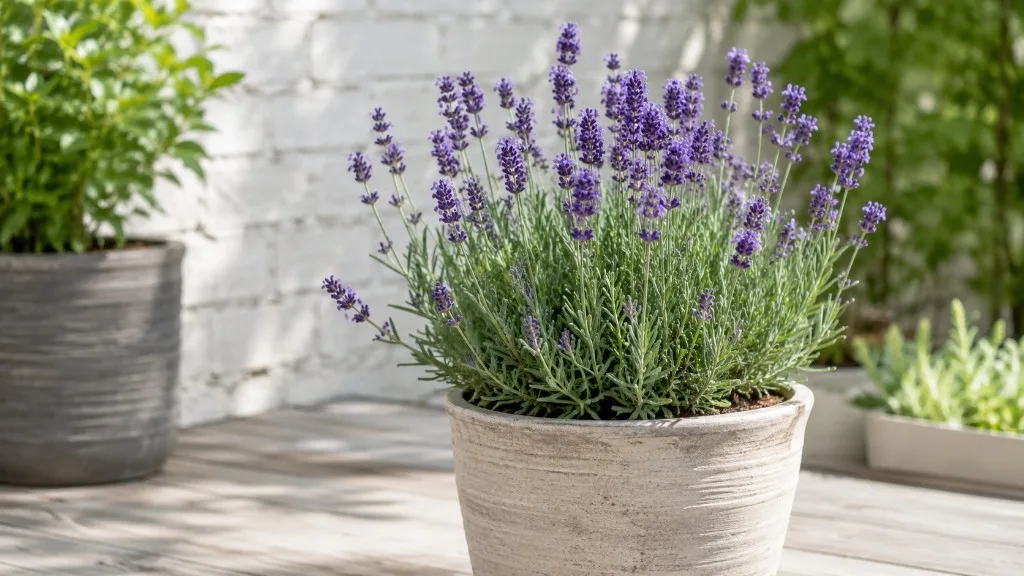
Lavender is native to Mediterranean - Spain, France, Italy, typically reaches 30–90 cm tall; 60–90 cm wide indoors, with slow to moderate growth. Lavender has a bushy growth habit and part of the Lamiaceae family. It is also known as English Lavender, True Lavender, and Lavandula.
| Detail | Information |
|---|---|
| Also known as | English Lavender, True Lavender, Lavandula |
| Native region | Mediterranean - Spain, France, Italy |
| Mature size | 30–90 cm tall; 60–90 cm wide |
| Growth rate | Slow to moderate |
| Growth habit | Bushy |
| Scientific name | Lavandula angustifolia |
| Family | Lamiaceae |
Lavender Plant Care: Sun, Soil, Water & Tips
What Is Lavender?
Lavender is a sun-loving Mediterranean subshrub grown for silvery aromatic foliage, summer flower spikes, and the essential oils that have made it one of the world’s most recognizable herbs. The species most gardeners mean when they say “lavender” is Lavandula angustifolia, commonly called English lavender - a compact, cold-hardy type with narrow gray-green leaves and fragrant purple-blue blooms. Mature plants typically reach 12 to 36 inches (30 to 90 cm) tall and spread a similar width, forming a rounded, bushy mound that becomes woody at the base with age.
If you are deciding whether lavender fits your space, the honest summary is this: lavender rewards Lavender light guide, fast drainage, and restraint with water - and it punishes heavy soil, shade, and the kind of attentive daily watering that keeps tropical houseplants happy. Outdoors in a sunny border or on a dry balcony, lavender is genuinely low-maintenance once established. Indoors, it is challenging because most homes offer less direct sun and more ambient humidity than the plant evolved to handle. The payoff for getting the basics right is years of fragrance, pollinator visits, dried stems for sachets, and a plant that tolerates drought far better than most ornamentals.
Botanical Background and Main Lavender Types
Lavender belongs to the family Lamiaceae - the mint family - which matters for care because Lamiaceae plants generally prefer well-drained soil, dislike wet crowns, and show stress at the roots before symptoms become obvious on the foliage. The square stems and opposite leaves are classic mint-family traits, as is the aromatic oil content that makes lavender valuable to gardeners and problematic for some pets.
Not every plant sold as lavender is the same species, and the differences affect hardiness and size. Lavandula angustifolia and its hybrids are the hardiest types commonly grown, with many cultivars surviving USDA Hardiness Zones 5 through 10 when drainage is excellent. Popular English lavender cultivars include ‘Hidcote’ (deep purple flowers, compact habit) and ‘Munstead’ (slightly larger, early bloomer) - both widely recommended for colder climates with sharp drainage. Lavandula × intermedia, called lavandin, grows taller with longer flower stems and a stronger camphor note in the fragrance; it is generally less cold-hardy than English types. Lavandula stoechas (Spanish lavender) has distinctive bracts atop the flower heads and is more frost-sensitive, performing best in mild climates or as a seasonal container plant elsewhere.
The Royal Horticultural Society notes that lavender is among plants considered a high-risk host for Xylella fastidiosa, a bacterial disease affecting a wide range of woody plants. When purchasing lavender - especially imported stock - buy from reputable nurseries and inspect plants for general vigor. This is a sourcing awareness point, not a reason to avoid lavender, but it reinforces buying healthy, well-labeled plants rather than anonymous clearance specimens.
Why Mediterranean Origins Shape Every Care Rule
Lavender evolved in the dry, rocky hillsides of the Mediterranean - regions of Spain, southern France, and Italy where summers are hot, winters are cool and relatively dry, soils are lean and alkaline, and full sun is abundant. That native climate sets the upper and lower limits for everything you do at home. When gardeners treat lavender like a moisture-loving foliage houseplant, the mismatch shows up within weeks as yellowing lower stems, wilting in wet soil, or a plant that flowers weakly and stretches toward the nearest window.
The practical translation is straightforward: mirror dryness, brightness, and airflow rather than a calendar. Lavender does not want rich compost piled against its crown. It does not want a peaty mix that stays damp for days. It does not want a north-facing sill unless you supplement with strong grow lights. It does want six to eight hours of direct sun outdoors, gritty soil that water runs through in seconds, and a watering habit that waits until the root zone has actually dried. Understanding the plant as a drought-adapted subshrub - not a tender herbaceous annual - explains why it can live for many years in a dry garden but often dies in its first winter when planted in clay that holds moisture around the roots.
Best Growing Conditions for Lavender
Lavender performs best when four environmental variables align: light, water, soil, and temperature with airflow. Get those right and feeding, Lavender repotting guide, pruning, and propagation become simple seasonal tasks. Get any one badly wrong - especially soil drainage or watering frequency - and no amount of fertilizer or pest spray will rescue the plant.
Light Requirements
Lavender needs full sun - a minimum of six hours of direct sunlight daily, with eight or more hours ideal for dense growth and strong flowering. In partial shade, lavender stretches, blooms sparsely, and becomes more susceptible to root rot on Lavender because the soil dries more slowly. Outdoors, choose the brightest open position available: a south-facing border, a raised bed away from tree shade, or a container on a sun-baked patio. Indoors, only a south-facing window or a full-spectrum grow light on a 12–14 hour timer delivers enough intensity; east- and west-facing windows are marginal, and north-facing exposures are usually insufficient unless supplemented.
The fastest diagnostic for incorrect light is new growth quality. Compact, firm stems with silvery-green foliage and upright flower spikes mean the plant is probably receiving enough sun. Long, floppy stems with pale leaves and wide spacing between nodes mean the plant wants more light. If you are transitioning a greenhouse-grown lavender to a brighter position, acclimate over one to two weeks so tender new growth does not scorch abruptly. Established outdoor lavender tolerates intense summer sun well; the greater risk in hot climates is combined heat and humidity, which favors fungal issues - not sunburn itself.
Temperature and Humidity
Lavender prefers cool to warm, stable temperatures during the growing season, roughly 50 to 70°F (10 to 21°C) for optimal growth, though established plants tolerate summer heat well above that when soil moisture is managed correctly. English lavender and its hybrids are the most cold-hardy lavender types; many cultivars survive winter lows in Zone 5 with excellent drainage and a dry crown. Spanish and some lavandin types need milder winters or winter protection.
Humidity is where indoor growers often fail. Lavender thrives in low to moderate humidity - roughly 30 to 50% - and struggles in steamy bathrooms, crowded plant shelves with humidifiers, or humid coastal summers without good air movement. Do not mist lavender leaves; the brief humidity boost is useless, and wet foliage in stagnant air invites fungal problems. Indoors, keep lavender away from hot air vents and blowing AC, which desiccate foliage unevenly and stress the plant - Illinois Extension notes that lavender needs good air circulation between plants and dry foliage to stay healthy. Outdoor plants handle breezes naturally; if you are growing in a humid region, spacing plants for airflow matters as much as soil amendments.
Winter survival is less about absolute cold than moisture at the crown. Lavender roots in saturated winter soil rot even when air temperatures are mild. In containers, move pots to a rain shadow - under an eave, against a south-facing wall, or into a cold greenhouse where excess rain cannot saturate the mix - as the RHS recommends for potted plants in wet climates.
Soil and Drainage
Lavender requires exceptionally well-drained, lean soil with a neutral to slightly alkaline pH, roughly 6.5 to 8.0. Heavy clay, waterlogged borders, and standard peat-heavy potting mix are the most common reasons lavender dies within a year. The soil should feel gritty, drain in seconds when you water, and never remain soggy at the root level for more than a few hours.
For in-ground planting, amend slow-draining sites with coarse sand, fine gravel, or horticultural grit, or better yet, plant on a raised mound or in a raised bed so the crown sits above the surrounding water table. The RHS recommends replicating Mediterranean conditions by mixing perlite or coarse grit into potting mix for containers. A reliable home recipe is one part potting compost to three parts coarse grit or perlite, testing drainage by watering and confirming water runs freely from the bottom within seconds.
Set the crown at or slightly above soil level rather than buried deeply, especially in heavy soils. Mulch with gravel or small stones instead of bark or wood chips, which hold moisture against the stem base and accelerate crown rot. Lavender is adapted to nutrient-poor soils; richness is not a virtue here. If your tap water is acidic and your soil trends acidic over time, occasional agricultural lime applications in truly acidic gardens can help, but most hobbyists growing in neutral commercial mixes never need pH micromanagement.
How to Feed Lavender
Lavender needs little fertilizer, and lean conditions often produce better fragrance and flowering than rich feeding. In reasonably poor garden soil, many established plants never need supplemental nutrients. In containers, where nutrients leach with each watering, a light feeding once or twice during the growing season is enough.
Use a balanced or slightly low-nitrogen fertilizer at quarter to half the label rate, applied to already-moist soil in late spring and optionally once more in early summer. Avoid high-nitrogen formulas that push soft leafy growth at the expense of flowers and winter hardiness. Do not fertilize in late summer or autumn, when new tender growth is vulnerable to frost, and do not feed stressed or recently repotted plants until active growth resumes. A thin top-dressing of compost in spring works for in-ground plantings in genuinely depleted soils, but keep organic mulch materials away from direct contact with the woody crown.
How to Water Lavender
The general rule for lavender is: let the soil dry between waterings, then soak thoroughly when you do water. More precisely, check moisture 5 to 7 cm (2 to 3 inches) deep in containers or at root depth in borders before adding water. During active summer growth, many container lavenders need water every 7 to 10 days; in winter, the same plant may need water only every two to four weeks - or even less if rainfall is absent and the pot is sheltered. Calendar schedules are starting points; the actual pot or bed dryness in your conditions is the final authority.
Lavender watering guide and Seasonal Adjustments
Newly planted lavender needs consistent moisture through its first growing season to establish roots. Water when the top inch dries, but never keep the mix constantly wet. After establishment - usually by the second year in the ground - lavender becomes drought tolerant and may need no supplemental watering except during prolonged dry spells. That shift catches gardeners off guard: the plant that needed weekly attention as a seedling should not receive the same rhythm as a mature shrub.
For container lavender, the rhythm stays more frequent because pots dry faster and root space is limited. During warm, bright months, water thoroughly until excess runs from drainage holes, then empty the saucer so the pot never sits in standing water. Terracotta pots help because their porous walls wick moisture away from the root zone - a meaningful advantage for a plant this sensitive to rot. If you are unsure whether to water, err toward waiting another day; lavender forgives brief dryness far more readily than brief sogginess.
In cooler months, lavender’s water uptake drops sharply even if the foliage still looks green. Reduce watering frequency in autumn and winter, especially for container plants exposed to rain. An unglazed pot sitting in open winter rain often dies from root rot while the gardener assumes cold killed it. Sliding containers under an eave or tilting them slightly so water does not pool on the soil surface prevents a common seasonal loss. Indoor lavender during winter needs bright cool conditions and sparse water - not a warm dim room with tropical-plant watering habits. Check the mix with your finger or a wooden chopstick before every drink. If the deeper mix is still cool and slightly damp, wait. Resume a more generous - but still drainage-conscious - rhythm only when new spring growth appears and the pot dries noticeably faster.
Common Watering Mistakes
The single most common killer of lavender is overwatering in slow-draining soil. Symptoms include wilting despite wet mix, yellowing at the stem base, and a sour smell from the roots. The fix is not more water - it is improved drainage and a drier interval, sometimes combined with repotting into gritty mix after trimming rotted roots.
Other frequent mistakes include daily light sprinkles that never reach deep roots but keep the surface chronically moist, saucers that hold runoff, and treating indoor lavender like a tropical foliage plant that wants evenly moist potting mix. If your lavender is in standard houseplant soil and declining, assume the soil is wrong before you assume the plant is diseased.
Repotting and Root Health
Repot lavender when the plant has outgrown its container, the mix has degraded into a water-retentive slab, or you are correcting root rot with fresh gritty soil. The best timing is spring, as new growth begins - the same window the RHS recommends for planting lavender outdoors when soil warms. Avoid repotting into oversized containers; choose a pot one size larger with large drainage holes, preferably unglazed terracotta.
Use a grit-heavy mix as described in the soil section. After repotting, water lightly to settle the roots, then let the mix dry normally before the next soak. Hold fertilizer for four to six weeks while roots heal. For a plant recovering from rot, trim dark mushy roots with clean scissors, dust cuts if you wish, and repot into fresh sterile mix rather than reusing contaminated soil.
Signs It Is Time to Repot
The clearest repotting signals are roots emerging from drainage holes, a plant that dries out within a day of watering in hot weather, water running straight through a compacted root ball without absorbing, or a top-heavy shrub that tips easily in a small pot. If the mix smells sour or drains slowly despite correct watering habits, repot into fresh gritty soil even if the calendar says otherwise. Lavender can live several years in the right container, but degraded peat-based mixes eventually suffocate roots and recreate the wet conditions lavender cannot tolerate.
Pruning and Harvesting Lavender
Prune lavender annually to maintain a compact shape, extend the plant’s productive life, and prevent bare woody centers. The best timing is immediately after the main summer bloom finishes, with a lighter tidy-up in spring if winter frost damaged tips or growth looks uneven. Using clean hand pruners, remove spent flower stalks and trim back roughly one-third of the current season’s soft green growth, sculpting a rounded mound as you go.
The critical rule: never cut deep into old woody stems that have no green leaves. Lavender does not reliably sprout new growth from bare wood, and hard renovation cuts into the woody base often kill the plant. If your lavender is already hollow and leggy with a bare center, recovery is limited - replacement or propagation from healthier side shoots is usually more realistic than aggressive hard pruning.
For harvesting, cut stems in the morning after dew dries, when flowers are partially open but not fully faded, for the strongest essential-oil content in dried bundles. Hang small bunches upside down in a dark, airy space for two to three weeks. Even if you do not harvest for drying, removing spent blooms as part of the annual trim keeps the plant looking intentional and directs energy into foliage and next year’s flower buds.
Propagation Methods for Lavender
The most reliable home propagation method for named lavender cultivars is semi-ripe stem cuttings taken in summer, after the main flush of growth has firmed but before stems turn fully woody. Seed is possible for species lavender but does not come true to named cultivars, so cuttings preserve the variety you already grow.
Take non-flowering shoots 10 to 15 cm (4 to 6 inches) long from a healthy parent plant. Strip the lower leaves, dip the cut end in rooting hormone if you have it, and insert the stem into a moist, gritty mix - equal parts perlite and potting compost works well. Cover with a clear bag or propagator lid to maintain humidity, but vent daily to prevent mold. Place cuttings in bright indirect light, not direct midday sun, until roots form in four to eight weeks. Tug gently to test resistance; rooted cuttings can move into individual small pots with the same fast-draining mix you use for mature plants.
Do not propagate from stressed, diseased, or rotting plants - cuttings inherit the parent’s problems and fail at higher rates. If your lavender is healthy but aging, taking cuttings while side shoots are still green is an inexpensive insurance policy before woody decline limits your options.
Common Lavender Problems
Most lavender problems are environmental rather than mysterious diseases. They develop slowly, and they respond slowly - patience matters as much as diagnosis.
Root Rot, Yellow Foliage, and Woody Decline
Root and crown rot is the primary fatal issue, caused by overwatering, poor drainage, or winter wetness. Aboveground signs include wilting in moist soil, browning at the base, and a foul root smell. Belowground, roots turn brown and mushy. Treatment requires trimming affected roots, repotting into fresh gritty mix, and reducing water - but advanced rot often means starting over from a cutting.
Yellowing lower foliage can indicate rot, but also temporary overwatering, nutrient excess, or natural aging of older leaves. Check moisture and drainage first, then inspect for pests. Brown, crispy leaf tips on otherwise healthy plants often point to extreme dry air near heat vents or salt buildup in containers; flush the pot with plain water occasionally if you fertilize regularly.
Woody bare stems with live tips only at the edges mean the plant was not pruned annually and has outgrown its productive phase. Prevent this with post-bloom shearing every year. Once a large woody skeleton forms, the aesthetic and flowering quality rarely return to nursery standards.
Pests are less common outdoors than indoors. Watch for spider mites in dry indoor air - fine webbing and stippled leaves are clues. Fungal issues increase in humid summers with poor airflow; fix spacing and avoid overhead watering rather than reaching for sprays first. Deer and rabbits generally avoid lavender because of the aromatic oils, which is one reason it works well as a low hedge in sunny regions.
Is Lavender Safe for Pets?
Lavender is toxic to cats, dogs, and horses according to the ASPCA. The toxic principles are linalool and linalyl acetate, compounds that can cause nausea, vomiting, and reduced appetite if pets ingest plant material. The risk from a potted plant on a high shelf is lower than the risk from lavender essential oil, which is highly concentrated and particularly dangerous around cats because oils can be absorbed through skin, inhaled from diffusers, or ingested during grooming.
Do not assume lavender is pet-safe because it is a common culinary herb in human foods. Small culinary amounts for people are not a model for pet exposure. Keep potted lavender out of reach of curious chewers, avoid diffusing lavender oil in enclosed rooms with cats, and contact your veterinarian or the ASPCA Animal Poison Control Center at (888) 426-4435 if you suspect ingestion of plant material or concentrated oil. When pet safety is a priority, position containers on raised stands or behind barriers rather than on floor-level windowsills dogs and cats can access.
Conclusion
The most useful thing to know about lavender is that it is a sun-loving Mediterranean subshrub that grows at a slow to moderate rate to roughly 30 to 90 cm tall and wide when conditions match its native range. If light, drainage, watering restraint, and annual pruning fit that description, lavender rewards you with years of fragrance and reliable summer blooms. If the soil stays wet, the window is dim, or woody stems go unpruned, the plant declines in predictable ways that look like mysterious failure but are actually environmental mismatch.
Start with full sun and gritty soil, water only when the root zone has dried, shear lightly after flowering without cutting into bare wood, propagate from healthy summer cuttings before the shrub ages out, and keep all forms of lavender - especially essential oils - away from pets the ASPCA lists as vulnerable. Fix the environment first when problems appear; lavender usually tells you clearly what it needs once you read the symptoms through a Mediterranean lens rather than a houseplant one.
When to use this page vs other Lavender guides
- Lavender overview - Canonical hub for this species - care topics and problems branch from here.
- Lavender problems - Symptom-first path when you already know something is wrong.
Related Lavender guides
How to care for Lavender?
How much light does Lavender need?
full sun - 6+ hours of direct sunlight; no compromise on this
- full sun - 6+ hours of direct sunlight; no compromise on this - full sun - 6+ hours of direct sunlight; no compromise on this.
When should you water Lavender?
Water every 7–10 days in summer only when soil is completely dry at 7 cm depth. Every 3–4 weeks in winter. Never water during monsoon or heavy rain periods.
- Push finger 7–8 cm deep - water only when completely dry at that depth - Water every 7–10 days in summer only when soil is completely dry at 7 cm depth.
- Drain excess water - Water every 7–10 days in summer only when soil is completely dry at 7 cm depth.
What soil works best for Lavender?
1 part potting compost + 3 parts coarse grit or perlite. pH 6.5–8.0. Drainage should be instant - water runs through in 2–3 seconds.
- 30% potting mix - 1 part potting compost + 3 parts coarse grit or perlite.
- 50% coarse sand or perlite - 1 part potting compost + 3 parts coarse grit or perlite.
- 20% fine gravel or grit - 1 part potting compost + 3 parts coarse grit or perlite.
Grower notes for Lavender
What matters most with Lavender
Lavender is usually grown for harvest, so flavor, fresh shoots, and quick regrowth matter more than keeping old stems forever. Replace or restart tired plants instead of nursing woody, exhausted growth indefinitely. In practice, the care checkpoint is simple: full sun - 6+ hours of direct sunlight; no compromise on this. Pair that with 1 part potting compost + 3 parts coarse grit or perlite; pH 6.5–8.0. Drainage should be instant - water runs through in 2–3 seconds, and avoid changing water, pot size, and placement all at once.
Best placement in a real home
Lavender belongs where full sun - 6+ hours of direct sunlight; no compromise on this is realistic for most of the day, not only where the pot looks good. Water every 7–10 days in summer only when soil is completely dry at 7 cm depth. Every 3–4 weeks in winter. Never water during monsoon or heavy rain periods. If the pot stays wet longer than expected, move the plant into better light or reassess the mix before watering again. Humidity target: Very low (20–40%); lavender is one of the least humidity-tolerant plants. Temperature comfort zone: 15°C to 28°C (60–82°F).
Before you buy this plant
Choose Lavender with firm new growth, clean leaf undersides, and soil that does not smell sour or feel compacted. Be cautious if you see root-rot, sticky residue, collapsed crowns, or a pot that is wet in poor light. Cosmetic old-leaf damage is less worrying than weak roots or active pests.
First month after bringing it home
Do not repot Lavender on day one unless the mix is failing or pests are obvious. Quarantine it, learn how fast the pot dries, and keep care boring while it adjusts. Watch especially for root-rot, brown-leaves, and leggy-growth. If problems appear, correct the condition first rather than stacking fertilizer, repotting, and pruning together.
Safety note for Lavender
Lavender is not a plant to keep within reach of pets or children. The database flags it for cats and dogs. Use gloves if sap or plant tissue is irritating, and pick a pet-safe alternative for floor pots or low shelves.
How to tell Lavender is settling in
Also sold as English Lavender, True Lavender, and Lavandula, this plant should be judged by stable new growth rather than label names alone. If you plan to multiply it later, common methods include Stem cuttings and Layering. Repot only when you see roots tightly circling pot and stunted growth. If brown-leaves shows up early, inspect light, watering, and roots before assuming the plant is permanently weak.
Is lavender safe for pets?
Lavender is toxic to cats and dogs. ASPCA lists it as causing nausea, vomiting, and central nervous system depression. Essential oil is especially dangerous to cats.
ASPCA classifies lavender (Lavandula species) as toxic to cats and dogs. Linalool and linalyl acetate cause nausea, vomiting, and CNS depression. Lavender essential oil is highly concentrated and particularly dangerous to cats. Keep all forms of lavender out of reach of pets.
Watering Lavender
For Lavender, push finger 7–8 cm deep - water only when completely dry at that depth and water every 7–10 days in summer; every 2–3 weeks in winter. Barely water in monsoon - the most dangerous season for lavender in India.
| Detail | Information |
|---|---|
| How often | Every 7–10 days in summer; every 2–3 weeks in winter |
| How to check | Push finger 7–8 cm deep - water only when completely dry at that depth |
| Seasonal changes | Barely water in monsoon - the most dangerous season for lavender in India |
Signs of overwatering
- grey or brown wilting stems
- crown rot at base
- lavender dying suddenly
Signs of underwatering
- leaves curling inward
- grey-green foliage becoming dull
Soil & potting for Lavender
Use a mix of 30% potting mix, 50% coarse sand or perlite, 20% fine gravel or grit for Lavender. Exceptional drainage - lavender roots rot within days in wet soil. Target soil pH around 6.5–8.0 (slightly alkaline preferred). Repot every 2–3 years; lavender prefers terracotta pots with extra drainage holes, ideally in early spring.
| Detail | Information |
|---|---|
| Recommended mix | 30% potting mix, 50% coarse sand or perlite, 20% fine gravel or grit |
| Drainage | Exceptional drainage - lavender roots rot within days in wet soil |
| Soil pH | 6.5–8.0 (slightly alkaline preferred) |
| Repotting frequency | Every 2–3 years; lavender prefers terracotta pots with extra drainage holes |
| Best season to repot | Early spring |
Signs it needs repotting
- roots tightly circling pot
- stunted growth
Humidity & temperature for Lavender
Lavender prefers very low (20–40%); lavender is one of the least humidity-tolerant plants, though normal home humidity is usually fine. Keep temperatures around 15°C to 28°C (60–82°F).
| Detail | Information |
|---|---|
| Humidity | Very low (20–40%); lavender is one of the least humidity-tolerant plants - normal home humidity is fine. |
| Ideal temperature | 15°C to 28°C (60–82°F) |
Fertilizer & pruning for Lavender
Use use low-nitrogen, slow-release granular fertilizer or a small amount of compost and stop if the plant is stressed, newly repotted, or not actively growing. for Lavender.
| Detail | Information |
|---|---|
| Fertilizer type | Use low-nitrogen, slow-release granular fertilizer or a small amount of compost and stop if the plant is stressed, newly repotted, or not actively growing. |
Common problems on Lavender
Likely cause: Lavandula (common name lavender) is a genus of 47 known species of perennial flowering plants in the sage family, Lamiaceae. [1] It is native to the Old World, primarily found across the drier, warmer …
Quick fix: Confirm diagnosis on your Lavender, then address the most likely care or pest factor described in current extension guidance.
Full fix guide →Bacterial Wilt
HighLikely cause: Bacterial infections pose additional threats to lavender health, with bacterial wilt being a prime example. This disease manifests through yellowing leaves and eventual plant decline.
Quick fix: Confirm diagnosis on your Lavender, then address the most likely care or pest factor described in current extension guidance.
Full fix guide →Black Spots
MediumLikely cause: Apr 1, 2026 · While black spots are a sign of stress or disease, early detection and appropriate treatment can often save your lavender plant. The severity of the spots , how quickly they spread, and the overall vigor of the plant will indi
Quick fix: Confirm diagnosis on your Lavender, then address the most likely care or pest factor described in current extension guidance.
Full fix guide →Blight
MediumLikely cause: The main fungal causes of blight -like symptoms in lavender are typically root rots, crown rots, and various stem or leaf blights that lead to the rapid browning, wilting, and collapse of branches or entire plants.
Quick fix: Confirm diagnosis on your Lavender, then address the most likely care or pest factor described in current extension guidance.
Full fix guide →Brown Leaves
HighLikely cause: Crown rot from humidity or wet soil at stem base
Quick fix: Remove mulch; improve airflow; dust with sulphur powder
Full fix guide →Brown Tips
MediumLikely cause: Apr 7, 2026 · Brown tips on lavender? Check the pattern—it reveals whether you've got a watering, nutrient, or pest issue. Six fixes matched to your exact problem.
Quick fix: Confirm diagnosis on your Lavender, then address the most likely care or pest factor described in current extension guidance.
Full fix guide →Bud Drop
LowLikely cause: The phrase "Is it safe to use lavender around bud drop?" indicates a misunderstanding . Lavender is a plant, and "bud drop" is a plant problem or symptom where flower buds fall off prematurely. You would not "use" lavender to treat bud drop
Quick fix: Confirm diagnosis on your Lavender, then address the most likely care or pest factor described in current extension guidance.
Full fix guide →Cold Damage
MediumLikely cause: Oct 25, 2025 · But when winter arrives, especially in colder climates, many gardeners worry: Will my lavender survive the frost? The truth is that while lavender is hardy, cold and wet winter conditions can quickly damage or even kill the p
Quick fix: Confirm diagnosis on your Lavender, then address the most likely care or pest factor described in current extension guidance.
Full fix guide →Compacted Soil
MediumLikely cause: Apr 18, 2026 · This guide compares five soil products that give lavender what it actually needs: fast drainage, slightly alkaline pH, and lean nutrition. I’ve noted which grower type each suits best, what ingredients make them work, and whe
Quick fix: Confirm diagnosis on your Lavender, then address the most likely care or pest factor described in current extension guidance.
Full fix guide →Crown Rot
HighLikely cause: In preliminary studies in our lab, symptoms of decay in the root crown led to this disease being renamed Phytophthora root and crown rot (PRCR) of lavender (Jeffers et al. 2016).
Quick fix: Follow extension or botanical guidance for Lavender crown rot; adjust care before applying broad treatments.
Full fix guide →Damping Off
HighLikely cause: Jan 26, 2025 · It seems like the lavender plants I've just received are experiencing damping off . Is this due to temperature, and should I have kept the plants heated or are they shipped ready to go outside?
Quick fix: Confirm diagnosis on your Lavender, then address the most likely care or pest factor described in current extension guidance.
Full fix guide →Drooping Leaves
MediumLikely cause: Apr 4, 2026 · If you’ve recently moved your lavender, it might experience transplant shock, which often presents as drooping leaves and general lethargy. The roots are disturbed, and the plant needs time to adjust to its new environment.
Quick fix: Confirm diagnosis on your Lavender, then address the most likely care or pest factor described in current extension guidance.
Full fix guide →Dry Hydrophobic Soil
MediumLikely cause: Apr 18, 2026 · This guide compares five soil products that give lavender what it actually needs: fast drainage, slightly alkaline pH, and lean nutrition. I’ve noted which grower type each suits best, what ingredients make them work, and whe
Quick fix: Confirm diagnosis on your Lavender, then address the most likely care or pest factor described in current extension guidance.
Full fix guide →Exposed Roots
MediumLikely cause: Lavender plants are shallow- rooted shrubs that require direct sunlight and proper air circulation inside the soil. They grow well in sandy and rocky soil. They are not invasive in nature and spread within the growing range. The roots grow
Quick fix: Confirm diagnosis on your Lavender, then address the most likely care or pest factor described in current extension guidance.
Full fix guide →Likely cause: Jun 19, 2025 · So if you’re worried about a weary or faded lavender plant, or keen to keep your cottage garden classic bursting with blooms for longer, knowing how to deadhead lavender is your best chance for extended flowering.
Quick fix: Follow extension or botanical guidance for Lavender faded flowers; adjust care before applying broad treatments.
Full fix guide →Faded Leaves
MediumLikely cause: Aug 22, 2025 · When lavender is underwatered, it experiences stress, leading to wilting, yellowing of leaves , and, ultimately, faded blooms. The plant’s ability to produce vibrant pigments is compromised as it struggles to survive.
Quick fix: Confirm diagnosis on your Lavender, then address the most likely care or pest factor described in current extension guidance.
Full fix guide →Flowers Turning Brown
MediumLikely cause: Learn how to grow lavender for fragrance, beauty, and pollinators! Get planting and care tips, discover edible varieties, and explore lavender’s culinary and medicinal uses.
Quick fix: Confirm diagnosis on your Lavender, then address the most likely care or pest factor described in current extension guidance.
Full fix guide →Fungus Gnats
LowLikely cause: Mar 28, 2026 · In this comprehensive guide, we’ll walk through everything you need to know about lavender plant fungus gnats , from identifying the culprits to implementing effective prevention and eradication strategies.
Quick fix: Confirm diagnosis on your Lavender, then address the most likely care or pest factor described in current extension guidance.
Full fix guide →Heat Stress
MediumLikely cause: Lavender (Lavandula spp.) is renowned for its fragrance and versatility, but many assume it thrives only in cooler climates. However, certain lavender varieties demonstrate remarkable heat tolerance, allowing them to flourish in warmer regi
Quick fix: Confirm diagnosis on your Lavender, then address the most likely care or pest factor described in current extension guidance.
Full fix guide →Leaf Drop
MediumLikely cause: Apr 7, 2026 · Lavender dropping leaves ? Diagnose the exact cause by timing, leaf color, and soil moisture with this 7-cause triage guide and proven fixes.
Quick fix: Confirm diagnosis on your Lavender, then address the most likely care or pest factor described in current extension guidance.
Full fix guide →Leggy Growth
MediumLikely cause: Insufficient sun or skipping annual post-flower prune
Quick fix: Move to full sun; prune back by one-third after flowering
Full fix guide →Leggy Seedlings
MediumLikely cause: Apr 8, 2026 · Leggy lavender is one of the most common problems gardeners bring to us — and in most cases, it’s completely fixable. But the fix depends entirely on which of the five causes is driving the problem.
Quick fix: Confirm diagnosis on your Lavender, then address the most likely care or pest factor described in current extension guidance.
Full fix guide →Magnesium Deficiency
MediumLikely cause: Sep 20, 2022 · In this article, we’ll explain how magnesium together with lavender essential oils can help with all three common issues. You may be familiar with both natural treatments individually.
Quick fix: Confirm diagnosis on your Lavender, then address the most likely care or pest factor described in current extension guidance.
Full fix guide →Mealybugs
MediumLikely cause: Jul 25, 2023 · Fortunately, there are several effective methods you can employ to get rid of mealybugs on your lavender plant. In this article, we will explore some of the most recommended techniques for eliminating these pests and restorin
Quick fix: Confirm diagnosis on your Lavender, then address the most likely care or pest factor described in current extension guidance.
Full fix guide →Nitrogen Deficiency
MediumLikely cause: Likely Deficiencies : General lack of nitrogen (N), phosphorus (P), or a broad nutrient deficiency. Consideration: Lavender is a slow grower naturally, so look for a significant reduction compared to its typical growth or historical perform
Quick fix: Confirm diagnosis on your Lavender, then address the most likely care or pest factor described in current extension guidance.
Full fix guide →No Drainage Hole
MediumLikely cause: 21 hours ago · Thank you! Lavender does need drainage holes for healthy growth and long-term survival. Without proper drainage holes , lavender plants can suffer from waterlogged soil, leading to root rot and poor health. Drainage holes ens
Quick fix: Confirm diagnosis on your Lavender, then address the most likely care or pest factor described in current extension guidance.
Full fix guide →No New Growth
MediumLikely cause: Oct 6, 2023 · A lack of flowers, wilted foliage, slow growth , or an unruly growth habit are common issues that gardeners face when growing lavender. Thankfully, these problems are fairly easy to diagnose and cure.
Quick fix: Follow extension or botanical guidance for Lavender no new growth; adjust care before applying broad treatments.
Full fix guide →Not Enough Light
MediumLikely cause: Apr 3, 2026 · When we talk about lavender light requirements, we are primarily talking about one thing: full sun. What does “full sun” really mean in gardening terms? It translates to a minimum of six hours of direct, unfiltered sunlight pe
Quick fix: Confirm diagnosis on your Lavender, then address the most likely care or pest factor described in current extension guidance.
Full fix guide →Pale Leaves
MediumLikely cause: Mar 28, 2026 · Lavender , while generally hardy, can sometimes send out distress signals. This comprehensive guide is designed to help you understand precisely why your lavender plant might be losing its color, and more importantly, how to
Quick fix: Confirm diagnosis on your Lavender, then address the most likely care or pest factor described in current extension guidance.
Full fix guide →Plant Leaning
MediumLikely cause: Mar 28, 2026 · In this comprehensive guide, we’ll dive deep into the common reasons why lavender plants start leaning and, more importantly, equip you with expert tips and actionable steps to prevent and fix this issue.
Quick fix: Confirm diagnosis on your Lavender, then address the most likely care or pest factor described in current extension guidance.
Full fix guide →Poor Potting Setup
MediumLikely cause: Apr 18, 2026 · Lavender dies in soggy soil—here are 5 well-draining mixes that prevent root rot, plus which common potting soils to skip for healthy plants.
Quick fix: Confirm diagnosis on your Lavender, then address the most likely care or pest factor described in current extension guidance.
Full fix guide →Potassium Deficiency
MediumLikely cause: May 7, 2025 · Although lavender does not require many nutrients, it is worth doing a basic fertilization at the time of planting. This does not mean that a large amount of nitrogen should be applied, but rather that the focus should be on s
Quick fix: Confirm diagnosis on your Lavender, then address the most likely care or pest factor described in current extension guidance.
Full fix guide →Purple Leaves
MediumLikely cause: Foliage: The foliage of ‘Ellagance Purple ’ is a beautiful silver-green, providing a striking contrast to the vibrant purple flowers. The leaves are narrow, lance-shaped, and emit a pleasant aroma when brushed against or crushed.
Quick fix: Confirm diagnosis on your Lavender, then address the most likely care or pest factor described in current extension guidance.
Full fix guide →Repotting Stress
MediumLikely cause: Jun 26, 2025 · Most repotting guides tell you to watch for roots poking through the drainage holes. By the time that happens, your lavender has been rootbound for months — silently losing flower production and building root stress that chip
Quick fix: Confirm diagnosis on your Lavender, then address the most likely care or pest factor described in current extension guidance.
Full fix guide →Root Bound
MediumLikely cause: 21 hours ago · Root - bound lavender can suffer from stunted growth, reduced flowering, and increased susceptibility to disease. In this post, we will explore why lavender does not thrive when root bound , the signs of root bound lavender ,
Quick fix: Confirm diagnosis on your Lavender, then address the most likely care or pest factor described in current extension guidance.
Full fix guide →Root Rot
HighLikely cause: Overwatering and poor drainage - primary killer in humid climates
Quick fix: Repot in very gritty mix; stop watering immediately; improve drainage
Full fix guide →Rust Disease
MediumLikely cause: Apr 24, 2026 · The fungus known as Septoria leaf spot can weaken lavender , particularly in humid conditions during late summer and early fall. Quick action is essential once a disease is suspected; identify the disease and take corrective
Quick fix: Confirm diagnosis on your Lavender, then address the most likely care or pest factor described in current extension guidance.
Full fix guide →Scale Insects
MediumLikely cause: Jun 29, 2023 · Beneficial Insects : Introducing beneficial insects , such as ladybugs or lacewings, to your garden can help control scale populations naturally. These insects are natural predators of scales and will feed on them, reducing t
Quick fix: Confirm diagnosis on your Lavender, then address the most likely care or pest factor described in current extension guidance.
Full fix guide →Seeds Not Germinating
MediumLikely cause: Lavender seeds typically take 14 to 21 days to germinate in warm soil. It’s important to note that the seeds should only be barely covered with soil, as using too much soil can hinder germination. Additionally, it’s important to avoid using
Quick fix: Confirm diagnosis on your Lavender, then address the most likely care or pest factor described in current extension guidance.
Full fix guide →Slow Growth
LowLikely cause: Normal for lavender in containers - a naturally slow grower
Quick fix: Ensure full sun and single annual fertiliser application; be patient
Full fix guide →Likely cause: Apr 6, 2022 · Small lavender plants are ideal for planting in containers and small garden beds. In this article I’ll show you 10 beautiful compact lavender varieties that are perfect for small gardens.
Quick fix: Confirm diagnosis on your Lavender, then address the most likely care or pest factor described in current extension guidance.
Full fix guide →Sticky Leaves
MediumLikely cause: Oct 6, 2023 · When it’s planted in waterlogged, heavy, or clay soils, its roots can start to rot and lead to wilted, droopy leaves . The easiest way to fix this is to use a broadfork to loosen the soil around the plant and generously mix in
Quick fix: Follow extension or botanical guidance for Lavender sticky leaves; adjust care before applying broad treatments.
Full fix guide →Thrips
MediumLikely cause: Jul 22, 2023 · If you’ve noticed signs of thrips infestation on your lavender plants, don’t panic. There are several effective methods you can use to get rid of these pesky insects and save your beloved lavender .
Quick fix: Confirm diagnosis on your Lavender, then address the most likely care or pest factor described in current extension guidance.
Full fix guide →Transparent Leaves
MediumLikely cause: Choose from 640+ Lavender Leaves graphic resources and download in the form of PNG, EPS, AI or PSD.
Quick fix: Confirm diagnosis on your Lavender, then address the most likely care or pest factor described in current extension guidance.
Full fix guide →Transplant Shock
MediumLikely cause: Apr 4, 2026 · This comprehensive guide will walk you through everything you need to know about transplanting lavender successfully, how to recognize the signs of stress, and most importantly, how to rescue your beloved plants if they do exp
Quick fix: Confirm diagnosis on your Lavender, then address the most likely care or pest factor described in current extension guidance.
Full fix guide →Underwatering
MediumLikely cause: Jan 31, 2023 · Here are three common signs that your lavender may be suffering from underwatering , as well as tips on how to save it before it’s too late and how often to water your lavender in the future!
Quick fix: Confirm diagnosis on your Lavender, then address the most likely care or pest factor described in current extension guidance.
Full fix guide →Weak Stems
MediumLikely cause: Oct 6, 2023 · In fact, excessive amounts of plant nutrients can lead to an overgrowth of foliage and weak or limp stems . This can be a real bummer for anyone who wants to harvest their lavender flowers for bouquets or dried herb wands.
Quick fix: Follow extension or botanical guidance for Lavender weak stems; adjust care before applying broad treatments.
Full fix guide →Whiteflies
MediumLikely cause: Jul 26, 2022 · While the calming aroma of lavender creates a better environment for us, it slows down the ability of a whitefly to search for a suitable environment. Lavender can repel whiteflies as it is just one of many scents they hate.
Quick fix: Confirm diagnosis on your Lavender, then address the most likely care or pest factor described in current extension guidance.
Full fix guide →Wind Damage
MediumLikely cause: Nov 9, 2025 · In summary, lavender plants can indeed be affected by strong winds , experiencing physical damage , desiccation, and reduced flowering if not properly protected. While lavender is generally a hardy and adaptable plant, wind ca
Quick fix: Confirm diagnosis on your Lavender, then address the most likely care or pest factor described in current extension guidance.
Full fix guide →Yellow Leaves
MediumLikely cause: Apr 7, 2026 · Yellow leaves on lavender most often appear at the base first — the starting point for diagnosis. Lavender yellow leaves usually point to one of 7 causes. Diagnose yours in minutes using leaf position and pattern, then fix it
Quick fix: Confirm diagnosis on your Lavender, then address the most likely care or pest factor described in current extension guidance.
Full fix guide →Yellow Seedlings
MediumLikely cause: Mar 27, 2021 · Rare woody perennial native to the Iberian Peninsula. Early spring flowers are fragrant and resemble French Lavender (Lavandula stoechas) except for the yellow color. Flowers to 3 feet. Plants prefer full sun and a dry to mes
Quick fix: Confirm diagnosis on your Lavender, then address the most likely care or pest factor described in current extension guidance.
Full fix guide →Aphids
MediumLikely cause: Aphids on lavender cluster on soft new shoots and flower wands, leaving sticky honeydew on silvery needles. First step: blast colonies off with a strong morning water stream, then apply insecticidal s
Quick fix: See plant-specific guide for step-by-step fixes.
Full fix guide →Low Humidity
MediumLikely cause: Low humidity rarely harms English lavender-it prefers dry Mediterranean air around 30–50% RH. Crispy leaf tips in winter heated homes almost always combine dry air with missed watering, not a humidity
Quick fix: See plant-specific guide for step-by-step fixes.
Full fix guide →Mold on Soil
MediumLikely cause: Mold on lavender soil means the mix surface stays wet and organic-often from overwatering in shade or humid weather. First step: scrape the top centimeter of moldy mix, stop watering until the top 7 c
Quick fix: See plant-specific guide for step-by-step fixes.
Full fix guide →Overwatering
MediumLikely cause: Overwatered lavender sits in wet gritty mix too long, causing grey wilting, crown rot, and root decline. Stop watering until soil is dry 7 cm deep, empty saucers, improve drainage, and never water dur
Quick fix: See plant-specific guide for step-by-step fixes.
Full fix guide →Spider Mites
MediumLikely cause: Spider mites on English lavender (Lavandula angustifolia) thrive in hot, dry, dusty conditions on sun-exposed containers. Confirm fine stippling plus webbing on needle undersides, rinse foliage early
Quick fix: See plant-specific guide for step-by-step fixes.
Full fix guide →Wilting
MediumLikely cause: Wilting lavender demands a moisture check first-wet soil with grey stems means root rot; dry soil with curling leaves means drought. Never water automatically; confirm pot weight, smell, and roots bef
Quick fix: See plant-specific guide for step-by-step fixes.
Full fix guide →