Damping Off on Lavender: Causes, Checks & Fixes
Quick answer
Damping off kills lavender seedlings when fungal pathogens rot stems at the soil line in wet, stagnant seed trays. Use gritty fast-draining mix, warm soil near 18–21 °C (65–70 °F), water from below sparingly, provide bright light and airflow, and discard collapsed seedlings without composting infected trays.
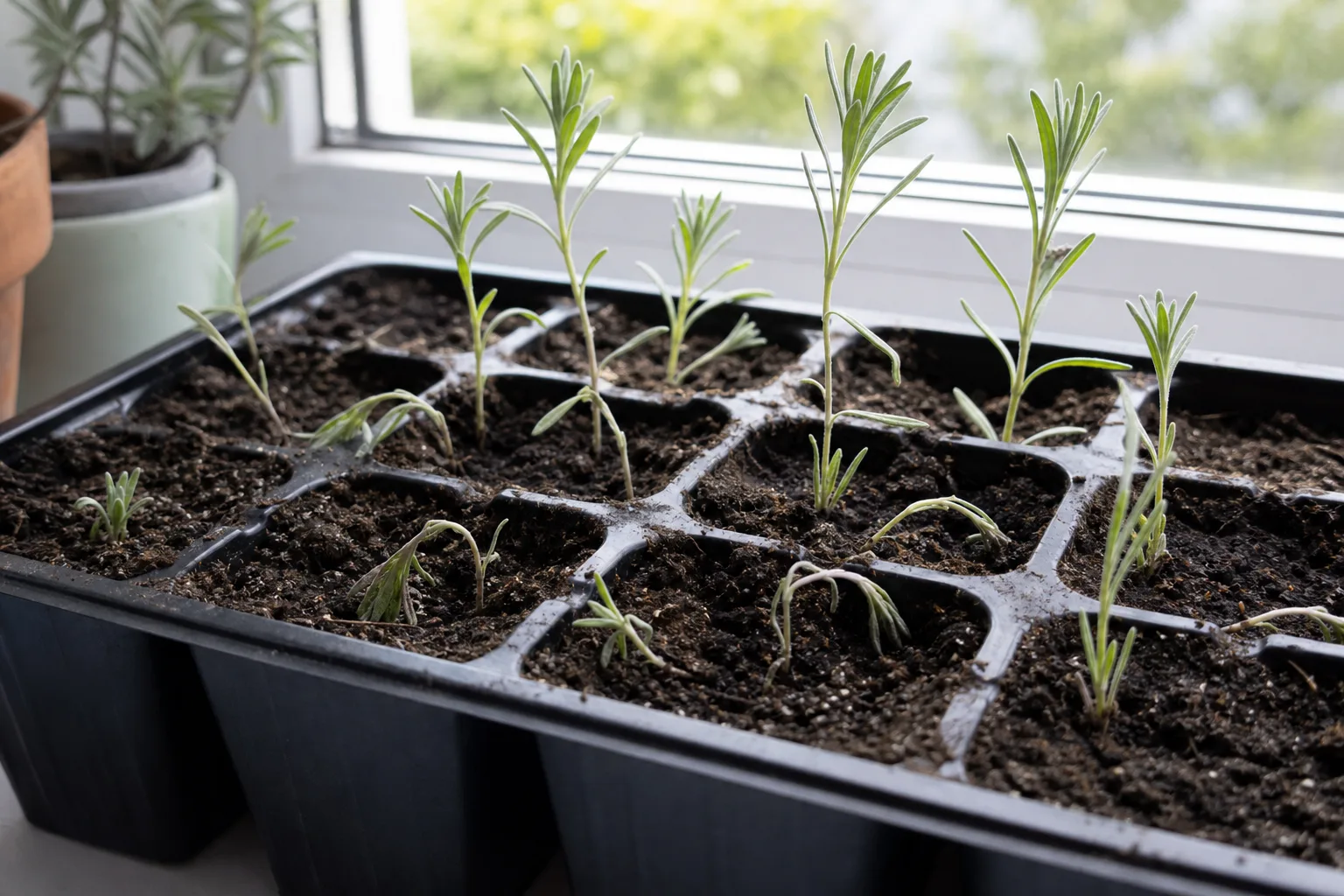
Damping Off on Lavender: Causes, Checks & Fixes
This guide covers damping off on Lavender. See also the general Damping Off guide, watering, and light pages for this plant.
Damping Off on Lavender: Causes, Checks & Fixes
Quick answer
Damping off on English lavender (Lavandula angustifolia) is collar rot at the soil line-stems pinch, topple, and die in wet, poorly ventilated seed trays. Unlike fast herbs that sprout in days, lavender seed is slow to germinate and may sit in moist mix for two to four weeks (sometimes longer without stratification). That long wait in peaty trays is when most indoor lavender damping-off losses happen.
First step: remove every collapsed seedling immediately-bag and discard them, do not compost on a windowsill. Infected sprouts cannot recover; your job is to stop Pythium, Rhizoctonia, and related pathogens from moving through shared wet mix to healthy neighbors before you dry the surface, warm the soil, and add light plus airflow.
For mature lavender with mushy roots-not seed-tray collapse-see root rot instead.
What damping off looks like on lavender
On lavender flats, damping-off usually appears after cotyledons open, though pre-emergence rot can stop seeds from breaking the surface at all.
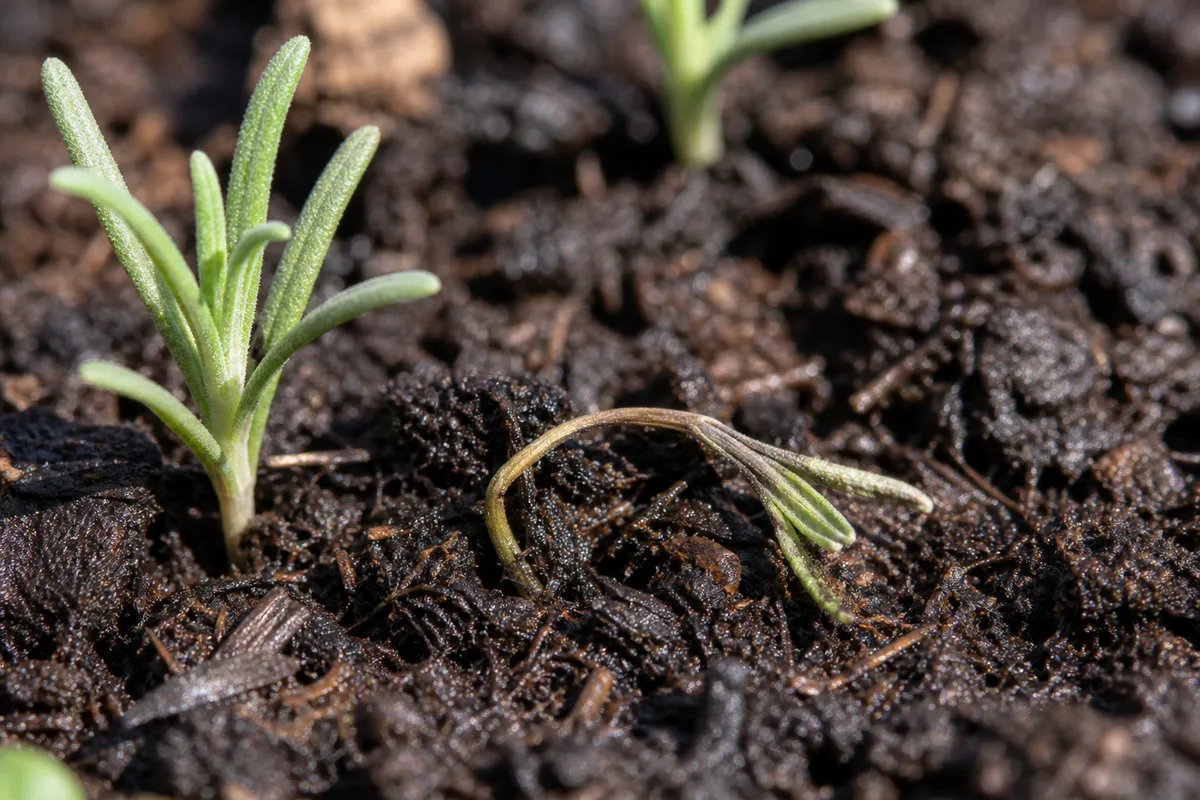
Damping Off symptoms on Lavender - compare with healthy tissue on the same plant.
Collar collapse
- Seedlings that stood yesterday suddenly lie flat with stems pinched and water-soaked at the base
- Lower stems turn brown, gray, or thread-thin where infected
- Cotyledons may still look green briefly while the collar is already mushy
Tray-wide spread
- Several cells fail within one to two nights in shared wet mix
- White or gray fuzzy growth sometimes appears on the mix surface under sealed domes
- Patchy emergence in one tray while a duplicate tray with grittier, drier mix performs better
Unlike leggy seedlings stretching for light, damping-off stems are mushy at soil contact, not merely thin and pale with a firm collar.
Why lavender seedlings damp off
Lavender is a Mediterranean dryland perennial that demands full sun and fast-draining soil from the seedling stage onward. Wet culture that suits moisture-loving herbs kills lavender starts.
Slow germination extends the danger window
Lavender is best started from cuttings because seed is slow and many cultivars do not come true-but when you do sow seed, trays often remain covered and moist far longer than basil or mint flats. RHS germination data for Lavandula lists 13–18 °C (55–64 °F) sowing temperatures, light cover, and cold moist stratification for four weeks on many lots, with emergence taking up to 90 days on slow batches. Every extra week of wet peat without grit or airflow is another week Pythium and Rhizoctonia can attack tender collars.
Cool, wet mix favors pathogens
Damping-off pathogens thrive in cool, wet conditions and attack newly emerged seedlings before stems harden. Media temperatures below 18 °C (65 °F) before and during germination slow lavender growth while fungi remain active. Overhead misting, sealed humidity domes after emergence, and fine peat without perlite keep collars wet for hours.
Pathogen behavior on seedlings
Cornell Greenhouse Horticulture notes that Pythium often causes pre-emergence rot or root decay, while Rhizoctonia typically rots stems at the soil line after emergence-the classic lavender tray picture. Pathogens spread through contaminated tools, hose ends, splashing water, and reused trays, not through the air.
Cold damp windowsills
Bottom heat without matching bright light produces weak stretch; cool room air plus saturated mix lets lavender sit vulnerable while pathogens work. Illinois Extension warns that dampness kills lavender more than cold alone-seedling trays are the first place that pattern appears.
How to confirm the cause
Work through these checks before assuming bad seed:
- Collar inspection - Mushy pinching at the soil line vs. firm thin stem from legginess (leggy seedlings guide)
- Tray moisture - Is the surface constantly wet without drying between waterings?
- Spread pattern - Random single collapse vs. tray-wide overnight losses points to fungus
- Ventilation - Is a dome or cloche still sealed after germination?
- Mix type - Fine peat without perlite, grit, or coarse sand?
- Soil temperature - Cool mix below 18 °C (65 °F) with slow growth?
- Recovery test - Collapsed seedlings never re-stiffen after drying-damping-off, not temporary wilt
Damping off vs. lookalikes
| Pattern | Stem at soil line | Mix moisture | Recovery after drying |
|---|---|---|---|
| Damping off | Pinched, mushy, dark | Soggy, cool | No-collapsed plants die |
| Leggy flop | Firm but thin | Often dry to moist | Stems stay attached; fix light |
| underwatering on Lavender wilt | Firm | Dry throughout | Perks after careful bottom-water |
| Heat stress | Firm | Variable | Leaf scorch; base stays hard |
| Slug damage | Chewed, slime trails | Moist | New damage nightly, not tray epidemic |
First fix for lavender
Remove all collapsed seedlings immediately, allow the tray surface to dry, open vents or remove domes, and move to the brightest cool location-water sparingly from below only when the top mix lightens.
Wisconsin Extension is clear: seedlings with damping-off cannot be saved; prevention and prompt removal are the only useful responses. After discarding infected tissue:
- Stop overhead misting
- Bottom-water shallowly so collars stay drier
- Place a heat mat under the tray to hold soil near 18–21 °C (65–70 °F)-warm soil speeds growth past the susceptible stage
- Run a small fan on low for gentle airflow
- Sterilize reused trays with a 10% bleach soak for 30 minutes, rinse thoroughly, and re-sow in fresh gritty mix rather than reusing infected substrate
Do not fertilize stressed survivors-wait until several true leaves develop. If losses were heavy, restarting from fresh seed or cuttings is often faster than nursing a sparse contaminated tray.
Step-by-step recovery
Once infected plants are out, protect remaining lavender seedlings in this order:
- Discard pinched seedlings and any cells touching their root zone
- Stop misting; bottom-water only until the surface just moistens, then drain completely
- Add coarse grit top-dress around collars to keep the soil line dry
- Thin overcrowded seedlings to at least 5 cm (2 in) spacing for airflow
- Provide strong light - lavender seedlings need bright conditions soon after emergence, matching adult full-sun demand
- Hold fertilizer until true leaves firm up-lavender prefers lean starts
- If losses continue daily, discard the tray and restart with sterile supplies per the lavender propagation guide
Recovery timeline
Firm surviving seedlings resume growth within one to two weeks under bright light and dry collars. Collapsed seedlings with pinched stems do not recover-expect partial tray loss unless culture is corrected within 24 hours of the first fall.
Seedling susceptibility declines as plants age and develop several true leaves. Plan on roughly two to three weeks of careful flat management after emergence before routine handling feels safe.
What not to do
Do not keep humidity domes on after sprouting-domes trap moisture around stem bases and shade seedlings. Do not overhead-water cold seedlings daily. Do not sow lavender in dense pure peat without drainage. Do not compost collapsed tray mix near garden lavender. Do not confuse mature crown or root rot with seed-tray damping-off.
When sterilizing trays indoors, work in a ventilated area-bleach fumes are irritating, and rinse containers thoroughly before re-sowing.
How to prevent damping off next time
Start clean. Use fresh pasteurized potting mix and trays washed with soapy water, then sanitized. Do not reuse old mix or garden soil-pathogens survive in debris.
Use gritty, fast-draining media. Aim for at least 50% perlite, coarse sand, or grit in seed cells, consistent with the lavender soil guide ratios for mature plants. Lavender needs dry to medium, well-drained soil even as seedlings.
Sow warm. Germinate with bottom heat near 18–21 °C (65–70 °F) so sprouts grow out of the danger window faster. Use warm water on young seedlings-cool tap water slows growth and increases infection opportunity.
Stratify when seed lots require it. Cold moist stratification for four weeks in the refrigerator improves many English lavender batches-but plan dome and watering discipline for the longer total timeline, not just sowing day.
Remove domes promptly. After slow lavender germination, take domes off the moment cotyledons clear the surface. Cross-check leggy seedlings if stretch appears after dome removal.
Water from below. Keep mix moist but not soggy; drainage holes in every cell are essential.
Light and airflow from emergence. Strong supplemental light and a gentle fan mimic conditions that discourage fungal growth on dryland seedlings.
Lavender care cross-check
Seedling damping-off predicts adult root rot if you keep the same wet peat habit indoors. Illinois Extension notes wet, poorly drained soil shortens lavender life-transition young plants early toward gritty outdoor culture once hardened off. Mature collapse at the crown belongs on the root rot page, not here.
When to worry
First collapsed seedling in a tray is the alarm-act the same day. Total tray loss is likely if domes stay closed through warm humid nights. Escalate immediately if:
- Multiple seedlings topple overnight in the same tray
- Seeds fail to emerge in large numbers while mix stays wet and cool
- White cobweb-like growth appears on stem bases
- New collapses continue daily after you dry the surface and warm the tray
You can stop worrying once lavender has several true leaves, firm stems, and no new pinching for a full week.
Related guides
- Lavender propagation - restarting after tray loss, cuttings vs. seed
- Root rot - mature plant mushy roots and crown decline
- Lavender soil - gritty mix ratios for seedlings and adults
- Leggy seedlings - firm-stem stretch vs. mushy collar rot
Conclusion
Damping off on lavender seedlings is a slow-germination tray problem, not bad seed alone. The Mediterranean dryland habit that makes adult lavender thrive in grit and sun also makes wet peaty flats lethal at the collar. Remove collapsed plants immediately, dry and warm the environment for survivors, and restart with sterile gritty mix if spread continues. When a tray fails entirely, the fastest recovery path is a clean re-sow or softwood cutting batch-see the lavender propagation guide for restart timing and dome rules.
Recommendations were checked against Missouri Botanical Garden L. angustifolia data, Illinois Extension lavender culture notes, the RHS lavender and germination guides, UMN Extension and Cornell Greenhouse damping-off pathology references, Wisconsin Extension seed-starting guidance, and LeafyPixels propagation and sibling problem guides before publication.
When to use this page vs other Lavender guides
- Lavender watering guide - Use for routine moisture checks before assuming damping off is the main issue.
- Lavender problems hub - Browse all 51 common issues on this species.