Ants on Lavender: Causes, Checks & Fixes
Quick answer
Ants on lavender rarely damage the plant directly; they farm aphids or scale for honeydew on new shoots and flower wands. Find the sap-sucking pest first, treat that colony, then block ant trails with sticky barriers or bait stations away from blooms.
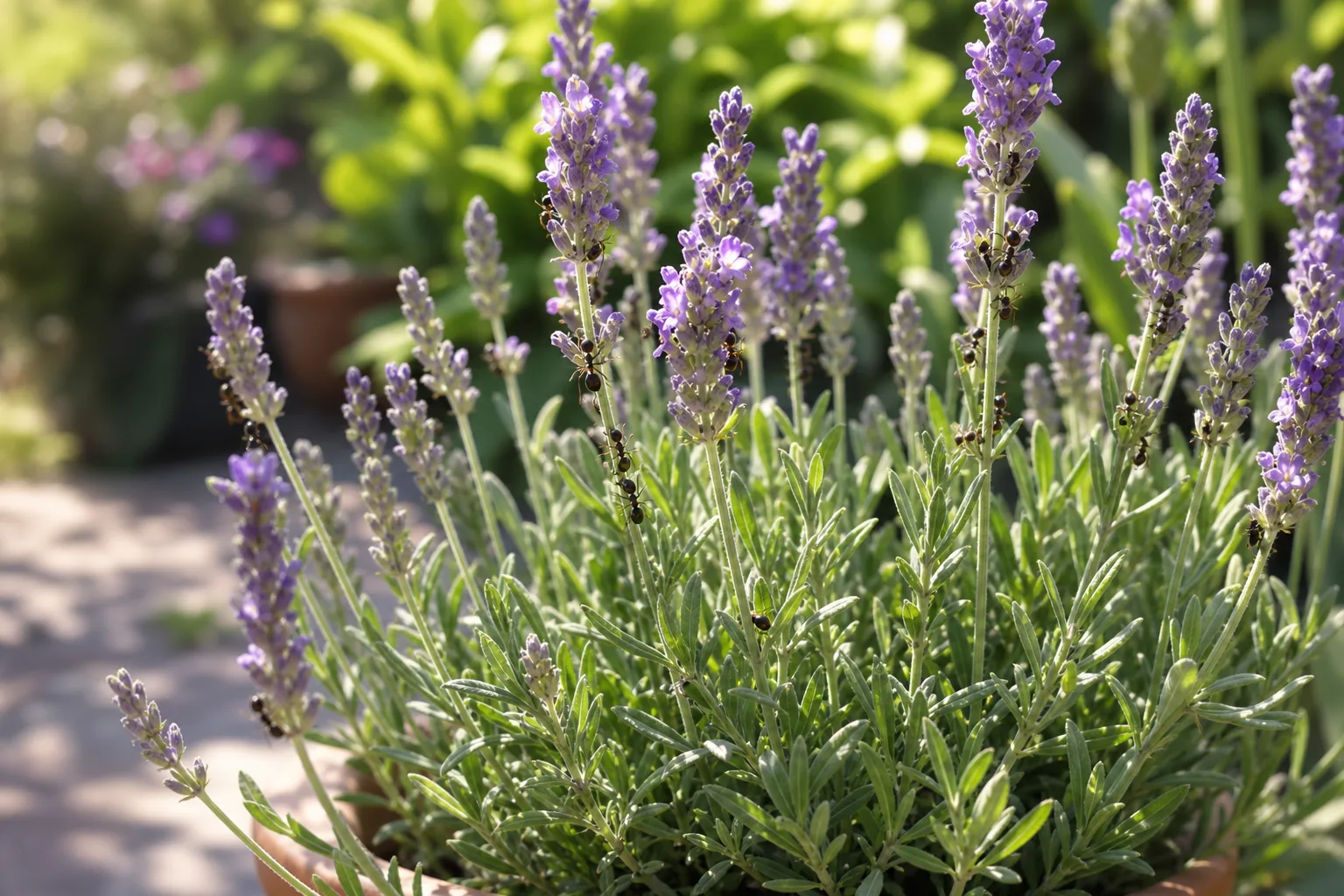
Ants on Lavender: Causes, Checks & Fixes
This guide covers ants on plant on Lavender. See also the general Ants on Plant guide, watering, and light pages for this plant.
Ants on Lavender: Causes, Checks & Fixes
Quick answer
Ants on Lavender are almost always protectors of sap-sucking pests, not leaf chewers. They climb stems to harvest honeydew from aphids, soft scale, or mealybugs on new shoots and flower wands. First step: trace the trail upward, identify and treat the pest colony, then manage ant access-not spray ants alone while honeydew keeps flowing.
What ants on lavender look like
You will see steady ant trails along woody stems, pot edges, and saucers-often strongest in spring when lavender pushes soft new growth. The needles themselves usually show no chew marks. Instead, look for sticky honeydew on silvery foliage, black sooty mold on sticky patches, or clusters of aphids on tender tips.
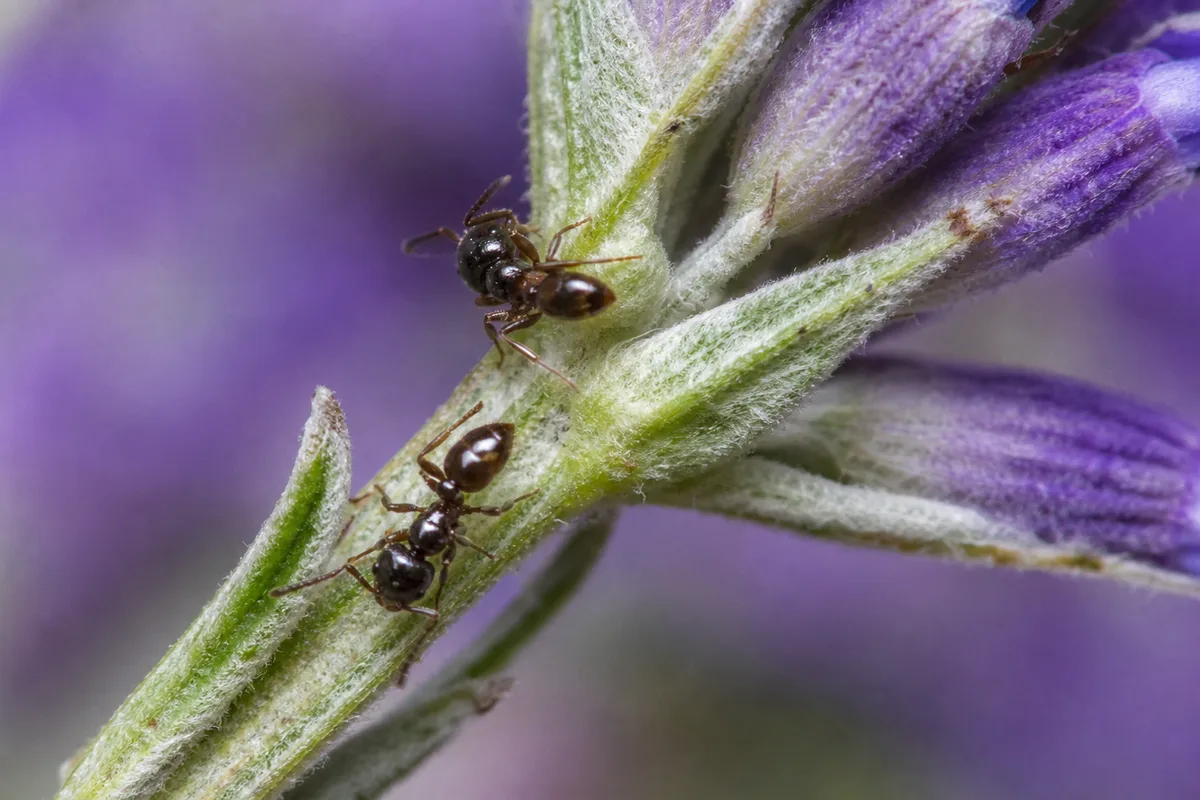
Ants on Plant symptoms on Lavender - compare with healthy tissue on the same plant.
Outdoor pots in partial shade may also harbor ant nests in wet mix beneath the plant. That pattern pairs ants with soggy soil-a separate risk for lavender, which needs dry to medium, well-drained soil in full sun.
Why Lavender gets ants on stems
Ants do not feed on lavender leaves. They tend honeydew-producing insects-aphids on spring shoots, soft brown scale on woody stems, or mealybugs in leaf joints. Keep ants off plants to help beneficial insects such as lady beetles and lacewings control aphids naturally.
Lavender grown with excess nitrogen or in weak winter light produces lush soft tips that attract aphids-and therefore ants. Container lavender in humid monsoon weather with wet saucers can host ground-nesting ants without any pest farm above; fix drainage first in that case.
How to confirm the cause
- Follow the trail - Where do ants stop on the plant? Inspect that zone closely.
- Check for honeydew - Sticky shine on needles or pot rim confirms sap feeders.
- Look for aphids or scale - Pear-shaped aphids on new tips; immobile brown bumps on stems.
- Rule out nest-only ants - Ants around a dry pot base with no pests may be foraging elsewhere; still check mix moisture.
- Smell and probe roots - Sour wet mix plus ants suggests overwatering stress, not just pest farming.
First fix for Lavender
Find and treat the sap-sucking pest, then block ant trails with sticky banding on support stakes or bait stations placed away from edible blooms-not ant spray on open flowers.
Blast aphids off new shoots with a strong morning water stream. Apply insecticidal soap to survivors on a cloudy morning, avoiding hot midday sun on lavender needles. For scale, scrape lightly and treat with horticultural oil on a cool day.
Once honeydew stops, ants usually leave within days. Ant management supports biological control of the underlying pest.
Step-by-step recovery
- Inspect flower wands and newest growth at dawn when ants are active.
- Treat aphids, scale, or mealybugs with targeted IPM-not blanket systemic on harvest lavender.
- Wipe heavy sooty mold from needles with damp cloth after pests are gone.
- Place ant bait stations on the ground away from the pot, not inside the crown.
- Confirm soil dries 7 cm deep between waterings; repot if mix stays wet and sour.
- Move shaded pots to fuller sun so new growth toughens and attracts fewer aphids.
Recovery timeline
Once the sap feeder is controlled, ant traffic drops within a few days. Lavender may push clean new silver shoots within two to three weeks in full sun. Flower production on heavily infested wands may skip one cycle-judge recovery by pest-free new tips, not instant rebloom.
Causes to rule out
- Normal foraging - Single ants exploring a healthy dry pot without honeydew or nests.
- Aphids without ants - Treat aphids even when ants have not arrived yet.
- root rot on Lavender from wet soil - Wilting with wet mix; ants may be coincidental.
- Earwigs or caterpillars - Actual chewing damage on leaves, not ant trails.
What not to do
Do not spray ant killer on lavender flowers you plan to harvest or dry. Do not ignore aphids while baiting ants-the colony will rebuild. Do not overwater trying to “flush” ants; lavender suffers when it receives too much water. Avoid oil sprays in freezing weather or on heat-stressed plants.
How to prevent ants next time
Weekly spring inspections of new shoots catch aphids before ants establish trails. Grow lavender in full sun with lean gritty mix to limit soft growth. Empty saucers after watering. Encourage predators by skipping broad-spectrum insecticides during bloom.
Lavender care cross-check
Ant problems often flare when lavender is pushed in partial shade with generous feeding-exactly opposite its needs. Align sun, drainage, and lean soil before escalating ant pesticides.
When to worry
Escalate if scale covers multiple woody stems, aphids blanket every flower wand before open bloom, or wet ant nests in the pot coincide with soft crown tissue. Ants alone on a firm, dry, sunny lavender are manageable with standard IPM.
Conclusion
Ants on lavender signal honeydew pests or occasionally wet nesting conditions-not ants eating the plant. Trace trails, treat aphids or scale first, manage ant access, and keep the pot dry and sunny so soft pest-attracting growth stays rare.
When to use this page vs other Lavender guides
- Lavender watering guide - Use for routine moisture checks before assuming ants on plant is the main issue.
- Lavender problems hub - Browse all 51 common issues on this species.