Blight on Lavender: Causes, Checks & Fixes
Quick answer
Blight on English lavender (*Lavandula angustifolia*) is rapid branch or stem decline from fungal pathogens-often Botrytis on wet tissue or Phytophthora moving into stems-triggered by wet crowns, humid air, and wounded wood. First step: cut out affected branches, dry the crown, and fix drainage-not more irrigation.
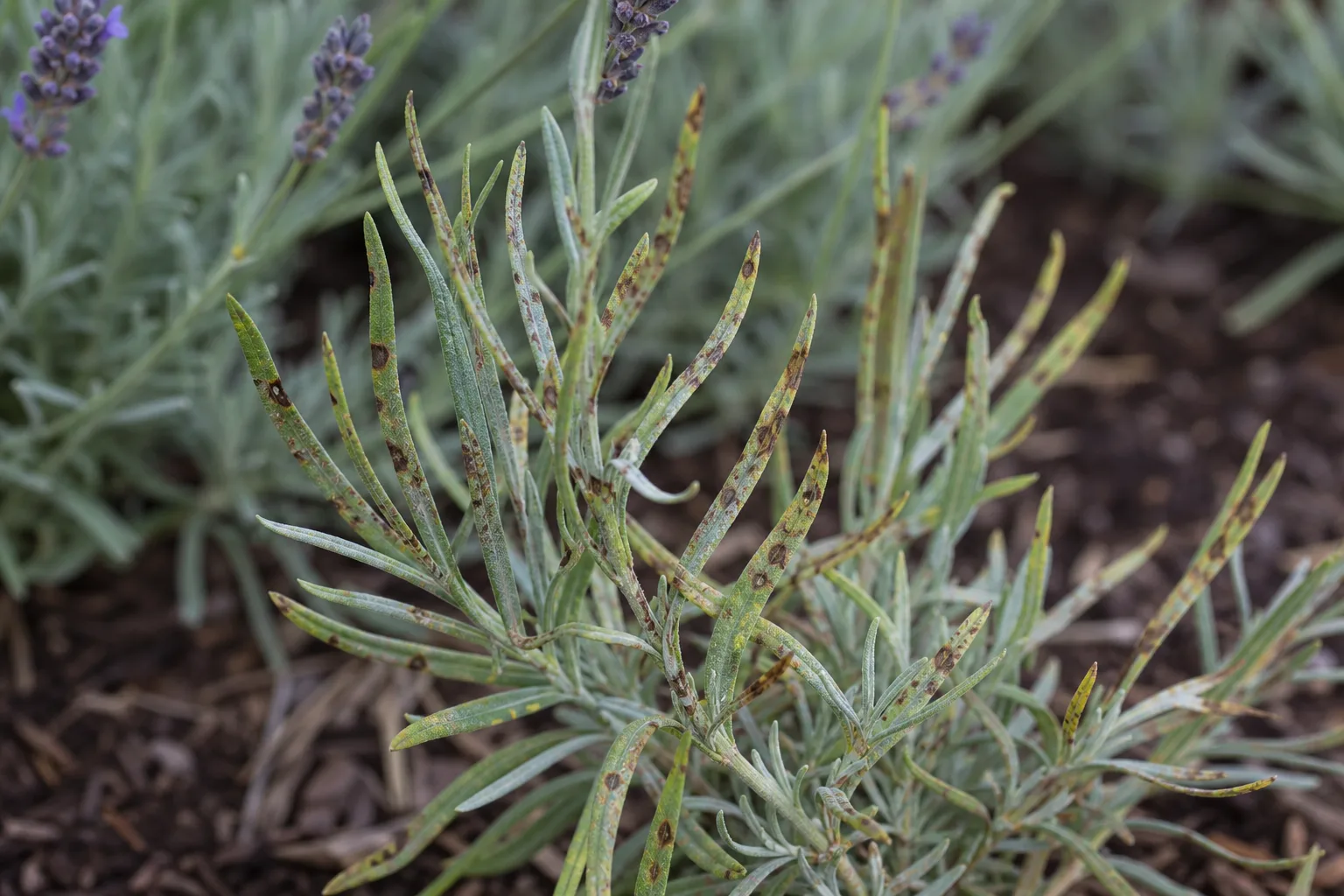
Blight on Lavender: Causes, Checks & Fixes
This guide covers blight on Lavender. See also the general Blight guide, watering, and light pages for this plant.
Blight on Lavender: Causes, Checks & Fixes
Quick answer
Blight on English lavender (Lavandula angustifolia) means rapid grey-brown wilting and collapse of stems-usually fungal branch or stem disease fueled by wet crowns, humid air, and wounded wood, not a single mystery pathogen. Dense mounded plants trap humidity in the inner canopy first; monsoon rain, saucers, or mulch against woody stems keep tissue wet long enough for infection.
First step: cut out all blighted wood into firm green-silver tissue, pull wet mulch from the crown, and stop watering until soil is dry 7 cm deep-not more irrigation on a wilting plant.
Scope on this page: rapid branch and stem blight after wet weather or pruning wounds. If the stem base is soft and grey at the soil line, open crown rot. If roots are mushy with sour smell but stems cut clean with no dark streaks, open root rot. Baseline watering and culture live on lavender watering and the lavender overview.
Blight vs. crown rot vs. root rot on lavender
These three slugs overlap because wet culture triggers all of them-but the first symptom location tells you which page to trust.
| What you see first | Likely problem | Urgency | Start here |
|---|---|---|---|
| One or more branches grey-brown and wilted; crown still firm when pinched | Branch/stem blight | Prune-out rescue if caught early | This page |
| Soft, grey, mushy tissue at soil line; collapse from base upward | Crown rot | Same-day escalation | Crown rot |
| Mushy roots, sour smell, whole-plant wilt; stem wood firm, no dark streaks inside cuts | Root rot | Repot after root trim | Root rot |
| Wilting on dry, light pot in midday heat; crown hard; recovery overnight | Heat wilt | Wait for evening | Wilting |
| Chronic heavy pot on schedule watering; no stem streaks yet | Overwatering stress | Fix dry-down before decay | Overwatering |
Blight is the speed and branch pattern page: stems fail fast after humidity, often starting low or inside the mound. Crown rot is the base softness page. Root rot is the root decay page when stems have not yet shown internal streaking.
What blight looks like on lavender
Rapid branch browning and inner-canopy collapse
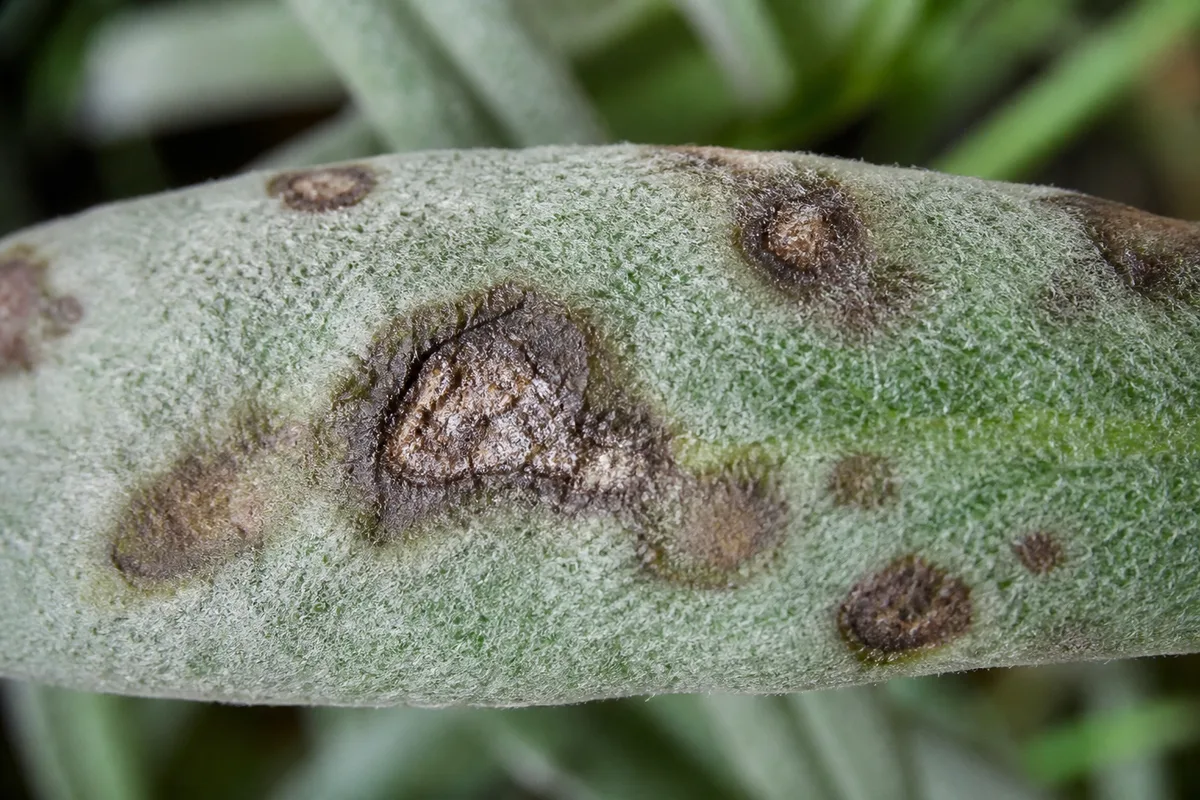
Blight symptoms on Lavender - compare with healthy tissue on the same plant.
Branches turn grey-brown and wilt suddenly-sometimes over a few days in humid weather. Inner dense growth collapses first while outer wand tips may still look green briefly, because the mounded form traps moisture where stems cross. Lower stems may show dark lesions or grey fuzzy growth at the soil line when Botrytis exploits wet tissue.
Unlike heat wilt, blighted stems do not recover overnight. Unlike underwatering, the pot often feels heavy and mix near the surface stays moist.
Photo callout - branch blight vs. heat wilt: Picture a dense English lavender mound after three humid days: one inner wand hangs grey-brown and limp while outer silver tips still look upright; the terracotta pot feels heavy and the surface mix is damp. By the next morning the grey wand is still dead-not perked up like a heat-stressed plant on dry soil.
Grey mold at the soil line and stem-cut dark streaks
At the branch base or on pruning wounds, you may see grey fuzzy mold after prolonged leaf wetness. The definitive home check: cut a wilted wand with sterilized pruners and look inside the wood-dark internal streaks or discoloration in blighted stems versus firm pale-green cambium in healthy silver wood.
Photo callout - stem-cut check: Slice a wilted wand one-third up from the base. Blighted wood shows brown-black streaks inside the stem; healthy wood cuts clean to firm pale-green tissue. If the cut is clean but roots are mushy, route to root rot instead.
Slow lower-stem browning months after bloom on an otherwise vigorous plant may be normal woody aging, not blight. Blight moves faster and follows wet spells or fresh cuts exposed to rain.
Why lavender gets blight
Mediterranean dryland biology and wet-culture triggers
English lavender evolved on dry, rocky hillsides with full sun and fast drainage. It needs dry to medium, well-drained soil and good air circulation between plants-crowded dense mounds in humid summers are the opposite of its native conditions. Dampness more than cold is responsible for killing lavender when crowns stay wet through winter or monsoon seasons.
Lavender’s woody crown sits at the soil line where stems cross in a dense mound-exactly where splashing rain, saucer water, and organic mulch keep tissue wet. That geometry means branch blight and crown involvement can progress on the same plant when humidity stalls inside the mound even though outer wands still look healthy.
Container culture concentrates risk: rain plus supplemental watering, full saucers, and organic mulch piled against woody stems keep the crown anaerobic. RHS notes that lavender will not thrive in heavy or waterlogged soil and that container roots are more susceptible to rot when compost stays wet.
In-ground beds, raised mounds, and monsoon containers
In garden beds, lavender benefits from raised planting when drainage is poor-saturated field soil after prolonged rain triggers the same rapid decline extension services document in lavender fields under very moist conditions. Mounded rows or amended ridges keep crowns above the wet zone; flat low spots in clay are blight hotspots after monsoon weeks.
On balconies through humid weeks, a single overhead shower or rain splash on a fresh pruning cut can invite stem blight on dense English lavender mounds that lack interior airflow. French and Spanish lavenders (Lavandula stoechas, L. dentata) tolerate more humidity in some cultivars but still fail when crowns sit wet-do not assume tender types are immune.
Named pathogens behind lavender blight
“Blight” is an umbrella term for rapid fungal decline. On lavender, extension and nursery literature commonly implicates:
- Phytophthora species - soil-borne water molds that cause root and crown rot on lavender; zoospores move in saturated mix and colonize upward from roots into stems. UMass Extension documents wilting and decline from Phytophthora crown rot in lavender production; PNW handbooks list multiple Phytophthora species on English lavender in cold wet soils. Home containers see the same trigger when drainage fails.
- Botrytis cinerea (grey mold) - attacks wet, wounded, or senescent tissue on stems and at the soil line in high humidity; spreads on splashing water and crowded foliage. Pruning in rain without drying cuts afterward is a common entry point on dense mounds.
- Other stem-invading fungi - Fusarium and related rot fungi appear on lavender roots and can accompany wet-culture decline; they are less common as isolated branch blight than Botrytis or Phytophthora on home pots.
Cultural drying and sanitation are the primary fixes for home growers; Phytophthora has no reliable cure once advanced, and NC State Extension notes limited organic options for Phytophthora on perennials-fungicides are secondary after drainage correction.
How to confirm the cause
- Speed of collapse - Rapid branch browning after a wet spell suggests blight, not slow lignification.
- Crown firmness - Firm base with branch-only symptoms supports prune-out rescue; soft crown routes to crown rot.
- Stem cut - Dark internal streaks in wilted branches confirm stem involvement; clean pale wood suggests look elsewhere.
- Root inspection - Mushy roots plus stem streaks indicate combined failure; mushy roots with firm stems route to root rot.
- Drainage test - Water should run through gritty mix in seconds; standing water confirms wet-culture trigger.
- Pot weight vs. wilt - Heavy pot with moist surface and wilting branches fits blight/overwatering, not drought.
- Post-bloom dieback - Slow lower stem browning on old wood with vigorous upper growth may be normal aging.
First fix for lavender
Remove all blighted branches well into healthy firm wood with sterilized pruners, eliminate wet mulch at the crown, and improve airflow by spacing pots-stop all watering until soil is dry 7 cm deep.
Discard infected clippings in household waste; do not compost spore-bearing tissue. If roots are still mostly firm and the crown is hard, repot into fresh gritty mix after pruning; if the crown is already soft, take upper stem cuttings immediately and follow crown rot escalation.
Step-by-step recovery
- Prune all wilted or grey stems to firm green-silver wood; disinfect tools between cuts.
- Pull mulch away from the stem base; top-dress with gravel only, away from wood.
- Unpot if mix smells sour; trim mushy roots; repot one part compost to three parts grit with crown at original depth.
- Water lightly once after repot, then wait for full dry-down before the next drink per lavender watering.
- Avoid fertilizer until new shoots appear.
- Optional copper fungicide only per label in dry weather-cultural fixes come first.
- Monitor daily through humid weeks; remove any new wilt promptly before it reaches the crown.
Recovery timeline
| Severity | What to expect |
|---|---|
| Single-branch blight, firm crown | New silver shoots at pruned nodes in three to five weeks in full sun after crown dries |
| Multiple branches, crown still firm | One skipped bloom cycle; judge success by new tips, not old grey foliage |
| Crown softening or 48-hour multi-branch collapse | Unlikely to save the mother plant-cuttings from firm upper stems are the practical backup |
Causes to rule out
- Root rot without stem streaks - Mushy roots, sour smell, whole-plant wilt; firm stem wood on cut → root rot.
- Crown rot at base - Soft grey tissue at soil line → crown rot.
- Underwatering - Light pot, curling leaves, firm roots and crown.
- Heat collapse - Temporary midday wilt; recovery after evening on dry soil → wilting.
- Normal woody dieback - Lower stems lignify after years; upper growth stays vigorous; slow timeline.
- Foliar spots only - Purple-brown leaf spots without branch wilt may be black spots instead.
What not to do
Do not water wilting blighted plants. Do not leave saucers full. Do not repot into heavy peat without grit. Do not prune in rain without drying cuts afterward. Do not compost infected clippings. Wear gloves when handling diseased tissue; lavender is toxic to cats and dogs.
How to prevent blight next time
Well-drained soils are required, particularly in winter. Use terracotta with instant drainage, monsoon dry-down discipline, and inorganic mulch such as rock or pea gravel kept away from stems. Prune after bloom in dry weather, thin dense centers annually for airflow, and space pots so humid air does not stall between plants.
In-ground beds: plant on raised mounds or amended ridges if drainage is poor-lavender should never be planted in winter when soil is cold and wet.
When to worry
Escalate same day when the crown softens, multiple branches collapse within 48 hours, or grey mold rings a widening stem base in saturated mix. Take cuttings from firm upper growth before the plant is unsalvageable.
Mild tip dieback on one wand after bloom on an otherwise firm plant is lower urgency-confirm it is not normal aging before aggressive pruning.
If blight keeps spreading after drainage correction on multiple container lavenders, contact your local cooperative extension office for pathogen identification-Phytophthora in field or container stock may need professional diagnosis before replanting.
Related lavender problems
- Crown rot - soft grey tissue at the soil line; collapse from base up
- Root rot - mushy roots and sour smell; stems may still cut clean early
- Overwatering - schedule error before tissue decay begins
- Wilting - heat and drought wilt vs. fungal branch collapse
- Black spots - foliar spotting without rapid branch wilt
- Lavender watering - dry-down rhythm and probe depth
- Lavender overview - sun, soil, and baseline culture
FAQs
Is blight the same as crown rot on lavender?
Not exactly. Blight on this page means rapid branch browning and wilt that often starts in the inner canopy or on pruned stems after wet weather. Crown rot is base-focused-soft grey tissue at the soil line with collapse from the bottom up. Branch blight with a firm crown can be pruned out; soft crown means escalate to the crown rot page.
How do I tell blight from root rot when both involve wet soil?
Root rot without stem involvement shows mushy roots and whole-plant wilt but firm woody stems with no dark internal streaks when you cut a wand. Blight adds branch-level grey-brown wilt, dark discoloration inside cut stems, and often starts in one section while others stay green briefly. Mushy roots alone route to root rot; stem streaks plus wet culture point here.
Can one lavender branch have blight while the rest looks fine?
Yes-early branch blight often hits one wand or the inner dense canopy first while outer tips still look silvery. That is salvageable if you prune well into firm wood, dry the crown, and fix airflow. When multiple branches brown within 48 hours or the crown softens, treat it as escalation toward crown rot, not isolated branch blight.
Should I use fungicide on lavender blight?
Cultural fixes come first-remove infected wood, stop overhead watering, improve drainage and spacing. Extension guidance for home lavender rarely recommends routine fungicide for branch blight; copper may be used per label in dry weather only after sanitation. Fungicide on a soggy pot without drying the crown usually fails.
How can I confirm blight on lavender at home?
Look for rapid grey-brown wilt after a wet spell, dark internal discoloration when you cut a wilted stem, and a heavy pot with moist surface mix. Confirm the crown is still firm-not soft at the soil line. If only roots are mushy with sour smell and stems cut clean, use the root rot page instead.
Conclusion
Treat lavender blight as a severity ladder, not a single rescue recipe. Firm crown + isolated branch wilt → prune into healthy wood, dry the base, fix drainage on this page. Soft crown or 48-hour multi-branch collapse → open crown rot and take cuttings now. Mushy roots, firm stems, no streaks → root rot. Success means stopped spread, a hard crown, and new silver shoots-not salvaging grey old wands.
When to use this page vs other Lavender guides
- Lavender watering guide - Use for routine moisture checks before assuming blight is the main issue.
- Lavender problems hub - Browse all 51 common issues on this species.