Underwatering on Lavender: Causes, Checks & Fixes
Quick answer
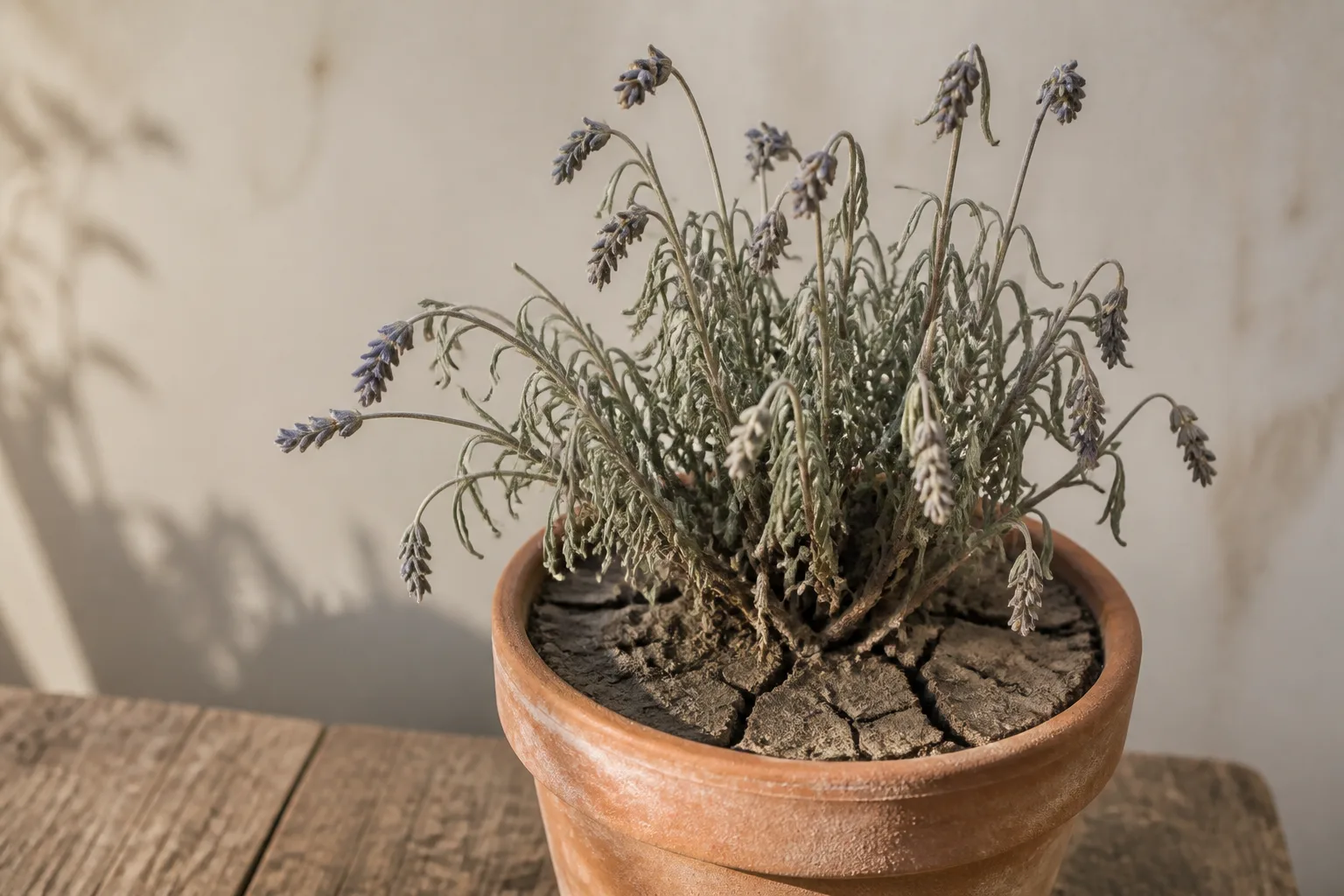
Underwatered lavender shows inward-curling dull grey-green leaves and a very light dry pot. Water deeply when soil is completely dry 7 cm deep, then resume the dry-down rhythm-lavender tolerates drought but not repeated bake-dry cycles in peak sun.
Underwatering on Lavender: Causes, Checks & Fixes
This guide covers underwatering on Lavender. See also the general Underwatering guide, watering, and light pages for this plant.
Underwatering on Lavender: Causes, Checks & Fixes
Quick answer
Underwatering on English lavender (Lavandula angustifolia) means the root zone stayed dry too long in a hot full-sun container-not that lavender “does not need water.” Inward-curling dull grey-green leaves, a very light pot, and crispy tips on soil dry 7 cm deep confirm drought stress. Woody stems should still feel firm-soft grey wilting on wet soil means rot, not thirst.
First step: water deeply when soil is completely dry 7 cm deep, then return to the normal dry-down rhythm on the lavender watering guide.
This page is the primary drought-rescue hub for container lavender. For water that runs off without soaking the root ball, see dry hydrophobic soil. For grey wilt on heavy wet pots, see overwatering and wilting.
What underwatering looks like on lavender
Stressed lavender shows inward-curling narrow grey-green leaves-not the floppy limp of broad tropical houseplants. The silver sheen dulls to flat olive-green, outer foliage develops dry crispy tips, and fragrance weakens. Woody square stems may droop midday in heat while remaining firm at the base-different from grey mushy wilting on wet soil.
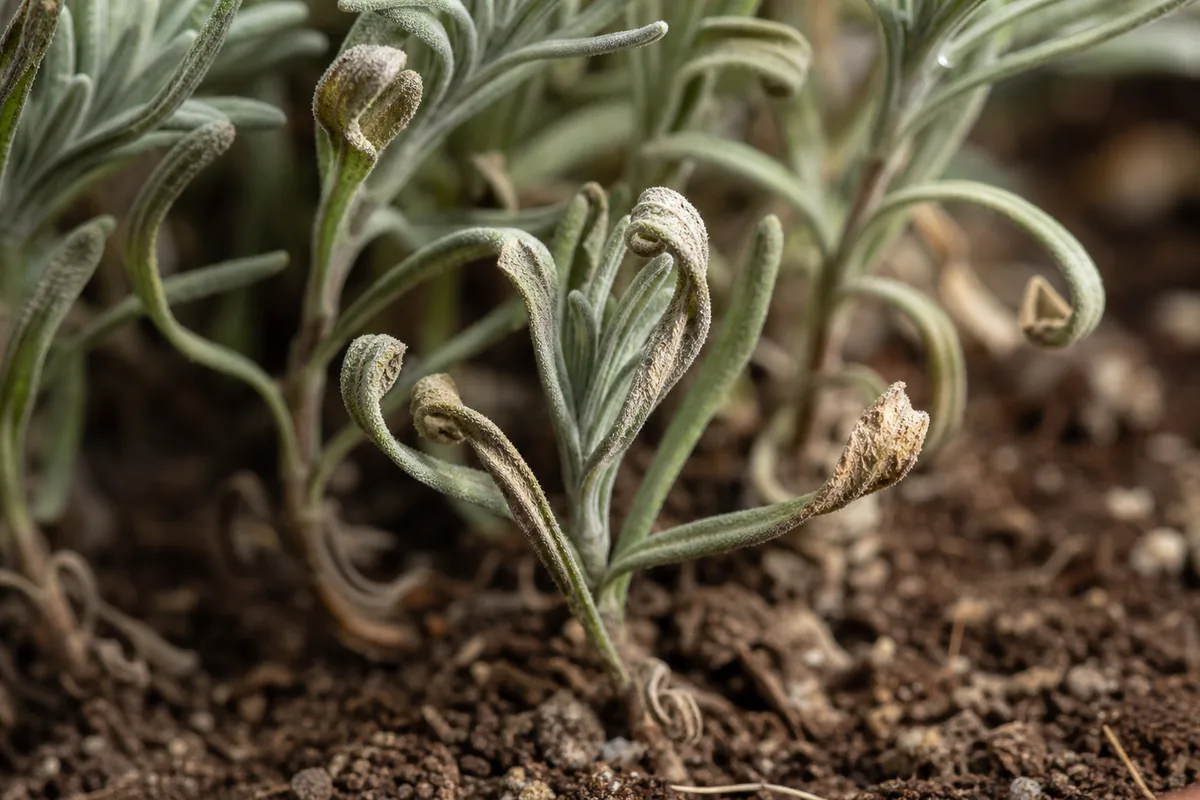
Underwatering symptoms on Lavender - compare with healthy tissue on the same plant.
The pot feels noticeably light. Soil 7 cm deep is dusty dry and may pull slightly from the pot wall. In severe cases, lower leaves drop and active-season growth pauses until water returns.
Inward curl, dull color, and crispy tips on dry mix
Lavender’s narrow lanceolate leaves curl inward to reduce surface area when turgor drops-a drought-conservation pattern common in Lamiaceae dryland herbs, not dramatic outward flop. Owners trained on peace lilies often miss early curl because stiff woody stems still look structurally sound.
Crispy tips and brown edges are cosmetic scars from cells that desiccated during the dry spell. They will not re-green. Real recovery shows as uncurling foliage and new silver shoots on healthy wood within days to weeks.
Severity ladder
| Severity | Soil at 7 cm | Pot weight | Stems | Leaf pattern | Action |
|---|---|---|---|---|---|
| Mild | Dry; missed one check | Light | Firm | Slight inward curl, dull color | Deep soak today; resume dry-down |
| Moderate | Dust-dry several days | Very light | Firm | Obvious curl, widespread crispy tips | Two-pass soak if hydrophobic; check daily in heat |
| Severe | Rock-hard dry gap at wall | Feather-light | Still firm but limp | Lower leaf drop, growth stopped | Same-day soak; watch for spider mites next week |
| Critical | Prolonged bone-dry weeks | Light | Beginning to grey | No new tips; brittle outer wood | Soak now; fine roots may be dead-propagate firm upper stems if no response in 48 hours |
Established lavender is drought-tolerant once established in open ground, but container roots in limited soil volume dry faster than in-ground plantings in full sun.
Why lavender gets underwatering
Drought tolerance vs. container limits in full sun
English lavender evolved on dry, rocky Mediterranean hillsides with lean alkaline soil and seasonal drought. In-ground roots can reach deep moisture once established; a 10 cm terracotta pot on a south-facing balcony can go from moist to bone-dry in a few hot days. Utah State University Extension notes lavender grows best in dry, sandy, well-drained soils and is very drought tolerant once established-but that tolerance assumes roots can access stored moisture, which small containers cannot provide.
Lavender belongs to Lamiaceae, the mint family. Like rosemary and sage, it tolerates brief drought better than chronic wet feet-but repeated bake-dry cycles in peak sun damage fine feeder roots that supply water to narrow leaves. The plant looks “designed for drought,” so owners withhold water too long after a previous overwatering scare.
Fear of root rot on Lavender after overwatering scares
The cruel paradox on lavender: overwatered plants wilt on wet soil while underwatered plants wilt on dry soil. After losing one plant to rot, growers often skip drinks too long-especially in terracotta where the pot feels light and looks “correct.” Dampness more than cold kills lavender, but drought in a small pot during a heat wave kills fine roots before crown rot ever appears.
Terracotta, travel gaps, and hydrophobic gritty mix
Small terracotta pots in full sun wick moisture through the walls, accelerating dry-down-a benefit for rot prevention, a risk during travel or missed checks. Windy balconies and heat waves compress watering intervals below what a calendar suggests.
Hydrophobic gritty mix that has dried completely may shed water down the pot sides without rewetting the root ball-surface water runs through while roots stay dry. That pattern overlaps dry hydrophobic soil and needs a different first fix than simple thirst. Brief triage here; full repelling-mix rescue lives on that sibling page.
Winter underwatering is less common but happens on heated indoor sills where dry air and missed watering crisp tips while growth slows.
First-year vs. established watering needs
New lavender cannot yet reach deep moisture reserves. RHS guidance notes container plants need regular water in summer until roots expand. Use this interval table as a starting framework-always override with 7 cm dryness checks:
| Situation | Starting check interval | Dry-down target |
|---|---|---|
| New plant, first summer, small terracotta | Every 5–7 days in hot weather | Dry at 7 cm depth |
| Established container, active summer | Every 7–10 days | Dry at 7 cm depth |
| Established container, cool autumn | Every 10–14 days | Dry at 7 cm depth |
| Established container, winter indoors | Every 2–3 weeks | Dry at 7 cm depth |
| Established in-ground, temperate summer | Only during hot dry spells 2+ weeks | Deep dry between rains |
Full seasonal rhythm: lavender watering guide.
How to confirm the cause
Work through these checks before you pour. The goal is to separate true drought from hydrophobic repelling mix, wet-root wilt, and heat collapse.
- Dryness at 7 cm - Push finger or skewer 7–8 cm deep. Completely dry confirms need to water; wet cool soil means stop-see overwatering.
- Pot weight - Lift the container. Noticeably light versus your memory after a proper soak almost always means drought on summer containers.
- Leaf curl direction - Inward curl with firm stems on dry soil supports drought. Grey mushy wilt on heavy wet soil supports rot.
- Wilting context - Midday droop recovering by morning on moist soil: heat stress, not drought. Wilt that does not recover overnight on wet mix: root failure.
- Rewet test - Water runs off dry mix without absorbing? Hydrophobic soil-use two-pass soak or bottom-water; escalate to dry hydrophobic soil if repeat.
Confirmation decision table
| Pattern | Pot | Soil at 7 cm | Stems | Likely cause | First action |
|---|---|---|---|---|---|
| Inward curl, dull leaves | Light | Dry | Firm | True underwatering | Deep soak at pot edge |
| Water runs through; core dry | Light–medium | Dust-dry core | Firm | Hydrophobic dry mix | Two-pass soak or bottom-water; see sibling page if repeat |
| Grey wilt, sour smell | Heavy | Wet days | Soft crown | Overwatering / rot | Stop water; unpot if crown softens |
| Midday slump only | Medium | Moist | Firm | Heat collapse | Verify evening recovery; shade hottest hour |
| Curl + bronze stippling | Light dry | Dry | Firm | Drought + mite risk | Soak; inspect undersides next week |
First fix for lavender
Water deeply when soil is dry 7 cm deep-slowly at the pot edge if mix is hydrophobic so water penetrates the root ball, not just the sides.
Water until a small amount exits drainage holes, then empty the saucer completely within 30 minutes. Leaves often uncurl within hours if stems are firm. Do not switch to daily shallow sips-that wets only the surface and encourages weak roots.
| Situation | First action |
|---|---|
| Light pot, dry 7 cm, water absorbs normally | One deep soak until slight drainage; empty saucer |
| Water sheds off dry mix | Two slow passes 10 minutes apart, or bottom-water 20–30 minutes then drain |
| Unsure wet vs. dry | Probe 7 cm and lift pot before any water |
Return to checking dryness at depth before each drink per the watering guide.
Step-by-step recovery
- Confirm dry soil 7 cm deep with finger or skewer-not surface color alone.
- If hydrophobic, water in two slow passes ten minutes apart or bottom-water once, then drain fully.
- Soak at the soil line until slight drainage; discard all saucer water.
- Keep in full sun with well-drained soil-shade plus drought weakens recovery.
- Watch for spider mites over the next week in hot dry recovery conditions-stressed lavender attracts pests in dry heat.
- Trim only fully brown brittle leaves if they block your view of new growth; do not hard-prune living wood the same day.
If the plant does not uncurl within 24 hours after a confirmed deep soak on dry soil, re-check for wet rot (wilting) or repelling mix that never rewet.
Recovery timeline
Leaf curl often eases within hours of proper watering on firm-stem plants. Crispy tips remain brown permanently-judge success by uncurling and new silver shoots, not old edge color.
New active-season growth resumes over one to three weeks if drought did not kill fine roots. Prolonged bone-dry cycles in small pots can desiccate feeder roots; the plant may yellow briefly when water returns, then recover if rot has not set in.
Severe repeated drought weakens plants enough to invite spider mites in hot weather-inspect undersides weekly through recovery.
Causes to rule out
- Root rot - Wet heavy soil with wilting; mushy roots; sour smell. See overwatering.
- Heat collapse - Temporary midday wilt with moist soil; recovers overnight without water. See heat stress.
- Hydrophobic repelling mix - Surface wet attempt, dry dusty core; water runs through. See dry hydrophobic soil.
- Spider mite damage - Bronze stippling and fine webbing after drought stress-not thirst alone.
- Normal winter rest - Reduced water needs; do not confuse with active summer drought.
What not to do
Do not flood the lavender crown daily after one dry spell-resume dry-down rhythm. Do not leave saucers full after rehydration. Do not interpret firm drought wilt as rot and withhold water further. Do not expect crispy tips to re-green. Do not bottom-soak repeatedly without fixing repelling mix-escalate to the dry hydrophobic soil protocol if water keeps running off.
How to prevent underwatering next time
Check soil 7 cm deep on a schedule tied to weather-more often in peak summer full sun, far less in winter and monsoon. New plantings benefit from regular watering during the first year until roots establish, then dry-down dominates.
Use gritty mix that rewets reliably; avoid letting pots go rock-hard dry between vacations without a deep soak beforehand. Grow in dry to medium, well-drained soil in terracotta to balance drought tolerance with container limits.
Weigh the pot after each proper soak to calibrate “light” versus “heavy.” Terracotta wicks faster than glazed ceramic-adjust intervals when you change pot material. Cross-check culture on the lavender overview and full watering guide.
Lavender care cross-check
Underwatering and overwatering both harm lavender-dry-down checks at 7 cm separate them. Full sun increases water use; winter and monsoon reduce it. When symptoms overlap wilting or chronic wet decline, use the confirmation table before you act.
When to worry - fine-root death and prolonged heat desiccation
Worry when dust-dry soil joins severe stem droop in extreme heat for many days-fine feeder roots may die even if woody stems still feel firm initially. Rehydrate promptly the same day.
Escalate if:
- No uncurling within 24 hours after a confirmed deep soak on dry soil
- Grey dieback climbs from tips despite firm crown-may be advanced stress, not simple thirst
- Bronze stippling and webbing appear-pair drought recovery with spider mite checks
- Hydrophobic mix repels water after two rescue soaks-open dry hydrophobic soil for bottom-soak or repot
Contact your local extension office if repeated drought rescue fails on an otherwise correct gritty setup.
Related lavender problems
- Lavender watering guide - Seasonal dry-down rhythm and soak technique
- Dry hydrophobic soil - Water runs off while core stays dry
- Overwatering - Grey wilt on heavy wet pots
- Wilting - Wet-vs-dry uptake failure hub
- Heat stress - Midday slump on moist soil
- Spider mites - Post-drought pest outbreak
- Lavender overview - Mediterranean dryland biology and cultivars
FAQs
Why does my lavender look dry but water runs straight through?
Bone-dry gritty mix often turns hydrophobic-water sheds down the pot sides while the root core stays dusty. That is not true thirst relief. Use a two-pass slow soak or bottom-water once, then see dry hydrophobic soil for repeat repelling mix. Confirm with a skewer at 7 cm depth before assuming the plant drank enough.
How often should I water lavender in a small terracotta pot in summer?
Check soil 7 cm deep every few days in full summer sun-many small terracotta containers need a deep soak every five to ten days, but heat, wind, and pot size change timing. Water only when that depth is completely dry, not on a fixed calendar. First-year plants need more frequent checks until roots establish.
Will crispy lavender tips turn green again?
No. Brown crispy leaf tips and edges are permanent cosmetic damage from past drought. Judge recovery by uncurling foliage, firm woody stems, and new silver shoots at stem tips-not by old tips re-greening. Severe repeated drought can kill fine roots even when tips are the only visible symptom.
How can I confirm underwatering vs overwatering on lavender?
Underwatering pairs a light dry pot with inward-curling dull leaves and soil dry 7 cm deep-stems stay firm. Overwatering pairs a heavy wet pot with grey wilt on moist soil and possible sour smell. Never water from wilt alone; probe depth and lift the pot first. Use the confirmation table above and overwatering for wet-soil rescue.
When is underwatering urgent on lavender?
Same-day rehydration when soil is dust-dry at 7 cm, stems droop severely in extreme heat, and the pot feels feather-light during active growth. Prolonged bone-dry cycles in small pots can kill fine feeder roots before woody stems soften. Lower urgency when only mild midday curl appears on firm plants that recover overnight on moist soil-that may be heat stress, not drought.
Conclusion
Underwatered lavender curls inward on light dry pots-firm stems, dry soil 7 cm deep. Water deeply when that layer is dry, use two-pass or bottom soak for hydrophobic mix, and resume infrequent deep drinks matched to full sun. Crispy tips stay brown; uncurling leaves and new silver shoots signal success. When water keeps running off, escalate to dry hydrophobic soil; when the pot is heavy and grey despite moisture, switch to overwatering rescue-not another drought soak.
When to use this page vs other Lavender guides
- Lavender watering guide - Use for routine moisture checks before assuming underwatering is the main issue.
- Lavender problems hub - Browse all 51 common issues on this species.
- Brown Tips on Lavender - Different entry point when symptoms overlap with underwatering.
- Yellow Leaves on Lavender - Different entry point when symptoms overlap with underwatering.
- Leaf Drop on Lavender - Different entry point when symptoms overlap with underwatering.