Lavender Light Requirements: Full Sun 6-8+ Hours
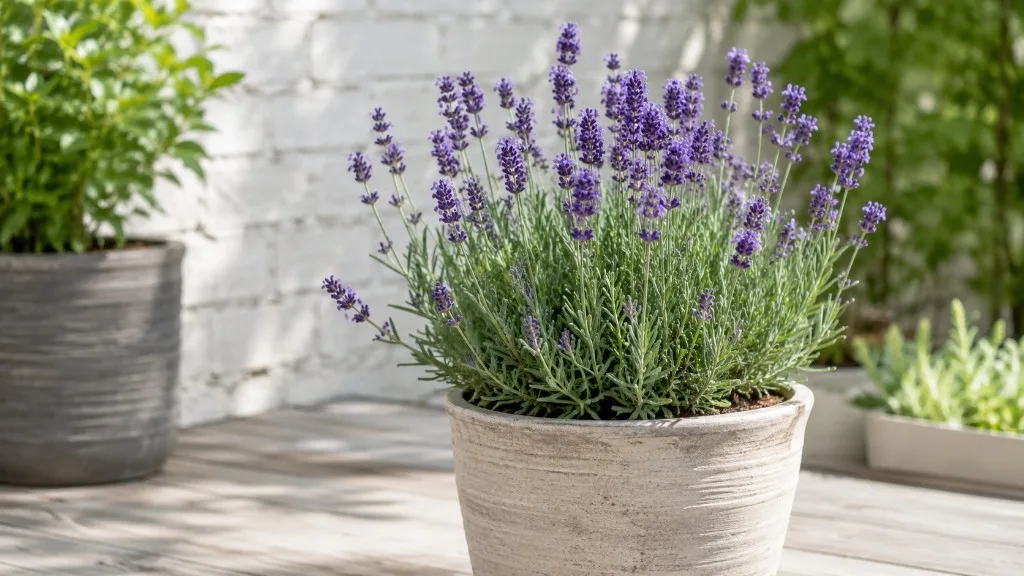
Lavender Light Requirements: Full Sun 6-8+ Hours
Lavender Light Requirements: Full Sun 6-8+ Hours
Lavender is not a flexible houseplant that adapts to whatever corner looks prettiest. Lavandula species evolved on open, sun-baked Mediterranean hillsides where intense radiation, sharp drainage, and low humidity shaped every part of their biology - from silver-gray leaf coatings to the aromatic oils that define the plant’s value in gardens, kitchens, and dried arrangements. If you give lavender “enough light to stay alive” but not full sun for six to eight hours or more each day, you will eventually get a floppy, woody, barely fragrant shrub that frustrates every other care upgrade you attempt.
The practical baseline across university extension guidance and major horticultural references is consistent: lavender needs full sun, defined as six to eight hours of direct, unfiltered sunlight daily, with eight hours the target during the main growing season for strong bloom, dense branching, and peak essential oil concentration. Illinois Extension states that lavender requires full sun - at least eight hours each day - alongside well-drained soil. That is not marketing language. It is the minimum photon budget a sun-adapted subshrub requires to partition carbohydrates toward roots, floral buds, and terpene production instead of emergency stem elongation.
This guide covers the decisions that determine whether lavender thrives or merely hangs on: the exact hour requirement, why light matters physiologically, how English, Spanish, French, and lavandin types differ, where to place plants outdoors and on balconies, when afternoon shade helps in hot climates, what indoor growing realistically demands, and how to read warning signs before weak growth becomes permanent woody decline.
How Much Light Lavender Actually Needs
Full sun means direct rays hit the foliage - not bright shade, not “lots of ambient light across the room,” not dappled light under a tree canopy all day. For Lavandula angustifolia (English lavender), the species most gardeners mean when they say “lavender,” the workable floor is six hours of direct sun at an absolute minimum, with seven to eight or more hours producing visibly superior form, fragrance, and flower count. The Missouri Botanical Garden lists full sun alongside sharp drainage as a core requirement for English lavender.
Less than six hours triggers predictable decline: internodes stretch, stems lean toward the brightest vector, new leaves arrive smaller and paler, flower spikes thin out, and the plant’s signature scent weakens because terpene synthesis drops when photosynthetic flux is insufficient. Illinois Extension notes that dampness kills lavender more reliably than cold in many gardens - and shade is the primary driver of lingering soil moisture around the crown. (Illinois Extension) You can perfect the grit mix and still fail if the pot sits in four hours of direct sun and six hours of cool, humid shade.
Light also sets the pace for every other care variable. A lavender in correct full sun dries its root zone faster, transpires actively, and tolerates the lean watering regime the plant requires. The same pot in partial shade stays wet longer, grows slowly, and invites crown rot and gray mold even when you water conservatively. Treat sunlight as the throttle for the entire system - not an isolated checkbox.
Every light change alters how fast lavender drinks. Full sun on a breezy terrace can dry a small pot in 24–48 hours in midsummer; the same pot in partial shade may stay wet five days after one watering. Misaligned watering - keeping a shaded schedule on a sun-moved plant - causes rot; keeping a sun schedule on a dim plant desiccates roots. After any placement change, recalibrate moisture checks for two weeks: insert a finger or skewer 7 cm (3 inches) deep and water only when dry at that depth during active summer growth. If soil stays wet more than 48 hours after a moderate watering in summer, suspect insufficient light or poor drainage before blaming genetics. Lavender prefers low humidity (roughly 20–40%) and open air; a shaded, humid corner under a porch roof combines the two conditions lavender hates most - full sun with airflow is the corrective pair.
The 6-8 Hour Full Sun Baseline
If you are auditing a site, count direct sun hours, not “bright day” hours. Stand where the pot or planting hole will sit and track when direct rays first strike the spot and when a building, fence, or tree blocks them. Morning counts. Midday counts. Hazy days still count if shadows are sharp. Reflected light from pale walls helps marginally but does not replace direct exposure for hour totals.
Use this quick reference when evaluating placement:
- 8+ hours direct sun: Ideal for English lavender and lavandin in most climates; expect compact mounds, strong bloom, and richest fragrance.
- 6–8 hours direct sun: Acceptable floor for L. angustifolia and L. × intermedia; monitor for stretch and thin bloom if closer to six.
- 4–5 hours direct sun: Survival zone at best for Spanish or French types; English lavender typically declines within one to two seasons.
- Under 4 hours or all-day dappled shade: Wrong plant for the spot - choose a shade-tolerant alternative rather than force lavender.
A simple new-growth test beats guessing: after two weeks in a candidate spot, the newest shoots should be firm, gray-green to blue-green, and closely spaced. If stems lengthen and leaves pale while old wood stays put, the site fails the test regardless of how sunny it looked at noon on one Saturday.
Why Lavender Demands Full Sun
Lavender belongs to the category of Mediterranean xerophytes - plants built for intense solar radiation, summer drought, and fast-draining alkaline soils. Native range centers on sunny slopes of Spain, southern France, and Italy, where competition for light is minimal and summer heat is paired with low humidity and sharp drainage. That evolutionary package did not include shade tolerance, deep root competition under forest canopy, or the dim, stable conditions of a north-facing indoor shelf.
Sunlight drives three outcomes gardeners actually care about. First, compact architectural form: short internodes and dense branching require high photosynthetic input distributed across the growing season. Second, flower quantity and quality: floral initiation and spike development depend on adequate light energy during the weeks before bloom, not on a late-season fertilizer rescue. Third, essential oil concentration and fragrance: the aromatic compounds in lavender foliage and flowers - linalool, linalyl acetate, and related terpenes - accumulate under high light flux. Plants in chronic shade may still smell faintly of lavender, but the scent is thin compared to a sun-stressed mound on an open slope.
Utah State University Extension lists full sun as a baseline requirement for English lavender culture in intermountain and high-plains gardens - regions where summer intensity is already strong. When extension services across climates agree on the same floor, it reflects physiology, not regional preference.
Sunlight Drives Oil, Fragrance, and Compact Growth
The silver tone on lavender leaves is not decorative. Those trichomes and waxy leaf coatings reflect excess radiation and reduce water loss - adaptations to high light environments. When you place lavender in shade, the plant often produces softer, greener growth with fewer protective coatings, which reads as “healthy green” to an indoor-eye but signals etiolation and reduced drought resilience outdoors.
Fragrance is a light-linked metabolite budget problem. Terpene production costs carbon. In full sun, photosynthesis supplies enough surplus to fund both growth and oil synthesis. In partial shade, the plant prioritizes reaching light over producing display chemistry. That is why a shaded lavender hedge smells pleasant from inches away but disappoints compared to a sun-baked row along a driveway.
Compact growth follows the same math. Each elongated stem in shade is a structural bet that brighter conditions exist somewhere above. Outdoors in a permanent partial-shade bed, there is nowhere useful to reach - so you get open, leggy architecture that ages into woody, bare-bottomed plants faster. Regular pruning cannot fully reverse a skeleton built under insufficient light.
English Lavender vs Other Lavandula Species
Not every plant labeled “lavender” at the nursery shares identical sun requirements, though none thrive in true shade. Species and hybrid groups differ in heat tolerance, hardiness, and the absolute minimum hours they can survive before decline accelerates.
Lavandula angustifolia (English lavender - cultivars like ‘Hidcote’, ‘Munstead’, and ‘Vera’) is the strictest and the reference point for “lavender light requirements.” Plan for 6–8+ hours direct sun, excellent drainage, and USDA zones 5–8 for most cultivars. This is the culinary and aromatherapy standard, and it shows the fastest decline below six hours.
Lavandula × intermedia (lavandin - ‘Grosso’, ‘Phenomenal’, ‘Provence’) is a hybrid of English and spike lavender bred for larger size and commercial oil production. It often wants 7–8+ hours and handles hot, dry summers well when drainage is sharp. Many gardeners in zones 6–9 choose lavandin for hedges specifically because vigor in full sun is exceptional.
Lavandula stoechas (Spanish lavender) and Lavandula dentata (French lavender) tolerate marginally lower daily totals - roughly five to six hours survivable in warm zones 8–11 - but still underperform compared to full-sun placement. They are not shade plants; they are heat-climate lavenders that forgive slightly shorter photoperiods while punishing humidity and wet crowns.
Minimum Sun Hours by Species and Cultivar
| Lavandula type | Common examples | Practical sun minimum | Best use case |
|---|---|---|---|
| L. angustifolia | Hidcote, Munstead, Vera | 6–8+ hours (strict) | Culinary, dried bundles, cold-hardy gardens |
| L. × intermedia | Grosso, Phenomenal, Provence | 7–8+ hours | Large hedges, oil production, hot dry sites |
| L. stoechas | Otto Quast, Anouk, Castilliano | 5–6 hours survivable; 6–8 preferred | Ornamental wings, zones 8–10, containers |
| L. dentata | Goodwin Creek Grey | 5–6 hours survivable; 6–8 preferred | Long bloom in mild winters, zones 8–11 |
When the tag does not specify species, assume English lavender rules: full sun, no compromise. Misidentified Spanish lavender in a partly shaded herb bed often dies mid-summer while the gardener blames watering - when the real failure was four hours of direct sun and a tree line after noon.
Best Outdoor Sun Placement
In-ground lavender succeeds on open slopes, raised beds, garden edges, and gravel gardens where nothing competes for sky access. The ideal site receives uninterrupted sun from mid-morning through mid-afternoon at minimum, with airflow across the foliage to reduce humidity pockets that encourage fungal issues.
Avoid planting lavender where mature trees, tall fences, or south-facing walls cast extended shadows during peak midday hours. A spot that looks sunny at 8 a.m. and 5 p.m. but sits in building shade from 11 a.m. to 2 p.m. may fail the six-hour test even though it feels “bright” to human perception. Lavender needs peak-intensity midday sun, not just early and late glancing rays.
Spacing matters for light penetration into the mound’s interior. Crowded lavender hedges eventually shade their own lower stems, contributing to woody bare bases. Plant English lavender roughly 18 to 36 inches (45–90 cm) apart depending on cultivar mature spread so each mound receives direct light on all sides. (Illinois Extension)
Pair full sun with instant-draining soil. Illinois Extension emphasizes that dampness kills lavender more reliably than cold - and shade is the primary driver of lingering soil moisture around the crown. A sun-baked gravel bank beats a partly shaded rich loam every time for this genus.
Slopes, Rows, and Air Circulation
Sloped ground offers lavender two advantages beyond drainage: maximum sky exposure and cold air movement that reduces winter crown wetness in marginal climates. If your flat yard holds puddles, build a raised mound or berm and plant on the south- or west-facing shoulder where sun duration is longest.
Orient rows so plants do not shade each other as the sun tracks. In the northern hemisphere, a north-south row alignment often gives both sides of each plant direct hours across the day. Along walkways and seating areas - classic lavender placements - prioritize sun over foot-traffic convenience. The prettiest path edge is useless if a wall blocks three afternoon hours.
Air circulation is the overlooked partner of full sun. Open sun plus breeze dries dew quickly after cool nights, reducing Botrytis and other foliar fungal pressures that shade-heavy sites amplify. Morning sun is especially valuable for this reason: early rays evaporate overnight moisture before spores germinate.
Potted Lavender on Balconies and Patios
Container lavender is harder than in-ground lavender because pots heat up, dry unevenly, and sit where railings, overhangs, and neighboring units steal hours of direct rays. A balcony labeled “sunny” in a rental listing may deliver three hours between buildings - fine for succulents that tolerate bright shade, fatal for English lavender long-term.
Place pots where direct sun hits the foliage, not just the rim of the container. A pot recessed under a deep balcony roof may receive reflected brightness while leaves sit in shadow. Elevate or pull pots forward until shadows on leaves match sharp midday sun.
Dark containers on hot pavement or metal decking add root-zone heat stress on top of light stress. In full-sun placements, prefer light-colored pots, feet or pot risers for air gap, and gritty mix (roughly one part compost to three parts coarse grit or perlite for many Mediterranean herbs) so roots stay aerated when the canopy is in eight hours of radiation.
Reading Window and Compass Directions
Compass direction is a starting guess, not a verdict. A south-facing balcony blocked by a taller building may lose to an unobstructed east or west railing with longer direct totals. Audit each candidate spot across a full sunny day before committing.
An east-facing exposure delivers cooler morning sun that dries dew and starts photosynthesis early without the heat spike of late afternoon. East is an excellent default for containers when total hours still reach six or more across morning and midday.
A south-facing exposure (northern hemisphere) maximizes winter sun angle and often delivers the longest daily totals for balcony pots. In summer, watch for leaf wilting on hottest afternoons - not because south is wrong, but because reflected heat from glass railings and dark floors cooks roots while leaves transpire at maximum.
A west-facing exposure supplies strong afternoon and evening rays. Totals can suffice for lavender, but heat load is highest on west pots. Monitor soil moisture and leaf turgor on 95°F+ (35°C+) days; light afternoon shade cloth helps in zones 8–9 without sacrificing overall hour counts if installed after peak bloom hours.
A north-facing exposure rarely accumulates six direct hours for lavender. North may keep a pot alive for a season with Spanish lavender in warm climates, but English types will stretch and weaken. Treat north balconies as grow-light territory or choose a different herb.
Morning Sun vs Afternoon Sun
Lavender benefits from both morning and midday direct sun. If your site offers a choice between morning-only and afternoon-only exposure at similar hour totals, morning sun is usually safer because temperatures are lower, dew dries efficiently, and leaf tissues acclimate before peak daily heat.
Afternoon-only placements can work when totals exceed six hours and drainage is excellent, but container plants on west patios show stress first: wilting despite moist soil (heat-driven, not thirst), bleached leaf tips, and reduced bloom in repeatedly hot summers.
For in-ground plantings, the classic Mediterranean garden pattern - open sky all day with gritty soil - remains the gold standard. Do not trade away midday sun to “protect” lavender unless your climate consistently exceeds 95°F (35°C) with high humidity, where physiological stress compounds light stress.
Afternoon Shade in Hot Southern Gardens
In USDA zones 8–9 and other regions where summer afternoons combine extreme heat, high humidity, or both, established English lavender sometimes performs best with full morning and midday sun plus light dappled shade after roughly 2 p.m. This is not permission for part shade all day. It is a heat-management overlay on top of six or more direct hours earlier.
The configuration looks like: east or south exposure unobstructed until early afternoon, then high canopy, pergola slats, or 20–30% shade cloth reducing late-day radiation when leaf temperature spikes. Utah and intermountain growers may never need this; humid subtropical growers often do.
Spanish and French lavenders tolerate hot afternoons slightly better than English types but still require strong morning sun totals. Do not interpret heat-climate advice as “lavender prefers shade.” It prefers full sun with optional late-day heat relief - a narrow distinction that prevents the most common misplacement error in southern gardens.
Indoor Lavender and Grow Light Setups
Honest assessment first: lavender is an outdoor full-sun plant that tolerates temporary indoor overwintering better than it tolerates permanent indoor culture. A sunny windowsill rarely delivers six hours of direct rays on the plant - glass filters intensity, overhangs shorten the window, and winter photoperiod drops total daily energy sharply.
If you must grow lavender indoors - overwintering a prized ‘Hidcote’, starting cuttings, or short-term quarantine - plan on a full-spectrum LED grow light as the primary source, with window light as supplement only. Target 12 to 16 hours daily under a fixture rated for vegetative growth, positioned so PPFD at the canopy approximates outdoor partial-to-full sun conditions. Start 12–18 inches (30–45 cm) above foliage and adjust by reading new growth: compact blue-green leaves mean adequate flux; stretch means lower the lamp or extend duration.
Without supplemental lighting, indoor lavender typically leggies within weeks, produces few or no flower spikes, and accumulates soft growth vulnerable to aphids and mildew in heated dry rooms with poor airflow. Rotating the pot weekly prevents one-sided lean but does not fix insufficient totals.
Realistic Expectations for Window-Only Indoors
A south-facing window in a cool, unheated sunroom can sometimes maintain dormant or semi-dormant lavender through winter in zones where outdoor frost is lethal. Expect minimal growth, no bloom, and a hard acclimation period when returning outdoors in spring. Jumping directly from winter window to full July patio without hardening causes scorch and leaf drop.
East or west windows alone are insufficient for active indoor growth of English lavender. If your only indoor option is a bright east window without LED backup, treat the plant as temporary storage, not a long-term display - and move it outdoors to full sun the first frost-free week.
Overwintering checklist for indoor transitions: reduce watering to match lower light, keep humidity moderate (lavender dislikes steamy bathrooms), provide maximum window sun plus LED if stretch begins, and acclimate back outdoors gradually over 7 to 14 days in spring by increasing direct hours incrementally.
Part Shade and Low-Light Failure Modes
Lavender can survive in part shade briefly - especially young nursery pots still coasting on greenhouse vigor - but it will not thrive there. Part shade in horticultural terms means fewer than six hours of direct sun, or dappled light replacing direct rays for much of the day. Under those conditions, decline is predictable and often misattributed.
Leggy, open habit develops first: stems elongate, the mound loses the tight silver mound silhouette, and lower leaves yellow as the plant reallocates resources upward. Flowering drops next - fewer spikes, shorter spikes, or complete bloom failure in the second season. Fragrance weakens as terpene production falls. Disease susceptibility rises because shaded crowns stay damp longer after rain or irrigation, and Illinois Extension’s dampness-kills-lavender observation becomes your reality. (Illinois Extension)
Some gardeners report Spanish lavender “doing fine” under a tree with four to five direct hours. That may mean the plant still shows leaves - not that the placement is sound. Compare the same cultivar in full sun side by side once; the difference in spike count, stem stiffness, and winter survival usually ends the debate.
If your site offers only part shade, the horticulturally honest recommendation is to choose a different plant - Russian sage (Salvia yangii / Perovskia atriplicifolia), catmint (Nepeta × faassenii), or rosemary (Salvia rosmarinus) in similar drainage - rather than repeatedly replacing dead lavender every two years.
Warning Signs Lavender Is Starved for Light
Read newest growth, not historic damage on old wood. Lavender does not backfill bare lower stems once they lignify; only forward-looking signals tell you whether today’s placement works.
Insufficient light symptoms:
- Elongated internodes - visible gaps between leaf pairs on new shoots
- Pale or yellow-green new foliage instead of firm gray-green
- Lean toward the brightest direction - entire pot or mound angles toward sun
- Thin, weak flower spikes or no bloom despite age and season
- Reduced aroma when you crush a leaf - weak scent indicates weak metabolite production
- Soft, floppy new stems that do not stiffen as they age
- Persistent soil moisture in a pot that should dry quickly in “full sun”
- Increased pest and mildew issues on tender shaded growth
If three or more signs appear together after 14 days in a spot, move the plant to more direct hours before adjusting fertilizer or Lavender repotting guide. Changing water, soil, and light simultaneously makes diagnosis impossible.
Can Lavender Get Too Much Sun?
In most temperate gardens, no - you cannot give lavender too much direct sun if drainage is excellent and the plant is acclimated. Lavender’s failure mode in Minnesota, Colorado, or the UK is almost always too little light, not too much. The question becomes relevant in extreme heat, reflected radiation environments, and ** sudden exposure jumps** without hardening.
Heat stress differs from light insufficiency. Signs include midday wilting on established plants that recover overnight, bleached or bronzed leaf tips on scorching days, and bloom abortion during sustained heat waves above 100°F (38°C). Container plants on dark surfaces show heat stress first because root zones overheat even when leaves receive correct photon totals.
Sudden moves from nursery shade houses or dim garden centers to unfiltered patio sun cause leaf scorch, browning, and temporary collapse - not because full sun is wrong, but because leaves formed under lower light lack protective capacity. Nursery lavender often arrives from partially shaded production benches; moving it straight to a south-facing gravel bed in June invites scorch even when that bed is the correct long-term home.
Always acclimate over 7 to 14 days using a stepped protocol: Days 1–3, place in 3–4 hours direct morning sun with bright open shade otherwise; Days 4–6, increase to 5–6 hours including midday if temperatures stay moderate; Days 7–10, move to the final location or add afternoon hours until full placement is reached; Days 11–14, hold at full sun and evaluate new growth only for color and spacing. During acclimation, water when the root zone dries at finger depth - heat increases transpiration, but soggy soil plus new sun is worse than slight dryness. Do not fertilize heavily during the move; soft nitrogen-driven growth burns faster. For seasonal indoor-to-outdoor transitions in spring, harden outdoors incrementally - never move same-day from a windowsill to blazing wall exposure.
Heat Scorch and Container Stress
Mitigate extreme-sun stress without abandoning full sun:
- Use light-colored containers and pot feet to reduce root heat
- Apply gravel mulch at the crown - not water-retentive bark - to stabilize soil temperature
- Provide late-afternoon shade cloth only after six or more direct hours earlier in the day
- Increase watering frequency slightly in heat - not volume per watering - while keeping soil dry between sessions at depth
- Avoid overhead sprinklers that wet foliage overnight; drip or soil-level watering pairs better with high light
Do not interpret heat-stress wilting as a signal to move lavender to shade permanently. Move to better root cooling and optional afternoon diffusion while preserving morning and midday direct sun.
Conclusion
Lavender light requirements are not negotiable: six to eight hours of direct sun daily is the floor for English lavender, with eight or more hours ideal for dense form, abundant bloom, and the fragrance that justifies growing the plant at all. Full sun drives essential oil production, keeps internodes short, dries crowns quickly, and pairs with the sharp drainage lavender demands. Species matter - Spanish and French types tolerate marginal heat and slightly lower totals in warm zones - but no lavender thrives in part shade long-term.
Place in-ground plants on open, well-drained sites with midday exposure; put containers where direct rays hit leaves, not just nearby brightness. Use morning sun to dry dew and start growth; add light afternoon shade only in extreme heat after six or more earlier direct hours. Indoors, accept that windows alone rarely suffice - use full-spectrum LEDs for 12–16 hours or treat indoor culture as temporary. Acclimate nursery plants over 7–14 days, read new growth for pass/fail, and when a site cannot deliver six direct hours, choose a sun-loving alternative instead of fighting Mediterranean biology.
Get the light right first. Watering, soil, pruning, and winter survival all become simpler when lavender receives the radiation it evolved under.
When to use this page vs other Lavender guides
- Lavender overview - Start here for whole-plant context before deep-diving this topic.
- Lavender problems hub - Jump to symptom-specific fix guides when this care topic does not resolve the issue.
- Not Enough Light on Lavender - Escalate here when light adjustments are not enough.
- Leggy Growth on Lavender - Escalate here when light adjustments are not enough.
- Leaf Drop on Lavender - Escalate here when light adjustments are not enough.
Related Lavender guides
- Lavender overview
- Lavender watering
- Lavender soil
- Lavender propagation
- Lavender fertilizer
- Lavender repotting
- Not Enough Light on Lavender
- Leggy Growth on Lavender
- Leaf Drop on Lavender
- Lavender problems
Related tool
Try the Plant Problem Diagnosis Tool with lavender pre-selected to estimate needs for your setup.