Leaf Drop on Lavender: Causes, Checks & Fixes
Quick answer
Leaf drop on lavender means silvery needles shedding beyond normal inner browning-usually from watering swings, repot shock, root rot, or cold wet soil. Check crown firmness and soil moisture at 7 cm depth, fix drainage or drought, and avoid stacking repot with prune during stress.
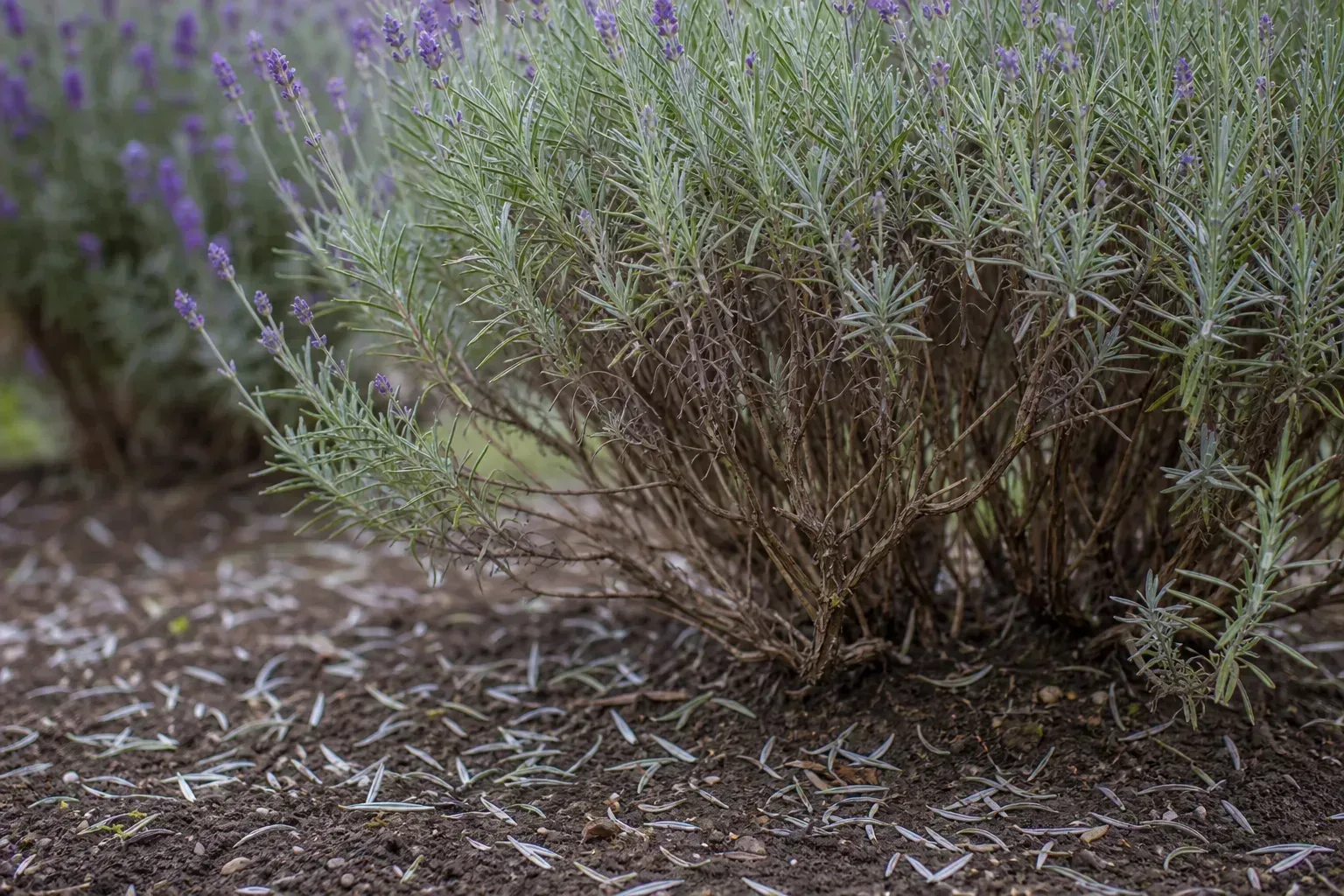
Leaf Drop on Lavender: Causes, Checks & Fixes
This guide covers leaf drop on Lavender. See also the general Leaf Drop guide, watering, and light pages for this plant.
Leaf Drop on Lavender: Causes, Checks & Fixes
Quick answer
Your lavender is shedding more than the usual inner browning-and you need to know whether that is normal subshrub aging or stress-driven outer needle drop before you water again. English lavender (Lavandula angustifolia) sheds lower inner needles on woody stems seasonally while outer silver tips stay firm. Abnormal drop strips active outer shoots, often with wilting, yellowing, or a heavy wet pot.
First step: probe soil at 7 cm (3 inches) depth, squeeze the crown at the soil line, and apply one targeted fix-dry-down for wet rot, controlled rehydration for drought, or stable sun and minimal disturbance for shock. Do not stack repot, hard prune, and fertilizer in the same stressed week. For cultivar context and baseline culture, see the lavender overview.
This page focuses on shed pattern and drop zone-where needles fall and how fast. Wilting covers turgor loss without mass shed; yellow leaves covers chlorosis before needles detach.
What leaf drop looks on lavender (needles vs. normal aging)
Lavender’s narrow leaves are often called needles-silvery, aromatic, and opposite on square stems. Searchers say “leaf drop”; growers say “needle shed.” Both mean the same symptom on this plant.
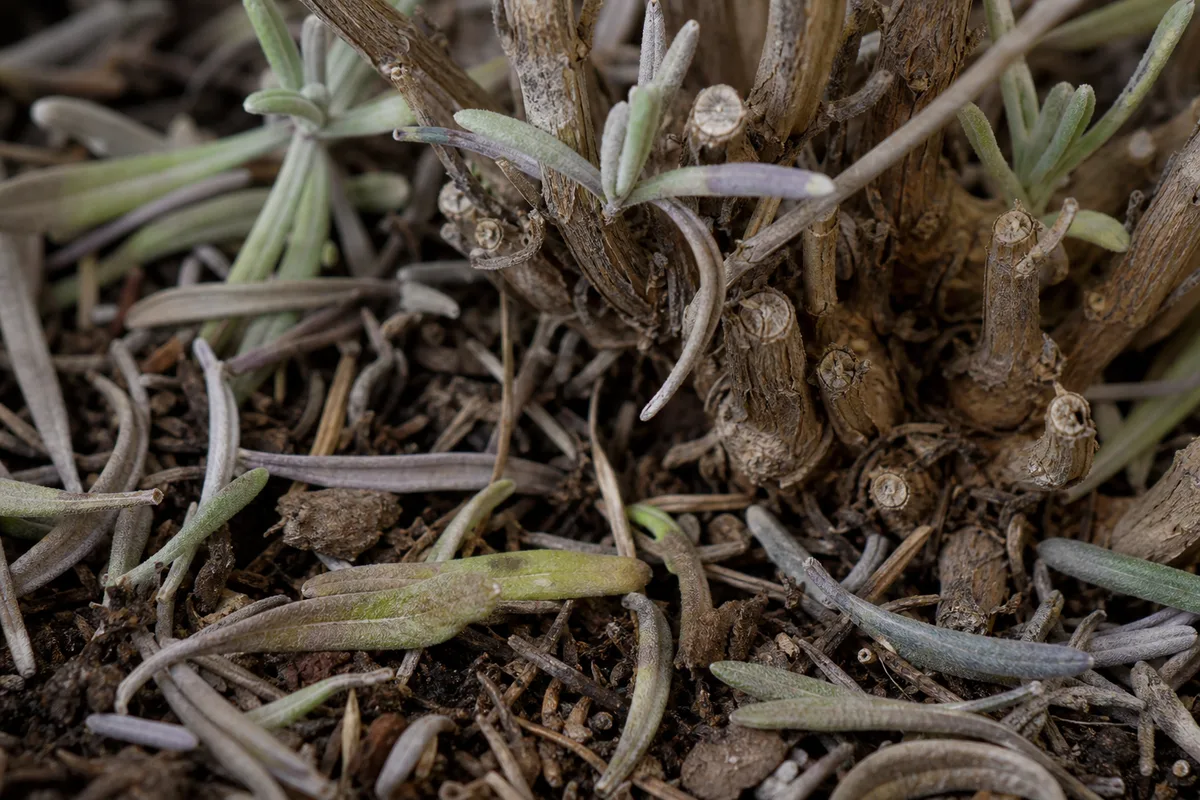
Leaf Drop symptoms on Lavender - compare with healthy tissue on the same plant.
Normal aging: Lower inner needles on woody bases turn brown or straw-colored and drop while outer tips stay silver and firm. Mature English lavender mounds do this year-round; it intensifies in autumn and winter slow growth. The plant keeps structure; only the oldest inner tissue sheds.
Abnormal stress drop: Outer active shoots lose needles en masse, sometimes yellow-green first, then grey and dry. Stems may wilt even when the pot feels heavy-roots can no longer move water while mix stays wet.
Rot-linked drop: Needles fall with grey wilting stems, sour smell from the drain hole, and a soft crown at the soil line. Mix stays wet at 7 cm depth for days.
Drought-linked drop: Inward curl on silver foliage, then dry needle drop on a light pot with dusty dry mix throughout the root ball.
Shock-linked drop: Sudden shed within days of repot, indoor move, hard prune, or unhardened sun jump-crown still firm, smell neutral, mix draining correctly.
First-year seedlings may drop lower leaves while establishing roots; that differs from a five-year woody mound shedding inner base needles only.
Why lavender drops foliage
Lavender evolved on dry, rocky Mediterranean hillsides as a drought-adapted subshrub. When roots fail-usually from excess moisture-the plant sheds outer active shoots first because those tissues cost the most water to maintain. Inner woody stems hold reserves longer. That biology explains why rot and overwatering look like “the top died first” rather than a uniform fade.
Overwatering and root rot suffocate roots in wet mix. Needles drop as uptake collapses; wilting on wet soil is the cruel trap that pushes gardeners to water more. See root rot for unpot, trim, and gritty repot escalation.
Underwatering in heat causes prolonged curl, then defensive shed after the plant cannot sustain outer shoots. Light pots and dry probes at 7 cm depth confirm this path-details in underwatering.
Transplant shock from repotting, field plant-out, or failing to harden off triggers temporary drop while roots re-anchor. Firm crown plus neutral-smelling gritty mix fits shock; see transplant shock and repotting stress when symptoms follow a move.
Cold plus wet winter soil drops foliage before outright root death. Dampness more than cold kills lavender-saturated mix through rainy or snowy weeks is more dangerous than frost on dry crowns.
Indoor overwinter drop pairs low light with retained summer watering frequency. Growth slows, uptake drops, but the mix stays moist-outer needles shed while roots sit anaerobic. Bright cool conditions and sparse water per the lavender watering guide reverse most cases.
Sudden heat after cloudy greenhouse growth can accelerate shed on weak shoots. Spider mites cause stippling and webbing more often than mass drop-check undersides before assuming water stress.
English lavender vs. other types (winter sensitivity)
Most container growers mean English lavender (Lavandula angustifolia)-compact, cold-hardy, with narrow grey-green needles. Cultivars like ‘Hidcote’ and ‘Munstead’ survive USDA Zones 5 through 10 when drainage is excellent; winter inner needle shed on firm wood is normal.
Lavandin (Lavandula × intermedia) grows taller with stronger camphor fragrance and is generally less cold-hardy than English types-expect more winter foliage stress in borderline climates if pots stay wet.
Spanish lavender (Lavandula stoechas) is more frost-sensitive and often behaves as a seasonal container plant in cold regions. Heavy winter drop on wet mix kills Spanish stock faster than hardy English mounds.
All types share the same rule: dry crowns through winter matter more than absolute cold. Type differences change how much shed you tolerate before investigating drainage.
How to confirm the cause
Work through these checks in order-each narrows the fix before you touch the plant.
- Drop zone - Inner lower woody stems only, or outer silver tips en masse?
- Soil moisture at 7 cm - Wet and heavy for days, or dusty dry throughout?
- Crown firmness - Hard woody base vs. soft grey tissue at the soil line?
- Smell - Neutral or earthy vs. sour rot from the drain hole?
- Recent events - Repot, indoor move, freeze, heat wave, or monsoon week within the last two weeks?
- Wilting pattern - Present with wet soil (root dysfunction) or dry soil (thirst)?
Wet vs. dry vs. shock vs. normal aging comparison
| Pattern | Drop zone | Soil at 7 cm | Crown | Smell | Likely cause |
|---|---|---|---|---|---|
| Normal aging | Inner lower only | Dry to normal | Firm | Neutral | Woody subshrub shed-wait |
| Drought stress | Outer tips after curl | Dry, light pot | Firm | Neutral | Underwatering-one soak then dry-down |
| Root rot | Outer + lower, wilting | Wet days on end | Softening | Sour | Root rot-stop water, unpot |
| Transplant shock | Scattered, post-move | Moist but draining | Firm | Neutral | Transplant shock-stable sun, dry-down |
| Indoor winter | Outer tips, dull grey | Wet despite slow growth | Firm early | Neutral | Low light + overwatering-light up, dry down |
| Cold wet winter | Progressive outer shed | Saturated from rain/snow | Firm then soft | Earthy to sour | Shelter pot, improve drainage |
Leaf drop vs. sibling symptoms
| Symptom page | What it emphasizes | When to open it |
|---|---|---|
| This page (leaf drop) | Where needles fall and shed rate | Mass or abnormal pattern |
| Wilting | Limp turgor, stems bend | Wilt without heavy shed |
| Yellow leaves | Chlorosis before drop | Yellowing dominates |
| Overwatering | Chronic wet culture | Calendar watering on heavy mix |
First fix for lavender
Classify wet vs. dry vs. shock before acting-then apply one intervention, not three.
If wet (heavy pot, damp 7 cm probe, sour smell, or soft crown): stop watering immediately. If smell is sour or crown softens, unpot, trim mushy roots, and repot into gritty mix per root rot rescue-do not wait for more needles to fall.
If dry (light pot, dusty dry probe, inward curl before drop): bottom-soak once until excess drains, empty the saucer, then resume dry-down watering only when the 7 cm zone is completely dry again. Hydrophobic mix that sheds water down the sides may need a slow top soak or brief bottom sit-then probe before the next drink.
If shock (firm crown, neutral smell, symptoms started within a week of repot or move): hold stable full sun (or brief afternoon shade if scorched), give one settling soak only if dry at depth, and avoid repot plus hard prune plus feed in the same week.
Step-by-step recovery
- Photograph the drop zone - Inner-only vs. outer mass shed documents whether you are improving.
- Wet rot path - Unpot, rinse roots, trim brown mushy tissue, repot shallow in one part compost to three parts grit, crown dry above mix. Take firm upper cuttings if crown is questionable.
- Dry path - Rehydrate once, then probe before every future pour. Terracotta dries faster than plastic-lift pot weight as a secondary check.
- Shock path - Full sun when hardened, steady dry-down rhythm, wait two to three weeks for new silver tips at nodes.
- Indoor winter path - Move to brightest window or 12–14 hour grow light, cut watering to winter sparse rhythm, brush fallen needles off the surface.
- Remove only fully dead crispy stems after new tips appear-lavender does not reliably refoliate bare old wood.
- Escalate if outer drop continues with firm upper wood only-softwood cuttings from healthy tips are backup before the base fails.
Recovery timeline
Recovery depends on severity and how long roots sat wet.
Mild (inner-only shed or brief shock on firm plant): No action beyond correct culture; plant may look sparse through winter dormancy then push new silver tips in early spring.
Moderate (drought correction or shock on firm crown): First new silver shoots often appear at stem nodes within two to four weeks after moisture and light stabilize. Judge success by new tips, not old needles reattaching.
Severe (rot with trimmed roots but firm crown): Partial refoliation over four to eight weeks in full sun with strict dry-down; mound may stay thinner until spring flush.
Critical (soft crown, majority mushy roots): Defoliation can progress over days despite intervention. Take cuttings immediately from firm upper stems; parent plant may not refoliate.
Improvement signs: Firm crown, neutral soil smell, new silver tips, shrinking afternoon wilt, probe drying on schedule between drinks.
Worsening signs: Daily outer shed acceleration, crown softening, sour smell on constantly wet mix, grey mush spreading from soil line-switch to rot protocol without delay.
Lookalike symptoms to rule out
- Normal inner shed - Woody base only, firm crown, no wilting on wet soil.
- Seasonal dormancy - Slight greying and inner drop on firm plant in cool slow winter growth; do not increase water to “help.”
- Spider mites - Fine stippling, webbing on undersides; wash and confirm pests before blaming water.
- Botrytis on wet flowers - Grey fuzzy mold on spent blooms in humid weather; deadhead and improve airflow-distinct from crown rot needle shed.
- Wilting without mass shed - Turgor problem; see wilting page.
- Yellowing before drop - Chlorosis track; see yellow leaves.
Mistakes to avoid
Do not fertilize defoliating stressed plants-salts burn roots already under pressure. Lavender thrives in lean, well-drained soil.
Do not repot and hard prune simultaneously during active shed-that doubles root and shoot loss.
Do not keep wet saucers through monsoon or rainy weeks while needles drop-humid-climate container growers lose more lavender to cold plus wet than to drought.
Do not increase winter watering when foliage looks dull indoors-growth is slow; wet mix causes shed, not cure.
Do not leave fallen needles matted on wet soil surface-they hold moisture against the crown.
How to prevent leaf drop next time
Watering: Probe 7 cm deep per the lavender watering guide-dry-down rhythm, not calendar fear. Winter containers under eaves need far less than summer patio pots.
Drainage: Gritty alkaline mix, holed terracotta, gravel mulch instead of wet bark against stems. Well-drained soils particularly in winter are non-negotiable.
Light: Full sun-at least six hours daily outdoors; strongest window or grow lights indoors.
Moves: Repot early spring, harden indoor-outdoor transitions over seven to ten days, never bury woody crowns deeper than before.
Winter shelter: Slide pots out of open rain; frozen saturated mix kills roots even when air temperatures are mild.
Pet safety: The ASPCA lists lavender as toxic to cats, dogs, and horses if ingested. Brush up dropped needles if pets access the pot; contact a veterinarian if ingestion is suspected.
When to worry
Urgent: Outer needle drop with wilting, crown softening, or sour wet soil-start root rot protocol the same day.
Escalate: No new silver tips after three weeks on corrected dry-down with firm stems-unpot to check for hidden rot, dry hydrophobic core, or buried crown.
Low urgency: Gradual inner lower shed on a vigorous mound with firm wood-routine aging; resume normal pruning rhythm in spring if needed.
Related lavender guides
- Lavender overview - species types, hardiness, baseline culture
- Lavender watering - 7 cm probe workflow and seasonal dry-down
- Root rot on lavender - unpot, trim, gritty repot when crown and smell alarm
- Transplant shock - recovery after repot or plant-out
- Overwatering - chronic wet culture fixes
Outer needle drop is the alarm; inner-only shed on firm wood is often normal. Match watering to probe depth at 7 cm, not fear or calendar-and judge recovery by new silver shoots, not old needles returning.
Author: sai-ananth · Reviewed by: LeafyPixels Review Board · Reviewed: 2026-06-16