Repotting Stress on Lavender: Causes, Checks & Fixes
Quick answer
Repotting stress on lavender is a short-lived wilt or growth pause after root disturbance in a new pot-normal when the crown stays firm and gritty mix drains fast. First step: stop extra interventions, keep full sun, and water only after the root zone dries at 7 cm depth rather than keeping the pot constantly damp.
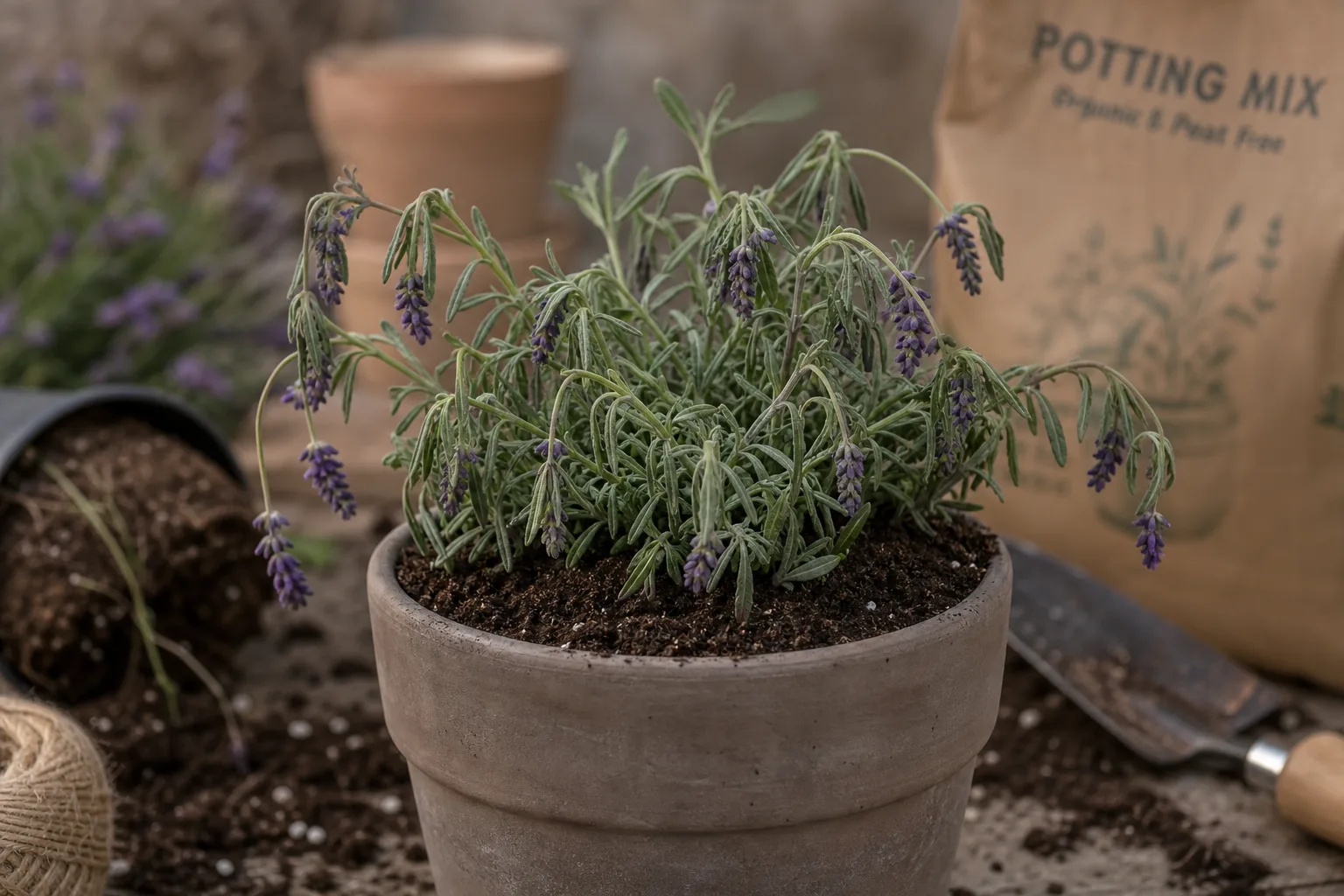
Repotting Stress on Lavender: Causes, Checks & Fixes
This guide covers repotting stress on Lavender. See also the general Repotting Stress guide, watering, and light pages for this plant.
Repotting Stress on Lavender: Causes, Checks & Fixes
Quick answer
You upgraded the pot last weekend-same patio, same sun-but now the narrow leaves look limp and dull grey-green. On a firm crown in gritty, draining mix, that usually means Lavender repotting guide stress: fine root hairs were sheared when you teased the root ball, and uptake lags behind what the foliage loses to sun until new roots grow into fresh mix.
First step: probe 7 cm deep and water only if that zone is dry, then let it dry down again before the next pour. Hold fertilizer, hard pruning, and second repot attempts. Watch for new silver tips at stem nodes, not old leaves re-greening.
If the crown goes soft, the mix smells sour, or wilt deepens on constantly wet soil within a week, you are dealing with root rot or crown rot from a bad repot setup-not normal stress. This page covers container upgrades only. If you also moved location, planted into the garden, or skipped hardening off, start with transplant shock instead.
What repotting stress looks on lavender
Repotting stress is a temporary wilt or growth pause that begins within two to five days of disturbing roots during a pot change-not a slow decline over months. The woody base where stems meet soil should still feel rigid when pinched, and there should be no sour or swampy smell from the drain hole.
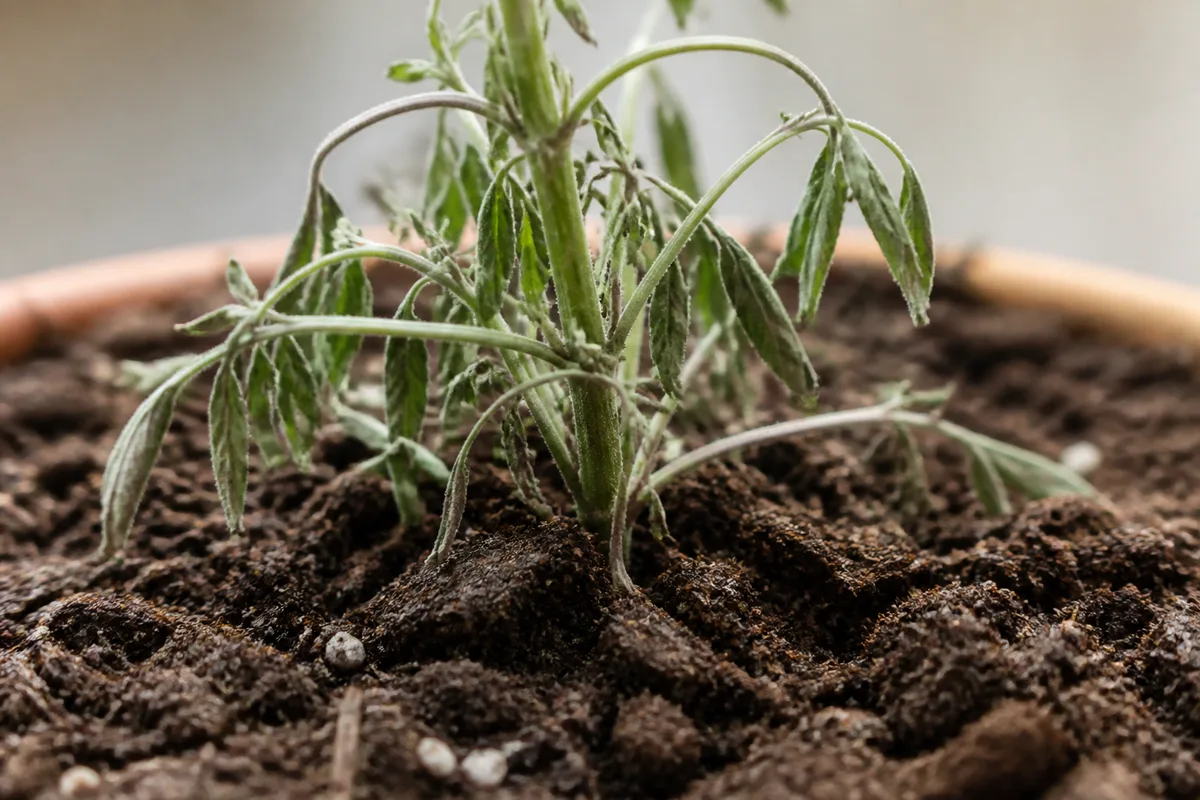
Repotting Stress symptoms on Lavender - compare with healthy tissue on the same plant.
Typical repot-stress signs:
- Midday droop that eases by evening on an otherwise firm plant
- Dull grey-green foliage without spreading mush at the soil line
- Growth pause for one to three weeks with neutral-smelling gritty mix
- Lower leaves may look tired while upper stems stay structurally sound
What repot stress usually does not include:
- Grey, mushy tissue at the crown that dents when pressed
- Sour or rotten smell from mix that stays heavy for days
- Progressive collapse that worsens daily after sympathy soaking
- Blackened spreading tissue up stems from a buried crown
Damaged leaves from stress rarely return to bright silver-green-they may stay dull or drop. Judge recovery by firm wood and fresh silver shoots at nodes, not by old foliage color.
Repotting stress vs root rot vs transplant shock
These three lavender problem pages overlap in symptoms but differ in trigger and first response. Use this table before you change anything else:
| Trigger | Firm crown + draining mix | Soft crown or sour wet mix | Start here |
|---|---|---|---|
| Pot upgrade only, same location | Wilt days 2–5, growth pause | Progressive mush at soil line | This page - dry-down patience |
| Pot upgrade + moved to hotter sun | Afternoon wilt, possible scorch | Rot if mix stays wet in sealed plastic | Transplant shock - harden sun |
| Oversized pot + heavy peat | Surface dries, center stays wet | Roots brown, crown softens by week 2 | Trim wet outer ring or downsize - see below |
| Garden plant-out same week | Sun scorch plus root pause | Buried crown or clay bathtub | Transplant shock |
| Sympathy soaking after repot | Wilt worsens despite wet mix | Sour odor within days | Root rot rescue |
Scope rule: If the only change was container size, mix refresh, or root teasing in the same spot, stay on this page. If light, wind, temperature, or planting depth in the garden changed materially, use transplant shock and cross-check depth against the lavender repotting guide.
Why lavender gets stressed after repotting
Repotting shears fine root hairs-the surface layer that absorbs most water. Until new hairs regenerate and contact fresh soil particles, the shrub loses more moisture through its narrow aromatic leaves than damaged roots can replace. That mismatch produces wilt that looks like thirst but is really a temporary uptake gap.
Lavender evolved on dry Mediterranean hillsides and needs free-draining soil in full sun. It does not perform well in wet or waterlogged soils-so repot failures usually trace to moisture mistakes, not missing fertilizer.
Why the semi-woody crown makes depth errors fatal
Unlike herbaceous herbs where buried stems can reroot, lavender develops a semi-woody crown at the soil line. That tissue rots quickly when buried in wet mix, yet upper leaves may stay briefly green-so a depth mistake looks like slow stress for several days before collapse. Always repot with the crown at the same visible soil line as before; even 1 cm deeper can keep woody tissue saturated while you wait for “recovery.”
Afternoon wilt on a firm crown is often false thirst
On narrow-leaf Mediterranean shrubs, midday droop on a firm crown with neutral-smelling mix is frequently transpiration outpacing damaged roots, not a signal to pour again. Lavender leaves lose moisture fast in full sun; broken root hairs cannot replace it yet. The trap is sympathy watering-which keeps the crown zone wet and converts uptake stress into rot within days.
The five repot mistakes that turn stress into rot
- Oversized pot - Fresh compost around a small root ball stays wet for weeks. RHS overpotting guidance notes that excess volume reduces aeration and roots rot instead of growing outward.
- Heavy water-retentive mix - Peat-heavy compost without grit holds moisture lavender roots cannot tolerate in containers.
- Buried crown - Woody stems planted deeper than before stay wet and rot while upper leaves still look briefly green.
- Sympathy soaking - Daily watering “to help shock” keeps broken roots in oxygen-poor, saturated mix.
- Stacked interventions - Hard prune plus feed plus repot in one week diverts energy away from root repair.
Container material and dry-down speed
Terracotta breathes and dries faster than sealed plastic or glazed ceramic-useful after repot when you need the outer ring to cycle moisture without staying sodden. Plastic retains water longer; probe depth matters more and saucers must be emptied. French and Spanish lavenders (Lavandula stoechas, L. dentata) are less cold-hardy than English types but share the same drainage intolerance; container material affects dry-down timing more than cultivar choice.
Case snapshots - mild stress vs early rot
Mild stress (recovered): A 20 cm English lavender repotted in late April from a 15 cm terracotta pot into an 18 cm holed terracotta with 25% grit mixed in. Crown stayed at the same depth. Day 2: slight midday wilt. Day 5: probe dry at 7 cm - one soak, saucer emptied. Day 12: first silver tip at a lower node. Day 28: plant visibly fuller; old lower leaves remained dull but firm.
Early rot escalation (needed rescue): Same cultivar jumped from 15 cm to 25 cm plastic with standard peat multipurpose, no added grit. Crown buried 1 cm deeper “for stability.” Day 3: wilt after daily watering. Day 7: soft grey tissue at soil line, sour smell. Unpot revealed brown outer roots in wet compost ring. Required trim, crown raised to original depth, and gritty repot in a smaller pot - see root rot workflow.
How to confirm the cause
Work through these checks in order before intervening:
- Timeline - Did wilt or dulling start within a week of the pot change only?
- Crown firmness - Pinch the woody base. Hard tissue supports stress; soft, grey, or dented bases point to crown rot.
- Depth - Crown should sit at the same level as before repotting.
- Pot size jump - One size up (roughly 2.5–5 cm wider) is safe; two sizes up on slow spring growth is high risk per overpotting advice.
- Drainage - Water runs through gritty mix in seconds; no standing saucer water.
- Smell - Neutral or earthy fits stress. Sour or swampy means rot.
- Light stability - Did sun exposure change? If yes, factor in transplant shock hardening.
Crown firmness decision table
Use crown feel, smell, and mix moisture together-not wilt alone:
| Crown feel | Mix smell | Moisture at 7 cm | Urgency | First action |
|---|---|---|---|---|
| Firm, woody | Neutral or earthy | Dry | Low - normal stress | One soak if dry at depth; then dry-down rhythm |
| Firm, woody | Neutral | Damp | Low - false thirst | Wait; do not sympathy water |
| Firm, woody | Neutral | Damp but wilt worsening 14+ days | Medium - setup issue | Inspect depth; trim wet outer ring if oversized pot |
| Softening or grey | Neutral | Any | High - early rot | Unpot same day; inspect roots and crown depth |
| Soft or dented | Sour or swampy | Wet | Urgent - active rot | Rot protocol: trim, repot smaller, raise crown |
| Firm | Sour | Wet | High - rot winning | Unpot immediately; do not wait for dry-down |
Borderline scenarios
Oversized pot, firm crown, week 1: Do not water more. Let the outer ring dry while probing 7 cm at the root ball center. If wilt persists past day 14 with a heavy wet pot, gently remove wet outer compost without burying the crown again.
Hydrophobic dry core: Surface looks moist but the old root ball center is dusty dry-water ran down the sides of a tight nursery ball. One controlled bottom soak through the drain hole wets the core; then resume dry-down rhythm. See dry hydrophobic soil if this pattern repeats.
Mixed stress plus rot signs: Firm crown with sour smell is uncommon-usually one wins by day 7. Soft crown on wet mix is rot; treat immediately rather than waiting.
First fix for lavender
Probe 7 cm deep and give one settling water only if that zone is dry, then wait for it to dry again before watering.
Insert a finger or bamboo skewer to roughly 7 cm (3 inches)-knuckle-deep in a standard pot. Dry at depth after a repot warrants one thorough soak until excess drains freely; empty the saucer. Damp at depth means wait, even if leaves droop in afternoon heat on a firm crown.
Keep full sun if exposure did not change. Do not fertilize, hard-prune, or repot again on day one. One calm correction beats stacked rescue actions-lavender usually improves when the moisture cycle is corrected and often declines when daily sympathy soaking keeps roots constantly damp.
Recovery pathways by severity
Mild stress (firm crown, neutral smell, modest pot upgrade)
- Dry-down watering at 7 cm depth - water only when probe emerges dry.
- Full sun and open airflow; at least six hours of direct light daily supports compact recovery.
- Hold fertilizer and shaping cuts two to three weeks.
- Track new silver tips at nodes, not old leaf color.
- Re-evaluate at three weeks if no new growth - gentle unpot to check depth, dry core, or hidden rot.
Moderate stress (persistent wilt, firm crown, oversized pot or heavy mix)
- Stop all watering until 7 cm probe reads dry - the outer ring may take longer on plastic.
- Remove decorative cachepots trapping runoff.
- If wilt persists past day 14 on a noticeably heavy pot, slide the plant out and trim or remove wet outer compost that is not rooted into, keeping crown at original depth.
- Do not jump to a third pot unless rot tissue is visible.
Escalate to rot protocol
If the crown softens, odor turns sour, or wilt deepens on constantly wet mix within a week, switch from stress watch to rot response: unpot, trim dead roots, repot at proper depth in faster-draining medium. Root and crown rots are common where lavender roots stay wet (UC ANR lavender guide).
Recovery timeline and escalation points
| Window | What is normal | Escalate if |
|---|---|---|
| Days 1–7 | Mild wilt, growth pause, afternoon droop on firm crown | Crown softens, sour smell, daily deepening wilt on wet mix |
| Weeks 2–3 | First silver tips on firm stems in spring repots | No tips plus heavy wet pot - inspect depth and outer ring |
| Week 4+ | Visible fill-in from new shoots | Progressive collapse or grey mush at soil line |
Most firm plants in correct gritty terracotta show first silver shoots within two to four weeks during active growth. USU Extension recommends spring container repotting when roots can re-establish quickly; cool weather or French cultivars may extend the pause without indicating failure-firm wood and neutral smell support continued patience.
Improvement signs: Firm crown, neutral soil smell, new silver tips, afternoon wilt shrinking as roots establish.
Worsening signs: Softening crown, sour smell, wilt deepening on wet mix, grey mush spreading from soil line - move to rot pages, not more waiting.
What not to do
Do not keep lavender constantly moist after repotting-lavender needs dry, well-drained conditions, and dampness kills faster than brief dry spells in poorly drained setups.
Do not bury the crown deeper than the original soil line for “stability.”
Do not feed a stressed plant immediately - salts burn tender regrowing roots.
Do not repot again within the first week unless rot signs are clear.
Do not combine repotting with aggressive pruning and fertilizer in the same week.
Do not add a gravel layer at the pot bottom - it can create a perched water table above the gravel while the root ball sits wet (Illinois Extension container drainage guidance favors grit mixed throughout the full depth instead).
Prevention checklist for next repot
- Time for spring when active growth supports faster root repair (RHS recommends April–May planting; USU Extension advises spring repot for container lavender).
- Avoid winter and peak-summer repots - Dormant winter repots on cold wet patios stall root repair for months; repotting during heat waves on exposed concrete adds transpiration stress on top of root damage. Schedule upgrades for mild spring or early fall when roots can establish before extreme weather.
- One pot size up - roughly 2.5–5 cm wider, not a dramatic jump.
- Holed terracotta or equivalent with grit mixed up to 25% by volume in peat-free loam-based compost.
- Crown at prior depth - soil line on the stem visible at the same height as before.
- One settle water, then dry-down at 7 cm - not daily rescue pours.
- Space stressful jobs - no hard prune or feed the same week.
Full technique: lavender repotting guide. Mix and drainage setup: lavender soil and lavender watering. Lavender overview hub: lavender overview.
Where to go next - symptom routing
| Your situation | Next page |
|---|---|
| Wilt after pot change only, firm crown | Stay here - dry-down and wait |
| Also moved to new sun, garden, or skipped hardening | Transplant shock |
| Crown softens, sour smell, brown roots | Root rot or crown rot |
| Mix or pot design caused the problem | Poor potting setup |
| Chronic overwatering pattern | Overwatering |
| Water runs off dry root ball | Dry hydrophobic soil |
FAQs
I repotted lavender into a bigger pot and it wilted the next day-should I water more?
Not if the mix is still damp at 7 cm depth. Oversized pots stay wet longer around broken roots, and sympathy soaking is the most common way a correct repot turns into rot. Probe deep: dry at 7 cm warrants one thorough soak with full drainage; damp at depth means wait, even when leaves droop at midday on a firm crown.
When should I unpot lavender again after a stressful repot?
Do not unpot again within the first week unless the crown softens, the mix smells sour, or you discover the crown was buried deeper than before. Mild wilt on a firm plant in a modest pot upgrade usually needs dry-down patience, not a second disturbance. If you jumped two pot sizes or used heavy peat, unpotting at day 10–14 to trim wet outer mix may be warranted.
How do I tell repotting stress from transplant shock on lavender?
Repotting stress follows only a container and mix change in the same location. Transplant shock also covers field plant-out, greenhouse-to-patio sun jumps, and hardening failures. If you moved the pot to a hotter roof or planted into the garden the same week, use the transplant shock page; if symptoms began after a pot upgrade with otherwise stable light, stay on this page.
What if lavender wilt worsens after the first dry-down cycle?
Worsening wilt on constantly wet mix with a softening crown is rot escalation, not slow stress. Unpot, inspect roots, trim brown slimy tissue, and repot at the original crown depth in faster-draining mix. Worsening afternoon wilt on light, dry terracotta with a firm crown may be a hydrophobic dry core-one bottom soak through the drain hole, then return to dry-down rhythm.
How long until lavender shows new growth after repotting?
Firm plants in holed terracotta with gritty mix often push the first silver tips at stem nodes within two to four weeks during active spring growth. English lavenders (Lavandula angustifolia) may pause longer than French types in cool weather. Judge recovery by new tips and crown firmness, not by old leaves re-greening-damaged foliage rarely returns to bright silver.
When to use this page vs other Lavender guides
- Lavender watering guide - Use for routine moisture checks before assuming repotting stress is the main issue.
- Lavender problems hub - Browse all 51 common issues on this species.
- Transplant Shock on Lavender - Different entry point when symptoms overlap with repotting stress.
- Root Rot on Lavender - Different entry point when symptoms overlap with repotting stress.