Poor Potting Setup on Lavender: Causes, Checks & Fixes
Quick answer
Poor potting setup on lavender means heavy water-holding mix, blocked or missing drainage holes, oversized containers, wet cachepots, or a buried woody crown. First fix: move lavender into a pot with open drainage, then repot into a gritty mix with the crown at or slightly above soil level.
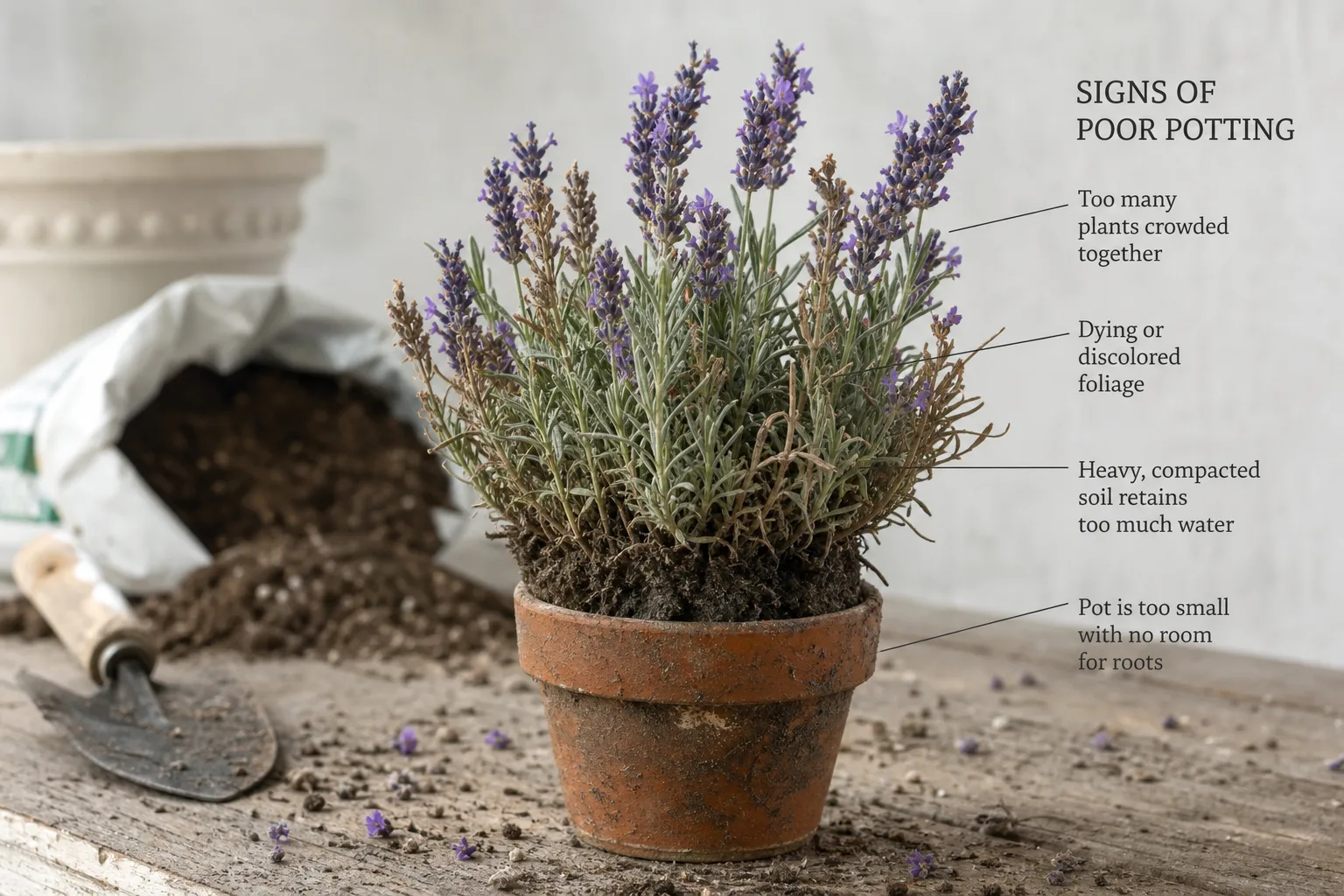
Poor Potting Setup on Lavender: Causes, Checks & Fixes
This guide covers poor potting setup on Lavender. See also the general Poor Potting Setup guide, watering, and light pages for this plant.
Poor Potting Setup on Lavender: Causes, Checks & Fixes
Quick answer
English lavender (Lavandula angustifolia) declines fast when the container system holds water around roots and crown-wrong mix, wrong pot size, blocked drainage, trapped cachepot runoff, or a buried woody stem. That structural failure mimics chronic overwatering even when you pour carefully. Lavender needs dry to medium, well-drained soil in full sun; dampness more than cold is responsible for killing lavender when mix stays wet through humid or rainy weeks.
First fix: restore the drainage path immediately-lift the inner pot from any decorative shell, empty standing water, and confirm holes are open. Repot into gritty mix only if structure is still wrong after drainage is restored.
This page covers combined setup failures (mix + container + crown depth + runoff trapping). If a single issue dominates, route to the sibling page first: no drainage hole for sealed bottoms, compacted soil for dense root-zone media, or root rot when tissue is already decaying.
What this page covers (and what it does not)
Covers: diagnosing when lavender’s pot environment-not watering frequency alone-is keeping roots wet; confirming mix texture, pot volume, crown height, and cachepot behavior; correcting structure before fertilizer or pest sprays; realistic recovery when roots remain firm.
Does not cover: calendar overwatering in an otherwise correct holed terracotta pot (overwatering); sealed containers with zero exit holes (no drainage hole); water-repellent dry cores (dry hydrophobic soil); or advanced mushy-root rescue beyond setup correction (root rot).
For mix recipes and pH targets, see lavender soil. For repot timing and crown-depth rules, see lavender repotting.
What poor setup looks like on lavender
Poor potting setup usually shows a pattern, not one isolated symptom:
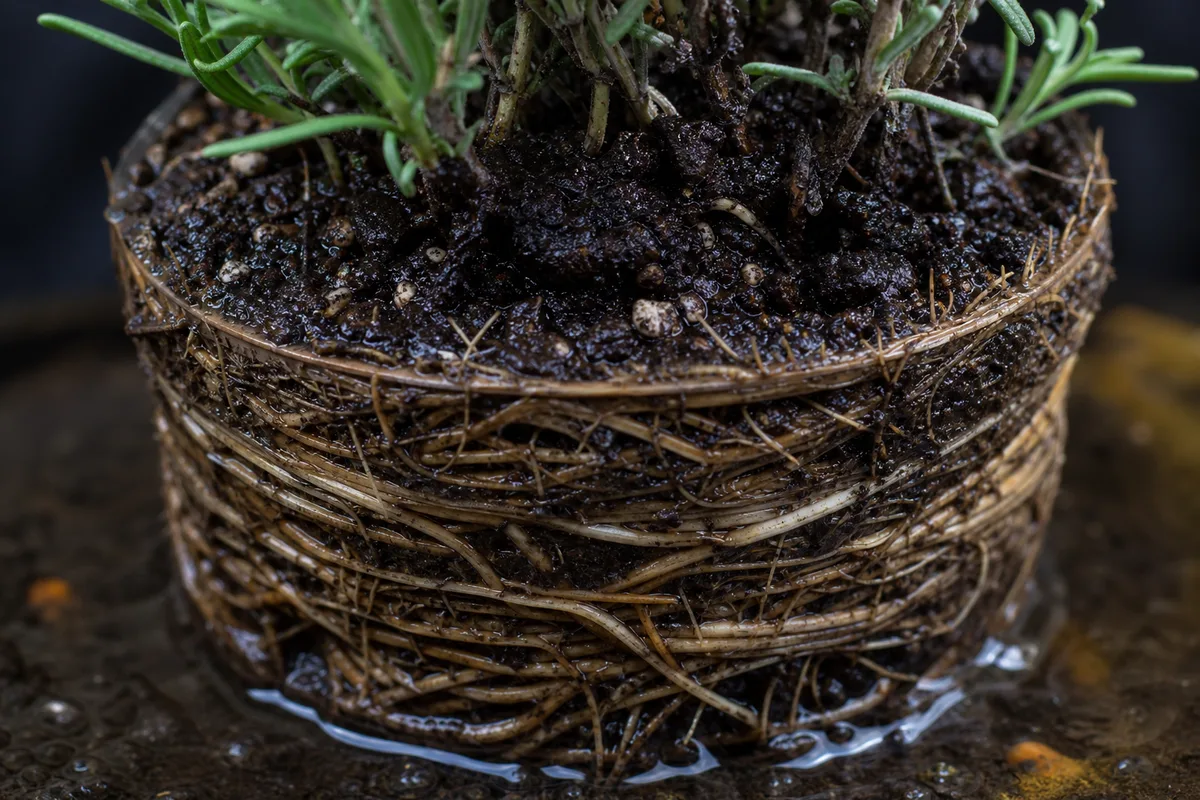
Poor Potting Setup symptoms on Lavender - compare with healthy tissue on the same plant.
- Mix stays wet at 7 cm (about 3 inches) depth for many days after one watering
- Water drains slowly, beads on the surface, or collects in saucers and cachepots
- Pot is much larger than the root ball-often two or more sizes too big
- Woody crown sits below the finished soil line or under wet organic mulch
- Lower silver foliage dulls, softens, or greys while soil remains damp at depth
- Root zone smells sour or musty when the pot is lifted
- Plant wilts on heavy wet mix-the underwatering paradox when roots are oxygen-starved
Firm stems with light dry gritty mix in a correctly sized holed terracotta pot point away from setup failure. Crispy needle tips with a light pot throughout suggest underwatering or heat stress instead.
Case example (editorial)
A balcony Hidcote lavender sat in a 30 cm glazed cachepot with a 15 cm inner plastic pot-holes present but the outer shell never emptied. Mix was standard peat-heavy bag soil with no grit. After three weeks of humid weather, lower stems greyed while the surface looked merely damp. Lifting the inner pot revealed 2 cm of standing water in the cachepot and a crown buried under wet mulch. Same-day fix: removed mulch, raised the crown to soil line, repotted into holed terracotta one size up from the root ball with one part compost to three parts perlite, and switched to lift-out watering only. New silver shoot tips appeared in 18 days; old grey leaves did not re-green-that is normal.
Why setup drives lavender decline
Container culture traps roots in whatever structure you built. In garden beds, water moves outward; in pots, excess moisture has only one exit path. Lavender evolved for lean, rocky Mediterranean soils. RHS guidance notes lavender will not survive long in shady, damp, or extremely cold conditions and will not thrive in heavy clay or waterlogged soil-container mistakes recreate that waterlogging in a small volume.
Oversized pots hold a large wet soil reservoir around a small root ball. Even careful watering keeps the center anaerobic for days. Peat-heavy mixes without enough grit collapse and retain water; lavender requires well-drained soils and does well in low-fertility sandy or gravelly media.
Buried woody crowns trap moisture against lignified stem tissue-the first place rot starts in humid weather. Cachepots and deep saucers that never get emptied function like partial waterlogging even when the inner pot has holes. Illinois Extension warns that plants in a pot liner must never stand in water unless they are aquatic-drain the outer container after every watering.
Cultivar and climate notes: English lavender (L. angustifolia) and its hybrids are more cold-hardy than Spanish or French tender types but all share the same drainage demand in pots. English lavender grows best in dry, sandy, well-drained soils and does not perform well in wet or waterlogged conditions. Humid summers, rainy balcony seasons, and cool indoor winters slow evaporation-setup errors that are merely annoying in dry Mediterranean climates can become fatal within weeks elsewhere.
How to confirm the cause
Work through this checklist in order:
- Hole check - Are holes present, open, and elevated above a saucer mat? Roots or debris blocking exit?
- Drainage speed test - Pour water; it should move through gritty lavender mix in seconds, not pool on the surface for minutes.
- Pot size ratio - Is pot diameter more than roughly 3–5 cm (1–2 inches) wider than the root ball on all sides? Dramatically larger volumes signal oversizing.
- Crown depth - Is the woody stem base at or slightly above the finished soil line, not buried under mix or mulch?
- Cachepot inspection - After watering, lift the inner pot-is standing water visible in the outer shell?
- Moisture probe - Does mix stay wet at 7 cm depth for four or more days after your normal watering rhythm?
- Unpot if unsure - Firm pale roots support setup correction; mushy dark roots with sour smell mean escalate toward root rot workflow.
Heuristic vs. sourced fact: The 7 cm dry-down probe and pot-size ratio are field-tested container checks used throughout LeafyPixels lavender guides; species drainage requirements are grounded in extension and botanical garden references cited above.
Poor setup vs sibling lavender problems
| Pattern | Poor potting setup | No drainage hole | Compacted soil | Dry hydrophobic soil | Root-bound | Root rot (advanced) |
|---|---|---|---|---|---|---|
| Primary issue | Mix + size + crown + runoff combo | Zero or blocked exit holes | Dense anaerobic root zone | Water-repellent dry core | Circling roots; little mix left | Active tissue decay |
| Pot bottom | May have holes | Zero holes or blocked exit | Holes present | Holes present | Holes present | Any |
| Water behavior | Slow drain; oversized wet reservoir | Pools at base; never fully drains | Water sits on surface; exits slowly | Runs down walls; core stays dry | Drains fast; unstable watering | Chronic wet; sour smell |
| Crown | Often buried too deep | Softens fast in sealed pot | Firm unless secondary rot | Firm if caught early | Firm; stalled growth | Soft, grey, collapsing |
| First fix | Drain path + repot gritty, right size | Drill holes or repot with holes | Refresh or repot gritty mix | Bottom-soak once to re-wet | Repot one size up | Unpot, trim rot, gritty repot |
| Page link | This page | No drainage hole | Compacted soil | Dry hydrophobic soil | Root-bound | Root rot |
Use this table before repotting unnecessarily. Simple overwatering in a holed terracotta with correct mix may fix with schedule change only-structural setup failures never do with watering tweaks alone.
First fix for lavender
Restore the drainage path immediately-before changing fertilizer, pruning hard, or spraying for pests.
Lift the inner pot out of any decorative shell, empty all standing water, and confirm holes are open and not sealed to a saucer. If water cannot leave the root zone, every other intervention is secondary.
After drainage is restored, repot if setup remains structurally wrong: oversized container, dense peat-heavy mix without grit, buried crown, or a pot that cannot be corrected. Match gritty mix and sizing guidance in lavender soil and lavender repotting.
When setup correction alone may be enough
If holes are open, mix is already gritty, crown height is correct, and only a cachepot held water, lifting the inner pot and emptying runoff after every watering may resolve decline without unpotting. Re-evaluate after seven to ten days of dry-down watering per lavender watering-new firm shoot tips mean success; continued grey wilt on wet depth means full repot.
Step-by-step recovery
When structure-not just a full cachepot-needs correction:
- Unpot gently - Inspect roots and crown. Trim only dark, mushy roots with sterile scissors; keep the woody crown intact.
- Choose container - Holed terracotta, usually one size up at most from the current root ball-not the decorative oversized tub.
- Mix - Roughly one part compost to three parts coarse grit, perlite, or pumice; RHS container guidance recommends mixing up to 25 percent coarse grit by volume into peat-free compost for drainage.
- Replant - Woody crown at or slightly above finished soil line; no wet mulch piled against the base.
- Water once - Soak until runoff exits holes; drain completely; empty saucer or cachepot within 30 minutes.
- Light and dry-down - Full sun and good airflow; water only when mix is dry at 7 cm depth.
- Hold fertilizer - Lavender thrives in lean soil; feed only after new growth appears.
If more than one-third of roots are mushy or the crown is soft, take cuttings from firm upper stems while repotting and follow root rot escalation steps.
Recovery timeline and expected outcomes
| Severity | Root/crown state | Realistic outcome | Timeframe |
|---|---|---|---|
| Mild | Firm roots; crown firm; only cachepot or slight oversizing | Turgor improves; new silver tips | 2–4 weeks in warm bright conditions |
| Moderate | Some brown roots trimmed; crown still firm | Partial recovery likely with strict dry-down | 4–8 weeks |
| Severe | Soft crown; majority mushy roots | Low survival odds; cuttings are backup | Uncertain-escalate same day |
Judge recovery by new growth and firmer structure, not by damaged old leaves greying at the base. Old foliage rarely reverts to silver-green.
Causes to rule out
- Simple heat wilt - Plant wilts in afternoon heat but recovers in cooler hours; root zone is not chronically wet at depth.
- Underwatering - Pot becomes very light; mix dry throughout; stems limp but crown firm with crisp needle edges.
- No drainage hole only - Sealed bottom is the dominant failure; see no drainage hole before blaming mix alone.
- Compacted soil - Dense old medium stays wet despite acceptable pot size and hole count; see compacted soil.
- Root-bound stress - Roots tightly circling with little mix left; fast dry-out or unstable watering despite holes.
- Root rot from watering in good mix - Firm gritty mix can still rot if watered on a calendar through rainy weeks.
What not to do
Do not add a gravel layer at the bottom to compensate for missing drainage holes-Illinois Extension calls this a myth: water perches in soil above the gravel until pores saturate. Do not jump to a much larger container “for future growth.” Do not bury the woody crown for stability. Do not leave the nursery pot sitting in trapped runoff inside a sealed cachepot. Do not fertilize or fungicide a stressed plant in wet mix before fixing structure.
How to prevent poor setup next time
Build prevention into day-one setup: open-drain container, gritty low-retention medium, modest pot sizing, and crown placement that stays dry at the base. Run the instant runoff test after every repot-water should exit in seconds.
If you use decorative outer pots, treat them as display sleeves only: lift the inner holed pot to water, drain fully, and keep the outer shell dry. For balcony culture, repot into holed terracotta before rainy season when evaporation drops.
English lavender in outdoor containers benefits from a sheltered spot in winter so roots are not in damp compost through cold wet weeks-RHS notes that container roots are more susceptible to cold and rot when compost stays wet.
Lavender care cross-check
Many recurring lavender “care” failures are setup failures in disguise. Before adjusting feed, sprays, or watering frequency, verify structure: container, drainage path, soil texture, and crown height. Baseline culture lives on the lavender overview.
When to escalate immediately
Escalate same day if lavender wilts on wet soil, smells sour, or has a soft crown base. In rainy or humid seasons, poor setup can move from stress to rot within seven to ten days-waiting for “one more week” usually worsens outcomes.
Seek local extension or nursery help when:
- Crown tissue is soft after repotting into corrected setup
- More than one-third of roots were mushy on inspection
- Decline continues despite holed terracotta, gritty mix, and strict dry-down for two weeks
- You are growing tender Spanish or French lavender outdoors through a wet winter-hardiness and drainage needs differ from English types
Related lavender problems
- No drainage hole - when sealed bottoms or blocked exits dominate
- Compacted soil - dense root-zone media despite open holes
- Root-bound - circling roots in an otherwise draining pot
- Root rot - mushy roots and sour smell confirm advanced failure
- Overwatering - schedule error in an otherwise correct setup
- Dry hydrophobic soil - water runs off while core stays dry
- Lavender soil - mix ratios, pH, and drainage tests
- Lavender repotting - step-by-step procedure and crown-depth rules
Conclusion
Poor potting setup on lavender is a structural problem, not a watering mistake alone. Route first: confirm scope with the differential table, restore drainage path, then repot into gritty mix at the right size with the crown above the wet zone. If symptoms already match active rot, move to root rot after structural correction. Success means firm crown, no sour smell, and new silver shoots-not salvaging grey old foliage.
When to use this page vs other Lavender guides
- Lavender watering guide - Use for routine moisture checks before assuming poor potting setup is the main issue.
- Lavender problems hub - Browse all 51 common issues on this species.