Compacted Soil on Lavender: Causes, Checks & Fixes
Quick answer
Compacted soil on lavender traps water around roots, causing grey wilting and stunted silver growth despite watering. Repot into one part compost to three parts coarse grit or perlite, confirm water runs through in 2–3 seconds, and never reuse dense peat-heavy mix.
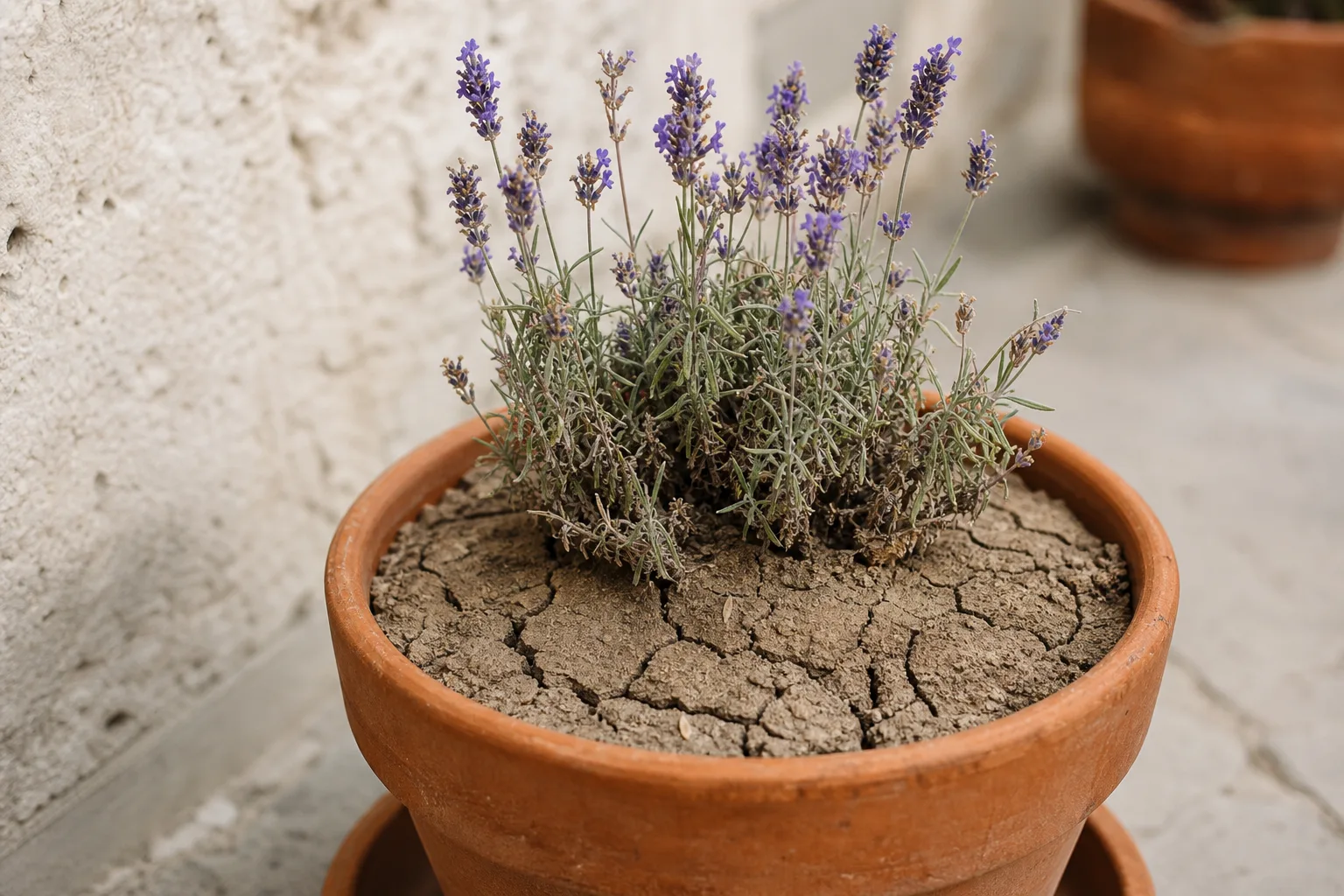
Compacted Soil on Lavender: Causes, Checks & Fixes
This guide covers compacted soil on Lavender. See also the general Compacted Soil guide, watering, and light pages for this plant.
Compacted Soil on Lavender: Causes, Checks & Fixes
Quick answer
English lavender (Lavandula angustifolia) wilting on wet, heavy potting mix is often compacted soil-not underwatering. Fine peat-based media collapse over two to three years of top watering and root pressure, eliminating the air pockets Mediterranean roots need between drinks. Lavender needs dry to medium, well-drained, alkaline soil in full sun; compaction suffocates roots faster than a missed watering in hot weather.
First fix: unpot, loosen or trim bound roots, and repot into fresh one-part-compost to three-parts-grit mix sized to the root mass-not the same dense substrate stirred loosely. For pH 6.5–7.5 targets and full mix recipes, see the lavender soil guide. For crown-depth rules and pot sizing, see lavender repotting.
This page covers substrate collapse and slow drain in holed pots. If your pot has no exit holes, start with no drainage hole. If water beads off a light pot while the core stays dry, compare with dry hydrophobic soil before repotting.
What compacted soil looks like on lavender
The hallmark is the wilting-with-wet-surface paradox: silver foliage dulls and lower stems grey while mix near the top feels soggy and the pot stays heavy for many days after one watering.
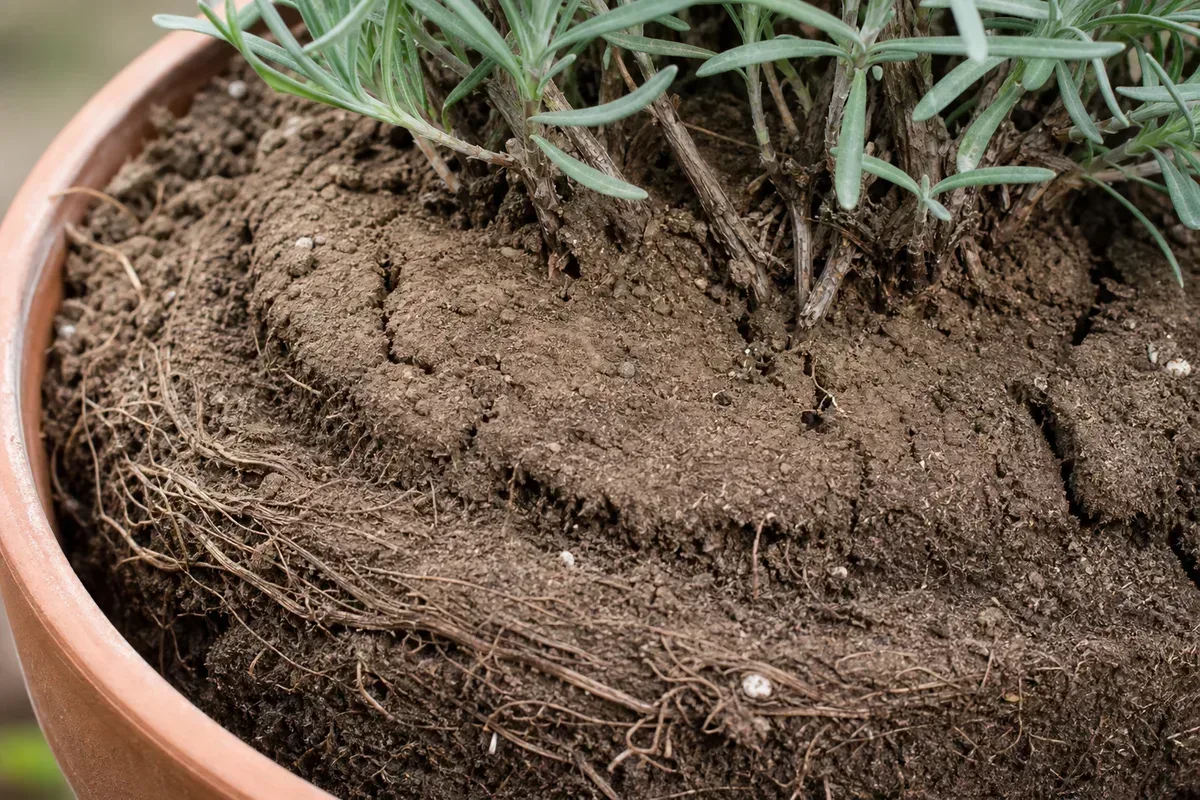
Compacted Soil symptoms on Lavender - compare with healthy tissue on the same plant.
Typical patterns on container lavender:
- Water beads on the surface or channels down pot sides without wetting the center
- Mix feels hard and dense when probed at about 7 cm (roughly 3 inches) depth
- New shoots stall; established silver leaves lose brightness before crisp wilting appears
- Sour or musty smell from the bottom of the pot after lifting it
- Unpotting reveals a solid root brick with few white tips and fine roots matted together
Photo callout - surface beading: Picture a terracotta lavender pot after a normal top watering: water pools on the dark peat crust for thirty seconds before a thin trickle exits the drain hole, while the pot still feels brick-heavy three days later. Healthy gritty mix absorbs instantly and lightens within a week on a sunny patio.
Photo callout - root brick: Slide the plant out and the root ball holds its cylindrical shape like a paving stone-dense brown roots with almost no visible white tips at the outer edge. A healthy lavender root mass should crumble slightly at the edges with pale growing tips visible.
Firm stems with completely dry, loose gritty mix in a holed pot point away from compaction. A light pot with water running down walls and a dusty dry core suggests dry hydrophobic soil instead.
Why lavender suffers in compacted soil
Lavender evolved on lean, rocky Mediterranean slopes where water moves through fast and air sits around fine feeder roots continuously. Standard peat-heavy potting mix is engineered to retain moisture for general houseplants. Months of top watering compress fine particles; root growth adds further pressure; macropores-the air channels roots breathe through-disappear.
Dampness more than cold is responsible for killing lavender, and Illinois Extension notes high susceptibility to root rot in heavy, poorly drained soils. Compacted container mix mimics chronic overwatering even when you pour carefully: the center stays saturated while the surface looks merely damp.
Terracotta vs. plastic changes how fast compaction shows up but not the end result. Unglazed clay wicks moisture through porous walls and can mask early collapse in a holed pot, while sealed plastic tubs often fail faster because walls do not breathe. Either material with dense, aged peat will eventually suffocate roots.
Using garden clay or rich compost straight from the yard in balcony pots is a common mistake-rules that work for in-ground lavender on amended mounds do not apply to closed containers. Lavender will not thrive in heavy clay or any soil that becomes waterlogged over winter.
Fine top-dressing mulch washed into surface pores accelerates upper-layer cementing on lavender, where the woody crown sits right at the soil line-the first tissue to fail when air disappears.
How to confirm the cause
Work through these checks in order:
- Drainage speed - Pour water slowly; in proper lavender mix it should run through in roughly 2–3 seconds in a small pot. Pooling for minutes signals compaction or wrong mix.
- Probe resistance - A chopstick or finger meets a hard dry or wet plug at mid-depth, not loose crumbly grit.
- Root ball structure - Tight circling mass with minimal white tips vs. loose outer roots with pale growing points.
- Wilting pattern - Wilting with heavy wet pot suggests root suffocation, not drought.
- Mix age - Same peat substrate three or more years without refresh is high risk.
- Smell - Sour anaerobic odor from the bottom confirms oxygen-starved breakdown.
If holes are absent or blocked, confirm no drainage hole before blaming mix alone. Match dry-down rhythm to lavender watering-probe at 7 cm depth, not surface crust alone.
Compaction vs. sibling problems
| Pattern | Compacted soil | Dry hydrophobic soil | No drainage hole | Root-bound | Root rot (advanced) |
|---|---|---|---|---|---|
| Pot weight | Heavy for days | Light | Heavy continuously | Moderate; drains fast | Heavy; sour |
| Water behavior | Pools on surface; slow exit | Runs down walls; core dry | Pools at base; never fully drains | Drains quickly | Chronic wet; slow drain |
| Probe at 7 cm | Hard dense plug | Dry dusty core after top water | Wet for many days | Firm mix; circling roots | Wet; mushy roots |
| Crown | Firm unless secondary rot | Firm if caught early | Softens fast in sealed pot | Firm; stalled growth | Soft, grey, collapsing |
| First fix | Refresh or repot gritty mix | Bottom-soak once to re-wet | Drill holes or repot with holes | Repot one size up | Unpot, trim rot, gritty repot |
| Page link | This page | Dry hydrophobic soil | No drainage hole | Root-bound | Root rot |
Use this table before repotting unnecessarily. Simple overwatering in loose gritty mix with open holes may fix with schedule change only-compacted peat never does without a mix refresh.
First fix for lavender
Repot into fresh gritty alkaline mix, tease apart or slice bound roots, and use a pot sized to the root mass with open drainage-not the same compacted soil stirred loosely on top.
Blend roughly one part potting compost to three parts coarse grit, perlite, or fine gravel by volume. English lavender grows best in dry, sandy, well-drained soils with pH roughly 6.5–7.5; full amendment detail lives in the lavender soil guide. Water once lightly after repot, then dry-down only-hold fertilizer until new silver tips appear.
Photo callout - post-repot drainage test: After repotting into fresh grit mix, soak until water runs from holes. In a 15–20 cm pot, the column should clear in seconds and the pot should feel noticeably lighter within a week on a sunny sill-your simple proof compaction is fixed.
Step-by-step recovery by severity
Mild compaction - surface crust, firm crown
When the crown is firm, roots show white tips, and smell is neutral:
- Flush the pot once in summer-water until it runs freely from holes; empty the saucer; allow full dry-down before the next drink.
- Scarify the surface crust lightly with a fork; remove fine mulch that cemented upper pores.
- Top-dress with coarse grit instead of organic mulch.
- Monitor drainage speed for two weeks; if pooling returns, escalate to moderate repot.
Moderate compaction - root brick, no crown softness
When unpotting shows a dense circling mass but firm woody crown tissue:
- Unpot - Discard dense or sour substrate entirely; do not reuse.
- Score the root ball vertically in three or four places if circling; remove bottom matted dead roots only-do not aggressively shave the woody lavender crown.
- Choose holed terracotta sized to root mass, not oversized plastic tubs; see lavender repotting.
- Fill with fresh gritty mix; plant at the same depth; crown above any mulch line.
- Water until a small amount drains; empty saucer within 30 minutes.
- Place in full sun; water only when mix is dry at 7 cm depth.
Severe compaction - sour smell, crown softness, grey base stems
When anaerobic breakdown has started:
- Follow moderate steps 1–4, but trim black mushy roots with sterile scissors; air-dry cut surfaces briefly.
- Repot into a smaller pot if much root mass was removed-oversized wet voids invite repeat rot.
- Hold water for about a week if crown tissue was stressed; then resume dry-down checks.
- If decline continues within seven to ten days, escalate to root rot workflow.
Recovery timeline
Mild surface compaction corrected before rot may show new silver shoots in two to four weeks after gritty repot and dry-down discipline. Severe anaerobic damage with crown softness takes longer and may fail if rot advanced-inspect weekly for firm new tips, not greening of old grey foliage.
Old crispy or grey leaves will not revert; judge success by new firm shoots and a pot that lightens on schedule between waterings.
Causes to rule out
- Simple underwatering - Light pot, curling leaves, loose dry mix throughout; see underwatering.
- No drainage hole - Related but distinct; fix holes and mix together via no drainage hole.
- Poor potting setup - Oversized wet pot, buried crown, or wrong mix from day one; see poor potting setup.
- Root rot from overwatering in good mix - Firm mix can still rot if watered constantly without dry-down.
- Nutrient deficiency - Pale leaves in loose appropriate mix; different fix.
What not to do
Do not “fix” compaction by watering more to soften it-that worsens anaerobic conditions. Do not add sand alone to clay-it can create an even greater drainage problem rather than improving structure. Do not repot into larger heavy peat bags without grit. Do not reuse old compacted substrate. Do not score the woody lavender crown aggressively-trim roots only.
How to prevent compacted soil next time
Refresh mix every two to three years before roots bind the pot solid. Use gritty, fast-draining alkaline recipes from the lavender soil guide consistently. Occasionally flush pots in summer if mineral crust forms on the surface-then allow full dry-down.
Confirm instant runoff after every repot: water should move through in seconds. Top-dress with gravel, not fine bark that washes into pores. Spanish lavender (L. stoechas) and tender types in humid climates need the same open mix discipline as English lavender-sometimes more grit, never less drainage.
In-ground lavender on clay
Compaction in garden beds is a different failure mode from pots but the same biology: lavender roots drown where winter wet sits. On heavy clay, plant on a 20–30 cm mound or raised bed so roots sit above pooling water-do not rototill small amounts of sand into clay. Build a gravelly, inorganic mound per the soil guide rather than amending the whole yard. In-ground culture, pH targets, and mound recipes are covered on lavender soil.
Lavender care cross-check
Compaction turns a drought-loving herb into a bog plant by accident. Gritty open mix and holed terracotta are baseline culture for container lavender-not optional extras. Species-wide light, water, and hardiness notes live on the lavender overview.
When to worry - crown softness and root rot escalation
Escalate immediately if:
- Crown is soft or grey at the soil line
- Stems blacken from the base while mix stays wet
- Roots are mostly mush after unpotting
- Sour smell persists after gritty repot and dry-down
- Decline continues seven to ten days despite corrected mix
Follow root rot rescue steps after repotting into grit. For repeated compaction failure in the same pot, review poor potting setup and container choice before a third repot.
Related lavender problems
- Root rot - when mushy roots and sour smell confirm advanced failure
- No drainage hole - sealed containers trap water regardless of mix quality
- Dry hydrophobic soil - water runs off while core stays dry
- Poor potting setup - wrong mix, oversized pot, or buried crown from day one
- Root-bound - circling roots in an otherwise draining pot
- Overwatering - schedule failure in adequate mix
- Lavender soil - mix ratios, pH, drainage tests, and clay mound builds
- Lavender repotting - crown-depth rules and pot sizing
Conclusion
Compacted soil suffocates lavender roots by eliminating air pockets peat collapse and root pressure create over time. Confirm with drainage speed, probe resistance, and root-ball inspection; fix with gritty alkaline repot sized to the root mass; prevent with mix refresh every two to three years and instant runoff tests. If the crown softens or roots turn mushy, route to root rot rescue-not another surface watering attempt.
When to use this page vs other Lavender guides
- Lavender watering guide - Use for routine moisture checks before assuming compacted soil is the main issue.
- Lavender problems hub - Browse all 51 common issues on this species.