Root Bound on Lavender: Causes, Checks & Fixes
Quick answer
Root-bound lavender has circling dense roots filling the pot, stalled silver shoots, and water that channels down the sides without wetting the core. First step: slide the plant out and inspect the root ball-if roots spiral the walls with little mix left, repot in early spring into holed terracotta one size up with fresh gritty mix and tease or score the outer root mass.
Root Bound on Lavender: Causes, Checks & Fixes
This guide covers root bound on Lavender. See also the general Root Bound guide, watering, and light pages for this plant.
Root Bound on Lavender: Causes, Checks & Fixes
Quick answer
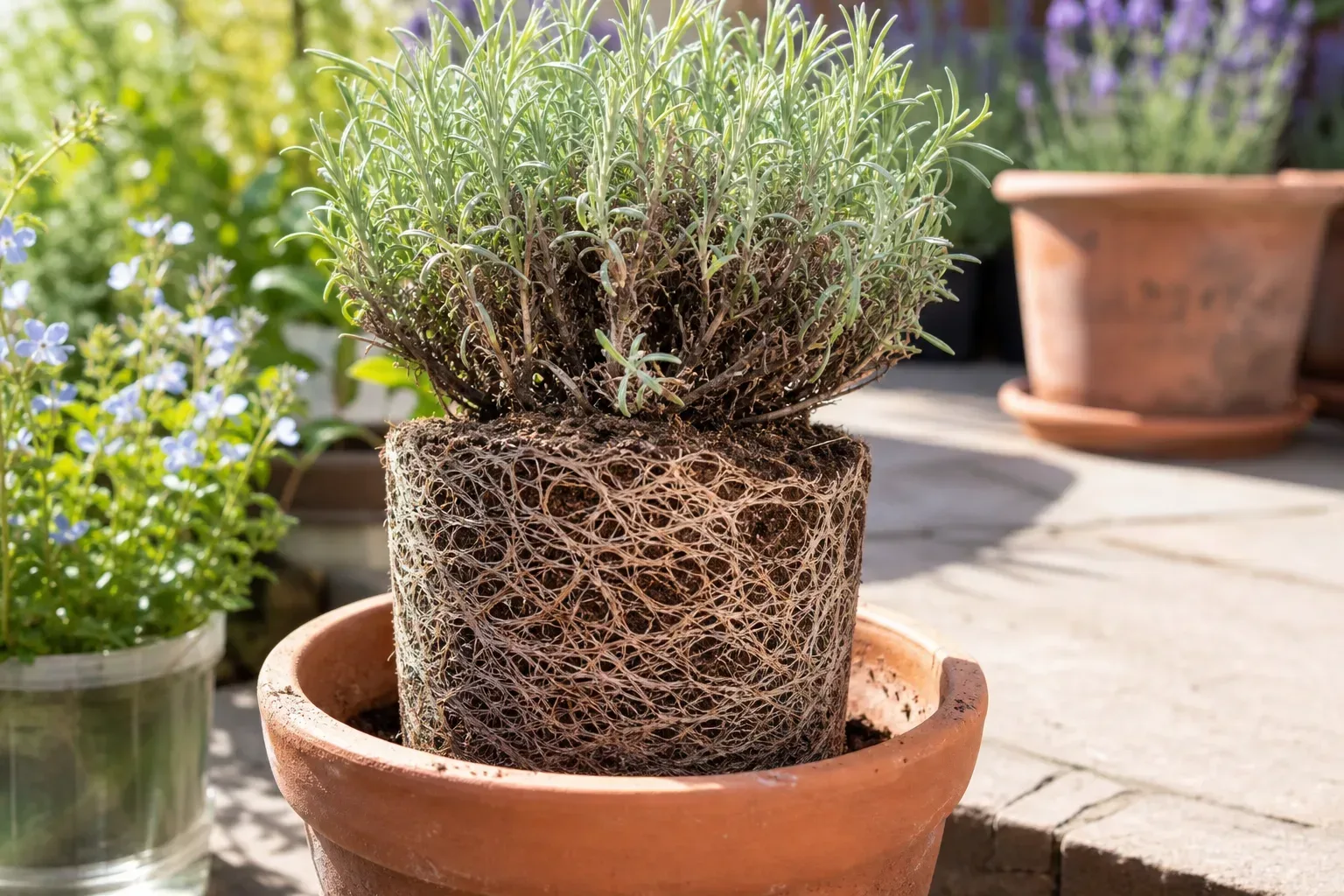
Root-bound lavender (Lavandula spp.) stalls when circling roots consume the pot and little fresh mix remains to hold air and water. Above soil you may see stalled silver tips, a pot that dries within hours after watering, and no improvement despite full sun. Below soil, white roots spiral the pot walls in a dense sleeve with almost no loose grit visible.
First step: slide the plant out and inspect the root ball. If roots wrap the outside in a solid mat and water has been channeling down the sides, binding is confirmed-not a fertilizer shortage or mystery pest. Plan to repot in early spring into holed terracotta one size up with fresh one-part compost to three-parts grit, teasing or scoring the outer root mass. For full technique, timing, and species notes, see the lavender repotting guide.
Lavender evolved on dry Mediterranean hillsides and needs full sun and free-draining soil. Container plants dry quickly even when healthy (RHS); binding makes that worse by replacing soil volume with roots that cannot store moisture evenly.
What root bound looks like on lavender
Above-soil stall signals
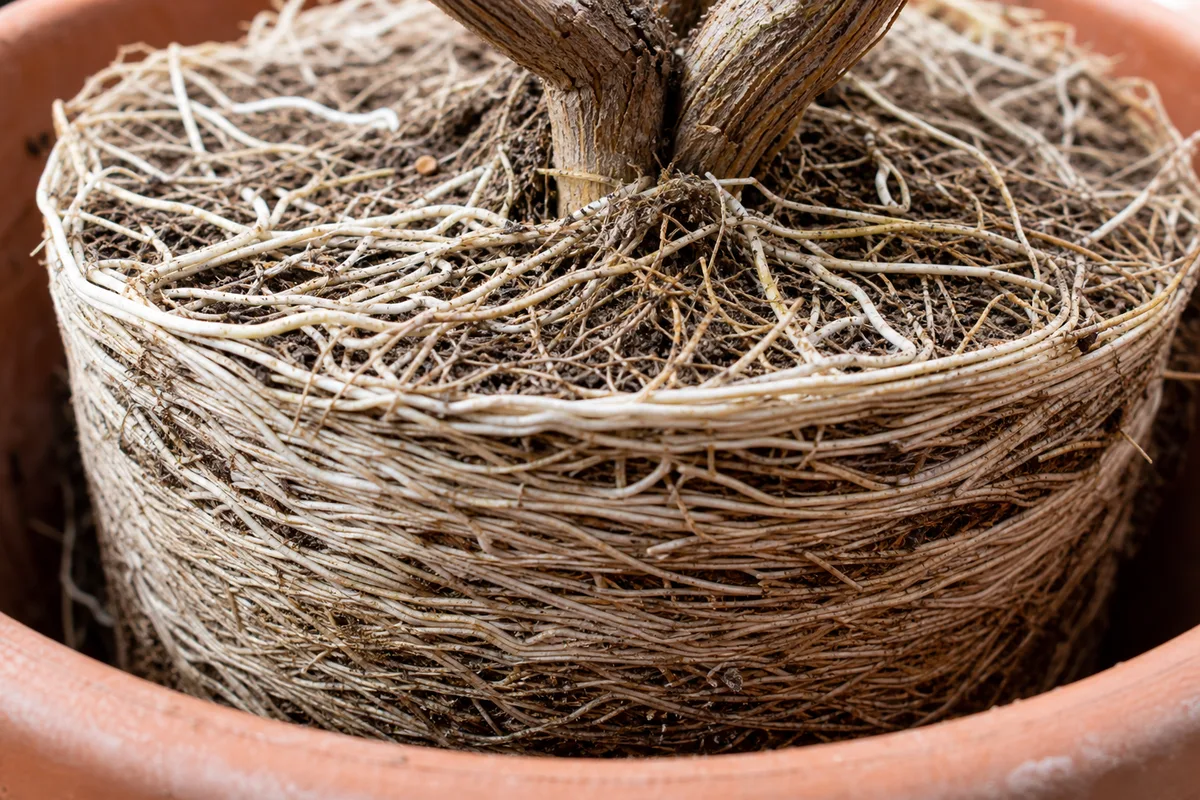
Root Bound symptoms on Lavender - compare with healthy tissue on the same plant.
Binding often shows up as water stress in a plant that looks otherwise well placed. You water thoroughly, yet the pot feels light again within a day or two. Silver-green tips stop extending even in spring and summer. Flowering may thin on a plant that bloomed reliably before-roots simply cannot support full wand development when the pot is exhausted.
The woody crown usually stays firm on binding alone. Softening at the base or a sour smell from the mix points toward root rot overlapping with crowding, not simple binding.
Below-soil root mat clues
Unpotting makes the diagnosis clear:
- White or tan roots spiral tightly against the pot wall
- The root ball lifts out as one solid mass with little visible grit between roots
- Roots poke through drainage holes or crowd the bottom
- Water runs straight through in seconds without wetting the dry core
- The pot feels hard and full when you press the sides
Healthy container lavender has firm pale roots with airy gritty mix between them. Slight outer circling after two years is normal; a root brick with no mix left is not.
Why lavender becomes root bound
Lavender is a slow to moderate grower in pots compared with fast herbs, which makes binding easy to miss. Many plants stay in the same terracotta for three or more years because drought tolerance reads as “low maintenance.” During that time, shallow Mediterranean roots gradually displace mix volume until the pot is more root than soil.
Container lavender already has a limited root zone. RHS guidance notes that pots dry quickly and need regular summer water-when roots consume that small volume, channel drainage begins. Water follows paths down the pot walls and exits before the center hydrates. The plant experiences drought cycles even right after you water, which stresses silver foliage and invites rot if someone responds by watering more often.
Terracotta helps dry-down but does not prevent binding; roots still circle any fixed volume. Plastic nursery pots hide pressure until roots exit holes or the plant becomes top-heavy. Oversized pots are the opposite failure mode-wet unused mix around a small root ball causes rot, not binding. Binding shows fast dry-down plus circling roots; oversized pots show slow drying with idle wet outer soil.
English lavender (Lavandula angustifolia) and lavandin hybrids are the usual container choices in cool climates; French and Spanish types in warm regions may need more frequent watering checks in porous pots but the same repot rules apply. Illinois Extension stresses that dampness kills lavender faster than cold-binding plus erratic channel watering is a common path to decline.
How to confirm the cause
Work through these checks before you repot:
- Time since last repot - Has the plant been in the same container for two or more years, or since purchase with no refresh?
- Water behavior - After a full soak, does the pot feel light within 24–48 hours? Does water pour out the bottom in seconds while the top inch looks barely moist?
- Growth rhythm - Are silver tips stalled through spring and summer with no change in light or pruning?
- Partial lift test - Tilt the pot and slide the root ball up slightly. Do roots cling to the wall in a visible spiral?
- Drain hole inspection - Are white root tips growing out of holes or packing the bottom?
- Crown and smell on unpot - Firm circling roots with no foul odor confirm binding. Brown mushy roots with a sour smell mean root rot-repot with trim, not binding alone.
- Season check - Firm winter pause on an outdoor plant may be dormancy, not binding. Inspect roots before repotting a dormant mound.
If the mix is dry throughout, roots are loose with plenty of grit visible, and the crown is firm, slow growth from shade or an exhausted woody center may explain the stall better than binding.
Severity: mild circling vs root brick vs rot overlap
| Level | What you see on unpot | Water behavior | Crown | First action |
|---|---|---|---|---|
| Mild circling | Outer roots circle; mix still visible in center | Slightly fast dry-down; some new tips | Firm | Plan spring repot; top-dress grit if not urgent |
| Moderate binding | Dense sleeve at walls; little mix in lower half | Channels every watering; tips stall weeks | Firm | Repot early spring one size up; tease outer roots |
| Solid root brick | Root mass holds pot shape; almost no soil | Dries in hours; top-heavy plant | Firm | Repot promptly before peak heat; score sides vertically |
| Girdled + rot overlap | Tight mat plus brown mushy core or sour smell | Erratic wet/dry; base yellowing | Soft or firm with odor | Trim rot, repot same day into fresh gritty mix-see root rot |
Mild outer circling is tolerable for a season if growth and watering still work. A root brick entering summer heat or a prolonged wet season deserves preemptive repot-binding worsens drought stress when you cannot soak the core, and wet outer channels can rot the dry center if watering becomes erratic.
First fix for lavender
Slide the plant out and inspect the root ball.
Knock the pot gently, support the woody base, and lift the mass out. If roots circle the outside in a dense mat with little grit visible, binding is confirmed. That single inspection tells you whether the next step is spring repot, rot trim, or simply fixing watering rhythm because the mix was dry and roots were fine.
Do not jump to a huge new pot, heavy fertilizer, or aggressive root stripping on day one. Lavender tolerates repot better than staying bound in stagnant, channel-prone soil-but one size up only, with gritty alkaline mix, prevents the wet unused soil that causes post-repot rot.
Step-by-step recovery
Once binding is confirmed, repot in this order:
- Choose timing - Early spring, as new growth starts, is ideal. In warm climates (USDA Zones 9–10), early fall at least six weeks before frost also works. Avoid routine winter repot unless roots are rotting. See lavender repotting for species timing.
- Select the pot - Move up only one size-about 2.5–5 cm (1–2 inches) wider in diameter. Use a container with large drainage holes; holed terracotta improves dry-down. A standard English lavender finishing in a 30–40 cm (12–16 in.) pot is typical per RHS container guidance.
- Prepare mix - Fresh one-part compost to three-parts coarse grit (or peat-free loam with up to 25% grit by volume per RHS). Lavender needs sharp drainage and tolerates lean, slightly alkaline conditions (Missouri Botanical Garden).
- Tease or score the root ball - Loosen circling outer roots with your fingers. If the mat is tight, make two or three shallow vertical cuts along the sides-never at the crown. Trim only black, dead circling roots.
- Repot at the same depth - Keep the woody crown at the same soil line; burying the stem base invites crown rot (Illinois Extension).
- Water to settle - One thorough soak until excess drains, then return to dry-down rhythm-probe roughly 7 cm deep before the next water rather than keeping the pot constantly moist.
- Full sun and patience - Place in full sun if already acclimated. Hold fertilizer until new silver tips appear.
If unpotting reveals extensive mush, switch to root-rot salvage before assuming binding was the only issue.
Recovery timeline
Firm bound plants repotted into slightly larger gritty holed pots usually show fresh silver tips within two to four weeks during active growth in full sun. Water uptake stabilizes first-the pot stays evenly moist for a normal interval instead of drying in hours.
Severely girdled roots may need an extra week before tips move. Extreme girdling with a woody hollow center may need renewal pruning after repot if top growth still stalls-binding was not the only limiter. Winter repots recover slower; prefer spring when possible.
Judge recovery by new silver growth and crown firmness, not by how quickly older leaves green up. Wrinkled or dull lower foliage from past drought cycles may stay cosmetic.
Lookalike symptoms to rule out
| Symptom pattern | Likely cause | Key check | Page |
|---|---|---|---|
| Water channels fast; circling roots; firm crown | Root bound | Solid root sleeve on unpot | This page |
| Water pools on surface; mix hard and crusted | Compacted soil | Mix dense but roots not circling tightly | Compacted soil |
| Mix repels water; dry core, wet rim | Dry hydrophobic soil | Peat or fines degraded; crust on top | Hydrophobic soil |
| Firm pause; short days; no spiral roots | Winter dormancy | Season and firm mound | Normal rest |
| No new tips; leggy pale growth | Shade stall | Low light; roots loose in pot | Slow growth |
| Soft crown; sour smell; dark roots | Root or crown rot | Mushy tissue on unpot | Root rot |
Channel drainage with a firm crown strongly suggests binding. Compaction and hydrophobic crust can mimic fast surface dry-down but show different root and mix texture when you unpot.
What not to do
- Do not repot into a much larger pot “for years”-excess wet mix around a small root zone invites rot after binding correction.
- Do not repot a bound plant without teasing or scoring outer circling roots-they will continue the spiral in fresh mix.
- Do not repot a weak rotting plant without trimming mushy roots first.
- Do not water on autopilot after repot-fresh gritty mix dries on a new rhythm; see lavender watering.
- Do not confuse winter dormancy on a firm outdoor plant with binding that needs emergency repot.
- Do not fertilize until new tips show-lavender prefers lean soil (RHS).
How to prevent binding next time
Repot every two to three years in early spring before roots circle into an impenetrable mass. Refresh the top inch of gritty mix each spring if a full repot is not yet needed-useful for mature plants in finishing pots per the repotting guide.
Use appropriately sized holed terracotta, not decorative tubs with hidden wet zones. Match pot diameter to cultivar: dwarf English types finish smaller than standard L. angustifolia or lavandin hybrids. Slight cosiness is acceptable until growth and moisture retention suffer.
Lavender care cross-check
Root bound is a maintenance timing problem, not a mystery disease. If stall appears in full sun with channel watering and a firm crown, inspect roots before chasing pests or feed. If the mix is wrong-heavy, peat-rich, or slow-draining-fix soil setup during repot rather than only upsizing.
Overlap with repotting stress is normal for one to three weeks after a correct repot; firm crown plus new tips means progress. Soft crown after repot means rot protocol, not patience.
When to worry
Preemptive repot before peak summer heat or your region’s wettest season if the pot is a solid root brick and watering has become unpredictable-binding plus heat or erratic rain worsens drought stress and core rot risk.
Escalate immediately if unpotting reveals soft roots, sour smell, or crown softening-trim and repot the same day into fresh gritty mix. Repeated binding failure on the same plant after correct repot may indicate oversized prior pots or chronic overwatering; review poor potting setup and watering guides.
Related lavender guides
- Lavender repotting - full when-to-repot, scoring technique, and species timing
- Root rot - mushy roots and sour smell during binding repot
- Compacted soil - hard mix without a circling root sleeve
- Slow growth - stall from shade or woody center, not crowding
- Lavender watering - dry-down rhythm after repot
- Lavender soil - gritty mix ratios and pH for containers
Conclusion
Root-bound lavender stalls when circling roots replace soil volume and water channels past the dry core. Confirm with unpot inspection, repot in early spring one size up with fresh gritty mix, tease or score outer roots, and return to full sun with dry-down watering. Routine two- to three-year repot prevents a root brick from collapsing growth before you notice the problem.