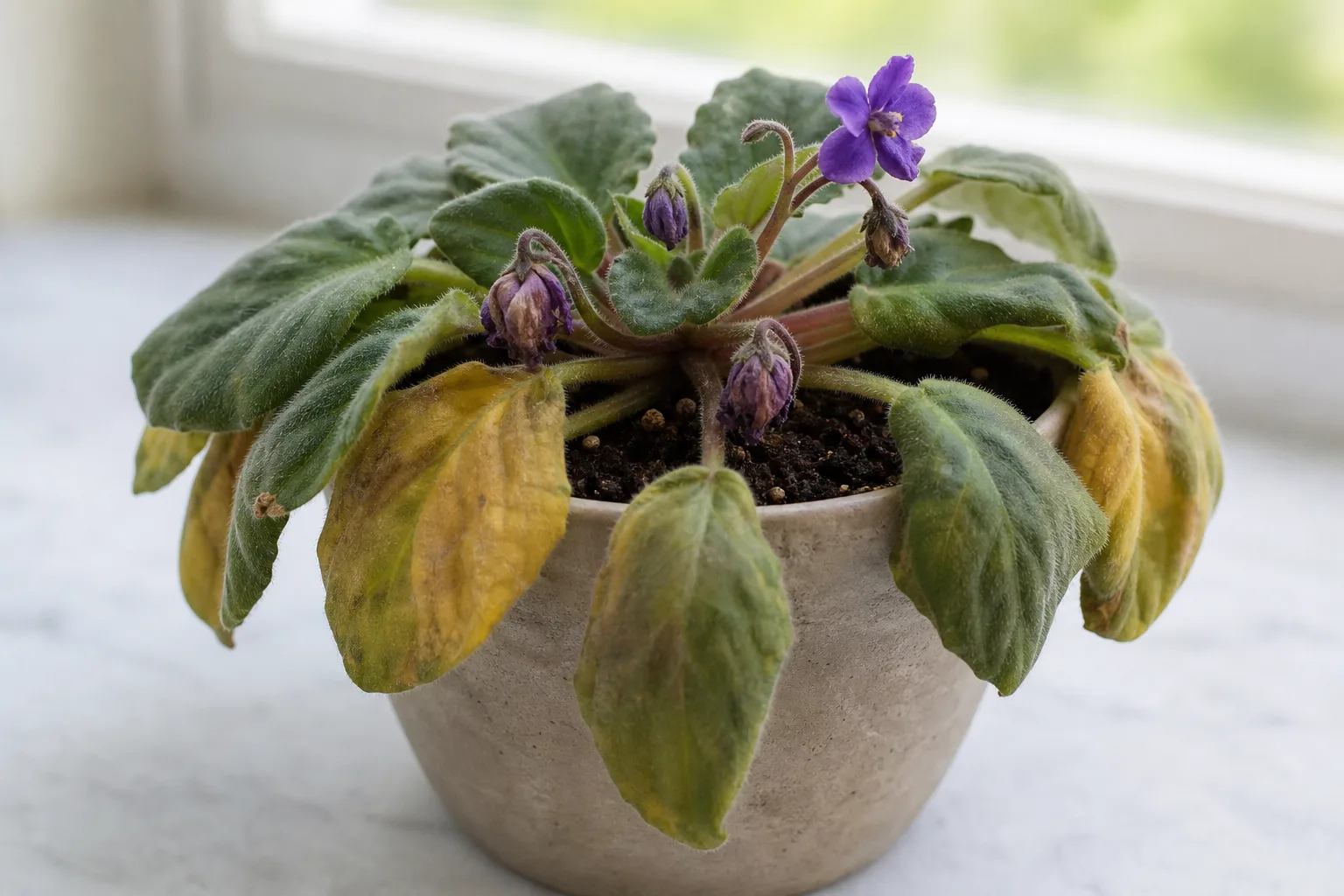
 RootsDamaged RootsRoot health determines everything above the soil. Damaged Roots produces Plant wilts or declines after repotting or root injury when roots suffocate, rot, dry out, or run out of space. Because damage is hidden, owners often treat leaves while the real problem sits in the pot. Track weekly progress after you change care, and note watering, light, and repotting dates so you can tell whether the symptom is improving or returning. Compare upper versus lower leaves, new versus old growth, and soil moisture at root depth before you treat, because the same visible symptom can come from watering, light, pests, or normal aging on different plants.
Roots problems
Root rot, root bound pots, and damaged root systems.
Not sure where to start? Match symptoms in under a minute
Select what you see on your plant and we'll suggest the most likely problems to check first.
How to inspect roots safely
Root problems affect the entire plant, so confirm them carefully. Healthy roots are usually firm and pale to tan; failing roots are often mushy, hollow, dark, or sour-smelling.
- Slide the root ball out gently instead of tearing through the mix.
- Trim only dead roots with clean tools, then repot into an appropriately airy mix.
- Avoid upsizing dramatically after root loss because oversized pots stay wet too long.
RootsDamaged RootsRoot health determines everything above the soil. Damaged Roots produces Plant wilts or declines after repotting or root injury when roots suffocate, rot, dry out, or run out of space. Because damage is hidden, owners often treat leaves while the real problem sits in the pot. Track weekly progress after you change care, and note watering, light, and repotting dates so you can tell whether the symptom is improving or returning. Compare upper versus lower leaves, new versus old growth, and soil moisture at root depth before you treat, because the same visible symptom can come from watering, light, pests, or normal aging on different plants.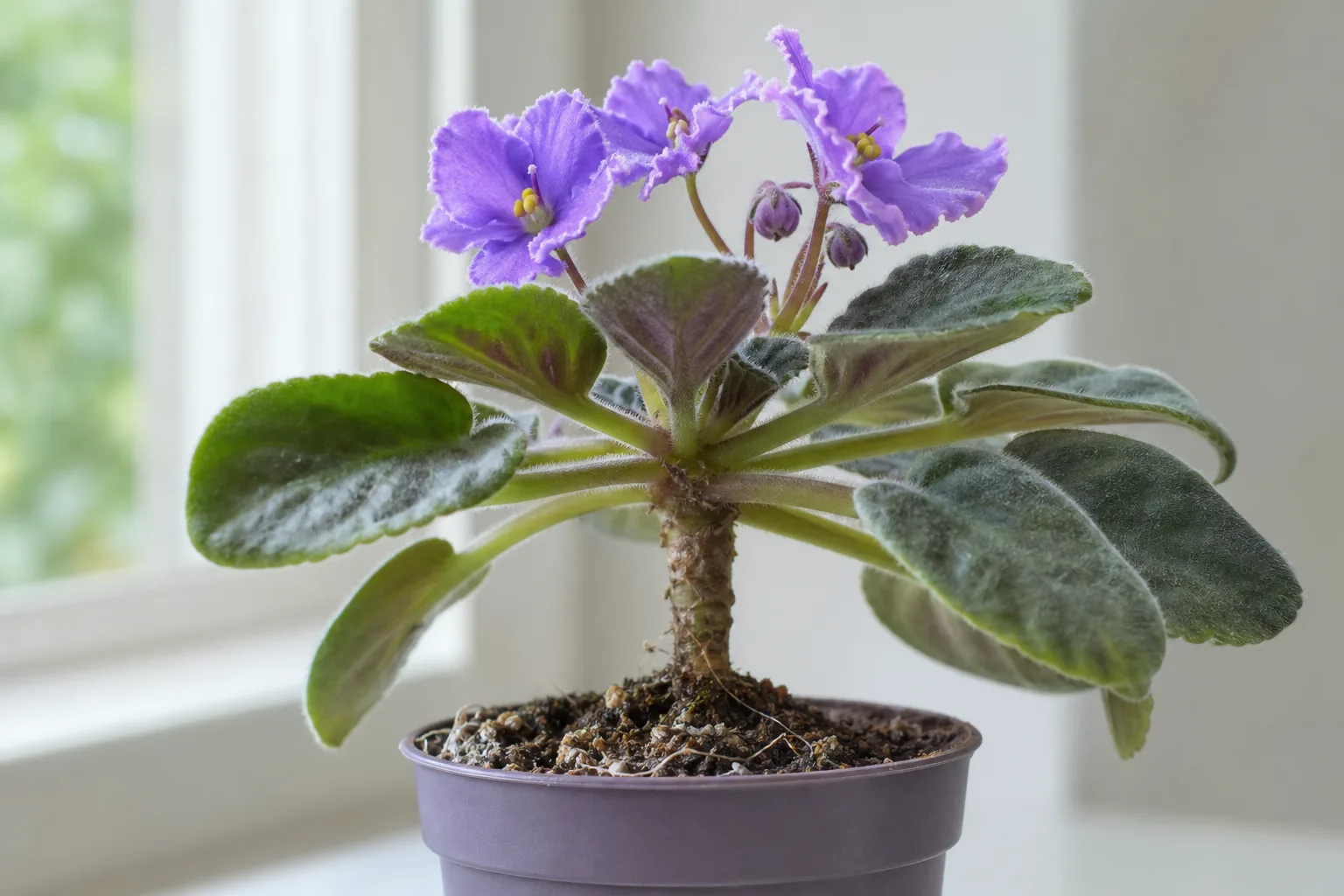 RootsExposed RootsRoot health determines everything above the soil. Exposed Roots produces Roots visible above soil surface when roots suffocate, rot, dry out, or run out of space. Because damage is hidden, owners often treat leaves while the real problem sits in the pot. Track weekly progress after you change care, and note watering, light, and repotting dates so you can tell whether the symptom is improving or returning. Compare upper versus lower leaves, new versus old growth, and soil moisture at root depth before you treat, because the same visible symptom can come from watering, light, pests, or normal aging on different plants.
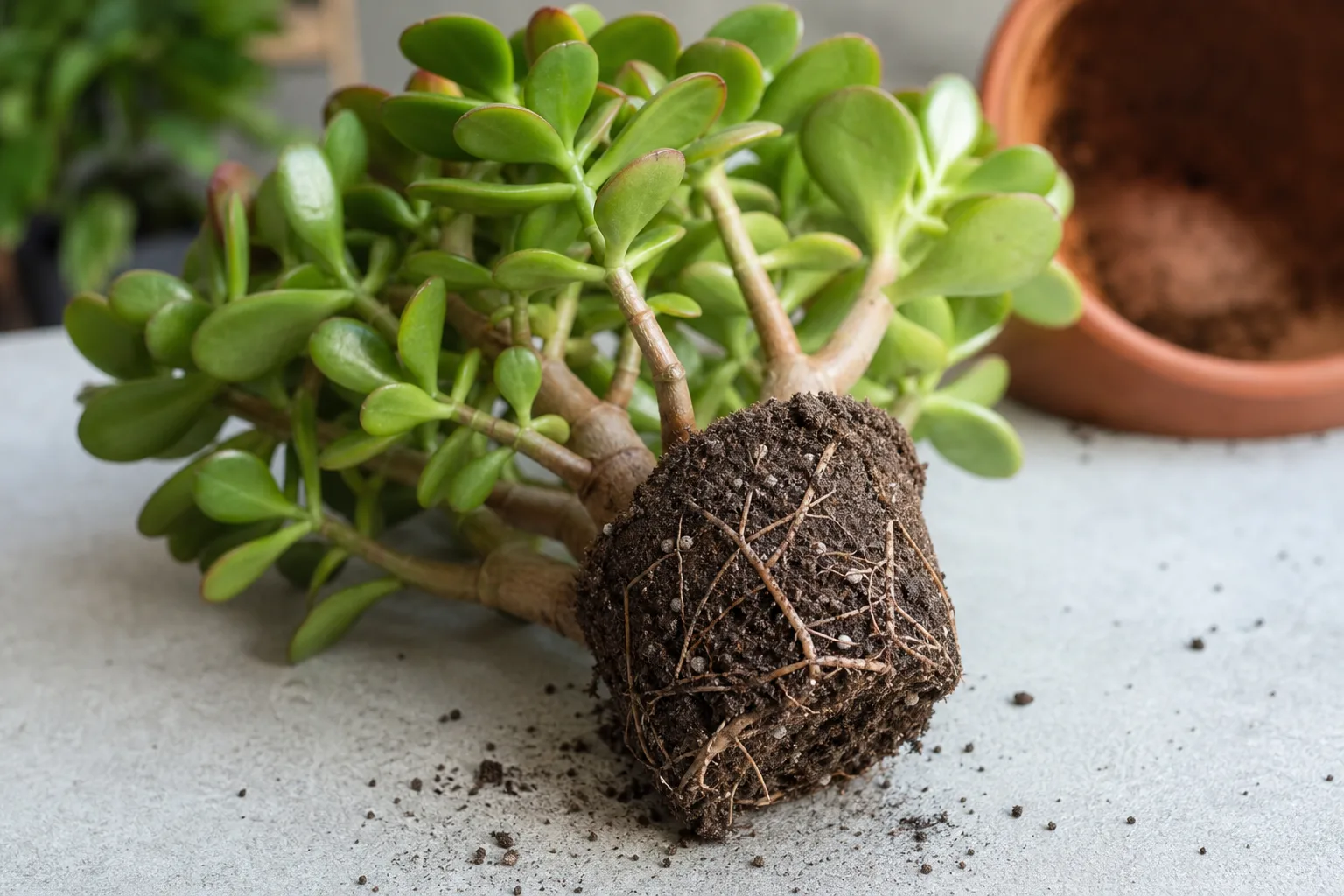 RootsPoor Root GrowthRoot health determines everything above the soil. Poor Root Growth produces Small, weak, or underdeveloped root system when roots suffocate, rot, dry out, or run out of space. Because damage is hidden, owners often treat leaves while the real problem sits in the pot. Track weekly progress after you change care, and note watering, light, and repotting dates so you can tell whether the symptom is improving or returning. Compare upper versus lower leaves, new versus old growth, and soil moisture at root depth before you treat, because the same visible symptom can come from watering, light, pests, or normal aging on different plants.
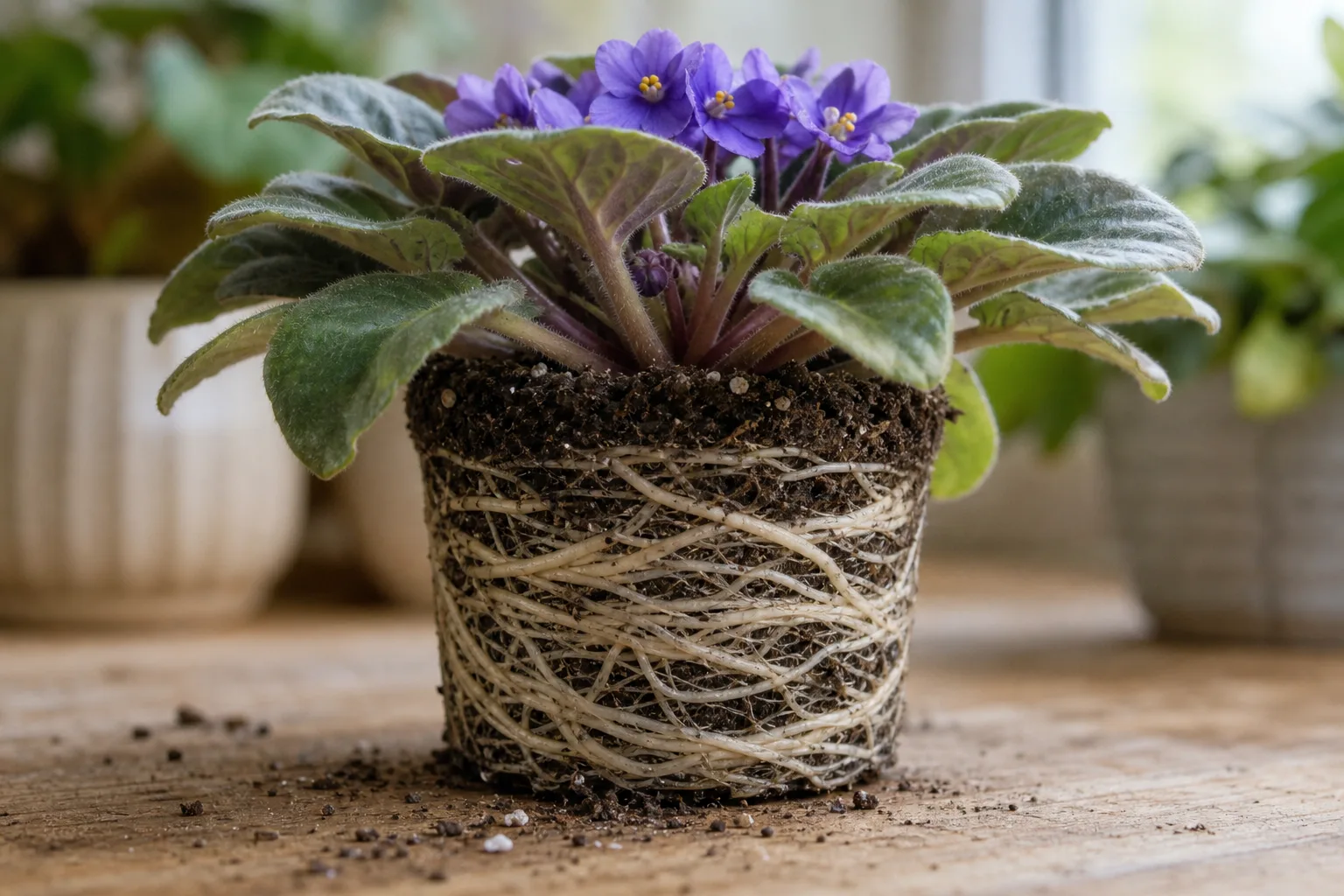 RootsRoot BoundA root-bound plant has outgrown its container enough that roots circle densely around the root ball and there is too little loose media left to buffer water, air, and nutrients. The symptom does not usually begin as dramatic leaf damage. It starts with a plant that dries out too fast, stops sizing up, needs watering more often than it used to, or pushes roots from the drainage holes because there is nowhere else to go.
Root-bound is not the same as root rot. A crowded root ball can still have healthy roots. The job is to decide whether the plant is merely snug, truly pot-bound, or already suffering from dehydration and stalled growth because the container is too full of roots to function well.
RootsRoot BoundA root-bound plant has outgrown its container enough that roots circle densely around the root ball and there is too little loose media left to buffer water, air, and nutrients. The symptom does not usually begin as dramatic leaf damage. It starts with a plant that dries out too fast, stops sizing up, needs watering more often than it used to, or pushes roots from the drainage holes because there is nowhere else to go.
Root-bound is not the same as root rot. A crowded root ball can still have healthy roots. The job is to decide whether the plant is merely snug, truly pot-bound, or already suffering from dehydration and stalled growth because the container is too full of roots to function well.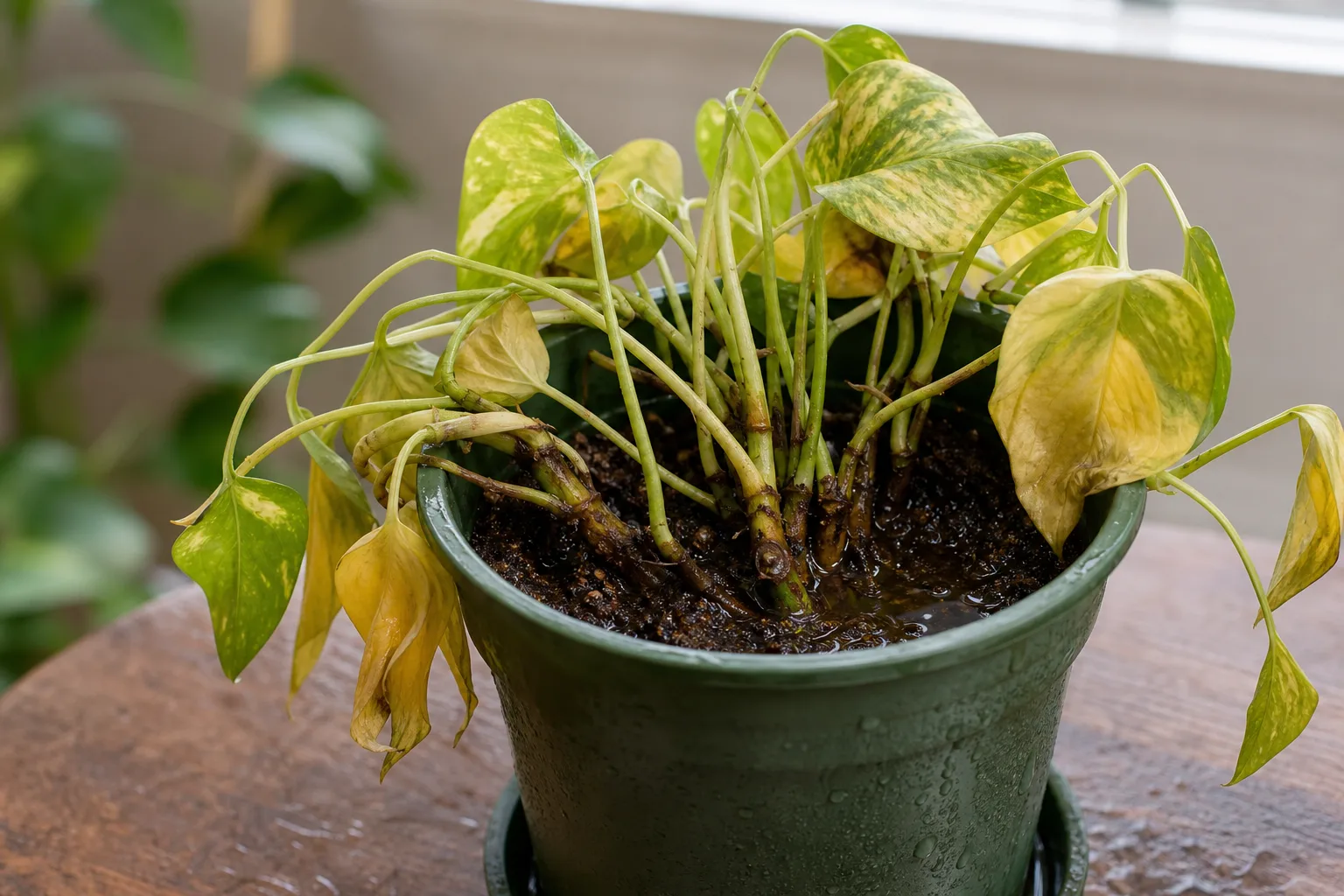 RootsRoot RotRoot rot is a high-risk condition caused by oxygen-starved, waterlogged roots that become vulnerable to decay organisms. The confusing part is that plants with root rot often look thirsty above soil: drooping, yellowing, and limp leaves can appear even when the pot is wet. This happens because damaged roots cannot move water to foliage. Without intervention, decline can accelerate quickly.
Recovery depends on speed and decisiveness. Mild cases can rebound with improved aeration and watering control, while moderate to severe cases require root pruning and repotting into fresh, well-draining media. Waiting for the soil to dry alone is rarely enough once roots have decayed. The key is to remove dead tissue, restore oxygen around remaining roots, and prevent repeat saturation. New healthy roots are the true sign of recovery, and that can take several weeks depending on plant vigor and season.
RootsRoot RotRoot rot is a high-risk condition caused by oxygen-starved, waterlogged roots that become vulnerable to decay organisms. The confusing part is that plants with root rot often look thirsty above soil: drooping, yellowing, and limp leaves can appear even when the pot is wet. This happens because damaged roots cannot move water to foliage. Without intervention, decline can accelerate quickly.
Recovery depends on speed and decisiveness. Mild cases can rebound with improved aeration and watering control, while moderate to severe cases require root pruning and repotting into fresh, well-draining media. Waiting for the soil to dry alone is rarely enough once roots have decayed. The key is to remove dead tissue, restore oxygen around remaining roots, and prevent repeat saturation. New healthy roots are the true sign of recovery, and that can take several weeks depending on plant vigor and season.No problems matched your search. Try different keywords or clear the category filter.
This roots problems problem guide was researched and written by . Roots problems symptoms, lookalike causes, and step-by-step fixes are cross-checked against extension pest, disease, and care references before publication.
We prioritize sources that hold up under scrutiny:
- University cooperative extension bulletins and fact sheets (Penn State, Clemson, UMD, NC State, and similar programs)
- Botanical garden and horticultural society publications
- Peer-reviewed plant science and veterinary toxicology references where pet safety matters (including ASPCA Animal Poison Control)
- Established reference works on indoor plant culture
The LeafyPixels editorial team then reviews the draft for clarity, step-by-step usefulness, and fit with real apartment and home conditions-not ideal greenhouse setups. When guidance changes materially, we update the page and note the revision date.
Sources used
- Missouri Botanical Garden (n.d.) Root rot of houseplants. [Online]. Available at: https://www.missouribotanicalgarden.org/gardens-gardening/your-garden/help-for-the-home-gardener/advice-tips-resources/visual-guides/root-rot-of-houseplants (Accessed: 29 June 2026).
- Missouri Botanical Garden (n.d.) Renovating an indoor house plant. [Online]. Available at: https://www.missouribotanicalgarden.org/gardens-gardening/your-garden/help-for-the-home-gardener/advice-tips-resources/renovating-an-indoor-house-plant (Accessed: 29 June 2026).
- Penn State Extension (n.d.) Root rot of houseplants. [Online]. Available at: https://extension.psu.edu/pest-and-disease-problems-of-indoor-plants (Accessed: 29 June 2026).
- University of Maryland Extension (n.d.) Diagnose indoor plant problems. [Online]. Available at: https://extension.umd.edu/resource/diagnose-indoor-plant-problems (Accessed: 29 June 2026).