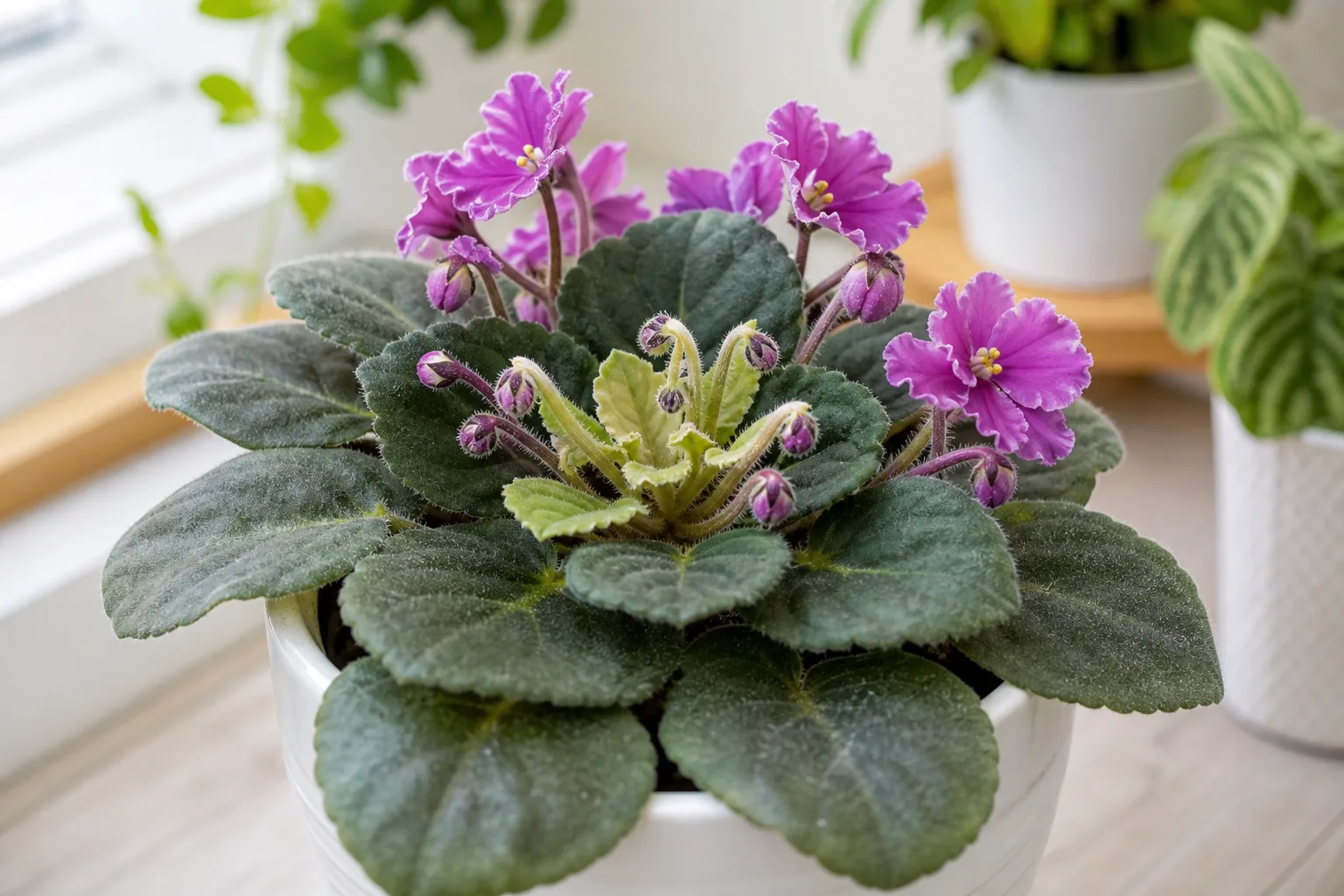
 NutrientsCalcium DeficiencyCalcium deficiency shows up on the newest tissue first because calcium does not move easily from old leaves into new growth. When a plant cannot deliver enough calcium to expanding leaves, those young leaves may emerge twisted, hooked, weak, or spotted with dead patches. The symptom is often blamed on pests or low humidity because the oldest foliage can still look acceptable.
In houseplants and container herbs, true calcium shortage is less common than water-related delivery failure. Roots may be unable to move calcium upward if the mix stays erratically dry, the root system is damaged, or the growing tips are expanding faster than the plant can supply them. That is why calcium problems need moisture and root-zone checks, not just another scoop of fertilizer.
NutrientsCalcium DeficiencyCalcium deficiency shows up on the newest tissue first because calcium does not move easily from old leaves into new growth. When a plant cannot deliver enough calcium to expanding leaves, those young leaves may emerge twisted, hooked, weak, or spotted with dead patches. The symptom is often blamed on pests or low humidity because the oldest foliage can still look acceptable.
In houseplants and container herbs, true calcium shortage is less common than water-related delivery failure. Roots may be unable to move calcium upward if the mix stays erratically dry, the root system is damaged, or the growing tips are expanding faster than the plant can supply them. That is why calcium problems need moisture and root-zone checks, not just another scoop of fertilizer.Nutrients problems
Deficiencies, fertilizer burn, and nutrient lockout guides.
Not sure where to start? Match symptoms in under a minute
Select what you see on your plant and we'll suggest the most likely problems to check first.
How to troubleshoot nutrients
Nutrient symptoms are easy to overdiagnose. Rule out root rot, cold soil, pH issues, and overfertilization first, because damaged roots cannot use fertilizer efficiently.
- Check whether yellowing follows veins, older leaves, leaf edges, or new growth.
- Pause fertilizer if the mix is dry, salty, cold, or recently repotted.
- Use diluted fertilizer during active growth and flush only when drainage is reliable.
NutrientsCalcium DeficiencyCalcium deficiency shows up on the newest tissue first because calcium does not move easily from old leaves into new growth. When a plant cannot deliver enough calcium to expanding leaves, those young leaves may emerge twisted, hooked, weak, or spotted with dead patches. The symptom is often blamed on pests or low humidity because the oldest foliage can still look acceptable.
In houseplants and container herbs, true calcium shortage is less common than water-related delivery failure. Roots may be unable to move calcium upward if the mix stays erratically dry, the root system is damaged, or the growing tips are expanding faster than the plant can supply them. That is why calcium problems need moisture and root-zone checks, not just another scoop of fertilizer.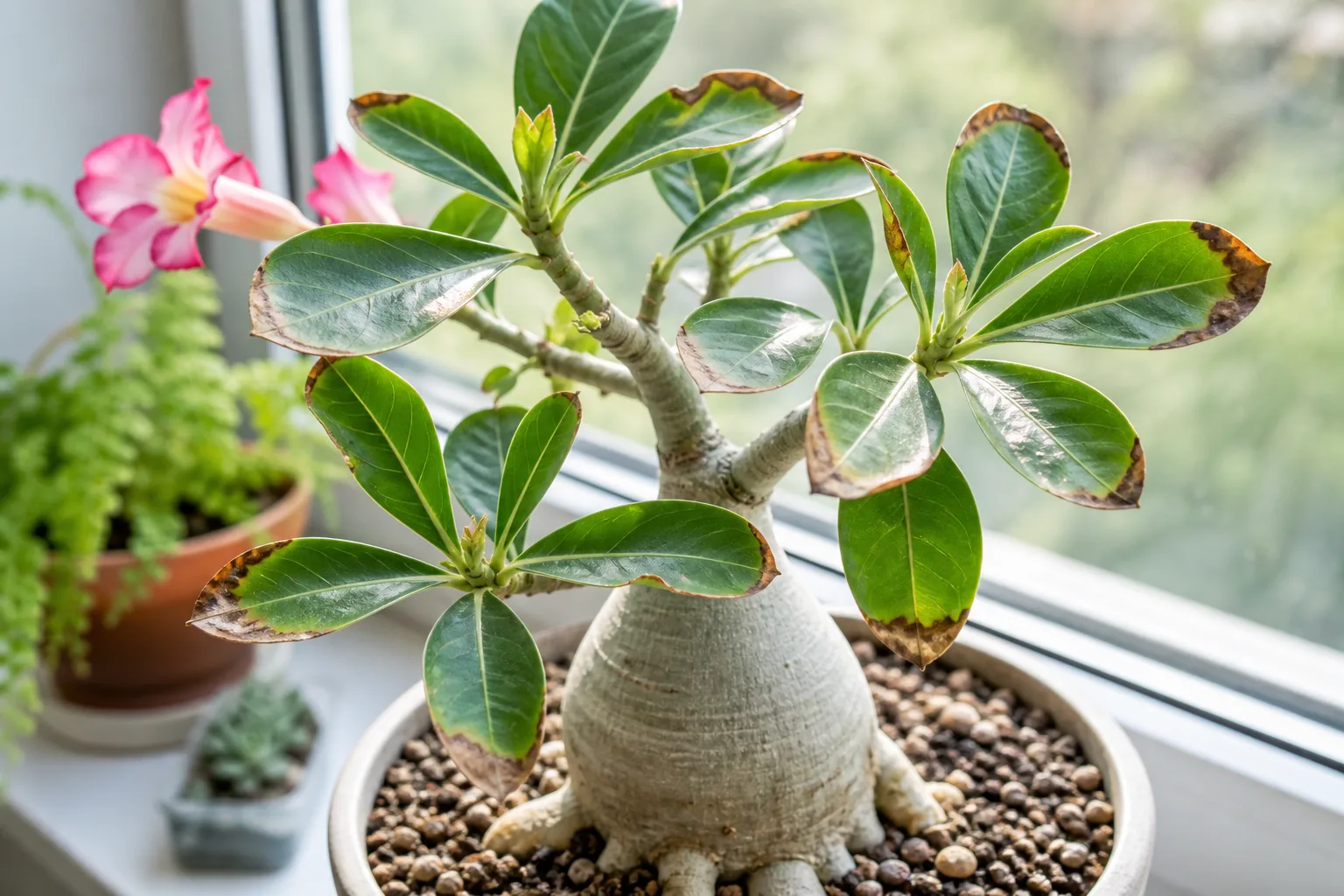 NutrientsFertilizer BurnFertilizer burn is salt injury, not a sign that a plant needs more food. When dissolved fertilizer salts build up faster than roots can use them, water is pulled away from root tissue and tender feeder roots are damaged first. The top of the plant often responds with brown leaf edges, scorched tips, stalled growth, or sudden collapse after an otherwise ordinary feeding.
The main diagnostic question is timing. If symptoms worsened soon after fertilizing, if a white crust formed on the soil or pot rim, or if the root ball stays chemically "hot" from repeated feeding without periodic flushing, excess salts move to the top of the suspect list. The fix is usually to stop feeding, leach the pot thoroughly, and reassess the plant after clean new growth appears.
NutrientsFertilizer BurnFertilizer burn is salt injury, not a sign that a plant needs more food. When dissolved fertilizer salts build up faster than roots can use them, water is pulled away from root tissue and tender feeder roots are damaged first. The top of the plant often responds with brown leaf edges, scorched tips, stalled growth, or sudden collapse after an otherwise ordinary feeding.
The main diagnostic question is timing. If symptoms worsened soon after fertilizing, if a white crust formed on the soil or pot rim, or if the root ball stays chemically "hot" from repeated feeding without periodic flushing, excess salts move to the top of the suspect list. The fix is usually to stop feeding, leach the pot thoroughly, and reassess the plant after clean new growth appears.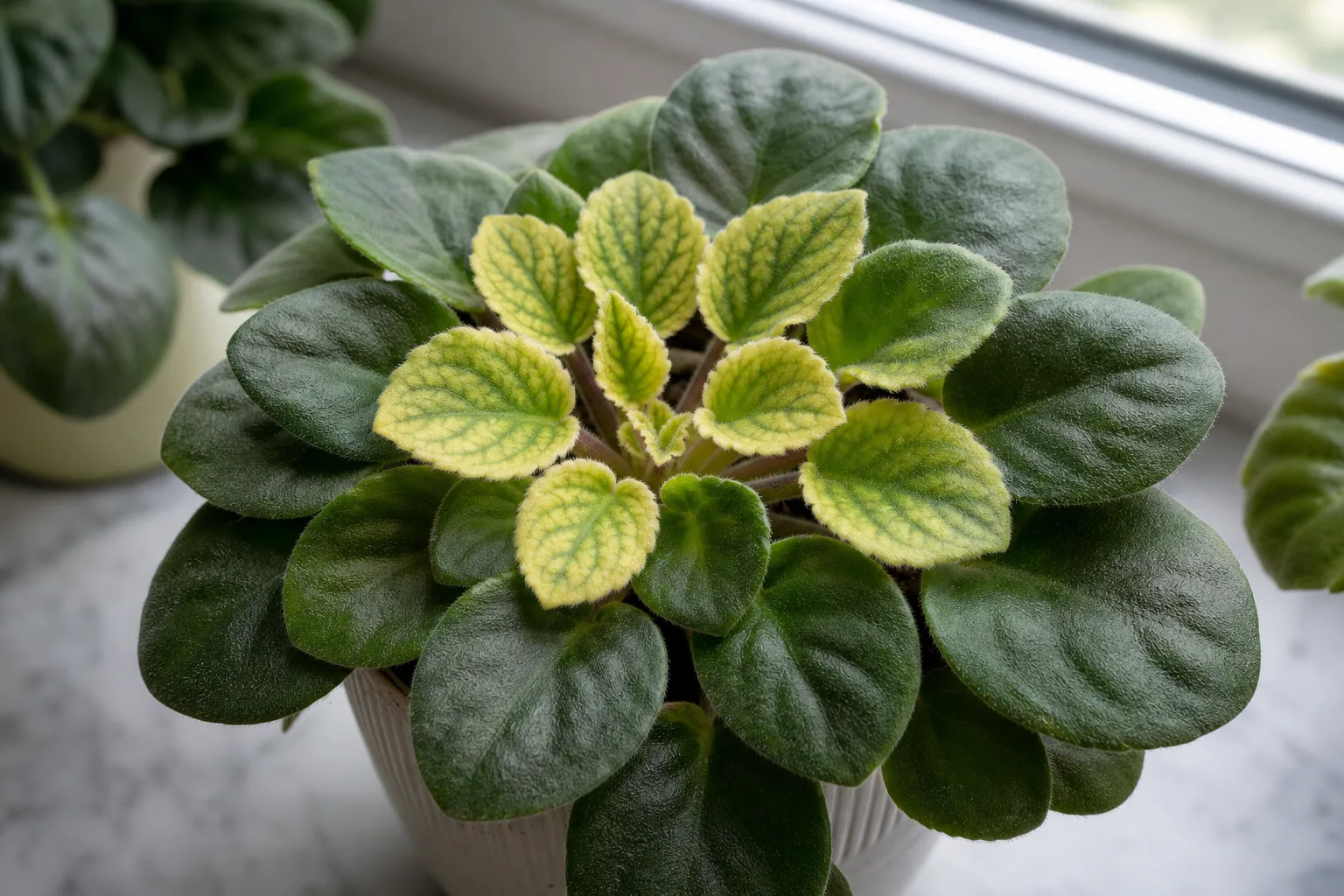 NutrientsIron DeficiencyIron deficiency is one of the clearest chlorosis patterns on indoor plants: the newest leaves fade yellow while the veins stay greener for a time. Because iron is not readily moved from old leaves into new ones, fresh growth shows the problem first. Gardenias and other acid-loving plants are especially known for this pattern, but any container plant with stressed roots or the wrong media chemistry can show it.
The key question is whether iron is absent or simply unavailable. Recent fertilizing does not rule the problem out. High pH, salt buildup, or root injury can block uptake and make the plant look deficient even when some iron is present. That means the fix may be a pH or root-zone correction rather than more general fertilizer.
NutrientsIron DeficiencyIron deficiency is one of the clearest chlorosis patterns on indoor plants: the newest leaves fade yellow while the veins stay greener for a time. Because iron is not readily moved from old leaves into new ones, fresh growth shows the problem first. Gardenias and other acid-loving plants are especially known for this pattern, but any container plant with stressed roots or the wrong media chemistry can show it.
The key question is whether iron is absent or simply unavailable. Recent fertilizing does not rule the problem out. High pH, salt buildup, or root injury can block uptake and make the plant look deficient even when some iron is present. That means the fix may be a pH or root-zone correction rather than more general fertilizer.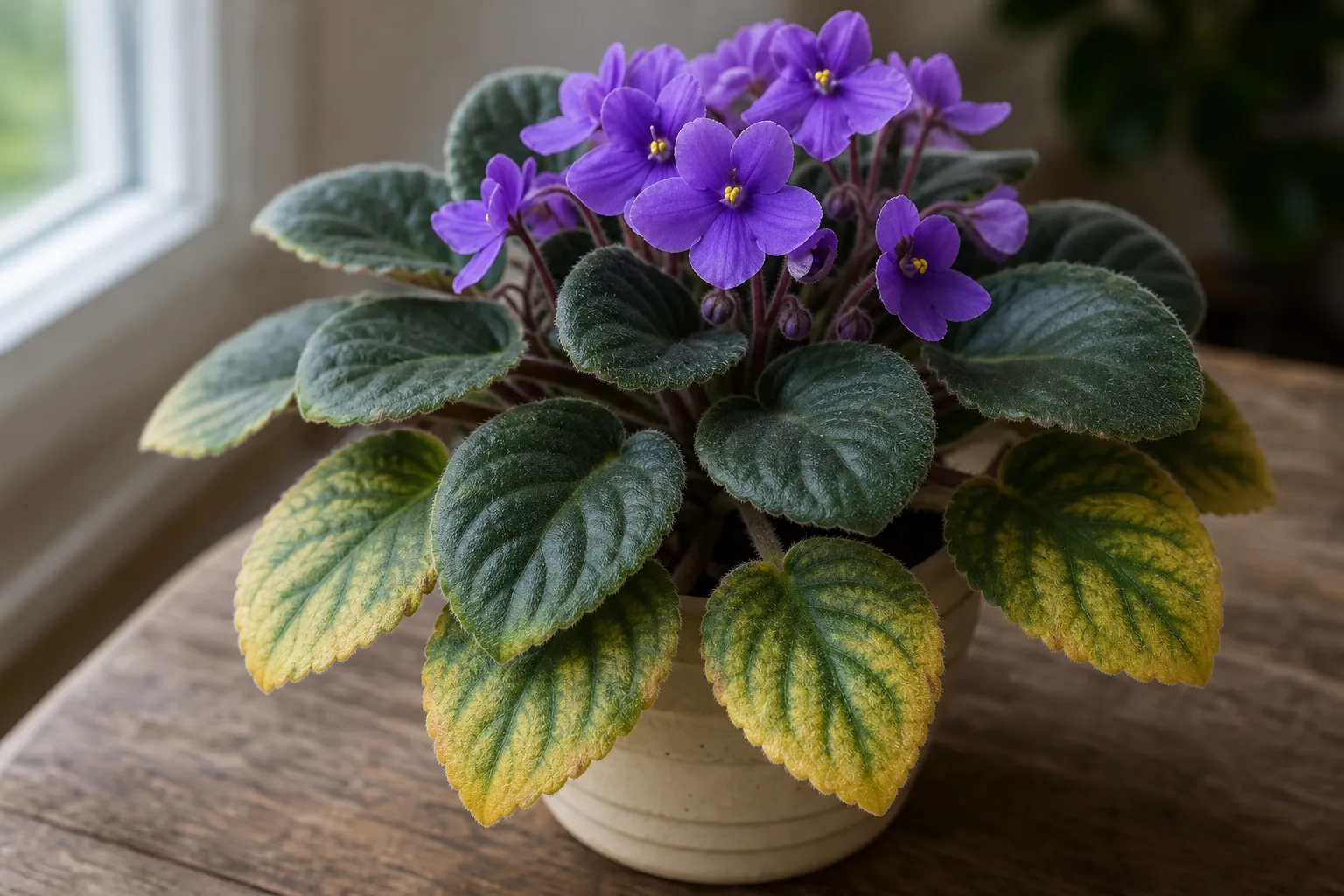 NutrientsMagnesium DeficiencyMagnesium deficiency usually shows on older leaves first because magnesium is mobile inside the plant. When supply runs short, the plant can pull magnesium out of mature leaves to support newer growth, leaving the older foliage with yellowing between still-greener veins. That pattern is easy to confuse with general aging unless you look closely at where the discoloration starts and how it spreads.
True magnesium shortage can happen in long-used containers, heavily leached media, or plants that have been fed inconsistently. But root stress and chemical imbalance can also mimic it. The goal is to confirm the classic older-leaf interveinal chlorosis pattern before reaching for Epsom salt or any other targeted supplement.
NutrientsMagnesium DeficiencyMagnesium deficiency usually shows on older leaves first because magnesium is mobile inside the plant. When supply runs short, the plant can pull magnesium out of mature leaves to support newer growth, leaving the older foliage with yellowing between still-greener veins. That pattern is easy to confuse with general aging unless you look closely at where the discoloration starts and how it spreads.
True magnesium shortage can happen in long-used containers, heavily leached media, or plants that have been fed inconsistently. But root stress and chemical imbalance can also mimic it. The goal is to confirm the classic older-leaf interveinal chlorosis pattern before reaching for Epsom salt or any other targeted supplement.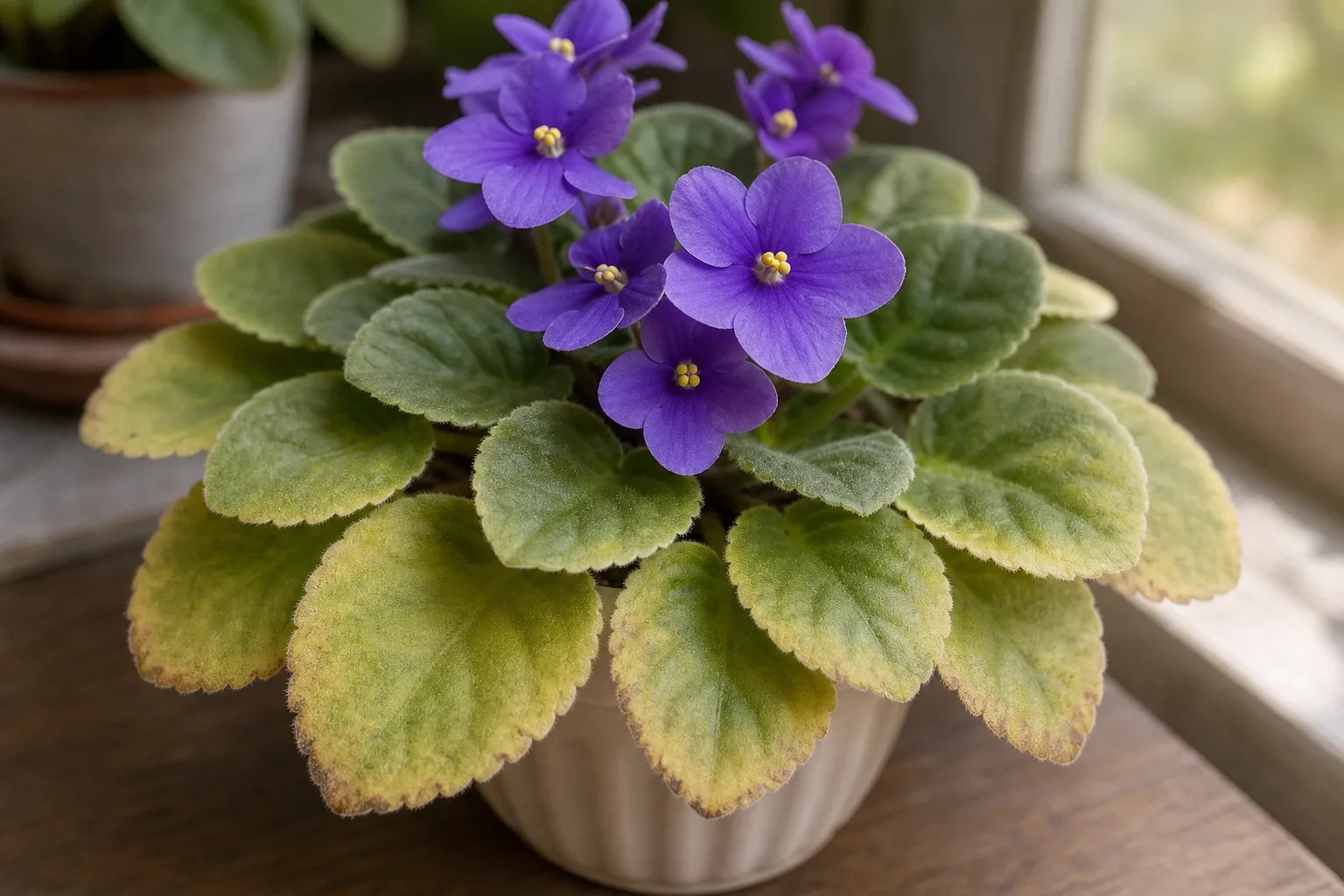 NutrientsNitrogen DeficiencyNutrient problems are often misdiagnosed as watering or light issues. Nitrogen Deficiency produces Older leaves turn pale yellow, growth becomes weak when plants cannot access or process nutrients correctly. Before adding more fertilizer, confirm whether you are dealing with deficiency, excess, or locked-out nutrients in old soil. Track weekly progress after you change care, and note watering, light, and repotting dates so you can tell whether the symptom is improving or returning. Compare upper versus lower leaves, new versus old growth, and soil moisture at root depth before you treat, because the same visible symptom can come from watering, light, pests, or normal aging on different plants.
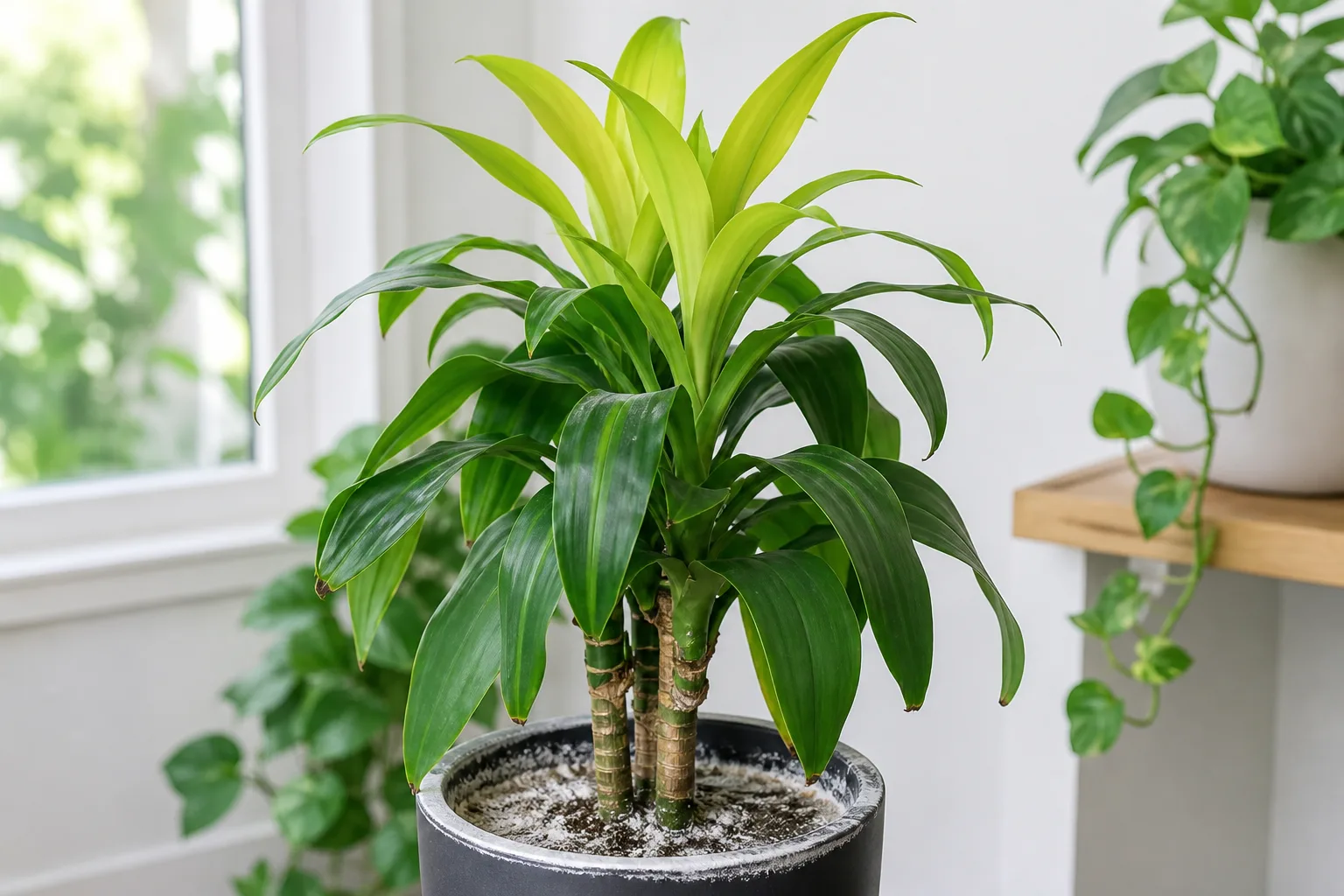 NutrientsNutrient LockoutNutrient lockout means the roots cannot take up available nutrients efficiently even though those nutrients are present in the pot. The plant can look deficient while the bag of fertilizer says everything should be covered. In containers, the usual drivers are root stress, stale compacted media, salt buildup, or a pH range that makes certain nutrients less available.
This is why blindly feeding more often can backfire. Extra fertilizer may raise the salt level without solving the uptake problem underneath. The better approach is to confirm the pattern on the leaves, check whether the root zone is stressed, and correct the medium or watering issue that is blocking uptake in the first place.
NutrientsNutrient LockoutNutrient lockout means the roots cannot take up available nutrients efficiently even though those nutrients are present in the pot. The plant can look deficient while the bag of fertilizer says everything should be covered. In containers, the usual drivers are root stress, stale compacted media, salt buildup, or a pH range that makes certain nutrients less available.
This is why blindly feeding more often can backfire. Extra fertilizer may raise the salt level without solving the uptake problem underneath. The better approach is to confirm the pattern on the leaves, check whether the root zone is stressed, and correct the medium or watering issue that is blocking uptake in the first place.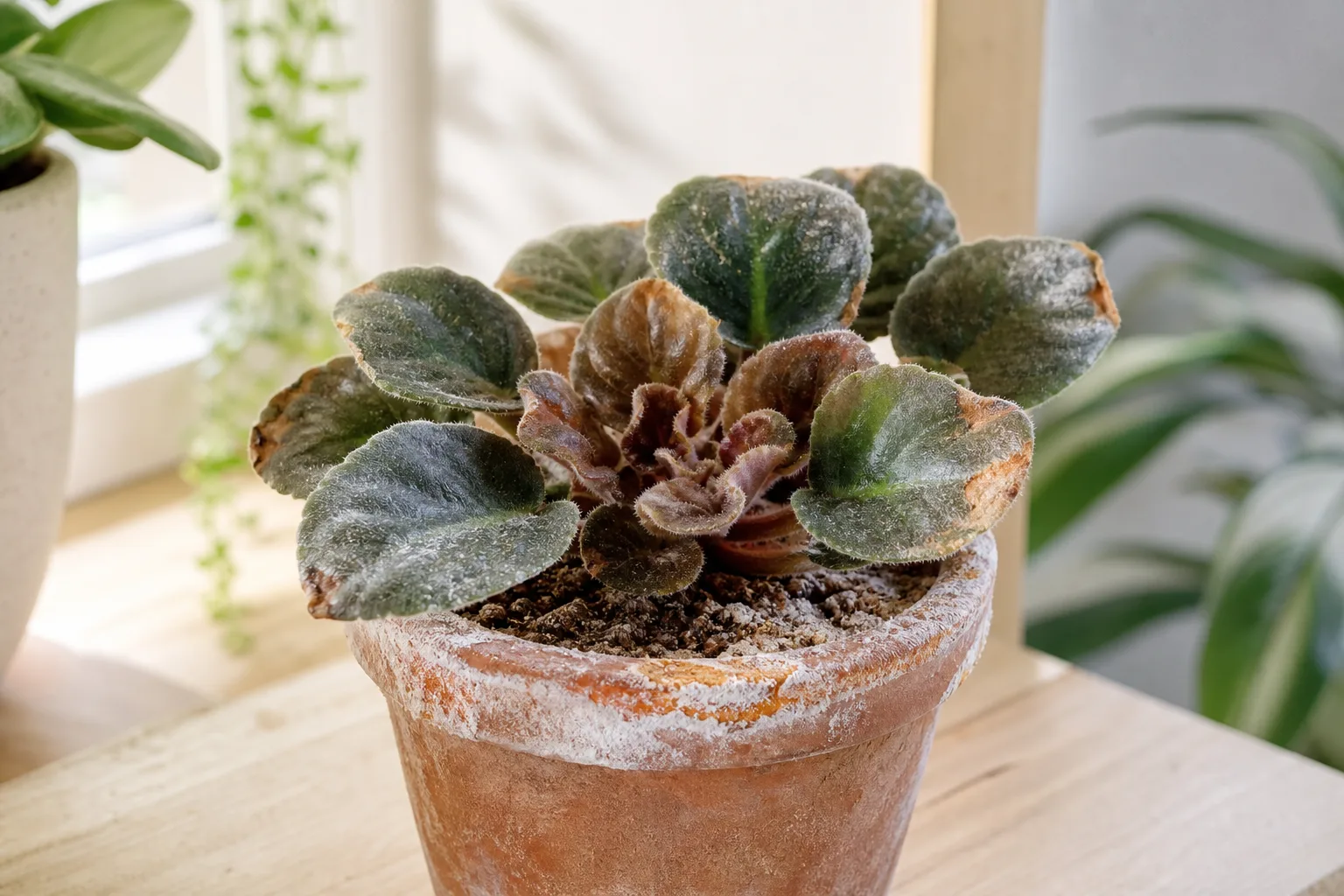 NutrientsOverfertilizationNutrient problems are often misdiagnosed as watering or light issues. Overfertilization produces Burnt tips, crispy edges, white crust on soil when plants cannot access or process nutrients correctly. Before adding more fertilizer, confirm whether you are dealing with deficiency, excess, or locked-out nutrients in old soil. Track weekly progress after you change care, and note watering, light, and repotting dates so you can tell whether the symptom is improving or returning. Compare upper versus lower leaves, new versus old growth, and soil moisture at root depth before you treat, because the same visible symptom can come from watering, light, pests, or normal aging on different plants.
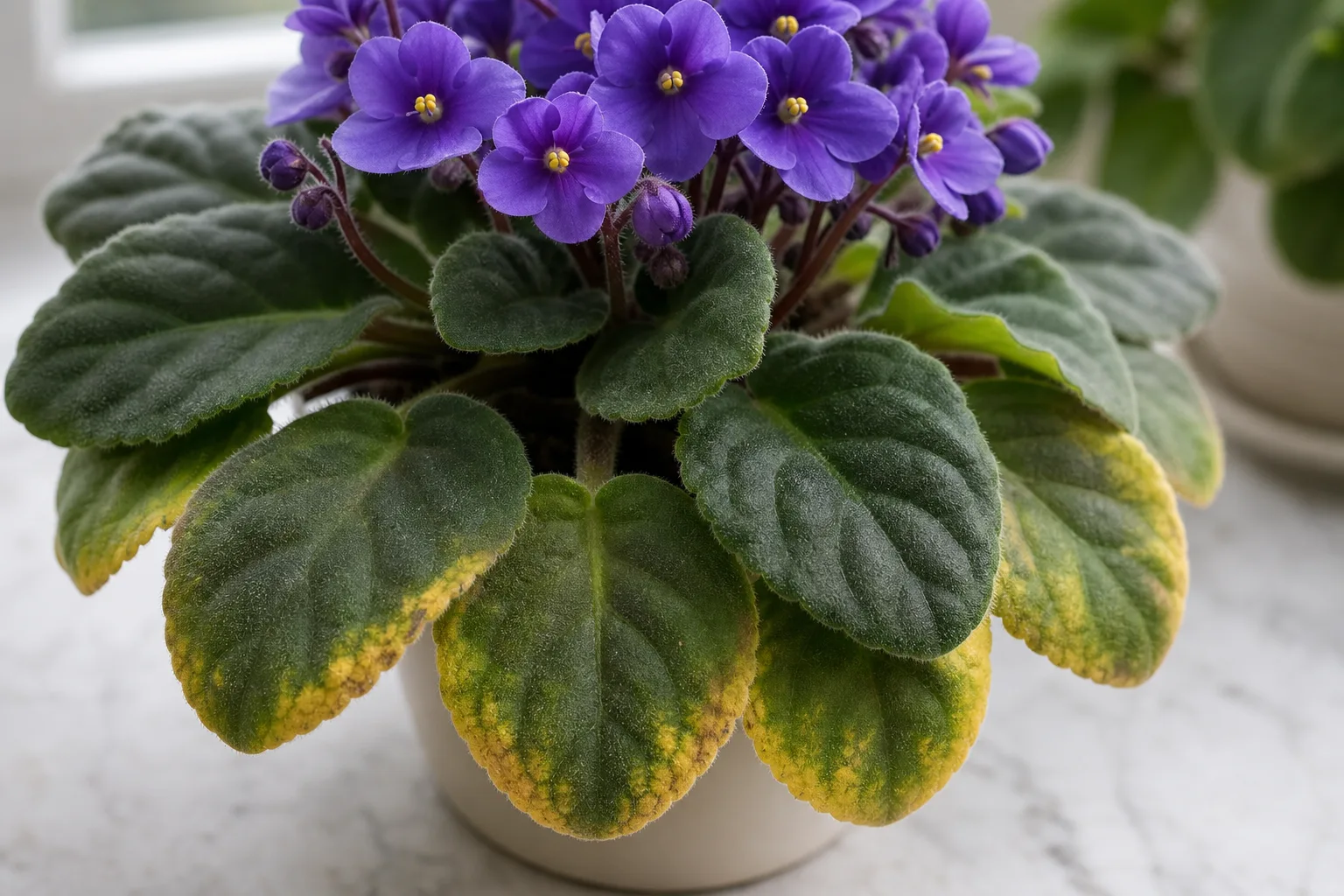 NutrientsPotassium DeficiencyNutrient problems are often misdiagnosed as watering or light issues. Potassium Deficiency produces Brown leaf edges, weak stems, poor flowering when plants cannot access or process nutrients correctly. Before adding more fertilizer, confirm whether you are dealing with deficiency, excess, or locked-out nutrients in old soil. Track weekly progress after you change care, and note watering, light, and repotting dates so you can tell whether the symptom is improving or returning. Compare upper versus lower leaves, new versus old growth, and soil moisture at root depth before you treat, because the same visible symptom can come from watering, light, pests, or normal aging on different plants.
No problems matched your search. Try different keywords or clear the category filter.
This nutrients problems problem guide was researched and written by . Nutrients problems symptoms, lookalike causes, and step-by-step fixes are cross-checked against extension pest, disease, and care references before publication.
We prioritize sources that hold up under scrutiny:
- University cooperative extension bulletins and fact sheets (Penn State, Clemson, UMD, NC State, and similar programs)
- Botanical garden and horticultural society publications
- Peer-reviewed plant science and veterinary toxicology references where pet safety matters (including ASPCA Animal Poison Control)
- Established reference works on indoor plant culture
The LeafyPixels editorial team then reviews the draft for clarity, step-by-step usefulness, and fit with real apartment and home conditions-not ideal greenhouse setups. When guidance changes materially, we update the page and note the revision date.
Sources used
- Clemson HGIC (n.d.) Diseases of indoor plants. [Online]. Available at: https://hgic.clemson.edu/?s=diseases%20of%20indoor%20plants (Accessed: 29 June 2026).
- University of Maryland Extension (n.d.) Nutrient deficiency of indoor plants. [Online]. Available at: https://extension.umd.edu/resource/nutrient-deficiency-indoor-plants (Accessed: 29 June 2026).
- University of Maryland Extension (n.d.) Diagnose indoor plant problems. [Online]. Available at: https://extension.umd.edu/resource/diagnose-indoor-plant-problems (Accessed: 29 June 2026).
- University of Maryland Extension (n.d.) Mineral and fertilizer salt deposits on indoor plants. [Online]. Available at: https://extension.umd.edu/resource/mineral-and-fertilizer-salt-deposits-indoor-plants (Accessed: 29 June 2026).
- University of Maryland Extension (n.d.) Fertilizing houseplants. [Online]. Available at: https://extension.umd.edu/search?search=fertilizing%20houseplants (Accessed: 29 June 2026).
- University of Maryland Extension (n.d.) Diagnosing houseplant problems. [Online]. Available at: https://www.extension.umd.edu/resource/diagnose-indoor-plant-problems (Accessed: 29 June 2026).