Calcium Deficiency in Houseplants: Signs and Fixes
Calcium deficiency shows up on the newest tissue first because calcium does not move easily from old leaves into new growth. When a plant cannot deliver enough calcium to expanding leaves, those young leaves may emerge twisted, hooked, weak, or spotted with dead patches. The symptom is often blamed on pests or low humidity because the oldest foliage can still look acceptable. In houseplants and container herbs, true calcium shortage is less common than water-related delivery failure. Roots may be unable to move calcium upward if the mix stays erratically dry, the root system is damaged, or the growing tips are expanding faster than the plant can supply them. That is why calcium problems need moisture and root-zone checks, not just another scoop of fertilizer.
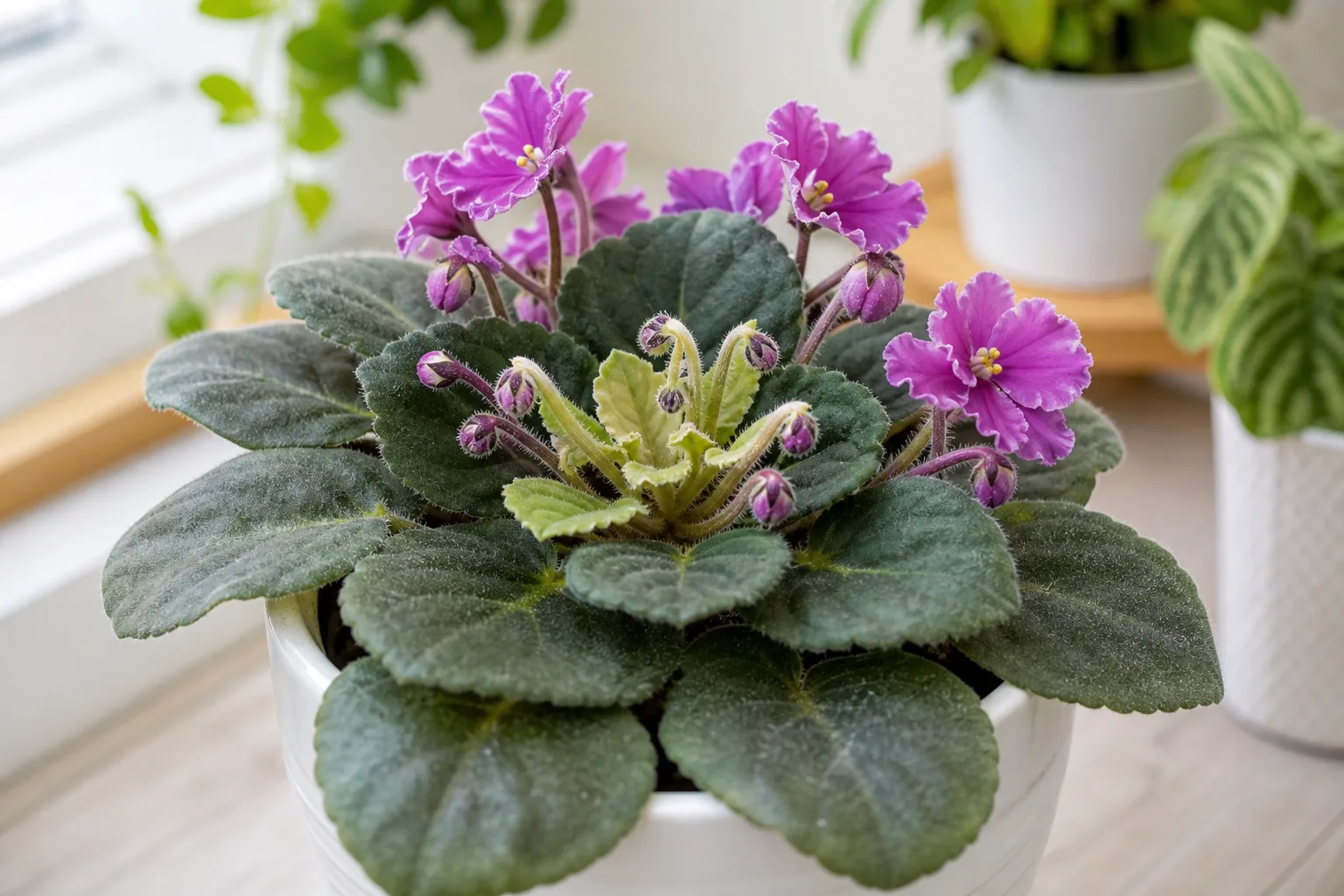
Calcium Deficiency on Houseplants
Still unsure?Match your symptoms to the most likely problems in under a minute.Run diagnosis →Understand and fix calcium deficiency
Calcium deficiency shows up on the newest tissue first because calcium does not move easily from old leaves into new growth. When a plant cannot deliver enough calcium to expanding leaves, those young leaves may emerge twisted, hooked, weak, or spotted with dead patches. The symptom is often blamed on pests or low humidity because the oldest foliage can still look acceptable. In houseplants and container herbs, true calcium shortage is less common than water-related delivery failure. Roots may be unable to move calcium upward if the mix stays erratically dry, the root system is damaged, or the growing tips are expanding faster than the plant can supply them. That is why calcium problems need moisture and root-zone checks, not just another scoop of fertilizer.
Overview
Calcium deficiency shows up on the newest tissue first because calcium does not move easily from old leaves into new growth. When a plant cannot deliver enough calcium to expanding leaves, those young leaves may emerge twisted, hooked, weak, or spotted with dead patches. The symptom is often blamed on pests or low humidity because the oldest foliage can still look acceptable.
In houseplants and container herbs, true calcium shortage is less common than water-related delivery failure. Roots may be unable to move calcium upward if the mix stays erratically dry, the root system is damaged, or the growing tips are expanding faster than the plant can supply them. That is why calcium problems need moisture and root-zone checks, not just another scoop of fertilizer.
How to identify it
- The newest leaves emerge misshapen, curled, stuck, or smaller than normal.
- Leaf tips or margins on young growth develop tan dead spots.
- Growing points may weaken or stall even while older leaves stay greener.
- Damage often concentrates at the crown, rosette center, or newest shoot tips.
- Symptoms may follow uneven watering, root damage, or very fast soft growth.
- Older foliage usually does not yellow first the way magnesium or nitrogen issues do.
When to worry
Escalate quickly if the central growing point collapses, several new leaves emerge deformed in a row, or root problems are also present.
Common causes
Inconsistent root-zone moisture
Calcium moves with water. Repeated drought stress or an erratic wet-dry cycle can interrupt delivery to new tissue.
Damaged or weak roots
Overwatering, root rot, or severe root binding can limit the plant's ability to pull calcium up into expanding leaves.
Very low calcium availability in old media
Long-used potting mix can become nutritionally imbalanced, especially when it has been heavily flushed or poorly fertilized.
pH or salt interference
If media chemistry is off or salts are high, uptake can suffer even when some calcium is present.
Step-by-step fix
Check the newest growth first
Confirm that damage is concentrated on fresh leaves or shoot tips, which is the typical calcium pattern.
Stabilize watering
Keep the root zone evenly within the plant's preferred moisture range. Calcium problems worsen when the plant repeatedly swings from dry stress to saturation.
Inspect roots and drainage
If the crown keeps deforming, inspect for root damage, compaction, or a pot that stays wet too long.
Refresh tired media or feed lightly
Repot into fresh mix or use a balanced fertilizer if the container is old and overall nutrition has been neglected.
Use targeted calcium only when the pattern fits
Add a calcium source only after ruling out wet roots, salt burn, and general stress. Supplements help only when calcium is the actual limiting factor.
Judge recovery by the next leaves
Deformed leaves stay deformed. Improvement means the next flush of growth opens cleaner and more normally shaped.
Prevention tips
- Water consistently enough that new growth does not repeatedly dry out.
- Keep roots healthy with good drainage and species-appropriate potting mix.
- Repot exhausted media before the structure and nutrient balance break down.
- Use balanced feeding instead of guessing with single-nutrient products.
Common mistakes
- Treating distorted new leaves as a pest problem without checking roots and watering.
- Applying calcium repeatedly when the true issue is salt buildup or root rot.
- Judging success by damaged old leaves instead of new growth.
Dracaena and African violet calcium-deficiency images show two possible presentations; neither image confirms the diagnosis by itself.
Quick Diagnosis
Suspect calcium stress when the youngest leaves or growing points emerge distorted, hooked, crinkled or locally necrotic while older foliage initially looks more normal. Calcium reaches developing tissue through the water-conducting system, so the visible problem can result from inadequate supply, unsuitable root-zone chemistry or disrupted transport. Appearance alone cannot tell those mechanisms apart.
First step: inspect the roots and recent moisture pattern before adding calcium. Correct severe drying, chronic saturation, compaction or damaged roots within the species’ care limits. Then review the fertilizer label, potting-medium age, irrigation water and pH. Penn State recommends media monitoring and plant analysis for nutrient diagnosis; its current nutrition guidance notes that calcium symptoms occur on new growth and can be related to nutrient balance and moisture management.
Dracaena is used below as one fluoride-sensitive comparison, while African violet illustrates a different leaf form. Neither species supplies a universal moisture target or proves that distorted growth is calcium deficient.
What calcium deficiency looks like on a houseplant
New growth at the crown or shoot tip is the key location. Depending on species, affected tissue may be a strap leaf, soft rosette leaf, expanding vine leaf or meristem. Calcium-related disorders tend to affect developing tissue first, but pests, cold injury, herbicide exposure, boron problems and irregular watering can create similar distortion.
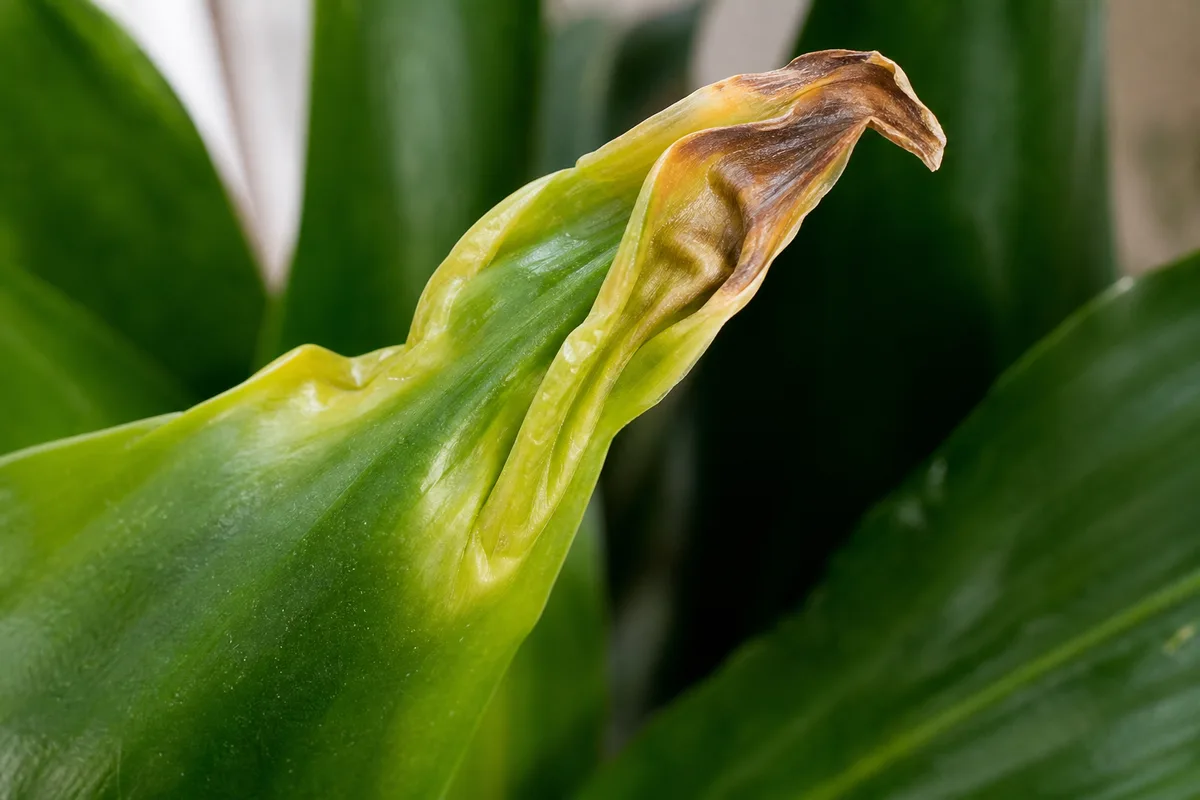
Representative dracaena image. Compare the age and shape of affected tissue, but do not infer calcium deficiency from this photo alone.
Typical signs:
- Hooked, bent or crinkled tissue on leaves that are still expanding
- Necrotic tips or margins on the youngest growth, especially when older leaves remain less affected
- Uneven expansion or stalled growing points
- A compatible root-zone history, such as severe dry-down, persistent saturation or an unbalanced fertilizer program
- Symptoms repeating on growth formed after the original stress, rather than one mechanically damaged leaf
Older leaves may remain relatively normal at first. That age pattern differs from deficiencies of mobile nutrients such as nitrogen, which commonly become visible on older foliage first. It does not, by itself, distinguish calcium from other new-growth disorders.
On dracaena specifically, brown tip burn on mature, otherwise flat leaves may reflect fluoride injury. That is a species-specific lookalike, not a rule for every houseplant. New-growth distortion broadens the differential but still requires root, water and nutrition evidence.
Compare with distorted leaves and deformed new growth when multiple stressors overlap; this page focuses on calcium-specific crown patterns.
Why houseplants develop calcium stress
Calcium disorders differ among plant types because growth rate, transpiration, tissue form and root-zone conditions differ. The same visible distortion may reflect a transport problem in one pot and direct injury or pests in another.
Uptake failure from wet mix in low light
Calcium transport depends on water movement and functional roots. A pot kept saturated may lose root function, while a plant allowed to wilt severely during rapid leaf expansion can interrupt delivery to young tissue. Low airflow, high temperature and moisture management are recognized contributors in controlled production, but indoor responses vary by species and environment. Treat this as a root-and-transport investigation, not proof that the medium contains no calcium.
True deficiency vs. fluoride mimic
True low supply is possible in depleted or poorly formulated media and in incomplete fertilizer programs, but it cannot be confirmed from a photograph. Review the guaranteed analysis of every product already used; many complete fertilizers and commercial mixes already contain calcium or receive it through irrigation water.
Fluoride toxicity is a species-specific lookalike. Dracaena deremensis is sensitive to fluoride, and injury often affects tips and margins. Clemson also notes dracaena fluoride sensitivity. These sources support the dracaena comparison only; they do not prove that every distorted houseplant needs low-fluoride water or shares the same pH target.
Overlap with nutrient lockout and salt buildup
Heavy feeding, incompatible products or accumulated soluble salts can injure roots and create mixed deficiency-like symptoms. White crust, burned root tips and a rising conductivity reading support a salt problem, but crust can also include minerals from irrigation water. Do not apply a dracaena-specific pH target to orchids, African violets, succulents or other unrelated plants.
How to confirm the cause
Work through this checklist in order:
- New vs. old tissue - Repeated distortion on the youngest growth is compatible with calcium stress; one injured leaf is not.
- Root and moisture history - Saturated, compacted, severely dry, cold or diseased roots can impair uptake even when calcium is present.
- Feeding record - Record product names, analyses, dilution and dates. “No feeding” and “heavy feeding” lead to different hypotheses.
- Water and medium chemistry - Measure pH with a method suitable for container media and review irrigation alkalinity when available; do not diagnose from a cheap probe in dry mix.
- Salt evidence - White deposits, damaged root tips or a high electrical-conductivity test support excess salts and call for source correction.
- Lookalikes - Inspect for mites or thrips, cold injury, edema, mechanical damage and species-specific toxicities before supplementing.
Fluoride tip burn vs. calcium crown distortion
| Pattern | Leaf age affected | Leaf shape | Water history | First direction | Urgency | | --- | --- | --- | --- | --- | | Fluoride tip burn in susceptible species | Mature straps may show first | Tips or margins brown; blade otherwise flat | Repeated fluoride exposure | Verify species and water source | Low | | Possible calcium transport failure | Emerging leaves or growing points | New tissue distorted or necrotic | Root or moisture disruption | Repair root-zone conditions | Medium | | Possible low supply | Repeated new-growth symptoms | Species-dependent | Incomplete nutrition program | Test/review program before amending | Medium | | Nutrient lockout | Pale new crown; mixed signs | Distorted plus chlorotic | Recent feeding + white crust | Flush; see nutrient lockout | Medium-High | | Root rot | Yellowing spreads; crown may stall | Soft, not just crinkled | Wet sour mix | Stop water; inspect roots | High (same day) |
Magnesium deficiency more often causes interveinal chlorosis on older tissue, while iron commonly affects new tissue. These age patterns help organize an investigation but are imperfect and can overlap.
First fix for a houseplant
Correct the strongest evidenced root-zone problem and pause unverified supplements.
- Identify the plant and compare moisture needs with a reliable species reference.
- Inspect drainage and the root ball. Address saturation or severe dryness without imposing a fixed “top half dry” rule on all plants.
- Review water chemistry. Low-mineral water may help a fluoride-sensitive dracaena, while plants relying on very low-mineral water may need a complete fertilizer that supplies calcium and magnesium.
- Hold additional lime, gypsum, eggshells and calcium products until supply, pH and root function have been reviewed.
When fertilizer is justified
Fertilizer is justified only when roots are functional, growth is active and the existing program is incomplete or testing supports low supply. Choose a complete product labeled for the plant and growing system, then follow its directions; “half strength” is not a universal dose because formulations differ. For a fluoride-sensitive dracaena, Clemson notes both seasonal feeding and fluoride sensitivity, but those details should not be transferred to every species.
Do not add garden lime, gypsum, calcium nitrate or crushed eggshells without evidence that the product fits the medium and deficiency. If high salts are confirmed and the plant tolerates leaching, clear-water flushing may be appropriate; small pots with badly affected media may need replacement, as the University of Maryland’s soluble-salt guidance explains.
Step-by-step recovery
- Identify the plant and photograph the youngest affected and healthy leaves.
- Inspect moisture, drainage and roots; treat root failure before nutrition.
- Record water source, fertilizer products, dilution, frequency and potting-medium age.
- Measure pH and electrical conductivity or submit samples when the plant is valuable or several pots are affected.
- Correct the verified limitation: root-zone culture, excessive salts, unsuitable pH or an incomplete nutrition program.
- Keep light, temperature and watering within the species’ documented range.
- Watch the next two to three leaves or shoots. New tissue should develop more normally if the limiting factor was corrected.
- Retain healthy foliage and remove dead tissue only when sanitation or appearance justifies it.
If distortion returns every spring despite filtered water and light feeding, consider repotting into fresh well-drained mix and review salt build-up before escalating supplements.
Recovery timeline
Recovery follows the plant’s growth rate. Fast-growing foliage plants may provide new evidence within weeks; a slow plant in cool or seasonal conditions may take much longer. Avoid promising a fixed cure across species.
Old distorted or necrotic tissue generally will not become normally shaped again. Judge success by growth initiated after the correction, stable roots and cessation of new damage.
Causes to rule out
Distorted crown growth overlaps with:
- Fluoride toxicity in susceptible species - Margin or tip necrosis on firm mature leaves; verify species and water source
- Nutrient lockout - Pale crown despite feeding; white crust; see nutrient lockout
- Overwatering / root rot - Yellow soft leaves, sour wet mix, soft roots or crown
- Cold injury - Damage follows an exposure outside the species’ safe range; no universal temperature threshold applies
- Low light alone - Small pale leaves without crinkling; brighten before feeding
What not to do
Do not add garden lime, gypsum, eggshells or a single-nutrient product without evidence. Do not fertilize dry, waterlogged or actively decaying roots. Do not repot, prune heavily and feed on the same day. Keep fertilizers in their original containers and away from children and pets. If the example plant is dracaena, note that dracaena is toxic to cats and dogs; toxicity differs by species.
How to prevent calcium problems next time
Use a complete fertilizer only during the plant’s active growth and at its label rate. Match irrigation water and fertilizer to the species and growing system; very low-mineral water is helpful for some sensitive plants but can require deliberate mineral supply in others.
Keep drainage functional, avoid severe wet-dry swings and periodically review medium pH and salts where problems recur. Repot based on root and medium condition rather than a universal calendar. Do not force growth in unsuitable light or temperature with extra nitrogen.
Practical checks
Urgency check
Soft roots or crown, sour-smelling medium, rapid collapse or spreading yellowing in a saturated pot warrants prompt root assessment. Stable distortion on otherwise firm growth allows time for a measured investigation.
Best inspection order
Youngest leaves → species baseline → recent environmental changes → moisture and roots → water and fertilizer records → pH/salts or laboratory analysis where justified.
When to worry
Escalate if damage spreads after fertilizer, several plants using the same inputs develop the pattern, roots decline, or two to three new leaves remain distorted after the verified correction. A local extension service or plant laboratory can help separate nutrient supply, chemistry, pests and disease.
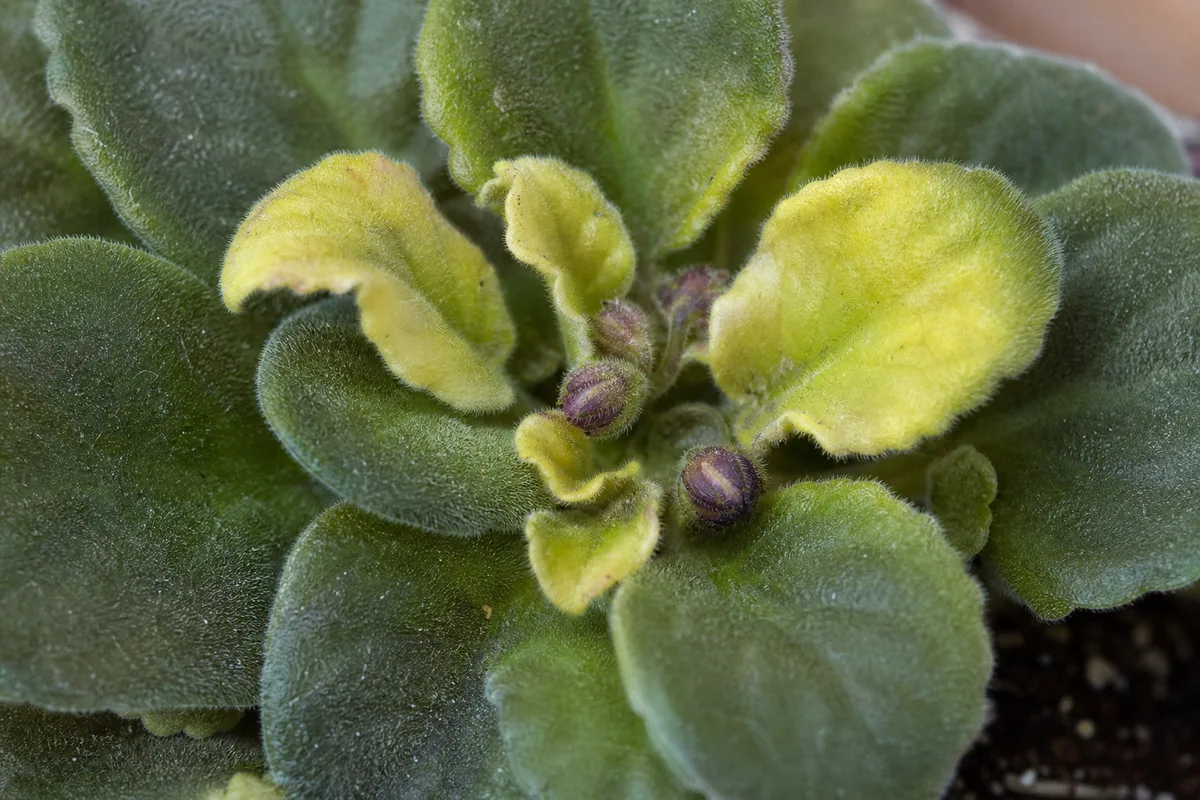
Calcium has structural and signaling roles in plants, but a visible symptom does not reveal whether the potting mix lacks calcium. Delivery can fail when damaged roots cannot absorb water, when the root zone cycles between drought and saturation, or when rapid young growth receives too little calcium through the transpiration stream. Research on calcium-related tipburn treats the disorder as a transport problem as well as a nutrition problem; recent controlled work describes tipburn in young enclosed lettuce leaves as a calcium-related physiological disorder.
The location of damage is the first useful filter. Calcium is poorly redistributed from older tissue, so repeated distortion, marginal necrosis, or collapse at actively expanding leaves and growing points fits better than yellowing that starts on old leaves. This is not unique to calcium: broad mites, thrips, herbicide exposure, cold injury, and root disease can also deform young tissue.
Inspect roots before adding a single-nutrient product. Healthy roots vary by species but should generally be firm rather than slimy or hollow. A sour odor, persistently wet mix, a soft crown, or roots that slough under gentle pressure points toward root disease or oxygen stress. Correcting calcium concentration does not repair roots that cannot move water.
Review watering as a pattern rather than a calendar. Calcium moves with water through xylem; the OpenStax plant-transport material explains how water potential and transpiration drive movement through roots and shoots. Both severe drying and chronic saturation can interrupt that system by different mechanisms.
Test pH and electrical conductivity when the problem persists, especially in valuable collections or recirculating systems. Media chemistry can alter availability, while accumulated salts can injure roots. A laboratory media or irrigation-water analysis is more defensible than repeatedly adding calcium, lime, gypsum, or homemade amendments.
If the plant has sound roots, active growth, a fitting symptom pattern, and a history of incomplete nutrition, use a complete fertilizer labeled for the crop at the conservative end of its directions. Calcium nitrate or other targeted products make more sense in a measured production program than as a blind household remedy. The North Carolina Department of Agriculture warns that adding calcium, magnesium, and potassium beyond plant requirements can create nutrient imbalances.
Do not use Epsom salt as a calcium treatment; magnesium sulfate contains magnesium and sulfur, not calcium. Do not use eggshell water as an emergency correction: release is inconsistent and too slow to address active tissue collapse. Avoid foliar calcium claims unless a product is labeled for the plant and evidence supports that route for the specific crop.
Recovery appears in tissue that develops after the correction. Scarred tips, hooked leaves, and dead growing-point tissue do not become normal again. Photograph the crown, mark the youngest leaf, and inspect the next two or three leaves. A clean new flush and resumed growth are stronger evidence than a greener old scar.
Humidity requires careful interpretation. Very high humidity can reduce transpiration from sheltered young leaves in some production crops, while very dry air can increase general water stress. That does not justify prescribing one humidity target for every houseplant. Use the range recommended for the exact species, provide reasonable air movement, and avoid sealing a symptomatic plant in a stagnant enclosure as a universal calcium treatment.
Fast growth can expose a supply bottleneck. A plant pushed by strong nitrogen feeding, warm temperatures, or intense production conditions may expand tissue faster than calcium reaches it. Slowing an excessive growth push and restoring balanced culture may be safer than adding a concentrated calcium dose. This is especially relevant when the fertilizer already lists calcium.
The form of the growing system matters. In ordinary potting mix, calcium, pH, and salts interact with peat, bark, compost, and irrigation water. In semi-hydroponic or hydroponic systems, reservoir concentration, replenishment, aeration, and antagonism among ions become more important. Do not transfer a soil amendment recipe directly into a water-culture reservoir.
Keep the diagnosis proportional to the evidence. “Consistent with calcium delivery trouble” is more accurate than “proven calcium deficiency” when no tissue, media, or water analysis exists. This wording is not evasive; it prevents a visually plausible pattern from becoming a reason for repeated, potentially harmful supplementation.
When sampling is worthwhile, collect material before major treatment changes and follow the laboratory’s instructions. A representative media sample, irrigation-water analysis, and—where available—tissue test can distinguish low supply from unsuitable pH, excessive salinity, or another nutrient interaction. Record the fertilizer product and dilution because the lab needs context to interpret results.
Finally, preserve an untreated comparison when practical. If several similar plants are affected, change one variable on a small subset and document the result rather than dosing the entire collection. A measured comparison cannot replace a formal trial, but it reduces the chance that normal new growth, seasonal change, or simultaneous care adjustments are credited to an unnecessary supplement. Keep products in their original containers, measure with dedicated tools, and follow all label restrictions.
Before closing the diagnosis, compare the plant with healthy examples of the same species at the same growth stage. Young leaves can emerge temporarily folded, lighter, or softer before hardening normally. A genuine recurring problem is more likely when several successive leaves remain malformed, necrosis expands at the growing point, or growth stalls. This baseline check is especially important for rosette plants, unfurling aroids, and species whose leaves naturally emerge pleated.
Also record environmental changes that preceded the symptom. A move to warmer, brighter conditions can accelerate growth and expose a delivery bottleneck; a move into cool low light can leave media wet long enough to impair roots. The same visible tissue damage may therefore require different corrections. The event timeline, root condition, and next flush together provide stronger evidence than the damaged leaf alone.
Build a calcium case from the next growth cycle
The most useful household experiment is a controlled observation period, not an immediate sequence of amendments. Photograph the growing point, mark the newest fully expanded leaf, and note whether the root ball is wet, evenly moist, or unusually dry. Record the irrigation source, fertilizer product, dilution, and last application. These details create a baseline against which the next one or two leaves can be compared.
If the pot is staying saturated, restore drainage and an appropriate dry-down before evaluating nutrition. If it is repeatedly becoming bone-dry during active growth, correct that instability without keeping the substrate constantly wet. Calcium moves to developing tissue with water, so a sound concentration in the mix cannot compensate for roots that are intermittently inactive or oxygen-starved. Conversely, continually adding calcium cannot prove that calcium was the original limitation.
Use the distribution of new damage as the outcome measure. A correction is more convincing when leaves initiated afterward expand normally while the old distorted leaves remain unchanged. Continued crown collapse, puckering, or marginal death means the working diagnosis needs review. Reinspect undersides and folded young tissue for mites or thrips, reconsider recent cold or chemical exposure, and compare the plant with reliable species photographs.
Testing becomes worthwhile when the same symptom recurs, several plants using the same water and fertilizer are affected, or a valuable specimen continues to decline. Submit the medium and irrigation water before flushing, repotting, liming, or applying a calcium-only product, because those actions change the evidence. Ask the laboratory or extension service which sampling method and reference range fit container media; field-soil values are not automatically transferable to a small indoor pot.
If analysis confirms low calcium supply and roots are functional, correct the complete nutrition program at the labeled rate rather than chasing a single dramatic dose. Penn State Extension’s overview of essential plant nutrients and deficiency supports treating nutrient balance and delivery as a system. Keep the change measurable, then monitor the next growth point. That sequence distinguishes a plausible correction from coincidence and reduces the risk of creating excess salts while trying to cure a symptom that had another cause.
Conclusion
Calcium deficiency is most credible when distorted or collapsed new growth appears while older foliage is comparatively normal—and when root-zone conditions can plausibly restrict calcium delivery. Correct wet, cold, damaged, or erratically dry roots before adding more fertilizer, then assess leaves produced after the correction because malformed tissue will not straighten. If the crown continues to fail despite stable roots and a verified nutrient program, seek a substrate or tissue test through a local extension service instead of escalating calcium blindly.
Plants commonly affected
These houseplants often struggle with calcium deficiency. Open a care guide or plant-specific troubleshooting page for tailored fixes.
 Medium
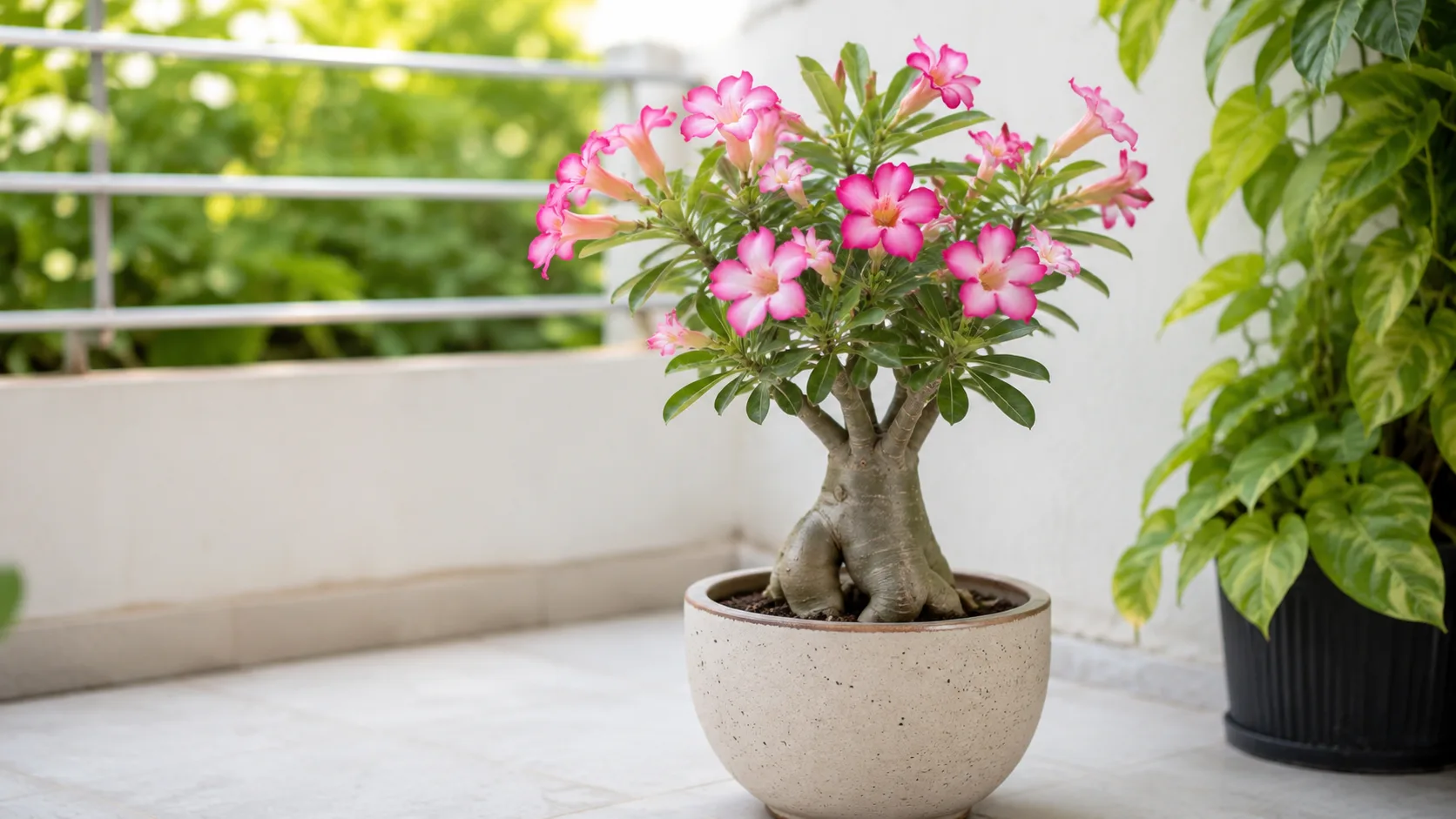
Adenium
Likely causeCommon calcium deficiency pattern on Adenium under indoor care stress.
Quick fixInspect roots, watering, light, and pests; adjust one variable and monitor new growth.
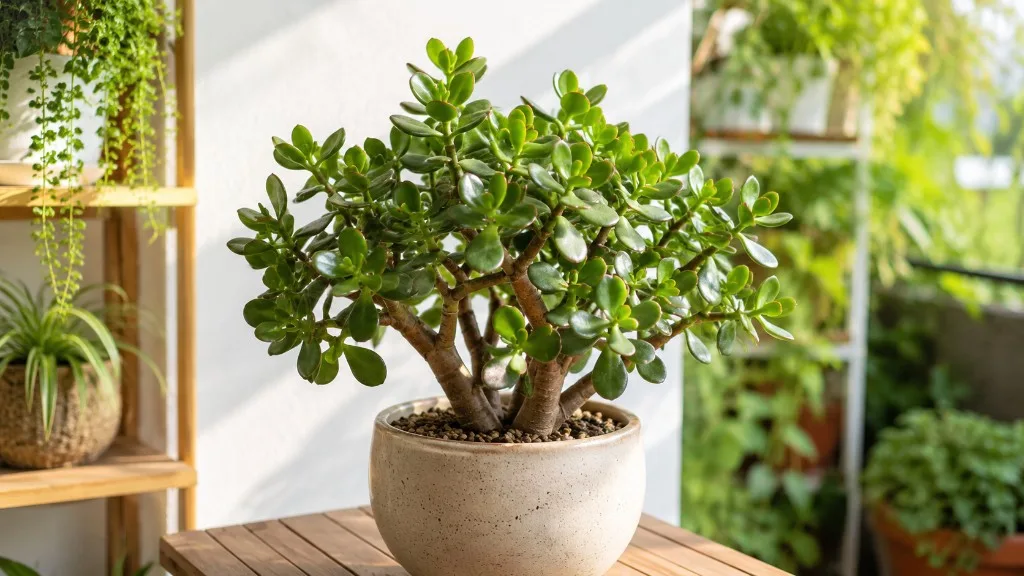 Medium
African Milk Tree
Likely causeCommon calcium deficiency pattern on African Milk Tree under indoor care stress.
Quick fixInspect roots, watering, light, and pests; adjust one variable and monitor new growth.
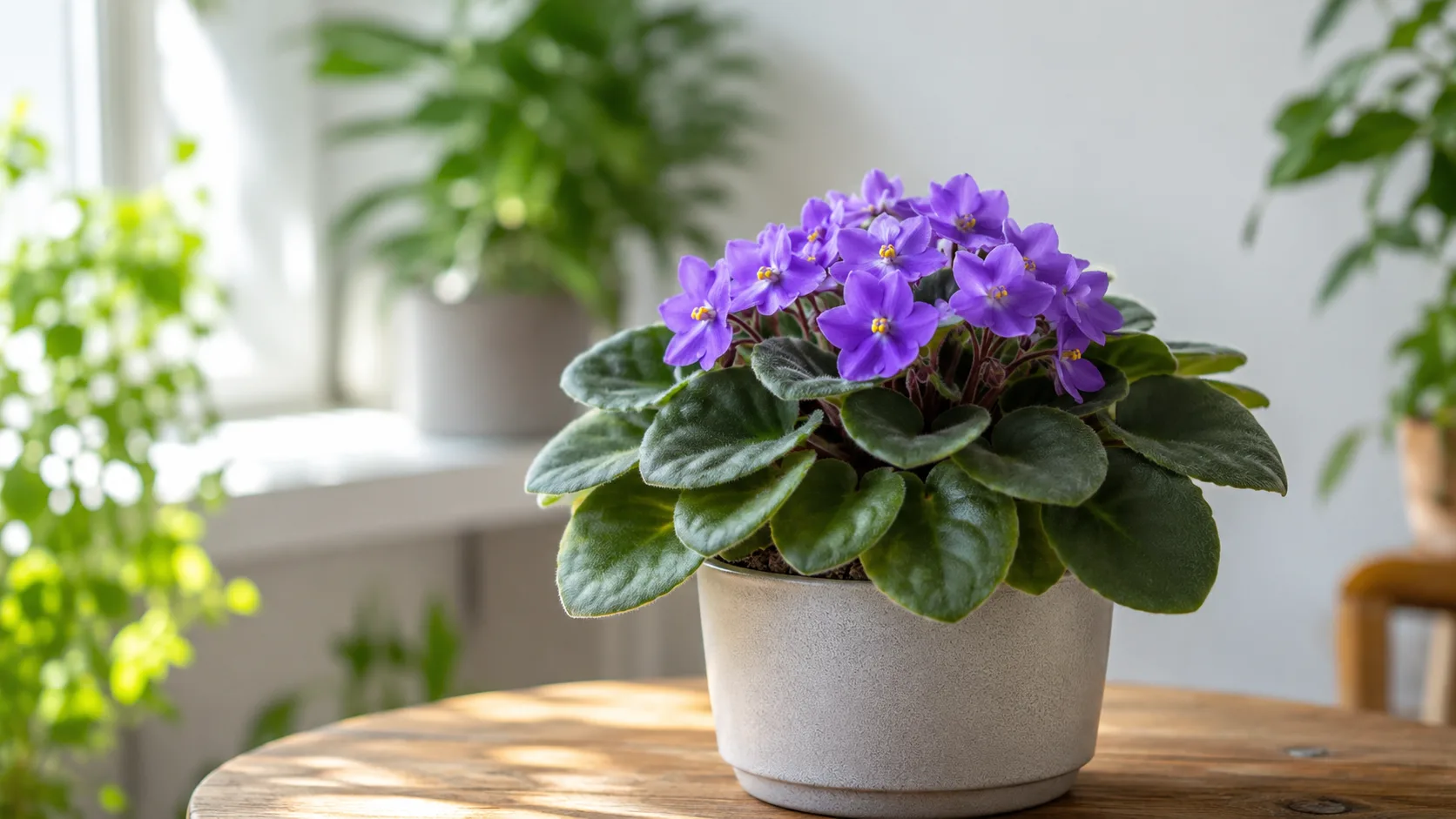 Medium
African Violet
Likely causeCalcium Deficiency on African Violet: Calcium Deficiency Description Calcium Deficiency is a condition which describes an African Violet that is not getting enough calcium (Ca). Calcium is an essential element for the growth and vitality
Quick fixInspect African Violet, confirm calcium deficiency matches your symptoms, then adjust care or treat per authoritative guides.
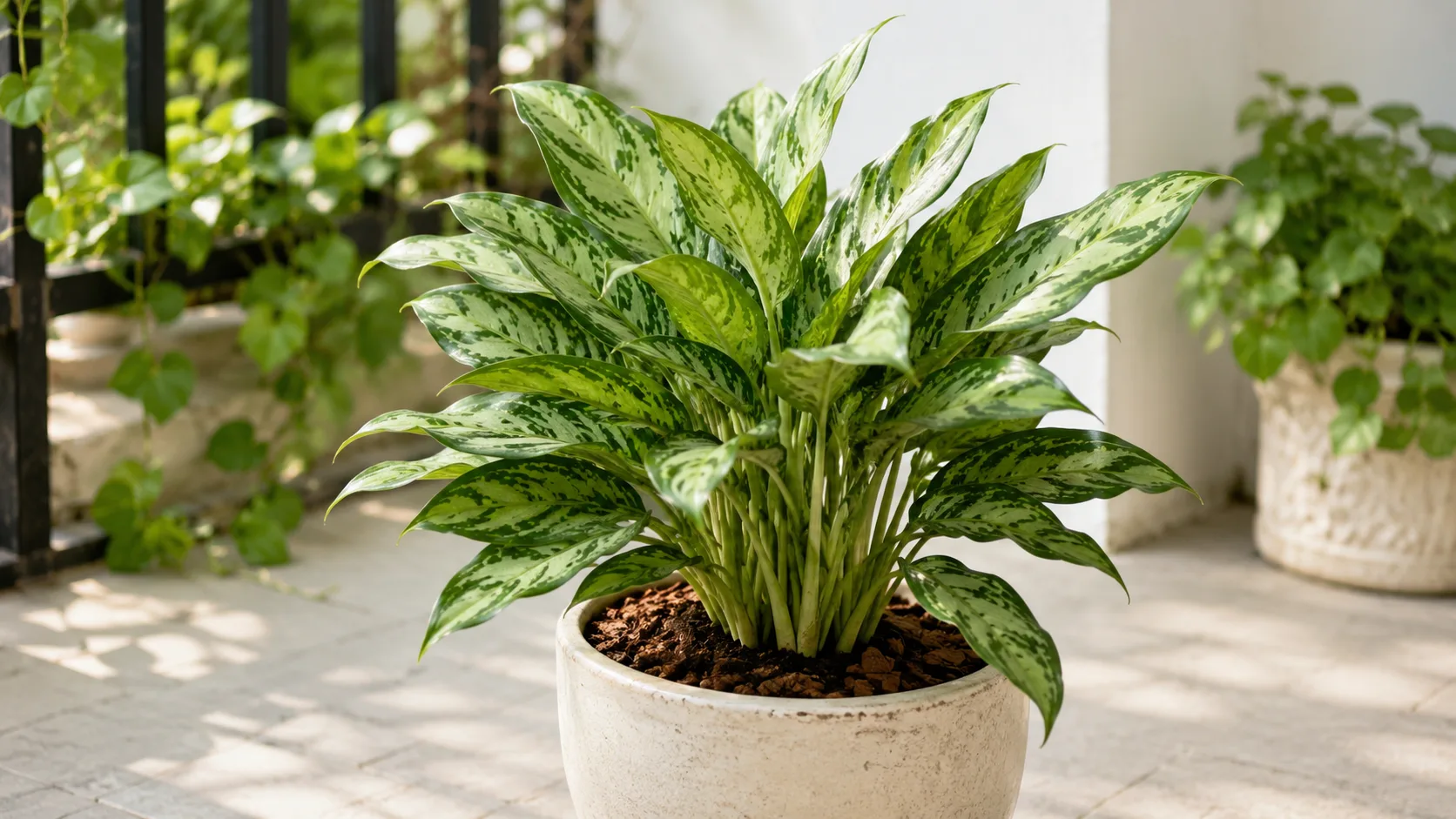 Medium
Aglaonema
Likely causeCommon calcium deficiency pattern on Aglaonema under indoor care stress.
Quick fixInspect roots, watering, light, and pests; adjust one variable and monitor new growth.
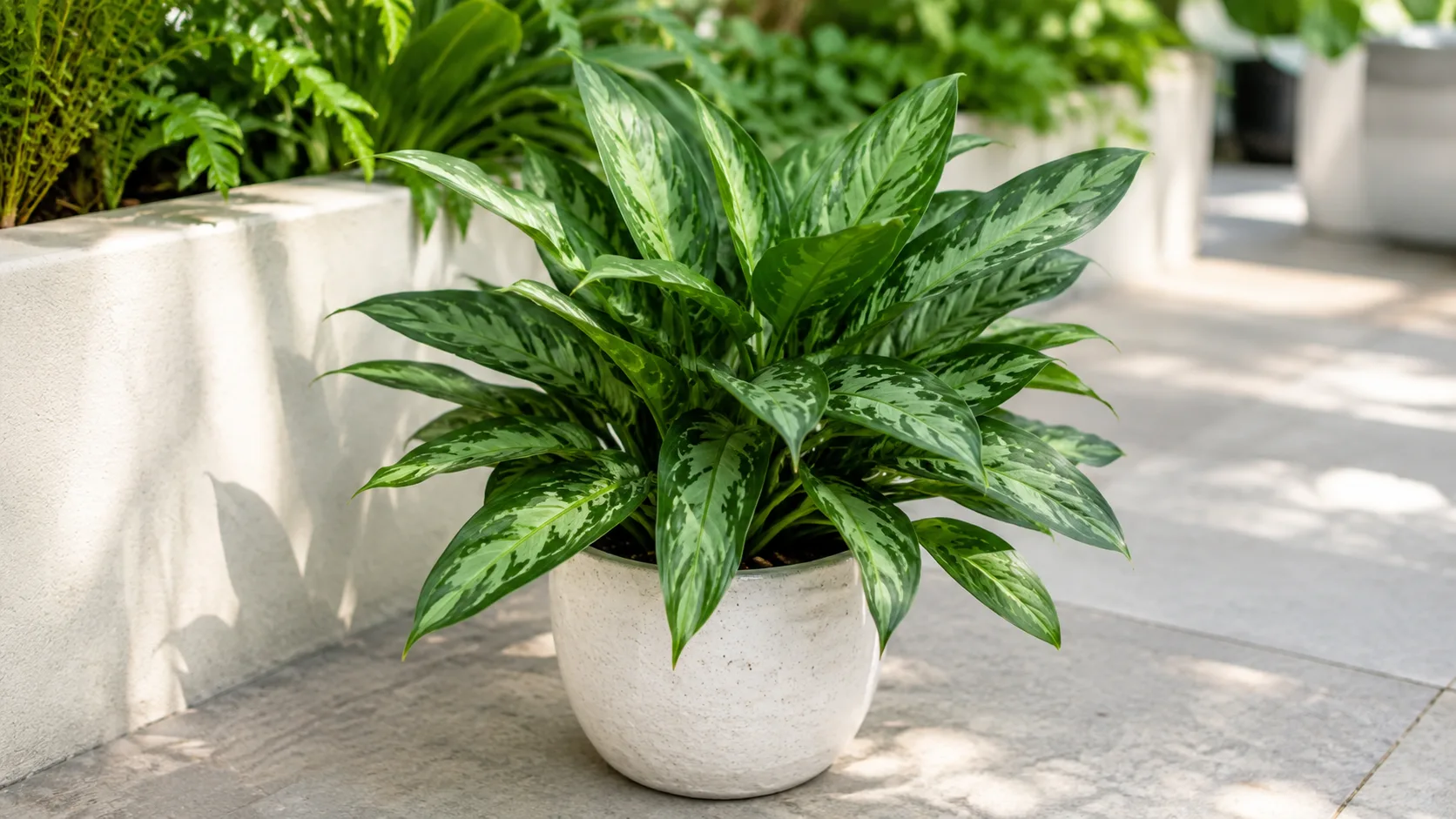 Medium
Aglaonema Cutlass
Likely causeCommon calcium deficiency pattern on Aglaonema Cutlass under indoor care stress.
Quick fixInspect roots, watering, light, and pests; adjust one variable and monitor new growth.
- Medium
Aglaonema Lady Valentine
Likely causeCommon calcium deficiency pattern on Aglaonema Lady Valentine under indoor care stress.
Quick fixInspect roots, watering, light, and pests; adjust one variable and monitor new growth.
- Medium
Aglaonema Maria
Likely causeCommon calcium deficiency pattern on Aglaonema Maria under indoor care stress.
Quick fixInspect roots, watering, light, and pests; adjust one variable and monitor new growth.
- Medium
Aglaonema Pictum Tricolor
Likely causeCommon calcium deficiency pattern on Aglaonema Pictum Tricolor under indoor care stress.
Quick fixInspect roots, watering, light, and pests; adjust one variable and monitor new growth.
 Medium
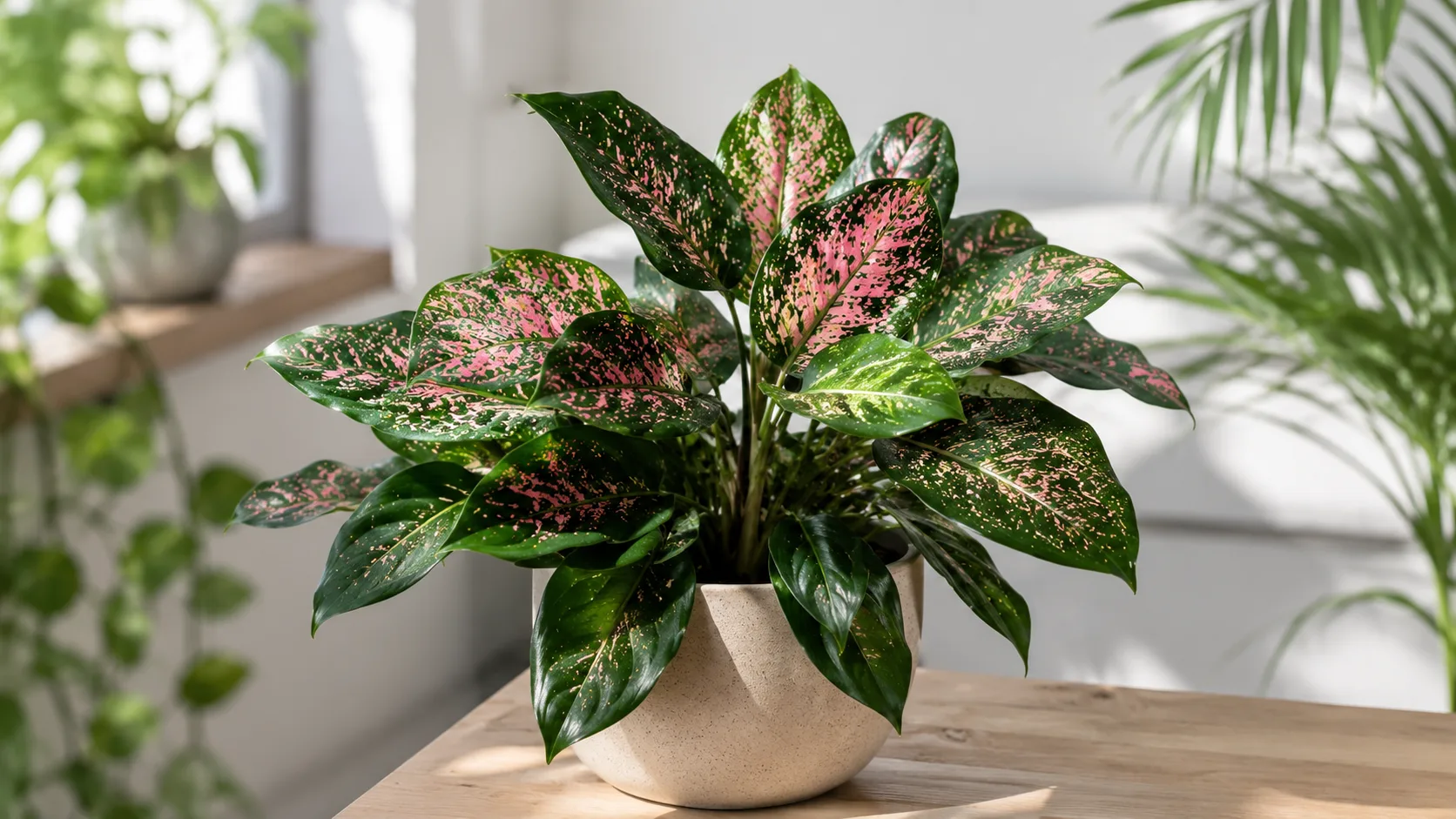
Aglaonema Pink Dalmatian
Likely causeCommon calcium deficiency pattern on Aglaonema Pink Dalmatian under indoor care stress.
Quick fixInspect roots, watering, light, and pests; adjust one variable and monitor new growth.
- Medium
Aglaonema Red Siam
Likely causeCommon calcium deficiency pattern on Aglaonema Red Siam under indoor care stress.
Quick fixInspect roots, watering, light, and pests; adjust one variable and monitor new growth.
 Medium
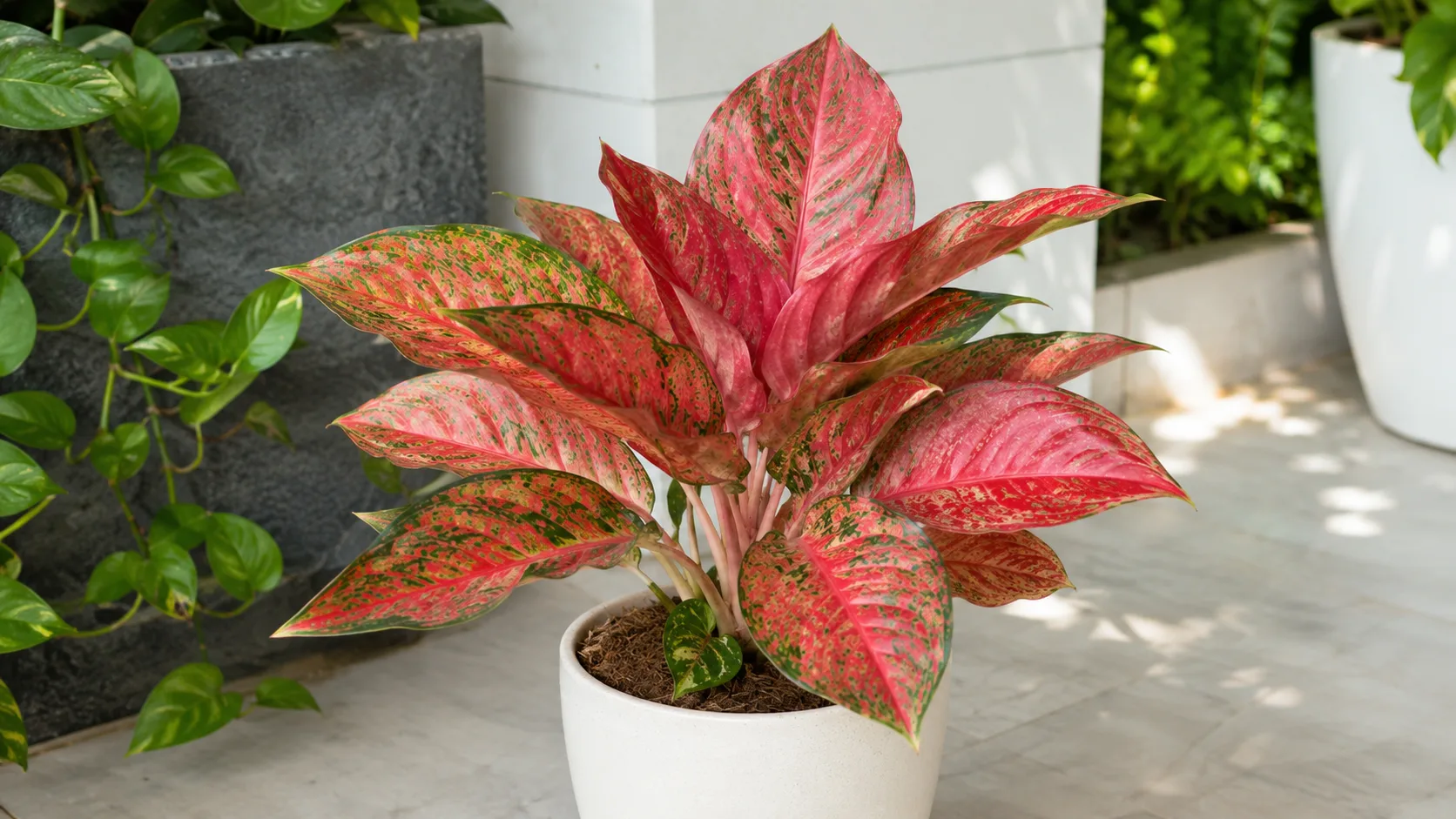
Aglaonema Red Valentine
Likely causeCommon calcium deficiency pattern on Aglaonema Red Valentine under indoor care stress.
Quick fixInspect roots, watering, light, and pests; adjust one variable and monitor new growth.
 Medium
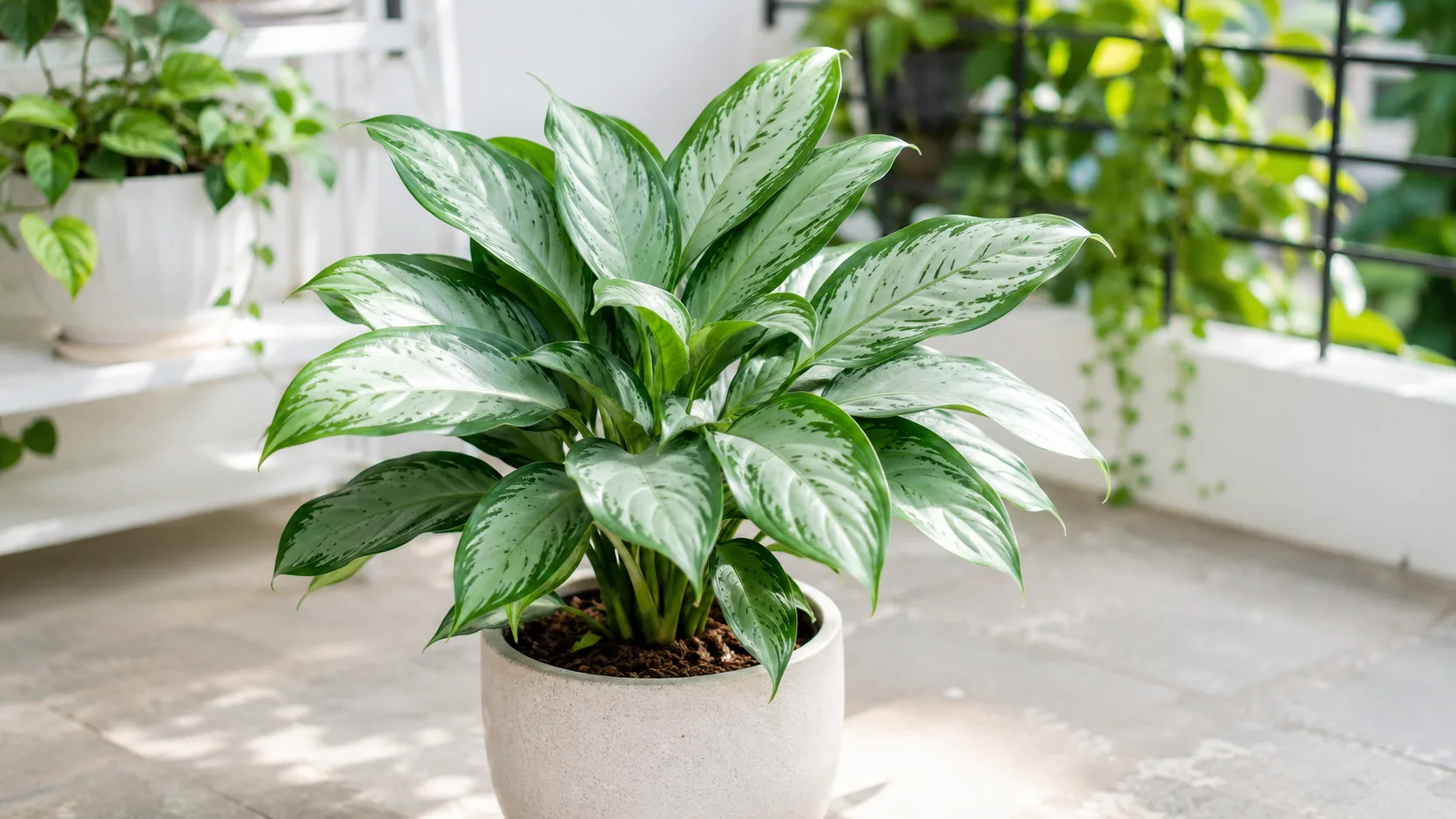
Aglaonema Silver Bay
Likely causeCommon calcium deficiency pattern on Aglaonema Silver Bay under indoor care stress.
Quick fixInspect roots, watering, light, and pests; adjust one variable and monitor new growth.