Calcium Deficiency on Philodendron Birkin: Causes, Checks &
Quick answer
When Birkin's newest pinstriped crown leaf cups, twists, or browns while lower striped leaves stay firm, suspect calcium uptake trouble-not a whole-plant crisis. First fix: check soil moisture rhythm and mix age, then repot into fresh airy mix before resuming diluted fertilizer.
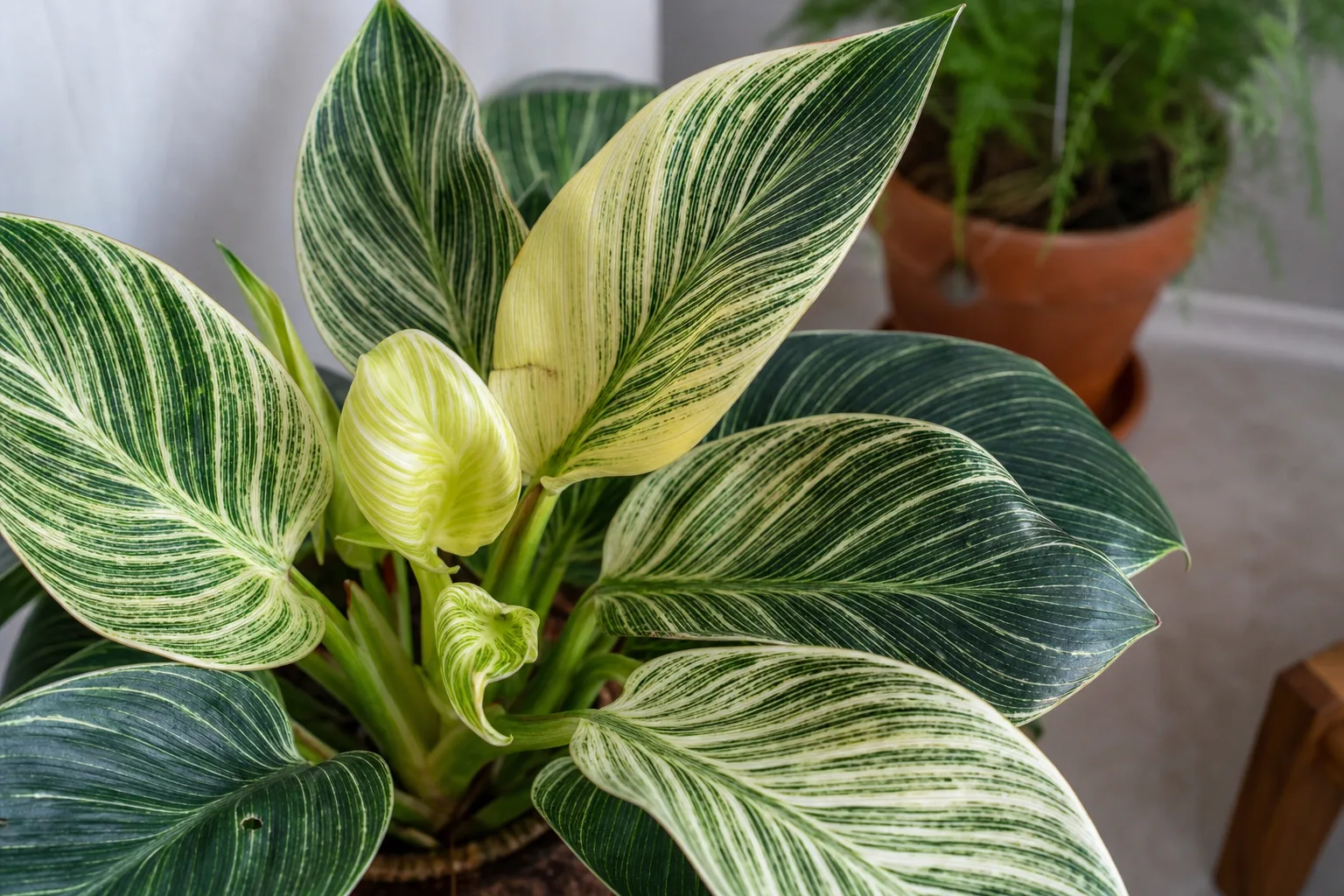
Calcium Deficiency on Philodendron Birkin: Causes, Checks & Fixes
This guide covers calcium deficiency on Philodendron Birkin. See also the general Calcium Deficiency guide, watering, and light pages for this plant.
Calcium Deficiency on Philodendron Birkin: Causes, Checks & Fixes
Quick answer
Your Birkin’s newest pinstriped crown leaf is cupped, twisted, or browning at the edges-and every lower striped leaf still looks fine. That pattern is the hallmark of calcium uptake trouble on new growth, not a whole-plant yellowing crisis. Calcium is immobile in plants, so the youngest tissue at the center crown shows damage first while older pinstriped foliage below stays healthy.
Do not confuse this with calcium oxalate crystals-the natural compound inside all philodendron tissue that makes Birkin toxic to dogs and cats if ingested. Nutrient calcium deficiency is about minerals reaching expanding cells, not pet mouth irritation from chewing leaves.
On this compact self-heading aroid, the trigger is usually interrupted water flow, depleted mix, or salt imbalance-not a missing bottle of calcium. First fix: confirm soil moisture rhythm and mix age, then repot into fresh well-draining mix if the medium is old before resuming diluted fertilizer. If you are unsure whether the problem is calcium, potassium, or lockout, use the comparison table below before adding supplements.
What calcium deficiency looks like on Philodendron Birkin
Birkin grows as an erect rosette with thick upright stems and glossy heart-shaped leaves striped in creamy white. Watch the center crown where new leaves unfurl-not the lower foliage first. Distorted young leaves may emerge smaller, cupped inward, or twisted compared with healthy plump hearts with crisp pinstripes. Brown or necrotic patches can appear on the youngest tissue-sometimes at leaf margins, sometimes as dead spots in the center of a new leaf. The white variegation on affected new growth may look blurry, thin, or uneven while older leaves keep their pattern. On Birkin’s slow habit, one bad crown leaf can persist for weeks before owners notice the stall.
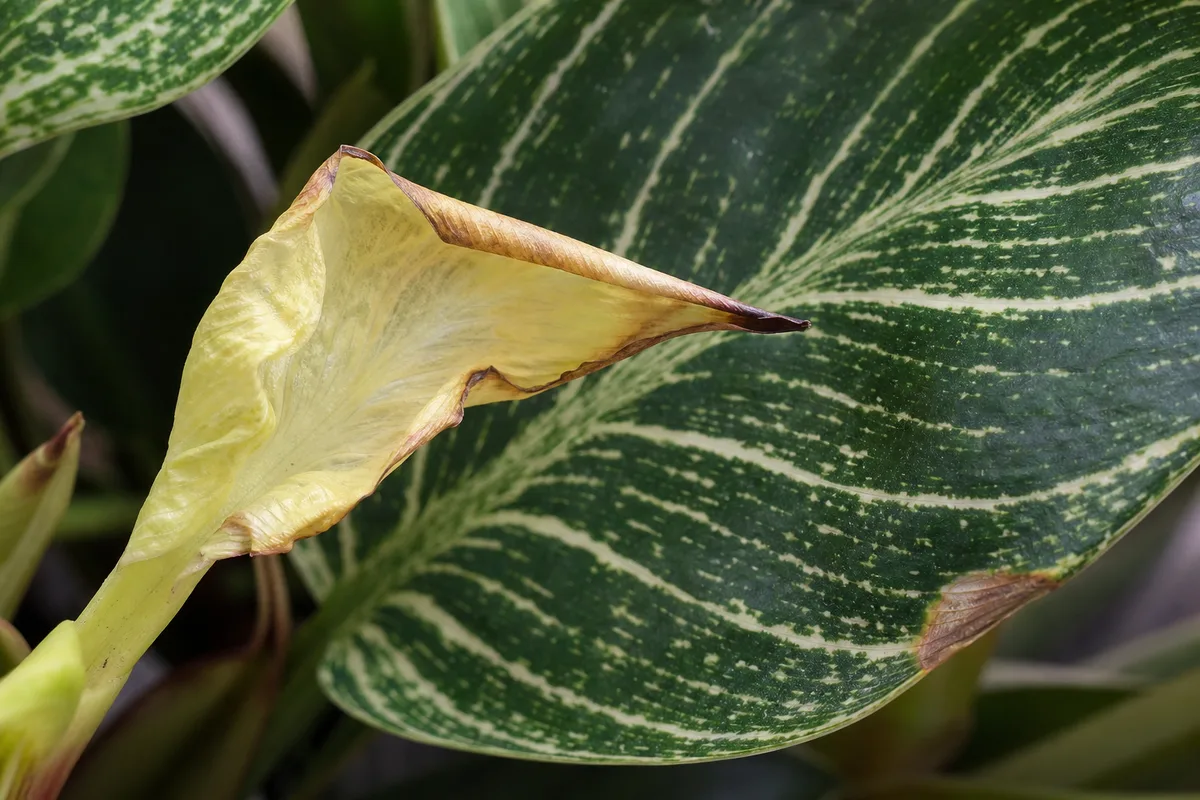
Calcium Deficiency symptoms on Philodendron Birkin - compare with healthy tissue on the same plant.
Other Birkin-specific clues:
- Weak or kinked petioles on fresh growth while the main stem stays firm
- Stalled crown with no new pinstriped leaves for weeks during spring or summer
- Ragged or torn-looking new leaf edges that never fully expand-UF/IFAS notes hybrid philodendron new leaves become twisted or distorted with calcium deficiency
- Older lower leaves staying green and striped while only the top looks wrong
Compare calcium with potassium, nitrogen, and nutrient lockout
Use this table when crown distortion could be more than one nutrient problem. For deeper dives, see our guides on potassium deficiency, nutrient lockout, and salt build-up.
| Symptom pattern | Calcium deficiency | Potassium deficiency | Nitrogen deficiency | Nutrient lockout |
|---|---|---|---|---|
| Which leaves first | Newest crown pinstriped leaves | Lower mature leaves | Oldest leaves inward | New crown leaves pale despite feeding |
| Main visual cue | Cupping, twisting, weak petioles | Dry brown marginal scorch on old leaves | Overall yellowing from bottom up | Faded pinstripes, white soil crust |
| Variegation | Blurry or thin stripes on new growth only | Dull stripes with lower-edge burn | Pale, small new leaves plant-wide | Washed-out pinstripes after heavy feed |
| Stem/petiole | Kinked soft petioles on fresh growth | Weak upright stems over time | Thin pale stems | Firm stems; tips burn after feed |
| Soil clue | Old exhausted mix, dry-wet swings | Depleted mix, skipped K in label | Long gaps without any feed | White crust, recent full-strength dose |
| First fix direction | Repot + stabilize watering | Read K on label, balanced feed | Resume light balanced feed | Stop feed, flush salts |
Compare carefully with non-nutrient lookalikes:
- Insufficient light causes loss of variegation, leggy stems, and small pale leaves spread across the plant-not isolated crown distortion on otherwise firm lower foliage. See our not enough light guide when striping fades plant-wide.
- Low humidity shows as crisp brown tips on multiple leaves, often without cupping at the crown only.
- underwatering on Philodendron Birkin can wilt and curl several leaves at once; the whole rosette looks stressed, not just the newest pinstriped tissue.
- Fertilizer burn can scorch tips soon after a heavy feed rather than after months of depleted mix.
- overwatering on Philodendron Birkin pairs yellowing and limp leaves with wet soil and possible root decline-not twisted new growth on dry, healthy-smelling mix.
Why Philodendron Birkin gets calcium deficiency
Philodendron Birkin grows slowly in bright filtered light and uses nutrients steadily during spring and summer. Long gaps without feed, mix washed out by years of watering, or pH drift outside the slightly acidic to neutral range Philodendron Birkin overview prefers can all limit calcium uptake even when minerals are technically present. Birkin kept in the same peat-heavy store mix for two or more years often runs low on available minerals-our soil guide covers the perlite-and-bark blend that keeps roots oxygenated.
The most common causes on Birkin are:
- Inconsistent watering. Calcium travels with water through the xylem. Repeated dry cycles followed by heavy watering interrupt calcium delivery to rapidly expanding new leaves at the crown. Match rhythm to our watering guide-allow the top 3–5 cm to dry, but avoid weeks of drought during active spring growth.
- Old or exhausted potting mix. Nutrients leach out with each watering. Repotting on a one-to-two-year cycle replaces what flushing removed.
- pH or salt imbalance. Fertilizer salt buildup and excess magnesium from random Epsom salt use can inhibit calcium absorption even when calcium is in the mix. White crust on the pot rim signals salt build-up worth flushing before any supplement.
- Root stress from overwatering. Rotting roots cannot pull up water or dissolved calcium, so new crown growth fails even if fertilizer is present.
Birkin’s compact crown sits close to the soil surface. Owners who underwater during active growth or overwater in dim winter corners both disrupt the steady moisture calcium needs. Slow growth also means symptoms linger longer before owners notice-one bad new leaf at the crown can sit there for weeks while the rosette stops pushing fresh pinstripes.
How to confirm the cause
Work through checks in this order:
- Inspect the newest leaves at the crown under bright light. Distorted young pinstriped foliage with normal older leaves below matches calcium uptake failure better than pest or rot patterns.
- Run the comparison table above. Crown-only cupping with firm lower leaves points to calcium. Lower-leaf marginal scorch points to potassium deficiency. Pale pinstripes right after feeding point to nutrient lockout.
- Check soil moisture rhythm. Does the mix swing from bone dry for weeks to saturated? That pattern limits calcium delivery to new cells even when fertilizer is present.
- Review mix age and surface salts. White crust on the pot rim, mix older than two years, or never repotted since purchase all raise lockout risk.
- Feel roots and smell the mix. Firm white roots with dry, healthy-smelling mix support a nutrition diagnosis. Mushy roots and sour-smelling mix need a rot workup instead-do not fertilize until roots are healthy.
- Note light level. Birkin in dim corners grows slowly and uses less water; irregular feeding plus poor light can mimic deficiency when the real issue is weak photosynthesis and stale mix.
If crown distortion overlaps with salt crust and recent heavy feeding, flush and pause fertilizer before assuming calcium alone is missing. If lower leaves scorch while the crown stays relatively green, start with potassium checks instead.
First fix for Philodendron Birkin
Stabilize the root zone before adding supplements. If mix is more than two years old or heavily salted, repot into standard potting mix with 20–25% perlite and 10% orchid bark per our repotting guide. Gently loosen old mix from roots without tearing healthy tissue, use a pot only slightly larger, and water once until excess drains. Hold fertilizer for two weeks while the plant settles.
When you restart feeding, use a balanced houseplant formula at half the label strength every four to six weeks during spring and summer-not full label rates indoors. Our fertilizer guide covers Birkin’s seasonal pause and why stressed rosettes should not be fed. Do not fertilize during winter dormancy or while the plant is stressed. Do not dump Epsom salt or high-dose calcium products on a dry plant; excess magnesium can make calcium problems worse.
When to consider Cal-Mag or gypsum after repot
Balanced fertilizer in fresh mix resolves most Birkin calcium trouble within one growing season. Consider a single diluted calcium-magnesium supplement only if new crown leaves still emerge twisted four to eight weeks after repot, proper watering, and half-strength balanced feeding during active growth-and only when you have not recently applied Epsom salt or magnesium-rich products. Gypsum mixed lightly into fresh mix at repot is a safer slow-release option for peat-heavy blends than foliar sprays on delicate new pinstripes. Never foliar-feed undiluted fertilizer on unfurling crown tissue-it can spot variegation permanently.
Match watering to how the pot dries: allow the top 3–5 cm to dry before watering during growth, but avoid letting Birkin sit drought-stressed for weeks during active spring and summer extension. Keep the plant in bright filtered light so it uses water and nutrients predictably.
Recovery timeline
New pinstriped leaves should emerge with normal shape and crisp variegation within four to eight weeks after repotting and consistent feeding if roots are firm. Birkin’s slow growth habit means recovery takes longer than on a fast trailing philodendron. Old twisted or browned young leaves will not fully flatten-remove them only after new growth looks stable and you want to tidy the rosette.
Signs the problem is worsening: repeated crown dieback, spreading distortion down the stem, or new leaves staying tiny and pale while the stem base softens. If nothing improves after repot and one full month of proper feeding in Philodendron Birkin light guide, inspect for root rot on Philodendron Birkin or confirm you are not underwatering between feeds.
What not to do
Do not foliar-feed with undiluted fertilizer on delicate new pinstriped leaves-it can spot foliage. Do not increase watering because new crown leaves look weak; soggy roots block uptake. Do not assume every curled Birkin leaf needs calcium-confirm the new-growth-only pattern first. Do not feed a plant sitting in wet, rotting mix; fix drainage and root health first. Do not stack repotting, heavy pruning, and full-strength fertilizer on the same week.
How to prevent calcium deficiency next time
Repot every one to two years into fresh airy mix to keep pH in the slightly acidic to neutral range Birkin prefers-see our soil guide for the perlite-and-bark ratio. Feed lightly and consistently during spring and summer rather than in large bursts, and flush salts occasionally by watering deeply until excess runs from the drainage hole when white crust appears. Keep the plant in bright filtered light so it uses water and nutrients predictably. Avoid oversized pots that stay wet and stall root function. Rotate the pot occasionally so new crown growth develops evenly under consistent light.
In winter, Birkin in dim corners transpires less and soil stays wet longer-pause feeding when growth slows and reduce watering frequency so crown extension does not stall from soggy roots while light is weak.
Conclusion
On Birkin, the pinstriped crown is your early warning system: when only the newest center leaves cup or twist while lower striped foliage stays crisp, think calcium uptake through the root zone-not a missing supplement bottle. Repot tired mix, stabilize watering, and judge success by the next clean pinstriped leaf unfurling-not by waiting for damaged crown tissue to flatten. If symptoms overlap with salt crust or lower-leaf scorch, route to our nutrient lockout or potassium deficiency guides before stacking more minerals.
When to use this page vs other Philodendron Birkin guides
- Philodendron Birkin watering guide - Use for routine moisture checks before assuming calcium deficiency is the main issue.
- Philodendron Birkin problems hub - Browse all 42 common issues on this species.