Underwatering on Philodendron Birkin: Causes, Checks & Fixes
Quick answer
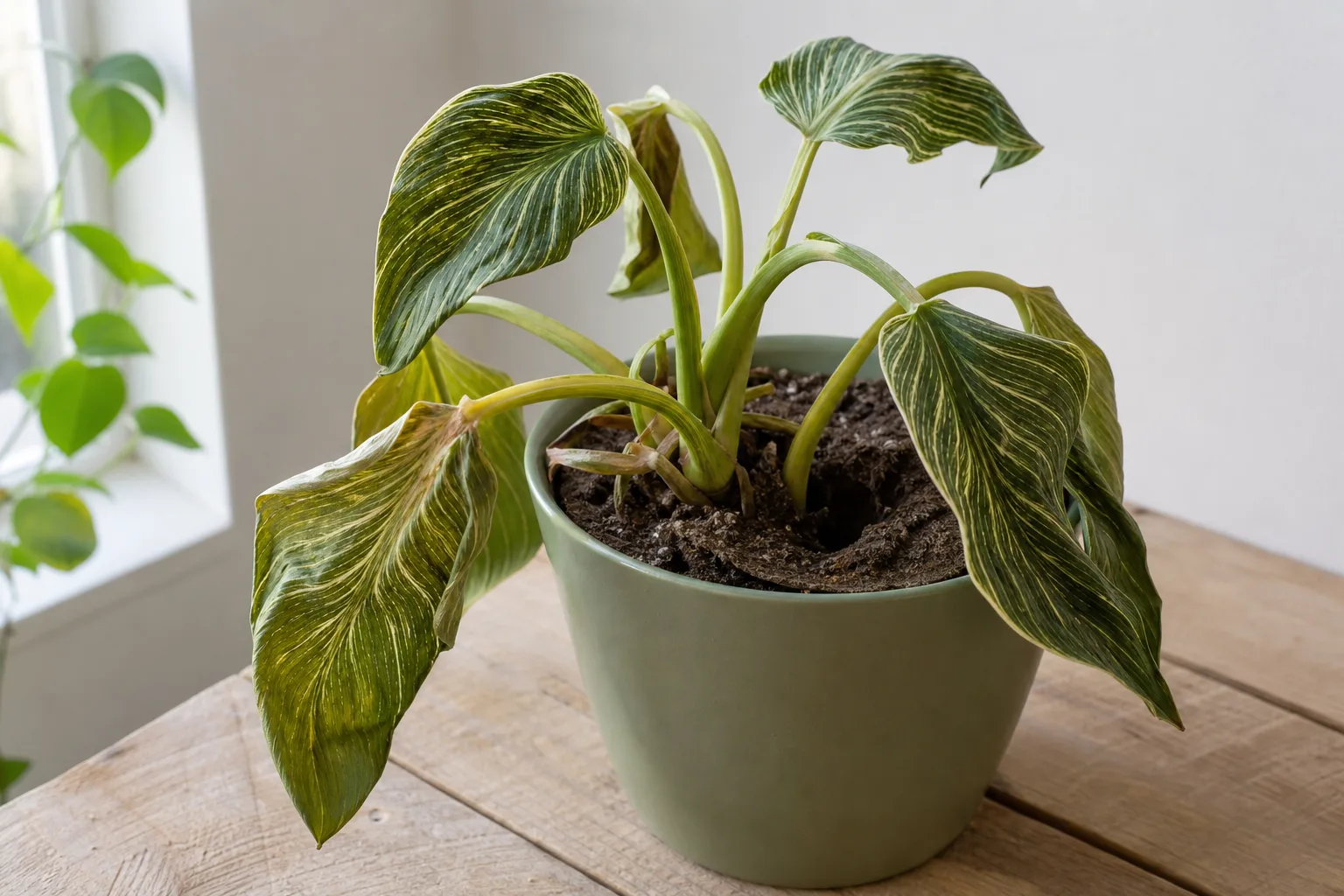
Underwatering on Philodendron Birkin shows as limp pinstriped leaves, a light dry pot, and mix dry 3–5 cm down-common in bright windows, small pots, or after a long vacation. First step: water deeply until excess drains, then check again in a few hours before changing anything else.
Underwatering on Philodendron Birkin: Causes, Checks & Fixes
This guide covers underwatering on Philodendron Birkin. See also the general Underwatering guide, watering, and light pages for this plant.
Underwatering on Philodendron Birkin: Causes, Checks & Fixes
Quick answer
Philodendron Birkin handles a missed drink better than chronically wet roots, but long dry spells still show up fast in its tight rosette of pinstriped leaves. When the top 3–5 cm of mix is dusty dry and the pot feels light, water deeply once until excess runs from the drainage holes-that single thorough soak is the first fix, not misting, Philodendron Birkin repotting guide, or fertilizer.
Birkin is a slow-growing, self-heading aroid that needs consistent moisture in the root zone even though it is more drought-tolerant than many moisture-loving ferns. Limp, soft leaves on bone-dry mix usually mean thirst. Leaves that stay limp on wet soil mean a different problem entirely.
What underwatering looks like on Philodendron Birkin
Birkin signals drought through its glossy variegated foliage before the stem fails. Because leaves sit in a compact crown above the pot, the whole plant can look wilted at once rather than yellowing one leaf at a time.
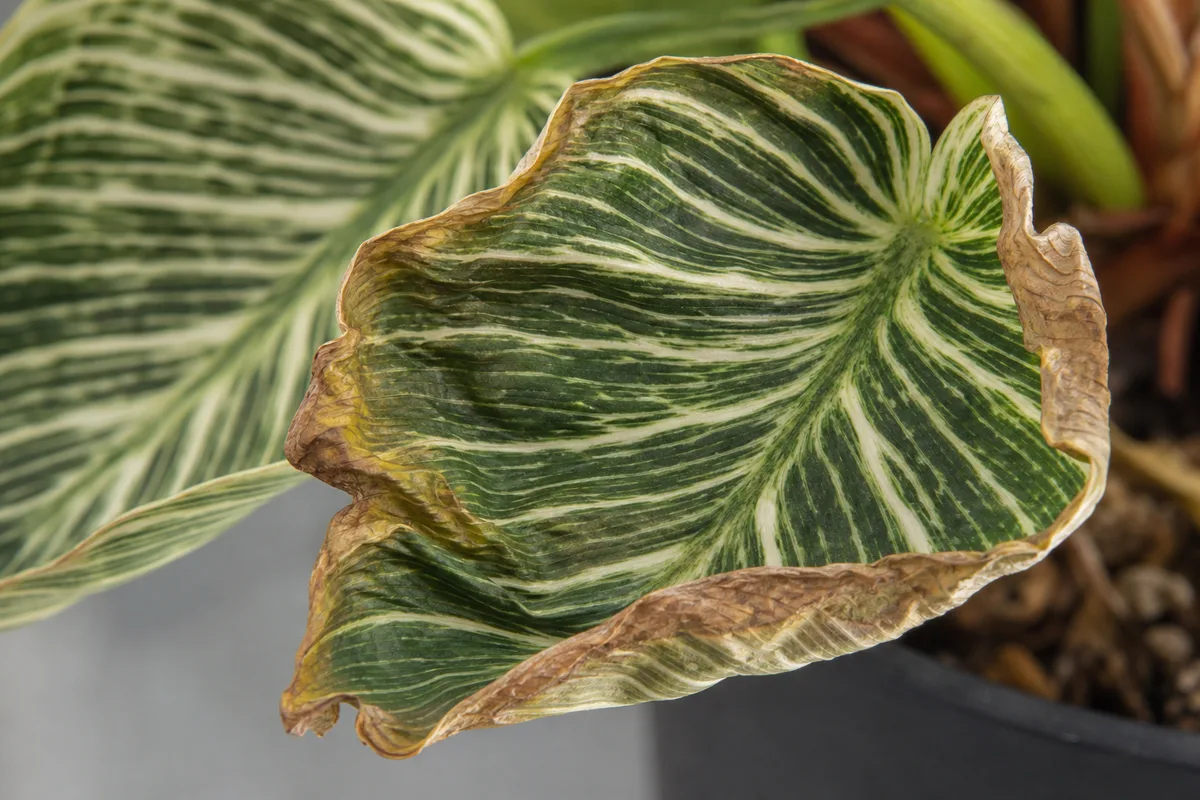
Underwatering symptoms on Philodendron Birkin - compare with healthy tissue on the same plant.
Common signs on Philodendron Birkin overview:
- Limp, drooping pinstriped leaves that feel thin or papery-not the heavy flop of waterlogged tissue
- Dry, crispy brown edges or tips on white or cream stripes, especially on older leaves
- Leaf curling or inward cupping as the plant reduces surface area to limit water loss
- Light pot that feels almost hollow when lifted
- Dusty dry mix 3–5 cm down; in severe cases, soil pulls away from the pot wall
- Slowed or stalled new growth-Birkin already grows slowly, so weeks without a new pinstriped leaf after summer can mean chronic dryness
- Older lower leaves yellowing and dropping after repeated dry cycles, as the plant sheds tissue to conserve moisture
Fully crispy brown leaf tissue will not turn green again. Recovery shows in firm leaves and one new leaf with crisp white striping-not in old damaged edges re-coloring.
Why Philodendron Birkin gets underwatered
Birkin is often sold as an easy tabletop plant, which leads owners to treat it like a succulent. It tolerates brief dryness better than constant wetness, but it still needs regular deep watering when the top layer dries. Several Birkin-specific factors make underwatering common:
Bright filtered light increases water use. Birkin prefers bright, filtered sunlight. In an east or near-south window, transpiration runs higher than in a dim corner-yet many owners keep the same winter calendar from a darker season.
Airy, fast-draining mix. Birkin does best in moist, well-drained aroid mix with perlite and bark. That mix is correct for root health but dries faster than dense store peat, especially in small pots.
Compact pot and slow root exploration. Birkin stays compact-often 6 inches to 3 feet tall in a tabletop pot. A root ball that fills a small container can dry through in just a few days during active growth and air conditioning season.
Calendar watering in variable homes. Watering every two weeks because “that’s what the tag said” ignores that pots dry at different speeds by room temperature, humidity, and season. Birkin in a warm bright room may need water every 7–10 days when the top 3–5 cm is dry; the same plant in a cool dim room may need less.
Hydrophobic old peat. When dry potting mix repels water, the surface looks briefly damp while the root ball inside stays dry. Water runs down the inside wall of the pot or straight through without soaking the center-classic underwatering even when you think you watered.
Vacation gaps and heating season. Dry indoor air from heating plus missed waterings during travel stack stress on Birkin’s relatively thin leaf tissue compared to succulents.
How to confirm underwatering
Work through these checks before repotting, pruning, or feeding:
- Soil moisture at depth - Stick your finger into the mix 3–5 cm deep. Dusty, bone-dry soil with limp leaves strongly suggests underwatering. Cold-damp or wet soil with limp leaves suggests overwatering on Philodendron Birkin or root damage.
- Pot weight - Lift the pot. A very light feel compared to how it feels after a proper watering confirms dry roots.
- Leaf texture - Underwatered Birkin leaves feel thin, dry, or slightly crispy at edges. Overwatered leaves feel soft and heavy while soil is wet.
- Perk test - Water thoroughly and wait several hours to a day. If leaves firm up and lift, thirst was the main issue. No improvement on dry mix may mean dead roots or another stressor.
- Rewet behavior - If water pools on the surface or runs through in seconds, the mix may be hydrophobic. That supports underwatering even if you watered recently.
- Light and season context - Birkin in bright filtered light during summer dries faster. Reduce checks in winter but do not assume dormancy means zero water for months.
- Pest cross-check - Spider mites also cause stippling and dull leaves, but mite damage usually comes with fine webbing and is not fixed by one deep soak alone.
The combination of dry mix several centimeters down + light pot + limp leaves that recover after watering confirms underwatering. One older yellow leaf on otherwise healthy dry-down rhythm is usually normal senescence, not a drought crisis.
First fix to try
Water thoroughly until excess runs from the drainage holes, then empty the saucer within 30 minutes.
Use room-temperature water and pour slowly until the entire root zone gets moisture-not a quick splash that wets only the surface. If water races through in seconds, the mix is likely hydrophobic: bottom-water the pot in a sink or basin for 20–30 minutes, or use the double watering method so the peat can absorb moisture.
Do not fertilize, repot, or prune heavily on day one. Do not move Birkin into direct afternoon sun to “help it recover”-too much sun will scorch pinstriped leaves. If foliage is limp but soil is wet, stop and read the overwatering guide instead; adding water to failing roots makes things worse.
Step-by-step recovery
Choose a path based on how long the plant has been dry and how the roots respond.
Mild case: dry mix, firm stem, leaves limp but not crispy
- Deep-water until excess drains; discard saucer water.
- Wait 6–24 hours and check whether leaves regain turgor.
- Resume the normal rhythm: water when the top 3–5 cm is dry-roughly every 7–10 days in active growth, every 10–14 days in winter for most homes.
- Remove fully brown crispy leaf tips only if they bother you cosmetically; they will not heal.
- Watch for one new pinstriped leaf over the next two to four weeks.
Moderate case: hydrophobic mix or repeated dry cycles
- Bottom-water for 20–30 minutes until the surface darkens evenly, or use the double-watering method-water once, wait 30 minutes, water again.
- Poke a few shallow channels into the dry surface with a chopstick if water channels around the root ball.
- Move Birkin to stable bright filtered light so it uses water steadily without scorching.
- Trim fully dead brown leaves at the base; keep any firm green tissue.
- Hold fertilizer until you see active new growth.
Severe case: weeks without water, collapsed leaves, soil shrunken from pot walls
- Bottom-water for 45–60 minutes, then let the pot drain fully.
- If leaves remain papery after 24 hours, unpot carefully and inspect roots. Healthy aroid roots are firm and pale; desiccated roots are brittle and brown.
- Trim only clearly dead roots. Repot into slightly moist fresh aroid mix if the old ball was impossible to rewet-same size pot or one size up, never oversized.
- Water lightly to settle, then let the top layer dry before the next drink.
- Accept that heavily damaged plants may drop several leaves before pushing new growth.
Wear gloves when handling cut tissue-Birkin sap can irritate skin, and all philodendron parts contain calcium oxalate crystals toxic to pets if ingested.
Recovery timeline
Mild underwatering often shows improvement within hours to one day after a thorough soak. Leaves should feel firmer and the pot noticeably heavier.
Moderate stress from hydrophobic mix or repeated dry spells usually needs two to four weeks before Birkin pushes a new leaf with normal pinstripes. Its slow growth rate means patience-not failure.
Severe desiccation can take a full growing season if fine roots died back. Firm stem tissue and one healthy new leaf are positive signs. If the stem base shrivels, leaves keep collapsing despite proper moisture, or new growth emerges tiny and solid green in adequate light, root damage may be deeper than simple thirst.
Lookalike symptoms
Overwatering - Heavy wet pot, yellow leaves (often lower first), sour smell, fungus gnats, or limp leaves that do not improve when soil is already wet. Wilting on wet mix often means damaged roots, not thirst.
Low humidity - Crispy brown tips on otherwise firm leaves with normal soil moisture. Birkin prefers moderate humidity; brown leaf tips indicate a lack of humidity and dry air alone can brown variegated edges without underwatering the root zone.
Not enough light - Leggy stems, smaller leaves, fading pinstripes, and slow growth without necessarily dry soil. More water will not restore variegation; brighter filtered light will.
Heat stress - Limp leaves after exposure to hot dry air near a heat vent or in direct sun. Soil may be dry, but the fix includes moving the plant-not only adding water in place.
Natural leaf drop - One or two older bottom leaves yellow and fall while soil dries on a normal rhythm and new growth looks good. No rescue needed.
root rot on Philodendron Birkin from past overwatering - Wilt despite watering because roots cannot take up water. Inspect roots if limp foliage persists after the mix is evenly moist.
Mistakes to avoid
- Misting leaves instead of soaking roots - Surface moisture does not rehydrate a dry root ball and can spot Birkin foliage.
- Assuming drooping always means overwatering - Dry mix and a light pot point the other way.
- Drenching repeatedly for days after one good soak - One thorough watering fixes mild thirst; constant flooding risks rot.
- Waiting for a calendar day instead of checking whether the top 3–5 cm is dry
- Using ice cubes or cold water - Room-temperature water is gentler on tropical roots.
- Repotting into a much larger pot to “hold more water”-excess mix stays wet unevenly and invites rot
- Fertilizing a drought-stressed plant - Rehydrate first; feeding dry roots can cause burn
- Placing in direct afternoon sun to speed recovery-Birkin scorches easily; use Philodendron Birkin light guide
Birkin care cross-check
Underwatering recovery sticks only when the rest of the setup matches Birkin’s needs:
- Light: Bright filtered or indirect light most of the day. Strong light increases watering frequency; too little light slows growth without fixing dry soil patterns.
- Soil: Well-draining aroid mix with perlite and bark-not straight garden soil or pure peat without structure.
- Water rhythm: Every 7–10 days in active growth when the top 3–5 cm is dry; every 10–14 days in winter for many homes-always confirm with the pot, not the calendar.
- Humidity: 50 to 60% humidity supports leaf edges, but humidity does not replace root-zone moisture.
- Temperature: Stable 18–26°C (65–79°F). Heat and AC increase dry-down speed-check more often in summer.
How to prevent underwatering next time
Check soil at 3–5 cm depth before every watering, or lift the pot weekly until you know its weight when properly moist versus dry.
Water thoroughly each time so the whole root zone gets moisture, then empty saucers promptly. Partial splashes train owners to think they watered while the center stays dry.
Refresh peat-heavy mix that has gone hydrophobic, or repot into a proper aroid blend when the plant is healthy. Add perlite and bark so drainage stays good without the mix drying out in hours-balance is the goal.
Match frequency to season and placement. Birkin in a bright east window in summer may need water weekly; the same plant in a cool north room in winter may need water every two weeks or longer.
If you travel, use a pebble tray under a lifted pot, group plants for humidity, or ask someone to check pot weight-not just the surface. A moisture meter can help, but finger depth and pot weight remain the most reliable checks for Birkin’s size.
When to worry
Treat underwatering as urgent when:
- Soil has shrunken and pulled away from the pot, and water runs straight through without soaking
- Leaves feel papery and collapse in hot direct sun after prolonged dryness
- The plant has gone many weeks without water during active summer growth
- Leaves perk briefly after watering but wilt again within a day on evenly moist mix-possible root loss from earlier drought or rot
- The stem base shrivels or feels hollow
Birkin is rarely lost to a single missed watering if stems are still firm. It may not be saveable if the entire root system is desiccated and brittle, the stem base has collapsed, and no firm tissue remains for propagation. Take a healthy stem cutting with a node before discarding if any firm section still exists.
Conclusion
Philodendron Birkin asks for attention to dry-down speed, not a rigid schedule. Its pinstriped rosette wilts dramatically when roots run dry, but a single deep watering often restores turgor within a day if damage is recent. Pair bright filtered light with a simple rule-water when the top 3–5 cm is dry-and lift the pot until that rhythm becomes intuitive. Firm leaves, predictable pot weight, and one new crisp pinstriped leaf are the signs your Birkin is hydrated and back on track.
When to use this page vs other Philodendron Birkin guides
- Philodendron Birkin watering guide - Use for routine moisture checks before assuming underwatering is the main issue.
- Philodendron Birkin problems hub - Browse all 42 common issues on this species.
- Brown Tips on Philodendron Birkin - Different entry point when symptoms overlap with underwatering.
- Yellow Leaves on Philodendron Birkin - Different entry point when symptoms overlap with underwatering.
- Leaf Drop on Philodendron Birkin - Different entry point when symptoms overlap with underwatering.