Root Rot on Philodendron Birkin: Causes, Checks & Fixes
Quick answer
Root rot on Philodendron Birkin starts when the compact root ball sits in wet mix too long-common in low light, oversized pots, or cache pots without drainage. First step: stop watering and unpot to inspect roots before repotting or pruning anything else.
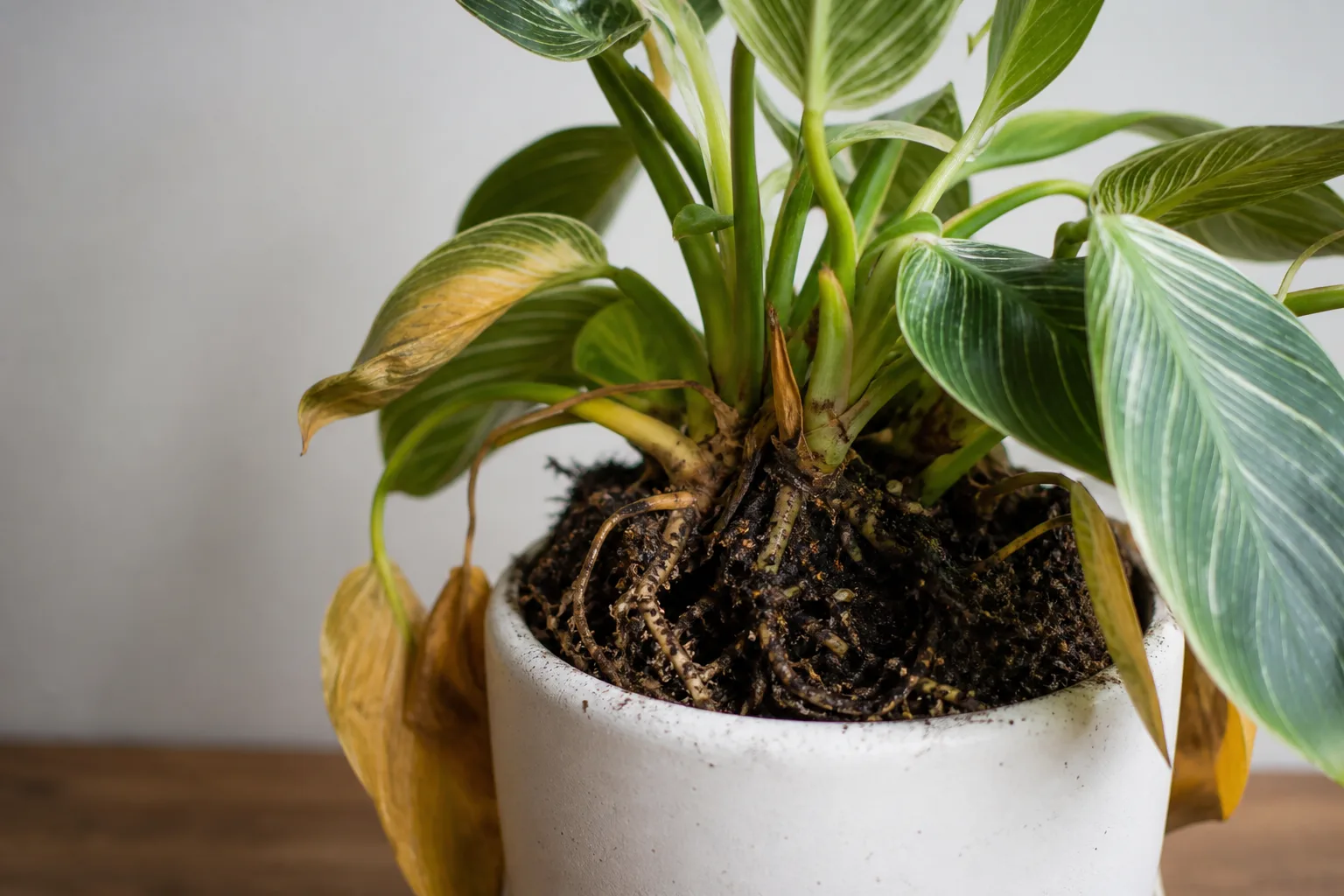
Root Rot on Philodendron Birkin: Causes, Checks & Fixes
This guide covers root rot on Philodendron Birkin. See also the general Root Rot guide, watering, and light pages for this plant.
Root Rot on Philodendron Birkin: Causes, Checks & Fixes
Quick answer
Root rot on Philodendron Birkin almost always traces to roots sitting in wet, oxygen-poor mix too long-not a rare pathogen attacking an otherwise healthy plant. This self-heading aroid wants moist, well-drained soil and bright filtered light. When the pot stays heavy in a dim corner or inside a cache pot without drainage, decay fungi move in and roots stop working.
The confusing part: wilting and yellow pinstriped leaves can look like thirst even when the mix is wet, because rotting roots cannot take up water.
First step: stop watering and unpot the plant today. You need to see whether roots are firm or mushy before Philodendron Birkin repotting guide, spraying fungicide, or adding fertilizer. Waiting for the surface to dry alone rarely saves a Birkin once roots have turned brown and slimy.
What root rot looks like on Philodendron Birkin
Above soil, rot often mimics underwatering on Philodendron Birkin. Lower leaves may yellow first, then droop. The glossy pinstriped foliage loses its crisp upright habit and the whole rosette can look limp. A sour or swampy smell from the drainage hole is a strong clue. The pot stays heavy for days after you last watered.
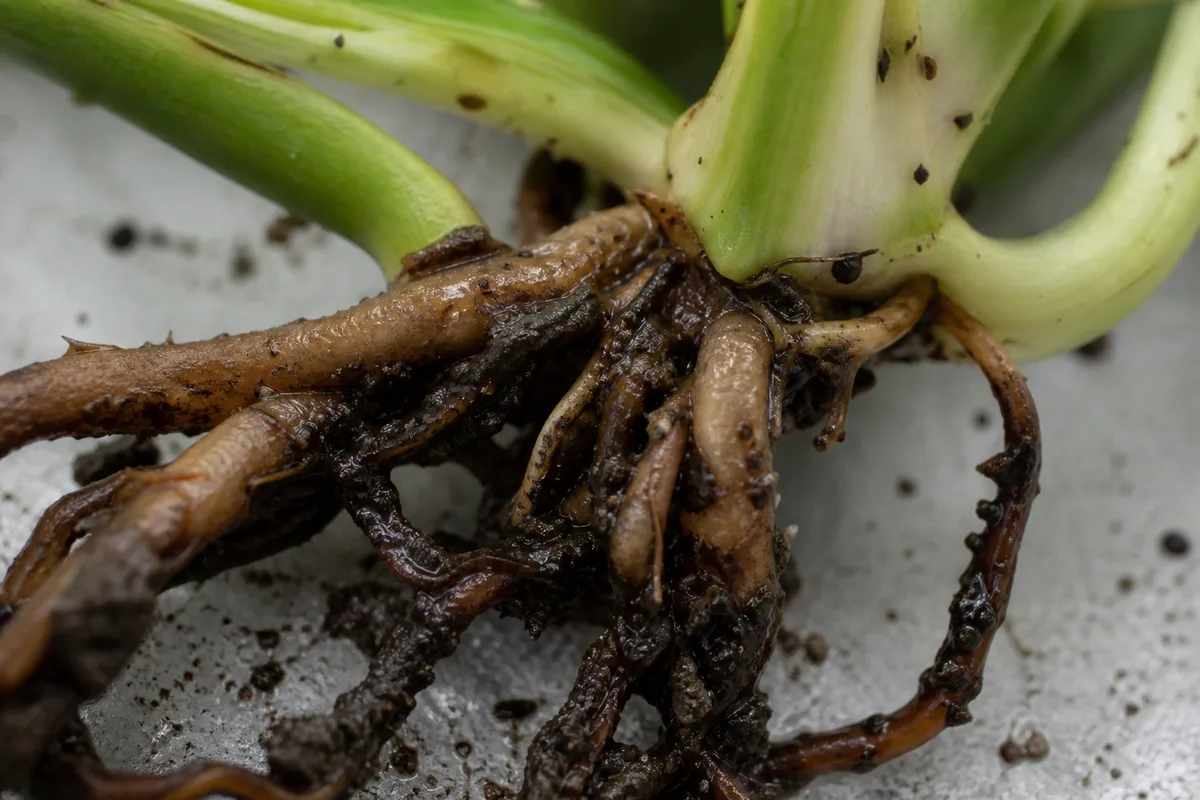
Root Rot symptoms on Philodendron Birkin - compare with healthy tissue on the same plant.
The Birkin’s thick upright stem should feel solid, like a firm pencil. Advanced rot shows as:
- Soft or dented tissue at the soil line
- Black or brown patches climbing from the base of the stem
- Yellowing that continues while mix stays damp 3–5 cm down
- New leaves emerging small, pale, or without clean white striping
Below soil, healthy roots are firm and white or light tan. Rotted roots turn brown, translucent, or mushy and may slip off between your fingers. A white fuzz on collapsed roots is fungal growth, not healthy root hairs.
Normal lookalikes: One older bottom leaf yellowing on a firm stem with drying soil is often natural shedding. Rot is the combination of wet deep mix + limp foliage + mushy roots, not a single blemished leaf alone.
Why Philodendron Birkin gets root rot
Birkin is a compact self-heading hybrid with slow growth and a relatively small root mass for its showy foliage. It evolved as an understory aroid-not a plant that wants constantly saturated peat. North Carolina Extension lists overwatering as a cause of root rot and yellowing leaves on this cultivar.
Overwatering on a calendar is the leading trigger. Watering every seven days because an app said so, without checking whether the top 3–5 cm has dried, keeps the root zone wet when the plant is not using moisture.
Low light plus frequent watering is the classic Birkin rot setup. In insufficient light the plant stretches and loses variegation; growth slows, transpiration drops, and the same Philodendron Birkin watering guide that worked in a bright window becomes excessive in a back bedroom.
Other Birkin-specific triggers:
- Heavy peat-only mix without perlite or bark-dense substrate holds water around the compact crown
- Oversized decorative pots where a small root ball sits in a large wet zone-Missouri Botanical Garden notes root rot often results from too large a pot or inadequate drainage
- Cache pots or saucers holding standing water after every drink
- Cool winter rooms (below about 18°C / 65°F) where evaporation slows but watering continues on a summer schedule-chilling injury combined with wet soil often leads to root rots
- Repotting into fresh mix and watering heavily before inspecting whether old roots were already failing
Fungi finish the job once roots are oxygen-starved, but the root cause is almost always culture, not bad luck.
How to confirm the cause
Work through these checks in order:
- Pot weight - Heavy days after watering with limp leaves suggests waterlogged roots, not drought.
- Soil moisture at depth - Dry 3–5 cm down with a firm stem and slightly limp leaves may be underwatering. Wet deep mix with yellowing confirms trouble.
- Light level - Dim placement with a heavy pot on a weekly water schedule fits rot more than a bright windowsill with dry mix.
- Smell and drainage - Sour odor, blocked holes, or water sitting in an outer pot point to saturated lower roots.
- Stem firmness - Press the base above the soil. Hard tissue supports recovery; soft tissue means advanced rot.
- Root inspection - Unpot if the base is soft or smell is sour. Rinse mix away gently. Healthy tissue is firm; rot collapses when pinched.
If the pot is light, mix is dry throughout, and the stem is firm but leaves droop slightly, underwatering may explain wilt better than rot-do not soak until you have checked moisture at depth.
First fix for Philodendron Birkin
Stop all watering and unpot the plant.
Lay the Birkin on newspaper, knock away wet mix, and identify where roots turn from firm to mushy. That single inspection tells you whether you are treating rot, drought, or low light-everything else depends on it.
Do not fertilize, mist heavily, or repot into fresh mix until you have cut away decay. Stacking fixes the same day stresses an already failing root system on a slow-growing self-header.
Step-by-step recovery
Once rot is confirmed, work in this order:
- Trim all decay - With clean, sharp scissors, cut mushy roots back to firm white or tan tissue. If stem base is soft, cut back to hard green tissue. Sterilize blades with rubbing alcohol between cuts.
- Let roots air-dry - Leave the trimmed root ball on dry paper for several hours in Philodendron Birkin light guide with good airflow so cut surfaces are not dripping wet.
- Discard old mix and clean the pot - Reusing soggy soil reintroduces pathogens. Scrub the container or use a fresh one with drainage holes.
- Repot into airy aroid mix - Use standard potting mix with 20–25% perlite and 10% orchid bark, or a commercial aroid blend. Choose a pot only slightly larger than the remaining root mass-not a big upgrade.
- Water once lightly, then pause - Settle the mix with one thorough drink, let the pot drain fully, and empty any saucer. Wait until the top 3–5 cm dries before the next watering-often seven to ten days or longer while roots heal.
- Improve light - Move to bright, filtered sunlight so the plant uses moisture and produces compact new growth with crisp pinstripes.
- Hold fertilizer - Skip feed for three to four weeks. Salt stress on damaged roots slows recovery on a plant that grows slowly even when healthy.
If the upper stem is still firm but most roots are gone, take a stem cutting with at least one node as backup before the last tissue fails-Birkin propagates from stem sections rooted in water or moist sphagnum once callused.
Recovery timeline
Stabilization often takes two to four weeks after trim and repot-during that window the stem should stay firm and the pot should dry on a normal schedule.
New pinstriped leaves are the best sign of success; expect them in four to eight weeks during warm active growth, sometimes longer if recovery started in late winter. Old yellow leaves will not green up again-remove them for hygiene once the plant is stable.
Full root mass rebuild over several months, not days. A Birkin that lost half its roots may stay smaller and slower until the next growing season.
Worsening signs: stem softens further after dry repotting, black streaks climb the upright stem, or no new growth appears by mid-spring-those point toward tissue that cannot be salvaged.
Lookalike symptoms
- Underwatering - Light pot, dry mix throughout, firm stem, leaves slightly limp or curled; deep soak once, then resume dry-down checks.
- Low light stress - Leggy stems, fading variegation, small new leaves, but firm base and drying soil; move to brighter indirect light before assuming rot.
- Normal leaf drop - One or two older bottom leaves yellow on an otherwise firm plant with appropriate moisture; no root surgery needed.
- Cold draft damage - Pale or damaged leaf patches after exposure to cold air; keep warm and avoid wet feet while tissue heals.
- Fungus gnats - Flying adults with consistently wet surface soil; dry the mix and address drainage-gnats signal moisture problems that precede rot.
What not to do
Do not water more because pinstriped leaves look wilted while soil is already wet-that accelerates rot. Avoid heavy peat mix without drainage amendments. Do not feed immediately after root pruning.
Skip fungicide alone without removing mushy tissue and fixing drainage-chemicals do not restore oxygen to waterlogged roots. Do not repot into a much larger pot; extra wet soil volume slows drying around a compact Birkin root ball. Do not leave the plant in a full saucer or decorative outer pot that holds runoff.
When trimming roots or stems, wear gloves and keep cuttings away from pets-Philodendron contains calcium oxalate crystals toxic to cats and dogs. Wash tools and hands after handling sap.
How to prevent root rot next time
Match watering to how fast your pot dries: water when the top 3–5 cm is dry, not on a fixed calendar. Iowa State Extension recommends watering philodendrons when the top of the soil is dry and never letting plants sit in soggy soil or saucers of water.
Use aroid mix with perlite and bark, pots with open drainage, and empty saucers after every drink. Place Birkin where bright, filtered light is realistic most of the day so the plant uses moisture between waterings. Reduce frequency in cooler, darker months.
Lift the pot weekly during the growing season-early heaviness with limp leaves is easier to fix than a collapsed rosette.
When to worry
Escalate immediately if the stem dents under light pressure, blackening spreads upward from the soil line, or inspection shows mostly mushy roots. Slow cosmetic yellowing on a firm stem in autumn can wait for a watering tweak.
If more than half the root system is mushy after trimming and the stem base is softening, survival odds drop sharply-propagate a firm upper cutting with a node while tissue is still healthy.
Conclusion
Root rot on Philodendron Birkin is a drainage and watering problem more than a mystery disease. Confirm it with a heavy wet pot, sour smell, and mushy roots, stop water, cut decay, and repot into airy mix in a right-sized container. Prevent it by respecting this slow self-header’s need for bright filtered light, dry-down watering, and pots that actually drain-Birkin forgives brief drought far more willingly than it forgives a soggy winter on a dark shelf.
When to use this page vs other Philodendron Birkin guides
- Philodendron Birkin watering guide - Use for routine moisture checks before assuming root rot is the main issue.
- Philodendron Birkin problems hub - Browse all 42 common issues on this species.
- Overwatering on Philodendron Birkin - Different entry point when symptoms overlap with root rot.
- Yellow Leaves on Philodendron Birkin - Different entry point when symptoms overlap with root rot.
- Repotting Stress on Philodendron Birkin - Different entry point when symptoms overlap with root rot.