Repotting Stress on Philodendron Birkin: Causes, Checks &
Quick answer
Repotting stress on Philodendron Birkin follows root disturbance plus watering too soon-often into an oversized pot. First step: stop watering until the top 3–5 cm of fresh mix dries, keep bright filtered light, and withhold fertilizer for four weeks while new pinstriped leaves resume.
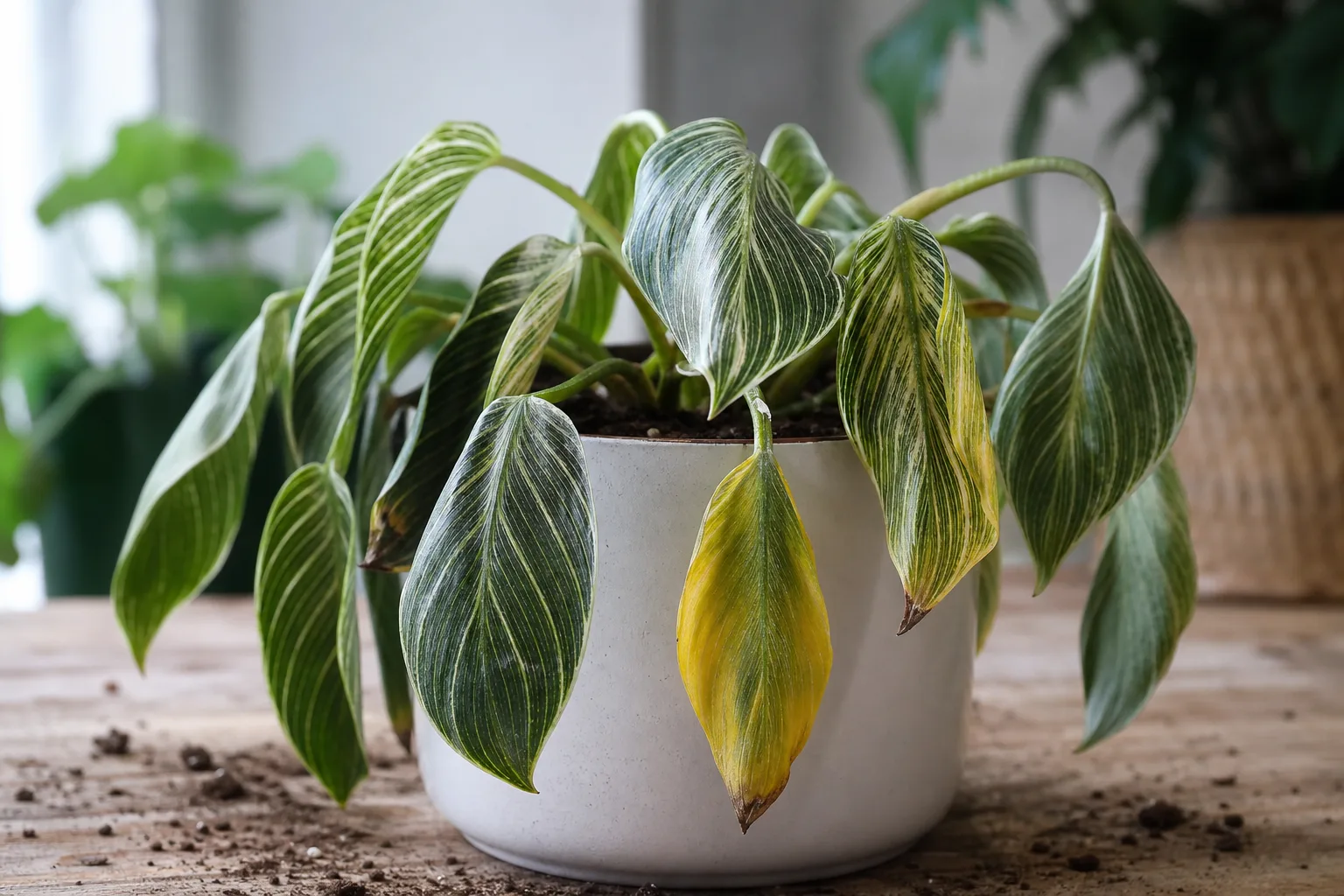
Repotting Stress on Philodendron Birkin: Causes, Checks & Fixes
This guide covers repotting stress on Philodendron Birkin. See also the general Repotting Stress guide, watering, and light pages for this plant.
Repotting Stress on Philodendron Birkin: Causes, Checks & Fixes
Quick answer
Philodendron Birkin repotting guide stress on Philodendron Birkin follows root disturbance plus watering too soon-often into an oversized pot. First step: stop watering until the top 3–5 cm of fresh mix dries, keep bright filtered light, and withhold fertilizer for four weeks while new pinstriped leaves resume.
Philodendron Birkin is a compact self-heading philodendron with thick upright stems and slow, dense growth. A careful spring repot into a slightly larger pot is usually harmless; stress appears when fine roots are damaged, the container is too large, or water reaches cut tissue before roots re-establish.
What repotting stress looks like on Philodendron Birkin
Typical signs within one to three weeks of repot:
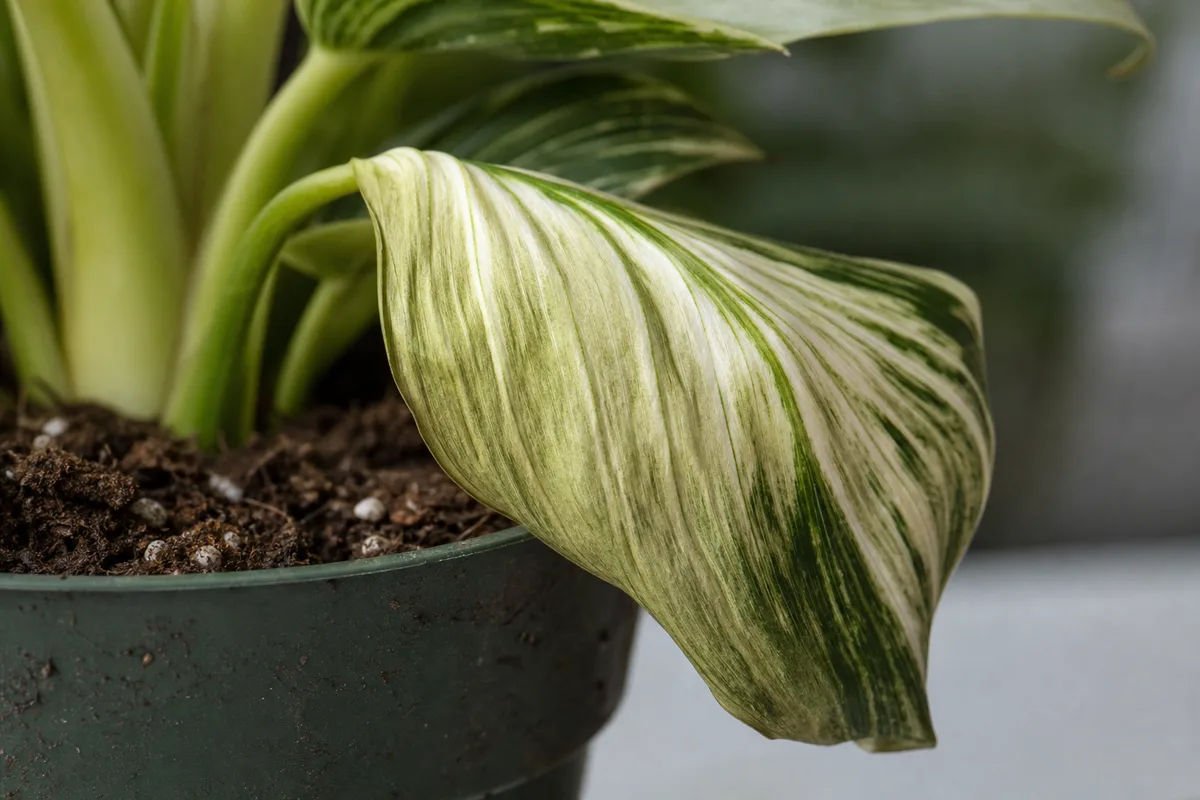
Repotting Stress symptoms on Philodendron Birkin - compare with healthy tissue on the same plant.
- Limp pinstriped leaves hanging from otherwise upright stems-the whole rosette looks tired rather than one trailing runner wilting at the tip
- New growth pauses-no fresh leaves with white striping, or emerging leaves stay small and soft
- One or two yellow lower leaves without immediate mush (mild stress)
- Soft, dark tissue at the stem base and sour smell from drainage holes (stress progressed to rot)
- Heavy pot if you watered heavily right after repot into fresh mix
- Plant wobbles in the new container because fine roots have not re-anchored
Normal post-repot pause differs from failure: firm green stems above the soil, neutral soil smell, and gradual stabilization over two to four weeks without spreading yellowing or stem collapse.
Birkin’s variegation makes recovery easy to read. When stress clears, new leaves show crisp white pinstripes on glossy green. Pale streaks that brown or leaves that stay solid green without striping during a long stall often mean light or watering still need correction-not just time.
Why Philodendron Birkin gets repotting stress
Root disturbance during repot
Repotting inevitably breaks fine root hairs that absorb water. Philodendrons do well when slightly pot-bound because their soil dries predictably between drinks. Aggressive teasing, bare-rooting, or dividing a Birkin strips absorbing surface area faster than this slow grower can replace it. Watering immediately after repot keeps cut root tissue wet and invites decay-the same pathway as overwatering damage on philodendrons.
Oversized pot after repot
Jumping more than one pot size is the most common Birkin repot failure. Birkin grows at a moderate, compact pace with a relatively dense root ball. Extra compost in a large decorative pot stays damp after the first post-repot watering, stressing roots that have not yet explored the new volume. Iowa State Extension recommends repotting into a container one size larger when overcrowded-not several sizes up.
Watering too soon after transplant
Many owners water heavily “to help the plant settle.” On Birkin, that often backfires. Fresh peat-based mix holds moisture longer than old, root-filled soil. Overwatered plants wilt despite wet soil because damaged roots cannot absorb water-adding more makes rot worse.
Wrong season or stacked changes
Winter repotting leaves disturbed roots in mix that dries slowly under short days. Birkin prefers room temperatures from about 65 to 85°F and slows visibly in cool, dim months. Repotting, fertilizing, moving to a new window, and pruning multiple leaves the same week stacks stress and makes diagnosis harder.
Day-one repot after purchase
New Birkins often need quarantine and observation, not immediate transplant. Unnecessary repot on arrival stacks shipping shock, new light, and root handling. Only repot when mix smells sour, drains poorly, or pests are obvious.
How to confirm the cause
Work through these checks in order:
- Repot timeline - Did symptoms begin within two weeks of transplant? Was repot recent and otherwise unexplained?
- Watering after repot - First heavy drink within 48 hours into fresh mix is a major stress trigger on Birkin’s fine roots.
- Pot size jump - More than 2–5 cm wider in diameter increases wet soil volume disproportionately for a slow, self-heading philodendron.
- Root handling - Aggressive loosening, bare-rooting, or rot trimming without dry-back raises decay risk.
- Stem firmness and smell - Firm green tissue above the soil with neutral smell suggests pause; mushy base and sour odor suggest rot needing salvage steps.
- Moisture at depth - Probe 3–5 cm into mix. Wet there with limp leaves after repot points to overwatering in fresh mix, not thirst.
Lookalike symptoms to rule out
Chronic overwatering before repot can persist if rot was not fully trimmed. Low winter light alone stalls growth without repot history. Root-bound dryness shows light pots and rapid dry-down-opposite of post-repot heaviness from early watering. Cold draft droop hits within hours near AC or winter sills. Mealybugs at leaf joints mimic decline but show cottony clusters.
First fix for Philodendron Birkin
If you repotted recently and watered too soon: stop watering immediately. Let the top 3–5 cm of fresh mix go fully dry before the next drink-often one to two weeks depending on light, pot size, and season. Keep the plant in bright filtered light without direct sun with stable room temperatures.
If stems are still firm:
- Do not repot again-repeated disturbance delays recovery on Birkin’s slow root system.
- Withhold fertilizer for four weeks minimum.
- Empty any saucer water; confirm drainage holes are open.
- Resume watering only when the top 3–5 cm is dry and the pot feels lighter-Birkin’s moderate growth means fresh mix often dries slower than expected.
If the stem base is mushy or soil smells sour, escalate to root rot on Philodendron Birkin salvage: unpot gently, trim soft roots with clean shears, air-dry cut surfaces briefly, and repot into a right-sized container with dry, well-drained mix.
Step-by-step recovery
- Days 0–7 after repot: No water unless mix is fully dry at 3–5 cm depth. Bright filtered light; no fertilizer.
- First post-repot watering: Water until a little runs from drainage holes, then empty the saucer. Use less volume than before if the pot was upsized.
- Weeks 2–4: Watch for new pinstriped leaves or firmer petioles. Remove fully collapsed yellow leaves; leave mostly green foliage.
- Weeks 4–8: Resume half-strength fertilizer only if new growth is active and mix dries predictably between waterings.
- Reinspection: If stall continues with firm stems, check light-repotted Birkins in dim corners recover slowly and may lose striping clarity.
Spring repots in March through June align with repotting when philodendrons become overcrowded during active growth.
Recovery timeline
Mild repotting pause with firm stems often resolves in two to four weeks once watering is corrected. Moderate wilting and one or two yellow leaves may need the full growing season before confident new pinstriped foliage. Rot triggered during repot can be fatal if the stem base softens-salvage through stem cuttings with a node if the main root mass fails.
Yellowed or limp older leaves do not green again. Success means stable firm stems and new leaves with crisp white striping.
What not to do
- Do not water on schedule “to help it settle”-disturbed roots need dry-back first.
- Do not repot again within six weeks unless confirmed rot requires it.
- Do not fertilize stressed plants-salts burn compromised fine roots.
- Do not move repeatedly between rooms while roots re-establish.
- Do not upsize to a large decorative pot immediately after a stressful repot.
- Do not bare-root Birkin unless rot salvage demands it-keep some original soil around the root ball.
How to prevent repotting stress next time
Repot only when necessary-roots circling drainage holes, mix failing, or instability-not on a calendar or purchase day. Best timing is spring or early summer when Birkin is in active growth. Use standard potting mix with perlite and orchid bark, increase pot size by only 2–5 cm in diameter, and repot into one container size larger when overcrowded.
After repot:
- Wait until the top 3–5 cm dries before the first water.
- Withhold fertilizer four weeks.
- Keep bright filtered light; avoid cold drafts below about 18°C and hot glass.
- Make one change at a time-repot OR prune heavily OR relocate, not all three.
Philodendrons prefer evenly moist but not wet soil-post-repot moisture discipline matters more than extra care on Birkin’s slow root system.
When to worry
Escalate when the stem base softens, black tissue spreads, soil smells foul after repot, or leaves keep collapsing within ten days. These indicate rot, not harmless pause.
Lower urgency applies when stems are firm, smell is neutral, and growth is simply slow-wait through a full dry-down before intervening again.
Conclusion
Repotting stress on Philodendron Birkin is usually self-inflicted: fine root disturbance plus watering too soon, often in an oversized pot. Confirm by recent repot timeline and declining stem firmness; fix by stopping water until the top 3–5 cm dries, withholding fertilizer, and watching for new pinstriped leaves. Prevent by spring repotting into a modest upsize, perlite-and-bark drainage, dry-back before the first drink, and avoiding unnecessary transplant on arrival day.
When to use this page vs other Philodendron Birkin guides
- Philodendron Birkin watering guide - Use for routine moisture checks before assuming repotting stress is the main issue.
- Philodendron Birkin problems hub - Browse all 42 common issues on this species.
- Transplant Shock on Philodendron Birkin - Different entry point when symptoms overlap with repotting stress.
- Root Rot on Philodendron Birkin - Different entry point when symptoms overlap with repotting stress.