Watering Philodendron Birkin: Schedule, Soil Checks &
Watering Philodendron Birkin: Schedule, Soil Checks & Mistakes
Watering Philodendron Birkin: Schedule, Soil Checks & Mistakes
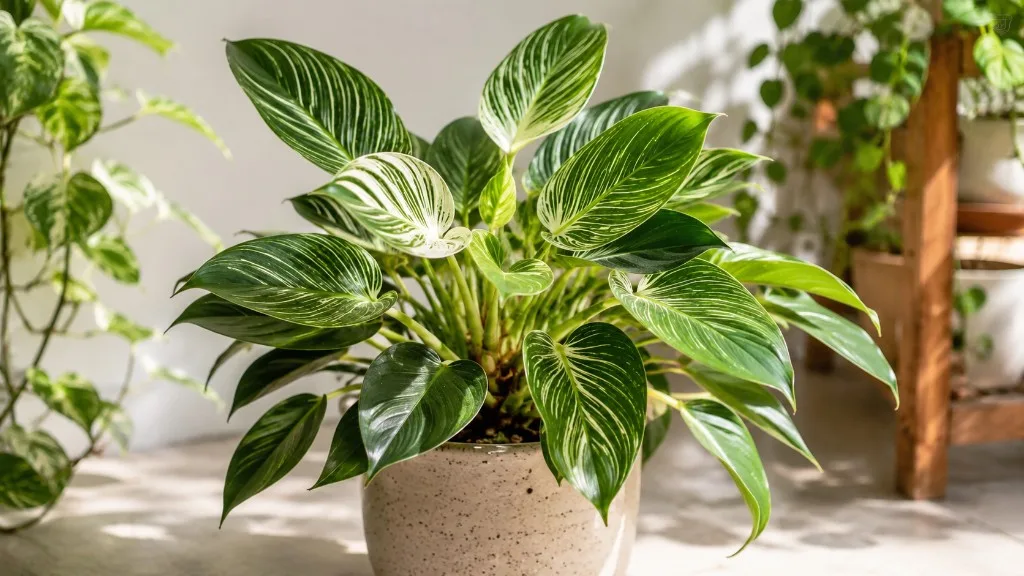
Philodendron Birkin watering is less about memorizing “every seven days” and more about reading what your specific pot is doing today. Philodendron ‘Birkin’ is a compact, self-heading aroid - not a trailing vine - with a dense upright crown and pinstriped leaves that sit close to the soil surface. That architecture changes everything: the root ball is relatively small for the leaf display, the mix at the crown dries unevenly, and a decorative cachepot can hold stale water for weeks while the surface looks merely “damp.” The main mistake is treating Birkin like a calendar plant in a dim corner, which is exactly how overwatering causes root rot and yellowing leaves on an otherwise forgiving houseplant.
North Carolina Extension describes Birkin’s preference for moist, well-drained soil in warm, humid indoor conditions - not permanently wet mix. The Royal Horticultural Society puts the practical rule plainly for philodendrons generally: let the compost dry out slightly between waterings and never leave plants standing in water, because saturated compost leads to root rot. This guide translates those principles into a check-based routine: how deep to test, how to soak and drain, how summer and winter change dry-down, what to do when leaves wilt on wet soil, and when to cross-check light, soil, and overwatering problem signs.
Reviewed by LeafyPixels Review Board · Author: sai-ananth · Methodology: Recommendations checked against NC State Extension, RHS, Missouri Botanical Garden, and University of Minnesota Extension houseplant guidance, then aligned with LeafyPixels Birkin cluster data.
Why Birkin Watering Is Not a Weekly Calendar Habit
A weekly phone reminder is a useful nudge to check your plant, not permission to pour water regardless of soil state. Birkin grows slowly indoors - NC State lists a slow growth rate - which means it uses less water than fast vines like Brasil in the same room. In low light, metabolism drops further while evaporation from the pot rim may still look “normal,” so the mix stays wet at depth long after you stopped thinking about it.
University of Minnesota Extension explains a pattern every Birkin owner should internalize: a wilted plant with moist soil often signals root damage from chronically wet conditions, not thirst. Wet soil lacks oxygen; roots cannot function; the plant wilts anyway. Adding more water makes the spiral worse. Calendar watering in winter, watering because the pinstripes look dull, or misting to “help” a dry pot all miss the actual question: has the top 3–5 cm (about 1–2 inches) of mix dried enough for another full soak?
Light and watering are coupled. A Birkin moved closer to a window after reading the light guide will drink faster; one pushed into a hallway will need longer dry-down. Change light first, observe pot weight for two weeks, then adjust water - not the reverse.
The Core Rule: Check the Root Zone, Then Water Fully
The workable framework for Birkin is partial dry-down, full soak, complete drainage. You are not aiming for desert-dry soil edge to edge; you are aiming for the upper profile to lose enough moisture that air returns to fine roots, then one thorough irrigation that wets the entire root ball once. Partial top-ups every few days keep the crown zone chronically damp without flushing salts or refreshing deep roots - a common path to fungus gnats and sour mix.
Missouri Botanical Garden’s overwatering guidance describes the mechanism: roots in saturated soil cannot absorb the oxygen they need, die back, and leave the plant unable to take up water even when the mix is wet. Birkin’s thick, glossy leaves hide stress longer than thin-leaved plants, so by the time yellowing spreads through pinstriped foliage, root damage may already be advanced. Checking before each watering prevents that lag.
How Self-Heading Growth Changes Dry-Down Timing
Self-heading philodendrons like Birkin produce new leaves from a central crown with thick, upright stems rather than extending long runners. The root mass is often compact relative to the leafy rosette, especially in a 6-inch display pot. That means the pot can feel light sooner than a trailing philodendron in the same container size because there is less root length exploring the outer soil - but the crown-adjacent mix can also stay wet longer because foliage shades the surface and reduces airflow.
Trailing types like heartleaf philodendron expose more stem and leaf edge to air; Birkin’s tight rosette slows surface drying. Do not assume “the top looks dry” equals “ready to water.” Verify at 3–5 cm depth. If you recently repotted into a larger pot per the repotting guide, expect slower dry-down until roots fill the new volume.
How to Check Soil Moisture Before You Water
Surface color lies. Peat-heavy mixes turn pale on top while staying cool and damp near the roots. Use at least one physical test every time - the same method, the same depth - so you learn this pot’s rhythm instead of guessing.
Finger, Skewer, and Pot-Weight Methods
Knuckle or finger test: Push into the mix to 3–5 cm (1–2 inches). If the soil feels cool, clingy, or leaves bits on your skin, wait. If it is dry and crumbly at that depth, you can water. In a small 6-inch pot, that depth may represent a large fraction of the root zone - which is appropriate for Birkin; you are not trying to desiccate the entire ball.
Skewer or chopstick test: Insert a dry wooden skewer to the pot’s lower third. Pull it out. Darkening or sticking soil means moisture remains. Clean, dry wood suggests the profile has dried enough for a soak.
Pot-weight test: Lift the container after a thorough watering when you know the mix is fully saturated - that is your “heavy” baseline. As the plant uses water, the pot becomes noticeably lighter. University of Minnesota Extension notes that a light pot is dry; a heavy pot is still moist. Weight is especially reliable for ceramic pots where you cannot see the mix.
Track results on your phone notes for two weeks: date watered, date pot felt light, room temperature, and window direction. You will quickly outgrow generic “7–10 days” advice.
How Often to Water Philodendron Birkin Indoors
There is no honest universal interval. A starting reminder range - not a rule - for many indoor Birkins in bright indirect light looks like this:
| Season / conditions | Typical check rhythm | Dry-down target before soaking |
|---|---|---|
| Active growth, bright light, warm room | Every 5–7 days | Top 3–5 cm dry |
| Moderate light, average home | Every 7–10 days | Top 3–5 cm dry |
| Cool, dim winter room | Every 10–14 days or longer | Top 3–5 cm dry; pot clearly lighter |
Label day counts as reminders to check, not automatic water dates. Your soil mix - standard potting soil with perlite and orchid bark for drainage - dries faster than straight peat-heavy bag mix. A Birkin in a terracotta pot dries faster than one in glazed ceramic. Air conditioning and heating change evaporation overnight.
If the pot stays wet more than 10–12 days after a single watering in an ordinary room, suspect low light, oversize pot, blocked drainage holes, or a cachepot holding runoff. Fix the environment before adding another drink.
Seasonal Watering: Summer vs. Winter Adjustments
Birkin is evergreen indoors but still slows when days shorten and rooms cool. NC State recommends 65 to 85°F (18 to 29°C) and 50 to 60% humidity - conditions that shift with seasons even if the plant does not go dormant like a deciduous outdoor perennial.
Spring through early fall: Longer days and warmer rooms increase transpiration. Check more often - sometimes every five days in July for a bright-window Birkin. Growth picks up; new pinstriped leaves need steady moisture cycles, not constant wetness.
Late fall through winter: Growth slows. The same soak that dried in a week may now take two. Reduce watering frequency by lengthening dry-down, not by giving smaller sips more often. Small sips keep the crown zone damp without oxygenating deep soil - the worst of both worlds.
University of Minnesota Extension’s spring houseplant guidance applies year-round as a principle: water when the top inch feels dry, prefer steady moisture over soaking wet conditions, and empty saucers so roots are not sitting in water.
Worked Example - 6-Inch Tabletop Birkin in an East Window
Imagine a Birkin in a 6-inch (15 cm) ceramic pot with drainage holes, standard aroid mix, east-facing window, and room temperatures around 72°F (22°C).
Mid-July: After a full soak on Monday morning, the skewer reads dry at 3 cm by the following Sunday - seven days. Pot weight is clearly lighter. You water again Sunday evening, drain fully, and empty the saucer.
Mid-January: Same plant, same window, but heating dries air and daylight is short. After watering on the 1st, the top 3 cm is still cool on the 10th. You wait until the 14th when the pot feels light and the skewer is dry at depth. That is normal - not “the plant stopped drinking.”
If January dry-down stretches beyond three weeks with sour smell or gnats, the problem is likely low light plus oversize pot or poor drainage - not that Birkin “needs winter water.” Inspect roots and review yellow leaves and root rot guides before assuming thirst.
How to Water Philodendron Birkin the Right Way
Use this five-step soak-and-drain sequence every time checks pass:
- Prepare water at room temperature. Cold tap water shocks warm-rooted tropicals. RHS advises room-temperature water for philodendrons.
- Water evenly across the surface until excess runs freely from drainage holes - confirming the root ball wetted through, not just the rim.
- Avoid splashing the crown. NC State warns that leaf spots can occur if leaves get wet during watering. Direct the stream at soil level; do not shower the pinstriped rosette.
- Let the pot sit 15–30 minutes so perched water drains.
- Empty the saucer or cachepot completely. Never leave Birkin standing in runoff overnight.
Bottom-watering is optional for Birkin if top watering splashes foliage, but ensure the mix still reaches the dry upper layer eventually. Top-off bottom watering without occasional top flushes can accumulate salts.
Signs You Are Overwatering Philodendron Birkin
Overwatering is more common than underwatering on Philodendron Birkin for indoor Birkins - especially in dim rooms with generous owners. Watch for these patterns together, not in isolation:
- Yellowing leaves starting lower but spreading upward while mix stays damp (NC State)
- Limp, soft pinstriped foliage despite wet soil - not the crisp curl of thirst
- Heavy pot that does not lighten for 10+ days after one watering
- Sour or rotten smell from the mix (Missouri Botanical Garden - overwatering)
- Fungus gnats hovering at each watering (University of Minnesota Extension)
- White mold or algae on the soil surface under the leaf crown
- Brown water-soaked spots on leaves after crown splashing
If several signs align, stop watering until the top 3–5 cm dries, improve light if the plant is dim, and read the dedicated overwatering fix guide before repotting or fertilizing. Fertilizer on rotting roots burns tissue and worsens decline.
Signs Your Birkin Needs Water Now
Underwatering is less common but still happens - especially after a heat wave, a forgotten vacation, or aggressive winter “cut back” that became neglect.
- Pot feels very light and top 3–5 cm is bone dry
- Leaf edges curl slightly or leaves feel thinner than usual
- Mix pulls away from the pot rim - hydrophobic peat that repels water
- Slowed new growth with smaller emerging leaves in otherwise bright light
Rehydrate with one full soak until runoff, then drain. If peat repels water, water in two passes ten minutes apart or bottom-water until the top darkens. Do not compensate with daily sips afterward; return to check-based full soaks.
Brown leaf tips alone often reflect low humidity during dry cycles rather than underwatering. Raising humidity helps; drowning the pot does not.
Light, Pot Size, and Soil - What Changes the Schedule
Light: Birkin wants bright, filtered sunlight. More light increases water use; low light slows use while evaporation from a shaded pot top also drops - a double reason wet soil persists. After any light change, reset your calendar entirely.
Pot size: Freshly repotted Birkins in pots more than one size up hold extra wet mix around a small root ball. Water less often until roots explore outward. Oversize pots are a leading hidden cause of chronic dampness.
Soil: Birkin needs open, well-drained mix. The soil guide recipe - potting soil plus 20–25% perlite and 10% orchid bark - supports the moist-but-aerated profile NC State describes. Heavy garden soil or moisture-retentive additives without perlite extend dry-down past safe limits.
Cachepots: Decorative outer pots without drainage are fine only if you remove the inner nursery pot to water, drain completely, then replace. Watering inside a sealed cachepot is one of the fastest routes to root rot.
Water Quality, Humidity, and Temperature
Tap water is acceptable for most Birkins if you let cold water sit to room temperature. Hard water can leave mineral crust on soil; occasional top-to-bottom flushes with plain water reduce buildup. University of Minnesota Extension notes that what is in your water can affect houseplant health and suggests rainwater or filtered water for sensitive species; Birkin is moderately tolerant compared to orchids.
Humidity at 50–60% supports healthy pinstriped foliage and reduces tip browning during normal dry-down. Humidity does not replace watering - misting leaves does not rehydrate roots and can worsen leaf spots if foliage stays wet.
Keep Birkin away from cold drafts below its comfort band. Chilled roots absorb water poorly and rot more easily in wet mix. Hot radiator air accelerates surface drying while deep soil stays wet - always verify at depth, not by leaf appearance alone.
Watering After Repotting or Moving
After repotting, roots are disturbed and fine root hairs die back. Water once thoroughly at repot time with fresh mix, then let the top inch dry before the next soak - usually a few days in warm active growth, longer in winter. Do not water daily “to help it settle.” That keeps new cuts in anaerobic conditions.
When moving homes or rooms, expect adjustment leaf drop or wilting even if watering is correct. Hold the same dry-down rule; do not chase symptoms with extra water. Stabilize light first per the overview guide, then reassess pot weight after two weeks.
Propagation cuttings recently potted need slightly more consistent upper moisture until roots establish - see the propagation guide for the seedling phase. Mature Birkin in a stable pot should not stay on cutting-level moisture.
Common Philodendron Birkin Watering Mistakes
- Watering on autopilot every Sunday without a soil check - especially in winter or low light.
- Leaving runoff in the saucer “so it can drink later.”
- Misting instead of watering when the pot is light and dry at depth.
- Repotting into a huge decorative pot without adjusting checks.
- Splashing the crown and inviting fungal leaf spots.
- Chasing wilt with more water when soil is already wet - classic root-rot spiral.
- Using heavy, drainage-free mix because “tropical plants like moisture.”
- Ignoring light while only tweaking water - dim Birkins + frequent water = rot.
Recovery from mistake six starts with pausing irrigation, verifying drainage, and inspecting roots - not fertilizing, pruning heavily, and repotting all in one weekend.
Troubleshooting: Wet Soil but Wilting Leaves
This is the highest-anxiety Birkin scenario and the one most misdiagnosed as thirst.
If soil is wet at 3–5 cm and the pot is heavy: Suspect root damage, compacted anaerobic mix, or a blocked drainage hole. Stop watering. Move to brighter filtered light if the plant has been dim. Unpot only if yellowing spreads or smell worsens - then trim mushy roots, repot into fresh airy mix, and wait a week before careful rewatering. See wilting and root rot for step-by-step recovery.
If soil is wet only at the surface but dry deeper: You may have been top-sipping. Water thoroughly once, drain, then adopt full soak cycles.
If soil is dry at depth and pot is light: Genuine thirst. Soak and drain; adjust future check frequency upward.
If you repotted within three weeks: Slow dry-down is normal. Do not water because the calendar says so - wait for weight and skewer signals.
Missouri Botanical Garden emphasizes that overwatering damage is frequently misdiagnosed as pest damage - check roots before spraying pesticides.
Know Your Plant: Self-Heading Birkin vs. Trailing Philodendrons
Philodendron ‘Birkin’ is an upright self-heading hybrid in the arum family (Araceae), reaching 6 inches to 3 feet tall indoors with white pinstripe variegation - not a trailing vine like Brasil. Iowa State Extension notes that non-trailing philodendrons propagate from stem sections or offsets rather than long internode chains, reflecting their bushy architecture.
For watering, that means a compact root ball and shaded crown dry differently than a hanging heartleaf philodendron in the same pot diameter. Brasil’s running stems expose more tissue to air; Birkin’s rosette slows surface drying. Use the same check depth, but expect Birkin to need fewer total irrigations in moderate light and more careful drainage around the crown.
Pet and human safety: NC State lists low-severity oxalate poisoning with mouth pain, drooling, and vomiting if ingested, plus contact dermatitis from sap. Philodendron species are toxic to dogs and cats. Keep Birkin on elevated shelves away from pets and children; call your veterinarian or ASPCA Poison Control at (888) 426-4435 if ingestion is suspected.
Conclusion
Water Philodendron Birkin by confirming the top 3–5 cm of mix is dry and the pot has lightened, then give one full soak and empty all runoff. Use summer-vs-winter checks instead of a fixed weekly habit, pair every watering decision with honest light assessment via the light guide, and keep mix airy per the soil guide. When leaves wilt on wet soil, suspect roots first - not thirst. That check-based rhythm protects the pinstriped foliage display this cultivar is grown for, without leaving the roots in stale, oxygen-starved mix.
When to use this page vs other Philodendron Birkin guides
- Philodendron Birkin overview - Start here for whole-plant context before deep-diving this topic.
- Philodendron Birkin problems hub - Jump to symptom-specific fix guides when this care topic does not resolve the issue.
- Overwatering on Philodendron Birkin - Escalate here when watering adjustments are not enough.
- Underwatering on Philodendron Birkin - Escalate here when watering adjustments are not enough.
- Root Rot on Philodendron Birkin - Escalate here when watering adjustments are not enough.
Related Philodendron Birkin guides
- Philodendron Birkin overview
- Philodendron Birkin light
- Philodendron Birkin soil
- Philodendron Birkin propagation
- Philodendron Birkin fertilizer
- Philodendron Birkin repotting
- Overwatering on Philodendron Birkin
- Underwatering on Philodendron Birkin
- Root Rot on Philodendron Birkin
- Philodendron Birkin problems