Yellow Leaves on Philodendron Birkin: Causes, Checks & Fixes
Quick answer
Yellow leaves on Philodendron Birkin usually mean roots are staying wet too long or light is too weak for stable variegated growth. First, pause watering until the top 3-5 cm dries, then move the plant to brighter filtered light and track new leaves.
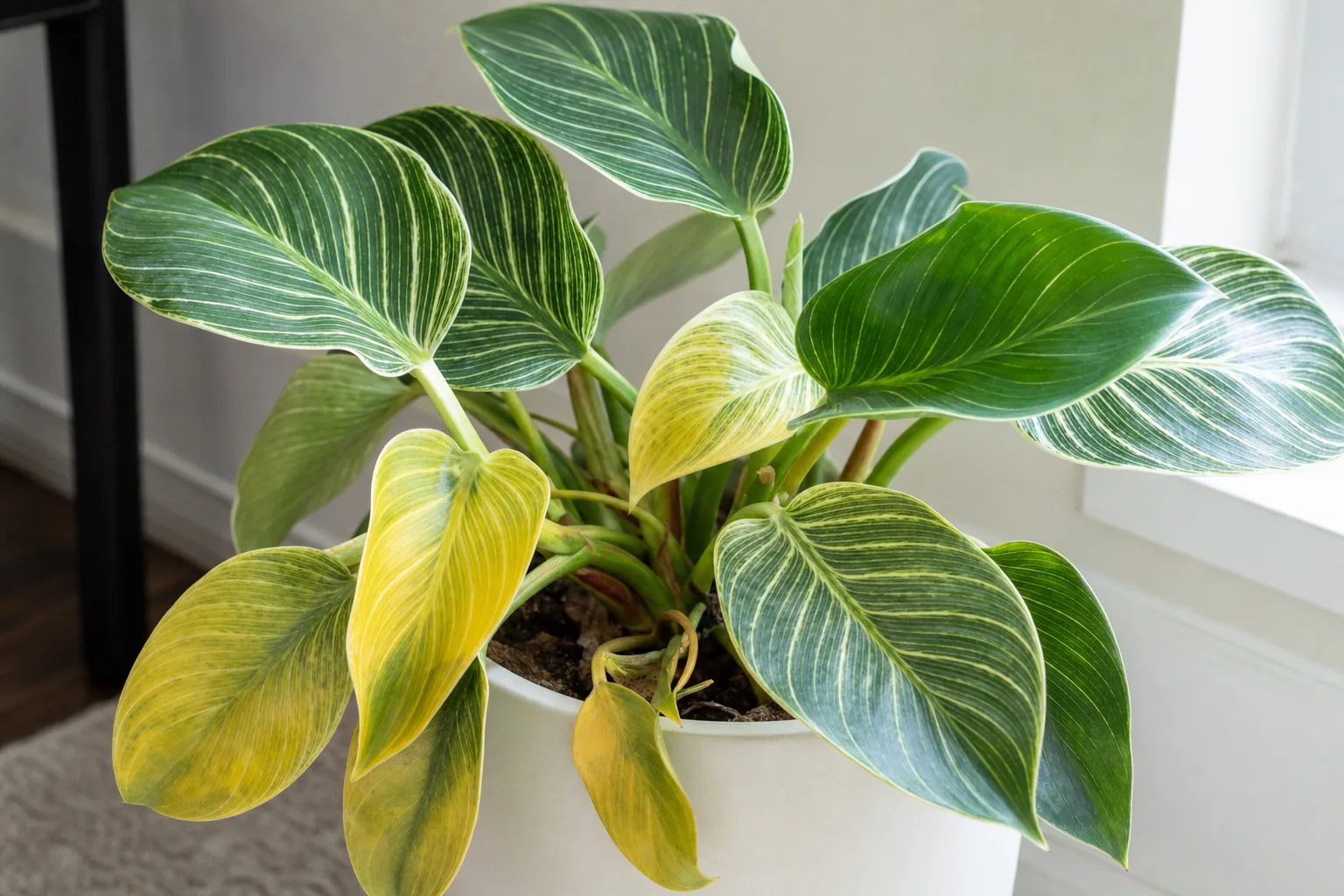
Yellow Leaves on Philodendron Birkin: Causes, Checks & Fixes
This guide covers yellow leaves on Philodendron Birkin. See also the general Yellow Leaves guide, watering, and light pages for this plant.
Yellow Leaves on Philodendron Birkin: Causes, Checks & Fixes
Quick answer
Yellow leaves on Philodendron Birkin are usually a watering and light mismatch, not a fertilizer emergency. Birkin is a compact, upright Araceae aroid with variegated pinstriped leaves, and it performs best when roots get oxygen between waterings and the canopy gets bright filtered light. If your mix stays wet in a dim corner, roots decline, lower leaves yellow, and new leaves may emerge with weaker striping.
Your first move is simple: stop watering until the top 3-5 cm is dry, then improve light before adding any fertilizer or making major changes. If yellowing is spreading fast and the pot smells sour, check roots immediately.
Why Philodendron Birkin gets yellow leaves
For most indoor Birkins, three causes explain yellow leaves:
-
overwatering on Philodendron Birkin and poor aeration
In waterlogged media, roots lose oxygen and then lose function. Overwatering commonly causes yellowing and stunting because roots in saturated media cannot function normally. Birkin is especially vulnerable if planted in dense mix, oversized pots, or placed where evaporation is slow. -
Low light relative to variegated growth demands
Birkin keeps better pattern and form in bright, filtered sunlight. In low light, leaves can become paler, striping can look dull, and new growth slows. The plant is not climbing hard for light like some vining philodendrons, so low-light stress can be easy to miss until yellowing appears. -
Normal lower-leaf turnover
An occasional oldest leaf yellowing and dropping while new leaves stay healthy is normal. That is different from whole-plant yellowing or yellowing in newer leaves.
Less common causes include root congestion, accumulated salts from heavy feeding, sudden cold drafts, or chronic standing water in a cachepot.
What yellowing patterns mean on Birkin
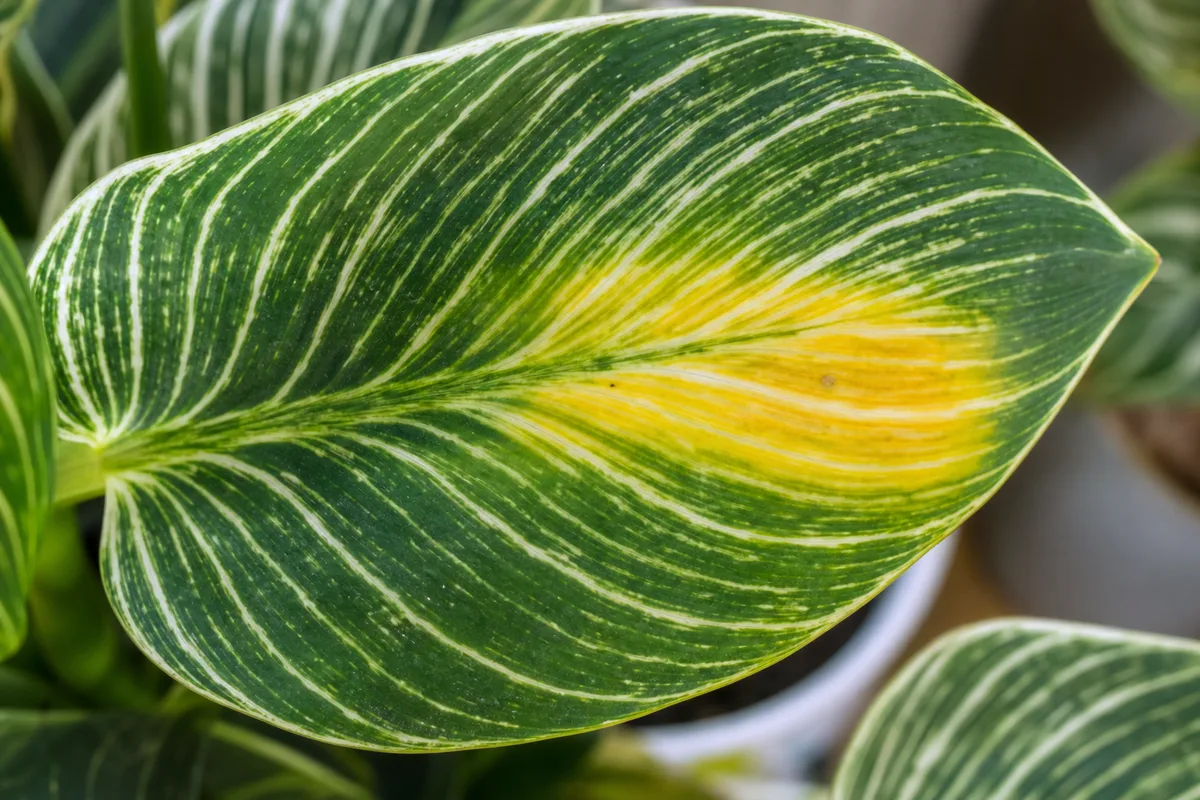
Yellow Leaves symptoms on Philodendron Birkin - compare with healthy tissue on the same plant.
Use leaf position and pattern to narrow the cause:
- One older bottom leaf at a time: usually routine aging.
- Many leaves yellowing together with heavy wet soil: overwatering likely.
- New leaves smaller and less crisp striping with pale canopy: light likely too weak.
- Yellowing plus soft stem base or sour mix smell: rot risk; urgent root check.
- Yellowing plus crispy edges in very dry mix: underwatering on Philodendron Birkin or inconsistent watering.
When overwatering is involved, brown, soft roots and a bad odor in the potting mix are classic warning signs.
Birkin yellow-leaf confirmation checklist
Work top to bottom in this order:
- Check mix depth, not just surface: probe 3-5 cm down. Surface dryness alone can mislead when deeper media is still wet.
- Check pot weight: if it still feels heavy several days after watering, dry-down is too slow for current conditions.
- Inspect newest leaf: fading striping plus slow leaf size can indicate low light stress.
- Inspect drainage behavior: if runoff sits in a saucer or outer pot, roots stay wet too long.
- Smell the root zone: sour or swampy odor points to low oxygen and possible rot.
- Unpot if yellowing accelerates: healthy roots are generally firm and light; decaying roots are soft and darker.
This sequence avoids the common mistake of treating every yellow leaf as hunger.
First fix to try (one action first)
First fix: pause watering until the top 3-5 cm of mix dries, then move the plant to brighter filtered light.
Do this before Philodendron Birkin repotting guide or fertilizing. It addresses the two most likely causes at once without stacking stressful interventions.
After 5-10 days, reassess:
- If yellowing slows and new growth looks better, continue dry-down based watering.
- If yellowing spreads and soil remains wet, do a root inspection and repot.
Step-by-step recovery if roots are stressed
If root stress is confirmed:
- Remove plant from pot and gently separate saturated media.
- Trim only soft, dark, or collapsing roots with clean tools.
- Repot into fresh, airy aroid mix (for example, bark + perlite + houseplant mix) in a container with drainage.
- Remove fully yellow leaves, but keep partially green leaves for photosynthesis.
- Hold fertilizer until stable new growth appears.
Waterlogged roots lose oxygen and become vulnerable to rot, often producing yellow leaves and stunted growth. If most of the root mass is soft and collapsed, full recovery may be limited.
Lookalikes to rule out
Yellow leaves do not always mean overwatering. Rule out these lookalikes:
- Underwatering: mix pulls from pot sides, leaf edges crisp, pot feels very light.
- Low light without root stress: slow growth, long spacing, weak striping, but roots remain firm.
- Cold shock: sudden yellowing after drafts or abrupt temperature drops.
- Salt buildup from overfeeding: yellowing plus browning tips and crust on media surface.
Recovery timeline for Birkin
Birkin is not a fast grower, so evaluate recovery by new growth, not by old yellow leaves turning green.
- Week 1-2: yellowing should stop spreading after watering/light correction.
- Week 2-4: new leaf should emerge with better color and stronger striping.
- Week 4-8: canopy balance improves if roots are healthy and dry-down is stable.
Fully yellow leaves will not regain green pigment. Improvement means healthier new leaves and a stable stem base.
What not to do
- Do not increase watering because leaves look limp before checking root moisture.
- Do not fertilize a stressed Birkin as your first response.
- Do not repot, prune heavily, and feed all at once.
- Do not leave the nursery pot sitting in drainage water.
- Do not treat Birkin like a climbing philodendron that must be on a moss pole.
Also place the plant away from pets. Philodendron tissues contain insoluble calcium oxalate crystals and are toxic to cats and dogs.
Preventing yellow leaves on your next growth cycle
Use a conditions-based routine:
- Water only when the top 3-5 cm is dry and the pot feels lighter.
- Keep Birkin in bright filtered light and rotate periodically for even growth.
- Use an airy mix and a pot with active drainage.
- Reduce watering frequency in cool or low-light months.
- Recheck roots early if yellowing returns quickly after watering.
This approach keeps roots oxygenated and supports steady variegated growth without forcing rapid interventions.
When to use this page vs other Philodendron Birkin guides
- Philodendron Birkin watering guide - Use for routine moisture checks before assuming yellow leaves is the main issue.
- Philodendron Birkin problems hub - Browse all 42 common issues on this species.
- Overwatering on Philodendron Birkin - Different entry point when symptoms overlap with yellow leaves.
- Underwatering on Philodendron Birkin - Different entry point when symptoms overlap with yellow leaves.
- Not Enough Light on Philodendron Birkin - Different entry point when symptoms overlap with yellow leaves.