Not Enough Light on Philodendron Birkin: Causes, Checks &
Quick answer
Philodendron Birkin needs bright filtered light to hold its white pinstripes and compact form. In dim rooms it fades, stretches, grows slowly, and uses water poorly. First step: move it where leaves receive bright indirect light for several hours daily-Birkin is a variegated specimen, not a low-light plant.
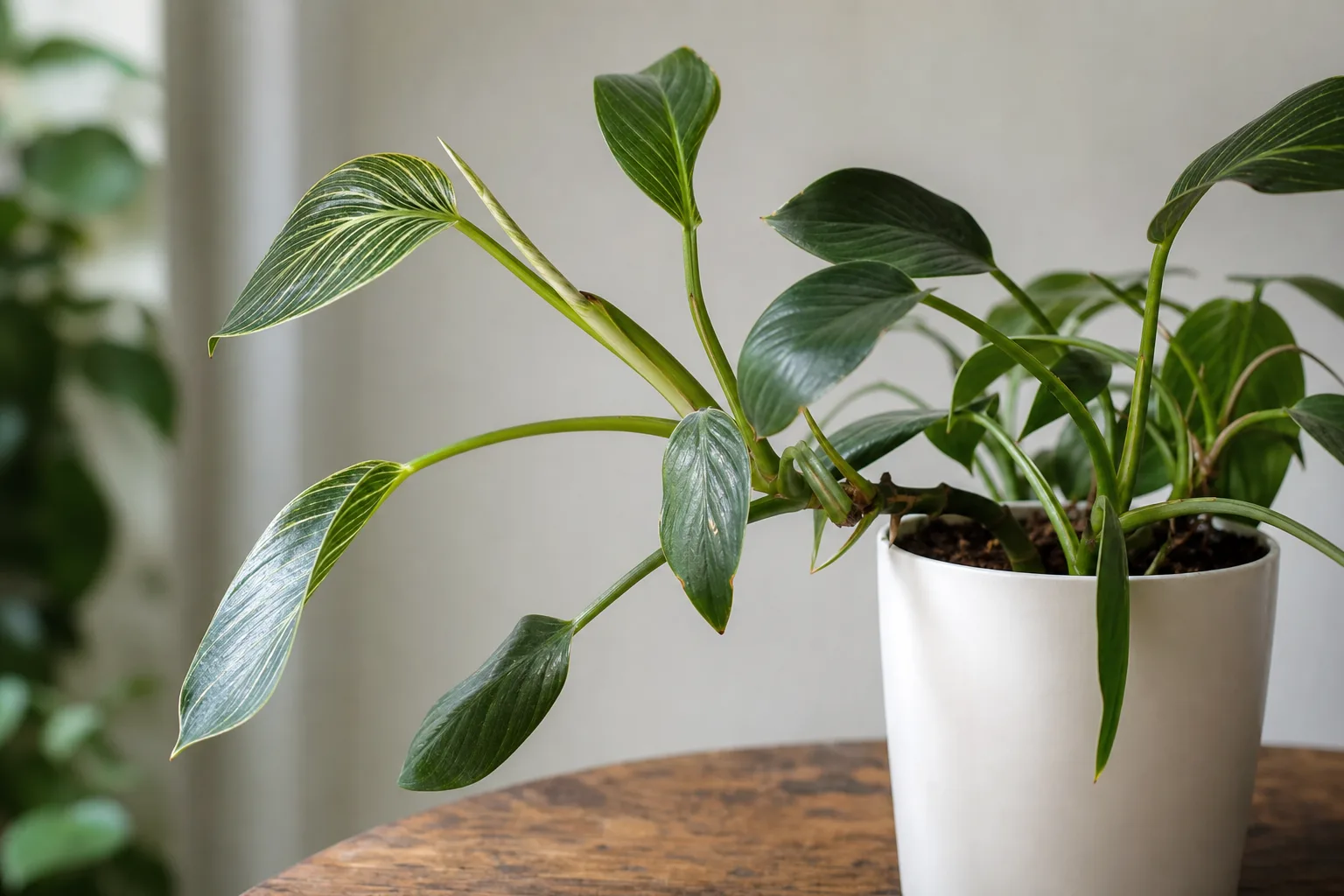
Not Enough Light on Philodendron Birkin: Causes, Checks & Fixes
This guide covers not enough light on Philodendron Birkin. See also the general Not Enough Light guide, watering, and light pages for this plant.
Not Enough Light on Philodendron Birkin: Causes, Checks & Fixes
Quick answer
Not enough light on Philodendron Birkin shows up as faded pinstripes, slow growth, and a plant that leans toward windows-not sudden collapse. This compact self-heading cultivar depends on bright filtered light to maintain the white stripe variegation that makes it worth growing. In dim corners Birkin still looks green and alive, but it stops behaving like a striped specimen: new leaves emerge mostly green, internodes stretch, and the pot dries slowly because [low light reduces water use](https://www.missouribotanicalgarden.org/gardens-gardening/your-garden/help-for-the-home-gardener/advice-tips-resources/insects-pests-and-problems/environmental/[overwatering on Philodendron Birkin](/plants/philodendron-birkin/overwatering/)).
First step: move the plant to bright filtered light where the leaves-not just the room-receive several hours of indirect illumination daily. Do not repot, fertilize, or add a moss pole on day one. Birkin does not climb like Brasil; photons fix the problem, not support stakes.
What not enough light looks like on Philodendron Birkin
Healthy Birkin sits as a tight tabletop rosette with glossy green leaves marked by creamy white pinstripes. Each new leaf should show visible variegation, and growth should feel steady during warm months-not frozen for months in the same spot.
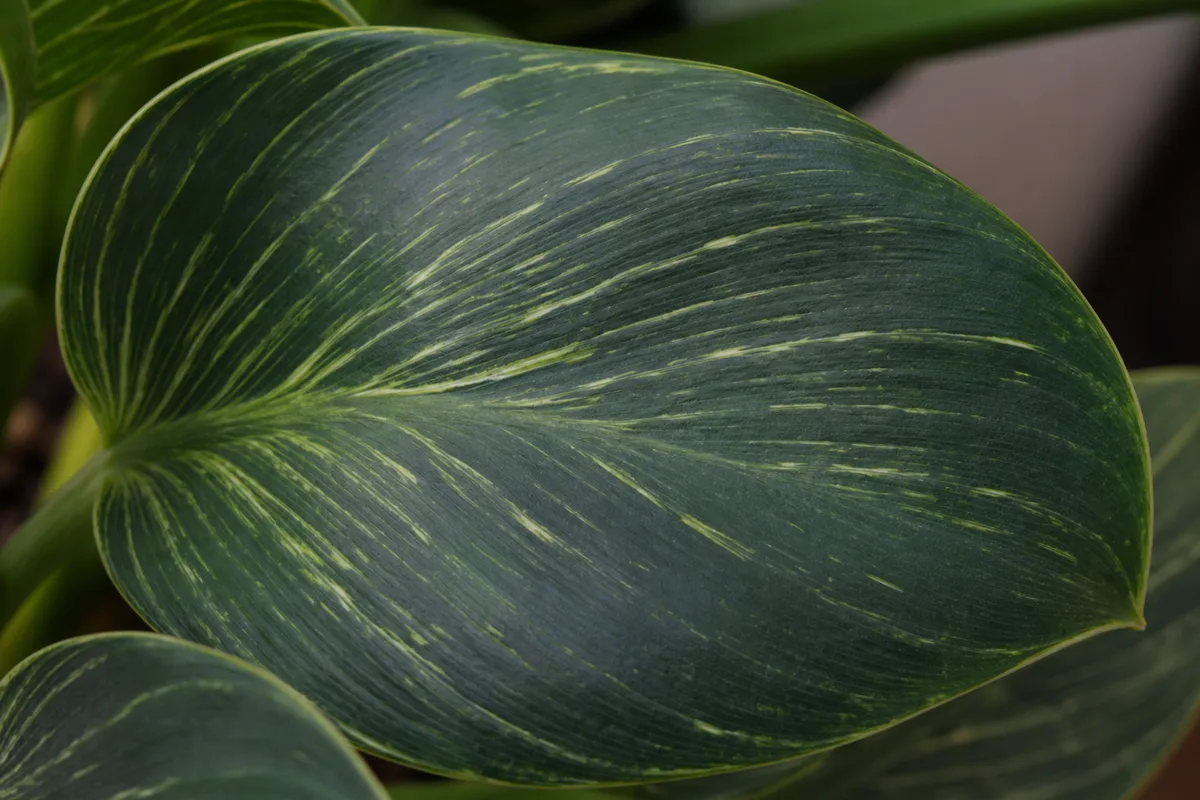
Not Enough Light symptoms on Philodendron Birkin - compare with healthy tissue on the same plant.
Low-light Birkin breaks that pattern in recognizable ways:
- Fading or missing pinstripes on new leaves - Latest foliage is mostly green or shows thin, patchy white lines instead of bold stripes
- Smaller new leaves - Recent leaves are narrower or shorter than older ones near the base
- Slow or stalled growth - No new leaves for weeks while the plant otherwise looks alive
- Leggy upright stems - Long gaps between leaf nodes as the rosette stretches toward light
- Directional lean - Whole plant or newest leaves angle sharply toward a window or lamp
- Dull, flat green color - Leaves lose the crisp contrast between stripe and background
- Persistently wet soil - Mix stays heavy 10–14 days after watering because transpiration drops in shade
- Lower leaf yellowing in dim wet corners - Older leaves drop while the center stays pale
Unlike a trailing heartleaf philodendron that tolerates back-shelf life, Birkin is sold for variegation on a compact upright form. When striping fades and spacing widens, the diagnosis is almost always insufficient light-not a mysterious disease.
Why Philodendron Birkin is sensitive to low light
Birkin is a variegated cultivar in the arum family. White and cream sections contain less chlorophyll than solid green tissue, so the plant needs more usable light, not less, to photosynthesize and hold its pattern. When photons are scarce, Birkin prioritizes survival over aesthetics: it produces greener leaves, elongates stems toward the brightest source, and slows overall metabolism.
Philodendron Birkin prefers bright, filtered sunlight indoors. Too much direct sun scorches pale sections, but deep shade causes the opposite failure-loss of variegation, leggy growth, or small leaves. That pairing of symptoms on Birkin is a textbook light-stress signature.
Common Birkin-specific triggers include:
- Decor placement over Philodendron Birkin light guide - Looks fine on a distant bookshelf but receives only ambient room glow, often below 100 foot-candles at leaf level
- North-facing rooms without supplementation - Fine for true low-light plants, marginal for variegated philodendrons
- Winter daylight drop - Shorter days and cloudy weeks reduce intensity even at the same window
- Dirty glass, heavy sheers, or furniture blocking the window - Cuts usable light more than owners expect
- Overhead-only ceiling fixtures - Rarely deliver enough intensity for variegated foliage at table height
- One-sided exposure - Plant pressed against a wall so only one face gets window light
Low light also slows water uptake. Birkin’s mix may stay wet longer in dim corners, which does not cause light stress directly but raises overwatering risk if you keep watering on a bright-room schedule. Wet soil plus weak light is a common combo that leads to yellow lower leaves and root stress.
How to confirm the cause
Work through these checks before changing anything else:
- New leaf quality - Inspect the last two or three leaves. Fading pinstripes with smaller size fit light stress on Birkin better than pest stippling or uniform nutrient deficiency.
- Lean direction - Does the plant point toward a window or lamp? Strong directional lean confirms light seeking.
- Hand shadow test - Hold your hand between the window and the foliage at midday. A soft shadow with clear edges suggests adequate indirect light; a faint or absent shadow means too dim for variegated philodendrons.
- Compare sides - If one side is compact and the other stretched, uneven exposure-not disease-is likely.
- Season check - Did symptoms start or worsen in late fall or winter? Seasonal intensity drop is common indoors.
- Soil dry-down speed - Pot still damp 10–14 days after watering in a dim spot supports low-light culture; pair any watering adjustment with brighter placement.
- Pest scan - Inspect leaf undersides for spider mites or mealybugs. Pests cause stippling and stickiness, not classic faded variegation with wet slow-drying soil.
If new leaves show crisp pinstripes, even spacing when rotated toward light, and the pot dries on a normal rhythm, Birkin is not light-starved-compare against when you bought it or healthy reference photos.
First fix for Philodendron Birkin
Move the plant to bright filtered light where leaves receive several hours of indirect illumination daily, and rotate the pot one quarter turn.
Good targets include an east-facing window, or several feet back from a south- or west-facing window with sheer curtain filter. Birkin wants bright filtered sun-not deep shade and not hot direct midday rays on pale leaf sections.
If the plant came from very dim conditions, increase light over 7–10 days rather than jumping straight into harsh sun. Sudden intense direct light can bleach or brown white pinstripes. Rotate weekly so all sides of the rosette develop evenly.
Do not add a moss pole, repot, or fertilize on day one. Those steps do not replace photons and can stress a plant already compensating for shade.
Step-by-step recovery
After the first light move:
- Adjust watering to match new light - Brighter exposure dries the pot faster. Check the top 3–5 cm of mix before each drink instead of following an old calendar from the dim corner.
- Add supplemental light if windows are insufficient - In dark winter rooms or north-facing spaces, a full-spectrum grow lamp 30–45 cm above the canopy for 10–12 hours daily can stabilize form. Sixteen hours of light and eight hours of darkness work well for many indoor plants under artificial supplementation.
- Clean the window and clear obstructions - Remove grime, open sheers during daylight, and pull the pot closer to glass if safe from cold drafts and direct scorching sun.
- Prune only after new growth improves - When the next two leaves show better spacing and striping, trim the worst faded or stretched sections just above a node with clean shears. Birkin often pushes a side shoot from the cut.
- Hold fertilizer until growth stabilizes - After two weeks of improved leaves, feed lightly at half strength during active growth if the plant is otherwise healthy. Feeding a still-stressed Birkin in marginal light pushes soft tissue without fixing the root cause.
- Stake only as temporary help - If a heavy rosette leans until new stems stiffen, a discreet stake is fine-but treat it as support during recovery, not a long-term substitute for light.
Recovery timeline
Expect visible improvement on the next one or two leaves within two to four weeks after adequate light-stronger pinstripes and tighter spacing are the signals that matter. Full visual recovery of the silhouette may take two to three months as new compact foliage replaces the pale stretched profile.
Old faded or stretched leaves do not revert. Fully green or weakly striped leaves stay that way even after conditions improve; judge success by new growth quality, not by old tissue reshaping itself.
Worsening signs: continued fade on every new leaf after four weeks in brighter light, yellowing lower leaves with persistently wet soil, or soft stem tissue at the soil line. Those point to overlapping water stress or advanced root issues-not light alone-and need root inspection.
Lookalike symptoms
- Leggy growth on Philodendron Birkin - Long internodes are one expression of the same light deficit; fixing placement addresses both.
- Yellow leaves with wet soil on Philodendron Birkin - Often overwatering compounded by low light; improve light and dry-down together.
- Brown tips - Usually humidity or water quality, not primary light stress; check air moisture if striping is fine but tips crisp.
- Solid green reversion on one stem - Some Birkin specimens produce fully green shoots in shade; still a light response, not a separate disease.
- Slow growth from cool winter rest - Growth naturally slows in cooler dim months, but Birkin should still hold reasonable variegation on any new leaf that opens-pure green new foliage in winter still means too little light.
Mistakes to avoid
Do not move straight from a dark corner into direct south-window sun without acclimation; white variegation burns easily.
Do not install a moss pole expecting Birkin to climb into fullness-it is a self-heading rosette, not a vining Brasil.
Do not increase fertilizer to force color or bushiness; soft nitrogen growth in dim rooms makes stretch and fade worse.
Do not keep watering on the old schedule when brighter light dries the pot faster, or when dim light keeps soil wet-both extremes cause secondary stress.
Do not mistake survival for success - Birkin can stay green in low light while quietly losing the variegation you bought it for.
Do not assume a north window is enough without checking leaf response; variegated philodendron cultivars generally need brighter indirect conditions than solid-green heartleaf types.
How to prevent not enough light next time
Place Birkin where bright filtered light hits the leaves, not just where the pot looks good on camera. East windows and filtered south or west exposures match Birkin’s indoor cultural needs for a striped specimen.
Rotate the pot weekly so the rosette stays symmetrical. Supplement winter windows with a grow lamp before fade and stretch start, not after the plant has already leaned.
Match watering to how fast the pot dries in your light level-top 3–5 cm dry before watering, slower in winter, faster in bright summer rooms.
When buying, choose plants with crisp pinstripes on the newest leaf; pass on specimens already pale or stretched in nursery shade if you want a compact stripe showpiece.
When to worry
Low light on Birkin is usually a gradual cultural issue, not an emergency. Escalate when yellow leaves stack up while soil stays wet, the base feels soft, or the plant topples from one-sided stretch onto cold glass-those combinations suggest rot or mechanical damage on top of light stress.
If four to six weeks of corrected light still produces only pale, spaced leaves, verify lamp intensity or try a closer bright indirect position before assuming a defective cultivar. Some all-green reversion on individual stems can persist even after light improves; prune reverted shoots if striping matters to you.
Conclusion
Not enough light on Philodendron Birkin is Birkin telling you it cannot hold variegation or compact form in current placement. Move it to bright filtered exposure, rotate for even growth, adjust watering to match, and judge recovery by the next leaves-not by old faded tissue turning green again. With adequate photons, Birkin can look like the striped tabletop plant you bought, without a moss pole, repot, or heavy feed cycle.
When to use this page vs other Philodendron Birkin guides
- Philodendron Birkin watering guide - Use for routine moisture checks before assuming not enough light is the main issue.
- Philodendron Birkin problems hub - Browse all 42 common issues on this species.
- Leggy Growth on Philodendron Birkin - Different entry point when symptoms overlap with not enough light.
- Yellow Leaves on Philodendron Birkin - Different entry point when symptoms overlap with not enough light.
- Leaf Drop on Philodendron Birkin - Different entry point when symptoms overlap with not enough light.