Leaf Drop on Philodendron Birkin: Causes, Checks & Fixes
Quick answer
Leaf drop on Philodendron Birkin usually means watering stress, a recent environment change, or light too weak for variegated growth-not random failure. First step: probe soil moisture 3–5 cm deep, lift the pot for weight, and hold light and placement steady for two weeks while you correct only the moisture pattern.
Leaf Drop on Philodendron Birkin: Causes, Checks & Fixes
This guide covers leaf drop on Philodendron Birkin. See also the general Leaf Drop guide, watering, and light pages for this plant.
Leaf Drop on Philodendron Birkin: Causes, Checks & Fixes
Quick answer
Philodendron Birkin is an upright self-heading rosette with thick stems and white pinstriped leaves clustered above the pot-not a trailing vine. A few oldest lower leaves yellowing and falling while the crown still pushes crisp new striping is often normal aging. Problematic leaf drop is continuous shedding-especially of still-green or half-yellow leaves across the rosette.
On this slow-growing compact aroid, the most common drop triggers are overwatering that damages roots near the crown, underwatering during active growth, insufficient light that fades variegation before foliage sheds, cold or dry drafts near HVAC vents, relocation shock after a move, chimeric reversion thinning the canopy, and cramped roots in an undersized pot. For species context, see our Philodendron Birkin overview.
Before repotting, fertilizing, or shifting the pot again, probe soil moisture 3–5 cm deep and lift the pot for weight. That single step tells you whether to pause watering or give a thorough drink-and stops you from stacking fixes that make shedding worse.
Leaf drop vs. yellow leaves - when to use this page
Use this page when leaves detach from the rosette-fully fallen on the soil or popping off with little resistance. If foliage hangs on but turns yellow, start with our yellow leaves guide instead; yellowing often precedes drop but needs different triage when tissue is still attached.
Our overwatering guide goes deeper when wet soil is already confirmed. Wilting covers sudden whole-plant collapse; transplant shock covers post-repot shedding. For daily dry-down rhythm, see our watering guide.
Wet soil vs. dry soil vs. shock - quick routing table
| What you see | Soil at 3–5 cm | Pot weight | Likely cause | First action |
|---|---|---|---|---|
| Yellow lower leaves detach; stems still firm | Wet or cold-damp | Heavy days after watering | Overwatering / root stress | Stop watering until top layer dries; check drainage |
| Thin curling pinstriped leaves; crisp edges | Bone dry | Very light | Underwatering | One thorough soak; empty saucer within 30 min |
| Green leaves pop off with little yellowing | Even moisture | Normal | Relocation / draft shock | Hold all changes steady 2–3 weeks |
| Pale weak new striping; long internodes | Mildly damp | Moderate | Low light (+ slow dry-down trap) | Move to brighter filtered light; do not overwater |
| Successive solid green new leaves, no striping | Normal dry-down | Predictable | Chimeric reversion | Prune reverted shoots; see overview guide |
| Water runs through fast; stalled growth | Dries very fast | Light soon after watering | Pot too small / root-bound | Confirm crowding; repot one size up in spring |
| Sticky residue or stippling on new growth | Any | Any | Sap-sucking pests | Isolate, inspect undersides; treat before repotting |
| One old bottom leaf every few weeks | Normal dry-down | Predictable | Normal aging | No action unless pattern accelerates |
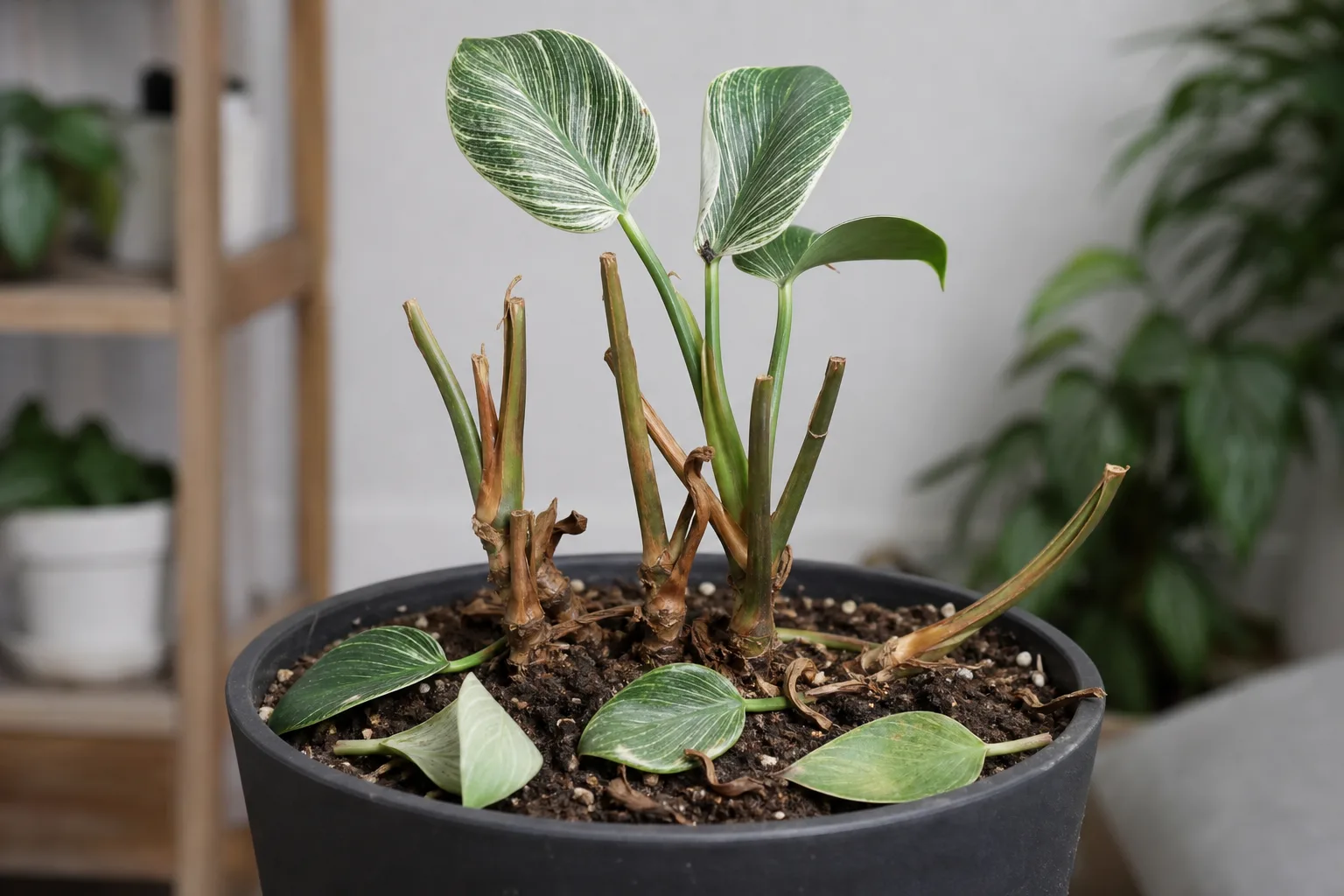
What leaf drop looks like on Philodendron Birkin
Birkin grows as an upright self-heading rosette with thick stems and white pinstriped leaves clustered above the pot-not a trailing vine. Leaf loss shows up as a thinning crown, often starting from the lowest, oldest leaves and working inward.
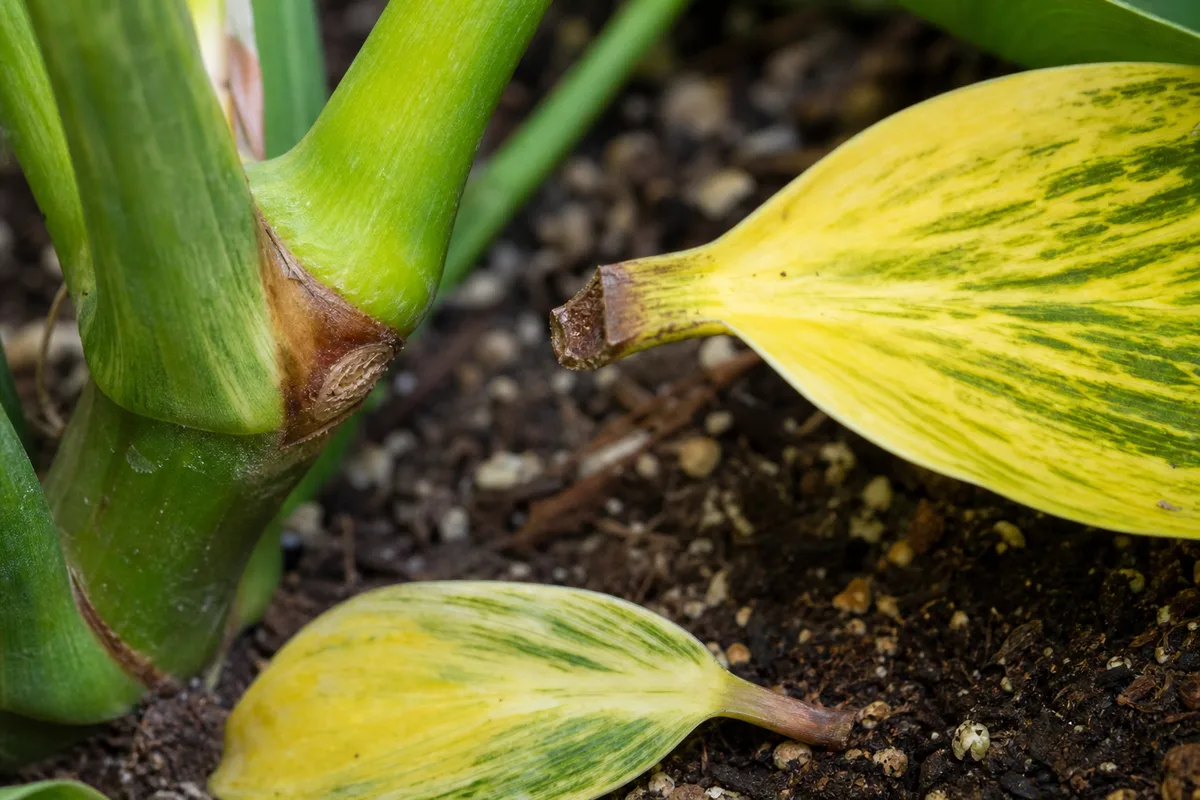
Leaf Drop symptoms on Philodendron Birkin - compare with healthy tissue on the same plant.
Normal senescence: one or two bottom leaves turn yellow, then detach while new pinstriped foliage at the center looks firm and well-striped. Stress-related drop looks different:
- Yellow-then-drop pattern on multiple lower leaves while soil stays wet and the pot feels heavy
- Green leaves popping off with little resistance after a recent move, repot, or winter window shift
- Pale, small new leaves with weak striping before older foliage falls-often paired with leggy stems in dim corners; see not enough light
- Crisp brown edges on pinstriped leaves that later yellow and drop when air is too dry
- Sticky residue or speckling on new growth when sap-sucking pests weaken the plant enough to shed leaves
Unlike fast-climbing philodendrons, Birkin recovers slowly. A dropped pinstriped leaf will not grow back on the same petiole; new leaves emerge only from the central growth point. Bare lower sections on thick upright stems may stay visible permanently-that is cosmetic, not fatal, if the crown keeps producing healthy new foliage.
Why Philodendron Birkin drops leaves
Birkin sheds foliage when roots or the environment cannot support the full leaf canopy. Several Birkin-specific factors make this plant more sensitive than a basic heartleaf philodendron.
Overwatering and root stress. Birkin prefers moist, well-drained soil and bright filtered light. In dim rooms, soil stays wet for days because the slow-growing rosette uses little water relative to pot volume-a dual trap where roots suffocate while light stress still triggers drop. Waterlogged roots cannot absorb oxygen, decline, and fail to supply the canopy-triggering yellowing and drop even when upper leaves still look partly green. The compact crown sits close to damp mix, so poor drainage at the root zone hits this plant quickly.
Underwatering during growth. Birkin tolerates brief dry spells but not prolonged drought while actively pushing new striped leaves. Bone-dry mix forces the plant to shed foliage it cannot hydrate. Leaves may curl inward and feel thin before they detach. See our underwatering guide when the pot is light and mix is dry several centimeters down.
Insufficient light. Yellowing of lower leaves can be caused by too little light or overwatering on philodendrons. Birkin’s variegation depends on bright filtered sun-insufficient light can result in loss of variegation, leggy growth, and small leaves before the plant sheds inner foliage it cannot sustain.
Drafts and temperature swings. Birkin needs warm, humid conditions and cold drafts should be avoided. Sudden cold from AC vents, winter windows, or porch trips can cause green leaves to drop without prior yellowing.
Relocation and repotting shock. Plants subjected to a significant change in environment may drop leaves, though this should ease within about three weeks if conditions stabilize. Birkin often sheds after nursery-to-home moves, repotting, or shifting from a bright greenhouse to a dim living room.
Chimeric reversion. Birkin’s pinstripes come from a rare mutation of Philodendron ‘Rojo Congo’. When variegated outer meristem layers are displaced, new shoots can emerge solid green or reddish-green, thinning the striped rosette appearance without classic water-stress yellowing. Prune reverted stems back to the last clearly striped node per our overview guide-watering fixes alone will not restore pinstripes on a reverted shoot.
Pot too small or root-bound. Plants in pots that are too small will drop leaves even when surface watering looks correct-the root ball stays cramped while outer leaves shed first. Iowa State notes philodendrons do well when slightly pot-bound, but Birkin’s slow fill rate means compacted peat can still channel water around a dense root mat. See our pot too small guide when water runs straight through or mix dries in one to two days.
Pests on new growth. Monitor for spider mites, mealybugs, aphids, and scale on Birkin. Severe sap-sucking weakens new pinstriped leaves first, and stressed plants may shed foliage before obvious pest damage spreads across the whole rosette.
How to confirm the cause
Work through these checks in order before changing multiple variables:
- Soil moisture at 3–5 cm depth - Wet and cold-damp mix with yellowing lower leaves points to overwatering. Bone-dry mix with thin, curling leaves suggests underwatering.
- Pot weight - A heavy pot days after watering confirms slow dry-down; a feather-light pot confirms drought stress.
- New growth quality - Crisp white pinstripes on firm emerging leaves mean the core is healthy. Pale, small, or poorly striped new leaves with long internodes mean light is too weak even if watering seems fine.
- Recent history - Note repotting, room moves, new windows, or winter heat running. Drop within two weeks of a change often fits acclimation, not rot.
- Draft path - Feel for cold or dry airflow from AC, heat vents, or leaky winter glass near the rosette.
- Stem and petiole firmness - Press the base of falling leaves. Firm petioles with environmental clues fit water or light stress; soft mushy stems at soil line with wet mix suggest advancing root damage-see root rot.
- Pest scan - Inspect leaf undersides, stem joints, and new unfurling leaves for mites, mealybugs, or scale bumps.
If only one or two oldest bottom leaves yellowed while soil moisture and light are stable, you are likely seeing natural senescence-not an emergency.
First fix to try
Probe soil moisture 3–5 cm deep, then take one watering action-nothing else yet.
If the mix is wet or the pot is heavy and leaves are yellowing or dropping, stop watering until the top 3–5 cm is fully dry. Move Birkin to bright filtered light with airflow if it has been in a dim corner-but do not also repot, prune heavily, or fertilize the same week.
If the mix is bone dry, the pot is light, and leaves look thin or curled, water thoroughly once until excess drains from the hole and the saucer is emptied within 30 minutes. Then wait for the top layer to dry before the next drink per our watering guide.
If you recently moved or repotted the plant and stems are still firm, hold all other changes for two to three weeks. Keep light and watering steady so Birkin can acclimate.
Do not repot on day one unless soil smells sour, stems are softening at the base, or roots are clearly rotting when you inspect.
Step-by-step recovery
Once the first fix is in place, follow this sequence based on what you confirmed:
For overwatering-related drop: Skip watering until the top 3–5 cm dries. Ensure drainage holes are open and the pot is not sitting in a full saucer. If drop continues after two weeks of corrected watering, unpot, trim dark mushy roots, and repot into fresh aroid mix with perlite and bark. Remove only fully yellow or detached leaves; keep any partially green foliage that still photosynthesizes. Full rot rescue steps live on our root rot guide.
For underwatering-related drop: Establish a moisture-based rhythm-water when the top 3–5 cm is dry. Birkin is forgiving after a single missed drink but not after weeks of chronic drought during new leaf production.
For low-light drop: Move to bright filtered light-east window or filtered south/west exposure without harsh midday sun. Rotate the pot weekly so all sides keep even striping. Hold watering steady for two weeks; do not compensate with extra water.
For draft or cold shock: Relocate away from vents and cold glass. Keep room temperature in Birkin’s comfort zone and avoid touching the plant to a chilly windowpane at night.
For post-repot or relocation shock: Minimize further disturbance. Maintain stable light and watering; drop should slow within one to three weeks if stems stay firm.
For reversion-related thinning: Prune solid green or reddish shoots back to the last striped node. Improve light so remaining variegated tissue can dominate the crown.
For root-bound drop: Repot one size up in fresh airy aroid mix during spring active growth per our pot too small guide.
For pest-related drop: Isolate the plant, rinse leaf undersides, confirm active pests, then treat before adjusting fertilizer or repotting.
Recovery timeline and signs of improvement
Birkin is a slow-growing self-heading hybrid, so leaf drop slows before the rosette looks full again. Expect shedding to decrease within one to three weeks once watering and light stabilize. New pinstriped leaves may take two to four more weeks to emerge from the center after mild stress correction.
Editorial recovery note: A tabletop Birkin in a 15 cm nursery pot that shed green pinstriped leaves for about ten days after a dim-corner-to-east-window move stabilized once watering matched our dry-down guide and light held steady. New striped leaves appeared from the crown by week four-illustrating that firm stems plus one-variable correction matter more than replacing the whole plant.
Signs you are winning:
- Fewer leaves falling each week
- Firm upright stems and petioles
- New leaves unfurling with crisp white striping
- Pot weight and dry-down becoming predictable between waterings
Signs the problem is worsening:
- Green pinstriped leaves detaching without yellowing first while soil stays wet
- Stem base softening at soil line
- Sour smell from mix
- New growth stalling entirely for more than a month
Fully yellow or dropped leaves will not return on the same stems. Bare lower sections may stay visible on Birkin’s thick upright stems-that is cosmetic, not fatal, if the crown keeps producing healthy new foliage.
Lookalike symptoms
Yellow leaves without drop often mean early overwatering or light stress-use our yellow leaves guide if foliage hangs on but discolors.
Brown tips without mass drop usually point to low humidity or fluoride in tap water rather than root failure-see brown tips.
Wilting with wet soil suggests root damage, not thirst-adding water will worsen drop. See wilting for wet-wilt triage.
Leggy growth without drop is primarily a light issue; the plant stretches before it sheds-see not enough light.
One old bottom leaf every few months is normal aging on a mature Birkin rosette, not a care crisis.
Mistakes to avoid
Do not increase watering because leaves are falling-wet roots are the most common Birkin killer in dim rooms. Do not fertilize a shedding plant to “push” new growth; that adds salt stress while roots are already struggling. Do not repot, prune, relocate, and feed in the same week during active drop. Do not assume every fallen pinstriped leaf means the plant is dying; confirm soil, light, and stem firmness first.
Keep fallen leaves cleared if you have pets-Philodendron contains calcium oxalate crystals toxic to cats and dogs. Contact your veterinarian or ASPCA Animal Poison Control at (888) 426-4435 if ingestion is suspected.
How to prevent leaf drop next time
Match watering to how fast your pot dries in your actual light-allow the top 3–5 cm to dry between drinks and cut back in winter when growth slows per our watering guide. Keep Birkin in bright, filtered sunlight with stable placement; avoid bouncing it between rooms with very different brightness. Buffer the plant from HVAC drafts and inspect new growth monthly for mites and mealybugs before pests weaken the rosette enough to trigger shedding. Use well-draining aroid mix so the compact crown is not sitting above chronically soggy peat.
When to worry
Prioritize root inspection if active drop continues more than two weeks despite corrected watering and light, if healthy green pinstriped leaves detach in clusters, or if stems soften while soil is wet. A Birkin with firm stems, slowing drop, and one new striped leaf emerging is on the path to recovery even if the rosette looks sparse for now. Advanced wet-soil rescue steps live on our root rot guide.
Related Philodendron Birkin guides
- Philodendron Birkin overview - Self-heading habit, variegation stability, and reversion pruning
- Watering Philodendron Birkin - Moisture rhythm and dry-down checks
- Yellow leaves - When foliage discolors but stays attached
- Overwatering - Chronic wet mix and crown proximity risk
- Root rot - Advanced rescue when wet soil and mushy roots persist
- Transplant shock - Post-repot green-leaf drop patterns
- Not enough light - Faded striping and slow dry-down trap
- Pot too small - Root-bound drop when watering looks correct
- Wilting - Whole-plant collapse vs gradual leaf detach
- Brown tips - Humidity stress without mass drop
Conclusion
Leaf drop on Philodendron Birkin is a diagnostic signal from a slow self-heading rosette-not a death sentence. The same fallen pinstriped leaves can warn of drowning roots, thirst, shock, reversion, or cramped roots-but your first tool is always a depth moisture check paired with pot weight. Dry means one thorough soak and drain; wet means pause watering and inspect roots if drop continues. Recovery follows new firm growth at the central crown, not re-greening old petioles. For species context and daily watering rhythm, see the Philodendron Birkin overview.