Overwatering on Philodendron Birkin: Causes, Checks & Fixes
Quick answer
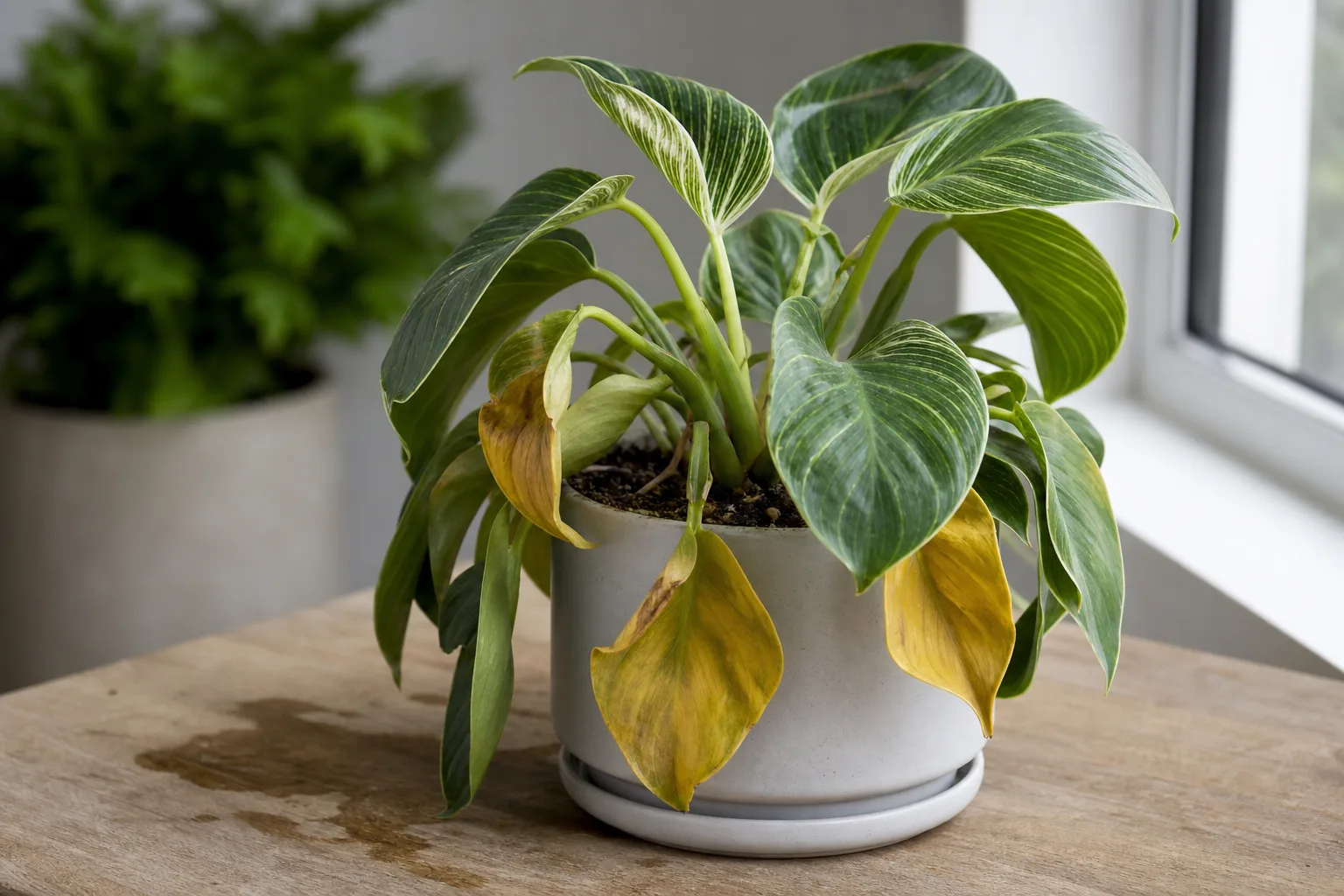
Overwatering on Philodendron Birkin shows as yellow pinstriped leaves, a heavy wet pot, and limp foliage even when the mix is damp-especially in dim rooms where soil never dries. First step: stop watering until the top 3–5 cm is dry, then check roots before adding more water.
Overwatering on Philodendron Birkin: Causes, Checks & Fixes
This guide covers overwatering on Philodendron Birkin. See also the general Overwatering guide, watering, and light pages for this plant.
Overwatering on Philodendron Birkin: Causes, Checks & Fixes
Quick answer
Overwatering is one of the fastest ways to damage Philodendron Birkin. This compact self-heading aroid wants moisture cycles-not constant wetness around its roots. When soil stays saturated, roots cannot absorb oxygen and begin to decay; leaves yellow and droop even though the mix feels damp.
First step: stop watering until the top 3–5 cm of mix is dry. Birkin’s tight rosette of pinstriped leaves sits close to the pot surface, so a chronically wet crown zone is common in dim corners. Do not add more water to “perk up” limp foliage until you have checked soil depth, pot weight, and drainage.
What overwatering looks like on Philodendron Birkin
Birkin shows water stress through its variegated foliage first. Lower leaves often yellow and drop, but overwatering can cause root rot and yellowing leaves on upper pinstriped foliage too when roots are badly damaged. The white or cream stripes may look dull or washed out on stressed leaves, and new growth can emerge smaller with weak striping.
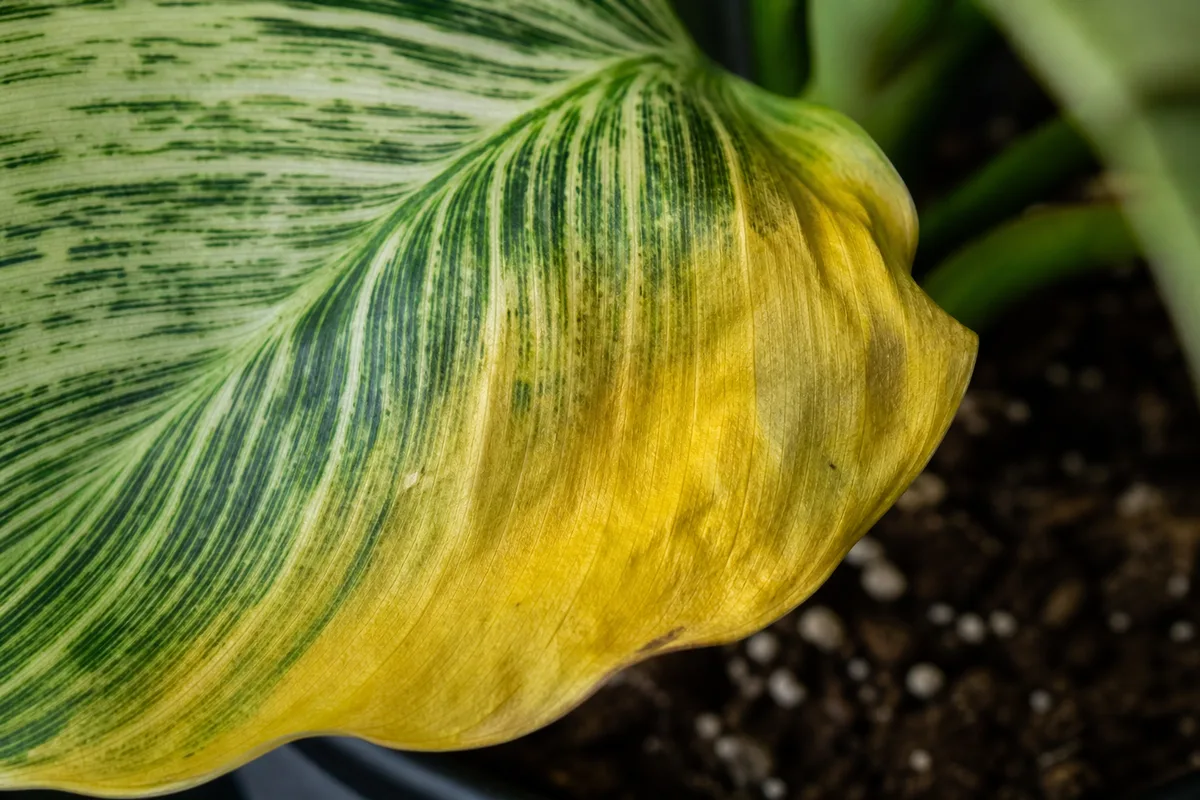
Overwatering symptoms on Philodendron Birkin - compare with healthy tissue on the same plant.
Other signs tied to Philodendron Birkin overview’s growth habit:
- Limp, soft pinstriped leaves while soil is wet-not the crisp curl of a thirsty plant
- Heavy pot that stays wet for a week or more after watering
- White mold, algae, or green film on the soil surface under the leaf crown
- Fungus gnats hovering when you water or disturb the top layer
- Sour or swampy smell from the mix when you lift the pot
- Stem base softening at soil line-a late sign that wet conditions have reached crown tissue
Birkin is slow-growing and compact. It will not bounce back overnight like a fast vine might. Yellow leaves that have fully chlorosed will not re-green; recovery shows up in firm new leaves with crisp pinstripes.
Why Philodendron Birkin gets overwatered
Birkin is not a moisture-loving fern. It needs moist, well-drained, slightly acidic soils and bright filtered light. The most common overwatering pattern is low light plus a fixed Philodendron Birkin watering guide-owners water every Sunday while the plant in a north-facing corner barely transpires, so the same water sits in peat for days.
Several Birkin-specific factors stack the odds:
Compact crown near damp soil. Birkin grows as an erect rosette with thick upright stems and leaves clustered above the pot. There is little airflow through the crown, so the top layer and root zone stay wet longer than on a trailing philodendron whose stems hang away from the mix.
Slow growth rate. Birkin’s slow habit means lower water demand than fast climbers like Brasil. In winter or in cool rooms, a pot that took five days to dry in summer may take two weeks-yet many owners keep the same weekly routine.
Heavy peat-based store mix. Birkin is often sold in dense, moisture-retentive potting soil. Without perlite and bark, that mix holds water like a sponge. Roots get less oxygen even when you think you are watering lightly.
Oversized or cache pots. Birkin looks best as a tabletop specimen, so it frequently sits inside a decorative pot with no drainage. Water pools at the bottom and the inner pot never truly dries.
Dim light reducing water use. Insufficient light slows photosynthesis and transpiration. The plant drinks less, soil dries slower, and the same watering volume becomes overwatering. Loss of crisp variegation and leggy stems often appear alongside wet soil in these setups.
How to confirm overwatering
Work through these checks before Philodendron Birkin repotting guide or pruning:
- Soil moisture at depth - Stick your finger 3–5 cm into the mix. If it is wet or cold-damp while lower leaves are yellowing, overwatering is likely. Bone-dry mix with limp leaves suggests underwatering on Philodendron Birkin instead.
- Pot weight - Lift the pot. A heavy, waterlogged feel days after watering confirms slow dry-down.
- Drainage path - Confirm drainage holes exist and are not blocked. Check whether the pot sits in a full saucer or sealed cache pot.
- Leaf and stem pattern - Yellowing starting on older lower leaves with wet soil fits overwatering. Uniform crisp brown edges on dry mix point to underwatering or low humidity.
- Smell test - Sour, anaerobic odor from the mix strongly suggests root decline.
- Pest clue - Fungus gnats breeding in constantly moist top layer support an overwatering diagnosis, though they are not the root cause.
- Light reality check - Note daily bright indirect hours. Birkin in less than a few hours of usable light plus frequent watering is the classic mis-match.
If soil is wet, stems are firm, and only one old bottom leaf yellowed, you may be seeing natural senescence-not a watering crisis. The combination of wet mix + spreading yellow + limp foliage is what confirms trouble.
First fix to try
Stop watering until the top 3–5 cm of mix is fully dry.
This single pause breaks the saturation cycle without shocking the plant further. Move Birkin to brighter filtered light-not direct afternoon sun-so the remaining healthy roots can dry the mix faster. Tilt the pot to pour out any saucer water. Do not mist, do not fertilize, and do not repot on day one unless the mix smells sour or the stem base is already soft.
If leaves are limp but soil is still wet, the problem is failing roots, not thirst. Wilting with wet soil can mean damaged roots-adding water makes root decline worse.
Step-by-step recovery
After the dry-down pause, choose a path based on severity.
Mild case: wet soil, firm stem, limited yellowing
- Let the top 3–5 cm dry before every future watering.
- Move to bright filtered light so the pot dries predictably.
- Empty the saucer within 30 minutes after each watering.
- Remove fully yellow leaves at the base-they will not recover.
- Watch for a new pinstriped leaf over the next two to four weeks.
Moderate case: sour smell, persistent gnats, or wilt with wet soil
- Slide the plant out of the pot and inspect roots. Healthy aroid roots are firm and pale; rotted roots are brown, mushy, and may smell bad.
- Trim all mushy roots with clean scissors. Rinse away old wet soil.
- Repot into fresh mix: standard potting soil plus 20–25% perlite and 10% orchid bark, in a pot with drainage holes sized to the root ball-not much larger.
- Water lightly once to settle the mix, then let the top layer dry before the next drink.
- Hold fertilizer until new growth appears.
Severe case: soft stem base or collapsing crown
- Unpot immediately and remove all rotted roots and any soft stem tissue back to firm green.
- Repot the remaining healthy section into a small well-draining pot, or propagate a firm stem cutting with a node if the base is gone.
- Keep humidity moderate and light bright but indirect. Avoid sealed plastic bags that trap moisture around the stem.
- Accept that heavily damaged plants may lose most foliage before pushing new growth.
Wear gloves when handling cut tissue-Birkin sap can irritate skin, and all philodendron parts contain calcium oxalate crystals toxic to pets if ingested.
Recovery timeline
Mild overwatering often stabilizes within two to four weeks once watering and light are corrected. You should see the pot dry on a predictable rhythm and at least one new leaf with defined pinstripes.
Moderate root trimming usually needs four to eight weeks before new growth looks normal. Birkin’s slow growth rate means patience-not a sign the rescue failed.
Severe crown or root loss can take a full growing season. If the stem base stays firm and you get one healthy new leaf, the plant is recovering. If the base keeps softening or new leaves emerge tiny and green without striping in adequate light, root damage may still be spreading.
Lookalike symptoms
Underwatering - Mix is light and dry several centimeters down. Leaves may curl inward or feel crisp at edges. A thorough soak perks foliage within hours if roots are healthy.
Low light alone - Leggy stems, smaller leaves, and fading pinstripes without constantly wet soil. Fix light first; watering more will not restore variegation.
Natural leaf drop - One or two older bottom leaves yellow and drop while soil dries normally and new growth looks good. No rescue needed.
Root rot as the next stage - Persistent wet soil eventually becomes rot. If mushy roots are already widespread, see the root rot guide for Birkin-but the first intervention is still stopping water and inspecting roots.
Cold draft stress - Darkened or limp leaves after exposure to AC vents or winter windows. Soil moisture may be normal; move the plant out of the draft.
Mistakes to avoid
- Watering on a calendar instead of checking whether the top 3–5 cm is dry
- Adding water to limp leaves when soil is already wet-this worsens root failure
- Repotting into a much larger pot “to help drainage”; excess mix stays wet longer
- Keeping Birkin in a cache pot that holds runoff water
- Misting leaves instead of fixing soil moisture-wet foliage can spot and does not dry the root zone
- Fertilizing a stressed plant hoping to push growth; wait until new roots form
- Placing in direct afternoon sun to “dry soil faster”-too much sun will scorch Birkin leaves; use brighter indirect light instead
Birkin care cross-check
Overwatering recovery sticks only when the rest of the setup matches Birkin’s needs:
- Light: Bright filtered or indirect light most of the day. Too dark slows drying; too much direct sun burns pinstripes.
- Soil: Well-draining aroid mix with perlite and bark-not straight peat or garden soil.
- Water rhythm: Every 7–10 days in active growth when the top 3–5 cm is dry; every 10–14 days in winter.
- Humidity: 50 to 60% humidity is ideal, but high humidity does not replace drainage. A humid bathroom with poor light and heavy soil overwaters faster.
- Temperature: Stable 18–26°C (65–79°F). Cold, slow-growing conditions extend dry-down time-reduce watering accordingly.
How to prevent overwatering next time
Water when the mix needs it, not when the calendar says so. Use the finger test at 3–5 cm depth, or lift the pot to judge weight after you know how it feels when properly dry.
Use pots with drainage holes and empty saucers promptly. If you use a decorative cover pot, lift the inner pot out to water and drain, then return it only when dripping has stopped.
Refresh dense store-bought mix by adding perlite and bark, or repot into a proper aroid blend when the plant is healthy-not as an emergency-only fix.
Match watering to season and light. Birkin in a bright east window in summer may need water weekly; the same plant in a dim winter room may need water every two weeks or longer.
Scout weekly during the first month after any rescue. Consistent dry-down between waterings is the best sign your schedule fits this plant.
When to worry
Treat overwatering as urgent when:
- The stem base feels soft or mushy at soil line
- Leaves collapse while mix is visibly wet
- Soil smells sour or roots are brown and slimy on inspection
- Yellowing spreads to multiple leaves within a week despite pausing water
- Fungus gnats persist and soil surface stays constantly moist
The plant may not be saveable if the entire root system is mushy, the stem base has collapsed, and no firm tissue remains to propagate. Take a healthy stem cutting with a node before discarding if any firm section still exists.
Conclusion
Philodendron Birkin rewards owners who let the mix breathe between drinks. Its compact pinstriped rosette looks delicate, but the real vulnerability is below soil-roots sitting in oxygen-poor wet peat. Catch overwatering early by pairing bright filtered light with a dry-top watering rule, and stop watering the moment limp leaves meet wet mix. Firm stems, predictable pot dry-down, and one new crisp pinstriped leaf are the signs your Birkin is back on track.
When to use this page vs other Philodendron Birkin guides
- Philodendron Birkin watering guide - Use for routine moisture checks before assuming overwatering is the main issue.
- Philodendron Birkin problems hub - Browse all 42 common issues on this species.
- Root Rot on Philodendron Birkin - Different entry point when symptoms overlap with overwatering.
- Yellow Leaves on Philodendron Birkin - Different entry point when symptoms overlap with overwatering.