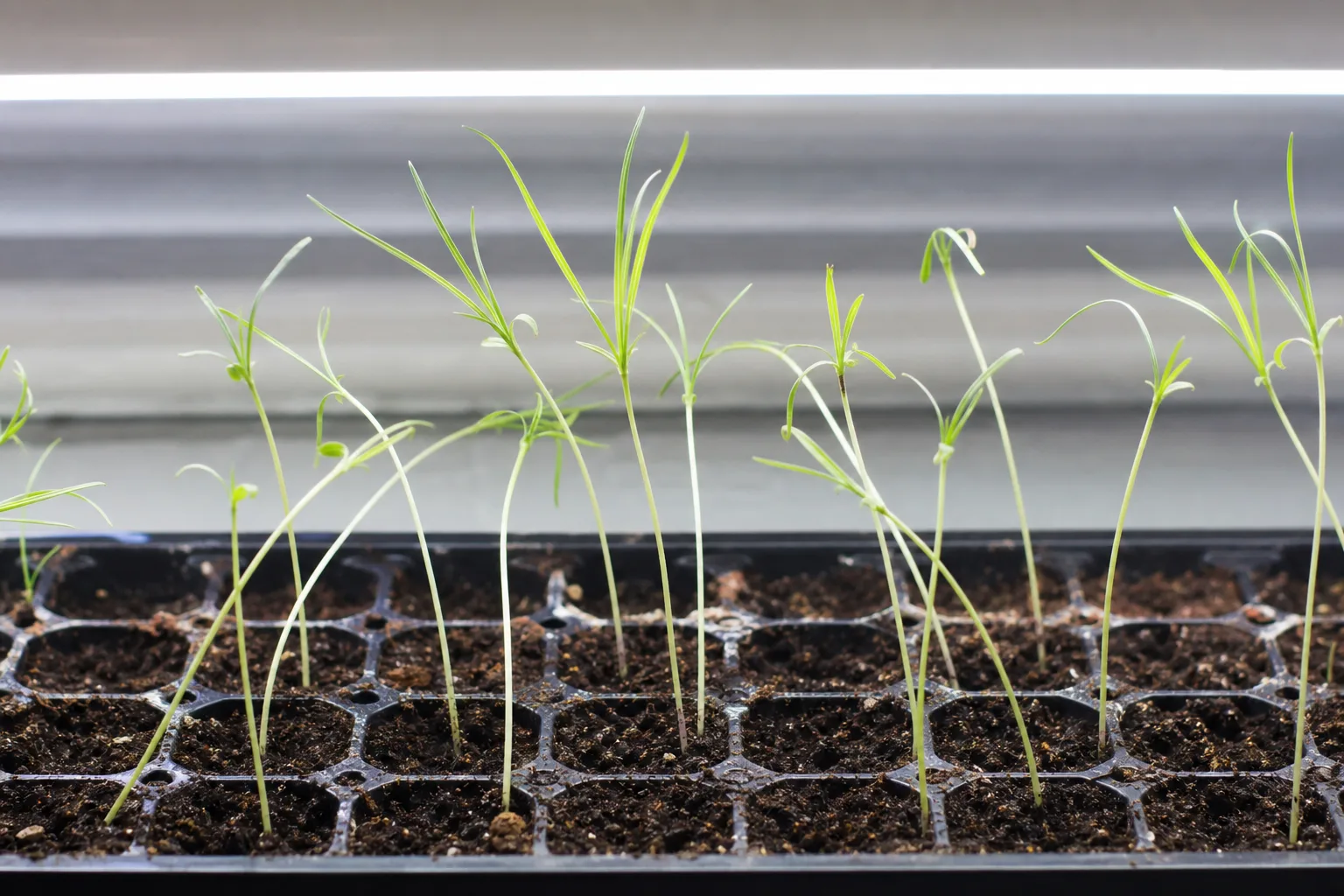
 Seeds / SeedlingsLeggy SeedlingsLeggy seedlings grow tall, pale, and fragile with long gaps between leaves. This is etiolation: the plant reaches for photons. Windowsills alone often fail in late winter, and humidity domes left on too long can compound weak growth.
The fix is stronger, closer light-not more water or feed. Position full-spectrum grow lights 2–4 inches above seedlings, run them 14–16 hours per day, and remove domes after germination. You can bury elongated stems slightly when transplanting some species, but prevention at germination is easier.
Seeds / SeedlingsLeggy SeedlingsLeggy seedlings grow tall, pale, and fragile with long gaps between leaves. This is etiolation: the plant reaches for photons. Windowsills alone often fail in late winter, and humidity domes left on too long can compound weak growth.
The fix is stronger, closer light-not more water or feed. Position full-spectrum grow lights 2–4 inches above seedlings, run them 14–16 hours per day, and remove domes after germination. You can bury elongated stems slightly when transplanting some species, but prevention at germination is easier.Seeds / Seedlings problems
Germination failures and common seedling problems.
Not sure where to start? Match symptoms in under a minute
Select what you see on your plant and we'll suggest the most likely problems to check first.
How to stabilize seedlings
Seedlings fail quickly when light, moisture, temperature, or airflow are off. Diagnose early because stretching, damping off, and yellowing are easier to prevent than reverse. Small corrections in the first week often prevent permanent weak stems.
- Place seedlings close to strong light as soon as they emerge.
- Keep the mix evenly moist but never stagnant or sealed after germination.
- Thin crowded seedlings so airflow reaches the soil surface.
Seeds / SeedlingsLeggy SeedlingsLeggy seedlings grow tall, pale, and fragile with long gaps between leaves. This is etiolation: the plant reaches for photons. Windowsills alone often fail in late winter, and humidity domes left on too long can compound weak growth.
The fix is stronger, closer light-not more water or feed. Position full-spectrum grow lights 2–4 inches above seedlings, run them 14–16 hours per day, and remove domes after germination. You can bury elongated stems slightly when transplanting some species, but prevention at germination is easier.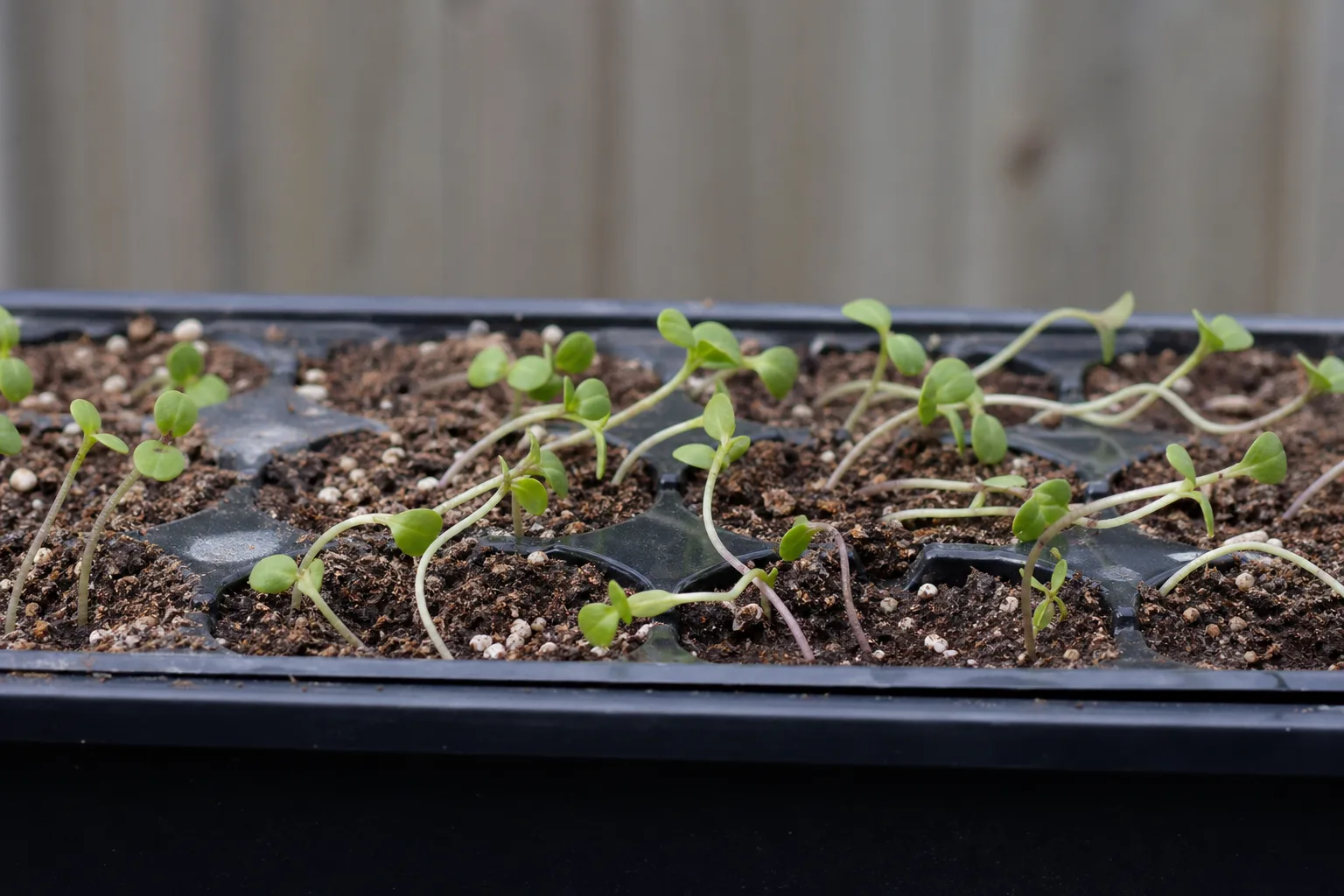 Seeds / SeedlingsSeedlings Falling OverA seedling that falls over is either structurally weak or diseased at the stem base. Leggy seedlings stretch toward weak light and collapse under their own weight. Damping off rots the stem at soil level and spreads across wet trays.
Tell them apart: leggy plants are tall and pale but the stem base stays firm; damping off pinches the stem, turns it brown, and kills seedlings in clusters. Both improve when you reduce surface moisture, add airflow, and place grow lights 2–4 inches above the canopy for 14–16 hours daily.
Seeds / SeedlingsSeedlings Falling OverA seedling that falls over is either structurally weak or diseased at the stem base. Leggy seedlings stretch toward weak light and collapse under their own weight. Damping off rots the stem at soil level and spreads across wet trays.
Tell them apart: leggy plants are tall and pale but the stem base stays firm; damping off pinches the stem, turns it brown, and kills seedlings in clusters. Both improve when you reduce surface moisture, add airflow, and place grow lights 2–4 inches above the canopy for 14–16 hours daily.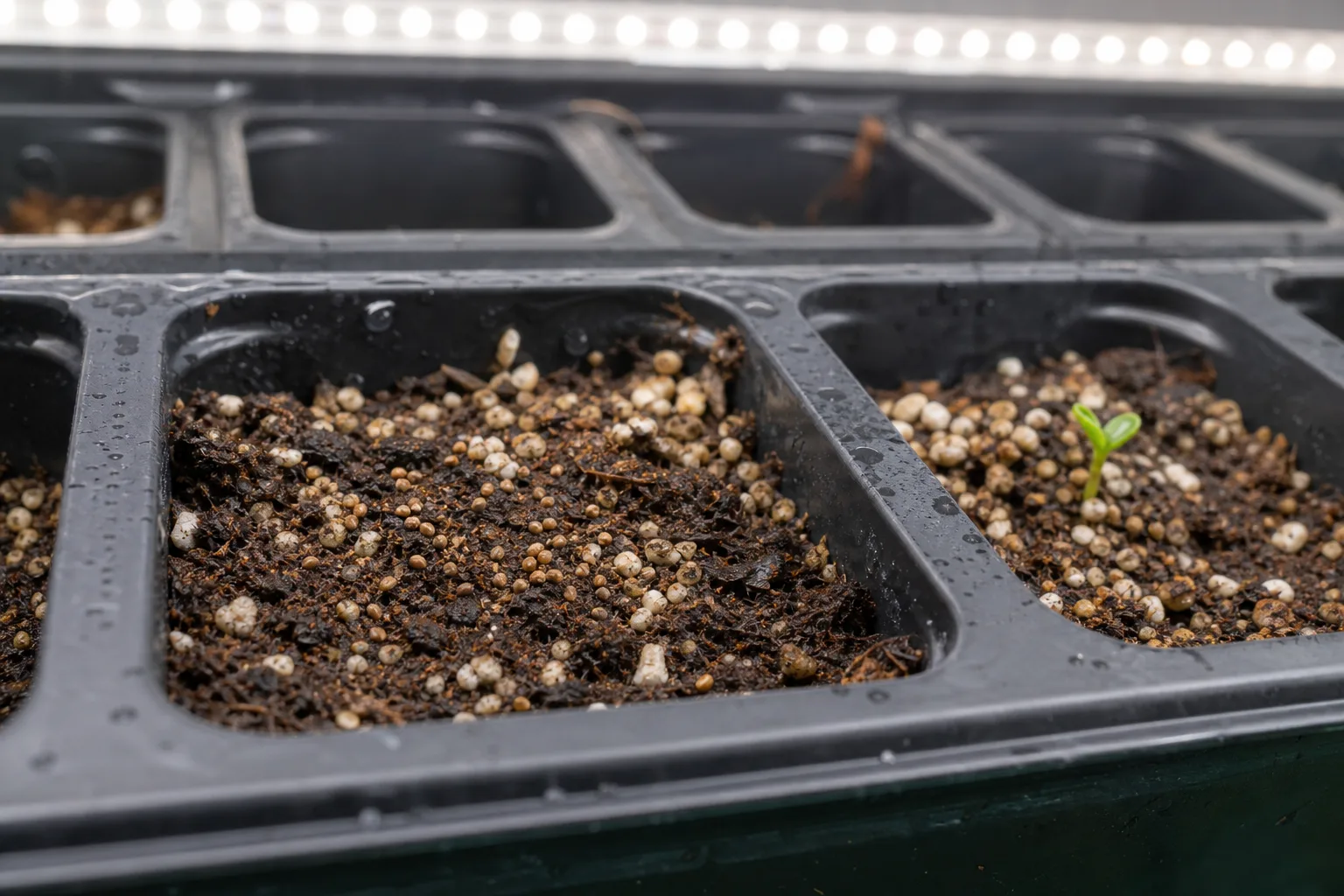 Seeds / SeedlingsSeeds Not GerminatingFailed germination is frustrating because the problem happens before you see any seedlings. Indoors, seeds need stable warmth, consistent light moisture (not soaking), and correct sowing depth for that species. A packet’s days-to-germinate range assumes these conditions.
Start by checking seed age and storage, soil temperature at root depth, and whether the mix dried out or stayed waterlogged. Many failures are environmental and fixable on the next sowing rather than a bad batch-though very old seed may need a viability test first.
Seeds / SeedlingsSeeds Not GerminatingFailed germination is frustrating because the problem happens before you see any seedlings. Indoors, seeds need stable warmth, consistent light moisture (not soaking), and correct sowing depth for that species. A packet’s days-to-germinate range assumes these conditions.
Start by checking seed age and storage, soil temperature at root depth, and whether the mix dried out or stayed waterlogged. Many failures are environmental and fixable on the next sowing rather than a bad batch-though very old seed may need a viability test first.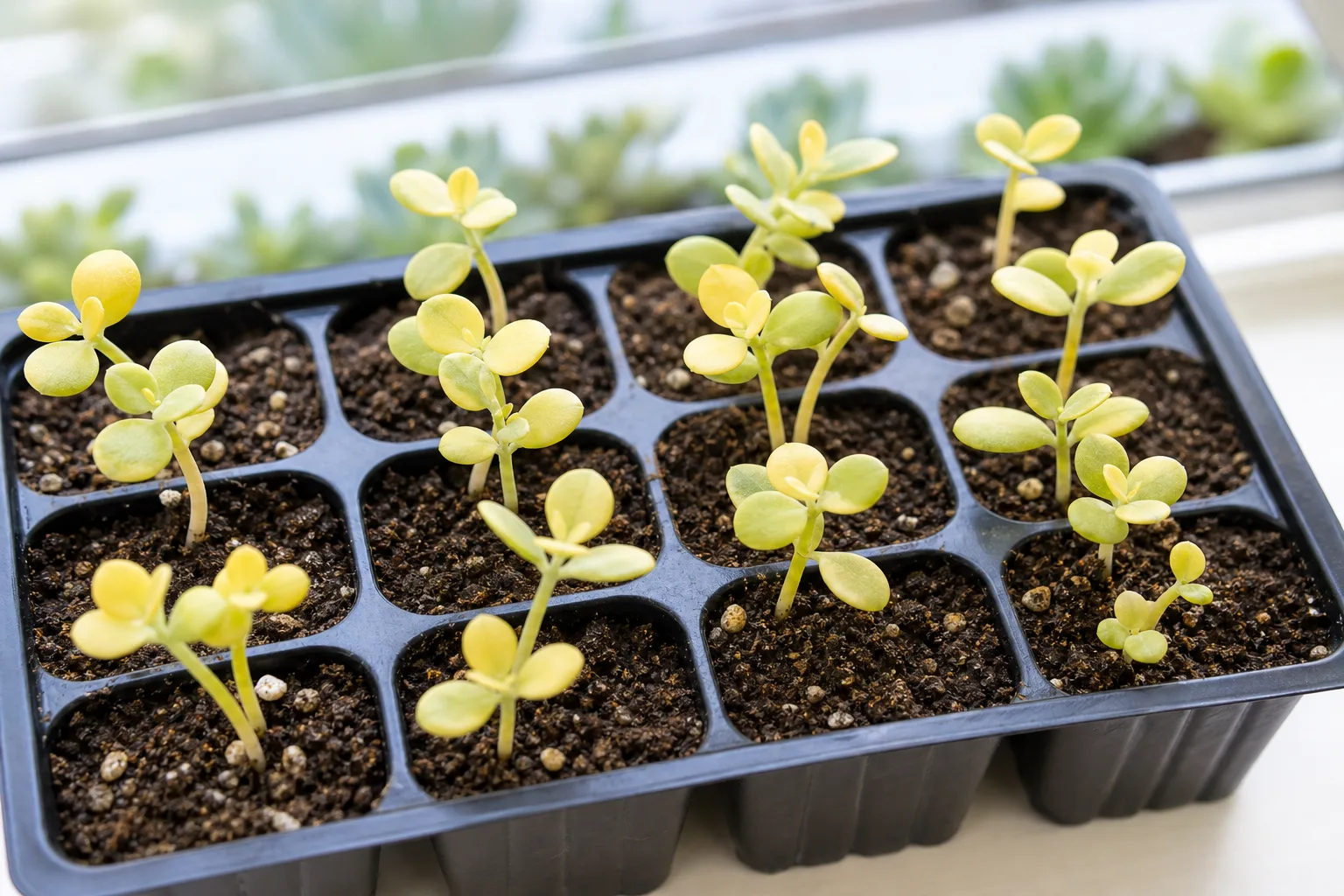 Seeds / SeedlingsYellow SeedlingsYellowing in seedlings differs from mature houseplant chlorosis. Young plants have small root systems and are sensitive to soggy mix, cold trays on windowsills, and nitrogen lack in sterile seed-starting media.
Check whether yellowing appears on cotyledons only (sometimes normal as true leaves emerge) or on new true leaves (action needed). Improve drainage, warm the root zone gently, increase light, and begin dilute fertilizer only after the first set of true leaves unless the label says otherwise for that crop.
Seeds / SeedlingsYellow SeedlingsYellowing in seedlings differs from mature houseplant chlorosis. Young plants have small root systems and are sensitive to soggy mix, cold trays on windowsills, and nitrogen lack in sterile seed-starting media.
Check whether yellowing appears on cotyledons only (sometimes normal as true leaves emerge) or on new true leaves (action needed). Improve drainage, warm the root zone gently, increase light, and begin dilute fertilizer only after the first set of true leaves unless the label says otherwise for that crop.No problems matched your search. Try different keywords or clear the category filter.
This seeds / seedlings problems problem guide was researched and written by . Seeds / seedlings problems symptoms, lookalike causes, and step-by-step fixes are cross-checked against extension pest, disease, and care references before publication.
We prioritize sources that hold up under scrutiny:
- University cooperative extension bulletins and fact sheets (Penn State, Clemson, UMD, NC State, and similar programs)
- Botanical garden and horticultural society publications
- Peer-reviewed plant science and veterinary toxicology references where pet safety matters (including ASPCA Animal Poison Control)
- Established reference works on indoor plant culture
The LeafyPixels editorial team then reviews the draft for clarity, step-by-step usefulness, and fit with real apartment and home conditions-not ideal greenhouse setups. When guidance changes materially, we update the page and note the revision date.
Sources used
- Cornell CALS (n.d.) Damping-off diseases of seedlings. [Online]. Available at: https://vegetablemdonline.ppath.cornell.edu/factsheets/Damping_Off.htm (Accessed: 29 June 2026).
- Penn State Extension (n.d.) Seed and seedling biology. [Online]. Available at: https://extension.psu.edu/seed-and-seedling-biology (Accessed: 29 June 2026).
- University of Maryland Extension (n.d.) Lighting for indoor plants. [Online]. Available at: https://extension.umd.edu/resource/lighting-indoor-plants (Accessed: 29 June 2026).
- University of Maryland Extension (n.d.) Nutrient deficiency of indoor plants. [Online]. Available at: https://extension.umd.edu/resource/nutrient-deficiency-indoor-plants (Accessed: 29 June 2026).
- University of Minnesota Extension (n.d.) Starting seeds indoors. [Online]. Available at: https://extension.umn.edu/planting-and-growing-guides/starting-seeds-indoors (Accessed: 29 June 2026).
- University of Minnesota Extension (n.d.) Damping off of seedlings. [Online]. Available at: https://extension.umn.edu/diseases/damping (Accessed: 29 June 2026).