Pot Too Small on Philodendron Birkin: Causes, Checks & Fixes
Quick answer
Philodendron Birkin's compact rosette grows slowly above soil, so root crowding often shows up first as weaker pinstripes or water that runs straight through-not obvious top growth. Slide the plant out to confirm circling roots, then repot one size up (about 2–5 cm or 1–2 in. wider) in fresh well-draining mix during spring.
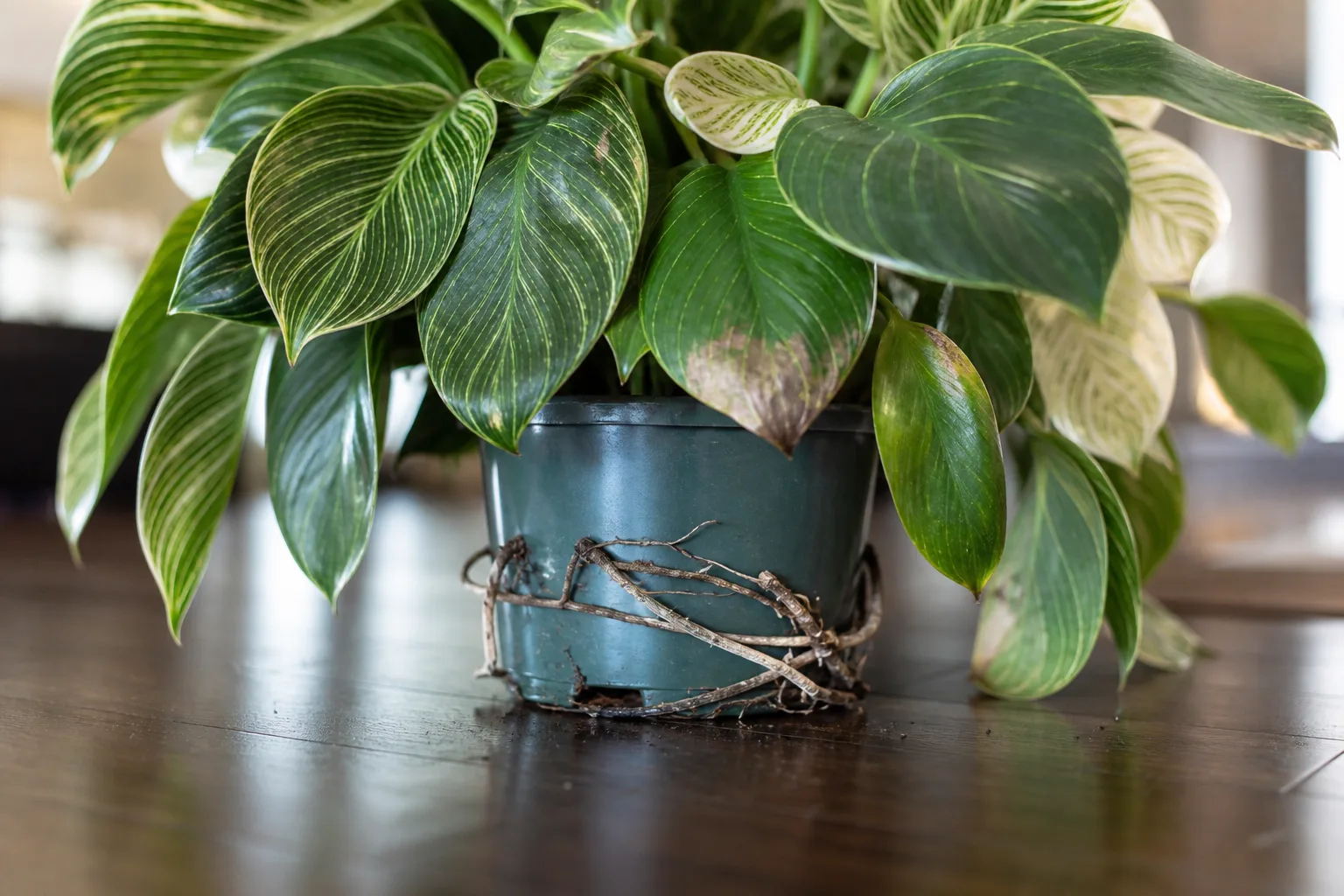
Pot Too Small on Philodendron Birkin: Causes, Checks & Fixes
This guide covers pot too small on Philodendron Birkin. See also the general Pot Too Small guide, watering, and light pages for this plant.
Pot Too Small on Philodendron Birkin: Causes, Checks & Fixes
Quick answer
Philodendron Birkin’s slow, self-heading rosette can look fine for months while roots quietly fill the pot-then new pinstripes weaken, mix dries in a day or two, and water channels straight out the bottom. First step: slide the plant out and check whether white roots circle the ball. If crowding is confirmed, repot one size up (about 2–5 cm or 1–2 in. wider in diameter) in fresh well-draining aroid mix during spring.
Birkin does not climb-a moss pole will not fix root crowding. Judge the container by root density and watering behavior, not stem length. For step-by-step repot timing, mix ratios, and post-move care, use our Philodendron Birkin repotting guide after you confirm the diagnosis here.
When to use this page vs. the Birkin repotting guide
| You need… | Start here | Use the repotting guide |
|---|---|---|
| Confirm whether symptoms mean root crowding | This page - symptom checklist, six-point confirmation, lookalike table | - |
| Full how-to: mix recipe, pot choice, depth, aftercare | - | Repotting guide |
| Wet mix + mushy brown roots | Root rot guide first - not a bigger pot alone | Repot only after trimming decay |
| Post-repot droop or leaf pause | Repotting stress | Procedural repot steps |
This page is diagnosis-first. The repotting guide is procedure-first for growers who already know Birkin needs a refresh.
What a pot too small looks like on Philodendron Birkin
A Birkin in an undersized container still holds its upright silhouette, but growth and watering tell the story:
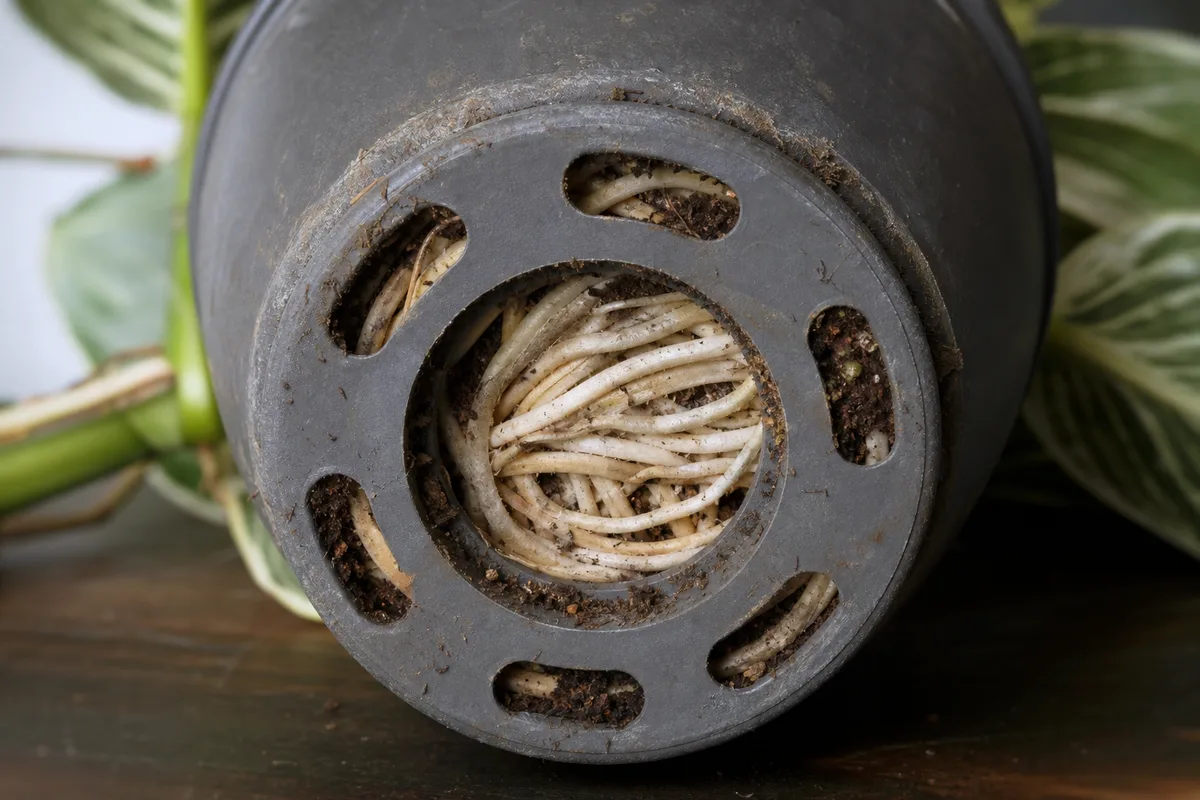
Pot Too Small symptoms on Philodendron Birkin - compare with healthy tissue on the same plant.
- Roots at drainage holes - White or tan roots peek out the bottom or spiral at the soil surface
- Water runs through fast - You soak the pot and water exits immediately; the root ball barely absorbs moisture
- Or soil dries unusually fast - Little mix remains between dense roots, so the pot goes light within one to two days in a warm room (vs. roughly seven to ten days in an appropriately sized pot at the same light)
- Smaller new leaves - Latest foliage is narrower or greener, with weaker pinstripes than older baseline leaves
- Stalled warm-season growth - No new leaves for weeks in spring or summer despite bright filtered light - see also slow growth
- Top-heavy wobble - Foliage mass outgrows the narrow base; the pot tips easily
- Pot bulges or cracks - Root pressure deforms thin plastic nursery pots
Normal, not root-bound: A Birkin in the right-sized pot dries when the top 3–5 cm (about 1–2 in.) of mix feel dry-often every seven to ten days in summer for most homes. Slow winter pause with firm stems is seasonal rest, not crowding.
Why Philodendron Birkin outgrows small pots
Compact growth hides root demand
Birkin looks like a tabletop specimen, but philodendrons still need space for healthy root spread. A 10–12 cm (4–5 in.) nursery pot suits a young plant for months, not years. As the rosette adds leaves, roots fill the remaining mix and nutrient and water storage shrink.
Variegation depends on healthy roots
White pinstripes carry less chlorophyll than solid green tissue. Stressed roots limit uptake, so new leaves may arrive smaller and less variegated even when light is adequate. Insufficient light can also fade variegation-root room and fresh airy mix support the next clean striped leaf when light is already good.
Crowding changes how water moves
In a root-bound ball, water follows channels between circling roots instead of re-wetting the whole mass. You may see runoff after seconds or need to water daily because almost no mix remains. Both patterns mimic underwatering but trace to container size.
Nursery pots left too long
Many Birkins arrive in thin plastic pots sized for shipping. Keeping that pot for a second growing season is a common reason growth stalls without an obvious pest or light problem.
How to confirm the cause
Work through these checks before jumping to a much larger pot or adding feed:
- Slide the plant out - Dense white roots wrapping the ball confirm crowding. Brown mushy roots suggest root rot from wet mix, not size alone. Wear gloves when handling roots and discarded mix-philodendrons contain calcium oxalate crystals toxic to cats and dogs if chewed.
- Drainage test - Water slowly. If most runs out in under a minute and the top stays dry, roots likely dominate the volume.
- Dry-down speed - Note how fast the top 3–5 cm (1–2 in.) dries. Very fast cycling plus visible roots fits a small pot; persistently wet mix with yellow leaves fits overwatering or poor drainage instead.
- New leaf quality - Smaller green-dominant new leaves with good light raise root stress suspicion alongside pot size. Leggy stems in a dim corner point to not enough light first.
- Rule out cache-pot traps - A decorative outer pot with standing water can mimic root problems. Empty saucers and confirm inner pot holes drain freely.
- Season check - Winter pause is normal. Crowding matters most when Birkin should push new foliage in warm months.
If roots are loose in plenty of mix and watering is stable, look at light or pests before repotting.
First fix for Philodendron Birkin
Slide the plant out to confirm root crowding. If roots circle heavily and watering is erratic, repot one size up-about 2–5 cm (1–2 in.) wider in diameter-with fresh aroid-style mix and drainage holes.
Do not jump two or three pot sizes. Oversized containers hold excess moisture around a small root system and can trigger rot on Birkin. One step up is the safe rule.
Wait until spring or early summer when possible. Water the day before, tease circling roots gently, trim only mushy tissue, and place Birkin in bright filtered light without direct sun for a week after the move. Hold fertilizer for about a month. Full procedural detail lives on our repotting guide.
Step-by-step recovery
- Water lightly the day before so the root ball holds together.
- Choose a pot 2–5 cm (1–2 in.) wider with drainage holes-glazed ceramic, plastic, or terracotta all work if water exits freely.
- Use fresh mix - Standard indoor potting mix with 20–25% perlite and 10% orchid bark matches Birkin’s need for well-drained soil. See our soil guide for ratios.
- Loosen circling roots - Score or gently pull apart tight spirals so new roots can grow outward.
- Center and backfill - Keep the crown at the same depth; do not bury stems.
- Water lightly after repotting; let the top layer of soil dry before the next soak per our watering guide.
- Skip feed for four weeks while roots settle.
- Optional same-pot refresh - If a decorative container cannot go larger, trim circling outer roots modestly, replace all spent mix, and return Birkin to the same pot. Missouri Extension notes houseplants can be repotted into the same container when roots are trimmed and fresh mix is added. Do not overwater after a trim; Birkin’s slow fill rate means less aggressive root pruning than fast vining pothos.
Recovery timeline
These are home-climate heuristics, not guarantees-cooler or dimmer rooms run slower.
One to two weeks: Mild transplant pause-slight droop or no new leaf is normal. See repotting stress if leaves yellow after the move.
Three to six weeks: In warm bright conditions, the next pinstriped leaf often appears. Judge success by striping quality on new foliage, not by old yellow leaves reverting.
One to two growing seasons: Full rosette vigor returns as roots colonize fresh space without crowding again.
Older yellow leaves from pre-repot stress usually will not revert; watch new growth and firm white roots instead.
Lookalike symptoms
| What you see | Often confused with | How to tell them apart |
|---|---|---|
| Daily wilting | Underwatering | Underwatering improves after a thorough soak; root-bound pots dry fast again within a day or water runs through instantly |
| Yellow lower leaves | Overwatering | Overwatering keeps mix wet 10+ days; crowding causes fast dry-down or runoff with little mix left |
| Small green new leaves | Not enough light | Move to brighter filtered light first; if striping still weak with good light and circling roots, pot size is likely |
| Slow winter growth | Pot too small | Winter pause is normal; recheck roots in spring if no new leaves appear by mid-summer - see slow growth |
| Post-repot droop | Pot still too small | Firm stems with recent repot point to repotting stress, not immediate re-repot |
Mistakes to avoid
- Repotting into a huge pot - Extra soil stays wet and risks root rot on Birkin.
- Only watering more - Crowded roots cannot use extra water efficiently; volume matters.
- Fertilizing a cramped plant - Feed after repotting and recovery, not before fixing roots.
- Bare-rooting aggressively - Tease circling roots; do not strip all soil unless rot requires it.
- Repotting in deep winter - Cold dim rooms slow recovery unless the plant is clearly root-bound and suffering.
- Sizing up with mushy roots - Trim decay and let roots dry before repotting into any container.
How to prevent pot size problems next time
Repot Birkin every one to two years in spring before roots spiral tightly. Choose a container one size larger than the root ball with working drainage holes. Refresh mix instead of packing old peat into a slightly bigger pot. If growth accelerates in a very bright room, check roots annually rather than waiting for obvious distress.
Treat the nursery pot as temporary. A proper Birkin home is one size up, well drained, and refreshed on schedule-not squeezed for years because the plant looks small above the rim. Species context and variegation stability notes live on the Philodendron Birkin overview.
When to worry
Repotting urgency rises when roots completely fill the container with almost no mix, the pot cracks, or the plant wilts daily despite careful watering. Those signs limit uptake quickly.
Pause and inspect roots instead of repotting if you smell sour soil, see mushy brown roots, or lower leaves yellow while mix stays wet for two weeks-that pattern may be rot in the current pot. Follow our root rot guide before moving to a slightly larger pot without trimming bad roots.
If Birkin shows no new growth six to eight weeks after a proper one-size-up repot in warm bright conditions, revisit light and watering before assuming another pot change will help.
Related Philodendron Birkin guides
- Philodendron Birkin overview - Self-heading habit, variegation stability, and reversion pruning
- Repotting Philodendron Birkin - Full procedural how-to after diagnosis
- Root rot - Wet mix and mushy roots before sizing up
- Overwatering - Chronic wet mix vs. fast dry-down
- Underwatering - Thirst vs. runoff from crowding
- Slow growth - Seasonal pause vs. root limitation
- Repotting stress - Post-move droop and leaf pause
- Soil for Philodendron Birkin - Aroid mix ratios for repot refresh
- Watering Philodendron Birkin - Dry-down rhythm after upsizing
Conclusion
Philodendron Birkin’s slow self-heading rosette hides root crowding longer than fast vining houseplants-until pinstripes weaken, water runs through, or mix dries in a day. Slide the plant out, confirm circling roots, then repot one size up with fresh airy mix, not a huge decorative container. Judge recovery by the next clean pinstriped leaf and firm white roots, not by old yellow tissue. For full repot steps, see the repotting guide; if wet mix and mushy roots appear during inspection, start with root rot triage instead.