Potassium Deficiency on Philodendron Birkin: Causes, Checks
Quick answer
Potassium deficiency on Philodendron Birkin shows as crisp brown edges on lower mature pinstriped leaves while newer center growth may still look acceptable, plus weak stems after months without complete fertilizer. First step: read your fertilizer label for potassium (K) and inspect lower leaves together-not the calendar alone.
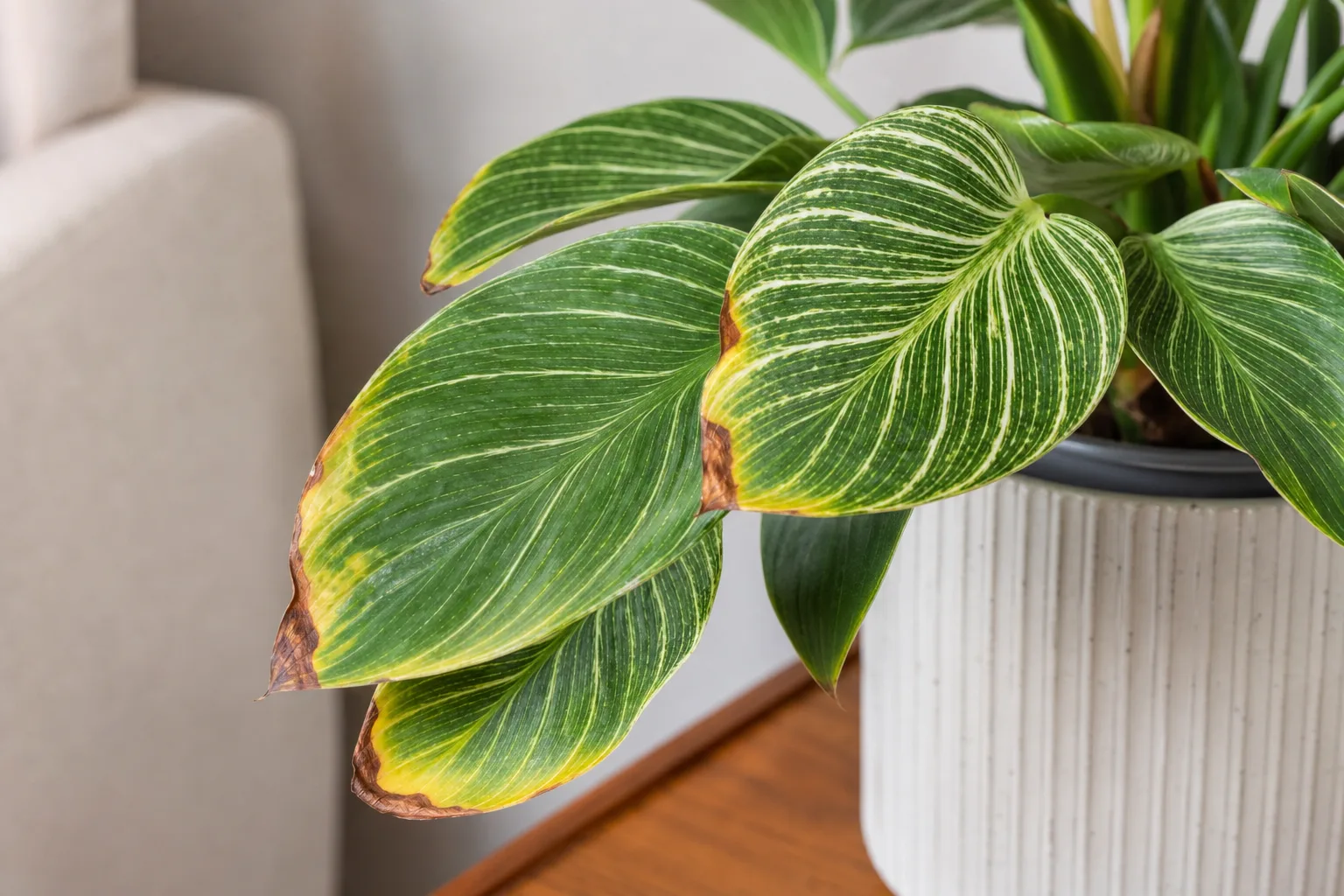
Potassium Deficiency on Philodendron Birkin: Causes, Checks & Fixes
This guide covers potassium deficiency on Philodendron Birkin. See also the general Potassium Deficiency guide, watering, and light pages for this plant.
Potassium Deficiency on Philodendron Birkin: Causes, Checks & Fixes
Quick answer
Potassium deficiency on Philodendron Birkin usually shows on lower, mature leaves first-dry brown scorch along the margins while newer pinstriped growth near the crown may still look acceptable. The compact, self-heading plant may push smaller leaves with less crisp white striping even when you water on schedule, and thick upright stems can feel softer than expected.
First step: read your fertilizer label for potassium (K) and inspect lower mature leaves together. If the middle number in the N-P-K ratio is low or missing, and scorch sits on old leaves-not the newest shoots-you are likely dealing with depleted or imbalanced feeding rather than drought, low humidity alone, or iron chlorosis. Do not dump more nitrogen hoping for greener foliage; that often deepens the problem on this slow-growing variegated philodendron.
What potassium deficiency looks like on Philodendron Birkin
Leaf pattern: Brown, necrotic scorching along the outer edges of older leaves is the hallmark sign. On a compact Birkin rosette, the lowest mature leaves show damage first; newer center leaves may stay green longer because the plant remobilizes mobile potassium upward. The tissue often feels dry and papery, sometimes curling downward at the margin. Yellowing may appear just inside the scorched edge before it turns fully brown.
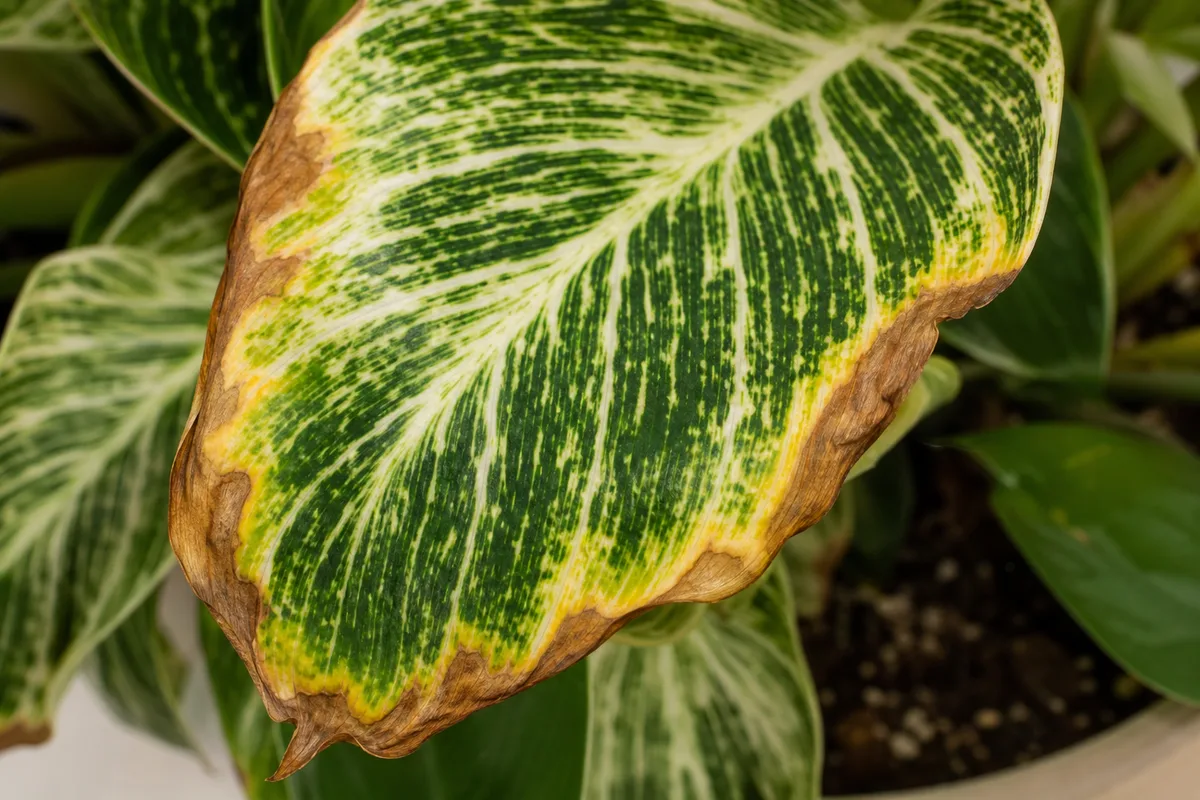
Potassium Deficiency symptoms on Philodendron Birkin - compare with healthy tissue on the same plant.
Birkin-specific cues: Healthy Birkin leaves carry irregular creamy white or yellow pinstripes against deep green. When potassium runs short, new leaves may stay smaller than usual and lose contrast between pale streaks and green-similar to low light, but paired with edge burn on lower leaves rather than all-green reversion alone. Weak upright stems on a plant that still has plump, damp soil fit nutrition stress more than underwatering on Philodendron Birkin, which usually leaves leaves thin and slightly curled across the whole rosette.
What it is not: Iron deficiency yellows young leaves with green veins. Magnesium shortage causes interveinal yellowing on older leaves-the green veins stay prominent while panels between them fade-not primarily crisp edge burn. Brown leaf tips on Birkin often indicate low humidity, but humidity burn typically affects tips across the plant without the predictable old-leaf-first marginal pattern tied to feeding history. Fertilizer burn from a recent overdose can look similar but usually appears quickly after a strong feed on dry soil.
Why Philodendron Birkin gets potassium deficiency
Philodendron Birkin is a slow-growing, self-heading hybrid that still draws potassium from container mix every time you water. Each drainage flush carries dissolved minerals out of the pot. After one to two years in the same peat-based mix without Philodendron Birkin repotting guide, available potassium can drop even when the plant still looks upright and pushes occasional new pinstriped leaves.
The feeding pattern on Birkin makes low potassium common indoors. Many owners skip fertilizer entirely because philodendrons are “easy,” or they use nitrogen-rich feeds to green up pale variegation without checking the potassium number. Excess nitrogen drives leafy extension while older leaves scorch at the edges-a classic mobile-nutrient pattern.
Salt buildup adds another trap. Monthly synthetic fertilizer at too-high strength, combined with hard tap water, leaves white crust on the soil surface. Those salts burn margins in a pattern that mimics drought scorch but happens while the mix is still damp. Root stress from chronically wet mix-common when Birkin sits in dim light and soil never dries-also limits how well roots absorb any potassium that remains.
Variegation matters here. Birkin carries less chlorophyll in its pale pinstripe sections and needs bright, filtered sunlight to keep striping crisp. A plant in weak light may show pale, mostly green new growth that mimics deficiency, but edge burn on lower leaves with adequate variegation on new tips still fits potassium when feeding history supports it.
How to confirm the cause
Work through these checks in order before changing your feeding program:
- Leaf age pattern - Scorched lower mature leaves with relatively healthy new tips strongly suggest mobile nutrient shortage, including potassium. Widespread yellowing of entire old leaves points more toward nitrogen; interveinal fading on old leaves suggests magnesium.
- Fertilizer label - Read the N-P-K ratio on the last product used. A high-first-number feed with modest K fits Birkin that looks lush but keeps scorching lower leaves. Confirm the label lists potassium as K₂O or potash, not just nitrogen and phosphorus.
- Feeding history - Note how often you fed during the last spring and summer. Months without any feed in an old container, or only occasional weak doses, depletes potassium even when nitrogen still produces green center growth.
- Salt crust check - White or tan crystalline deposits on the soil surface suggest salt stress that mimics or worsens potassium problems. Sniff the mix; sour smell points to root rot on Philodendron Birkin, not simple deficiency.
- Pot weight and moisture - Lift the pot. A heavy, wet container with marginal burn on lower leaves fits salt or nutrition stress more than underwatering. A very light pot with crispy all leaves fits drought first.
- Humidity cross-check - Birkin prefers 50–60% humidity. Dry winter air can brown tips, but humidity burn rarely follows the old-leaf-first marginal scorch pattern with a clear feeding gap. If humidity is under 40% and you never feed, both may contribute-address humidity for tips, potassium for lower marginal burn.
- Repot timeline - Has the plant stayed in the same mix for more than two years? Root-bound Birkin in exhausted soil often shows marginal burn even when you feed, because leaching removed available minerals.
If lower leaves scorch, the label lacks meaningful potassium, and salts or old soil are present, you have enough evidence to treat for potassium imbalance without waiting for a lab test.
First fix for Philodendron Birkin
Read the fertilizer label and stop any nitrogen-heavy feed until you confirm potassium is supplied.
This single step prevents the most common mistake-adding more nitrogen to a Birkin that already has plenty of foliage but weak stems and scorched lower leaves. Photograph the N-P-K panel, note the last application date, and set nitrogen-rich products aside. You are not starving the plant; you are stopping the imbalance that keeps pulling mobile potassium away from older leaves.
Do not repot on day one unless the mix smells sour or roots are clearly rotting. Do not flush or fertilize until you have confirmed the label and leaf pattern-blind flushing on a drought-stressed Birkin wastes time, and feeding before diagnosis can add salts to an already crusted pot.
Step-by-step recovery
Once the label confirms low or missing potassium-or high nitrogen relative to K-work through these steps in order:
- Flush salts if crust is visible - Move the pot to a sink. Run lukewarm water slowly through the mix until water flows freely from drainage holes for several minutes. Let the pot drain fully before returning it to its saucer. Repeat once after the soil begins to dry normally. Hold all fertilizer for four to six weeks after a heavy flush.
- Switch to a complete balanced feed - During active growth (spring through early autumn), use a balanced soluble houseplant fertilizer diluted to half label strength every four to six weeks. Growing philodendrons at home calls for feeding once or twice monthly during the growing season with a balanced all-purpose fertilizer-adequate potassium without excess nitrogen.
- Water on Birkin’s normal rhythm - Allow the top 3–5 cm of mix to dry before watering. Even moisture helps roots take up potassium after salts are leached-alternating flood and drought makes any deficiency look worse.
- Repot if soil is exhausted - If roots circle the pot and the plant has not been repotted in two or more years, move it in spring into fresh, well-draining mix with 20–25% perlite and 10% orchid bark. Do not fertilize for two weeks after repotting while roots settle.
- Trim damaged lower leaves - Once new growth shows clean margins, remove the worst scorched foliage for appearance. Those burned edges will not revert to green.
- Improve light if variegation is fading - Move to Philodendron Birkin light guide so new leaves can use the potassium you supply. Birkin in dim corners will not fully recover even with perfect fertilizer.
Skip Epsom salt unless you also see classic magnesium interveinal yellowing on older leaves. Random supplements without symptoms can skew soil chemistry further.
Recovery timeline
Expect no change on already scorched leaf edges-that tissue is dead. Within two to four weeks of corrected feeding and salt management during the growing season, new Birkin leaves should emerge with intact margins and sharper pinstripes if potassium was the main issue. Stem firmness often improves over the next growth cycle.
If marginal burn keeps climbing to new leaves despite a complete low-salt feeding program, reassess for root rot (sour soil, soft stems at the base), chronic overwatering on Philodendron Birkin in low light, or magnesium deficiency rather than potassium alone. Full recovery on a slow-growing Birkin can take one growing season when soil was heavily depleted.
Lookalike symptoms to rule out
Low humidity brown tips - NC State notes brown leaf tips on Birkin indicate lack of humidity. Tip-only burn in dry winter air often affects multiple leaves without the old-leaf-first marginal scorch tied to depleted potassium.
Fertilizer burn from a recent overdose causes marginal necrosis separated from green tissue by a yellow halo, often appearing quickly after a strong feed on dry soil. Timing and a visible salt crust differentiate it from slow deficiency developing over months.
Magnesium deficiency shows interveinal chlorosis on older leaves-the veins stay green while panels between yellow-without the sharp brown edge scorch typical of severe potassium shortage.
Iron chlorosis hits youngest leaves first with yellow blades and green veins. Birkin in cold wet roots can show iron problems, but the leaf age pattern differs from potassium.
Overwatering yellows lower leaves while soil stays wet for days; stems may soften at the base. Potassium deficiency can occur while soil moisture is adequate and lower inner leaves scorch first.
Mistakes to avoid
Do not respond to marginal burn with more nitrogen-it greens center growth while lower leaves keep scorching.
Do not fertilize a bone-dry or water-stressed Birkin. Water first, then feed on the next watering cycle at diluted strength.
Do not use full-strength outdoor fertilizer in a small indoor pot. Concentrated salts burn margins faster on container philodendrons.
Do not assume every brown edge needs potassium without reading the label. A single recent overdose needs flushing and a feed pause, not more minerals.
Do not repot, fertilize, and move to new light the same week unless roots are clearly failing. Stack one stressor at a time.
Philodendron Birkin care cross-check
Potassium correction only works when baseline care is sound. Birkin needs bright, filtered sunlight to maintain pinstripe variegation and use nutrients efficiently. A plant in weak light may show pale, weak growth that mimics deficiency but will not fully respond to fertilizer alone.
Water when the top 3–5 cm dries-typically every 7–10 days in summer and every 10–14 days in winter. Soil that stays wet for a week in moderate light points to overwatering or poor drainage, not a potassium shortage.
Pause feeding during winter rest when growth slows. Scorched lower leaves appearing during spring and summer active growth after repeated feeding implicate nutrition, not dormancy.
How to prevent it next time
Use a complete balanced fertilizer during spring and summer at half strength every four to six weeks, not nitrogen-only products or years of no feed at all.
Flush container soil once or twice a year if you use synthetic fertilizer regularly or have hard tap water. That leaches accumulated salts before they compete with potassium uptake.
Repot every one to two years or when roots circle the pot and marginal burn returns despite good light. Fresh perlite-rich mix restores baseline mineral reserves that leaching removed.
Always dilute indoor feeds to half strength or less. Birkin in a pot has nowhere for excess salts to go except the root zone and leaf margins.
Pause feeding when the plant is newly repotted, drought-stressed, or sitting in soggy soil. Feed only when the plant is actively growing and taking water on a normal schedule.
When to worry
Treat as urgent if scorch spreads rapidly to new leaves after each fertilizer application-those patterns suggest salt burn or root failure, not mild deficiency alone.
A plant with sour-smelling soil, blackening stems at the base, or mushy roots when you slip it from the pot needs root-rot assessment, not potassium supplements.
Mild marginal burn on a few lower leaves after a long season in an old pot is manageable. Widespread canopy decline with pale new growth and no response after six weeks of corrected feeding warrants reassessing light, watering, and possible magnesium or iron issues.
Conclusion
Potassium deficiency on Philodendron Birkin is a pattern problem as much as a numbers problem: old leaves scorch at the edges, new pinstriped growth keeps emerging, and upright stems stay weak after incomplete or nitrogen-heavy feeding in leached container soil. Read the label first, flush salts if needed, then feed with adequate potassium through the growing season. Burned margins will not heal, but clean new striped leaves and firmer stems tell you the plant is back on track.
When to use this page vs other Philodendron Birkin guides
- Philodendron Birkin watering guide - Use for routine moisture checks before assuming potassium deficiency is the main issue.
- Philodendron Birkin problems hub - Browse all 42 common issues on this species.