Cold Damage on Philodendron Birkin: Causes, Checks & Fixes
Quick answer
Cold damage on Philodendron Birkin shows as limp, darkened, or blackened pinstriped leaves after exposure below about 13°C (55°F), often on outer leaves touching cold window glass or after time in a chilly car. First step: move the pot into stable 18–26°C air away from cold glass and exterior doors before changing watering or repotting.
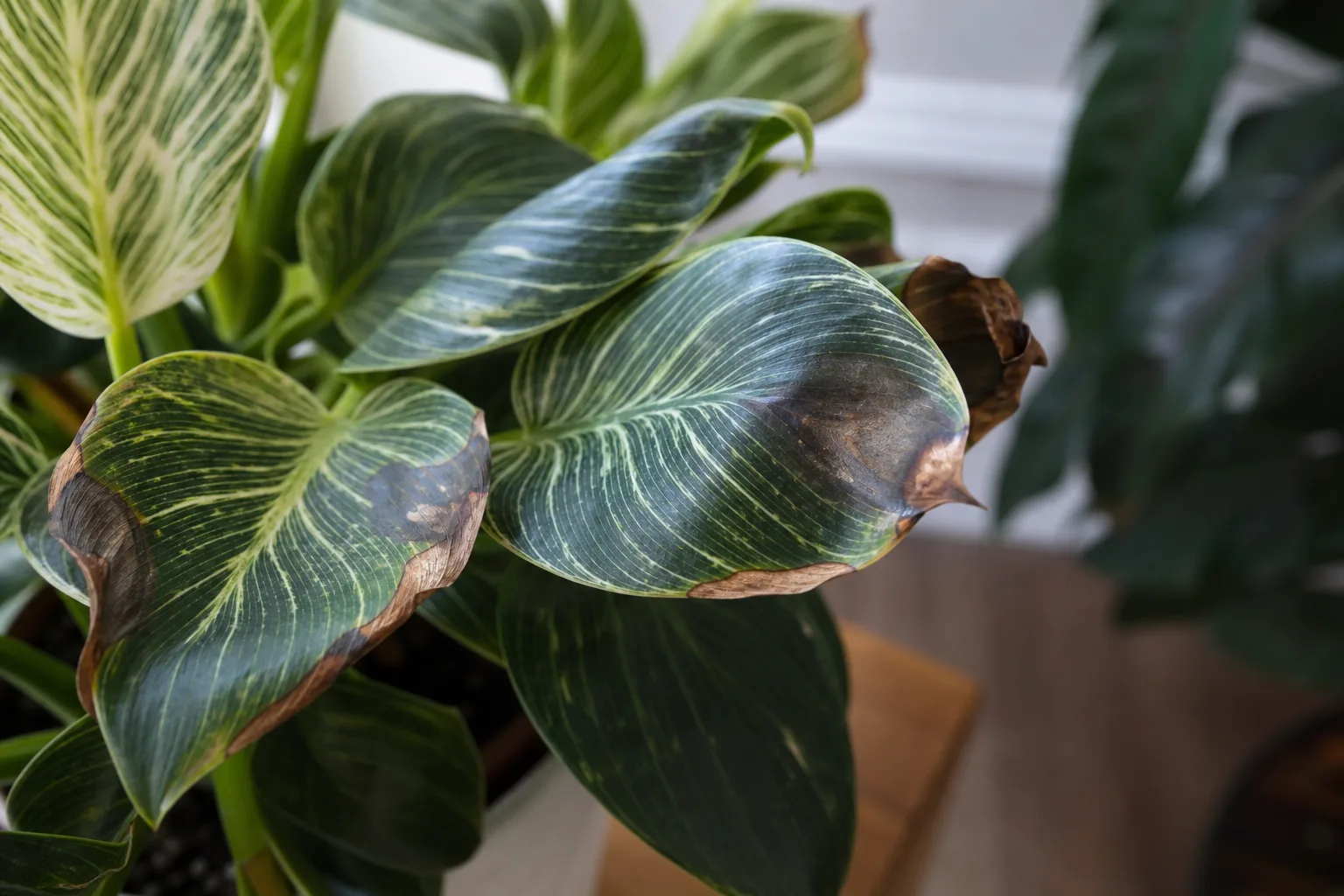
Cold Damage on Philodendron Birkin: Causes, Checks & Fixes
This guide covers cold damage on Philodendron Birkin. See also the general Cold Damage guide, watering, and light pages for this plant.
Cold Damage on Philodendron Birkin: Causes, Checks & Fixes
Quick answer
Philodendron Birkin (Philodendron ‘Birkin’) is a compact self-heading hybrid with creamy white pinstripes that wilts, yellows, or blackens when chilled-especially on outer leaves touching cold window glass, sitting beside an exterior door, or left in a car below about 13°C (55°F). Cold damage is environmental injury, not a signal to water more.
First step: move the pot into stable 18–26°C (65–79°F) air at least one metre from cold window panes, exterior doors, and AC blasts, with Philodendron Birkin light guide. Hold watering, fertilizer, and Philodendron Birkin repotting guide until the plant has sat in corrected warmth for one to two weeks.
What cold damage looks like on Philodendron Birkin
Cold injury on Birkin is localized and tied to a temperature event, not a slow uniform decline across every leaf in the rosette.
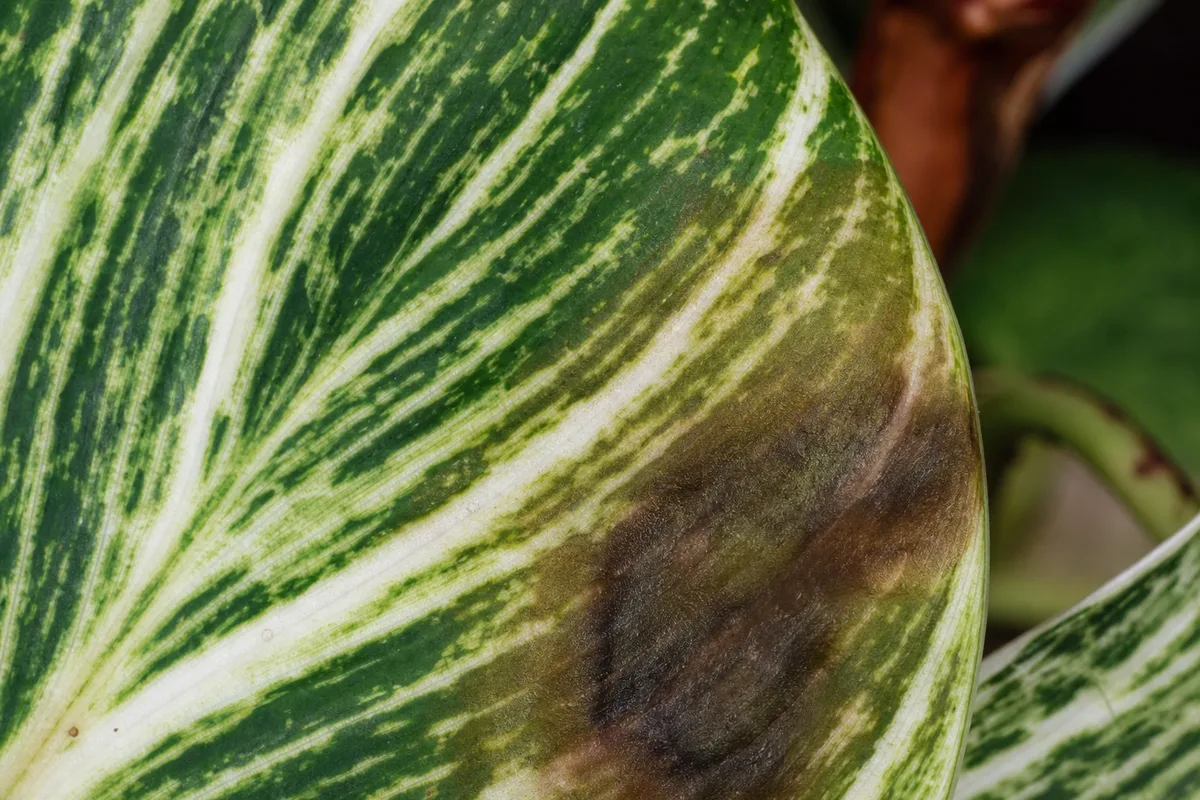
Cold Damage symptoms on Philodendron Birkin - compare with healthy tissue on the same plant.
Typical signs include:
- Dark, limp, or blackened patches on glossy pinstriped leaves after a cold night, chilly delivery, or time in an unheated car
- Yellowing or browning that starts on white variegation before solid green sections, often on the leaf nearest the cold source
- Overnight limpness on outer leaves that improves slightly by midday but returns when the room cools again
- Crispy black margins on pale pinstripes after repeated cold exposure near glass
- Premature leaf drop on Philodendron Birkin on the cold-facing side while the central stem still looks firm
- Stalled or distorted new leaves with curled unfurling or blurred striping after a cold spell
- Collapsed petioles on chilled outer leaves-self-heading philodendrons have brittle leaf stalks that weaken quickly when tissue freezes
What cold damage does not look like: sour-smelling wet soil with mushy stems throughout the pot (overwatering on Philodendron Birkin or root rot on Philodendron Birkin), uniform underwatering on Philodendron Birkin wilt with bone-dry mix, sticky residue with stippling (pests), or spreading black spots with yellow halos (disease).
Birkin grows as an upright rosette with short stems and large variegated leaves held close to the crown. That compact shape means damage often shows on the outer ring of leaves while inner foliage still looks fine. White pinstripe sections have less chlorophyll and lose turgor and chill faster than dark green tissue, so asymmetric browning on pale streaks is a hallmark of cold injury on this cultivar.
Why Philodendron Birkin gets cold damage
Philodendrons evolved in tropical forests of Central and South America and prefer warm temperatures between 65 and 85 degrees F. They are very sensitive to cold and drafts should be avoided. Indoors, philodendrons perform best with night temperatures of 65 to 70 °F and day temperatures of 75 to 85 °F (about 18–29°C). Prolonged exposure below about 13°C (55 degrees Fahrenheit) disrupts cell function in tender tropical tissue.
Birkin-specific cold triggers stack quickly:
- Winter window glass that drops well below room air-outer leaves resting on the sill freeze tissue before the thermostat registers danger
- Tabletop placement on a cold windowsill-Birkin is often displayed as a compact specimen right against glass
- Exterior doors and poorly insulated windows that blast cold air each time they open
- Summer AC returns blowing directly on the rosette-cold air damages plant cells much like hot air
- Cold transport from nursery to home without wrapping, or time in an unheated car
- Overnight porch or garage storage during a move or repotting project
- Sudden relocation from a warm greenhouse to a drafty apartment without acclimation
Philodendron Birkin is slow-growing and compact compared with trailing philodendrons. That slower replacement rate means cold on top of winter slowdown delays recovery. Heavy white variegation also leaves less green tissue to photosynthesize while the plant rebuilds after chill injury.
Cold plus wet soil is especially dangerous on Philodendron Birkin overview. Chilled roots absorb water poorly, and overwatering can cause root rot-a common overlap when growers water a chilled plant thinking limp leaves mean drought.
How to confirm cold damage is the cause
Work through these checks in order:
- Event timing - Tie symptoms to a cold night, delivery day, open window, or car ride. Cold damage usually follows an identifiable chill within 24–72 hours.
- Placement audit - Map cold sources within a metre of the pot: window glass, exterior door, AC return, or floor-level draft along an outside wall.
- Glass temperature test - Touch the window pane at night. If glass is cold and outer leaves rest against it, those leaves are at highest risk.
- Damage pattern - Asymmetric injury on the cold-facing side with a firm central stem strongly supports cold-not whole-pot disease.
- Soil moisture check - Insert a finger 3–5 cm into the mix. Normal drying soil plus localized limp leaves fits cold. Soggy soil with soft stems at the base suggests overwatering overlap.
- Variegation pattern - Darkening starting on white pinstripes while green tissue stays firm implicates chill on variegated tissue.
- Pest cross-check - Flip leaves for stippling, webbing, or grit. Cold damage does not produce sticky honeydew or insect colonies.
If soil stays wet for weeks, stems soften throughout, and leaves yellow from the petiole outward, prioritize root health over cold diagnosis alone.
First fix for Philodendron Birkin
Move the pot to a warmer, stable location at least one metre from cold window glass and exterior doors, with bright indirect light and consistent 18–26°C air.
Pull the rosette back from window panes so no outer leaves touch cold glass. If the only bright spot is a frost-prone sill, set the pot on a table a metre back or use a sheer curtain as a buffer. Philodendrons need bright indirect sunlight rather than contact with cold glass where hot and cold extremes damage cells.
Do not water heavily as your first response when soil is already moist-chilled roots in wet soil rot quickly. Do not repot or fertilize on day one. Birkin handles one careful move better than a stack of interventions.
Wait one to two weeks in the new spot before any other change.
Step-by-step recovery
After relocation to stable warmth:
- Maintain normal watering - Allow the top 3–5 cm to dry before watering, as you would in active growth. Cold slows evaporation; check soil before assuming drought.
- Hold fertilizer and repotting until new growth looks clean for at least two weeks. Stressed Birkins need boring stability through winter slowdown.
- Trim fully black or mushy leaves with clean scissors once the plant is stable. Dead tissue will not regreen and can harbor mold on crowded outer leaves.
- Leave partially damaged leaves if some green tissue remains-they still photosynthesize while the plant rebuilds.
- Raise humidity modestly if winter heating dries the room-Birkin prefers 50–60% at leaf height without keeping foliage constantly wet.
- Inspect roots only if stems stay soft while mix stays wet after warming-cold plus overwatering may have started rot. Slide the plant out and trim brown mushy roots before repotting in fresh airy mix with 20–25% perlite and 10% orchid bark.
If the plant was only briefly chilled and the central stem stayed firm, relocation alone is often enough.
Recovery timeline
Overnight limpness often eases within three to seven days once the pot leaves the cold zone. Visible proof of recovery is clean new pinstriped leaves from the crown-Birkin’s slow growth means unblemished new foliage may take two to four weeks in bright indirect light.
Blackened tissue stays dead permanently. Judge success by new growth, firm stems, and stopped symptom spread-not by damaged leaves turning green again.
If four to six weeks pass in stable warmth and new leaves still emerge darkened, curled, or with faded striping, revisit placement-recurring cold from a hidden draft or chronic low light can both stall recovery on this variegated self-header.
Lookalike symptoms to rule out
Draft stress - Overlaps with cold damage but often from AC blasts or vent airflow rather than sustained low temperature. Same first fix: move away from the air source.
Overwatering and root rot - Yellowing from petiole outward, soft stems at the base, sour soil smell. Whole-rosette decline, not one-sided cold-facing damage.
Underwatering - Whole-plant limpness with bone-dry soil throughout the pot. Wilting does not follow a cold event.
Low humidity alone - Dry brown tips on firm leaves in dry winter air, often near heat vents but without blackened mushy tissue from chill.
Not enough light - Leggy spacing, plain-green reversion on new leaves, and faded pinstripes without sudden blackening after one cold night. Light loss and chill can overlap after a windowsill winter.
Mistakes to avoid
Do not overwater a chilled plant with already-moist soil-chilled roots in wet mix rot faster than the same watering in warm stable air.
Do not leave Birkin on a windowsill through winter nights-outer leaves freeze against glass even when the room feels warm.
Do not move the plant daily between warm and cold rooms; temperature swings stress tropical rosettes.
Do not fertilize during active cold stress-salts on chilled, stressed roots burn margins further.
Do not expect old blackened leaves to heal-wait for new crown growth as your signal.
Do not repot on day one unless roots are clearly rotting. Cold recovery does not require fresh mix.
Do not knock or bump the pot while leaves are limp from chill-self-heading philodendron petioles are brittle and snap easily when tissue is weakened.
How to prevent cold damage next time
- Keep Philodendron Birkin in stable 18–26°C air year-round, away from cold glass and exterior doors
- Display the rosette back from window panes in winter-never let outer leaves rest against the glass
- Wrap new purchases for transport when outdoor temperatures drop below 10°C (50°F)
- Acclimate gradually when moving from a warm greenhouse to a cooler home over seven to ten days
- Avoid leaving plants in unheated cars, garages, or porches during moves or deliveries
- Redirect AC vents so cold air does not blow directly on the crown in summer
- During cold snaps, move pots inward from windowsills even if light drops slightly-a metre back preserves more leaves than glass contact
- Monitor new leaf pinstripes each winter-pale sections darken before green tissue when chill stress begins
When to worry
Cold damage alone is medium severity on established Birkin with healthy roots-you rarely need emergency repotting for localized blackened margins if the central stem stays firm.
Escalate when:
- Stems turn mushy at the base while mix stays wet-inspect for root rot
- Black tissue spreads inward on multiple leaves within a week
- Whole rosette collapses after frost exposure through a window
- No new growth appears after four to six weeks in stable warmth and bright light
- New leaves lose pinstriping entirely-that usually signals insufficient light, not cold alone
If only outer leaves show damage and new growth after relocation is clean and striped, the plant is stable. Trim cosmetic damage or tolerate it on older foliage.
Conclusion
Cold damage on Philodendron Birkin announces itself through limp, darkened, or blackened pinstriped leaves-often on white variegation nearest cold glass-after a chill below its tropical comfort zone. Move into stable warmth first, keep watering disciplined around dry-down cycles, and watch new striped leaves from the crown-not old blackened tissue-for proof the environment is right. This slow-growing self-header recovers from brief chill when roots stay healthy; stable placement beats a pile of quick fixes.
When to use this page vs other Philodendron Birkin guides
- Philodendron Birkin watering guide - Use for routine moisture checks before assuming cold damage is the main issue.
- Philodendron Birkin problems hub - Browse all 42 common issues on this species.
- Leaf Drop on Philodendron Birkin - Different entry point when symptoms overlap with cold damage.