Salt Build Up on Philodendron Birkin: Causes, Checks & Fixes
Quick answer
Salt build up on Philodendron Birkin shows as white crust on soil or pot rims and crispy brown tips on pinstriped leaves despite moist mix. Stop fertilizer, scrape surface crust, and leach the pot with plain water until it drains freely-using at least twice the pot volume.
Salt Build Up on Philodendron Birkin: Causes, Checks & Fixes
This guide covers salt build-up on Philodendron Birkin. See also the general Salt Build-up guide, watering, and light pages for this plant.
Salt Build Up on Philodendron Birkin: Causes, Checks & Fixes
Quick answer
Salt build up on Philodendron Birkin is excess dissolved minerals-mostly from fertilizer and hard tap water-that concentrate in the pot as water evaporates. On this slow-growing, upright self-heading hybrid, the first visible sign is often a white crust on the soil surface or pot rim, followed by crispy brown leaf tips and margins-sometimes worse along the creamy white pinstripes. The first fix is not more fertilizer: stop feeding, scrape surface crust, and leach the pot with plain room-temperature water until it drains freely from the bottom.
What salt build up looks like on Philodendron Birkin
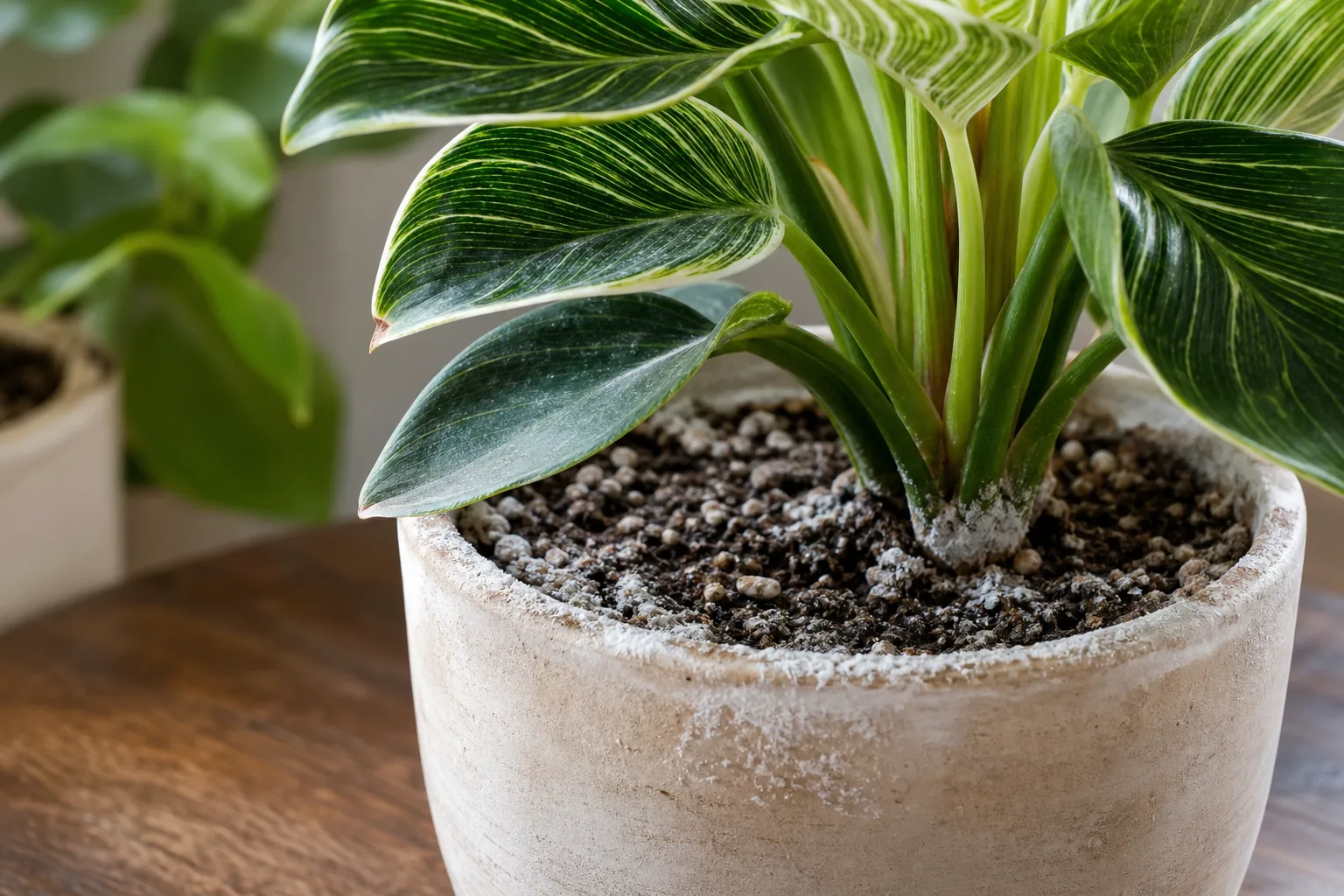
The classic pattern starts at the pot, not the leaf. You may notice chalky white or pale yellow deposits on the soil surface, around the drainage hole, or as a ring on the outside of terra-cotta pots. On the plant itself, Birkin’s thick glossy leaves with irregular white pinstripes often show dry brown tips and edges while the rest of the blade stays green and firm. Pale variegated sections can crisp before solid green tissue because they transpire differently under stress. Lower leaves may yellow and drop as salt stress worsens. Growth slows even though you have been feeding regularly-because roots cannot take up water normally when salt concentration in the soil exceeds levels inside root cells.
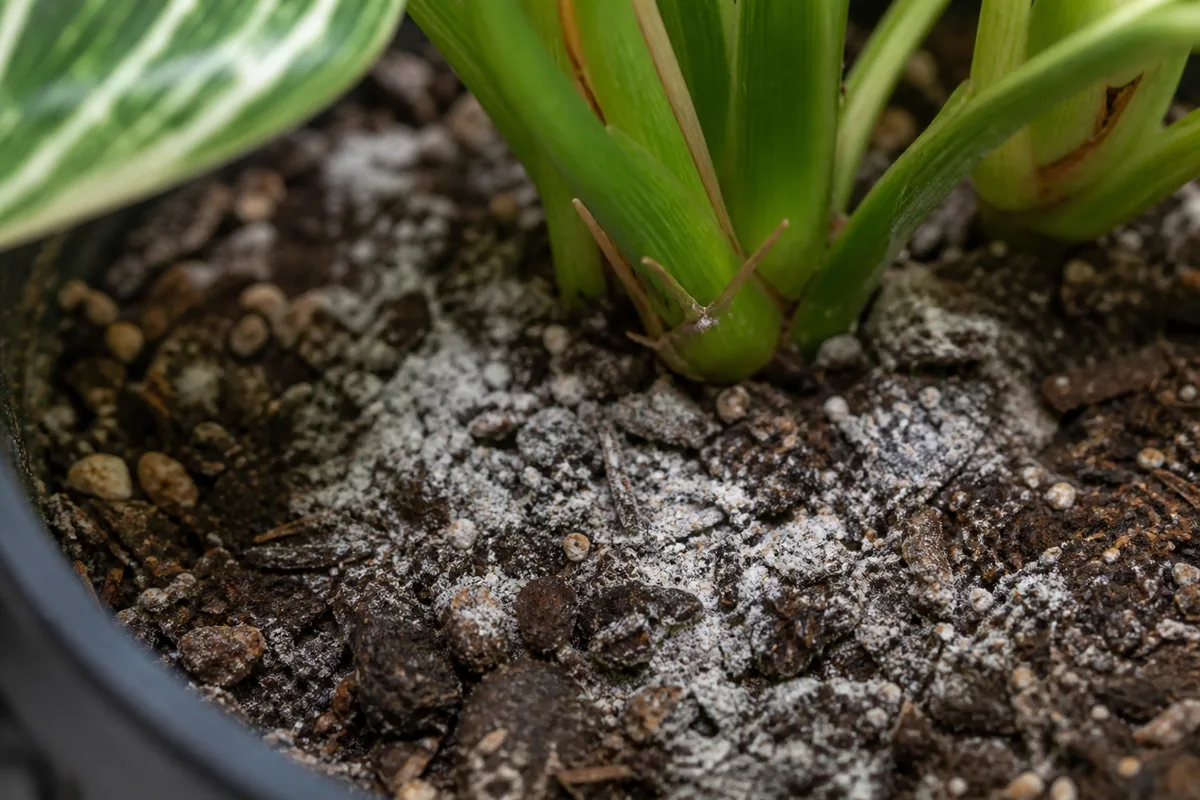
Salt Build-up symptoms on Philodendron Birkin - compare with healthy tissue on the same plant.
Unlike humidity-related tip burn, salt damage often follows a recent fertilizer application or months of unfed-but-hard tap water without periodic leaching. The soil may feel moist, yet the compact crown looks slightly wilted-a confusing sign that damaged roots are struggling to move water despite wet mix.
Why Philodendron Birkin gets salt build up
Birkin is a slow-growing tabletop philodendron that many owners feed every four to six weeks through spring and summer. Each diluted application leaves soluble salts behind when water evaporates. Excessive fertilizer use, frequent applications, or concentrates applied too strong accelerate buildup faster than this compact plant can use nutrients-especially when it stays in the same pot for one to two years without Philodendron Birkin repotting guide.
Hard tap water adds calcium, sodium, and other minerals on top of fertilizer salts. Mineral deposits from hard water create the same white crust and tip burn even when feeding is modest. Bottom watering or saucers left full worsen the problem: water wicks salts back into the mix instead of flushing them out.
Peat-heavy aroid mix with perlite and orchid bark that has not been refreshed holds salts in the root zone longer. Birkin’s relatively fine roots in a standard draining mix do not tolerate chronic high salinity as well as a freshly leached or repotted plant.
How to confirm salt build up (and rule out lookalikes)
Work through these checks before leaching:
Surface and pot inspection. White crystalline crust on soil or pot rim strongly points to salts. Scrape off the crust before leaching, removing no more than about a quarter inch of surface mix.
Feeding history. Monthly full-strength fertilizer, slow-release pellets plus liquid feed, or feeding a dormant winter plant all raise salt risk. Birkin needs modest feeding during active growth only-overdoing it is a common trigger.
Tip pattern vs soil moisture. Crispy tips on firm leaves with visible crust = salts. Soft brown bases with sour-smelling, soggy soil = overwatering on Philodendron Birkin or root rot on Philodendron Birkin. Even dry-tip edges with no crust in winter heated air = low humidity-see the brown-tips guide for that pattern.
Root check (if unsure). Slide the plant out after leaching once. Firm white roots with dark, dry root tips suggest salt burn. Mushy brown roots mean rot-repot and trim, do not keep flushing a rotting root ball.
The first fix: leach the soil
Move the pot to a sink or tub where water can drain away completely-never leach into a saucer you leave in place.
- Stop all fertilizer immediately.
- Remove visible surface crust with a spoon or fork.
- Pour plain room-temperature water slowly onto the soil until it runs freely from drainage holes. Use at least twice the volume of the pot-for a six-inch pot, that is roughly ten cups total poured in stages.
- Repeat the full leach once more the same day or the next morning so salts do not redeposit.
- Let the pot drain fully and empty any saucer. Do not bottom-water for several weeks.
This single leaching pass is the correct first response-not repotting, not pruning half the crown, and not adding corrective fertilizer.
Step-by-step recovery after leaching
Once the initial flush is done, support recovery in order:
Pause feeding for four to six weeks. Resume only when new pinstriped growth appears and the plant looks stable. Use half-strength balanced liquid fertilizer during active growth, not full label rates.
Return to a dry-down rhythm. Water when the top 3–5 cm of mix has dried-for Birkin, that usually means every 7–10 days in summer and longer in winter. Salt-stressed roots recover faster in airy, not-soggy mix.
Trim only fully dead tissue. Snip crispy tip edges with clean scissors if they bother you aesthetically. Damaged leaf tissue will not re-green; judge recovery by new leaves with clean pinstripes.
Repot if leaching fails. If yellowing spreads, wilting persists after two leaches, or roots show extensive tip death, repot into fresh standard potting mix with 20–25% perlite and 10% orchid bark. Smaller pots with media high in salts should have the growing media replaced rather than flushed repeatedly.
Switch water source if needed. Filtered or rainwater reduces mineral input in hard-water areas. Leach every four to six months as routine maintenance when staying on tap water.
Recovery timeline and what improvement looks like
Most mild salt cases stabilize within two to three weeks after a proper leach. Existing brown tips remain brown; improvement shows up as new leaves with crisp white pinstripes and clean margins. If the plant pushes a fresh leaf from the crown within four to six weeks, roots are recovering.
Worsening signs-continued lower-leaf drop, wilt with wet soil, or blackened root tips after leaching-mean severity was underestimated. Repot into fresh mix and reduce feeding long term. Severe salt toxicity can cause root dieback and stem collapse at the soil line; those plants need repotting, not another flush alone.
Mistakes to avoid
Do not fertilize “to help recovery”-that adds more salts. Do not leach into a saucer and leave the pot sitting in runoff; salts reabsorb from the bottom. Do not combine leaching with repotting and heavy pruning the same day-change one stressor at a time. Do not use slow-release fertilizer and liquid feed together without leaching excess before growth slows. Avoid bottom watering while salts are present; top-water until the crust is gone and tips stabilize.
How to prevent salt build up on Philodendron Birkin
Feed lightly and seasonally: half-strength feed every four to six weeks in spring and summer, none in fall and winter when growth slows. Grow in moist, well-drained, slightly acidic soil and repot every one to two years so old peat does not trap minerals. Schedule a plain-water leach every four to six months-more often if you use hard tap water or feed frequently. Always empty saucers after watering. Keep philodendron away from pets when scraping crust or trimming burned leaves.
When to worry
Repot promptly if leaching twice does not stop decline, stems soften at the base, or roots are mostly dark and limp. Salt burn and root rot can overlap when an overfed plant also sat in wet mix-address drainage and salts together via fresh mix, not repeated fertilizer flushes. Cosmetic tip burn alone is not an emergency; widespread yellowing with wet soil and foul odor is.
When to use this page vs other Philodendron Birkin guides
- Philodendron Birkin watering guide - Use for routine moisture checks before assuming salt build-up is the main issue.
- Philodendron Birkin problems hub - Browse all 42 common issues on this species.
- Fertilizer Burn on Philodendron Birkin - Different entry point when symptoms overlap with salt build-up.
- Brown Tips on Philodendron Birkin - Different entry point when symptoms overlap with salt build-up.