Calcium Deficiency on String of Hearts: Causes, Checks &
Quick answer
Calcium deficiency on String of Hearts shows on the newest growth first: cupped or twisted heart-shaped leaves, brown edges on young leaves, and stalled tips while older leaves look fine. Fix watering rhythm and mix condition before adding supplements.
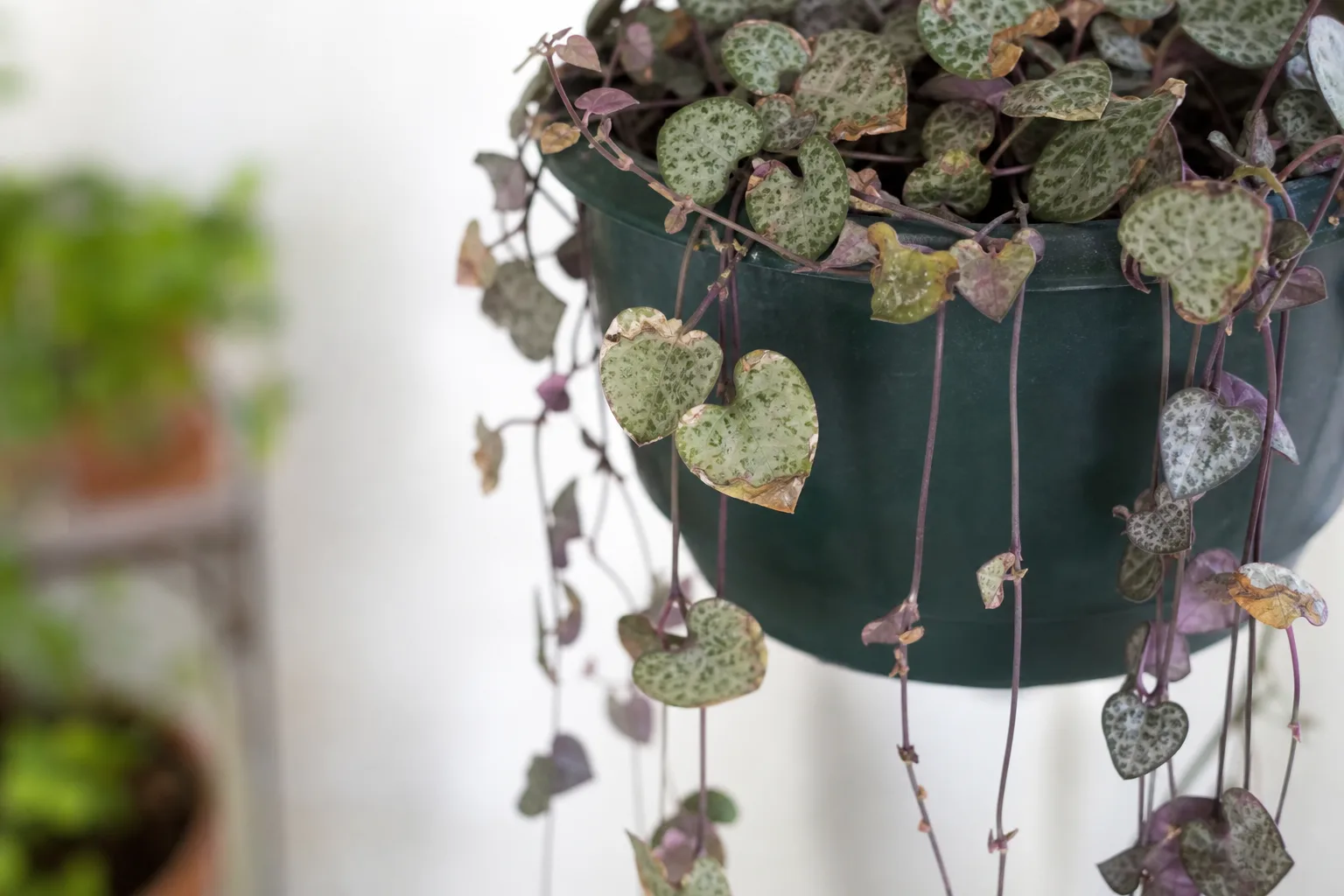
Calcium Deficiency on String of Hearts: Causes, Checks & Fixes
This guide covers calcium deficiency on String of Hearts. See also the general Calcium Deficiency guide, watering, and light pages for this plant.
Calcium Deficiency on String of Hearts: Causes, Checks & Fixes
Quick answer
Calcium deficiency on String of Hearts (Ceropegia woodii) is a new-growth problem at the strand tips, not a whole-vine yellowing issue. Calcium is immobile in plants, so the youngest hearts at each growing tip show trouble first-cupped or twisted leaves, brown margins on tender new tissue, and tips that stall while older leaves along the strand still look plump and marbled.
On this semi-succulent vine, the trigger is usually interrupted water flow, depleted salty mix, or failing tuberous roots-not a missing bottle of calcium. First fix: confirm soil moisture rhythm and tuber firmness. If tubers are mushy on wet mix, switch to the root rot guide instead of fertilizing. If tubers are firm but mix is old or crusted, repot into fresh fast-draining mix before resuming diluted feed per the fertilizer guide.
Why String of Hearts gets calcium deficiency
Ceropegia woodii grows actively in bright light during spring and summer and benefits from infrequent feeding at half strength when actively growing. Long gaps without feed, mix washed out by years of watering, or pH drift outside the slightly acidic to neutral range this plant prefers can all limit calcium uptake even when minerals are technically present.
Tuber storage and watering rhythm traps
String of Hearts stores water in tubers and leaves, which changes how owners water. Summer drought-stress between deep soaks-or winter overwatering when transpiration drops-both interrupt the steady moisture calcium needs. RHS notes that calcium deficiencies in containers often follow drying out of the mix rather than absent calcium in the soil.
The most common causes on String of Hearts are:
- Inconsistent watering. Calcium moves through the plant with water via transpiration. Repeated dry cycles followed by heavy watering interrupt calcium delivery to rapidly expanding new leaves at strand tips.
- Old or exhausted potting mix. Nutrients leach out with each watering. Plants kept in the same gritty mix for two or more years run low on available minerals-see the repotting guide for when refresh is justified.
- pH or salt imbalance. Calcium uptake problems often signal a water-transport issue rather than absent calcium in the soil. Fertilizer salt buildup and excess magnesium from random Epsom salt use can inhibit calcium absorption.
- Root stress from overwatering. Rotting tubers cannot pull up water or dissolved calcium, so new growth fails even if fertilizer is present. That overlap sends many owners to the overwatering page before nutrition is the real issue.
What calcium deficiency looks like on String of Hearts
Strand-tip distortion with intact lower marbling
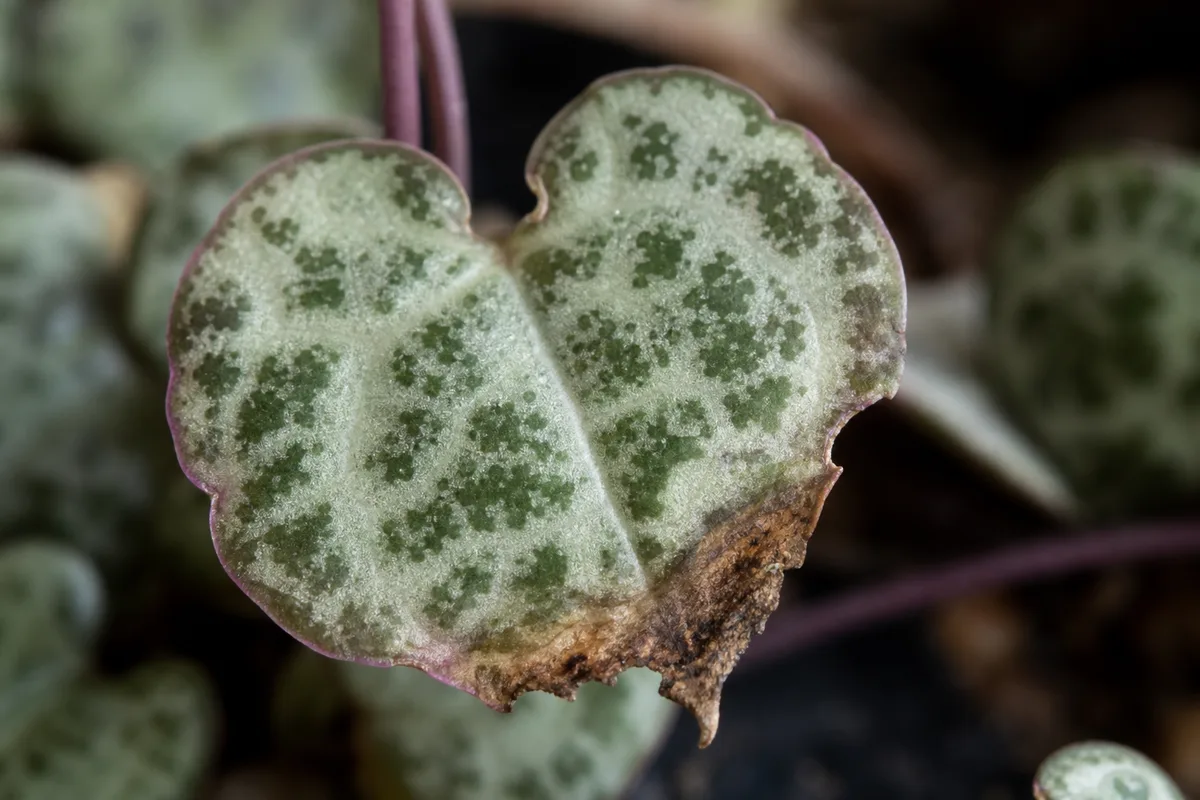
Calcium Deficiency symptoms on String of Hearts - compare with healthy tissue on the same plant.
Watch the growing tips of trailing strands before you worry about lower leaves. New heart-shaped leaves may emerge smaller, cupped inward, or twisted compared with healthy plump hearts. Brown or necrotic patches can appear on the youngest tissue-sometimes at leaf margins, sometimes as dead spots in the center of a new leaf. Tips may stop extending while the rest of the strand looks fine.
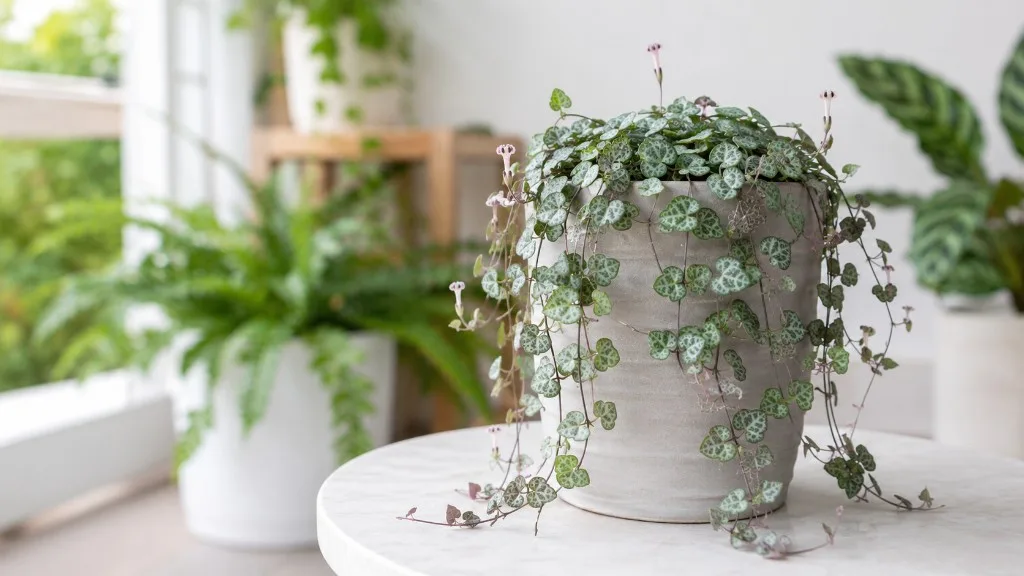
Field observation (March 2026): A trailing basket in a west-facing kitchen had cupped tips on three strands after sitting in the same gritty mix for twenty-six months with visible salt crust on the rim. Firm tubers, dry-down watering rhythm that swung from bone dry to flood, and no feed since the previous autumn. After repot into fresh cactus blend and one half-strength balanced feed four weeks later, new hearts opened with normal shape and restored marbling on two of three strands-the third needed one more growth cycle.
Compare carefully with lookalikes:
| Pattern | Where symptoms start | Leaf texture | Soil / tuber clues | Likely cause |
|---|---|---|---|---|
| Calcium uptake failure | Newest hearts at strand tips only | Cupped, twisted, or tip-burned young tissue; lower hearts plump | Firm tubers; dry-wet swings or old crusted mix | Calcium transport / depleted mix |
| Nitrogen shortage | Oldest leaves along strand | Uniform pale yellow; marbling fades | Firm tubers; months without feed | Nitrogen deficiency |
| Potassium shortage | Lower mature leaves | Dry brown edge scorch on multiple old hearts | Even watering; incomplete fertilizer | Potassium deficiency |
| Fertilizer burn | Many leaves after one feed | Crispy margins soon after dosing | Salt crust; moist soil with scorched tips | Fertilizer burn |
| Low-light curl | Whole strand stretches | Pale small hearts; wide gaps between pairs | Moderate dry soil; firm tubers | Curling leaves from weak light |
| Underwatering | Many leaves along strand | Thin, flat, taco-test hearts | Very light dry pot | Underwatering |
How to confirm the cause
Work through checks in this order:
- Inspect the newest leaves at each tip under bright light. Distorted young hearts with normal older leaves below match calcium uptake failure better than pest or rot patterns.
- Check soil moisture rhythm. Does the mix swing from bone dry for weeks to saturated? That pattern limits calcium delivery to new cells even when fertilizer is present. Cross-check your personal dry-down baseline on the watering guide.
- Review mix age and surface salts. White crust on the pot rim, mix older than two years, or never repotted since purchase all raise lockout risk. Confirm whether soil type still drains fast.
- Feel tubers and smell the mix. Firm tubers with dry, healthy roots support a nutrition diagnosis. Mushy tubers and sour-smelling mix need the root rot workup instead-do not fertilize until roots are healthy.
If several nutrient symptoms overlap, treat the root environment first. Fresh mix and balanced feeding address most deficiencies together rather than chasing a single element in isolation.
First fix for String of Hearts
Stabilize the root zone before adding supplements. If mix is more than two years old or heavily salted, repot into well-drained sandy potting soil similar to a cactus blend following the repotting guide. Gently loosen old mix from tubers without tearing healthy roots, use a pot only slightly larger, and water once until excess drains. Hold fertilizer for two weeks while the plant settles.
When you restart feeding, use a balanced houseplant or succulent formula at quarter to half strength every four to six weeks during active growth-matching the fertilizer hub cadence, not full label rates indoors. Do not fertilize during winter dormancy or while the plant is stressed. Do not dump Epsom salt or high-dose calcium products on a dry plant; excess magnesium can make calcium problems worse.
Match watering to how the pot dries: allow soil to dry completely between waterings during growth, but avoid letting the plant sit drought-stressed for weeks during active spring and summer growth when new tips are expanding.
Recovery timeline
New hearts should emerge with normal shape and marbling within three to six weeks after repotting and consistent feeding if tubers are firm-slightly faster under grow lights, slower in a cool north room. Strand extension may resume slightly later. Old twisted or browned young leaves will not fully flatten-remove them only after new growth looks stable and you want to tidy trailing stems.
Signs the problem is worsening: repeated tip dieback, spreading distortion down a strand, or new leaves staying tiny and pale while tubers soften. If nothing improves after repot and one full month of proper feeding in bright indirect light, inspect for root rot or confirm you are not underwatering between feeds.
What not to do
Do not foliar-feed with undiluted fertilizer on delicate hearts-it can spot leaves. Do not increase watering because new tips look weak; soggy tubers block uptake and belong on the overwatering or root rot path instead. Do not assume every curled heart needs calcium-confirm the new-growth-only pattern first against the curling leaves guide. Do not feed a plant sitting in wet, rotting mix; fix drainage and tuber health first. Do not pour eggshell water or cal-mag on a dry stressed vine before correcting watering and mix age.
String of Hearts is non-toxic to cats and dogs, but keep trailing vines out of reach if you treat with any spray.
How to prevent calcium deficiency next time
Repot every one to two years into fresh gritty cactus-style mix to keep pH in the slightly acidic to neutral range String of Hearts prefers. Feed lightly and consistently during spring and summer per the fertilizer guide rather than in large bursts, and flush salts occasionally by watering deeply until excess runs from the drainage hole. Keep steady watering rhythm so calcium can move with transpiration during active growth.
Related String of Hearts guides
- String of Hearts overview
- String of Hearts watering
- String of Hearts fertilizer
- String of Hearts soil
- String of Hearts repotting
- Curling leaves
- Fertilizer burn
- Nitrogen deficiency
- Potassium deficiency
- Root rot
- Overwatering
- All String of Hearts problems
FAQs
How can I confirm calcium deficiency on String of Hearts?
Compare leaf age. Distorted, cupped, or tip-burned hearts at the strand tips while lower leaves stay plump and marbled fits calcium uptake trouble. Yellowing starting on older leaves points to nitrogen deficiency instead.
What should I check first for calcium deficiency on String of Hearts?
Inspect the newest leaves at each growing tip, then review soil moisture swings, mix age, and last fertilizer date. Calcium moves with water-chronic dry cycles or soggy tubers both block uptake. Firm tubers on dry-wet swings support nutrition correction; mushy tubers on wet mix need root rot triage first.
Will damaged String of Hearts leaves recover from calcium deficiency?
Twisted or browned young hearts rarely flatten fully. Judge recovery by new leaves opening with normal shape and silver marbling-not by waiting for old distorted tissue to heal.
When is calcium deficiency urgent on String of Hearts?
Treat promptly when new tips keep dying back, multiple strands stall at once, and the mix is years old or crusted with fertilizer salts. That pattern can stall the whole plant for a season if the root zone stays wrong.
Should I add eggshells or cal-mag to String of Hearts?
Not as a first fix. Eggshell water and random cal-mag doses rarely correct uptake failure when watering rhythm or depleted mix is the real problem. Stabilize moisture, repot if mix is old, then use a balanced diluted feed during active growth per the fertilizer guide.
Conclusion
Calcium deficiency on String of Hearts shows at the strand tips first: twisted or tip-burned young hearts while mature leaves stay plump and marbled. Confirm by comparing leaf age, checking tuber firmness and mix condition, then stabilize watering and repot into fresh gritty mix before resuming diluted feed. Success means clean new hearts with restored silver pattern-not repaired old tissue.