Root Rot on String of Hearts: Causes, Checks & Fixes
Quick answer
Root rot on String of Hearts means mushy tubers and sour-smelling wet mix-not just a heavy pot with firm beads. Stop watering, unpot immediately, trim rotten tissue, and repot into gritty mix or propagate from firm aerial tubers if the crown is lost.
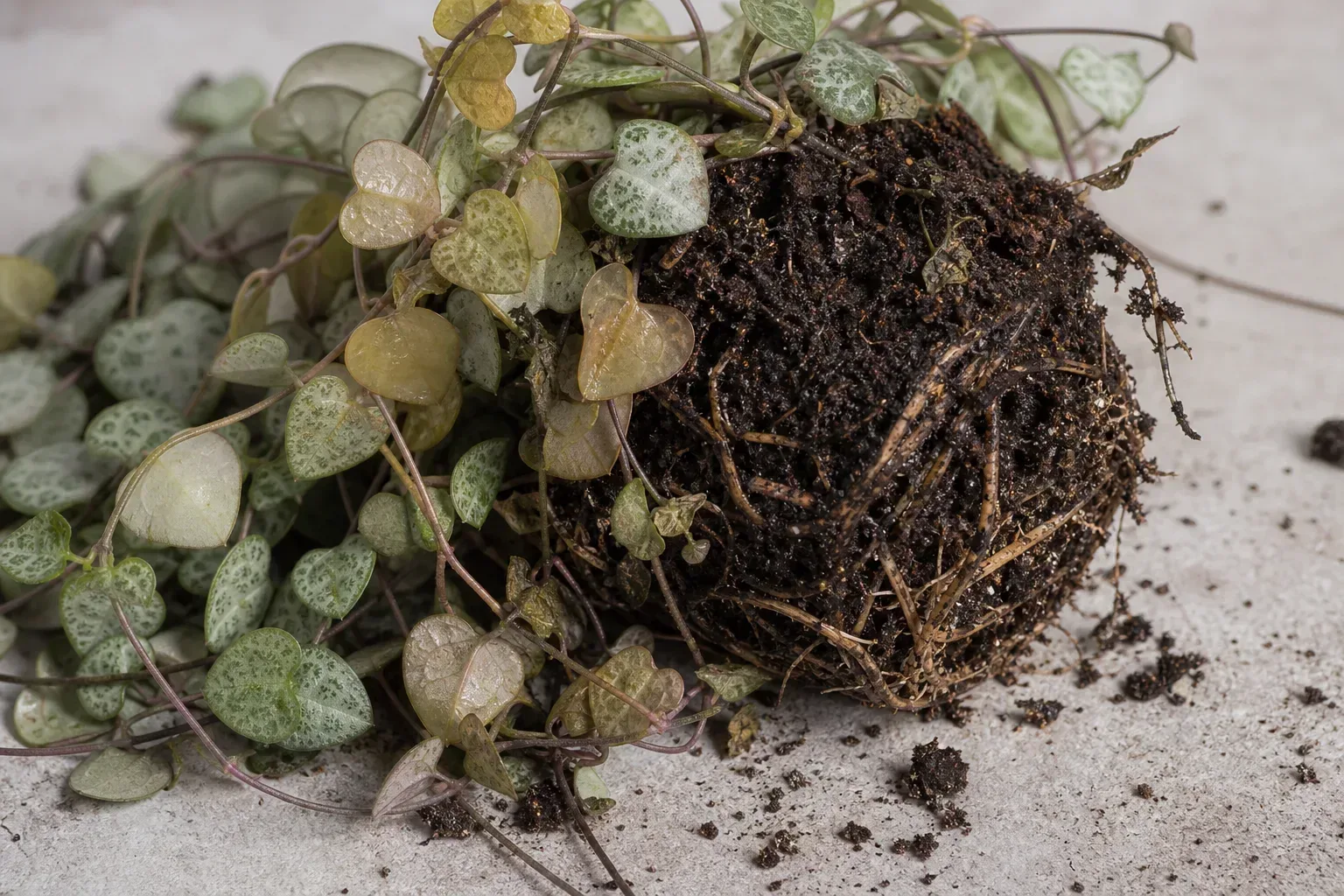
Root Rot on String of Hearts: Causes, Checks & Fixes
This guide covers root rot on String of Hearts. See also the general Root Rot guide, watering, and light pages for this plant.
Root Rot on String of Hearts: Causes, Checks & Fixes
Quick answer
Root rot on String of Hearts (Ceropegia woodii) is confirmed decay of tuberous roots and storage organs-not the early moisture stress you treat with a dry-out alone. This semi-succulent vine from South Africa’s dry scrublands has tuberous roots that store water and needs well-drained sandy potting mix with time to dry out completely between waterings. When mix stays wet-especially during winter dormancy when watering should be reduced further-tubers lose oxygen and tissue turns mushy.
The signature trap is wilt-on-wet-soil: heart-shaped leaves yellow and strands droop while the mix feels damp, because rotted tuberous roots cannot take up water even when soil holds moisture. Adding water accelerates decay.
First fix: stop watering and unpot immediately. Gently knock the plant from its container and inspect every tuber before trimming or repotting. If tubers are still firm and only the mix is wet, you may be on the overwatering triage page instead-this root rot guide is for confirmed mushy tissue, sour smell, or black stems at the soil line.
Why String of Hearts gets root rot
Tuberous roots and oxygen in wet mix
String of hearts evolved where rain is brief and soil drains fast. Indoors, peat-heavy mix in a closed pot holds moisture around sparse tuberous roots for days. Saturated mix becomes oxygen-poor; feeder roots stop functioning and begin to decay. Overwatering can cause root rot on String of Hearts overview, and pathogens such as Pythium can colonize tissue that stays wet too long-a mechanism the watering guide explains in more depth.
On String of Hearts, semi-succulent leaves and stems store water, so visible strand collapse often lags behind underground tuber damage. Soft bead-like tubers at nodes or below the soil line are an earlier rot signal than yellow tips alone on a long trailing vine.
Oversized pots and peat-heavy mix
A frequent rot setup is a pot sized for trailing canopy width while tuber mass stays small. A large plastic container filled with standard indoor potting mix keeps the root zone wet long after the surface looks dry-especially dangerous when paired with a cachepot that traps runoff.
Fast-draining cactus-style mix in a pot only slightly larger than the tuber cluster dries predictably. Terracotta breathes faster than plastic after a rescue repot, which helps remaining tubers cycle through dry intervals safely.
Calendar watering vs. real dry-down
Fixed weekly watering fails because drying speed shifts with light, temperature, and season. Continuing a summer schedule through a cool north-facing room in January-while the plant draws on tuber reserves during winter dormancy-is one of the highest-risk rot combinations on otherwise healthy specimens. If you have not yet confirmed mushy tubers, read the overwatering page for dry-out triage before escalating here.
Hydrophobic mix after drought-then-overwater cycles
Sometimes the surface looks dry while the center of the pot stays damp-or water runs off a crusted top while the core never dries. That false dry surface can mask chronic wet roots until tubers soften. A skewer pulled from the lower third and pot weight compared to a known dry baseline reveal the true moisture state better than looking at the top inch alone.
What root rot looks like on String of Hearts
Early signs
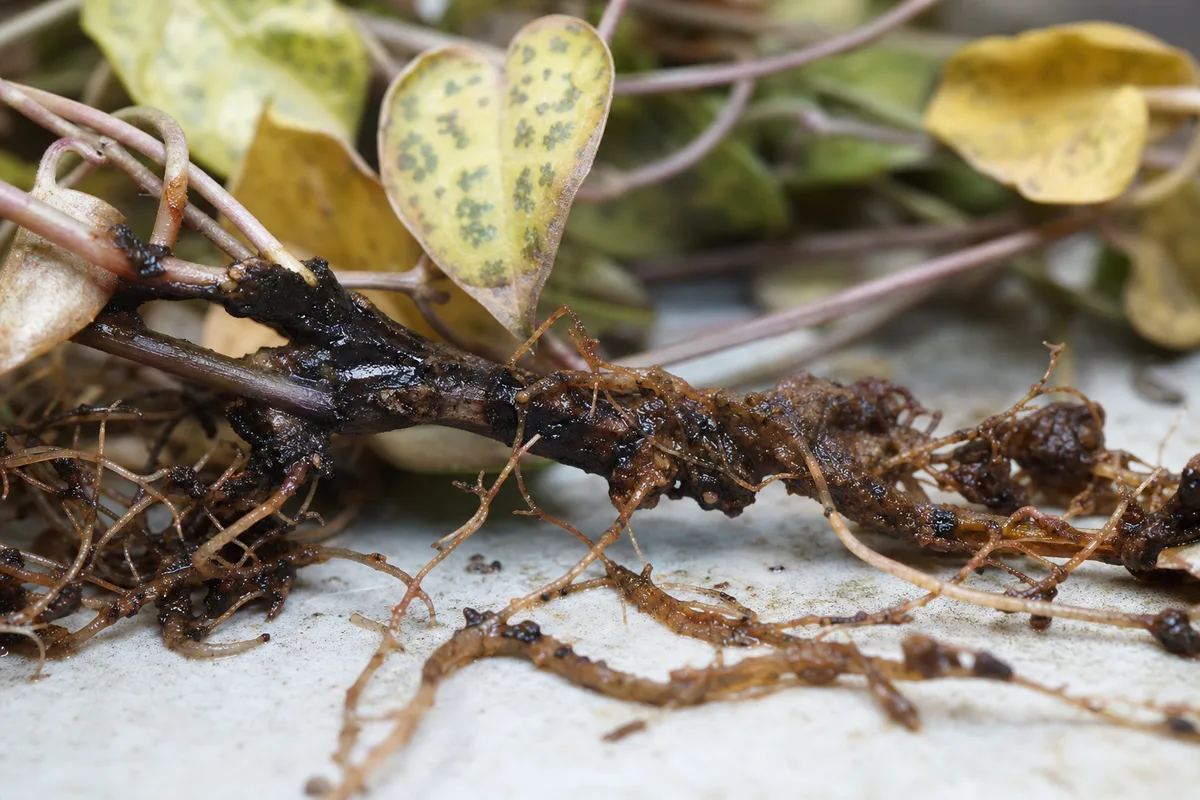
Root Rot symptoms on String of Hearts - compare with healthy tissue on the same plant.
- Yellow wilting on wet mix - leaves lose turgor while soil below the surface stays cool and damp
- Drooping strands that do not recover when the mix is clearly moist-the wilt-on-wet-soil paradox
- Softening tubers while mix is damp - healthy beads feel firm; rotted tissue squishes
- Fungus gnats hovering near soil - chronically wet tuberous roots often coincide with fungus gnat larvae in damp mix
Tuber firmness check
Healthy tubers feel firm like small beads on the vine and at the crown. Soft, squishy, or translucent underground tubers on moist mix confirm rot-not thirst. Gently press aerial tubers along the vines: firm storage organs may still support salvage even when lower tubers fail.
Advanced signs
Black mushy stems at the soil line, a sour or rotten smell from the soil, and vines collapsing at the base mean decay has spread through the crown. At this stage, focus on propagation from firm upper vine sections and aerial beads rather than saving the whole plant.
Root rot vs. underwatering vs. overwatering vs. transplant shock
| What you see | Pot and mix | Tuber feel | Likely cause | Next step |
|---|---|---|---|---|
| Yellow wilting strands | Heavy, wet throughout | Mushy, translucent | Root rot | Stop water; unpot; trim; repot or propagate |
| Yellow wilting strands | Heavy, wet throughout | Firm tubers | Overwatering - not yet rot | Overwatering triage |
| Thin folding leaves | Light, dry throughout | Firm tubers | Underwatering | Underwatering guide |
| Limp strands, confusing moisture | Surface dry, center damp | Firm or mixed | Hydrophobic soil | Dry hydrophobic soil |
| Limp after repot, no sour smell | Moist but not stagnant | Firm if roots intact | Transplant shock | Hold water; see repotting guide |
Wilted leaves may indicate soil that is too dry or too wet-on string of hearts, wet soil with limp yellow hearts means failing roots, not thirst.
How to confirm the cause
Work through this inspection checklist before you trim or repot:
- Stop all watering - further moisture on rotted tubers spreads decay faster.
- Pot weight - A still-heavy pot days after your last drink signals water retention; compare to a known dry baseline from the watering guide.
- Skewer depth test - Push a dry wooden skewer into the lower third. Damp soil clinging to the stick confirms wet roots even when the top inch looks pale.
- Unpot and rinse tubers gently - Healthy tissue is firm and pale; rotted tissue is brown, black, translucent, or mushy.
- Smell at drainage hole - Sour or rotten odor confirms anaerobic conditions.
- Tuber percentage - Estimate how much tuber mass is firm versus mushy; that drives the severity ladder below.
If the mix is dusty dry throughout, leaves are only slightly limp and thin, and tubers feel firm, switch to the underwatering page instead.
Severity ladder
Mild - partial tuber loss, firm vines and aerial beads
A minority of underground tubers are mushy; upper vines stay firm and aerial tubers along the strands feel solid. Trim all soft tissue back to firm tubers with sterilized scissors. Let cut surfaces air-dry 24 to 48 hours. Repot into fresh gritty cactus mix in a smaller pot sized to remaining tuber mass-not trailing canopy width. Withhold water until the mix has dried fully; resume using seasonal dry-down depth from the watering guide.
Judge recovery by firm new growth and solid aerial tubers-not by old yellow leaves re-greening. Those lower hearts may stay marked permanently.
Moderate - more than a third mushy tubers, firm upper vine
When a large share of underground tubers are rotten but upper strands and aerial beads remain firm, surgery is required. Plants with just a stem or small part with rot may be salvaged by pruning out the rotted part. Remove all mushy roots and tubers, sterilize tools between cuts, air-dry trimmed tissue, then repot survivors into fresh fast-draining mix. Consider downsizing to terracotta so remaining tubers dry faster between drinks.
Do not water again when strands wilt on wet mix during recovery-that mistake is how moderate rot becomes severe.
Severe - collapsed crown, mostly mushy tubers
When vines collapse at the base, the crown is fully mushy, or most tubers are black on inspection, repotting the whole plant rarely succeeds. Salvage firm vine sections and bead-like aerial tubers for propagation instead. Press firm aerial tubers into fresh gritty mix while still attached to healthy vine, or take cuttings above all soft tissue. Do not propagate from sections below rotted tissue.
First fix for String of Hearts
Stop all watering and unpot the plant. That single action prevents the most dangerous escalation-adding water because wilted strands look thirsty while soil is already wet.
Gently remove wet soil and identify firm versus mushy tubers before you cut anything. If vines are still firm and aerial tubers look healthy, you have a salvage path after trim and repot. If the crown is fully mushy, shift immediately to aerial-tuber propagation rather than trying to save the entire specimen.
Step-by-step recovery
- Unpot and rinse tubers gently to see what is firm versus mushy-do not yank wiry stems.
- Trim all soft tissue back to healthy firm tubers; sterilize scissors between cuts. Discard mushy material; do not compost it indoors.
- Let cut surfaces air-dry 24 to 48 hours in String of Hearts light guide before repotting-longer in humid rooms.
- Repot into a smaller pot with excellent drainage and fresh cactus-style mix-only slightly larger than the remaining tuber mass. See the repotting guide for technique.
- Withhold water until the mix has gone fully dry-often one to two weeks in moderate light, longer in cool winter rooms. Resume only when skewer depth and pot weight agree with the seasonal targets in the watering guide.
Terracotta after tuber trim helps remaining storage organs dry faster than plastic in the weeks after rescue.
What not to do
Do not keep watering because strands look wilted when the soil is already wet-that accelerates tuber decay. Do not fertilize a rotting plant. Do not repot into regular peat-heavy potting soil or a pot without drainage holes. Avoid misting or humidity trays; the problem is excess root-zone moisture, not dry air.
Do not propagate from vine sections below soft rotted tissue-the infection travels with the cutting. Do not assume old yellow leaves will recover; judge success by firm new growth and aerial tuber firmness only.
String of Hearts is non-toxic to cats and dogs, but handle cut tissue with clean tools.
How to prevent root rot next time
Match watering to season: allow the soil to dry out completely between waterings during active growth, then reduce watering even further in winter dormancy. Use mineral-heavy cactus mix and a pot sized to tuber mass, not trailing canopy width. Move the plant to brighter indirect light during the growing season so it uses water quickly. Inspect tubers when you water-they should stay firm year-round.
Empty saucers after every soak. Track how many days your pot takes to reach a light dry weight in your window-that personal baseline beats any calendar rule.
Missouri Botanical Garden describes Ceropegia woodii as a tuberous South African perennial suited to bright light and well-drained conditions-the same foundation every post-rot watering decision should respect.
When to worry
Treat root rot as urgent when:
- Vines collapse at the base or stems blacken at the soil line
- Tubers turn black and mushy while mix stays wet
- More than a third of tubers are rotten on inspection
- Sour smell and soft tubers appear together-act the same day
Mild partial tuber trimming on firm vines has a fair recovery chance. A fully collapsed crown usually means propagation from healthy strands is the best path. Press firm aerial tubers into fresh mix before rot spreads through wet strands.
String of Hearts care cross-check
Root rot rescue sits downstream of watering and soil choices. This page owns confirmed mushy-tuber surgery; the overwatering page owns early triage when tubers are still firm.
- Water: Dry-down protocol with skewer depth, pot weight, and taco test
- Soil: Fast-draining cactus mix - not peat-heavy indoor blend
- Pot: Sized to tuber mass; drainage holes clear; no standing saucer water
- Repot: Post-trim mechanics and timing - repotting guide
- Propagation: Aerial tuber and vine salvage for severe crown loss - propagation guide
- Pests: Fungus gnats often signal chronically wet mix
If limp strands return with a light dry pot and firm tubers, switch to the underwatering page instead of repeating a trim protocol.
Related String of Hearts care
- Watering guide - dry-down depth, seasonal rhythm, taco test
- Overwatering - early triage before confirmed rot
- Underwatering - dry-mix thirst and rescue soak
- Soil guide - gritty cactus mix recipe
- Repotting - post-trim repot mechanics
- Propagation - aerial tuber and vine salvage for severe cases
- Fungus gnats - wet-soil companion pest
- Wilting - broader collapse patterns beyond moisture alone
When to use this page vs other String of Hearts guides
- String of Hearts watering guide - Use for routine moisture checks before assuming root rot is the main issue.
- String of Hearts problems hub - Browse all 45 common issues on this species.
- Mold on Soil on String of Hearts - Different entry point when symptoms overlap with root rot.
- Poor Drainage on String of Hearts - Different entry point when symptoms overlap with root rot.
- Repotting Stress on String of Hearts - Different entry point when symptoms overlap with root rot.