Repotting Stress on String of Hearts: Causes, Checks & Fixes
Quick answer
Repotting stress on String of Hearts follows tuber and fine-root disturbance plus watering too soon-often in an oversized pot. First step: stop watering for 5–7 days after repot, keep bright indirect light, and withhold fertilizer for 4–6 weeks until new vine tips resume.
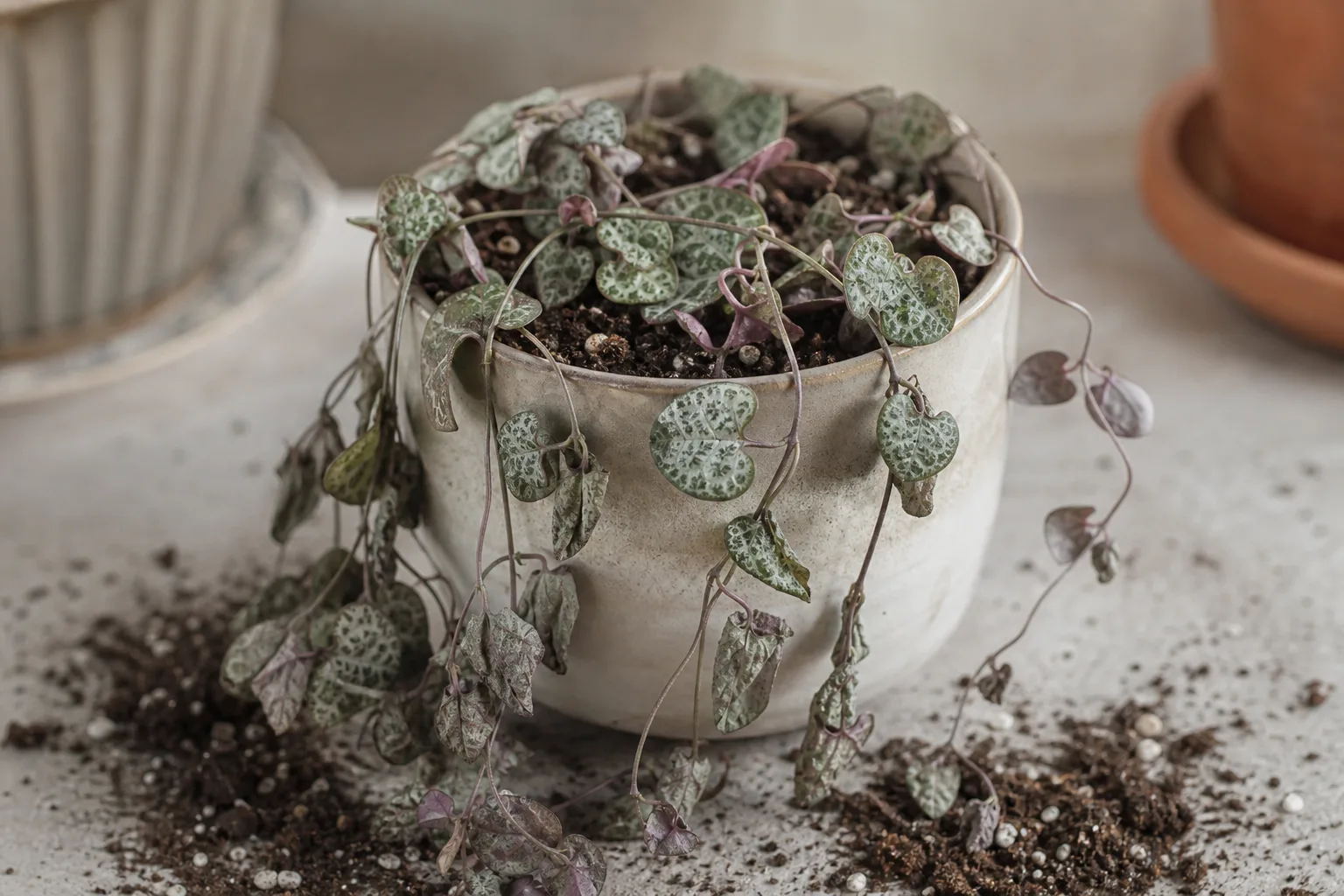
Repotting Stress on String of Hearts: Causes, Checks & Fixes
This guide covers repotting stress on String of Hearts. See also the general Repotting Stress guide, watering, and light pages for this plant.
Repotting Stress on String of Hearts: Causes, Checks & Fixes
Quick answer
String of Hearts repotting guide stress on String of Hearts follows tuber and fine-root disturbance plus watering too soon-often in an oversized pot. First step: stop watering for 5–7 days after repot, keep String of Hearts light guide, and withhold fertilizer for 4–6 weeks until new vine tips resume.
Ceropegia woodii stores water in tuberous roots and aerial tubercles that dislike unnecessary disturbance. A careful spring repot into a slightly crowded shallow pot is usually harmless; stress appears when tubers are damaged, the pot is too large, or water reaches cut tissue before it dries.
Why String of Hearts gets repotting stress
Tuber disturbance is inherent to repotting. Loosening circling roots, dividing strands, or trimming rot exposes cut surfaces on storage tubers and fine absorbing roots that need time to callus before moisture returns. Watering immediately after repot-especially into a larger volume of fresh mix-keeps cut tuber tissue wet and invites decay, the same pathway as root rot on String of Hearts on this trailing succulent.
Oversizing at repot multiplies risk. String of Hearts does best when crowded and repotting should happen only when necessary. Spare compost in a big pot stays damp after the first post-repot drink, stressing roots that have not yet explored the new volume. Many repotting failures on Ceropegia woodii are really overpotting plus early watering into unused wet mix.
Wrong season slows recovery. Wisconsin Horticulture notes a winter rest period with reduced watering and no fertilizer. Repotting in cold, dim months leaves disturbed tubers in mix that dries slowly. Disturbed plants in winter repots face a longer vulnerable window before roots repair.
Day-one repotting after purchase is a common trigger. New String of Hearts often need quarantine and observation, not immediate transplant. North Carolina State Extension describes Ceropegia woodii as a plant that likes to be crowded and tolerates staying in nursery pots when mix and drainage are adequate. Unnecessary repotting on arrival stacks shock from shipping, new light, and tuber handling.
Stacked interventions worsen outcomes. Repotting, fertilizing, moving to a new room, and pruning multiple strands the same week makes it impossible to read the plant’s response and increases rot risk on compromised tubers. Aerial tubercles buried too deep during a rushed repot rot the same way stem cuttings planted too deep fail.
What repotting stress looks like on String of Hearts
Typical signs within one to three weeks of repot:
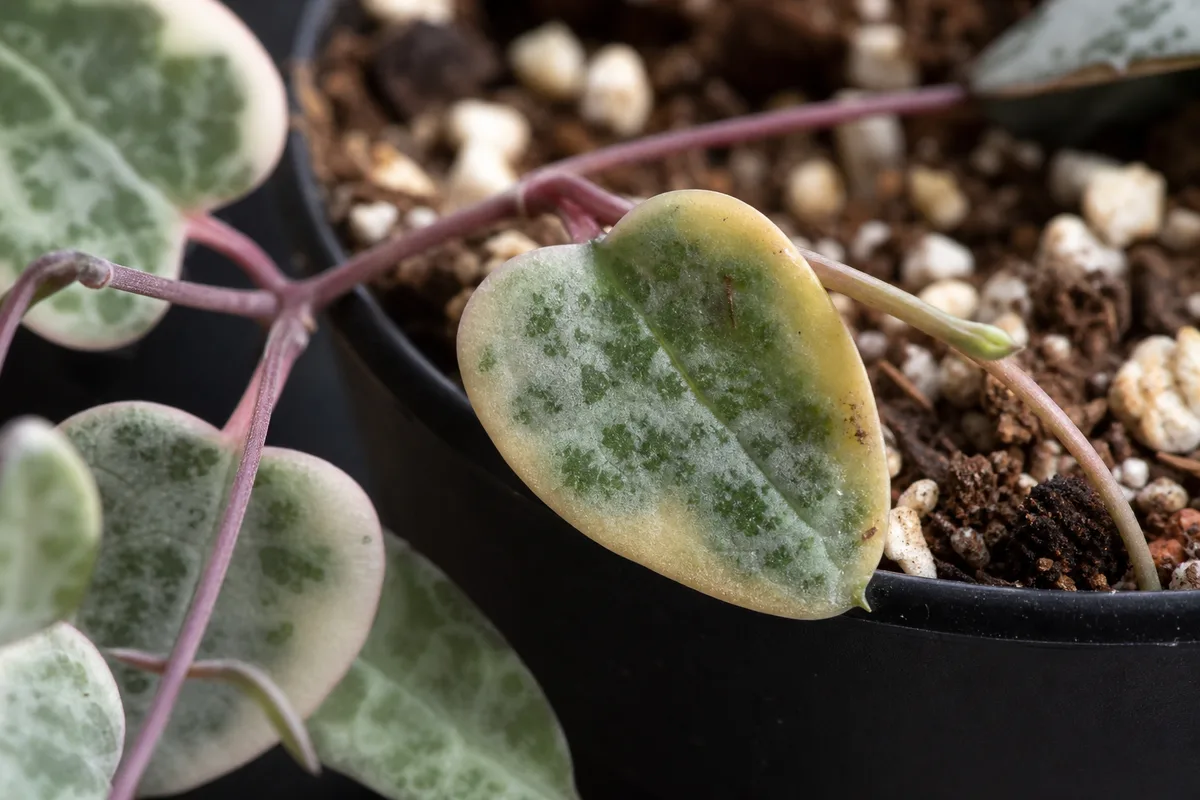
Repotting Stress symptoms on String of Hearts - compare with healthy tissue on the same plant.
- New vine growth pauses-no fresh tips or lengthening strands
- Trailing vines hang limply even when mix feels moist
- One or two older heart-shaped leaves yellow or thin without immediate mush (mild stress)
- Tubers along stems or at the crown soften and smell sour (stress progressed to rot)
- Pot stays heavy if you watered too soon after repot
- Plant wobbles because fine roots have not re-anchored in fresh mix
- Silver-marbled foliage looks dull rather than crisp
Normal post-repot pause differs from failure: firm tubers, neutral soil smell, and gradual re-rooting over two to four weeks without spreading yellowing or strand collapse.
How to confirm the cause
- Repot timeline - Did symptoms begin within two weeks of transplant? Was repot recent and otherwise unexplained?
- Watering after repot - First drink within 48 hours into fresh mix is a major stress trigger on tuberous Ceropegia woodii.
- Pot size jump - More than 1–2 inches wider diameter increases wet soil volume disproportionately in a species that prefers slight crowding.
- Tuber damage - Aggressive root teasing, buried aerial tubercles, or rot trimming without dry-back raises decay risk.
- Tuber firmness and smell - Firm beads along strands and neutral smell suggest pause; mushy tubers and sour mix suggest rot needing salvage steps.
Lookalike symptoms to rule out
Chronic overwatering before repot can persist after transplant if rot was not fully trimmed. Low winter light alone stalls growth without repot history. Root-bound dryness shows light pots and rapid dry-down-opposite of post-repot heaviness from early watering. Underwatering droop pairs with bone-dry mix and thin flat leaves, not a recently soaked heavy pot. Mealybugs at stem joints mimic decline but show cottony clusters.
First fix for String of Hearts
If you repotted recently and watered too soon: stop watering immediately. Let the fresh gritty mix go fully dry throughout the pot-often two to three weeks depending on light and pot size. Keep the plant in bright indirect light with good airflow.
If tubers are still firm:
- Do not repot again-repeated disturbance delays recovery on fine roots.
- Withhold fertilizer for four to six weeks.
- Empty any saucer water; confirm drainage holes are open.
- Resume watering only when mix is mostly or fully dry and hearts feel plump, not paper-thin.
If tubers are mushy or soil smells sour, escalate to root rot salvage: unpot gently without yanking vines, trim soft tissue, air-dry cut surfaces, and repot dry into a right-sized shallow gritty container.
Step-by-step recovery
- Days 0–7 after repot: No water unless hearts visibly thin and mix is fully dry. Bright indirect light; no fertilizer.
- First post-repot watering: Soak until runoff, then empty saucer. Use less volume than before if the pot was upsized.
- Weeks 2–4: Watch for new vine tips or plumper hearts. Remove fully collapsed leaves; leave mostly green foliage on strands.
- Weeks 4–8: Resume half-strength fertilizer only if new growth is active and mix dries predictably.
- Reinspection: If stall continues with firm tubers, check light-repotted plants in dim corners recover slowly.
Spring repots in March through June align with repotting best done in spring before new growth starts per Wisconsin Horticulture guidance.
Recovery timeline
Mild repotting pause with firm tubers often resolves in two to four weeks once watering is corrected. Moderate wilting and one or two yellow leaves may need a full growing season before confident new trailing growth. Rot triggered during repot can be fatal if crown tubers soften-salvage through strand cuttings or aerial tubercle propagation when the main root mass fails.
Yellowed or thin leaves do not green again. Success means stable firm tubers and new vine tips.
What not to do
- Do not water on schedule “to help it settle”-disturbed tubers need dry mix first.
- Do not repot again within six weeks unless confirmed rot requires it.
- Do not fertilize stressed plants-salts burn compromised fine roots.
- Do not move repeatedly between rooms while roots re-establish.
- Do not upsize to a large decorative pot immediately after a stressful repot.
- Do not bury aerial tubercles to tidy the pot-exposed beads resist rot better.
How to prevent repotting stress next time
Repot only when necessary-roots filling the pot, mix failing, or instability-not on a calendar or purchase day. Best timing is late spring through early summer when growth resumes. Use free-draining cactus mix, increase pot size by only 1–2 inches in a shallow wide pot, and allow soil to dry between deep waterings before and after transplant.
After repot:
- Wait 5–7 days before the first water (longer if tubers were trimmed).
- Withhold fertilizer four to six weeks.
- Keep bright indirect light; avoid cold drafts and hot glass.
- Make one change at a time-repot OR prune heavily OR relocate, not all three.
Ceropegia woodii is easily killed by overwatering-post-repot moisture discipline matters more than extra care.
When to worry
Escalate when tubers soften along multiple strands, black tissue spreads, soil smells foul after repot, or vines collapse within ten days. These indicate rot, not harmless pause.
Lower urgency applies when tubers are firm, smell is neutral, and growth is simply slow-wait through a full dry-down before intervening again.
Conclusion
Repotting stress on String of Hearts is usually self-inflicted: tuber disturbance plus early watering, often in an oversized pot. Confirm by recent repot timeline and declining tuber firmness; fix by stopping water, waiting for dry mix, and withholding fertilizer until new vine tips return. Prevent by spring repotting into a slightly crowded shallow pot, modest upsizing, dry-back before the first drink, and avoiding unnecessary transplant on arrival day.
When to use this page vs other String of Hearts guides
- String of Hearts watering guide - Use for routine moisture checks before assuming repotting stress is the main issue.
- String of Hearts problems hub - Browse all 45 common issues on this species.
- Root Rot on String of Hearts - Different entry point when symptoms overlap with repotting stress.