Best Soil for String of Hearts: Mix, Drainage & Repotting
Best Soil for String of Hearts: Mix, Drainage & Repotting
Best Soil for String of Hearts: Mix, Drainage & Repotting
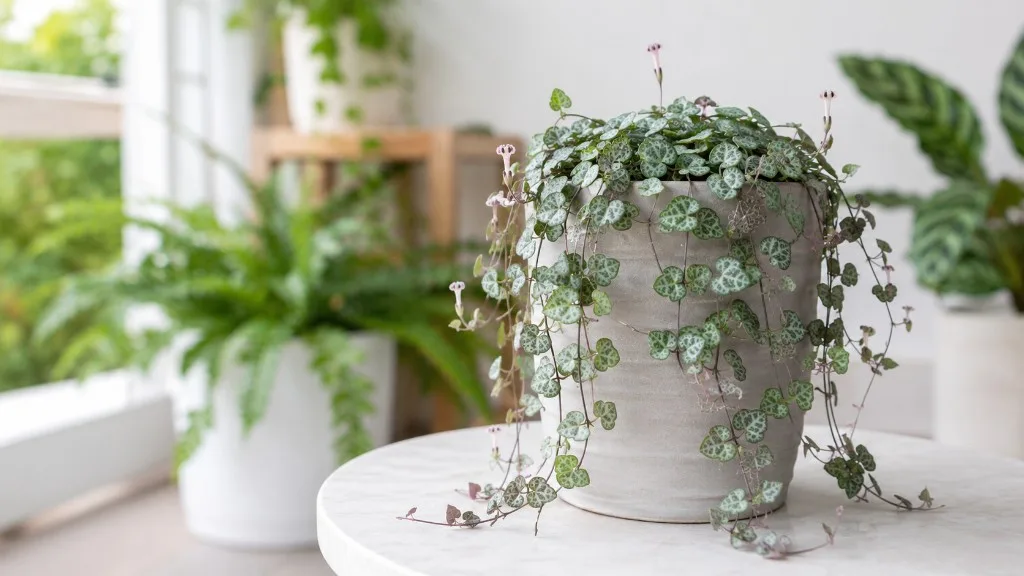
String of hearts soil is not a minor detail you can fix later with a better watering app. Ceropegia woodii - the trailing plant sold as string of hearts, rosary vine, or chain of hearts - stores water in fleshy leaves, wiry stems, and especially in woody tubers below and along the vine. That biology makes the root zone unforgiving: the mix must drain fast, hold enough air for roots to breathe, and never stay saturated long enough for pathogens to take hold. Standard indoor potting soil, even when labeled “premium,” usually retains too much moisture for this semi-succulent. The result is soft stems at the soil line, mushy tubers, and leaves that fall off in clusters while the plant still looks fine above the rim for a few days.
The practical answer most experienced growers land on is a fast-draining, gritty blend built around a commercial cactus or succulent base, amended with perlite or pumice and often coarse orchid bark or horticultural sand. A widely reliable ratio is 2 parts cactus or succulent mix, 1 part perlite or pumice, and 1 part orchid bark. Target pH 6.0–7.5, use a pot with a drainage hole, and choose a container only slightly larger than the root mass. Repot when the mix breaks down or roots crowd the pot - typically every two to three years for a mature plant - and keep tubers near the surface rather than buried deep.
This guide explains why that mix works, how to build or buy it, how to test drainage before you trust it, and how to repot without triggering the rot you were trying to prevent.
Why Soil Matters More Than Watering Schedules for String of Hearts
Growers often blame themselves for “overwatering” when the real problem is soil that cannot dry on a reasonable timeline. String of hearts can tolerate dry spells because its tubers act as internal reservoirs - SANBI’s PlantZAfrica entry notes that mature tubers reach roughly 25–50 mm and allow the plant to survive periods when thin cliff-edge soils dry completely. What it cannot tolerate is continuous wetness around those tubers. Peat-heavy potting mixes hold water in the lower half of the pot long after the surface looks dry, creating anaerobic conditions where Pythium and Phytophthora spread.
NC State Extension describes string of hearts as preferring well-drained sandy potting soil and warns against overwatering, with complete dry-down between drinks (NC State Extension - Ceropegia woodii). That guidance only works if the mix actually permits dry-down. In a dense blend, the top two centimeters may feel dry while the tuber zone stays damp for a week - and by then damage is underway.
Soil also controls oxygen access. String of hearts roots are thin and adapted to rocky crevices, not to compacted organic matter. When mix particles collapse after six to twelve months of watering, drainage slows even if your habits stay the same. A plant that thrived in year one can decline in year three on “the same” schedule because the substrate degraded. Thinking of soil as a system with a lifespan, not a one-time fill, prevents a lot of confusing mid-career failures.
What String of Hearts Needs From Soil: Drainage, Air, and Tuber Protection
The best soil for string of hearts succulent care delivers three things at once: rapid water movement, stable air pockets, and gentle support for tubers without burying them in moisture-trapping depth. Drainage means water exits the pot within minutes of a thorough soak, not hours. Aeration means macropores - large voids from bark, perlite, or coarse sand - stay open after repeated watering. Tuber protection means the swollen root structures sit in a zone that dries predictably, because they rot faster than fibrous roots on many common houseplants.
You are not trying to recreate desert sand. String of hearts still wants some moisture retention in the mix so roots do not desiccate between waterings, especially in bright light where transpiration is high. The balance is brief moisture, then airflow - the same rhythm described for propagation media on PlantZAfrica, where growers keep mix moist but never wet or soggy during tuber rooting. Ceropegia woodii evolved on rocky ledges and cliff faces in South Africa, often in thin humus-rich or sandy soil wedged into cracks from roughly 100–1,180 meters elevation. Rainfall is seasonal and drains almost immediately - so your indoor blend should mimic open texture with large particles and minimal fine peat, not deep, moisture-holding forest floor litter.
How Tubers and Tuberous Roots Change the Mix Equation
Below the soil surface, string of hearts develops a caudiciform tuber - a woody, bead-like structure that stores water and nutrients. Aerial tubers also form along stems and root easily when they touch moist medium. Both types are more rot-prone than typical fibrous houseplant roots because their tissue is dense and designed for storage, not constant hydration.
That anatomy changes two practical rules. First, depth matters: tubers should sit near the surface, not buried under several centimeters of wet peat. SANBI propagation guidance places aerial tubers on sand-perlite with only a thin covering rather than burying them deeply. Second, propagation mix can be slightly finer than a mature hanging basket blend, but it must still drain instantly. SANBI recommends equal parts soil-based potting mixture, coarse sand, and perlite for propagation, with tubers placed on sand-perlite rather than buried deep.
If your mix is right for a pothos, it is almost certainly wrong for string of hearts. The tuber is the canary: it fails before the trailing vines show the full story.
Best Soil Mix for String of Hearts
The best soil mix for string of hearts combines a lean, fast-draining base with coarse amendments that resist compaction. University of Wisconsin Horticulture Extension recommends a commercial cacti and succulent mix as the primary “large-textured component” for adequate drainage - then amend further because many retail succulent blends are still denser than cliff-edge soils.
Two approaches work well: a measured DIY blend you mix once and reuse, or a store-bought cactus mix plus 20–30% extra perlite or pumice. Hanging baskets in warm, bright rooms may need the higher amendment rate; cool, dim rooms may tolerate slightly more organic matter - but never revert to straight peat-based potting soil.
A Reliable DIY Recipe You Can Mix at Home
This recipe balances nutrition, drainage, and long-term structure:
- 2 parts commercial cactus or succulent potting mix
- 1 part perlite or pumice
- 1 part orchid bark (medium grade) or coarse horticultural sand
Mix dry in a tub until uniform. The result should feel gritty, crumble easily in your hand, and leave your fingers lightly coated with bark and perlite - not clumping into a wet ball. SANBI’s propagation guidance uses equal parts soil-based mix, coarse sand, and perlite; the 2-1-1 recipe above skews slightly leaner for long-term hanging baskets where compaction is a bigger risk.
Optional additions in small amounts:
- Horticultural charcoal (5–10% of total volume): may help absorb impurities and reduce fungal pressure in humid homes; evidence is anecdotal but harm is low if particles are coarse.
- Worm castings or compost (a handful per liter of mix): adds gentle nutrition at String of Hearts repotting guide; avoid heavy garden compost that holds water.
Do not add vermiculite as a primary amendment here. It retains moisture well - useful for seed starting, counterproductive for string of hearts tubers.
Commercial Cactus and Succulent Mixes Worth Using
If you buy rather than blend, choose a labeled cactus, succulent, or citrus mix from a reputable nursery supplier, then always amend. Open the bag and squeeze a handful: if it forms a tight ball that stays shaped, add 20–30% perlite or pumice by volume before potting. If it barely holds together and falls apart, you may need only 10–20% extra amendment.
Avoid “moisture control” potting mixes with water-absorbing crystals. Avoid generic indoor blends even if they contain a token amount of perlite visible on the bag photo. String of hearts in unamended store cactus mix sometimes survives - especially in very bright, warm conditions - but unamended mix is the most common reason otherwise careful growers still lose tubers.
Key Soil Ingredients Explained
Understanding why each ingredient exists helps you adjust when a plant dries too fast, too slow, or when only part of the pot seems to wet.
Perlite, Pumice, and Why Particle Size Matters
Perlite is expanded volcanic glass - lightweight, white, and excellent at creating air pockets. It improves drainage instantly but can float toward the surface over months of watering, leaving lower layers denser. Pumice is heavier, stays distributed longer, and holds a small moisture buffer in its pores before releasing it. Either works; pumice is slightly better for long-lived mixes if you can source it affordably.
For string of hearts, aim for 20–30% perlite or pumice of total mix volume when starting from a cactus base - more in humid bathrooms or oversized pots, slightly less in small terra-cotta pots that already wick moisture. Particle size matters: fine dust perlite does less for macropores than coarse grade (roughly 3–6 mm pieces).
Orchid Bark, Sand, and Coarse Amendments
Orchid bark creates macropores - channels larger than perlite alone provides - that resist collapse and mimic rocky crevice structure. Fir or pine bark labeled for orchids is standard; avoid fine mulch that breaks down quickly.
Coarse horticultural sand (not play sand, not beach sand) adds weight and sharp drainage. Equal-parts sand-perlite-soil blends appear in both SANBI propagation advice and many grower recipes. Sand-heavy mixes dry faster and suit growers who tend to water generously.
Coco coir appears in some blends as a peat alternative. It drains better than peat when coarse, but fine coir still holds water; if you use it, keep the fraction low and pair with bark or perlite. Coir-heavy blends without extra perlite are workable in dry climates but risky in cool, damp rooms where tubers need faster dry-down.
pH, Minerals, and Long-Term Mix Health
String of hearts tolerates slightly acidic to neutral soil, pH 6.0–7.5. Most peat-based cactus mixes and amended blends fall in this range without adjustment. Unless you have alkaline tap water and chronic nutrient lockout - rare in typical indoor care - you do not need to pH-test every repot.
What matters more is salt and mineral buildup. Fertilizer salts, hard water, and slow decomposition of organic matter can crust the soil surface and burn leaf margins. If white deposits appear on the pot rim or soil, flush the mix with plain water until runoff runs clear, or refresh the substrate at the next repot instead of stacking more fertilizer. String of hearts is a light feeder; soil that holds nutrients too aggressively in a small pot creates salt stress faster than deficiency.
Organic matter breaks down over 12–24 months, shrinking air spaces. Even a perfect mix becomes “wrong soil” through age alone. Refreshing or repotting on that timeline is normal maintenance, not a sign you failed.
Pot Size, Drainage Holes, and Soil Volume
Soil and pot work as a single system. A drainage hole is non-negotiable for long-term indoor string of hearts. Without it, no mix drains fully; the bottom stays saturated regardless of ingredients. A layer of gravel or LECA at the pot bottom does not fix poor drainage - it reduces usable root volume and can create a perched water table above the layer. What fixes drainage is porous mix plus an exit hole, not decorative stones.
Match pot depth to root habit. String of hearts roots and tubers spread relatively shallow compared to deep-rooted succulents like some euphorbias. A wide, shallow pot often outperforms a deep tower of wet mix. Terra cotta wicks moisture and pairs well with String of Hearts overview; plastic and glazed ceramic work if the mix is amended aggressively and you monitor dry-down.
Why Smaller Pots Often Beat Oversized Containers
NC State Extension notes that string of hearts likes to be somewhat crowded and repotting can be deferred until necessary. An oversized pot surrounds roots with a large volume of mix that stays wet longer after each watering - the classic setup for tuber rot in an otherwise careful grower. Choose a pot one size up from the root ball when repotting, not three.
Small pots also dry on a rhythm that matches semi-succulent metabolism. A 10 cm pot in String of Hearts light guide might need water every seven to fourteen days in summer; a 20 cm pot with the same vine length might stay wet at the center for three weeks. If your trailing plant is gorgeous but the tuber zone is always damp, downsize or amend before changing your entire watering philosophy.
How to Test Whether Your Mix Drains Fast Enough
Before repotting a prized string of hearts, run a simple drainage check on your blend. Fill a small cup with dry mix, saturate it until water runs from the bottom, and note how long the surface stays dark and slick. Within a few minutes, water should stop pooling on top; within 24 hours in a warm room, the mix should feel noticeably lighter and mostly dry at the top third.
After potting, watch the first three waterings. Water until it exits the drainage hole, discard cachepot water, and probe the center with a bamboo skewer or your finger if the pot is wide enough. The skewer should not come out cool and coated with wet peat five days later in normal indoor conditions. If it does, pull the plant, add perlite, bark, or sand, and repot - waiting until leaves yellow saves nothing.
Another useful signal: weight. Lift the pot when fully dry and again two days after watering. A healthy rhythm shows a clear light-to-heavy cycle. Perpetual heaviness means the mix or pot volume is wrong, not that you need a calendar reminder.
Repotting String of Hearts Into Fresh Mix
Repot when roots circle the bottom, the mix has compacted, drainage slowed, or the plant dries so fast you cannot keep up despite healthy vines. Spring through early summer is ideal; early fall works in mild climates. Avoid repotting into fresh wet mix during winter dormancy when growth is minimal - roots heal slowly and wet fresh peat lingers longer in cool rooms.
Work gently. String of hearts stems tangle and snap easily. Slide the root ball out, loosen only the outer third of old mix, trim mushy tubers or roots with clean scissors, and place the plant so tubers sit near the surface with no more than one centimeter of mix above them unless the plant was clearly established deeper before. Water lightly once, then let the new mix dry almost completely before the next soak - roots need air during recovery.
Do not repot on day one after purchase unless the existing mix is visibly sour, pest-infested, or soaking wet in a sealed sleeve. Quarantine, observe dry-down for two weeks, then refresh mix if needed.
Timing, Technique, and Tubers Near the Surface
Repotting signals include roots exiting drainage holes, water running straight down the sides without wetting the center (channeling from shrinkage), sour smell from the root zone, and slowed new leaf production despite good light. A plant that needs water every three days in a small pot may simply be root-bound - but if the same plant wilts between daily waterings, the mix may have hydrophobic, compacted peat that repels water while still holding old moisture below.
When positioning tubers, think anchor, not bury. Aerial tubers for propagation rest on moist mix; mature tubers behave similarly. Deep planting increases rot risk without improving stability - the vine anchors itself as roots and tubers spread horizontally.
Signs Your String of Hearts Soil Is Wrong
Wrong soil announces itself through the root zone first, often before the full trailing display collapses. Watch for these patterns:
- Mushy or discolored tubers when you inspect the soil line - tan and firm is healthy; soft, black, or hollow is not.
- Stem base rot where vines meet soil, with leaves detaching in clusters from that section upward.
- Persistent damp smell despite waiting “long enough” between waterings.
- Yellowing, soft leaves on an plant you have been careful not to overwater - a sign the bottom stayed wet while the top dried.
- Fungus gnats in large numbers, indicating decomposing, moisture-retentive organic matter.
- White mold on the soil surface after watering, especially in low light.
- Extremely fast dry-down followed by limp vines - sometimes compacted or peat-free mix with no water retention in small pots, or a pot too small for the root mass.
One symptom alone is not a diagnosis. Mushy tubers plus sour smell plus slow drainage strongly implicate soil. Sparse vines with firm tubers and fast dry-down point more toward light or pot size. Always inspect the tuber before rewriting your entire care routine.
Common String of Hearts Soil Mistakes
Using straight potting mix is the most common error. It feels logical - string of hearts is sold as a houseplant - but peat-heavy blends hold water in the tuber zone far too long.
Trusting gravel at the pot bottom wastes depth and does not replace porous ingredients or drainage holes. University extension publications consistently note that perched water tables form above coarse layers in containers.
Buying “succulent mix” without amendment fails when the product is mostly fine peat with decorative grit on top. Squeeze-test every bag.
Oversized pots after seeing a long trailing vine. Vine length does not equal root volume needed; extra mix holds extra water.
Burying aerial tubers deep during propagation or repotting invites rot. Press onto the surface and keep medium barely moist, as SANBI describes for tuber rooting.
Repotting into soaking wet mix in winter in a cool room. Fresh peat plus cold plus low growth equals long wetness.
Never refreshing old mix because the plant “still looks fine.” Compaction is silent until it is not.
Soil for Propagation Cuttings and Aerial Tubers
Propagation demands similar drainage principles with slightly finer texture so stem nodes and small tubers contact moisture without sitting in a swamp. Use equal parts soil-based mix, coarse sand, and perlite, or a 1:1 blend of cactus mix and perlite for stem cuttings laid on the surface or pinned lightly.
For aerial tubers, SANBI recommends placing a tuber about 2 cm in diameter on top of roughly 2.5 cm of sand-perlite mix, covered with a thin layer of fine sand, kept in medium light and watered sparingly until feeder roots establish over several weeks. Do not bury large tubers. A spray bottle keeps the surface lightly moist; soaking the pot defeats the purpose.
Stem cuttings root faster when the first node touches mix, not when half the vine is buried. Propagation boxes with high humidity still need open, gritty medium - humidity around leaves is not permission for wet peat around tubers.
Conclusion
The best soil for string of hearts succulent care is a fast-draining, airy blend that protects tuberous roots from long wetness while still holding enough moisture for roots to function between waterings. Build 2 parts cactus or succulent mix, 1 part perlite or pumice, and 1 part orchid bark or coarse sand, or buy cactus mix and amend with 20–30% extra perlite or pumice after a squeeze test. Keep pH in the 6.0–7.5 range, use pots with drainage holes sized close to the root ball, and repot when mix breaks down or roots crowd - not on a whim every spring.
Run a drainage test before you trust a new blend, keep tubers near the surface, and treat sour smell, mushy tubers, or perpetual pot heaviness as soil problems worth fixing directly. String of hearts rewards gritty, well-aerated mix with firm tubers, steady new leaves, and vines that trail for years. Get the substrate right, and watering becomes simpler instead of scary.
When to use this page vs other String of Hearts guides
- String of Hearts overview - Start here for whole-plant context before deep-diving this topic.
- String of Hearts problems hub - Jump to symptom-specific fix guides when this care topic does not resolve the issue.
- Wrong Soil Mix on String of Hearts - Escalate here when soil adjustments are not enough.
- Poor Drainage on String of Hearts - Escalate here when soil adjustments are not enough.
- Root Rot on String of Hearts - Escalate here when soil adjustments are not enough.
Related String of Hearts guides
- String of Hearts overview
- String of Hearts watering
- String of Hearts light
- String of Hearts propagation
- String of Hearts fertilizer
- String of Hearts repotting
- Wrong Soil Mix on String of Hearts
- Poor Drainage on String of Hearts
- Root Rot on String of Hearts
- Mold on Soil on String of Hearts
- String of Hearts problems