Poor Drainage on String of Hearts: Causes, Checks & Fixes
Quick answer
Poor drainage on String of Hearts is a setup problem-even careful watering fails when mix and pot cannot drain. Stop watering, confirm open drainage holes, and repot into fast-draining cactus mix with extra perlite or pumice if tubers are still firm.
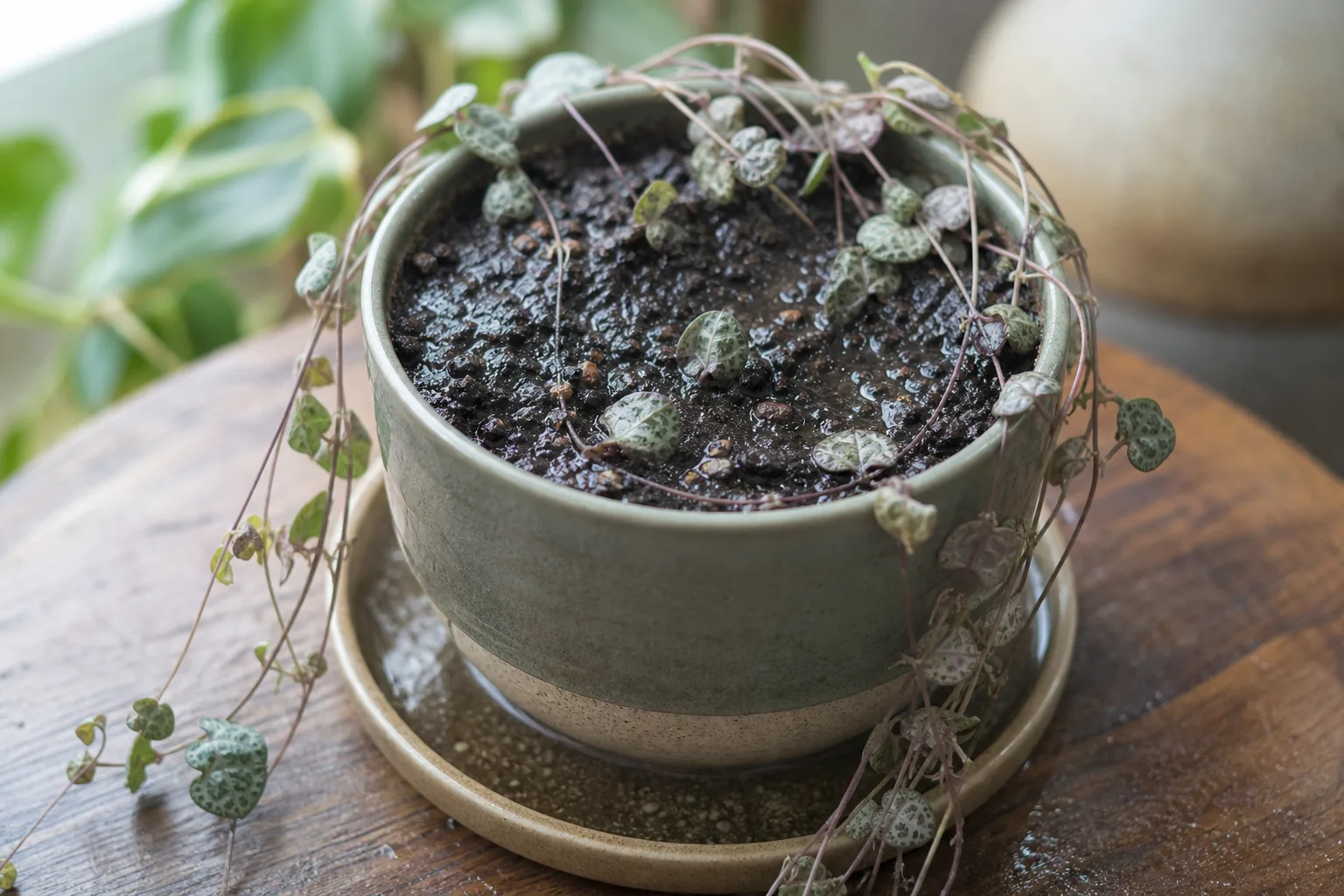
Poor Drainage on String of Hearts: Causes, Checks & Fixes
This guide covers poor drainage on String of Hearts. See also the general Poor Drainage guide, watering, and light pages for this plant.
Poor Drainage on String of Hearts: Causes, Checks & Fixes
Quick answer
Poor drainage on String of Hearts is a setup problem-even careful watering fails when the mix and pot cannot shed water fast enough. Ceropegia woodii is a semi-succulent vine native to Southern African hillsides with tuberous roots and bead-like aerial tubers adapted to thin, fast-draining soil. When peat-heavy mix, blocked holes, or an oversized pot keeps the root zone wet, oxygen leaves the tuber zone and decay can start while trailing strands still look mostly fine.
First fix: stop watering, confirm drainage holes are open, and inspect tuber firmness. If tubers are still firm and only the mix is too retentive, prepare gritty cactus mix and repot into a pot sized to tuber mass-not trailing canopy width. If tubers are already mushy, escalate to root rot rescue instead of waiting on mix correction alone.
This page owns drainage-mechanics triage-mix texture, hole flow, compaction, and pot sizing. The soil guide owns mix-building depth; the watering guide owns dry-down rhythm after setup is fixed.
Why String of Hearts gets poor drainage
Peat-heavy mix vs. sandy native habitat
Standard moisture-retentive potting soil is the most common indoor trigger. String of Hearts needs well-drained sandy potting soil and time to dry completely between waterings. Peat-heavy compost stays damp for days in a dim room or oversized plastic pot while String of Hearts overview requires excellent drainage and is easily killed by overwatering when mix stays soggy.
If unamended indoor mix is all you have, the soil guide details how to amend toward a 2:1:1 cactus base with perlite and orchid bark-a leaner blend than the 30–50% perlite bump used for emergency repots on this page.
Blocked or missing drainage holes
Blocked or missing drainage holes trap water at the bottom of the pot. Decorative cache pots, glued-in saucers, and roots matting over holes all keep the lowest soil saturated around underground tubers. Standing water in a saucer or sealed outer pot is a dedicated subset-see the no-drainage-hole page when the inner pot has no exit at all.
Overwatered soil can smell sour or rotten when the root zone has been oxygen-starved-a sign drainage failed before you noticed wilt.
Compaction over one to two years
Compaction makes an originally good mix fail over time. Organic matter breaks down, fine particles settle, and the center of the pot becomes a dense wet plug while the surface looks merely damp. Cool winter rooms and low light slow evaporation, so a mix that worked in bright summer becomes waterlogged by autumn when growth slows and watering should be reduced further in winter dormancy.
Refresh mix every one to two years before compaction silently fails-prevention is cheaper than tuber salvage.
Oversized pots and the trailing-canopy trap
String of Hearts does best when crowded and repotted only when necessary, but growers often size pots to trailing vine length while tuber mass stays small. A hanging basket three times wider than the underground tuber cluster holds extra wet soil the sparse roots cannot use. Good drainage is a cultural requirement-extra wet volume beyond the root zone defeats that need even when you water sparingly.
Choose a clean pot only one to two inches wider than the tuber mass at repot time, regardless of how long the strands have grown.
Cachepots and winter slow-dry
Cool dim rooms slow transpiration. Soil that dried in seven days in July may stay damp for two weeks in December while you keep the same summer watering habit. A cachepot that traps runoff keeps the bottom saturated even when the inner pot has holes. Pair winter dormancy with reduced drinks from the watering guide-not with denser mix or larger pots.
What poor drainage looks like on String of Hearts
Early signs
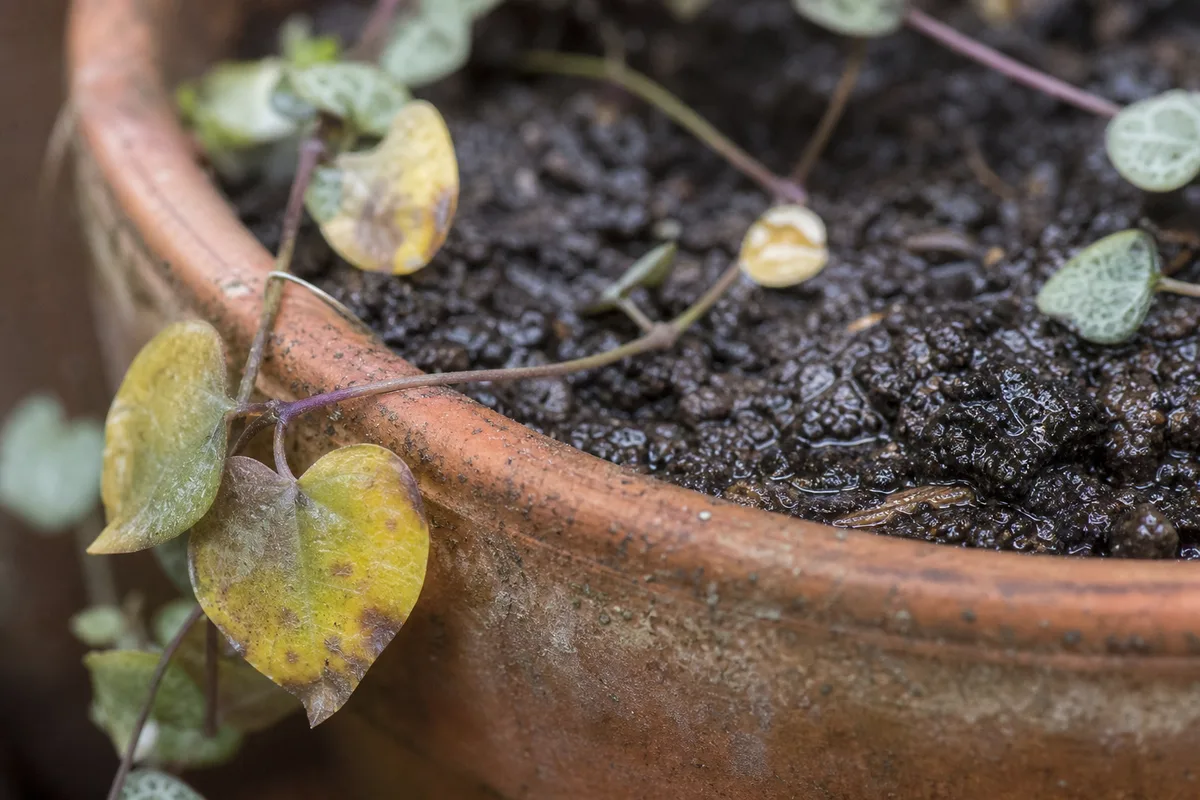
Poor Drainage symptoms on String of Hearts - compare with healthy tissue on the same plant.
- Soil surface stays visibly damp three to five days after a single moderate watering
- Pot feels heavy when lifted, even though you have not watered recently
- Sour or swampy smell from the drainage hole
- Heart-shaped leaves yellowing or thinning while the mix is still moist
- Aerial tubers along the vine feel soft instead of firm like beads
- Fungus gnats hovering over persistently wet top inches
- New growth stalling while existing strands stay attached-tubers fail underground before vines collapse
On String of Hearts, drainage problems often precede obvious rot. Semi-succulent leaves and stems store water, so visible strand collapse lags behind underground and aerial tuber damage. Pot weight, mix texture, and tuber firmness matter as much as leaf color.
Tuber firmness check
Healthy tubers feel firm like small beads on the vine and at the crown. Softening aerial tubers while mix is moist is an early drainage signal-even if upper leaves still look green. Gently press beads along the strands and where stems meet soil before assuming you need to water less often alone.
How to confirm the cause
Work through this inspection order before repotting:
- Drainage holes - Confirm holes are open and water runs freely within seconds of watering. Lift the pot from its saucer; standing water underneath means poor outflow. If there are no holes at all, switch to the no-drainage-hole page.
- Mix texture - Scrape the top inch aside. Gritty cactus mix should crumble; dense peat that smears when wet confirms retention problems. The soil guide squeeze-test workflow helps before you trust a blend.
- Pot weight and skewer depth - Note how many days the pot stays heavy after watering. Compare weight to a known dry baseline from the watering guide. Push a dry wooden skewer into the lower third: damp soil clinging days later confirms wet tubers even when the surface looks pale.
- Tuber firmness - Press underground tubers and aerial beads along the strands. Firm is good; soft, wet tubers suggest saturated roots below.
- Unpot if smell or softness is present - Rinse tubers gently to see whether decay has started despite cautious watering.
Hydrophobic surface vs. true drainage
Sometimes the top inch looks dusty dry while the center stays damp-or water runs off a crusted surface without wetting the core. That false dry surface can mask chronic wet roots until tubers soften. If skewer depth and pot weight disagree with what you see on top, read the dry hydrophobic soil page before assuming drainage is adequate.
Poor drainage vs. overwatering vs. underwatering vs. root rot
| What you see | Pot and mix | Tuber feel | Likely cause | Next step |
|---|---|---|---|---|
| Heavy pot, damp mix for days | Dense peat or compacted center | Firm beads | Poor drainage | Stop water; open holes; repot into gritty mix |
| Heavy pot, damp mix | Adequate gritty mix, open holes | Firm tubers | Overwatering - not setup | Overwatering triage |
| Light pot, dusty dry throughout | Dry at depth | Firm tubers | Underwatering | Underwatering guide |
| Heavy pot, sour smell | Wet throughout | Mushy, translucent | Root rot from failed drainage | Root rot rescue |
| Surface dry, center damp | Channeling or hydrophobic crust | Firm or mixed | Hydrophobic soil | Dry hydrophobic soil |
Simple overwatering on a schedule can mimic poor drainage, but the fix differs: frequency errors may resolve with dry-down if mix and holes are adequate. Advanced mushy tubers need the root rot salvage path, not mix correction alone.
Severity ladder
Mild - slow dry-down, firm tubers, neutral smell
The mix takes longer to dry than it should, but tubers and aerial beads feel firm and there is no sour odor. Stop watering and let the root ball dry in String of Hearts light guide for several days. If holes are open and only mild compaction is suspected, dry-out in place may suffice without immediate repot.
When dry-down exceeds two weeks indoors or peat-heavy soil smears when squeezed wet, repot the same week into fast-draining cactus or succulent compost amended with 30–50% perlite, pumice, or coarse horticultural sand-the soil guide 2:1:1 recipe is the long-term target after emergency rescue.
Moderate - sour smell, softening tubers, chronic heaviness
Soil smells sour, aerial tubers soften along the strands, or the pot stays heavy ten or more days after one drink despite stopping water. Repot immediately into gritty mix in a pot only slightly larger than tuber mass. Trim any tissue that squishes-do not wait for vines to collapse.
Withhold the first post-repot drink until the mix has gone fully dry-often five to seven days in moderate light, longer in cool winter rooms. Resume using seasonal depth targets from the watering guide, not a fixed calendar.
Severe - mushy black tubers, vine base collapse
When underground tubers turn soft and black, soil smells sour despite reduced watering, or vines collapse at the base within days, poor drainage has progressed to root rot. Hand off to the root rot page for trim-and-repot surgery or aerial-bead propagation-this drainage page stops at confirmed mushy tissue.
First fix for String of Hearts
Stop watering immediately and confirm drainage holes are open before doing anything else. If the mix stays wet and tubers are still mostly firm, let the root ball dry in bright indirect light for several days while you prepare fresh gritty mix.
When tubers are firm and smell is neutral, repot the same week into fast-draining cactus or succulent compost amended with 30–50% perlite, pumice, or coarse horticultural sand. Choose a clean pot with open drainage holes only slightly larger than the tuber mass-String of Hearts prefers to stay somewhat crowded.
Make this single correction before adding fertilizer, moving rooms, or upsizing again.
Step-by-step recovery
- Unpot and inspect tubers - firm, pale tubers and roots are healthy; brown mushy sections must go or escalate to root rot rescue.
- Shake off old compacted or peat-heavy soil gently without breaking firm aerial tubers on the vines.
- Repot into gritty mix at the same depth; do not bury strands deeper than before. See the repotting guide for technique.
- Wait five to seven days before the first light watering - only if the mix is fully dry and tubers feel firm; adjust longer in cool humid rooms.
- Empty the saucer within 30 minutes of every future watering; lift inner pots from cachepots so runoff never sits at the bottom.
- Watch for new firm leaves or active vine tips over four to twelve weeks.
Terracotta breathes faster than glazed ceramic during recovery, which helps amended mix dry on a predictable rhythm.
Recovery timeline
Mild drainage correction without active rot often stabilizes within two to four weeks once the mix dries predictably. Moderate cases with some yellowed leaves may need a full growing season before new dense growth appears. Severely rotted tubers rarely recover fully; propagation from firm vine sections and aerial beads may be the salvage path on the root rot page.
Damaged yellow leaves and thin strands do not fully green up again. Judge success by neutral-smelling soil, lighter pot weight between waterings, and firm new leaves or tubers-not by old hearts re-coloring.
What not to do
- Do not respond to heavy wet pots by watering less often while keeping the same dense mix - the root zone still suffocates between drinks.
- Do not add pebbles in the pot bottom instead of fixing mix; gravel layers do not replace porous mix and a drainage hole - they raise the wet zone without improving aeration where tubers sit.
- Do not repot into a much larger container to give roots room - extra wet soil volume worsens drainage stress.
- Do not fertilize until the plant pushes new growth in improved mix.
- Do not mist strands; surface moisture does not fix a waterlogged root zone.
- Do not confuse a hydrophobic dry surface with adequate drainage at tuber depth - confirm with skewer and pot weight.
How to prevent poor drainage next time
Match container, mix, and watering to String of Hearts’ drought-adapted biology:
- Use a freely-draining potting medium with coarse sand, perlite, or other large-textured components such as commercial cactus and succulent mix - build the full recipe on the soil guide.
- Choose pots with multiple drainage holes; terracotta helps the mix dry faster than glazed ceramic.
- Size pots to tuber mass - only one to two inches wider at repot time, not to trailing canopy length.
- Allow the soil to dry completely between waterings during active growth; reduce watering further in winter dormancy per the watering guide.
- Empty saucer runoff after every drink; never let cachepots hold standing water.
- Refresh mix every one to two years before compaction silently fails.
- Keep the plant in bright indirect light with some direct morning sun so the pot dries on a predictable rhythm.
Missouri Botanical Garden PlantFinder describes Ceropegia woodii as a tuberous South African perennial suited to bright light and well-drained conditions-the same foundation every drainage decision should respect.
When to worry
Escalate immediately if soil smells sour, tubers soften and turn black, or vines collapse at the base within days despite stopping water. These signs mean poor drainage has already progressed to root rot.
Lower urgency applies when strands are firm, smell is neutral, and the main issue is slow drying - repot into grittier mix before softness appears.
String of Hearts care cross-check
Poor drainage triage sits upstream of watering frequency and downstream of mix choice. This page owns setup mechanics when mix, holes, or pot size fail; the overwatering page owns schedule errors when drainage is adequate.
- Water: Dry-down protocol with skewer depth, pot weight, and taco test after setup is fixed
- Soil: Fast-draining cactus mix - squeeze test, 2:1:1 recipe, gravel-myth debunk
- Pot: Sized to tuber mass; drainage holes clear; no standing cachepot water - no-drainage-hole page for sealed containers
- Repot: Post-rescue mechanics and timing - repotting guide
- Escalation: Root rot when tubers are mushy; underwatering when pot is light and dry throughout
- Pests: Fungus gnats often signal chronically wet mix
Related String of Hearts care
- Soil guide - gritty mix recipe, drainage test, gravel myth
- Watering guide - dry-down depth, pot-weight baseline, skewer protocol
- Overwatering - frequency errors when drainage is adequate
- Underwatering - light pot and dry-mix thirst
- Root rot - confirmed mushy-tuber rescue
- No drainage hole - sealed cachepot and blocked-hole subset
- Dry hydrophobic soil - false dry surface masking wet core
- Repotting - post-rescue repot mechanics
- Fungus gnats - wet-soil companion pest
Poor drainage is a setup problem-fix mix, holes, and pot size first, then follow the watering guide for rhythm.
When to use this page vs other String of Hearts guides
- String of Hearts watering guide - Use for routine moisture checks before assuming poor drainage is the main issue.
- String of Hearts problems hub - Browse all 45 common issues on this species.