Dry Hydrophobic Soil on String of Hearts: Causes, Checks &
Quick answer
Hydrophobic soil on String of Hearts repels water after peat-heavy mix dries completely - drainage water flows out while the root ball and tubers stay dry. Bottom-soak the pot until the mix darkens throughout, drain fully, then repot into gritty cactus blend if the mix keeps rejecting water.
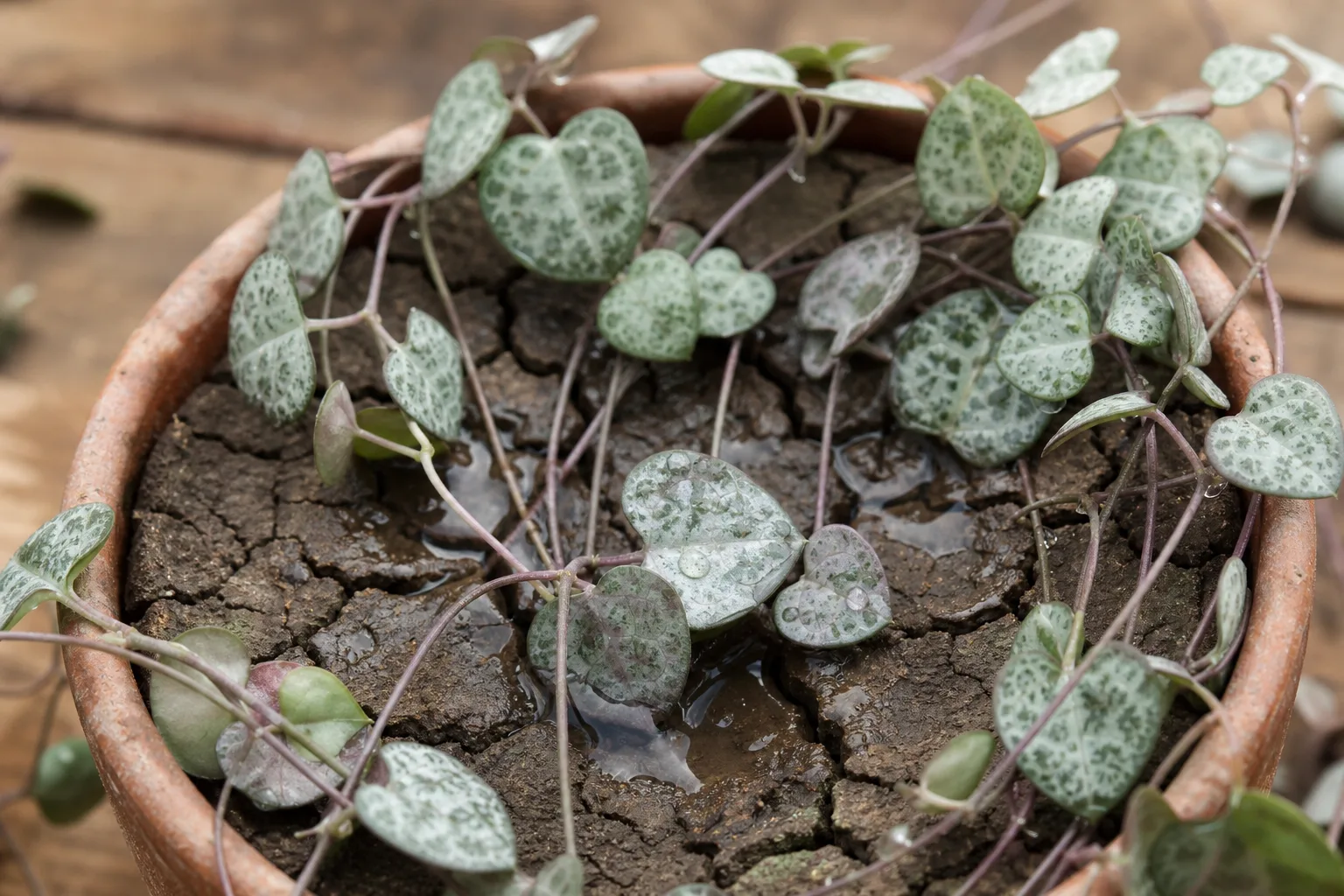
Dry Hydrophobic Soil on String of Hearts: Causes, Checks & Fixes
This guide covers dry hydrophobic soil on String of Hearts. See also the general Dry Hydrophobic Soil guide, watering, and light pages for this plant.
Dry Hydrophobic Soil on String of Hearts: Causes, Checks & Fixes
Quick answer
Dry hydrophobic soil on String of Hearts repels water after peat-heavy mix dries completely - you pour from the top, water runs down the pot sides, and the root ball and tubers stay dry while heart-shaped leaves turn thin, flat, and droopy. On Ceropegia woodii, that hidden drought is easy to miss because drainage water still flows from the bottom while the center stays dry. First step: bottom-soak the pot until mix darkens throughout, drain fully, then switch to a gritty fast-draining blend if the old mix keeps rejecting water.
What hydrophobic soil looks like on String of Hearts
Hydrophobic mix on String of Hearts often mimics underwatering - but a normal top watering does not fix it:
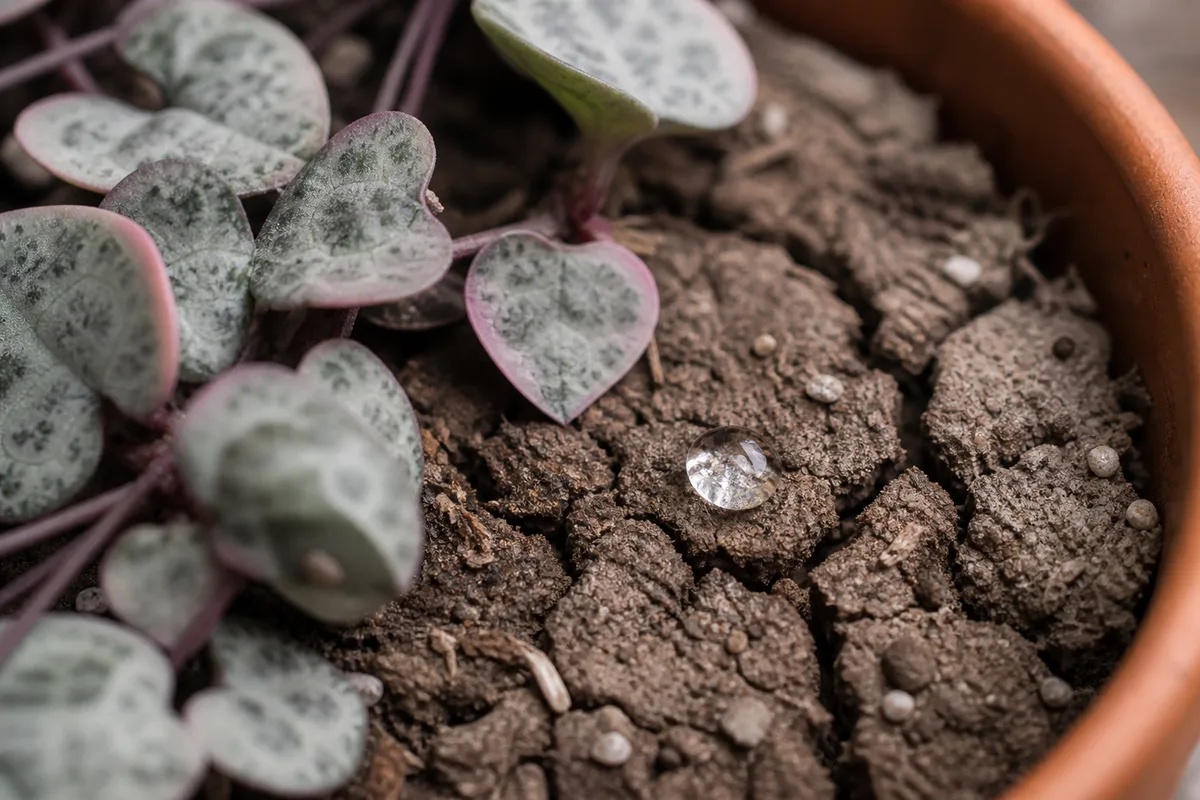
Dry Hydrophobic Soil symptoms on String of Hearts - compare with healthy tissue on the same plant.
- Water beads on the surface or channels down the inside wall without soaking in
- Pot feels light even right after you watered; saucer water ran out quickly
- Leaves along trailing strands look thin, pale, and fold easily (failed taco test)
- Mix pulls away from the pot rim; surface may look briefly damp while 2–3 cm down stays dusty dry
- Aerial tubers between nodes may shrivel while the plant still hangs limply
This differs from overwatering - heavy wet pot, sour smell, yellow mushy leaves with saturated mix throughout. It also differs from simple calendar underwatering, where the whole root ball is uniformly dry and a normal soak absorbs easily on the first pass.
Why String of Hearts mix turns hydrophobic
Complete dry-down of peat-heavy organic matter. Peat and coco coir shrink when bone-dry and resist re-wetting. Water can run between the pot wall and the dried root ball instead of penetrating the center.
Wrong mix for a semi-succulent. Regular potting soil is too dense and water-retentive for String of Hearts. It lacks the coarse perlite, pumice, or bark that create air pockets. Ceropegia woodii prefers well-drained sandy potting soil with a freely-draining medium rich in perlite or coarse sand. Dense peat holds moisture too long when wet, then dries into a hard repellent block when you finally skip waterings.
Extended drought between waterings. Ceropegia woodii stores water in leaves, stems, and tubers and tolerates dry spells - but letting the entire root ball bake bone-dry for weeks in a hanging basket near a bright window is a common setup for hydrophobic failure.
Old, compacted potting mix. Mix not refreshed in 1–2 years breaks down, loses structure, and dries unevenly. Perlite floats to the top over repeated waterings, leaving lower layers dense and prone to dry-out.
Assuming drainage water means the plant is hydrated. Runoff from a repellent root ball looks like success. Many growers add another splash, never realizing the tubers in the dry center are still thirsty.
How to confirm the cause
- Runoff test - Pour slowly; water pools or runs down sides instead of darkening the surface within seconds.
- Depth probe - Dry dusty mix 2–3 cm down immediately after a top watering attempt.
- Pot weight - Light pot with thin flat leaves despite recent watering.
- Re-wet trial - Bottom-soak 30–60 minutes; surface darkens and leaves plump if tubers were dry only.
- Tuber check - Firm pale tubers support hydrophobic diagnosis; soft black tubers with wet heavy mix suggest rot instead.
- Mix age and texture - Dense peat-heavy substrate with little grit that dried completely during travel or neglect.
First fix for String of Hearts
Bottom-soak the pot until the mix fully rehydrates, then drain completely.
Set the pot in a sink or tray of room-temperature water so the mix absorbs upward through drainage holes. Bottom watering may take an hour or more on stubborn dry root balls. Remove once the surface darkens and the pot feels noticeably heavier; let excess drain 30 minutes. Do not leave String of Hearts sitting in saucer water long-term - this is a one-time rehydration, not a permanent standing-water setup.
If bottom soaking fails on the first pass, submerge the pot briefly until air bubbles stop escaping, then drain. That forces water into a severely repellent root ball faster than repeated top splashes.
Do not repot on day one unless the mix remains hydrophobic after two thorough soaks. Do not fertilize a drought-stressed plant.
Step-by-step recovery
- Confirm hydrophobic mix with runoff and depth-probe tests before treating.
- Bottom-soak 30–60 minutes until mix is evenly moist; drain thoroughly.
- For severe repellency, submerge briefly until bubbling stops, then drain.
- Poke shallow aeration holes in the crust with a chopstick - avoid snapping fragile wiry stems.
- Trim fully crispy leaves and shriveled aerial tubers that will not plump back.
- Move to String of Hearts light guide with some morning sun so the plant can use moisture without baking the mix again.
- If mix still repels water after two soaks, repot into fresh gritty cactus blend with extra perlite or pumice.
- Resume watering only when the mix is mostly or completely dry - judge by pot weight, not the calendar.
Recovery timeline
Leaves often plump within 1–2 days after a successful soak if tubers stayed firm. New growth at nodes may take 2–4 weeks in active season. Severely desiccated strands with dead tubers may not recover - propagate healthy cuttings or firm aerial tubers instead.
Signs of improvement: pot feels heavier after watering, leaves resist folding, new hearts appear along strands, aerial tubers look plump.
Signs of worsening: more strands collapsing after soaks, tubers turning soft or black, yellow leaves with sour-smelling wet mix (rot overlapping hydrophobic dry-out).
Lookalike symptoms
Simple underwatering - whole mix is uniformly dry and absorbs water on first pour; bottom soak is optional, not mandatory.
Overwatering and root rot on String of Hearts - heavy wet pot, mushy tubers, yellow leaves; hydrophobic dry-out usually comes with a light pot and dry center.
Low light stress - large gaps between leaves and pale color without dry repellent mix; improving light helps, but hydrophobic soil still needs re-wetting first.
Heat or sun scorch - crispy brown patches on exposed leaves with otherwise firm hydrated mix.
Mistakes to avoid
- Watering daily from the top after one dry spell - water channels past repellent mix without reaching tubers
- Assuming saucer drainage proves the plant drank - check center moisture and pot weight
- String of Hearts repotting guide into another dense peat mix - String of Hearts needs coarse amendments for drainage and long-term wetting
- Leaving the pot in standing water for days - succulents rot when roots sit anaerobic after rehydration
- Fertilizing before the mix re-wets and new growth resumes
String of Hearts care cross-check
Bright indirect light with some direct morning sun helps the pot dry predictably between deep waterings. Pair that with fast-draining cactus blend amended with perlite or pumice. Allow the soil to dry between deep waterings - roughly every 10–14 days in summer, less in winter dormancy. String of Hearts is pet safe, but keep trailing vines out of reach if you treat pests or handle wet soil.
How to prevent hydrophobic soil next time
Use a gritty mix from the start - commercial cactus or succulent blend plus extra perlite or pumice. Avoid dense all-purpose peat in hanging baskets that dry fast at the rim. Water deeply enough that the whole root ball gets moisture each cycle, not just a surface splash. Refresh old compacted mix every 1–2 years before it turns water-repellent. Track pot weight so you notice when a heavy soak fails to add heft.
When to worry
Worry when two thorough soaks fail to darken the center mix, tubers feel soft or smell sour, or multiple strands collapse despite your efforts. At that point unpot, trim dead tubers, and repot into fresh gritty mix - or propagate firm cuttings and aerial tubers from whatever healthy tissue remains.
When to use this page vs other String of Hearts guides
- String of Hearts watering guide - Use for routine moisture checks before assuming dry hydrophobic soil is the main issue.
- String of Hearts problems hub - Browse all 45 common issues on this species.