Bud Drop on String of Hearts: Causes, Checks & Fixes
Quick answer
Bud drop on String of Hearts aborts small tubular flower buds when the plant is disturbed, overwatered, or stressed during bud swell. First step: leave the pot where it is, check whether soil is fully dry, and water only if needed-do not repot or relocate while buds are forming.
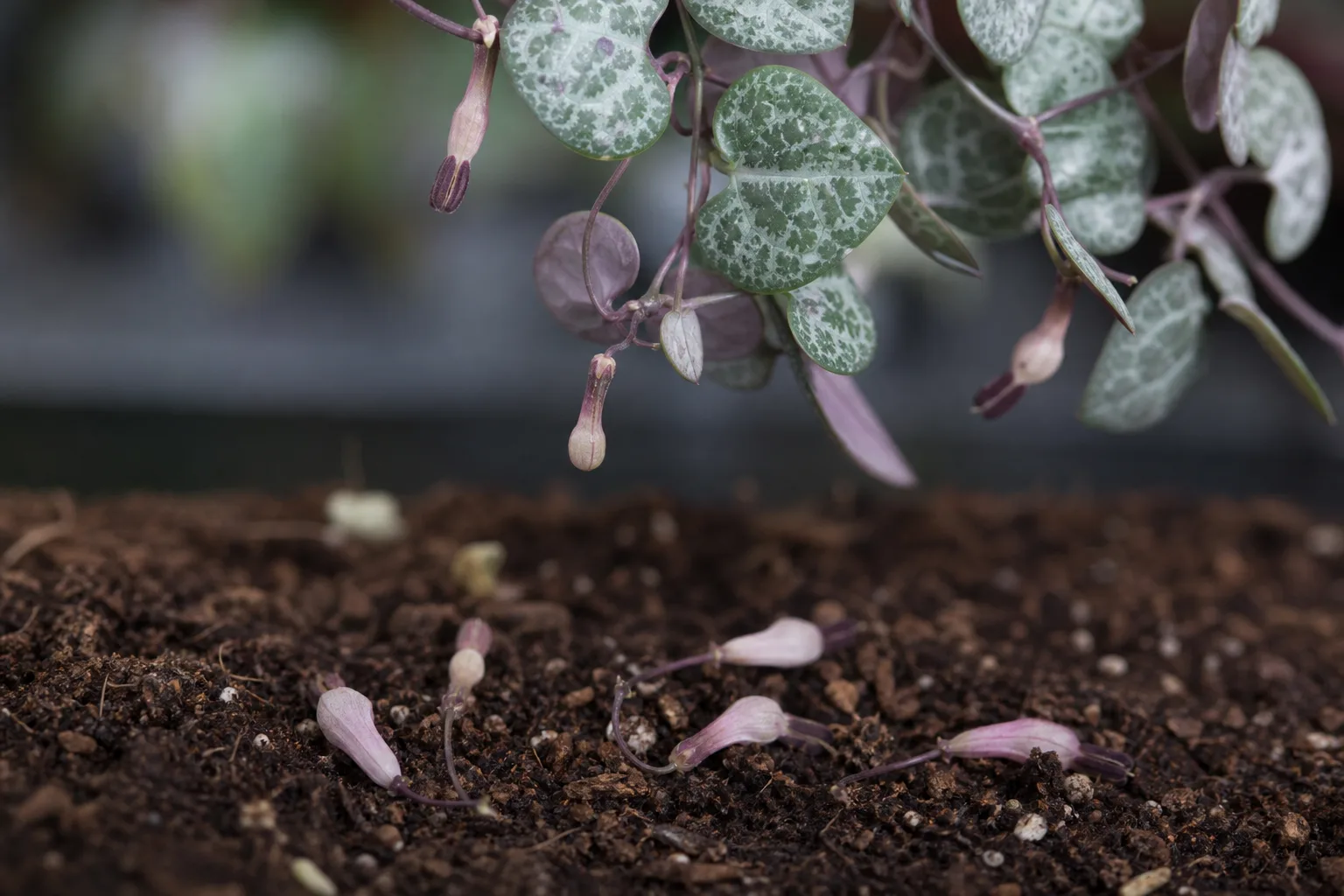
Bud Drop on String of Hearts: Causes, Checks & Fixes
This guide covers bud drop on String of Hearts. See also the general Bud Drop guide, watering, and light pages for this plant.
Bud Drop on String of Hearts: Causes, Checks & Fixes
Quick answer
Bud drop on String of Hearts (Ceropegia woodii) means the plant aborts developing flower buds before the small tubular blooms open. On this trailing semi-succulent, buds appear as subtle swellings along wiry purple stems-often at leaf nodes-then dry up and fall while the rest of the vine still looks healthy.
String of Hearts is grown mainly for its marbled heart-shaped leaves and bead-like aerial tubers, not for big showy flowers. The blooms are demure: inch-long tubular flowers in shades of white to pale magenta with a bulbous base. Losing them mid-development is frustrating but usually a cultural signal, not a death sentence.
First step: leave the plant exactly where it is and check soil moisture at the pot. Water thoroughly only if the mix is mostly or fully dry. If soil is still damp, skip watering and improve airflow instead. Do not repot, relocate, rotate for “even growth,” or change your String of Hearts watering guide while buds are swelling.
What bud drop looks like on String of Hearts
Ceropegia woodii flowers are easy to miss until you look closely. Buds start as small bumps along the vine, often between the heart-shaped leaves or near aerial tubers. What owners call “buds” are these developing inflorescences-not large bracts like on a zebra plant or orchid spikes.
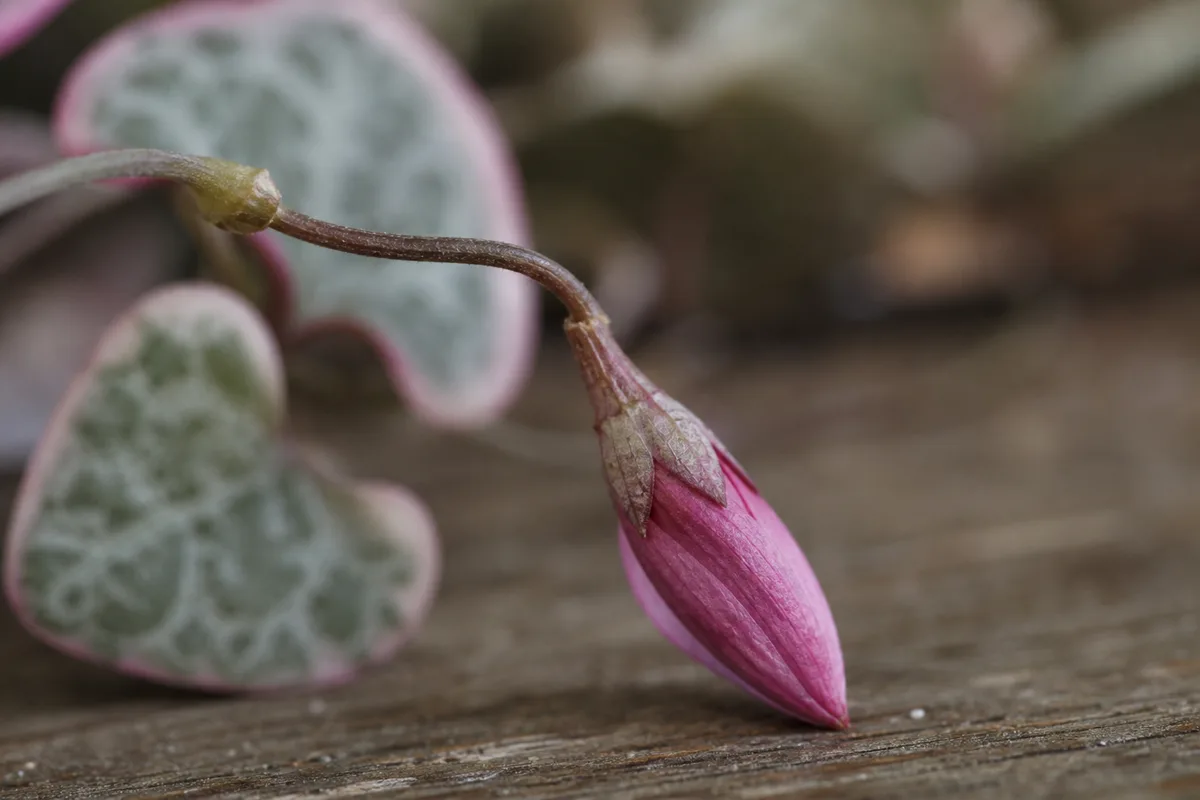
Bud Drop symptoms on String of Hearts - compare with healthy tissue on the same plant.
Typical bud-drop signs:
- Small swellings at nodes brown, shrivel, and detach before the tubular corolla opens
- Fallen bud tissue is dry and papery, sometimes still attached to a short pedicel
- The event often follows an identifiable stress-recent purchase, repot, room change, extra watering week, or cold window night
- Vines and leaves may still look firm and marbled while buds alone abort
What bud drop is not:
- Post-bloom fade - Open tubular flowers last only a few days to a week, then wilt naturally; that is normal senescence, not premature abortion
- No flowers ever forming - That points to insufficient light, immaturity, or a plant focused on vegetative growth, not bud drop
- Leaf drop or vine collapse - Leaves falling in clusters with wet soil suggest overwatering or rot-a different problem path
Because string of hearts blooms primarily in the summer and fall, many owners first notice bud loss during the brightest months-exactly when the plant is investing energy in reproduction and is least tolerant of care swings.
Why String of Hearts gets bud drop
Ceropegia woodii evolved on rocky ledges in southern Africa, storing water in leaves, stems, and tubers while flowering during warm bright seasons. Bud development is metabolically expensive. When indoor conditions slip, the plant sheds reproductive tissue before it sacrifices stored reserves in tubers or existing foliage.
Disturbance during bud set
Once swellings appear along the vines, sudden changes abort blooms faster than leaves show stress. Moving a hanging basket to a new window, String of Hearts repotting guide into fresh mix, turning the plant for symmetry, or shipping shock from a nursery all disrupt the stable microclimate buds need. Retail plants are especially vulnerable in the first two weeks at home because light angle and watering rhythm change even when care seems correct.
Overwatering and root stress
This species is easily killed by overwatering. When soil stays wet while buds are forming, stressed roots deliver less water and oxygen; the plant aborts blooms even though surface mix looks moist. Yellowing leaves, mushy tubers at soil level, and a heavy pot that never lightens between waterings point to this path. Chronic overwatering is more dangerous than a single missed drink on a semi-succulent that tolerates dry soil much better than soggy mix.
Inconsistent watering during bud swell
Alternating bone-dry spells with heavy soakings stresses tuberous roots during the same cell-expansion phase that bud development demands. A vine that went fully desiccated during a vacation week, then was flooded to compensate, often drops buds before leaves show lasting damage. Even moisture through the dry-down cycle-not constant wetness-supports bloom retention.
Insufficient light for the bloom attempt
String of hearts needs String of Hearts light guide and some direct morning sun for dense foliage. Plants in dim corners may never form buds; those that start blooming in marginal light sometimes abort when the energy budget cannot sustain both trailing growth and flower tubes. Large gaps between tiny pale leaves on the same vine confirm light was already borderline before buds failed.
Cold drafts and winter chill
During winter, keep plants in relatively warm conditions above 60°F. Bracts and buds at exposed nodes feel cold from winter glass, AC vents, or entry doors first. The plant enters a reduced-growth rest in cool months; watering should drop accordingly-summer-frequency watering on a semi-dormant plant in a cold spot stacks stress onto any buds that try to open.
Pests at nodes
Mealybugs hide at leaf nodes and in the tangled strand canopy. Sap feeding weakens tissue where buds form. Inspect nodes with a hand lens if bud loss coincides with white cottony patches or sticky residue. Environmental stress is still the more common explanation after a recent move or watering change, but pests can abort buds on otherwise firm vines.
How to confirm the cause
Work through these checks in order. You are looking for the stress event that preceded bud loss, not guessing from a single healthy-looking leaf.
- Timeline - Note when buds started falling. Within 48–72 hours of a move, repot, dry spell, or cold night strongly points to environmental bud drop.
- Soil moisture - Press a finger into the top inch. Dusty dry soil during bud swell suggests drought abortion. Wet, heavy soil with firm-smelling mix that never dries suggests overwatering-a parallel risk on String of Hearts overview.
- Pot weight - Lift the basket. A light pot with thin leaves means underwatering may have contributed; a consistently heavy pot means hold water.
- Light level - Are leaves dark green with silver marbling and spaced every few inches along the stem? Pale, widely spaced leaves mean the bloom attempt was underpowered from the start.
- Temperature - Feel air at the vine tips overnight. Sub-60°F pockets from glass or vents explain sudden abortion.
- Recent changes - Repot, new grow light, fertilizer spike, or room swap in the past week? Bud drop after disruption is expected until conditions restabilize.
- Pest check - Examine nodes and tubers. No insects plus a clear environmental trigger confirms cultural cause.
If vines stay firm, aerial tubers are plump, and only buds dropped without mass leaf loss or sour soil smell, the diagnosis is almost certainly cultural-not disease.
The first fix to try
Stabilize the environment: hold placement and correct watering without any other changes.
Leave the pot in its current spot for at least two weeks. Check the top inch of soil. If dry, water thoroughly until excess drains and discard saucer water. If still moist, do not water-let the mix dry before the next drink.
This single step addresses the two most common bud-drop drivers on Ceropegia woodii: disruption during bud swell and moisture swings that stress tuberous roots. Hold off on repotting, pruning vines, relocating for better light, or fertilizing until watering rhythm and placement stay steady.
If the plant sits in a cold draft or directly under an AC vent, slide it a few feet inward only after moisture is corrected-one change at a time, not three in one afternoon.
Step-by-step recovery
Once the first fix is in place, follow this sequence based on what you confirmed:
After move or repot shock:
- Leave the plant undisturbed in its current position
- Maintain the dry-down watering rhythm-do not compensate with extra feeds or soaks
- Accept that the current bud cluster may be lost; focus on keeping marbled leaves healthy
After overwatering-related bud drop:
- Stop watering until the top inch is dry
- Verify drainage holes are open and the basket is not sitting in drained water
- If tubers feel soft, unpot, trim mushy tissue, air-dry, and repot into gritty mix-only after the immediate bloom crisis, since repotting mid-bud can abort more buds
After drought-related bud drop:
- Water deeply once, then return to watering only when mostly dry
- Do not flood daily to compensate; soak-and-dry swings repeat the problem
If mealybugs are present:
- Dab visible insects with isopropyl alcohol on a cotton swab at nodes
- Rinse leaf undersides with lukewarm water before any spray
- Do not treat repeatedly in one week on a stressed, budless plant
Do not apply bloom fertilizer immediately after bud drop. Stressed semi-succulents need stable culture first. A weak, balanced feed can wait until new healthy growth looks normal for two weeks during spring or summer active growth.
Recovery timeline
Fallen buds do not reopen. Recovery is judged by vine vigor and future bloom attempts, not the failed flowers.
- Days 1–7 - Bud drop should stop once placement and moisture stabilize. No new abortions is the first good sign.
- Weeks 2–4 - New leaves at strand tips with firm plump texture mean the plant is rebuilding energy. Existing crisp leaf edges from prior stress will not fully heal.
- Months 2–6 - Plants bloom primarily in summer and fall; the next bud attempt often appears when light increases and winter rest ends. Mature vines in bright windows rebloom more reliably than recent stressed purchases.
- Long term - Many healthy string of hearts never bloom indoors despite excellent foliage. That is normal for this species and does not mean care failed.
If vines soften at the base, tubers go mushy on wet soil, or leaves yellow and fall in clusters despite corrected watering, inspect roots for rot-a separate escalation path.
Lookalike symptoms
| What you see | Likely cause | How to tell apart |
|---|---|---|
| Buds shrivel and fall before opening | Move stress, watering swings, cold | Follows recent change; vines and tubers stay firm |
| Open flowers wilt after a few days | Normal post-bloom senescence | Tubular blooms opened fully; timing is days not hours |
| No buds ever appear | Low light or young plant | Vegetative growth only; no swellings formed |
| Buds plus yellow leaves on wet soil | Overwatering / root stress | Heavy pot, soft tubers, sour smell |
| Buds plus white cotton at nodes | Mealybugs | Insects visible; may occur without recent move |
Bud drop is specifically premature abortion of developing flower tissue-not the slow fade of a finished bloom and not the absence of flowering altogether.
Mistakes to avoid
- Repotting when buds appear hoping extra root room will help-the spike usually aborts
- Moving the basket for better light mid-bud; improve light before swellings form or wait until after bloom
- Watering on a calendar instead of dry-down checks; summer and winter use different rhythms
- Flooding after a dry spell to compensate; wet-dry swings stress tuberous roots as much as drought
- Fertilizing heavily after bud loss; salts on stressed roots worsen leaf tips without producing new flowers
- Discarding the plant after one failed bloom cycle; firm vines often recover when culture matches semi-succulent needs
String of Hearts care cross-check
Bud drop is a bloom-stage problem, but prevention sits in everyday care:
- Light - Bright indirect light with some morning sun; weak light prevents blooms and weakens any bud attempt
- Water - Allow soil to dry between deep waterings; excellent drainage is non-negotiable
- Winter - Reduce watering during rest; keep temperatures above 60°F
- Pot size - Plants do best when slightly crowded; defer repot until necessary, ideally in spring before new growth
- Feeding - Fertilize infrequently at half strength only during active growth, not on stressed plants
How to prevent bud drop next time
Prevention on string of hearts is about holding stable semi-succulent conditions through the vulnerable bud-swelling phase.
- Pick placement before buds form - Quarantine new purchases in their final bright window from day one
- Dry-down watering - Water only when mostly or fully dry; never keep mix soggy through summer bloom season
- No moves during bud set - Avoid rotating, relocating, or repotting once swellings appear
- Temperature floor 60°F - Keep hanging baskets off cold glass and away from AC blasts
- Scout nodes for mealybugs - Inspect when you water during spring and summer growth
- Accept sporadic blooming - Focus on dense marbled trails; flowers are a bonus, not the baseline indoors
When to worry
Bud drop alone is disappointing but usually recoverable when vines remain firm and tubers stay plump. Escalate when:
- Mass leaf drop follows bud loss within the same week-multiple stresses or cold shock may be overwhelming the plant
- Tubers soften while soil stays wet-suspect root rot on String of Hearts, not bloom stress alone
- Mealybugs coat nodes and new leaves curl or yellow-treat insects before expecting rebloom
- No new growth for six weeks after corrections-chronic low light or damaged roots may need inspection
The plant is unlikely to be saveable if tubers go mushy, soil smells sour, and leaves continue dropping despite dry corrected watering. That pattern is rot, not bud drop.
Conclusion
Bud drop on String of Hearts is the plant canceling a small tubular bloom when placement, moisture, or temperature slip during bud swell. The developing flowers are the first casualties-not proof the vine is finished.
Check soil moisture at the pot, stabilize watering without moving the basket, and give Ceropegia woodii time to rebuild trailing growth through the growing season. The next summer or fall bloom attempt is realistic once bright indirect light and dry-down watering match what this southern African semi-succulent expects-and even without flowers, dense marbled strands mean the plant is thriving.
When to use this page vs other String of Hearts guides
- String of Hearts watering guide - Use for routine moisture checks before assuming bud drop is the main issue.
- String of Hearts problems hub - Browse all 45 common issues on this species.