Aphids on String of Hearts: Causes, Checks & Fixes
Quick answer
Aphids on String of Hearts gather on soft strand tips and leaf nodes, sucking sap and leaving sticky honeydew. First step: isolate the plant and rinse every trailing strand and leaf underside with a firm stream of water before spraying anything.
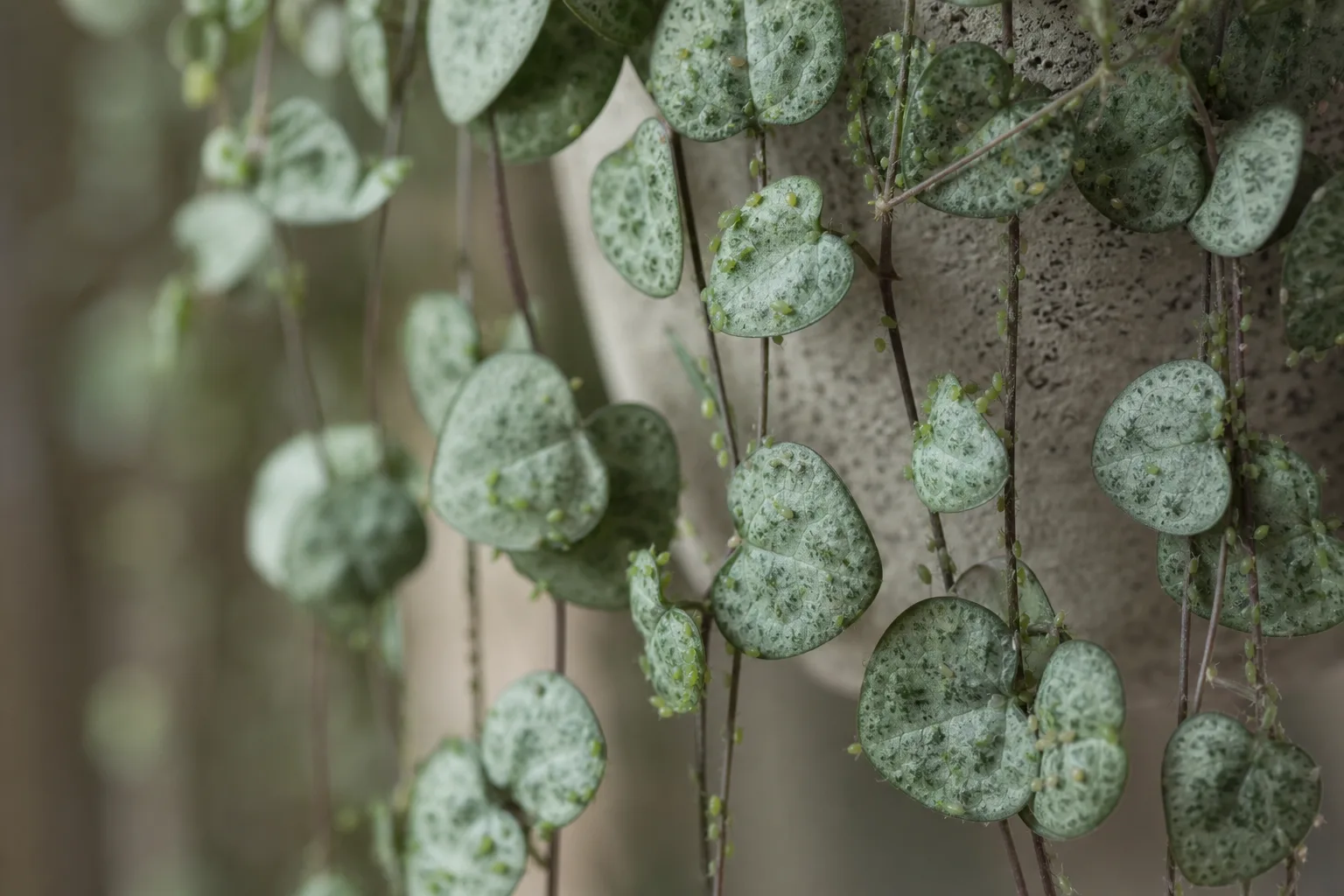
Aphids on String of Hearts: Causes, Checks & Fixes
This guide covers aphids on String of Hearts. See also the general Aphids guide, watering, and light pages for this plant.
Aphids on String of Hearts: Causes, Checks & Fixes
Quick answer
Aphids are common soft-bodied sap feeders on houseplants. On String of Hearts (Ceropegia woodii), they cluster on the softest tissue-new strand tips, unfurling heart leaves, and the joints where leaves meet wiry pink stems. NC State Extension lists aphids among insects to monitor on Ceropegia woodii, alongside mealybugs and scale.
The telltale sign is not just insects but sticky honeydew-a shiny, tacky residue that can attract ants and support sooty mold on leaf surfaces. Because this vine trails in a dense tangle, aphids often hide on undersides and at nodes until honeydew or ant trails give them away.
First step: isolate the plant and rinse every strand and leaf underside with a firm stream of water. Hold the pot tilted so you knock pests off without flooding tuberous roots. Confirm live aphids remain before moving to soap sprays.
What aphids look like on String of Hearts
Aphids are small, pear-shaped insects-often green, but also black, pink, yellow, or brown depending on species. On String of Hearts you usually find them in groups, not scattered singly:
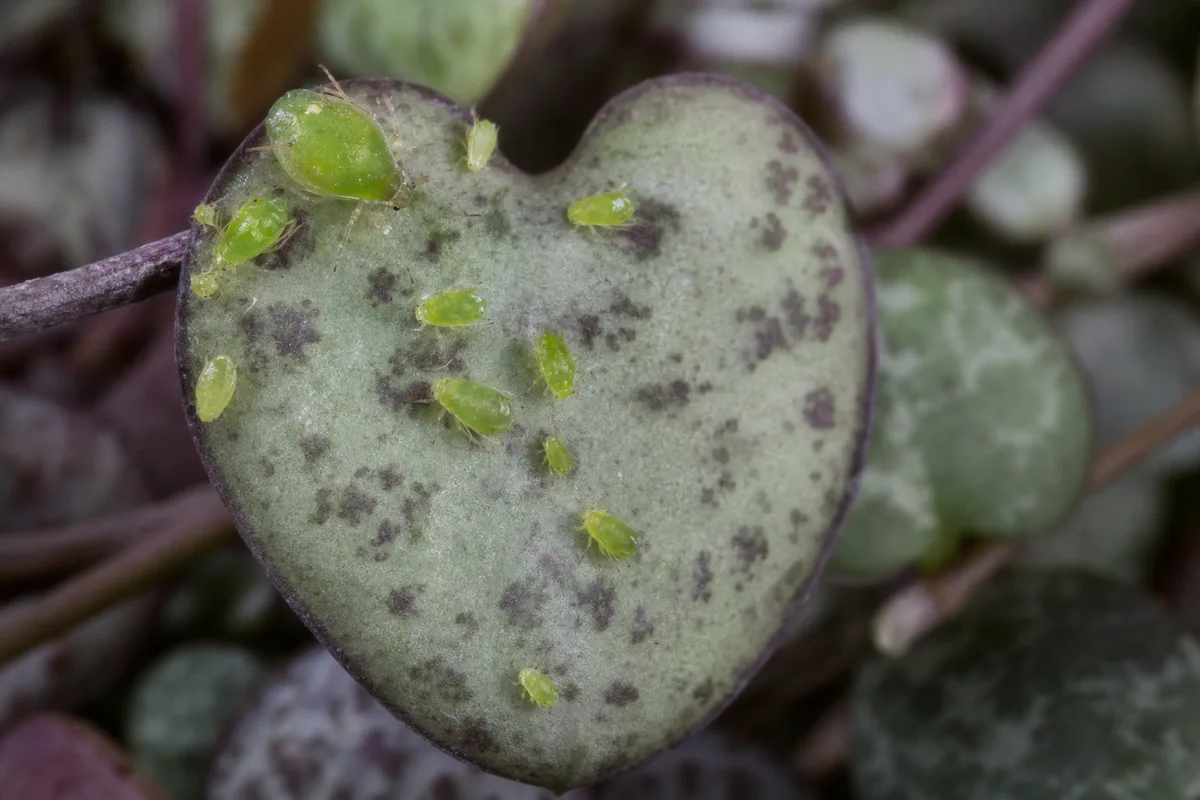
Aphids symptoms on String of Hearts - compare with healthy tissue on the same plant.
- Strand tips where new pairs of heart leaves are opening
- Leaf nodes along pink wiry stems, especially in the inner tangle where strands cross
- Undersides of young leaves, which stay thinner and softer than mature foliage on this succulent vine
- Near aerial tubers when stems rest against moist soil or pot edges
Visible damage follows feeding patterns. New leaves may curl, pucker, or look smaller than normal. Mature leaves farther down the strand may look fine while only the growing tips show trouble. Leaves can take on a dull, shiny coat from honeydew even when aphid numbers are still modest.
Ants on the hanging basket hook, shelf below, or neighboring pots often appear before you spot the insects themselves. Ants harvest honeydew and protect aphid colonies from predators, so ant traffic is a strong secondary clue.
Black sooty mold may follow heavy honeydew. It wipes off with a damp cloth and does not infect Ceropegia tissue directly, but a thick coating blocks light on affected leaves.
Why String of Hearts gets aphids
String of Hearts is not unusually pest-prone, but its growth habit creates specific weak points aphids exploit.
Tender new growth is always available somewhere on the vine. Even slow-growing indoor plants push soft shoots at strand ends during spring and summer. Aphids feed on soft, new plant growth and reproduce quickly on it. Excess nitrogen fertilizer pushes even softer shoots that attract colonization.
The trailing mass hides pests. Heart-shaped leaves spaced every few inches along thin stems create dozens of small crevices. Aphids tuck under young leaves and at forks where multiple strands overlap-exactly where a quick glance from above misses them.
Introduction routes are common indoors. New nursery plants, open windows in warm weather, and summer outdoor “vacations” on a porch can all bring aphids inside. Skipping quarantine is the fastest way they reach a clean String of Hearts collection.
Stress lowers resistance without causing aphids directly. Leggy growth from low light, irregular watering, or an oversized pot staying damp too long does not create aphids, but stressed plants are easier targets once insects arrive. String of Hearts stores water in tuberous roots and prefers fast-draining mix; chronically wet soil weakens the vine while doing nothing to prevent pests.
Leaf curling overlap. String of Hearts leaves can curl from insufficient light or as part of normal growth indoors. That overlap is why pest confirmation matters-you need insects, honeydew, or ants-not curling alone.
How to confirm the cause
Work through these checks in order before you treat:
- Find live insects - Use a hand lens on newest strand tips and leaf undersides. Aphids are soft-bodied and usually stay clustered; they do not jump when disturbed the way whiteflies do.
- Check for honeydew - Run a finger along a young leaf or stem. Sticky, shiny residue that transfers to your skin confirms sap feeding. Dry, matte leaves with no insects point elsewhere.
- Look for ants - Ant trails on basket hardware or surfaces below the pot strongly suggest aphids or other honeydew producers on the vine above.
- Inspect sooty mold - Black film that wipes off with a damp cloth indicates honeydew underneath. Mold alone without insects may mean a past infestation-keep scouting.
- Rule out mealybugs and scale - Mealybugs look cottony white at nodes. Scale forms immobile brown or tan bumps on stems. Neither moves in loose clusters like aphids.
- Separate light stress from pest curl - Uniform pale, widely spaced leaves along long bare stems suggest low light. Localized curl on only the newest tips with stickiness or insects suggests aphids.
- Review recent introductions - Did a new plant arrive, or did this basket sit outside? Timing with those events strengthens the aphid diagnosis.
If you find uniform plant health, firm tubers, no stickiness, and no insects on a close node-by-node inspection, aphids are unlikely-look at watering, light, or other problems instead.
First fix for String of Hearts
Isolate the plant, then rinse all strands and leaf undersides with a firm stream of water in a sink or shower.
This single step matches how UC IPM recommends knocking aphids off with a strong water spray and fits a hanging String of Hearts better than spot-dabbing alone. Hang or hold the pot tilted so water runs off without saturating tuberous roots and fast-draining mix.
- Work strand by strand from growing tips inward
- Direct spray at leaf undersides and stem joints where aphids cluster
- Let foliage dry in String of Hearts light guide the same day
- Keep the plant away from other houseplants until you confirm whether live aphids remain
Do not reach for insecticidal soap, neem, or alcohol until you have rinsed and re-inspected. Spraying blindly into a dense vine tangle wastes product and misses insects curled inside young leaves.
Step-by-step recovery
After the initial rinse, continue in this order based on what you find:
- Re-inspect in 24 hours - Aphids knocked off may not return immediately. Look at strand tips again with a lens. Any survivors warrant the next step.
- Apply insecticidal soap to contact insects - Clemson HGIC notes insecticidal soap works only on direct contact and must coat aphids on leaves and stems. Spray strand tips, nodes, and undersides until runoff. Use a product labeled for houseplants; do not mix homemade dish soap, which can burn foliage.
- Repeat on a 5–7 day interval - Aphid eggs and nymphs hatch on staggered schedules. UMN Extension recommends repeat applications because soaps have no residual activity. Plan two to three follow-up sprays even if numbers look low after the first treatment.
- Wipe honeydew and sooty mold - Once insects are controlled, rinse or wipe sticky residue from leaves so mold does not return. Insecticidal soap also helps wash honeydew and sooty mold from leaves.
- Manage ants if present - Sticky traps or ant barriers on basket hooks reduce ant protection of aphid colonies. Controlling ants helps naturally occurring predators work if the plant spends time outdoors.
- Trim only severely distorted tips - If a strand tip is heavily curled with dead tissue and no green growth point, cut back to healthy stem after pests are gone. Light distortion on one or two new hearts often outgrows itself.
- Hold fertilizer - Do not feed while the vine is under pest stress. Resume diluted fertilizer only after two weeks of clean new growth.
For heavy infestations where leaves are tightly curled around hidden colonies, UC IPM advises pruning infested tips so contact sprays can reach remaining insects. On String of Hearts, remove only the affected strand section-not the whole plant.
Recovery timeline
Expect gradual improvement rather than overnight reversal:
- 24–48 hours after rinsing - Live aphid count should drop sharply if spray coverage was thorough. Honeydew may still feel sticky until you wipe it.
- 1–2 weeks - New hearts opening at strand tips should look fuller and less curled if feeding has stopped. Repeat soap applications during this window catch hatching nymphs.
- 2–4 weeks - Sooty mold stops spreading and can be rinsed off. Older distorted leaves may remain slightly puckered; judge recovery by new growth, not old damage.
- 4–6 weeks - If no live aphids, honeydew, or new curl appear across two full spray cycles, the infestation is likely cleared. Keep the plant isolated one more week before returning it to a display shelf.
String of Hearts grows slowly indoors, so recovery signs appear on fresh strand tips first. A plant that keeps pushing firm new leaves with silver-green patterning is winning even if lower leaves still show old honeydew stains.
Lookalike symptoms
Several String of Hearts problems mimic aphid damage:
Low-light curling - Leaves curl and spacing widens along leggy strands without stickiness, insects, or ants. Moving to brighter indirect light improves new growth over weeks; no pest treatment needed.
Underwatering - Thin, flat, pale leaves on drooping strands with dry, lightweight pot. No honeydew. A thorough soak restores leaf texture in one to two days.
Mealybugs - White cottony masses at nodes and strand forks, not loose soft-bodied clusters. Alcohol dabs and soap work, but identification differs.
Scale - Immobile brown or tan bumps on stems. Scraping or repeated soap/oil contact is required; aphids move when disturbed.
Spider mites - Fine stippling and webbing, often in dry warm conditions. Mites are tiny and not pear-shaped; treatment overlap exists but inspection findings differ.
Getting the pest right matters because curled leaves from aphids shield insects from contact sprays until you rinse or prune enough to expose them.
Mistakes to avoid
- Treating once and stopping - Indoor aphids rarely disappear after a single spray. Eggs survive in nodes and curled tips.
- Soaking the soil while rinsing foliage - String of Hearts rots easily in wet mix. Tilt the pot and let water run off tubers and roots.
- Using harsh homemade soap - UMN Extension warns that homemade soap mixtures can burn plants. Use labeled insecticidal soap.
- Spraying oil or soap on sun-stressed leaves in heat - Succulent leaves in direct midday sun can scorch when wet. Treat in morning bright indirect light and let dry fully.
- Returning the plant to the shelf too soon - Winged aphids can disperse to neighbors. Finish isolation only after two weeks with no new activity.
- Fertilizing to “boost recovery” - Nitrogen pushes soft growth aphids prefer. Stabilize pest control first.
- Ignoring ants - Ants protect colonies; honeydew keeps coming until both are addressed.
String of Hearts is listed as non-toxic to cats and dogs by the ASPCA, but rinse soap residue from trailing vines before pets can reach them.
String of Hearts care cross-check
Pest recovery lasts longer when baseline care supports firm growth:
- Light - Bright indirect light with some morning sun keeps internodes tight and leaves thick. Leggy pale vines attract more pest attention.
- Water - Water when mix is mostly or completely dry. Tubers store moisture; soggy soil stresses roots without helping aphid control.
- Soil - Fast-draining, sandy or cactus-type mix prevents root rot on String of Hearts and keeps the plant metabolically steady during recovery.
- Airflow - Light air movement around hanging strands reduces stagnant pockets where honeydew and mold accumulate.
- Inspection habit - Weekly checks of strand tips during spring and summer catch aphids before colonies blanket new growth.
Correct care does not replace treatment, but a stressed vine in wet soil and dim light recovers slowly even after pests are gone.
How to prevent aphids next time
- Quarantine new plants two weeks before hanging them near your String of Hearts. Inspect undersides at arrival and again before merging collections.
- Scout strand tips weekly during active growth. One soft cluster is easier to rinse off than a tangled infestation.
- Limit nitrogen pushes - Use diluted balanced fertilizer at quarter to half strength every four to six weeks in spring and summer, not heavy feeds that produce soft aphid-friendly shoots.
- Rinse after outdoor time - If the basket spends summer on a porch, shower strands before bringing it indoors to knock off hitchhiking aphids.
- Control ants on hooks and shelves - Early ant activity often precedes visible aphid buildup on trailing vines.
- Keep neighboring plants clean - Aphids move between hosts. A heavily infested shelf mate reintroduces pests to a treated String of Hearts quickly.
Prevention on String of Hearts overview is mostly early detection plus isolation, not chemical prevention.
When to worry
Escalate treatment or consider trimming back harder when:
- Colonies cover most active strand tips despite two soap cycles
- New growth stops entirely while insects and honeydew persist
- Ants swarm multiple strands and reinfestation returns within days of rinsing
- Leaves show virus-like mottling after heavy aphid feeding-uncommon indoors but possible with some aphid species; distorted mottled growth usually will not revert
Most String of Hearts survive aphids when caught early. The plant becomes harder to save when sap loss continues for weeks across many strands while tubers soften from unrelated overwatering-address pests and soil moisture together if both are off.
Conclusion
Aphids on String of Hearts announce themselves on soft strand tips and leaf nodes through clusters of small insects, sticky honeydew, and sometimes ants or sooty mold-not through vague wilting alone. Isolate the vine, rinse every trailing strand thoroughly, then follow with labeled insecticidal soap on repeat intervals until two weeks pass with no live aphids.
Judge success by firm new hearts at growing tips, not by old puckered leaves lower on the strand. Keep quarantine, weekly scouting, and moderate feeding as habits, and this slow-growing succulent vine usually returns to clean trailing growth without heroic measures.
When to use this page vs other String of Hearts guides
- String of Hearts watering guide - Use for routine moisture checks before assuming aphids is the main issue.
- String of Hearts problems hub - Browse all 45 common issues on this species.
- Curling Leaves on String of Hearts - Different entry point when symptoms overlap with aphids.
- Mealybugs on String of Hearts - Different entry point when symptoms overlap with aphids.
- Leaf Drop on String of Hearts - Different entry point when symptoms overlap with aphids.