Curling Leaves on String of Hearts: Causes, Checks & Fixes
Quick answer
Curling on String of Hearts usually means one of four patterns: soft inward roll from thirst, firm small cupping from low light, twisted new tips from aphids, or soft pale cupping on wet soil when tubers fail. Run the taco test and check soil moisture before you water or move the pot.
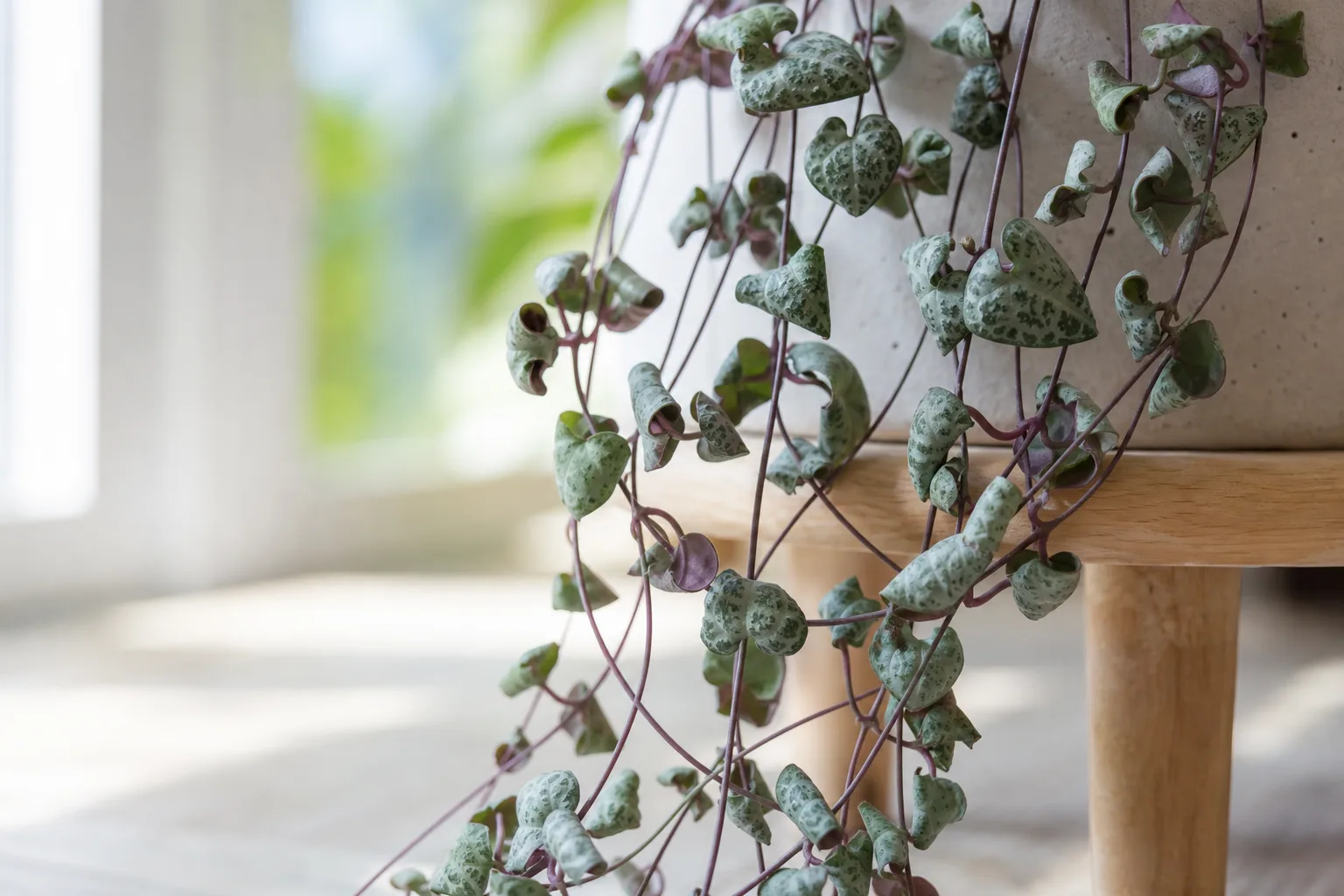
Curling Leaves on String of Hearts: Causes, Checks & Fixes
This guide covers curling leaves on String of Hearts. See also the general Curling Leaves guide, watering, and light pages for this plant.
Curling Leaves on String of Hearts: Causes, Checks & Fixes
Quick answer
Curling leaves on String of Hearts (Ceropegia woodii) fall into four distinct patterns-not one generic symptom. Thirst curl rolls soft hearts inward on dry soil. Low-light cupping keeps leaves firm but small and pale on stretched vines. Pest twist puckers new tips with honeydew or stippling. Rot-related curl looks like thirst on wet soil when tubers can no longer move water up the strand.
First step: run the taco test and check soil moisture before you water or relocate the pot. Pinch a heart-shaped leaf. Soft flat hearts that fold easily with dry light soil need one deep watering-not misting. Firm plump leaves with wide spacing between pairs need brighter light first. Wet heavy soil with soft tubers means stop watering and inspect roots, not another soak.
| Pattern | Leaf feel | Soil / tubers | First action |
|---|---|---|---|
| Thirst curl | Soft, thin, folds flat in taco test | Dry throughout; firm tubers | Deep water once; discard saucer water |
| Low-light cupping | Firm but small, pale, faded marbling | May be moderately dry; firm tubers | Move to brighter east or filtered west window |
| Pest twist | Uneven puckering on newest hearts | Any moisture; sticky residue at nodes | Isolate; rinse; treat aphids per our aphids guide |
| Rot mimicry | Soft, pale, wilt-like cupping | Wet, heavy; soft or sour-smelling tubers | Stop watering; unpot and inspect-see wilting guide |
Curling vs. drooping vs. wilting vs. underwatering
These symptoms overlap on trailing succulents, but the posture tells you which page to trust.
Curling (this page) means the leaf margin rolls inward or the heart cups along its edges while the strand may still hold some structure. The tissue is changing shape-conserving moisture, reaching for light, or distorting from pests-not necessarily collapsing.
Drooping leaves describe limp posture: strands hang straight, hearts lose their plump curve, and the whole vine looks deflated. Droop can come from thirst or root failure; curl is more about edge shape than strand collapse.
Wilting is acute collapse-thin papery leaves and limp stems that may look identical whether the mix is dry or wet. When cupped leaves also feel limp and the pot is heavy, wilting and rot mimicry overlap; follow the wet-soil branch on our wilting page before watering.
Underwatering is the drought cause behind thirst curl. Use that guide for full dry-down schedules and taco-test detail. This page owns the four-pattern split when you are not sure whether curl means thirst, light, pests, or failing tubers on damp mix.
Not enough light owns chronic etiolation-wide internode gaps, faded marbling, and firm small cupping over months. Low-light curl here is the acute cupping signal before you open the full light-recovery playbook.
What curling leaves look like on String of Hearts
Healthy hearts are small, plump, and marbled dark green with silver on top and purple underneath, spaced roughly every 7–8 cm (3 inches) along pink wiry stems. Problem curl shows up along trailing strands:
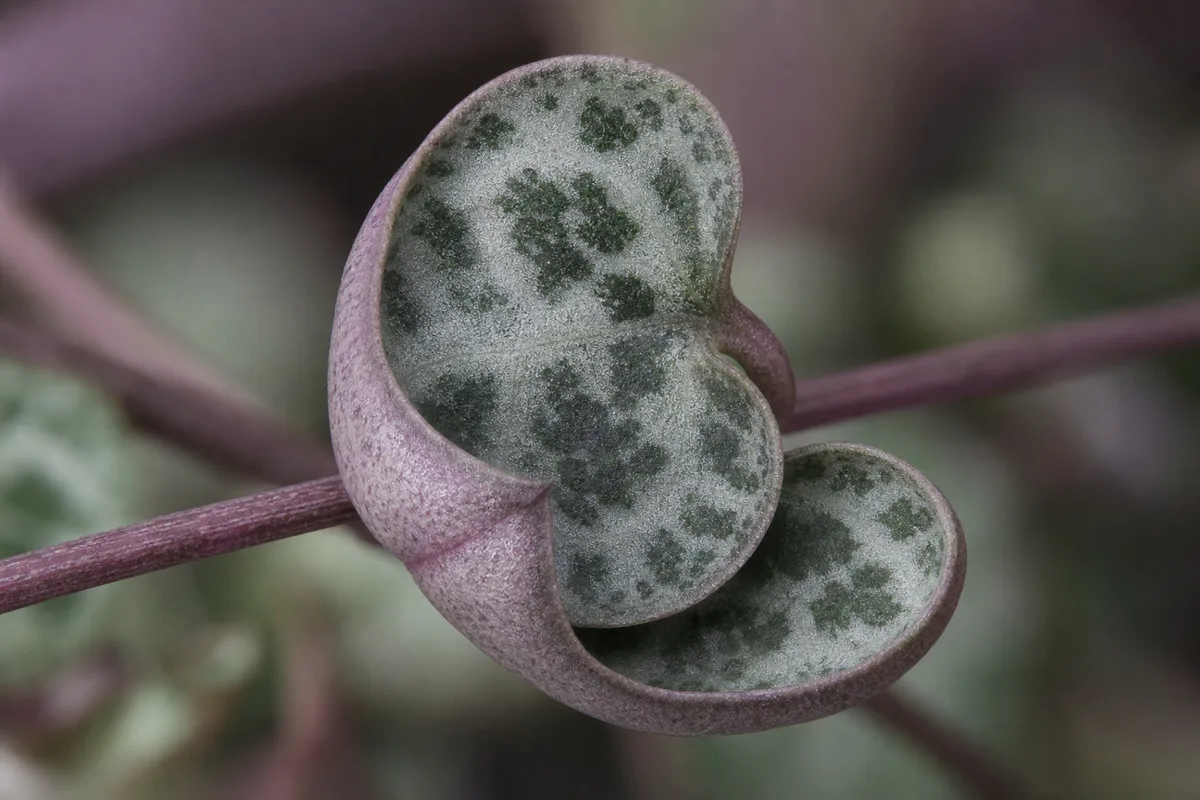
Curling Leaves symptoms on String of Hearts - compare with healthy tissue on the same plant.
- Thirst curl - leaves roll inward or cup along the edges, feel thin and soft, and fold flat in the taco test; soil is dry throughout the pot and aerial tubers stay firm
- Low-light curl - leaves stay firm but small and pale, with gaps over 7–8 cm between pairs; silver marbling fades and stems reach toward the window
- Pest curl - newest hearts twist or pucker unevenly; look for stippling, honeydew, or insects at nodes between leaves and aerial tubers
- Rot-related stress - soft pale cupping with wet heavy soil and mushy tubers at the base; curling here is a wilt signal, not drought
Already-curled old leaves may never flatten fully. Track whether new hearts emerge plump, marbled, and properly spaced.
Documented recovery case: An east-window hanger showed taco-test flat hearts and mix dry 12 days in late spring. One bottom-water soak for 25 minutes plumped the nearest leaf pairs within 36 hours; older cupped hearts near the soil line stayed slightly curled but new growth came in firm and silver-marbled-matching the pattern where mild thirst relaxes quickly but hardened tissue does not retroactively flatten.
Why String of Hearts leaves curl
This tender succulent vine stores water in tuberous roots and bead-like aerial tubers along wiry stems. When reserves drain during a long dry spell, leaf tissue curls inward to reduce surface area-that is thirst curl, the most common indoor trigger. NC State Extension notes that wilted leaves result from underwatering on this species; early thirst often shows as cupping before full strand collapse.
Insufficient light produces a different curl pattern. In strong light, leaves stay dark green with silver marbling; without enough brightness they turn light green and spaced farther apart. NC State states that large gaps between the leaves indicate the plant is not getting enough light. Pale, stretched vines with small firm cupped hearts need brighter placement-not more water. See our String of Hearts light guide for window placement and acclimation.
Pest pressure is less common but worth ruling out. NC State recommends monitoring for aphids, mealybugs, and scale on this species. Aphids on tender new growth can distort unfolding leaves and leave sticky honeydew along wiry stems. Distorted tips that persist after watering and light are corrected need a dedicated pest pass-start with our aphids on String of Hearts guide.
Overwatering and root failure rarely cause classic inward curl from the edges alone, but rotting tubers can no longer move water up the vine even when soil is wet-leaves may look soft and pale in a pattern that mimics thirst. Wisconsin Horticulture Extension describes this species as easily killed by overwatering and notes it should be watered only when dry. Check tuber firmness before watering again. Advanced cases belong on our root rot and wilting pages.
Heat-stress afternoon curl can appear on firm tubers after a sudden move to hot west glass-leaves cup during peak sun but recover overnight once light is filtered. That pattern is environmental, not thirst; see heat and sunburn notes in our light guide and sunburn page.
How to confirm the cause
Work through checks in this order:
- Taco test - plump firm leaves resist bending; thirsty leaves fold like a taco shell
- Pot weight and soil moisture - lift the pot and probe an inch or two below the surface; dry light pots support thirst diagnosis
- Spacing and color - wide internode gaps over 7–8 cm with washed-out green point to light stress even if soil is moderately dry
- Tuber firmness - bead-like aerial tubers and basal tubers should feel solid; soft tubers with sour-smelling mix suggest rot
- Pest scan - inspect nodes and leaf undersides with magnification if new growth stays distorted after watering and light are corrected
Do not assume every curl means underwatering. Adding water to a plant already sitting in damp mix can worsen tuber rot on a species that tolerates drought far better than soggy soil.
If the mix repels water despite looking dry on top, surface crust may be hydrophobic-see our dry hydrophobic soil guide before assuming the plant is fully hydrated.
First fix for String of Hearts
If the taco test shows soft flat leaves and soil is dry: water until excess runs from the drainage hole, then discard saucer water. Hearts often plump within 24–48 hours. Bottom-watering for 20–30 minutes can help if the mix has gone hydrophobic. Match ongoing rhythm to our watering guide-allow soil to dry completely between waterings during active growth.
If leaves feel plump but pale with wide spacing: move the pot to bright, indirect sunlight with gentle morning sun. Acclimate over a week so shade-adapted tissue does not scorch-too much direct sun scorches leaves on this plant.
If pests are confirmed: isolate the plant, rinse strand undersides, and follow the treatment sequence on our aphids page-insecticidal soap on a cool morning following label directions works for most soft-bodied pests on this species.
If soil is wet and tubers are soft: stop all watering. Unpot, trim mushy tissue to firm tuber, air-dry cut surfaces 24–48 hours, then repot into fast-draining cactus-style mix. Full salvage steps are on our wilting and root rot guides.
Apply one fix at a time. Do not repot, fertilize, and relocate on the same day.
Step-by-step recovery
After thirst curl:
- Confirm drainage holes are open and the basket is not sitting in standing water after the soak.
- Recheck leaf texture at 24 and 48 hours-plumping means tubers recharged.
- Resume moisture-guided watering per our watering guide; do not return to a fixed weekly calendar.
After low-light cupping:
- Place within 60–90 cm of an east or filtered west window.
- Rotate the pot weekly for even exposure.
- Expect tighter spacing and restored marbling on new leaves within three to six weeks; trim bare stretched sections after new growth looks healthy.
After pest curl:
- Isolate until honeydew and live insects are gone from new tips.
- Inspect nodes weekly during active growth.
- Judge success by two to six weeks of clean new hearts, not by old twisted tissue.
After rot mimicry:
- Salvage firm vine sections and aerial tubers if the basal caudex is lost.
- Wait at least a week before the first cautious watering on repotted tubers.
- Propagate backup strands while the main plant stabilizes.
Recovery timeline
Mild thirst curl often relaxes within one to two days after proper watering. Light-stressed plants need three to six weeks of brighter exposure before new leaves show tighter spacing and restored marbling. Pest-distorted tips need two to six weeks of clean new growth to confirm treatment worked. Severely dehydrated leaves that have already hardened into a cupped shape may stay that way until replaced by fresh growth.
Rot-related cupping on wet soil rarely improves without unpotting and tuber salvage-expect two to four weeks before new firm growth if enough healthy tissue remains. Heat-stress afternoon curl that resolves overnight needs no extended recovery window.
Lookalike symptoms
Drooping without edge roll - limp strands with thin leaves but little inward cupping often fit drooping leaves better than this page. Check pot weight first.
Full strand collapse on wet soil - that is wilting with uptake failure, not edge curl alone.
Crispy brown margins - sunburn or underwatering past the curl stage; see sunburn-scorched leaves if damage followed a sudden move to harsh afternoon sun.
Winter slowdown - slightly softer leaves in low winter light with dry firm tubers may mean dormancy, not emergency thirst. Reduce watering per our watering guide rather than soaking on a summer schedule.
What not to do
Do not mist for humidity-curling on this semi-succulent is rarely solved by misting; prioritize soil moisture and light first. Do not water on a fixed weekly schedule without checking dryness. Do not fertilize curled stressed vines hoping leaves uncurl. Do not blast with afternoon sun through hot glass after moving from a dim shelf.
String of Hearts is non-toxic to cats and dogs; keep trailing strands out of reach if you treat with soap sprays.
How to prevent curling leaves on String of Hearts
Learn how fast your pot dries in bright light-typically every 10–14 days in summer, less in winter dormancy. Hang the plant at window height in an east or filtered west window so leaves receive real brightness, not just ambient room light. Rotate the pot weekly for even exposure. Inspect nodes during spring and summer flush for aphids before distortion spreads.
Use gritty fast-draining mix and a container with drainage holes sized to the tuber mass-oversized pots stay wet too long around sparse roots. Review our overview and soil guide for baseline care that keeps curl triggers rare.
When to worry
Treat curling as urgent when cupped leaves pair with wet heavy soil and tubers that squish when pressed-that pattern means the water pathway has failed, not that the plant needs another drink. Wet-soil curl that worsens over 48 hours despite stopping water needs immediate unpotting.
Also act quickly when new tips stay twisted with stippling or honeydew after you have corrected watering and light-pest distortion spreads along fast-growing spring strands.
Mild thirst curl on firm tubers with dry soil is low urgency-one thorough watering cycle usually resolves it. If cupping persists on confirmed dry soil after 48 hours in appropriate light, inspect roots and drainage before assuming drought alone.
Related String of Hearts guides
- String of Hearts overview
- String of Hearts watering
- String of Hearts light
- Underwatering on String of Hearts
- Not Enough Light on String of Hearts
- Drooping Leaves on String of Hearts
- Wilting on String of Hearts
- Root Rot on String of Hearts
- Aphids on String of Hearts
- All String of Hearts problems
Conclusion
Curling on String of Hearts rewards a simple habit: taco test first, then match the pattern-soft thirst roll, firm light cupping, pest twist, or wet-soil rot mimicry-before you water, move, or spray. One correct action beats stacking treatments, and new plump hearts with restored marbling are the scorecard that matters more than old cupped tissue ever flattening.