Drooping Leaves on String of Hearts: Causes, Checks & Fixes
Quick answer
First check whether your String of Hearts pot is light and dry or heavy and wet. Light + dry + thin leaves usually means thirst; heavy + wet + soft tubers means root stress, not a watering shortage.
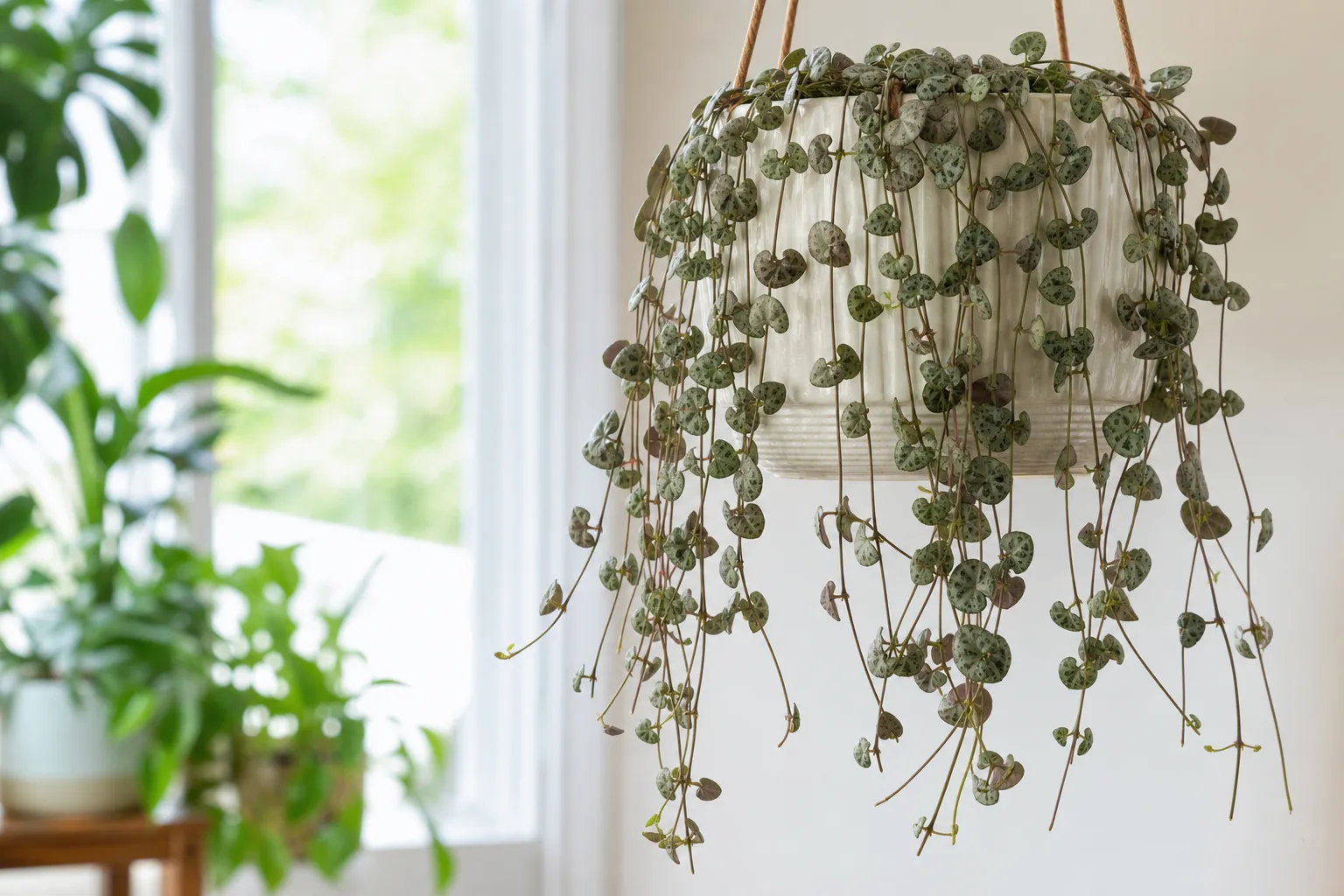
Drooping Leaves on String of Hearts: Causes, Checks & Fixes
This guide covers drooping leaves on String of Hearts. See also the general Drooping Leaves guide, watering, and light pages for this plant.
Drooping Leaves on String of Hearts: Causes, Checks & Fixes
Quick answer
Drooping leaves on String of Hearts are a posture clue, not a diagnosis by themselves. String of Hearts overview stores water in tuberous roots and stems, so it can droop when the mix is bone dry or when roots stay too wet and stop functioning (NC State Extension, Missouri Botanical Garden).
Your first move is simple: lift the pot before you water. If the pot is light and the mix is dry, start with one deep watering. If the pot is heavy and damp, watering again can accelerate root loss.
Normal trailing vs problem droop
Mature String of Hearts naturally hangs downward, especially in baskets. Healthy trailing still looks lively: leaves stay plump, patterned, and slightly firm.
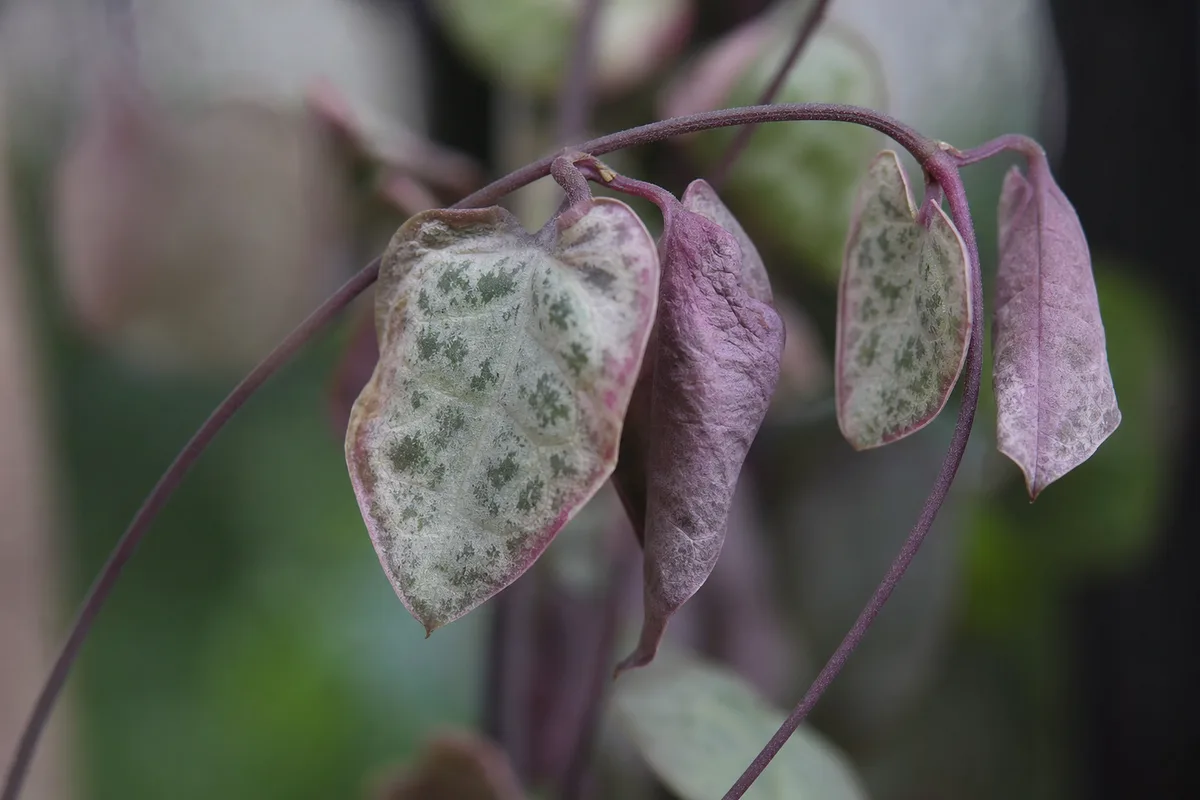
Drooping Leaves symptoms on String of Hearts - compare with healthy tissue on the same plant.
Problem droop looks deflated. Leaves feel thin, strands collapse near the soil line, and the plant loses its springy look even after cool overnight temperatures. A “taco fold” when you gently bend a leaf usually indicates water stress rather than normal drape.
Drooping vs wilting vs underwatering
Use this page when you are deciding why leaves are hanging limp right now. For deeper cause-specific recovery, also see wilting, underwatering, overwatering, and root rot.
- Drooping leaves: visual posture change; needs dry-vs-wet diagnosis.
- Wilting: broader collapse pattern that can include stems and tissue softening.
- Underwatering: one cause of drooping, confirmed by dry mix and firm storage tubers.
Why String of Hearts leaves droop
String of Hearts prefers String of Hearts light guide and dry-down cycles in a fast-draining mix (NC State Extension, Wisconsin Horticulture). When those conditions drift, droop follows.
Most common plant-specific triggers:
- Extended dry period in active growth
The plant uses stored water from tubers first. Leaves become thin and less turgid before strands slump. - Wet-root stress from excess moisture
Overwatered media lose air space, roots decline, and leaves droop even when soil is wet (Missouri Botanical Garden, University of Maryland Extension). - Hot window shift without acclimation
Afternoon heat can temporarily outpace root uptake. - Dormancy mismatch in winter
Growth slows and water demand drops; keeping summer watering frequency can push roots into chronic dampness (NC State Extension).
Dry droop vs wet droop: fast checks
- Likely dry droop
- Pot feels light
- Mix is dry deeper than two inches
- Leaves feel thin or fold easily
- Tuber nodes stay firm
- Likely wet droop
- Pot feels heavy for days
- Mix stays damp and cool
- Leaves yellow, soften, or turn translucent
- Root zone may smell sour in advanced cases (Missouri Botanical Garden)
- Possible heat droop
- Afternoon limpness, morning recovery
- Soil moisture and tuber firmness remain normal
How to confirm the cause
Follow this order so you do not mis-treat the plant:
- Check pot weight. A light pot usually means low remaining moisture (Missouri Botanical Garden).
- Probe deep moisture. Test 2 inches down, not just the dry surface crust.
- Press aerial tubers. Firm = storage still intact; mushy = stress or decay risk.
- Read leaf texture. Thin/papery supports drought; soft/translucent with wet media supports root stress.
- Assess context. Recent repot, sudden high heat, or winter String of Hearts watering guide often explains ambiguous symptoms.
If signs conflict, defer watering, recheck in 12-24 hours, and inspect roots if needed.
First fix for String of Hearts
If confirmed dry droop:
Water deeply until runoff, let the pot drain fully, then stop. Do not “top up” again the next day. Leaves often begin recovering within hours and usually improve clearly in 24-48 hours.
If confirmed wet droop:
Stop watering immediately. Unpot, trim mushy roots/tubers with clean tools, and repot into fresh gritty mix in a container with drainage. Keep in bright indirect light and wait for partial dry-down before the next watering.
Make one major correction first, then reassess. Stacking fertilizer, sprays, and String of Hearts repotting guide together makes diagnosis harder.
Step-by-step recovery
Recovery after dry droop
- Give one complete soak with drainage.
- Return to bright indirect light (not harsh midday direct sun).
- Recheck plumpness at 24 and 48 hours.
- Resume watering only after full dry-down.
- Trim leaves that stay crisp or fully desiccated.
Recovery after wet droop
- Remove old wet media from roots and tubers.
- Cut back to firm tissue only.
- Repot shallowly in fast-draining mix.
- Keep warm, airy, and bright indirect while recovering.
- Water lightly only when the new mix has dried well.
Recovery timeline
- Mild dry droop: visible rebound often within 24-48 hours.
- Severe dehydration: several days and one to two careful watering cycles.
- Wet-root recovery: commonly 2-4+ weeks for stable new growth during active season.
- No recovery signs: if droop worsens despite correct moisture, inspect roots again and consider propagating healthy vines.
Lookalike problems to rule out
- Low light stretch: long bare internodes and smaller leaves point more to not enough light than moisture.
- Root-bound stress: fast dry-down and repeated droop can reflect root bound conditions.
- Hydrophobic mix: water runs through but root ball stays dry in dry hydrophobic soil.
- Repot shock: brief droop after disturbance can match repotting stress, especially if roots were trimmed.
What not to do
- Do not water on a fixed weekly calendar.
- Do not treat every droop as thirst without checking root-zone moisture.
- Do not move a stressed plant into sudden strong direct sun to “dry it faster.”
- Do not fertilize while leaves are actively drooping.
- Do not ignore persistent fungus gnats; high moisture and organic-rich wet media favor them (UC IPM).
String of Hearts is listed as non-toxic to cats and dogs (ASPCA), but keep damaged vines away from pets if you apply any treatment products.
How to prevent drooping next time
Use your plant’s dry-down rhythm, not a strict schedule. Grow in bright indirect light, a draining pot, and a gritty mix so roots can re-oxygenate between waterings (NC State Extension).
Helpful prevention anchors:
- Review String of Hearts watering.
- Check your soil mix and repotting setup.
- If symptoms overlap, compare with wilting and overwatering.
When to worry
Escalate quickly if droop comes with wet soil plus soft blackened roots, sour odor, stem-base collapse, or rapid yellowing. That pattern suggests advanced root failure and can become unsalvageable if ignored.
If a confirmed dry plant does not improve at all 48 hours after a full soak, inspect for root loss, compacted media, or hidden drainage issues.
Conclusion
Drooping String of Hearts leaves are fixable most of the time when you diagnose before you act. Pot weight, deep moisture, and tuber firmness will usually tell you whether your next step is water or rescue. That pause is what prevents the common cycle of alternating drought and overwatering stress.
When to use this page vs other String of Hearts guides
- String of Hearts watering guide - Use for routine moisture checks before assuming drooping leaves is the main issue.
- String of Hearts problems hub - Browse all 45 common issues on this species.
- Root Rot on String of Hearts - Different entry point when symptoms overlap with drooping leaves.