String of Hearts Propagation: Cuttings & Tubers
String of Hearts Propagation: Cuttings & Tubers
String of Hearts Propagation: Cuttings & Tubers
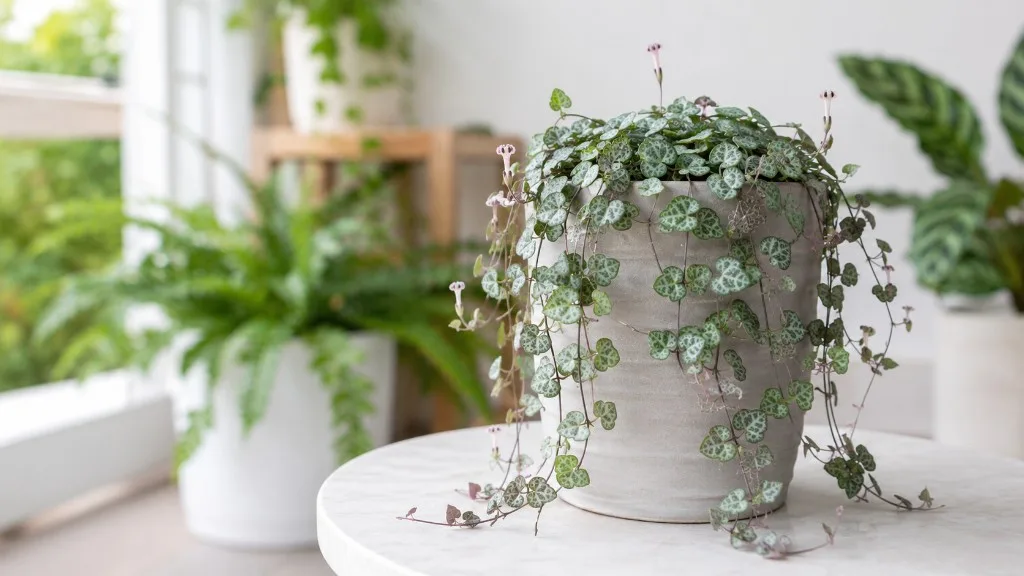
String of hearts propagation is one of the most rewarding projects in indoor plant care because the plant practically advertises where to cut. Ceropegia woodii - the botanical name behind string of hearts, rosary vine, and chain of hearts - evolved on rocky hillsides in southern Africa as a tuberous geophyte: a plant that stores energy in bulb-like organs to survive seasonal drought. Every node along its trailing stems carries root primordia ready to activate, and mature vines often develop aerial tubers - the small bead-like swellings that look like pearls along the strand. You are not forcing a reluctant houseplant to cooperate; you are redirecting biology the species already uses to spread across thin soil pockets in harsh light.
The practical decision is which method fits your goal: a stem cutting in water for fast visible roots, soil propagation for tougher root systems without a water transition, aerial tuber layering for the safest beginner start, or the butterfly method for maximum yield from a single strand. This guide covers node and tuber anatomy, timing, rooting setup, and aftercare for each pathway.
Why String of Hearts Is Built for Propagation
String of hearts belongs to Apocynaceae, the dogbane family, but behaves like a drought-adapted succulent vine rather than a typical flowering shrub. In its native range across southern Africa from Zimbabwe to eastern South Africa, it trails across rocky slopes and thin soil, anchoring wherever a node contacts moisture while tubers below ground and along the vine store reserves. That dual strategy - nodes for quick anchoring, tubers for energy insurance - is exactly what home propagation exploits. A severed vine with intact nodes does not need weeks of callus formation the way many thick cactus pads do; it needs contact with moisture, warmth, and String of Hearts light guide.
String of hearts rewards a minimal toolkit: sharp sterilized scissors, a small pot or clear jar, well-draining mix, and patience. The ASPCA lists Ceropegia as non-toxic to cats and dogs, so sharing cuttings with pet-owning friends is straightforward. One non-negotiable rule applies regardless of method: every viable cutting needs a node, not just a pretty heart-shaped leaf.
Nodes, Tubers, and Root Primordia
The node on string of hearts is the junction where each leaf petiole meets the stem. Because leaves grow in opposite pairs along the vine, a single stem segment between two leaf pairs often contains two nodes - one on each side where the leaf attaches. Those nodes house meristematic tissue and pre-formed root primordia: cells poised to generate roots when exposed to warmth, moisture, and oxygen. This is why a leaf snipped off without stem tissue may stay green for weeks yet never produce a vine - it lacks the growth point needed to branch.
Aerial tubers are a separate propagation asset. These firm, pea-to-marble-sized beads form along mature vines, often near nodes, and function as energy storage organs - miniature versions of the larger underground tuber at the plant’s base. NC State Extension notes that aerial tubercles along the stem will root and produce another plant if the stem comes in contact with soil. A tuber attached to even a short piece of vine carries enough stored starch to fuel root initiation before the new plant has a fully functioning photosynthetic system. That stored energy makes tuber propagation the most forgiving method for beginners, even though it takes longer to show above-ground growth than a water cutting with multiple submerged nodes.
Understanding this anatomy changes where you cut. For standard stem cuttings, you want sections with at least three to four nodes and healthy firm leaves. For tuber work, you want plump, not shriveled beads with green vine tissue still attached. For butterfly cuttings, you isolate a single node with its leaf pair and a few millimeters of stem on each side. In every case, the node or tuber is the engine; the leaves are passengers that speed up growth once roots connect.
When to Propagate Ceropegia woodii
Timing matters less than plant condition, but season still shifts the odds. String of hearts roots fastest during active growth - typically spring through early autumn when days are longer, temperatures sit in the comfortable indoor range, and the parent vine is pushing new pairs of leaves at the growing tip. Attempting propagation in the dead of winter is not impossible, but cool dim conditions can stretch a two-week water root into six weeks of anxious waiting, and wet soil stays dangerous longer when the cutting’s metabolism is slow.
The parent plant should look firm and actively growing, not recovering from a crisis. Avoid taking cuttings while the plant is wilting from drought, sitting in sour waterlogged mix, fighting a mealybug infestation, or adjusting to a new home after shipping. Propagation multiplies what you start with - healthy tissue becomes healthy plants, stressed tissue becomes rotting cuttings. If your string of hearts recently lost half its vines to overwatering, stabilize the parent first: correct the String of Hearts watering guide, refresh mix if needed, and wait for clean new growth before you harvest material.
Best Season and Parent Plant Readiness
Spring and early summer offer the best combination of warmth, light, and parent vigor. You do not need a calendar date - watch the plant. New leaf pairs opening at the vine tip, slightly faster pot dry-down, and firm tubers forming along older strands all signal readiness. A mature plant with vines at least 30–60 cm (12–24 inches) long gives you enough material to propagate generously without stripping the parent bare.
Signs the parent is not ready include yellowing leaves throughout the pot, mushy stems at the soil line, visible pests on leaf undersides, or vines that feel soft and wrinkled despite moist mix. Taking cuttings from that material usually wastes your effort and further weakens a plant that needs care, not surgery. One exception: if a healthy vine breaks accidentally, treat the detached section as a rescue cutting - firm tissue with nodes can root even when the parent is otherwise stressed, provided the broken piece itself is sound.
Tools and Sterile Cutting Technique
Gather sharp, clean scissors or pruning shears, small pots or propagation jars, fresh water or new potting mix, and optional bent paperclips or bobby pins for pinning vines to soil. Rub blades with rubbing alcohol or dip them in a 10% bleach solution for a few seconds, then rinse and dry. String of hearts stems are thin but carry sap; a clean cut heals faster and reduces entry points for rot organisms that thrive in propagation humidity.
Choose containers sized to the material. A cutting with two submerged nodes does not need a litre jar - a small glass keeps water fresher and makes root inspection easier. For soil, 8–10 cm (3–4 inch) nursery pots suit individual cuttings; shallow trays work better for butterfly batches. Drainage holes are non-negotiable for soil methods. For water propagation, any clear vessel that keeps leaves above the waterline while submerging nodes will work.
Work on a clean surface and process cuttings immediately after snipping. Letting cut vines sit on a dry counter for an hour is fine, but leaving them overnight in a hot room leads to shriveling.
How to Take Stem Cuttings the Right Way
Standard stem cuttings are the workhorse of string of hearts propagation because they balance speed, simplicity, and yield. Select a healthy trailing vine and identify a section with at least three to four nodes and firm, well-colored leaves. A cutting roughly 10–15 cm (4–6 inches) long gives you enough nodes to submerge or bury two while keeping upper leaves above the medium, which prevents rot and maintains photosynthesis during rooting.
Make your cut just below a node using your sterilized blade. The node immediately above the cut is your lowest rooting point; including one extra node below the cut end gives you a buffer if the tip dries slightly. Strip the leaves from the bottom one or two nodes so bare stem tissue can contact water or soil - wet leaves submerged in a jar invite decay and cloud the water with organic debris. Upper leaves should remain attached to support the cutting until roots take over water uptake.
If you are harvesting multiple cuttings from one long vine, work in sections rather than shaving the entire strand at once. Leave the parent enough foliage to recover, especially if you are propagating for fullness rather than replacing a dying plant. Each cutting becomes one rooted plant with a single dominant growing tip unless you use the butterfly method described later.
Finding Nodes and Making Clean Cuts
Run your finger along the vine and feel the slight thickening at each leaf-stem junction - that is the node. On string of hearts, leaves appear in pairs, so you will see two hearts at the same height on opposite sides of the stem, each with its own node. When in doubt, propagate segments that include visible pairs rather than internode-only sections between pairs; those paired zones are the densest rooting real estate.
Cut at a slight angle through healthy green stem, not woody brown tissue unless that is all that remains on an old vine - green tissue roots faster. Avoid crushing the stem with dull scissors; a ragged wound increases rot risk in water and soil alike.
Water Propagation for Stem Cuttings
Water propagation is the most popular string of hearts method because roots are visible within days. Fill a small clear jar with room-temperature water - tap water left to sit overnight works in most homes, though very chlorinated supplies may slow rooting slightly. Insert the cutting so at least two nodes sit below the waterline while all remaining leaves stay above the surface. Leaves that dip underwater will rot quickly and foul the entire setup.
Place the jar in bright indirect light with some gentle morning sun if available, away from heating vents and cold window glass. Change the water every five to seven days, or sooner if it looks cloudy or smells stale. Fresh water reoxygenates the rooting zone and limits bacterial growth that turns healthy nodes mushy. Within 10 to 21 days in warm active growth, you should see white or pale roots emerging from submerged nodes - first as tiny bumps, then as fine threads, then as a cluster worth transplanting.
Check progress weekly without pulling cuttings - disturbing fragile roots resets progress. Firm green or purple-tinted nodes are healthy; brown, slimy tissue means rot. Trim failed sections with sterile scissors, refresh the water, and continue. Transplant when roots reach 2–5 cm (1–2 inches), not when they fill the jar. Water roots shock easily in soil, so use lightly moist mix and withhold heavy watering for the first week after potting.
Soil Propagation for Stem Cuttings
Soil propagation skips the water-to-soil transition and often produces roots that handle dry-down better from day one. Fill a small pot with a fast-draining succulent mix - commercial cactus blend amended with extra perlite or pumice, or a homemade mix of potting compost, perlite, and coarse grit in roughly equal parts. Moisten the mix lightly so it feels like a wrung-out sponge, not wet mud.
Bury two nodes beneath the surface, pressing the stem gently into the mix so tissue makes firm contact. The lowest leaves should sit just above soil level. Some growers coil the remaining vine in a loose circle on top of the mix and pin it with paperclips so additional nodes touch the surface - a mini-version of the fuller-pot strategy covered later. Covering the pot with a clear plastic bag creates a humidity dome that reduces shriveling in dry homes; vent it daily to prevent mold.
Place the pot in bright indirect light and water sparingly - only when the top centimeter of mix dries. Overwatering before roots form is the number-one soil propagation killer. Roots typically develop in two to four weeks during active growth. A soft upward tug that meets slight resistance confirms anchoring. Soil propagation suits growers who prefer one-step rooting, though progress stays invisible until the tug test succeeds.
Propagating From Aerial Tubers at Nodes
Aerial tubers - the bead-like swellings along mature vines - are string of hearts’ secret weapon for easy propagation. These organs store carbohydrates and water, giving a detached or layered tuber enough energy to push roots even when conditions are less than perfect. You will most often see them on older strands that have hung in bright light for a year or more, though younger plants occasionally produce small beads along vigorous growth.
Tuber propagation works in two ways: layering while attached to the parent plant, or detaching and planting a tuber section. Both exploit the same biology; layering is lower-risk because the parent vine continues feeding the tuber through the attached stem until independent roots form.
Layering Attached Beads and Detached Tubers
For attached layering, identify a firm aerial tuber on a vine you can reach toward a pot of moist well-draining mix - either the parent pot or a new container sitting beside it. Lay the tuber on the soil surface or press it barely beneath the top layer; do not bury it deeply like a bulb. Use a bent paperclip, bobby pin, or small stone to hold the tuber in contact with the mix while the rest of the vine remains on the parent plant. Keep the soil lightly moist and provide bright indirect light. Over four to eight weeks, roots grow from the tuber into the mix. When you see new growth emerging near the tuber - a fresh vine tip or new leaf pair - sever the connecting strand between the new plant and the parent with clean scissors.
For detached tuber propagation, cut a short vine section that includes a plump tuber and at least one node beside it. Lay the tuber on moist mix as above, with the node also touching soil. The attached vine segment can coil loosely in the pot. Water lightly when the surface dries. Because the tuber carries stored energy, these setups tolerate slightly more neglect than bare stem cuttings, though desiccation still kills them - shriveled beads should be discarded.
Choose tubers that feel firm like a grape, not soft or wrinkled. Size helps: larger beads root faster than pinhead tubers on young plants. If no aerial tubers are visible yet, your plant may simply be immature - use stem cuttings instead and revisit tuber methods next season.
The Butterfly Method for Maximum Yield
The butterfly method turns string of hearts propagation into a numbers game with a biological twist. Instead of a long vine cutting with one dominant growing tip, you cut individual nodes with their paired leaves - each piece roughly 6–12 mm (¼–½ inch) of stem on either side of the node, looking like a tiny butterfly. Without an apical meristem at the tip, apical dominance - the hormonal suppression of side buds by a leading shoot - disappears. Both axillary buds flanking the node receive equal signals, so butterfly cuttings commonly produce two vines instead of one, giving a fuller plant from a single node.
To execute the method, remove a section of vine with several leaf pairs. Cut between pairs so each cutting holds one node with two leaves attached and short stem stubs on both sides. Prepare a shallow tray with moist sphagnum moss or moist succulent mix - moss holds humidity around tiny cuttings better than coarse mix alone. Lay cuttings flat with the node pressed into the substrate and leaves resting on top. Cover with a clear lid or plastic bag to maintain high humidity, venting daily for airflow.
Keep the tray in warm bright indirect light. Roots often appear within one to two weeks under good conditions, faster than many growers expect for such small tissue. Once each butterfly shows roots and tiny new vine nubs, remove the humidity cover gradually over a few days and treat them as normal young plants. Pot clusters of five to seven butterflies in an 10 cm (4 inch) pot for a bushy starter plant, or space them individually if you are building inventory for gifts.
Tiny butterfly pieces desiccate quickly without a humidity dome. Use this method when you want maximum plants from a single strand; for a first attempt, water cuttings or tuber layering are more forgiving.
Transplanting Rooted Cuttings and Tubers
Transplant timing depends on root quality, not root length alone. Water-rooted cuttings are ready when roots reach 2–5 cm (1–2 inches) and show branching - a tangled mass of 10 cm (4 inch) water roots shocks more easily than a compact cluster. Soil-rooted cuttings and tubers are ready when you feel gentle resistance on a tug test and see new vine or leaf growth.
Choose a pot one size up from the propagation container - usually 8–10 cm (3–4 inches) for a single rooted cutting. Use the same fast-draining mix as your mature string of hearts. Create a small hole, set the roots in without cramming them, and backfill so the lowest nodes sit just below the surface. Water thoroughly once, then let the mix approach dry before the next soak. Do not fertilize for four to six weeks; new roots are sensitive to salt buildup.
For water-rooted cuttings, transplant quickly after removing from the jar - water roots dry out in minutes. Some growers plant with the mix slightly drier than usual for the first week to limit rot at the transition; others water in once lightly. Both work if drainage is excellent and you watch for wilting. If leaves soften after transplant, increase humidity with a loose bag for a few days rather than drowning the mix.
Tuber-propagated plants often arrive with roots already in soil - simply move the whole rooted section to a permanent pot without disturbing the bead. Underground tubers may sit partially exposed; that is normal for String of Hearts overview and does not require deep burial.
Aftercare for New String of Hearts Plants
Newly propagated string of hearts plants need steadier, boring conditions than established specimens. Bright indirect light with optional morning sun, warm room temperatures between 18–27°C (65–80°F), and a watering rhythm that lets the mix dry mostly between soaks will carry most successes across the finish line. The goal in the first month is root expansion, not dramatic trailing length - a rooted cutting that pauses above ground while roots colonize the pot is behaving normally.
Hold off on fertilizer until you see active new growth - a fresh vine tip extending or new leaf pairs opening. Then feed at half the label strength of a balanced liquid fertilizer monthly through the growing season. Full-strength feeding on a tiny root system burns tips and sets the plant back further than skipping feed entirely.
Avoid String of Hearts repotting guide again immediately and rotate the pot weekly for even light. Watch for pests transferred from the parent - mealybugs hide at leaf axils - and quarantine new plants for the first month.
Common Propagation Mistakes and How to Fix Them
Most string of hearts propagation failures trace back to a short list of fixable errors. Submerging leaves in water rots the cutting from the top down while roots try to form below - strip lower leaves and keep foliage dry. Stagnant water suffocates nodes; change it weekly without exception. Overwatering soil before roots exist creates anaerobic mix that turns green stems brown - water only when the surface dries and use a smaller pot if in doubt.
Leaf-only cuttings without node tissue may root adventitiously but almost never produce a vine - discard the fantasy of propagating from a single heart-shaped leaf unless you are running a science experiment. Propagating from a sick parent spreads pests and weakness; stabilize the donor first. Too little light slows rooting until cuttings shrivel - move setups closer to a bright window or supplement with a grow light. Skipping nodes on short cuttings leaves nothing to root from - always include at least two nodes per piece.
Rot at a single node on an otherwise healthy multi-node cutting: remove the rotten section with sterile scissors, refresh water or replace soil, and continue. Shriveling with dry mix means underwatering during root formation - increase humidity with a bag or switch to water propagation for recovery. Shriveling with wet mix means rot has started underground - take a fresh cutting from higher on the parent vine and restart clean.
Making a Fuller Pot Through Strategic Propagation
Propagation is not only for new pots - it fixes a sparse crown on an existing plant. Mature string of hearts often trails at the edges while the top looks bare.
Trim long healthy vines and lay them across the soil surface, positioning nodes in contact with moist mix. Secure with bobby pins or garden staples and keep the mix slightly moist until nodes root - usually two to four weeks. For hanging baskets, plant three to five rooted cuttings or butterflies around the crown at once for a fuller cascade faster than a single trailing strand.
Comparing Propagation Methods Side by Side
Each string of hearts propagation method trades speed, effort, and yield differently. Water stem cuttings offer the fastest visible progress - roots in 10–21 days - and suit beginners who need feedback. Downsides include the water-to-soil transition and algae-prone jars in sunny windows. Soil stem cuttings take two to four weeks with less visible drama but produce tougher roots and one less transplant step. They fail more often when overwatered.
Aerial tuber layering is the lowest-skill method: firm beads on moist soil, wait four to eight weeks. Best for mature plants with visible tubers and growers who forget to change water. Detached tuber planting works similarly but suits beads you accidentally knock off. Butterfly method yields the most vines per centimeter of parent strand - two growing tips per node - but needs humidity control and more handling; rooting in one to two weeks under ideal warmth.
Choose water when you want to watch roots form and share the process with kids or friends. Choose soil when you prefer one-and-done rooting. Choose tubers when your plant already grew beads and you want the safest bet. Choose butterflies when you are maximizing count from limited material or building a bushy pot from scratch. None is universally superior; all require nodes or tubers and bright indirect light.
What Success Looks Like at Each Stage
Early success means firm nodes without slime and leaves that hold their color. White root bumps in water within two weeks, tug-test resistance in soil, or new vine emergence near a tuber all confirm progress. After transplant, look for new growth at the vine tip while older leaves stay firm. If nothing happens after six weeks in summer warmth, reassess light and moisture - string of hearts wants to root when conditions support it.
Conclusion
String of hearts propagation works because the plant already stores backup plans along every vine. Stem cuttings rooted in water or soil exploit nodes packed with root primordia. Aerial tubers at those same nodes carry stored energy for slower, steadier starts. The butterfly method removes apical dominance so one node becomes two vines. Match the method to your patience and your plant’s anatomy - beads visible on the strand favor tuber layering; a long healthy vine favors water cuttings; a sparse pot favors pinning nodes back into the crown.
If you remember only three rules, make them these: never propagate without a node or tuber, keep leaves out of stagnant water and soggy soil until roots work, and propagate during active growth from a healthy parent. Get those right and Ceropegia woodii becomes one of the easiest trailing plants to multiply - filler for bare baskets, gifts for friends, and proof that understanding nodes and tubers beats hoping a single leaf will magically sprout a vine.
When to use this page vs other String of Hearts guides
- String of Hearts overview - Start here for whole-plant context before deep-diving this topic.
- String of Hearts problems hub - Jump to symptom-specific fix guides when this care topic does not resolve the issue.
- Stem Rot on String of Hearts - Escalate here when propagation adjustments are not enough.