Mealybugs on String of Hearts: Causes, Checks & Fixes
Quick answer
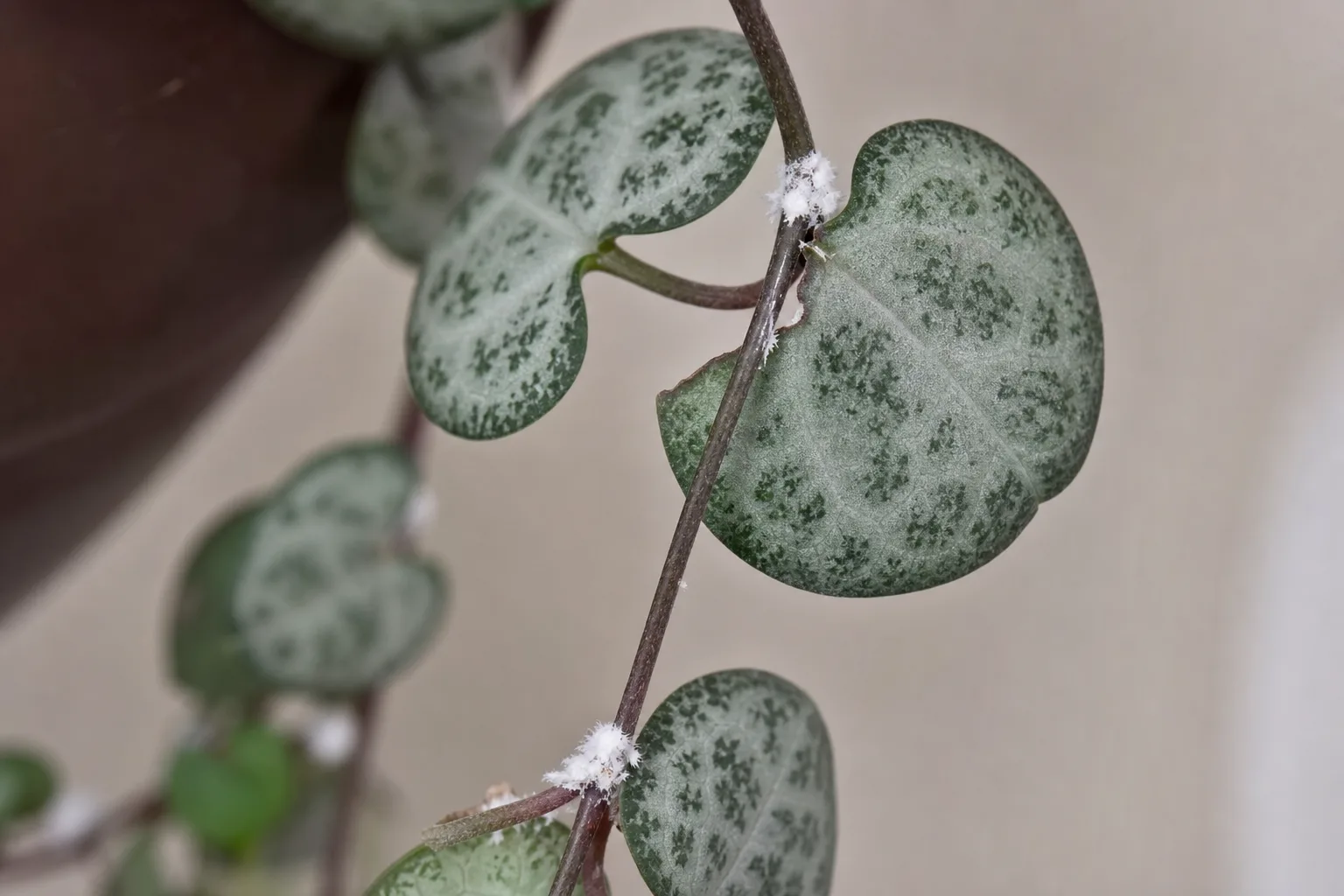
Mealybugs on String of Hearts show up as white cottony patches at leaf nodes and in the dense tangle of trailing strands. First step: isolate the plant and dab every visible cluster with 70% isopropyl alcohol on a cotton swab before spraying anything.
Mealybugs on String of Hearts: Causes, Checks & Fixes
This guide covers mealybugs on String of Hearts. See also the general Mealybugs guide, watering, and light pages for this plant.
Mealybugs on String of Hearts: Causes, Checks & Fixes
Quick answer
Mealybugs on String of Hearts (Ceropegia woodii) appear as white, cottony clusters tucked into leaf nodes, strand forks, and the overlapping tangle of trailing vines. They pierce stems and leaves, suck sap, and excrete sticky honeydew that can lead to black sooty mold on the hearts below.
First step: isolate the plant and dab every visible mealybug with 70% isopropyl alcohol on a cotton swab. On String of Hearts overview, contact removal beats a single blanket spray because the wiry pink stems and tight node angles hide colonies that foliar sprays miss. Work node by node through the hanging mass before moving to repeat treatments.
What mealybugs look like on String of Hearts
Mealybugs are soft, wax-covered insects that feed in groups. On String of Hearts they stand out against the slender pink stems and paired heart-shaped leaves:
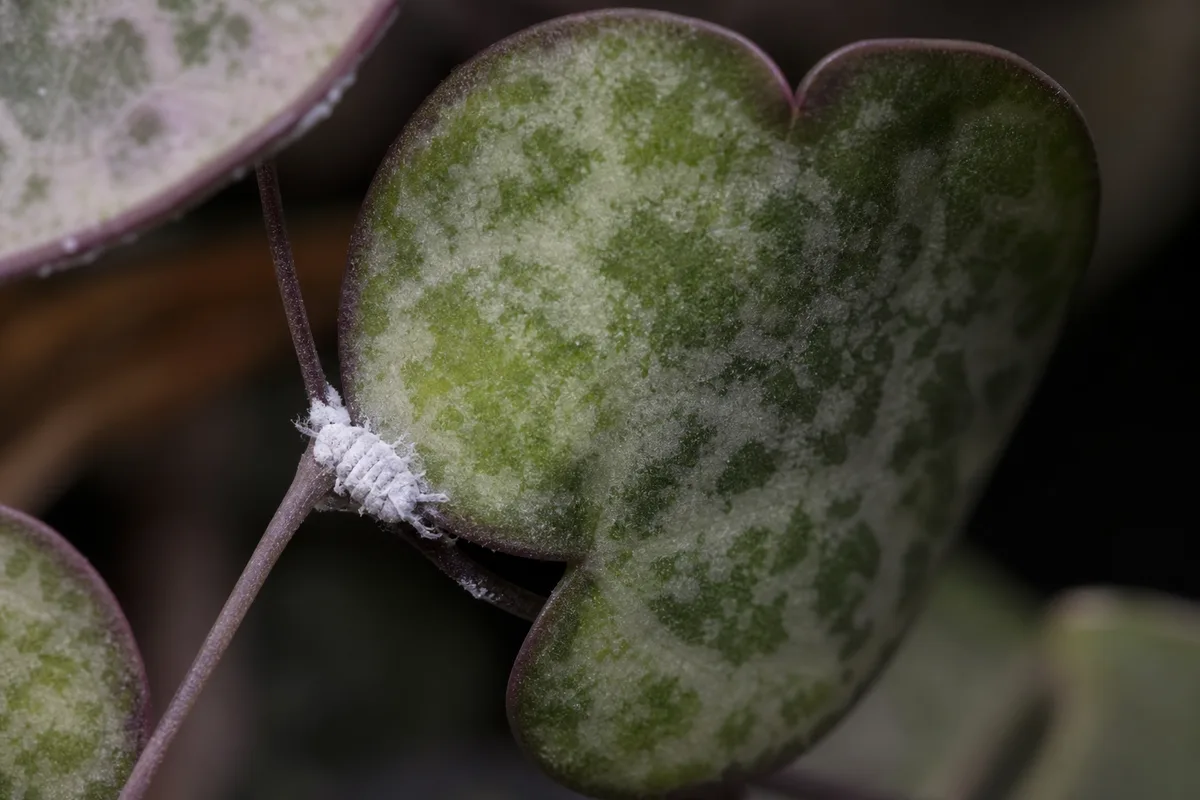
Mealybugs symptoms on String of Hearts - compare with healthy tissue on the same plant.
- White cottony patches where a leaf meets its stem, at strand forks, and in crevices where multiple vines cross
- Sticky, shiny residue on leaves below infested nodes-honeydew from sap feeding
- Black sooty mold on sticky leaf surfaces; it wipes off but returns until insects are controlled
- Ant trails on basket hooks or pot rims-ants harvest honeydew and protect mealybug colonies
- Slow yellowing or stunted new leaves when feeding is heavy on growing tips
String of Hearts makes inspection harder than on an upright plant. The same traits that make it decorative-a dense curtain of thin strands-give mealybugs dozens of sheltered joints. Bead-like tubers along strands and at the soil line are extra hiding spots; root-feeding mealybugs can look like white powder on tubers or inner pot walls even when stems look mostly clean.
Disturb a suspect cluster with a toothpick. Mealybugs leave a waxy smear and may show a pink or pale body underneath. Scale insects look like hard brown bumps that do not wipe away. Aphids gather on soft new tips as pinhead-sized insects without a cottony coat. Powdery mildew sits on leaf faces as flat white dust, not clustered wax at joints.
Why String of Hearts gets mealybugs
Mealybugs are common indoor pests on many ornamentals. Year-round mild indoor temperatures favor mealybug populations, where plants lack the predators that keep mealybugs in check outdoors.
String of Hearts adds plant-specific risk. NC State Extension notes mealybugs among insects to monitor on Ceropegia woodii:
- Node-heavy architecture. Every leaf pair creates a pocket where cottony wax blends with stem color until the colony is large.
- Trailing overlap. Strands drape over each other in hanging baskets, so upper vines shield lower ones from sprays and casual glances.
- Tuber contact points. Aerial tubers resting on mix or neighboring strands give mealybugs moist, protected crevices near stored energy the pest can drain.
- Slow growth. Ceropegia woodii does not replace damaged tissue quickly. Extended sap loss on a slow vine matters more than on a fast-growing pothos that pushes new leaves weekly.
- Introduction from new plants. Mealybugs commonly arrive on nursery stock. Skipping quarantine before placing a new basket beside an established String of Hearts is the most common entry route.
Overwatering does not attract mealybugs directly, but soggy mix stresses tuberous roots and keeps foliage soft-conditions that make recovery slower after you treat. This plant wants fast-draining, cactus-like soil and dry intervals between waterings; pest treatment goes better when the vine is otherwise healthy.
How to confirm the cause
Work through these checks before you commit to a spray schedule:
- Node inspection - Spread the trailing mass under a bright lamp. Run a cotton swab along stem joints; wax that smears and sticks to the swab is mealybug wax, not normal plant texture.
- Honeydew test - Touch a lower heart-shaped leaf below a suspect node. Tacky residue that transfers to your finger confirms sap feeding.
- Sooty mold check - Black film that wipes off with a damp cloth points to honeydew above, not a fungal leaf infection starting on the leaf itself.
- Ant activity - Ants marching up the hanger usually mean a colony is producing honeydew somewhere on the vine above.
- Tuber and soil-line check - Lift strands near the pot rim. White wax on tubers, inner pot walls, or surface mix without obvious foliar clusters suggests root or crown mealybugs.
- Neighbor scan - Inspect plants within a few feet, especially those whose leaves touch or share a watering tray. Mealybug crawlers walk short distances.
- Recent purchases - Trace any new plant added in the last two to four weeks; mealybugs often appear first on the newest introduction.
If you find cottony wax at nodes plus honeydew or ants, you have enough to treat as mealybugs. If stems look clean but the plant keeps declining, unpot and inspect tubers before assuming the problem is watering alone.
First fix for String of Hearts
Move the plant away from others, then dab every visible mealybug and egg mass with a cotton swab soaked in 70% isopropyl alcohol.
This is the right opening move on String of Hearts because:
- Alcohol dissolves the waxy coating on contact, reaching insects tucked into tight node angles better than a single mist pass.
- You avoid soaking the whole pot while treating-important for a plant with drought-tolerant tubers that rot in wet mix.
- You map the infestation as you work, revealing hidden clusters in the strand tangle.
Test alcohol on one leaf and wait 24 hours before treating the whole plant; some succulents and thin-leaved vines can show burn if alcohol sits too long in direct sun. Dab pests directly rather than saturating entire leaves if your plant sits in a hot window.
After dabbing, set the plant in quarantine with good airflow and String of Hearts light guide. Do not repot on day one unless you confirmed root mealybugs at tubers-String of Hearts repotting guide a foliar infestation before knockdown spreads crawlers through the bench.
Step-by-step recovery
Once isolation and alcohol dabbing are done, follow this sequence based on severity:
Light foliar clusters on a few nodes
- Dab all visible insects and cottony egg masses with alcohol every three to five days.
- After the first alcohol pass, spray insecticidal soap or horticultural oil to labeled directions, coating stem joints and leaf undersides where strands cross.
- Repeat sprays on the label interval-typically every five to seven days-for at least three cycles to catch newly hatched crawlers.
- Wipe fresh honeydew from leaves with a damp cloth so sooty mold does not spread.
- Return the plant to the collection only after two weeks with no new cottony spots on weekly checks.
Moderate infestation across multiple strands
- Complete a full alcohol dab session, working from soil line to strand tips.
- Optionally rinse trailing vines with lukewarm water in a sink, keeping the pot upright so mix does not stay saturated. Let foliage dry the same day.
- Apply insecticidal soap or neem oil thoroughly to all stem joints. On String of Hearts, tilt the pot and lift strands so spray reaches undersides.
- Prune only heavily coated strands that are already yellowed and bare-bag and discard cuttings in the trash, not compost.
- Continue weekly treatments until no live insects appear on inspection for two consecutive weeks.
Suspected root or tuber mealybugs
If stems look mostly clean but white wax persists on tubers, soil surface, or inner pot walls:
- Unpot carefully over paper to catch falling insects.
- Brush visible wax from tubers and roots with alcohol on a swab.
- Discard old mix; rinse the root ball gently without leaving it wet for days.
- Repot into fresh fast-draining cactus-style mix in a clean pot.
- Follow foliar spray intervals on any remaining aboveground clusters.
Do not stack repotting, heavy pruning, and strong oil sprays on the same day-pick the urgent step first, then let the plant stabilize between stressors.
Recovery timeline
Mealybug treatment is a weeks-long process, not a one-day fix. Eggs hatch on staggered schedules, and a single pass leaves the next generation untouched.
What to expect:
- Days 1–3: Cottony masses darken or disappear where alcohol contacted them; some honeydew may still appear from missed insects.
- Week 1–2: New crawlers emerge-this is normal and why repeat treatments matter. Fewer live bugs on each inspection means the cycle is working.
- Week 3–4: With consistent treatment, new cottony spots should stop appearing. Yellowed leaves will not green up, but new hearts at strand tips should look firm and wax-free.
- Week 6+: Two clean weekly inspections justify ending quarantine. String of Hearts may need a full spring and summer to regain trailing length if you pruned heavily.
Signs treatment is working: fewer white clusters, no new honeydew, clean new growth at nodes, no ants returning.
Signs the infestation is winning: cotton spreading to new strands despite weekly sprays, widespread yellowing, strand dieback from soil line upward, or wax reappearing on tubers after repotting. At that point, compare the cost of continued treatment against starting a clean plant from healthy tuber cuttings.
Lookalike symptoms
Several problems mimic mealybug damage on String of Hearts:
| What you see | Likely cause | How to tell apart |
|---|---|---|
| White dust on leaf faces | Powdery mildew or mineral dust | Flat coating on leaf surface, not clustered at nodes |
| Hard brown bumps on stems | Scale insects | Does not wipe away; no cottony filaments |
| Fine webbing with speckled leaves | Spider mites | Webbing at tips; mites move when shaken over paper |
| Sticky leaves without white wax | Aphids on new growth | Soft insects on tender tips, not waxy nodes |
| White specks in soil only | Perlite, slow-release fertilizer, or fungus gnat larvae | Not waxy; no honeydew on leaves above |
Getting the pest right matters because scale and mealybugs both look like white bumps from a distance, but alcohol dabbing alone clears mealybugs more reliably than it does armored scale.
Mistakes to avoid
- One-and-done spraying. A single soap or neem application kills adults but not eggs hidden in node crevices. Plan for multiple cycles.
- Skipping isolation. Mealybugs crawl to neighboring pots and hitchhike on pruning snips. Quarantine until two clean weekly checks pass.
- Soaking the pot while treating. String of Hearts rots when mix stays wet; rinse foliage without leaving the root zone saturated for days.
- Heavy oil in hot sun. Horticultural oil on leaves in direct midday window sun can burn thin succulent foliage. Treat in morning or move to bright indirect light first.
- Repotting before knockdown. Moving a heavily infested plant spreads crawlers to the bench and fresh mix before you reduce the population.
- Ignoring tubers. Foliar sprays miss root-feeding stages. If wax keeps returning at the soil line, inspect tubers.
- Returning the plant too early. Two weeks pest-free is a safer quarantine minimum than a single clean day after treatment.
String of Hearts care cross-check
While you treat mealybugs, keep baseline care steady-big care swings stress a vine that is already losing sap:
- Light: Bright indirect light with some morning sun supports recovery. Weak light slows new growth that tells you treatment worked.
- Water: Water when mix is mostly dry; tuberous roots store moisture and rot in soggy soil.
- Soil: Fast-draining cactus-style mix with sharp drainage prevents root stress during the treatment weeks.
- Fertilizer: Hold feeding until pests are controlled and new growth looks normal. Fertilizer on a stressed, sap-drained vine pushes soft tissue without fixing the pest.
String of Hearts is non-toxic to cats and dogs, but keep pets away from freshly sprayed vines until sprays dry.
How to prevent mealybugs next time
- Quarantine new plants two weeks before hanging them near established String of Hearts baskets.
- Inspect nodes during weekly care-lift trailing strands instead of only glancing at the top layer.
- Clean tools between plants when pruning or propagating tuber cuttings.
- Maintain firm growth with appropriate light and dry-interval watering; stressed, dusty, overcrowded plants are easier targets for many indoor pests.
- Check after outdoor summer stays if you hang baskets outside-mealybugs can ride back indoors on returning plants.
Prevention on this species is mostly about inspection access. The plant will always have hidden joints; your advantage is knowing where to look.
When to worry
Treat as urgent when:
- Cottony colonies cover most strands and new clusters appear daily despite alcohol and soap cycles
- Ants swarm the basket and honeydew drips onto surfaces below
- Strands yellow and die back from multiple nodes at once
- Root or tuber wax returns immediately after repotting into fresh mix
Consider discarding or replacing the plant when repeated six-week treatment cycles fail, the tuber base softens, or the hanging mass is mostly bare wiry stem with few healthy hearts-propagation from a clean tuber on a separate healthy plant is often less work than saving a root-infested basket.
Conclusion
Mealybugs on String of Hearts are manageable when you treat the architecture of the plant, not just its leaves. Isolate first, dab alcohol at every node in the trailing tangle, then repeat soap or oil sprays until crawlers stop appearing. Inspect tubers and soil line when foliar treatment alone fails. Recovery shows up as wax-free new hearts at strand tips-slow but reliable once the pest cycle breaks.
When to use this page vs other String of Hearts guides
- String of Hearts watering guide - Use for routine moisture checks before assuming mealybugs is the main issue.
- String of Hearts problems hub - Browse all 45 common issues on this species.
- Leaf Drop on String of Hearts - Different entry point when symptoms overlap with mealybugs.