Mold on Soil on String of Hearts: Causes, Checks & Fixes
Quick answer
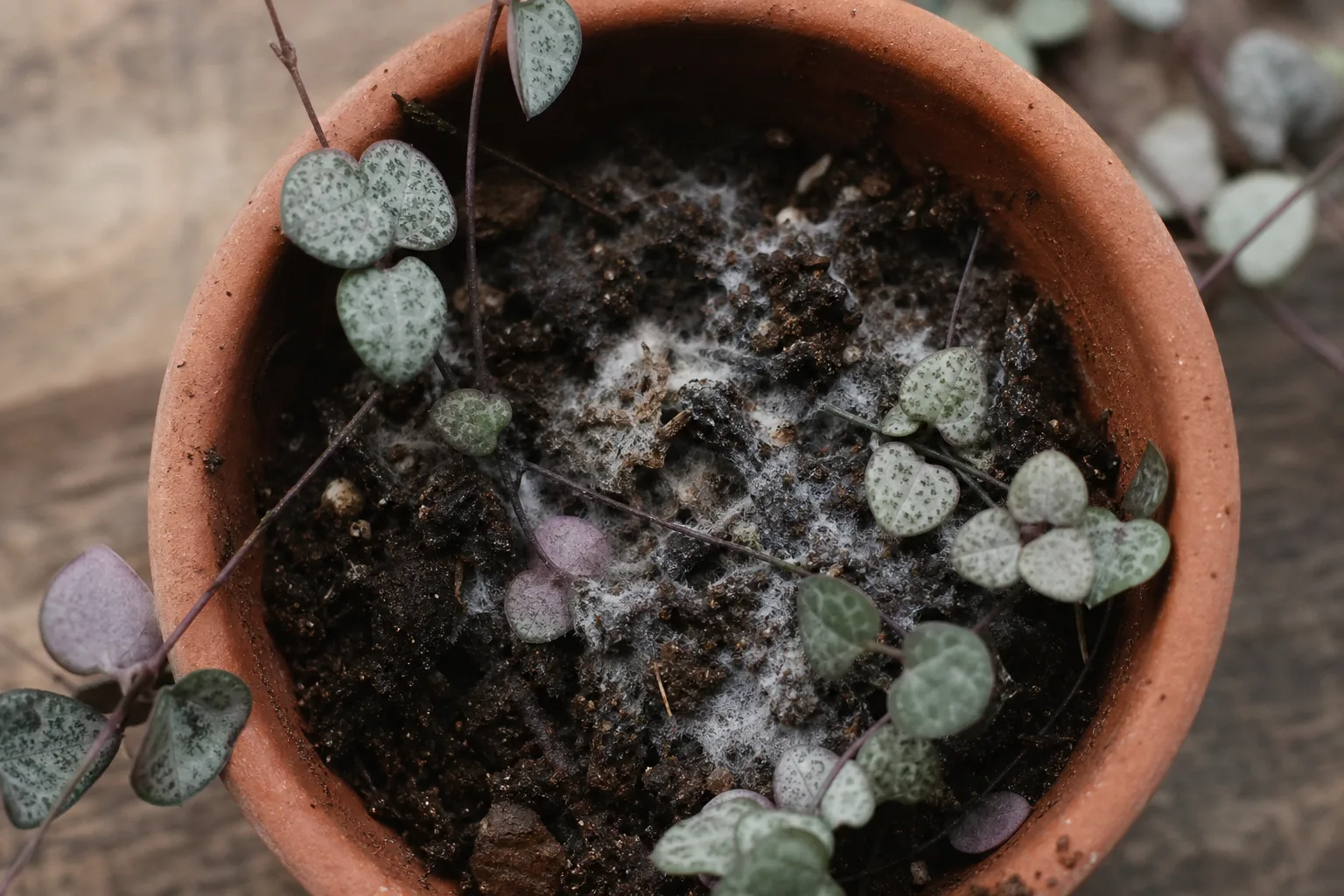
Fluffy white or gray mold on String of Hearts soil is usually harmless surface fungus feeding on damp organic mix-not a disease attacking the vines. The real risk is the wet conditions that grow it. First step: stop watering and let the top 1–2 inches dry while you check whether tubers and roots are still firm.
Mold on Soil on String of Hearts: Causes, Checks & Fixes
This guide covers mold on soil on String of Hearts. See also the general Mold on Soil guide, watering, and light pages for this plant.
Mold on Soil on String of Hearts: Causes, Checks & Fixes
Quick answer
White or gray fuzz on the soil surface of a String of Hearts (Ceropegia woodii) pot is usually saprophytic mold-a harmless fungus feeding on decaying organic matter in consistently damp mix. It is alarming to see on a trailing succulent, but the mold itself rarely attacks living tubers or vines.
The problem is what the mold reveals: the top of your pot is staying wet too long for a plant that wants well-drained sandy potting soil and is easily killed by overwatering. String of Hearts stores water in bead-like aerial tubers and tuberous roots; chronic surface moisture does not match that biology and can invite fungus gnats or, over time, tuber rot.
First step: pause watering and let the top 1–2 inches of mix dry completely while you check whether tubers along the strands and roots below soil feel firm. Do not repot, scrape, or spray on day one unless tubers are already mushy.
What mold on soil looks like on String of Hearts
On String of Hearts overview, mold almost always shows on the soil surface beneath cascading pink stems-not on the heart-shaped leaves themselves. Common patterns:
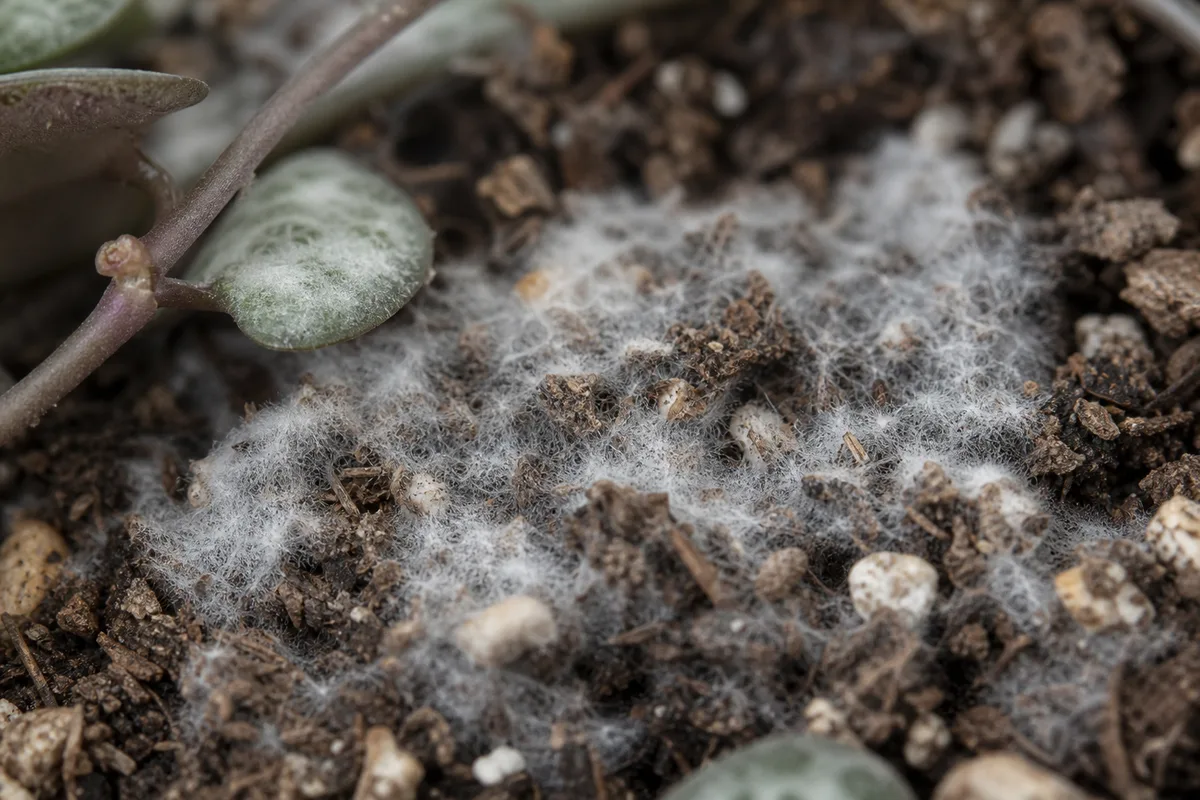
Mold on Soil symptoms on String of Hearts - compare with healthy tissue on the same plant.
Typical harmless surface mold:
- Fluffy white, gray, or occasionally yellow-tan film on topsoil
- Growth concentrated where water pools or organic debris collects
- Soil surface stays visibly damp for several days after watering
- Vines, leaves, and aerial tubers still look normal-plump leaves with silver markings, firm bead-like tubers between nodes
- May appear alongside fungus gnats hovering near the pot
Signs the wet soil is becoming a bigger problem:
- Musty or sour smell when you lift the pot or move trailing stems aside
- Aerial tubers or caudex tubers at the base feel soft, dented, or hollow
- Stems darken or go limp where they meet wet mix
- Leaves yellow or wilt even though soil feels moist
- Mold returns within two to three days every time you scrape it
Fungal growth on houseplant potting media is usually not directly harmful to plants, but a thick mat can crust the surface and interfere with water soaking in. On String of Hearts, the more important signal is moisture balance-not the fuzz color.
Not mold: Hard white mineral crust from tap water or fertilizer salts looks chalky and flat, not fluffy. Green slippery film on the rim is algae from constant surface wetness and low light-fix it the same way (dry the surface, brighten light slightly), but it is a different organism.
Why String of Hearts gets moldy soil
This species evolved as a trailing succulent with tuberous water storage. NC State Extension notes it should be allowed to dry out completely between waterings and goes dormant over winter when water needs drop further. Mold appears when care drifts toward “moist houseplant” habits instead.
Overwatering or watering on a calendar. Many owners water weekly because the strands look delicate. In reality, a crowded pot in bright light may need water only every 10–14 days in summer and far less in winter. Watering while the top inch is still damp keeps the surface a fungal buffet.
Peaty, water-retentive mix. Standard indoor potting soil holds moisture at the surface long after the owner thinks the plant has “dried.” String of Hearts wants a freely draining medium with coarse components-commercial cactus and succulent mix is the usual recommendation. Dense mix in a hanging basket is a common mold trigger.
Low light and slow evaporation. Trailing stems often shade the pot lip. Cool, dim spots slow both plant water use and soil dry-down, so the surface stays wet while tubers below still hold stored moisture-classic conditions for saprophytic fungi on organic matter.
Poor airflow around grouped pots. Stagnant air on a shelf or crowded plant stand slows surface drying. Mold and fungus gnats that breed in moist soil often show up together.
Organic debris on the soil. Fallen String of Hearts leaves, broken tubers, or top-dressing mulch give fungi a food source. Remove debris promptly rather than letting it decay on wet mix.
Oversized pots. A pot much larger than the root mass holds a wide ring of soil that stays damp at the surface while the center dries unevenly-inviting mold on the top layer month after month.
How to confirm the cause
Work through these checks before you change mix or repot:
-
Surface moisture - Stick a finger 2–3 cm into the mix. If it clings to your skin or feels cool and dark, the surface is still too wet. Healthy next watering for this plant starts when soil is dry deeper down, not merely when the fuzz is scraped away.
-
Tuber firmness - Pinch bead-like aerial tubers and the main tuber at the soil line. Firm tissue means mold is likely cosmetic. Soft, squishy, or wrinkled-mushy tubers mean investigate roots-wet conditions may already be damaging storage tissue.
-
Leaf and strand condition - Plump, firm leaves with good silver patterning suggest the plant is not in active decline. Thin, flat, pale leaves on dry soil point to underwatering; yellowing on wet soil points to root stress.
-
Pot weight and drainage - Lift the pot after watering. If it stays heavy for many days, drainage or mix retention is off. Confirm drainage holes are open and saucers are not holding standing water.
-
Light and season - Mold that appears in late fall through winter often tracks reduced light and continued summer watering frequency. Reduce watering during the winter rest period when growth slows.
-
Gnat check - Small flies rising when you disturb the pot confirm chronically moist organic soil. Gnats alone do not prove rot, but they reinforce that the surface is too wet.
If mold is present with firm tubers, normal leaves, and no sour smell, you have confirmed surface mold on overly wet topsoil-not a leaf or stem pathogen. Proceed with drying and surface cleanup, not emergency fungicides.
First fix to try
Stop watering and let the top 1–2 inches of soil dry completely before the next soak.
This single step addresses the condition that grows mold and matches how String of Hearts should be watered anyway. Letting the surface dry between waterings disrupts fungal growth and fungus gnat larvae without stressing firm tubers that still hold reserves.
While the surface dries over several days:
- Move the pot to brighter indirect light with a little morning sun if it was in a dim corner-faster dry-down without scorching leaves.
- Fan trailing stems aside so light and air reach the soil lip.
- Do not mist leaves or soil; do not cover the pot with plastic.
After the top layer is dry to the touch, water deeply until excess runs from drainage holes, then empty the saucer. Resume a rhythm based on pot weight and deep soil dryness, not the calendar.
Step-by-step recovery
Once you have paused watering and confirmed firm tubers, work through these steps in order:
1. Remove visible mold and debris
When the surface is dry enough to crumble, scrape off the top 1–2 cm of fuzzy mix and any decaying leaf bits. Discard that material in the trash-not the compost pile indoors. Breaking up or removing the fungal mat reduces spore load and improves water infiltration.
2. Refresh the top layer (optional)
Add a thin layer of dry, gritty cactus mix to replace what you removed. This is cosmetic and hygienic, not a substitute for fixing watering.
3. Correct the String of Hearts watering guide
Water only when soil is mostly or completely dry several inches down-often every 10–14 days in active summer growth, less in winter. Wisconsin Extension is explicit: this succulent tolerates dry soil much better than soggy soil. If leaves thin and pucker on dry mix, water thoroughly once; do not keep soil constantly moist to “prevent” mold.
4. Improve airflow and light
Give the pot space from neighboring plants. A small fan on low in the room helps surface evaporation. String of Hearts performs best with String of Hearts light guide and some direct morning sun-better light speeds both growth and pot dry-down.
5. Address recurring mold or gnats
If mold returns within a week after scraping:
- Top-dress with a thin layer of coarse sand or fine gravel to keep the surface drier between waterings
- Consider bottom-watering so the surface stays dry while roots still get moisture
- Set yellow sticky traps for adult fungus gnats while you dry the soil
6. Repot only when mix or roots demand it
Repot in spring if mold keeps returning despite dry surface habits, the mix is compacted peat that never dries, or you find mushy roots when inspecting. Move to a slightly snug pot with fast-draining cactus mix. String of Hearts does best when somewhat crowded; upsizing “to fix mold” often makes surface wetness worse.
Recovery timeline and what improvement looks like
Days 1–3: Mold may look unchanged until the surface actually dries-do not water during this phase unless strands are severely dehydrated with paper-thin leaves on bone-dry mix.
Days 4–7: Dry surface should halt new fuzzy growth. Any remaining patch looks static or powdery rather than spreading.
Weeks 1–2: With firm tubers and corrected watering, leaves stay plump and new nodes along strands look normal. Fungus gnat numbers should drop as soil dries.
Weeks 3–4: If you scraped and refreshed the top layer, mold should not return unless you are still watering too soon. New aerial tubers forming along strands are a strong health signal.
Ongoing: Judge success by stable tuber firmness, predictable pot dry-down, and no recurring surface mat-not by whether a single spore ever appears again.
Lookalike symptoms and causes to rule out
Root and tuber rot - Mushy caudex, blackened base stems, sour smell, and wilt on wet soil. Mold may be present but is secondary. Requires unpotting, trimming decay, and String of Hearts repotting guide dry-not just scraping fuzz.
Fungus gnats only - No visible mold but flies present; same fix (dry the surface, traps, better drainage).
Algae - Green slick film, often on pot rims in low light with frequent light watering. Dry surface and slightly brighter placement.
Salt crust - Flat white deposits from hard water or fertilizer; wipe away and flush soil occasionally if buildup is heavy.
Normal soil biology - A few fungal threads in fresh bagged mix are common and not necessarily harmful. Worry when a thick mat persists on wet mix week after week.
Mistakes to avoid
- Scraping mold daily while still watering on schedule - You remove spores but recreate ideal wet conditions every time.
- Pouring cinnamon, hydrogen peroxide, or fungicide as the first response - Unnecessary for harmless saprophytic mold; drying and drainage fix the cause.
- Repotting immediately into a much larger container - More wet soil volume at the surface invites repeat mold.
- Keeping saucers full of water - String of Hearts should never sit in standing water.
- Misting to “help humidity” - This plant prefers low to moderate humidity; misting wets leaves and soil without benefit.
- Assuming mold means the plant is doomed - Firm tubers and a dry correction often resolve cosmetic mold quickly.
- Ignoring soft tubers - Surface mold with declining roots needs rot protocol, not surface scraping alone.
How to prevent mold next time
Match prevention to how this species actually grows:
- Mix: Fast-draining cactus or succulent blend with perlite or coarse sand; avoid straight peat-heavy indoor mix in hanging baskets.
- Watering: Check deep dryness before every soak; reduce frequency in winter dormancy.
- Light: Bright indirect with some morning sun so the plant uses water and the pot dries evenly.
- Pot size: Slightly snug pots dry faster than oversized ones.
- Hygiene: Brush fallen leaves off the soil surface after they drop.
- Saucers: Empty within 30 minutes of watering.
- Airflow: Do not pack trailing pots flat against a wall where the soil lip never sees air movement.
When to worry
Treat mold as urgent when:
- Tubers or base caudex feel soft or squishy
- Sour or rotten smell comes from the pot
- Mold returns within days after repeated surface removal
- Leaves yellow or wilt while soil stays damp
- Fungus gnats persist on String of Hearts for weeks despite drying attempts-often a sign the mix holds too much moisture throughout, not just on top
You can watch and adjust slowly when mold is a one-time white patch, tubers are firm, strands look normal, and you are willing to let the surface dry before the next water.
Cosmetic mold on healthy String of Hearts is a moisture warning-not a death sentence. Fix the wet surface habit before the wet conditions reach the tubers this plant depends on for survival.
When to use this page vs other String of Hearts guides
- String of Hearts watering guide - Use for routine moisture checks before assuming mold on soil is the main issue.
- String of Hearts problems hub - Browse all 45 common issues on this species.
- Fungus Gnats on String of Hearts - Different entry point when symptoms overlap with mold on soil.
- Root Rot on String of Hearts - Different entry point when symptoms overlap with mold on soil.
- Poor Drainage on String of Hearts - Different entry point when symptoms overlap with mold on soil.