Nitrogen Deficiency on String of Hearts: Causes, Checks &
Quick answer
Nitrogen deficiency on String of Hearts is uncommon but shows as uniformly pale yellow older leaves on firm tubers after weeks without feed in bright light. First step: Rule out overwatering and low light, then apply one half-strength balanced liquid feed.
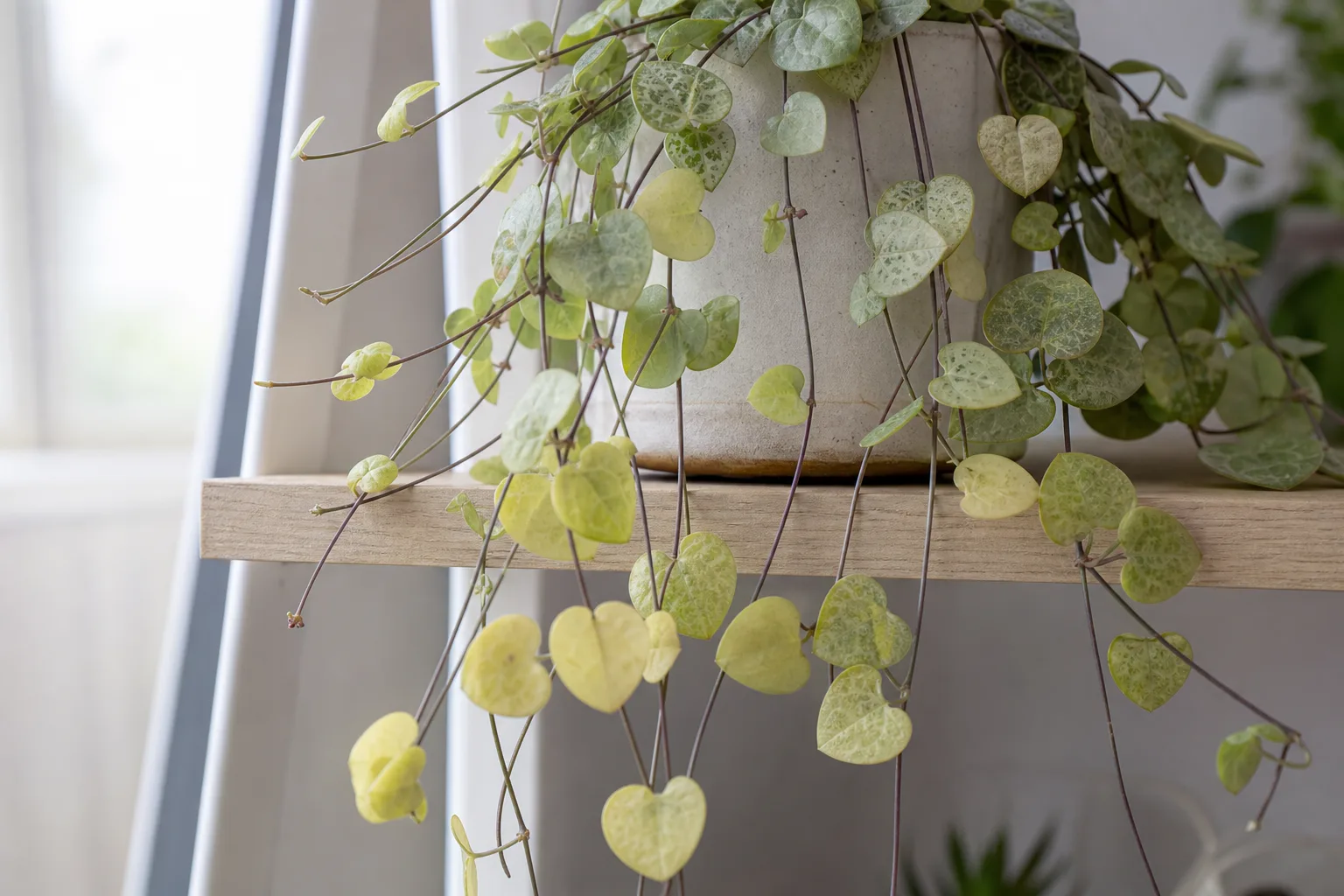
Nitrogen Deficiency on String of Hearts: Causes, Checks & Fixes
This guide covers nitrogen deficiency on String of Hearts. See also the general Nitrogen Deficiency guide, watering, and light pages for this plant.
Nitrogen Deficiency on String of Hearts: Causes, Checks & Fixes
Quick answer
Nitrogen deficiency on String of Hearts (Ceropegia woodii) is uncommon but shows as uniformly pale yellow older leaves on firm tubers after weeks without feed in bright light. First step: Rule out overwatering and low light, then apply one half-strength balanced liquid feed.
This semi-succulent vine stores water in tuberous roots and is a light feeder. Most pale or yellow foliage on String of Hearts traces to overwatering can cause root rot and yellowing of the leaves, insufficient light, or normal leaf aging-not hunger-so confirm tubers and placement before fertilizing.
What nitrogen deficiency looks like on String of Hearts
On String of Hearts, true nitrogen shortage usually starts on the oldest heart-shaped leaves along each trailing strand. Those leaves turn uniformly pale green to yellow while tubers and stems stay firm. The silver marbling may fade so leaves look washed out rather than richly patterned. Growth may slow, but the plant does not collapse overnight.
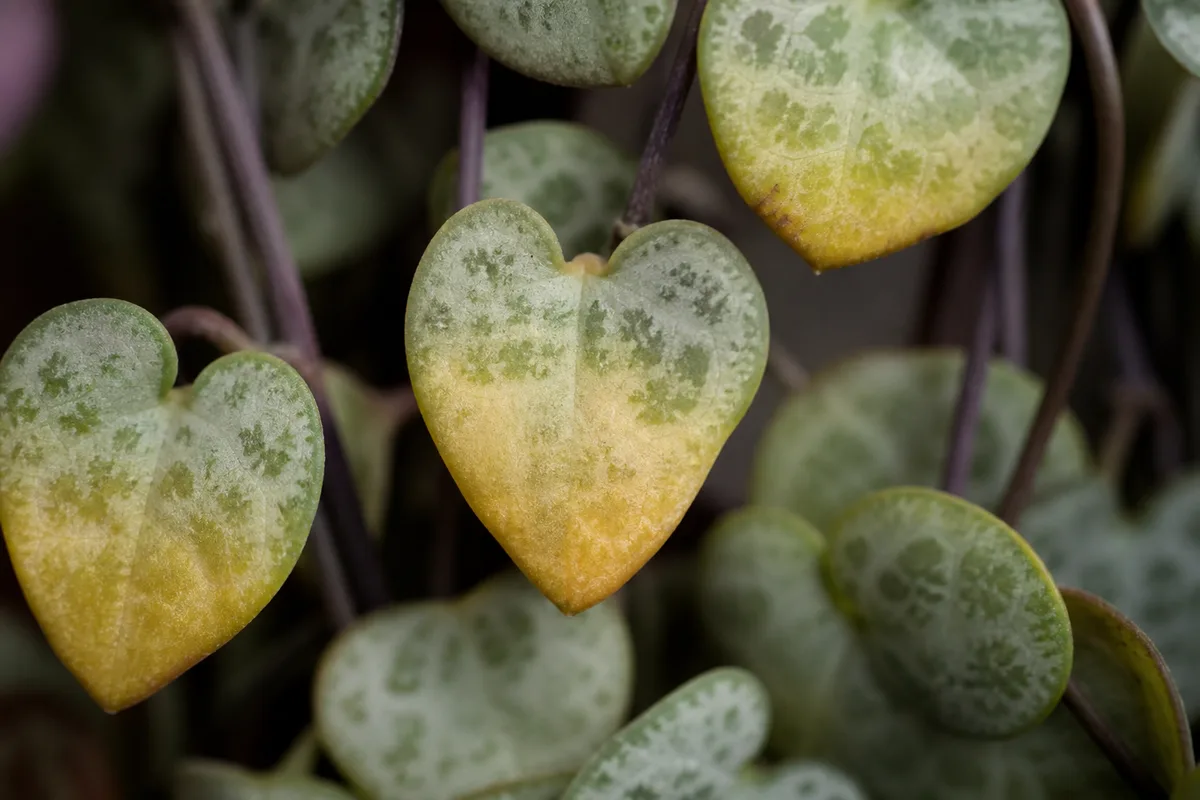
Nitrogen Deficiency symptoms on String of Hearts - compare with healthy tissue on the same plant.
Unlike rot, soil should cycle dry between waterings and tubers should feel solid-not soft or black. Unlike iron or magnesium issues, the yellowing is generally even across the leaf blade rather than bright green veins on pale tissue. Unlike underwatering, leaves stay somewhat plump rather than thin and crispy, and the mix is not bone dry for weeks.
If yellowing climbs from wet soil with soft tubers, treat as root trouble first-not nitrogen deficiency.
Why String of Hearts gets nitrogen deficiency
Ceropegia woodii evolved for lean, fast-draining rocky sites in southern Africa and needs little supplemental fertilizer under normal conditions. Deficiency is most plausible in long-lived containers that have been watered heavily for months without any feed, leaching nitrogen from a small root zone.
Lean cactus mix by design means nutrients wash out faster than the plant can replace them in pots. No feeding through a full warm season in sterile potting soil leaves String of Hearts running on reserves while actively trailing in bright light. Root damage from brief overwatering can limit uptake-pale foliage then mimics deficiency even when fertilizer salts are present.
Less common triggers include growing in the same depleted mix for two or more years without repotting, or repeatedly flushing pots to correct salt buildup without replacing nutrients afterward.
Excess nitrogen is a bigger risk than deficiency on this species: too much pushes soft, sappy growth that this plant cannot sustain at typical indoor light levels. String of Hearts is easily killed by overwatering, and heavy feeding on wet soil compounds that stress.
How to confirm the cause
Work through these checks in order:
- Tuber firmness - Firm tubers on dry-to-moderately dry soil support deficiency diagnosis; soft or black tubers on wet mix mean rot until proven otherwise.
- Light exposure - In strong light the leaves will be darkly colored, with distinctive marbling; uniformly light green stretched strands with large gaps between the leaves point to insufficient light, not hunger.
- Soil moisture history - Dry cycles with pale lower leaves fit hunger; constantly damp mix points to drainage or watering issues.
- Leaf age pattern - Bottom-up uniform yellow on firm plants suggests mobile nitrogen shortage; spotty lesions or sudden whole-strand yellow on wet soil do not.
- Feeding history - No fertilizer since planting in a container, or only plain water for many weeks during active growth, increases deficiency likelihood.
- New growth color - Lighter green tips with continued elongation suggest mild shortage; collapsed new shoots on wet soil need root rescue first.
- Season - Active growth runs spring through fall; pale plants in winter dormancy may simply be resting, not deficient.
Do not fertilize until rot, low light, and watering errors are ruled out.
First fix for String of Hearts
After confirming firm tubers, adequate bright indirect sunlight, and dry, well-drained soil, apply one half-strength balanced liquid fertilizer to moist soil-not to a drought-stressed or waterlogged plant.
Water lightly the day before if the mix is completely dry. Pour diluted feed at the soil surface, avoid soaking foliage overnight, and skip any additional feeding for three to four weeks. Judge response by new leaf color, marbling return, and strand extension-not by old yellow leaves re-greening.
If the pot has been in the same depleted mix for two years or more and growth stays pale after one light feed, refresh with fast-draining cactus mix at the next repot window rather than stacking heavy fertilizer doses.
One action at a time-do not combine feeding, repotting, and pruning on the same day.
Step-by-step recovery
- Confirm rot is absent: firm tubers, dry soil, no sour smell.
- Confirm light is adequate: bright indirect with some morning sun, not a dim corner.
- Water lightly if soil is powder-dry; wait 24 hours.
- Apply half-strength balanced liquid feed once during active growth.
- Return the pot to its bright spot with clear drainage.
- Pinch only fully yellow lower leaves if they look spent-keep partially green tissue.
- Monitor new heart-shaped leaves weekly; hold further feed until you see color response.
Recovery timeline
Older yellow leaves seldom regain deep green or full marbling. New growth should look richer within two to four weeks after one correct feeding. Trailing extension typically resumes over four to six weeks if tubers stayed healthy. Severe stunting from years of depletion may need fresh fast-draining mix rather than repeated fertilizer.
Judge success by deeper green new leaves with restored silver pattern and steady strand length-not by old foliage color.
Lookalike symptoms
Yellow leaves from overwatering show soft tubers and wet soil-far more common on String of Hearts than nitrogen shortage. Pale washed-out leaves in dim light are insufficient light, not hunger; large gaps between tiny leaves confirm this. Thin flat leaves on dry soil point to underwatering. Interveinal yellow with green veins on older leaves suggests magnesium, not nitrogen. Brown crispy tips after feeding suggest salt excess-flush and pause feed instead of adding more nitrogen.
What not to do
Do not fertilize String of Hearts sitting in wet, slow-draining mix-that stresses tuberous roots and worsens rot. Do not use full-strength or high-nitrogen feeds; this plant needs infrequent half-strength doses during active growth only. Do not assume every pale leaf needs nitrogen-check water, light, and tubers first. Do not feed during winter dormancy when growth slows. String of Hearts is non-toxic to cats and dogs.
How to prevent nitrogen deficiency on String of Hearts
Plant in fast-draining cactus mix and fertilize infrequently at half strength during active growth-at most monthly when the plant is trailing and pushing new leaves. Pause feed entirely during winter rest when watering drops. Refresh container mix every one to two years so baseline nutrients do not deplete. Allow the soil to dry out completely between waterings, and avoid flushing pots repeatedly without replacing nutrients. Keep the plant in bright indirect light with some morning sun so it can use light feed efficiently without stretching.
Practical checks
Urgency check
Low urgency if only older leaves are pale on firm dry tubers in bright light. High urgency if pale new growth appears on wet, soft tubers-treat as rot, not deficiency.
Best inspection order
Light exposure, tuber firmness, soil moisture, leaf age pattern, feeding history, season, then new tip color.
String of Hearts care cross-check
Pale String of Hearts in bright light with dry firm tubers after weeks without feed may need one light dose. Pale plants in cool shade or wet mix rarely need nitrogen-fix placement and drainage first. This vine does best when crowded; avoid unnecessary repotting unless mix is clearly exhausted.
Related String of Hearts guides
- String of Hearts overview
- String of Hearts watering
- String of Hearts light
- Slow Growth on String of Hearts
- Yellow Leaves on String of Hearts
- Overfertilization on String of Hearts
- All String of Hearts problems
Conclusion
Use this page to confirm nitrogen deficiency on String of Hearts by pattern and pot checks-not by treating every houseplant the same. When symptoms overlap with sibling pages, follow the linked guide for the matching cause before stacking fertilizer, repotting, or pesticide.