Fertilizer Burn on String of Hearts: Causes, Checks & Fixes
Quick answer
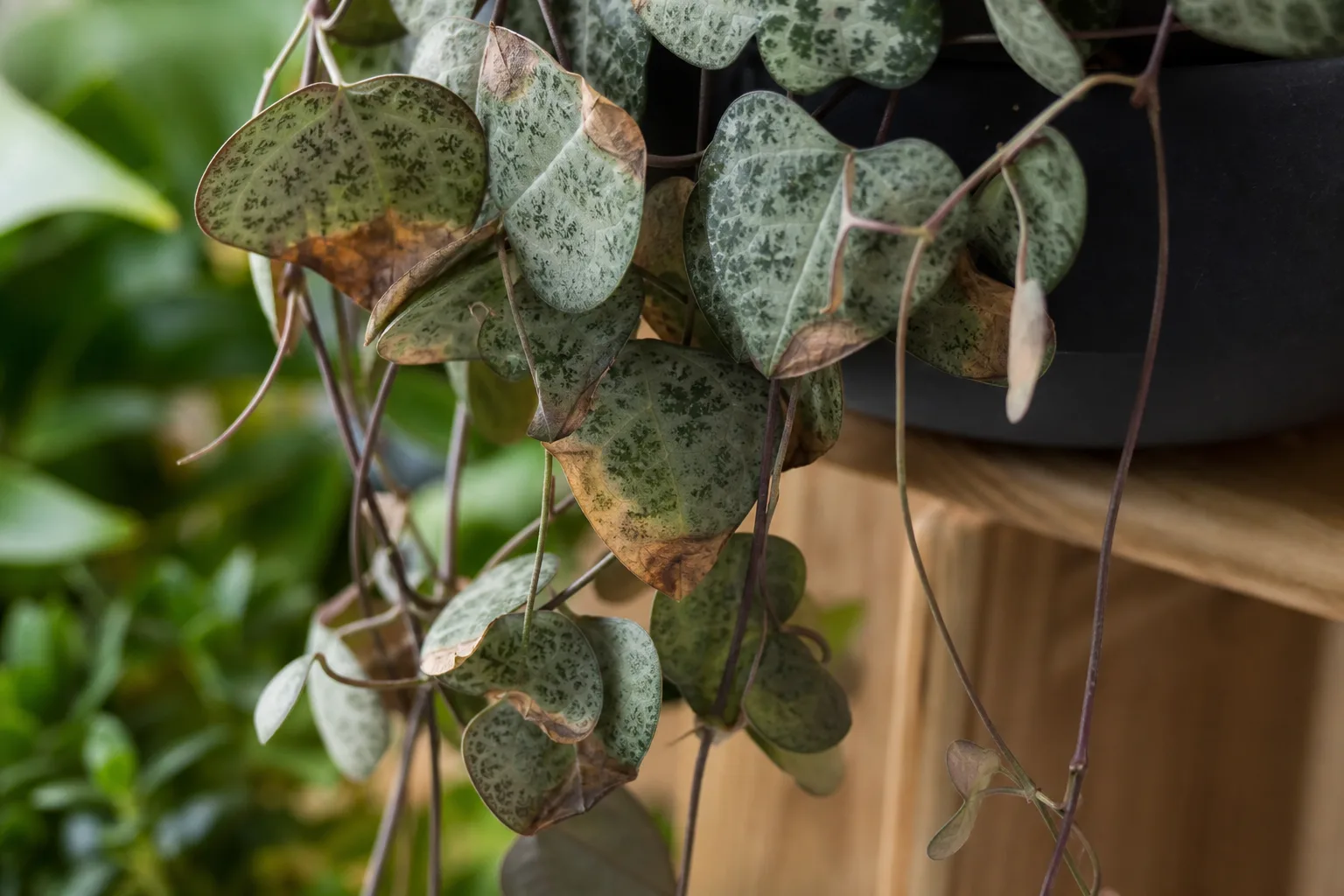
Fertilizer burn on String of Hearts shows as brown, crispy leaf tips and margins-often within days of feeding a light-feeding semi-succulent. First step: stop all fertilizer immediately and flush the pot with plain water until it drains freely.
Fertilizer Burn on String of Hearts: Causes, Checks & Fixes
This guide covers fertilizer burn on String of Hearts. See also the general Fertilizer Burn guide, watering, and light pages for this plant.
Fertilizer Burn on String of Hearts: Causes, Checks & Fixes
Quick answer
Fertilizer burn on String of Hearts (Ceropegia woodii) shows as brown, crispy leaf tips and margins on the small heart-shaped leaves-often within days of feeding a plant built for lean, fast-draining soil. You may also see a white or brownish salt crust on the soil surface or pot rim, wilting that does not match dry soil, and leggy weak new growth after a heavy nitrogen dose.
First step: stop all fertilizer immediately. String of Hearts is a light feeder that stores water in fleshy leaves and bead-like tubers along its strands; excess salts damage fine roots before trailing vines show obvious stress. Flush the pot with plain water until it runs freely from drainage holes, empty the saucer, and hold feed for at least four to six weeks while you watch new growth.
What fertilizer burn looks like on String of Hearts
On this semi-succulent trailer, salt damage has a recognizable pattern tied to when you last fed and how concentrated the dose was.
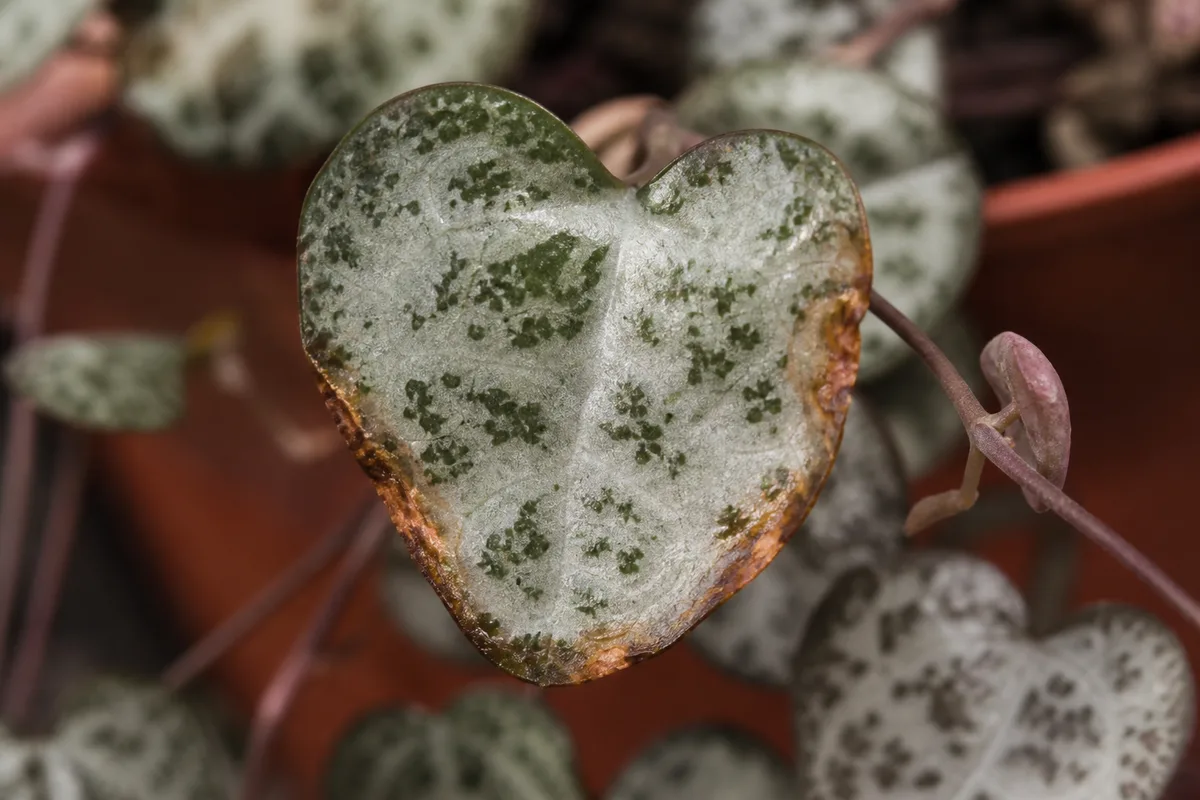
Fertilizer Burn symptoms on String of Hearts - compare with healthy tissue on the same plant.
Typical fertilizer-burn signs:
- Brown, dry margins on heart-shaped leaves-tips and edges turn tan to dark brown while the silver-marbled center may stay green briefly
- Symmetry across multiple strands-unlike spot diseases, burn often affects many leaves at once after a single feeding event
- White or crusty deposits on soil surface, inner pot rim, or saucer-accumulated fertilizer salts leaching out of mix
- Wilting despite moist soil-damaged roots cannot take up water even when mix feels wet
- Leggy, soft new growth after a nitrogen-heavy feed-String of Hearts already stretches in low light; overfeeding pushes weak vines with pale leaves
- Timing within days of feeding-liquid fertilizer on dry roots or full-strength dose often triggers visible tip burn within one week
What is not fertilizer burn:
- Crispy brown on bone-dry soil with no recent feed-classic underwatering; leaves fold softly like a taco shell when thirsty
- Soft dark stems or tubers on wet mix-overwatering causes root rot and yellowing, not isolated salt-driven tip necrosis
- Bleached patches on the window-facing side-sun scorch after a sudden light increase, not even marginal browning after feed
- Single damaged leaf from mechanical scrape-localized, not pattern across strands after fertilizing
Variegated cultivars like f. variegata may show tip burn first because pale tissue is more salt-sensitive.
Why String of Hearts gets fertilizer burn
String of Hearts evolved for well-drained sandy soil on sun-baked hillsides in southern Africa. Container gardeners often overcorrect with frequent feeding-a mismatch that concentrates salts in small hanging baskets.
Too much fertilizer or full label strength. Wisconsin Horticulture Extension recommends fertilizing infrequently at most monthly when actively growing, at half strength. Missouri Botanical Garden guidance for succulents cuts typical houseplant doses to one-quarter to one-half label concentration. Full-strength liquid or weekly feeding stacks salts faster than tuberous roots can tolerate.
Feeding during winter dormancy. This plant has a winter rest period with reduced watering and no fertilizer. Salts from autumn or winter feeds accumulate in soil while growth stalls-then spring growth emerges already stressed.
Feeding dry soil or stressed plants. Apply fertilizers only when soil is moist to avoid burning delicate tuberous roots. Applying liquid feed to bone-dry mix or to a heat-stressed plant concentrates salts at root contact points.
Slow-release pellets in small pots. A full dose of slow-release in a crowded 4-inch basket can release steadily through summer, building salts faster than shallow roots can tolerate-especially when evaporation leaves crust on the soil surface.
Repeated feeding without flushing. Container plants are particularly susceptible to soluble salt buildup. Without periodic leaching, even moderate monthly feeds stack up in porous but small pots. Illinois Extension recommends leaching every four to six months to limit salt accumulation.
High-nitrogen formulas. String of Hearts already risks leggy growth in moderate light. Heavy nitrogen pushes long gaps between tiny hearts-then salt load browns the very leaves that overgrew.
How to confirm the cause
Work through these checks before String of Hearts repotting guide or trimming heavily:
- Last feed date and concentration - Burn strongly suspected if brown tips appeared within 7–10 days of liquid feed, slow-release application, or foliar spray at or above label strength.
- Salt crust inspection - White or brownish crust on soil or pot rim supports excess fertilizer; absent crust does not rule out recent liquid overfeed.
- Soil moisture vs leaf appearance - Moist mix with drought-scorched tips and firm tubers points to salt-damaged roots; wet mix with soft tubers points to rot.
- Taco test - Pinch a leaf near the soil: firm and folded-soft on wet soil with brown tips fits burn; soft and wrinkled on dry soil fits thirst.
- Pattern on leaves - Even marginal browning on old and new hearts after feeding fits burn; single-leaf spots suggest mechanical damage or pest.
- New growth response - If tips on freshest leaves brown first after feed, stop fertilizer and treat as burn until proven otherwise.
First fix for String of Hearts
Stop all fertilizer immediately-do not feed again to “help recovery.”
Then flush the container thoroughly with plain water. Pour slowly until water runs freely from drainage holes, wait ten minutes, and repeat two to three times. This leaches soluble salts from the growing media in containers. Empty saucers so leached salts are not reabsorbed. Use room-temperature water; avoid feeding-flush combinations.
Do not repot on day one unless tubers smell sour, stems are mushy, or flush water runs through instantly on severely root-bound plants. Most String of Hearts burn cases recover in place once salts drop.
Do not prune every brown leaf immediately-partially green succulent foliage still photosynthesizes. Trim fully necrotic tips only after new growth looks stable.
One primary action first: stop feed + flush. Hold secondary steps until you see whether wilting eases over the next week.
Step-by-step recovery
- Stop fertilizer, foliar sprays, and compost tea entirely.
- Flush pot two to three times with plain water; confirm drainage holes are open.
- Return to String of Hearts light guide with some morning sun-recovery still needs adequate light, but avoid foliar feed in heat.
- Resume dry-down watering only-water when soil is mostly or completely dry; do not keep mix soggy while tubers heal.
- Trim fully brown dead leaves after two weeks if new hearts look clean.
- Repot into fresh cactus-style mix only if flush fails, salt crust returns within days, or tubers are dark and limp with sour smell.
Recovery timeline
Mild tip burn on firm String of Hearts often stabilizes within one to two weeks after flushing-new heart-shaped leaves emerge without crisp margins. Moderate burn with early wilting may need three to four weeks before trailing growth resumes steadily. Severely damaged roots in small hanging baskets may not recover; propagate healthy tubers or stem cuttings rather than forcing feed.
Judge success by clean new hearts and steady strand extension-not by old brown margins re-greening.
Lookalike symptoms
Brown leaves from rot show soft dark tissue at tubers on wet soil-not isolated crispy margins after feed. Brown tips from drought appear when soil has been bone dry for days and no fertilizer was applied recently; leaves feel soft in the taco test. Leggy growth alone without tip browning often traces to low light rather than salts. Sun scorch after moving from shade to harsh afternoon sun can bronze whole leaf faces, not just margins after a feed event.
What not to do
Do not feed burned String of Hearts to “push recovery”-fertilizer on damaged roots worsens salt load. Do not use full-strength outdoor fertilizer in small indoor hanging baskets. Do not assume brown tips mean the plant needs more water when soil is already wet-overwatering compounds tuber stress. Do not scrape all soil away unless flush failed; unnecessary repotting during recovery delays stabilization.
How to prevent fertilizer burn on String of Hearts
Feed at quarter to half strength at most monthly during active spring-through-early-fall growth, and skip feed entirely in winter when the plant rests. Water lightly the day before feeding and apply to moist soil only. Flush containers every four to six months to limit salt buildup. Match feeding to bright indirect light and fast-draining cactus mix-plants in weak light use less and accumulate salts faster relative to growth. Fertilize only when actively growing; when in doubt, underfeed String of Hearts rather than overfeed.
Practical checks
Urgency check
Urgent if wilting persists on moist soil after flush, new growth browns within 48 hours of feeding, or tubers soften at the crown.
Best inspection order
Last feed date, salt crust, soil moisture, taco test, leaf margin pattern, tuber firmness, then roots only if soft.
String of Hearts care cross-check
String of Hearts in crowded pots tolerates tight roots but not salt-heavy soil-hanging-basket growers see crust and tip necrosis before in-ground specimens would. Pair feeding guidance with the String of Hearts care guide and keep mix lean.
When to use this page vs other String of Hearts guides
- String of Hearts watering guide - Use for routine moisture checks before assuming fertilizer burn is the main issue.
- String of Hearts problems hub - Browse all 45 common issues on this species.
- Brown Tips on String of Hearts - Different entry point when symptoms overlap with fertilizer burn.