Janet Craig Dracaena Care: Light, Water & Tips
Dracaena deremensis 'Janet Craig'
Janet Craig is the best large Dracaena for low light. Avoid fluoride tap water to prevent brown tips. Water when top half dries - very infrequently in low-light positions. Toxic to pets.
Janet Craig Dracaena Care: Light, Water & Tips
Start with wateringThe most common care mistake for Janet Craig DracaenaWatering guide →Janet Craig Dracaena care essentials
Light
medium indirect light, low light, bright indirect light
Water
Allow top half to dry. Very infrequent in low-light positions - every 21–28 days or more. Use filtered water.
Soil
Standard well-draining potting mix with perlite.
Humidity
Average household humidity (40–50%)
Temperature
18°C to 27°C (65–80°F)
Fertilizer
Feed lightly during active growth. Use monthly during spring and summer..
About Janet Craig Dracaena
Janet Craig Dracaena has a upright growth habit.
| Detail | Information |
|---|---|
| Growth habit | Upright |
| Scientific name | Dracaena deremensis 'Janet Craig' |
Janet Craig Dracaena Care: Light, Water & Tips
What Is Janet Craig Dracaena?
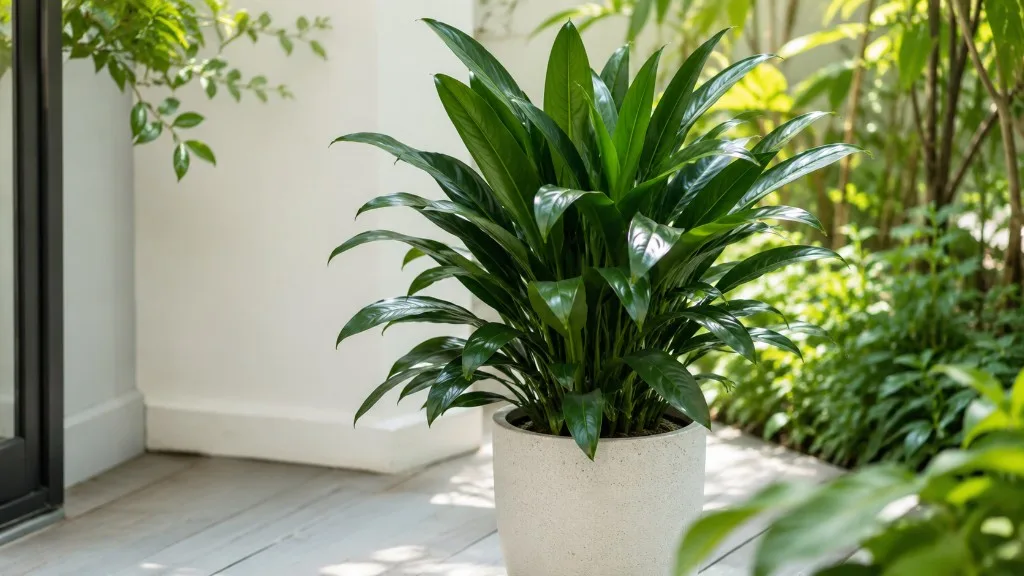
Janet Craig Dracaena is a slow-growing, upright floor plant grown for deep green, glossy foliage on thick cane-like stems. The cultivar name is Dracaena deremensis ‘Janet Craig’, though you will also see it sold under Dracaena fragrans group labels such as corn plant or simply “Janet Craig.” Taxonomists have reorganized Dracaena species several times, and retail tags often lag behind - for practical care purposes, all Janet Craig plants share the same environmental needs regardless of which scientific name is printed on the pot.
Indoors, Janet Craig typically reaches 4 to 6 feet (1.2 to 1.8 m) tall over many years, developing a visible trunk as lower leaves naturally shed and the stem elongates. Growth is deliberately slow, especially in lower light, which is why the plant is marketed heavily to offices, lobbies, and interior designers who want architectural foliage without constant reshaping. New leaves emerge from the crown in tight rosettes; over time the form becomes more tree-like and sculptural - a look that reads polished in corporate hallways and living rooms alike.
If you are deciding whether Janet Craig fits your space, the honest summary is this: it rewards patience, dry-down watering matched to light level, and filtered water - and it punishes overwatering on Janet Craig Dracaena in dim corners, fluoride-heavy tap water, and cold drafts. It is easier than a fiddle-leaf fig in low light and harder than a snake plant if you water on autopilot. The payoff is one of the most shade-tolerant large indoor plants available, with foliage that stays deep green where pothos would stretch and philodendrons would pale. One critical caveat for pet owners: Janet Craig is toxic to cats and dogs according to the ASPCA, which surprises many people who assume “office plants” are automatically pet-safe.
Botanical Background and Cultivar History
Janet Craig belongs to the family Asparagaceae - the asparagus family - which helps explain a few baseline care patterns. Asparagaceae houseplants generally prefer well-drained soil with periodic dry-down, dislike sudden cold, and accumulate leaf-tip burn when salts or fluoride build up in the root zone. The thick, cane-like stems store some water, but the roots still need air between waterings; soggy mix is the fastest path to decline.
The species descends from tropical African understory habitats - warm, humid rainforest margins where plants evolved beneath taller canopy. In USDA Hardiness Zones 10 through 12, related Dracaena species survive outdoors year-round in frost-free climates. Everywhere else, Janet Craig is a strictly indoor or greenhouse plant because it has no frost tolerance and loses leaves quickly when temperatures drop below about 55°F (13°C) for extended periods.
The cultivar ‘Janet Craig’ was introduced in 1935 and named for Janet Craig, daughter of Philadelphia nurseryman Robert Craig. It became synonymous with durability in commercial interiors - the plant you could place in a dim lobby and still invoice as “living décor” six months later. That reputation is largely deserved, but it created a misleading label: “low light” does not mean “no care.” Janet Craig survives low light; it grows noticeably faster and holds foliage longer when light is brighter. Do not confuse this cultivar with Dracaena compacta (sometimes sold as Compacta Janet Craig), which has tighter, stacked rosettes on a shorter frame but follows similar care logic.
You may also encounter Janet Craig grouped with corn plant (Dracaena fragrans) references because both share African ancestry and overlapping commercial naming. The ASPCA lists toxicity under both corn plant (Dracaena fragrans) and striped dracaena / Janet Craig plant (Dracaena deremensis). When pet safety or precise identification matters, treat the plant as a Dracaena with saponin content rather than debating cultivar paperwork at the nursery.
Why Low-Light Tolerance Defines Its Reputation
Janet Craig earned its office-plant status through exceptional shade tolerance, not through indifference to environment. In practical terms, it can maintain healthy foliage at roughly 250 to 500 lux - a shady corner or a room with only north exposure - where many foliage plants would thin out and die back within months. For comparison, Janet Craig Dracaena light guide near an east window often runs 1,000 to 2,000 lux, and standard fluorescent office ceiling lighting may deliver 500 to 750 lux across a desk zone. Janet Craig can work in all three scenarios, but the outcomes differ sharply.
In bright indirect light, you see wider leaves, richer gloss, and occasional new crown growth. In moderate office fluorescent light, the plant often enters a kind of stasis - alive, presentable, but barely adding height. In very dim conditions below about 250 lux for long periods, the plant eventually drops lower leaves as it reallocates stored energy, revealing more trunk and a thinner canopy. That is survival, not thriving. The distinction matters because the Janet Craig Dracaena watering guide that keeps a bright-window plant healthy will rot roots within weeks on the same specimen moved to a dark hallway without adjusting moisture checks.
Janet Craig also appeared in the NASA Clean Air Study (1989) as a species tested for volatile organic compound removal indoors. That research is often overstated in marketing copy - a single potted plant cannot replace ventilation - but it reflects real biochemical activity in the foliage and roots. The more practical reason designers specify Janet Craig is simpler: it looks expensive, tolerates real-world building light, and does not outgrow a floor plan in one season.
Compared with other low-light champions, Janet Craig sits between a snake plant (more drought-tolerant, slower to show distress, but stiff and architectural rather than lush) and a peace lily (showier blooms but much less forgiving of dry-down timing). If you need a large, deep-green floor specimen for a spot that is too dim for a fiddle-leaf fig but too formal for a trailing pothos, Janet Craig is one of the most reliable choices - provided you respect the link between light level and watering frequency.
Best Growing Conditions for Janet Craig Dracaena
Janet Craig does best when your space approximates the warm, stable rhythm of its African understory origins. The four variables that decide almost every outcome are light, water, soil, and temperature. Get those aligned and feeding, Janet Craig Dracaena repotting guide, propagation, and occasional pruning become infrequent maintenance. Get one badly wrong - especially water in low light - and the plant declines slowly enough that many owners misdiagnose the cause for months.
Light Requirements
Janet Craig performs best in bright, indirect light - strong ambient daylight without harsh midday sun on the leaves. East-facing windows are often ideal: gentle morning direct sun, then bright indirect exposure the rest of the day. A few feet back from a south- or west-facing window filtered by a sheer curtain also works well. North windows can support Janet Craig if the room is genuinely bright; in a dark north room, expect slow growth and stricter watering discipline.
The critical concept is survive versus thrive. Marketing labels shout “low light plant,” but low light changes the plant’s metabolism. In bright indirect conditions, aim for roughly 1,000 to 2,000 lux if you measure with a light meter - new leaves stay glossy and internodes remain reasonably tight. In office fluorescent lighting at 500 to 750 lux, the plant usually maintains appearance but adds little height. Below 250 lux, watch for progressive lower-leaf loss and a thinner crown; that is the plant cannibalizing older foliage because photosynthesis no longer supports the full canopy.
Direct afternoon sun through unobstructed glass will bleach or scorch deep green leaves, leaving tan patches that do not revert to green. Acclimate gradually over one to two weeks if you move a plant from a dim shop shelf to a brighter window - leaves formed in low light burn easily when light jumps suddenly. The fastest diagnostic is new growth: firm, dark green emerging leaves mean the current exposure is workable. Small, pale, or slow-to-unfurl new leaves mean the plant wants more light if you have it available.
If natural light is weak, a full-spectrum grow light on a 10–12 hour timer helps - especially in winter at northern latitudes. Position the fixture 12–24 inches above the crown and watch for heat buildup on the upper leaves. Rotate the pot quarterly so growth stays even rather than leaning toward the brightest source.
Temperature and Humidity
Janet Craig prefers stable indoor temperatures between 65 and 80°F (18 and 27°C) during active growth. It tolerates brief excursions toward 90°F (32°C) if soil moisture keeps pace, but it reacts badly to cold drafts from AC vents, winter window sills, or frequently opened exterior doors. Sustained exposure below 55°F (13°C) commonly triggers leaf drop and stalled crown growth that may not resume until warmth returns.
Humidity is helpful but secondary compared with light and water. Janet Craig handles average household humidity of 40 to 50% reasonably well - the range most homes already sit in. It appreciates moderate to higher humidity up to about 80% in theory, reflecting its rainforest ancestry, but it does not demand humidifier-level intervention the way a calathea might. Very dry winter air below 30% can encourage spider mites on indoor specimens, especially if the plant sits above a heating vent. Grouping plants, using a pebble tray with the pot elevated above the water line, or running a small humidifier nearby all help more than occasional misting, which raises humidity briefly and can leave wet foliage that invites fungal spotting when air circulation is poor.
Keep Janet Craig away from heating and cooling vents even when the ambient room temperature looks fine. Drafts desiccate leaf margins and stress roots unevenly - the plant may yellow and drop leaves on the side facing the vent while the opposite side still looks healthy, which sends owners on a frustrating nutrient or pest chase when the fix is placement.
Soil and Drainage
Use a standard well-draining potting mix amended with perlite - roughly three parts quality peat-free or peat-based houseplant mix to one part perlite is a workable starting blend. The principle matters more than a branded recipe: the mix should hold moisture in the root zone without staying waterlogged for days, and it should retain enough air space that roots can breathe between waterings. Janet Craig roots are relatively thick but still suffocate in compacted, anaerobic mix.
Target a mildly acidic pH around 6.1 to 6.5. Hobbyists rarely need to meter pH precisely for Janet Craig; the bigger practical issue is salt and fluoride accumulation from hard tap water and over-fertilizing, which show up as crust on the soil surface and brown leaf tips that persist even when watering looks correct. Always plant in a container with a drainage hole. Decorative cachepots are fine only if you empty runoff after every watering and never let the inner pot sit in standing water.
Because Janet Craig grows slowly, mix breaks down and compacts over two to three years even when the plant is not root-bound. Refresh soil at repotting rather than lifting a root-bound plant into the same tired substrate. A heavy, peat-dominated mix that worked in year one can become a water-retentive sponge by year three - especially dangerous in low light where dry-down already runs slow.
How to Water Janet Craig Dracaena
The general rule for Janet Craig is water based on dry-down, not calendar - and let light level set how deep the dry-down must go before the next drink. In bright conditions, allow the top half of the mix to dry before watering thoroughly. In low-light office placements, let the mix dry much deeper - often most of the pot - and stretch intervals to roughly every 21 to 28 days or longer in cool, dim months. More precisely, your schedule is a reminder to check, not a rule to obey blindly.
Use filtered, distilled, or reverse-osmosis water when possible. Janet Craig is notably sensitive to fluoride and chlorine in municipal tap water, which do not evaporate by leaving water on the counter overnight the way some gardeners assume. Fluoride toxicity shows up as persistent brown tips and margins on otherwise healthy leaves - damage that trimming solves cosmetically but does not fix until water quality changes. If filtered water is impractical, collect rainwater or flush the pot with plain water monthly to reduce salt buildup.
Water thoroughly until a modest amount runs from the drainage hole, then empty the saucer so roots are not standing in stale water. Check moisture with a finger, a wooden skewer, or by lifting the pot - a very light pot in low light usually means it is finally safe to water; a heavy pot with damp core means wait regardless of what the surface looks like. A moisture meter can help beginners in large floor pots where finger depth is awkward: water when the reading sits in the dry zone (roughly 1–3 on many consumer meters), not when the surface alone looks pale.
Watering Rhythm During Active Growth
During the warm, bright months when the plant is occasionally pushing new crown leaves, Janet Craig uses water on a predictable but unhurried rhythm. The goal is a full soak followed by a genuine dry-down - not permanently damp mix that never quite dries in the center. In bright indirect light, that often means checking every 10 to 14 days for a medium floor pot, though small pots in hot rooms may dry faster and large specimens in cool rooms may dry slower.
Watch new growth as your feedback loop. If the plant is producing occasional fresh leaves and existing foliage stays firm and dark green, your interval is probably in range. If crown leaves stay furled for weeks while the mix stays wet, you are likely overwatering even if the calendar says it is time. Janet Craig communicates slowly - by the time lower leaves yellow from root stress, the problem may have been building for months.
Seasonal Adjustments and Low-Light Watering
In cooler, dimmer months - or year-round in a low-light office - growth slows toward near-stasis and the pot dries far more slowly. Stretch the interval between waterings and reduce or pause fertilizer until new growth resumes in spring. The most common failure mode for Janet Craig is continuing a summer watering rhythm after the plant moves to a dimmer winter location or a darker office cube, which keeps the mix waterlogged and leads to yellow lower leaves, fungus gnats, and root rot.
Low-light watering requires mental discipline: the plant looks the same week after week, which tricks owners into watering from boredom. If Janet Craig has not dried down deeply and the pot still feels heavy, skipping a watering is almost always safer than adding one. In fluorescent-only offices, intervals of three to four weeks or longer between thorough waterings are normal in winter - not neglect, but matching metabolism to moisture.
When you do water a low-light plant, still water thoroughly rather than giving small sips. Light frequent top-ups wet only the upper layer while the center stays stagnant - the worst of both worlds for root health.
Common Watering Mistakes
The single most damaging mistake is watering on a fixed weekly schedule without checking the pot, especially after the plant moves to lower light. The second is letting the plant sit in a full saucer or sealed cachepot, which suffocates roots within days even if the top of the mix looks acceptable. The third is using fluoridated tap water for years and blaming humidity or fertilizer for brown tips that never resolve.
People also misread Janet Craig’s drought tolerance. It can survive missed waterings better than many tropicals, but repeated drought cycles still damage fine roots and make the plant more susceptible to pests. Underwatering usually shows as slight leaf droop, dry pot weight, and progressive tip browning on the oldest leaves. Overwatering shows as soft yellow lower leaves, sour-smelling mix, and crown stagnation while the pot stays heavy. Always pair symptoms with a moisture check at depth before adding more water.
If stems feel soft at the base and the mix smells sour, stop watering, inspect roots, trim any brown mushy tissue, and repot into fresh mix before resuming a conservative dry-down rhythm.
How to Feed Janet Craig Dracaena
Janet Craig is a light feeder, not a hungry one. A balanced water-soluble fertilizer - for example 10-10-10 or 20-20-20 - diluted to half the label rate is sufficient for most indoor specimens. Apply to already-moist soil roughly once every four to six weeks from spring through early fall, or once every three months if you prefer an even leaner approach matching its slow growth. Some growers feed only once or twice per year with good results on mature floor plants in stable office conditions - proof that more fertilizer does not equal more height on Janet Craig Dracaena overview.
Hold fertilizer entirely during the cool, low-light months, after a major repot until new growth appears, and while the plant is recovering from root rot or pest damage. Overfeeding produces salt buildup and brown leaf margins that mimic fluoride burn and drought stress. If margins crisp despite good moisture and filtered water, flush the pot with plain water at two to three times the pot volume and pause feeding for two to three months.
Because Janet Craig grows slowly, nutrient demand tracks leaf production, not calendar optimism. If the plant has not opened a new crown leaf in months - common in dim offices - supplemental feeding mostly adds salt without visible benefit. Resume feeding when you see firm new growth and the pot is drying on a normal rhythm for its light level.
Repotting and Root Health
Repot Janet Craig roughly every two to three years, or whenever roots circle drainage holes, the plant dries out within a few days of watering despite slow growth, or water runs straight through without soaking in. The best timing is early spring as active growth resumes, which gives the plant a full warm season to settle into fresh mix. Because growth is slow, young nursery plants may sit happily in the same pot longer than fast growers like pothos - do not repot reflexively every spring unless signs point to root crowding or degraded mix.
Choose a pot only one size larger than the current root ball - typically 1 to 2 inches (2.5 to 5 cm) wider. Oversized pots hold excess wet mix around roots that cannot use it, which is the most common trigger for rot after repotting on slow-growing dracaenas. Use fresh, well-draining mix, plant at the same depth as before, and water lightly for the first week while cut roots heal. Keep the plant in bright indirect light and avoid fertilizer until you see new crown activity.
Signs It Is Time to Repot
Physical signs include roots emerging from drainage holes, a top-heavy plant that dries unusually fast, or mix that has broken down into fine, water-retentive mud. Performance signs include stalled crown growth for a full growing season despite adequate light and conservative feeding, or chronic tip burn that persists after you have corrected water quality - sometimes indicating mineral-loaded old mix rather than current care errors.
Do not repot a plant that is actively collapsing from overwatering until you have inspected roots and trimmed rot. Moving a failing root ball into fresh mix without fixing the underlying moisture problem rarely saves Janet Craig - it simply delays the same outcome by a few weeks.
Propagation Methods for Janet Craig Dracaena
The standard home propagation methods for Janet Craig are cane sections and stem tip cuttings. Seed is not used commercially for this cultivar, and division is uncommon unless you have a multi-stem nursery specimen. Propagation works best from healthy, hydrated parent plants during warm, bright months - not as a rescue attempt on a rotting office plant in February.
For cane sections, cut a bare stem segment 3 to 6 inches (7.5 to 15 cm) long that includes at least one node using clean, sharp pruners. Lay the section horizontally on moist, well-draining mix or insert it vertically with the node buried half an inch (1 cm) deep. Keep the medium evenly moist but not soggy, and place the setup in bright indirect light at warm temperatures near 70 to 75°F (21 to 24°C). Roots and a new shoot often emerge from the node in four to eight weeks, though low-light parent conditions slow the timeline.
For stem tip cuttings, remove the top 6 to 10 inches (15 to 25 cm) of a healthy cane, strip lower leaves that would sit below the mix surface, and root in moist medium or water. If rooting in water, change the water every few days and transplant to mix once roots reach 1 to 2 inches (2.5 to 5 cm) long. Water-rooted cuttings sometimes struggle with the transition - rooting directly in mix with a humidity dome is often more reliable for beginners.
Do not propagate stressed, diseased, or heavily pest-infested plants - cuttings inherit the parent’s problems. After rooting, treat the new plant as a young specimen with slightly more conservative watering until the root system fills its container.
Common Janet Craig Dracaena Problems
Most Janet Craig problems are environmental, not mysterious diseases. The plant communicates through leaf color, tip condition, and drop timing long before the entire specimen collapses. The useful habit is to check light, moisture, and water quality in that order before reaching for pesticide or extra fertilizer.
Yellow Leaves, Brown Tips, and Pests
Yellow leaves on Janet Craig usually mean overwatering, underwatering, natural aging of lower leaves, cold drafts, or sudden light change - not a missing magic nutrient. If yellow leaves are soft and the mix is wet, suspect overwatering and inspect roots for brown mushy tissue. If yellow leaves are crisp and the pot is very light, drought stress is more likely. A single yellow lower leaf on an otherwise stable plant is often normal senescence as the trunk develops - remove it and watch the crown rather than overcorrecting every variable at once.
Brown leaf tips and margins are the signature complaint for Janet Craig, and fluoride or chlorine in tap water is the most common cause indoors. Trim dead tips cleanly with sharp scissors for appearance, but expect recurrence until water quality improves. Other contributors include low humidity, salt buildup from over-fertilizing, and chronic underwatering in bright light. Tips that are already brown will not turn green again; judge success by undamaged new leaves emerging from the crown.
Progressive lower-leaf drop in an otherwise stable plant can be normal trunk development over years. Sudden widespread drop after a move often traces to cold exposure, repot shock, or a sharp light change - stabilize placement and moisture before assuming disease.
Watch for spider mites in dry indoor air - fine webbing and stippled leaves are the tell. Mealybugs hide in leaf axils as white cottony clusters. Scale appears as immobile bumps along stems. Fungus gnats indicate overly wet surface mix, especially in low light; let the top layer dry longer between waterings. Catch pests early with weekly inspection. A strong shower, manual removal, and insecticidal soap applied per label directions handle most infestations if you act before the population spreads.
Soft stems at the base combined with foul-smelling mix is advanced overwatering damage. Trim healthy cane sections above the rot and propagate rather than trying to save a mushy base in the original pot.
Is Janet Craig Dracaena Safe for Pets?
Janet Craig Dracaena is toxic to cats, dogs, and horses according to the ASPCA’s toxic plant listings, which includes Janet Craig plant under Dracaena deremensis, and the corn plant listing under Dracaena fragrans. The toxic principle is saponins, present in leaves, stems, and roots. Clinical signs in pets include vomiting (occasionally with blood), depression, anorexia, hypersalivation, and in cats, dilated pupils. The ASPCA also notes abdominal pain, increased heart rate, drooling, incoordination, and weakness in some Dracaena exposures.
Toxic does not always mean fatal in small amounts, but saponins cause meaningful gastrointestinal irritation, and cats are particularly sensitive because they groom ingested material from their fur. Do not rely on “my pet never chews plants” as a safety plan for a floor-level specimen. Place pots out of reach, use physical barriers in mixed pet-and-plant households, or choose confirmed non-toxic alternatives if you have a cat that treats houseplants as enrichment.
If you suspect your pet ingested Janet Craig, contact your veterinarian or the ASPCA Animal Poison Control Center at (888) 426-4435 (a consultation fee may apply). Bring a photo of the plant tag or a leaf sample to help identification. This is general information, not veterinary advice - when symptoms are severe or persistent, professional care is the right move.
For households with curious pets, Janet Craig belongs in the same caution category as pothos or dracaena marginata: excellent for offices, problematic at nose level in a home with cats.
Conclusion
Janet Craig Dracaena (Dracaena deremensis ‘Janet Craig’) is a slow-growing African floor plant that trades minimal grooming for careful attention to light-linked watering and water quality. Give it bright indirect light when you want growth, honest low-light placement when you want durability, deep dry-down before watering in dim rooms, filtered water to prevent fluoride tip burn, and stable warm temperatures, and it will hold deep green architectural foliage for years - developing a handsome trunk as lower leaves naturally shed.
When something looks wrong, read the plant in context: brown tips with otherwise firm leaves mean water quality or salts first; yellow soft lower leaves on a heavy wet pot mean overwatering; progressive lower-leaf loss in very dim light may mean the plant needs brighter placement or less frequent watering, not more care. Repot every two to three years, feed lightly during active growth, propagate from healthy cane sections if you want backups, and keep the plant away from pets that chew foliage. Do that, and Janet Craig earns its reputation as one of the most dependable large indoor plants for real-world rooms - including the ones with no ideal window at all.
When to use this page vs other Janet Craig Dracaena guides
- Janet Craig Dracaena overview - Canonical hub for this species - care topics and problems branch from here.
- Janet Craig Dracaena problems - Symptom-first path when you already know something is wrong.
Related Janet Craig Dracaena guides
- Janet Craig Dracaena watering
- Janet Craig Dracaena light
- Janet Craig Dracaena soil
- Janet Craig Dracaena propagation
- Janet Craig Dracaena fertilizer
- Janet Craig Dracaena repotting
- Janet Craig Dracaena pruning
- Ants on Plant on Janet Craig Dracaena
- Bacterial Wilt on Janet Craig Dracaena
- Black Spots on Janet Craig Dracaena
- Brown Leaves on Janet Craig Dracaena
- Brown Tips on Janet Craig Dracaena
How to care for Janet Craig Dracaena?
How much light does Janet Craig Dracaena need?
medium indirect light, low light, bright indirect light
- medium indirect light, low light, bright indirect light - medium indirect light, low light, bright indirect light.
When should you water Janet Craig Dracaena?
Allow top half to dry. Very infrequent in low-light positions - every 21–28 days or more. Use filtered water.
- Check top 2 inches - Allow top half to dry.
- Drain excess water - Use filtered water.
What soil works best for Janet Craig Dracaena?
Standard well-draining potting mix with perlite.
- Well-draining mix - Standard well-draining potting mix with perlite.
Grower notes for Janet Craig Dracaena
What matters most with Janet Craig Dracaena
Janet Craig Dracaena is easiest to grow when you judge the whole plant: new growth, root-zone moisture, light exposure, and how quickly the pot dries after watering. In practice, the care checkpoint is simple: medium indirect light, low light, bright indirect light. Pair that with standard well-draining potting mix with perlite, and avoid changing water, pot size, and placement all at once.
Best placement in a real home
Janet Craig Dracaena belongs where medium indirect light, low light, bright indirect light is realistic for most of the day, not only where the pot looks good. Allow top half to dry. Very infrequent in low-light positions - every 21–28 days or more. Use filtered water. If the pot stays wet longer than expected, move the plant into better light or reassess the mix before watering again. Humidity target: Average household humidity (40–50%).. Temperature comfort zone: 18°C to 27°C (65–80°F).
Before you buy this plant
Choose Janet Craig Dracaena with firm new growth, clean leaf undersides, and soil that does not smell sour or feel compacted. Be cautious if you see brown-tips, sticky residue, collapsed crowns, or a pot that is wet in poor light. Cosmetic old-leaf damage is less worrying than weak roots or active pests.
First month after bringing it home
Do not repot Janet Craig Dracaena on day one unless the mix is failing or pests are obvious. Quarantine it, learn how fast the pot dries, and keep care boring while it adjusts. Watch especially for brown-tips, yellow-leaves, and overwatering. If problems appear, correct the condition first rather than stacking fertilizer, repotting, and pruning together.
Safety note for Janet Craig Dracaena
Janet Craig Dracaena is not a plant to keep within reach of pets or children. Treat it as an inaccessible display plant. Use gloves if sap or plant tissue is irritating, and pick a pet-safe alternative for floor pots or low shelves.
How to tell Janet Craig Dracaena is settling in
If you plan to multiply it later, common methods include Cane sections and Stem tip cuttings. If yellow-leaves shows up early, inspect light, watering, and roots before assuming the plant is permanently weak.
Is it pet safe?
Janet Craig Dracaena is toxic to cats and dogs.
Toxic to cats and dogs - causes vomiting and drooling.
Watering Janet Craig Dracaena
Allow top half to dry. Very infrequent in low-light positions - every 21–28 days or more. Use filtered water.
Soil & potting for Janet Craig Dracaena
Standard well-draining potting mix with perlite.
Humidity & temperature for Janet Craig Dracaena
Janet Craig Dracaena prefers average household humidity (40–50%), though normal home humidity is usually fine. Keep temperatures around 18°C to 27°C (65–80°F).
| Detail | Information |
|---|---|
| Humidity | Average household humidity (40–50%) - normal home humidity is fine. |
| Ideal temperature | 18°C to 27°C (65–80°F) |
Fertilizer & pruning for Janet Craig Dracaena
Use feed lightly during active growth. Use monthly during spring and summer.. for Janet Craig Dracaena.
| Detail | Information |
|---|---|
| Fertilizer type | Feed lightly during active growth. Use monthly during spring and summer.. |
Common problems on Janet Craig Dracaena
Likely cause: Plantas Dracaena como ‘ Janet Craig ’ são plantas de piso ideais para dar destaque vertical ou altura aos cantos sombreados.
Quick fix: Confirm diagnosis on your Janet Craig Dracaena, then address the most likely care or pest factor described in current extension guidance.
Full fix guide →Bacterial Wilt
HighLikely cause: Aug 6, 2025 · Dracaena Janet Craig (Dracaena fragrans 'Compacta', formerly Dracaena deremensis) is a popular houseplant recognized for its lush, upright foliage. This plant, part of a group often referred to as corn plants, features a cane-
Quick fix: Follow extension or botanical guidance for Janet Craig Dracaena bacterial wilt; adjust care before applying broad treatments.
Full fix guide →Black Spots
MediumLikely cause: Jul 15, 2023 · In this post, we'll get to the root of what might be causing those black leaves on your Janet Craig Dracaena . We'll cover everything from watering habits and sunlight exposure to pest problems and more.
Quick fix: Confirm diagnosis on your Janet Craig Dracaena, then address the most likely care or pest factor described in current extension guidance.
Full fix guide →Brown Leaves
MediumLikely cause: Feb 25, 2026 · If you’re a proud owner of a ‘ Janet Craig ’ Dracaena , you know the frustration. You’ve brought home this beautiful, resilient plant, only to watch its elegant, deep green leaves start to develop unsightly brown or crispy ed
Quick fix: Confirm diagnosis on your Janet Craig Dracaena, then address the most likely care or pest factor described in current extension guidance.
Full fix guide →Brown Tips
LowLikely cause: Fluoride from tap water accumulates and causes brown tips - universal Dracaena problem
Quick fix: Switch to filtered water; flush soil; trim existing tips
Full fix guide →Bud Drop
LowLikely cause: Apr 16, 2025 · Rapid fluctuations or exposure to cold drafts can trigger leaf drop or yellowing. Keeping the plant away from heating or cooling vents is wise because consistent indoor temperatures support stable growth.
Quick fix: Confirm diagnosis on your Janet Craig Dracaena, then address the most likely care or pest factor described in current extension guidance.
Full fix guide →Calcium Deficiency
MediumLikely cause: Aug 6, 2025 · Dracaena Janet Craig (Dracaena fragrans 'Compacta', formerly Dracaena deremensis) is a popular houseplant recognized for its lush, upright foliage. This plant, part of a group often referred to as corn plants, features a cane-
Quick fix: Follow extension or botanical guidance for Janet Craig Dracaena calcium deficiency; adjust care before applying broad treatments.
Full fix guide →Chemical Damage
MediumLikely cause: Dracaena fragrans “ Janet Craig ” is one of the most dependable houseplants around. ... However, if the only damage to a Janet Craig ...
Quick fix: Confirm diagnosis on your Janet Craig Dracaena, then address the most likely care or pest factor described in current extension guidance.
Full fix guide →Crispy Leaves
MediumLikely cause: Feb 25, 2026 · Once a leaf tip has turned brown and crispy , the cells in that area are dead and cannot recover. Your focus should be on stopping new tips from turning brown and maintaining the health of the remaining green foliage.
Quick fix: Confirm diagnosis on your Janet Craig Dracaena, then address the most likely care or pest factor described in current extension guidance.
Full fix guide →Curling Leaves
MediumLikely cause: Oct 4, 2022 · Janet Craig Dracaenas are tropical by nature, so they love warm temperatures and higher humidity levels. If your home is too cold or dry, you might notice those leaves starting to curl as the plant tries to cope with an enviro
Quick fix: Confirm diagnosis on your Janet Craig Dracaena, then address the most likely care or pest factor described in current extension guidance.
Full fix guide →Damaged Roots
MediumLikely cause: Jan 13, 2024 · How to revive a Janet Craig ? This care guide aims to save drooping Dracaena plants from root rot by identifying yellow leaves and wilting signs. Trim and treat roots , repot with well-draining soil, and monitor water, soil,
Quick fix: Confirm diagnosis on your Janet Craig Dracaena, then address the most likely care or pest factor described in current extension guidance.
Full fix guide →Deformed New Growth
MediumLikely cause: Mar 5, 2024 · With a little patience and a lot of love, your Janet Craig Dracaena will reward you with lush, vibrant growth . To sum up, getting new growth on your Janet Craig Dracaena involves a combination of proper lighting, watering, so
Quick fix: Confirm diagnosis on your Janet Craig Dracaena, then address the most likely care or pest factor described in current extension guidance.
Full fix guide →Distorted Leaves
MediumLikely cause: Feb 3, 2026 · But don't let its ubiquity fool you - when grown well, with its deep, glossy, corrugated leaves , the Dracaena deremensis ' Janet Craig ' is a stunning architectural piece. It stands out among other Dracaena varieties for its
Quick fix: Confirm diagnosis on your Janet Craig Dracaena, then address the most likely care or pest factor described in current extension guidance.
Full fix guide →Dry Hydrophobic Soil
MediumLikely cause: Jun 3, 2022 · In this article, we'll chat about everything you need to know to choose the best soil for your Janet Craig Dracaena . From understanding its natural habitat to mixing your own soil blend, we'll cover it all.
Quick fix: Confirm diagnosis on your Janet Craig Dracaena, then address the most likely care or pest factor described in current extension guidance.
Full fix guide →Exposed Roots
MediumLikely cause: Feb 5, 2023 · Janet Craig Dracaena roots are typically fibrous and spread out rather than diving deep into the soil. This structure helps them gather moisture efficiently from the top layer of soil, which is where most of the nutrients resi
Quick fix: Confirm diagnosis on your Janet Craig Dracaena, then address the most likely care or pest factor described in current extension guidance.
Full fix guide →Faded Leaves
MediumLikely cause: Mar 1, 2023 · In this article, we’ll explore some of the main reasons why your Janet Craig Dracaena might be looking a little worse for wear and, more importantly, what you can do to help it recover.
Quick fix: Confirm diagnosis on your Janet Craig Dracaena, then address the most likely care or pest factor described in current extension guidance.
Full fix guide →Fertilizer Burn
MediumLikely cause: Aug 4, 2022 · Avoid getting the fertilizer solution on the leaves, as this can cause spotting or burn . If you’re using a slow-release fertilizer , follow the instructions for how much to use based on the size of your plant and pot. Always
Quick fix: Confirm diagnosis on your Janet Craig Dracaena, then address the most likely care or pest factor described in current extension guidance.
Full fix guide →Flowers Turning Brown
MediumLikely cause: Feb 25, 2026 · I’m here to tell you that those dracaena janet craig brown tips are usually a cry for help, and with a little expert guidance, you can diagnose the problem and bring your plant back to its lush, vibrant self.
Quick fix: Confirm diagnosis on your Janet Craig Dracaena, then address the most likely care or pest factor described in current extension guidance.
Full fix guide →Fungus Gnats
LowLikely cause: Aug 8, 2025 · Fungus gnats are small, dark flies hovering around moist soil. While adults are a nuisance, their larvae feed on organic matter and can damage roots. Allowing soil to dry between waterings breaks their life cycle.
Quick fix: Confirm diagnosis on your Janet Craig Dracaena, then address the most likely care or pest factor described in current extension guidance.
Full fix guide →Heat Stress
MediumLikely cause: Jun 12, 2024 · You're not alone, and with a little love and care, your Janet Craig Dracaena can bounce back to its former glory. In this article, we’ll chat about why heat damage happens, how to recognize it, and most importantly, what you
Quick fix: Confirm diagnosis on your Janet Craig Dracaena, then address the most likely care or pest factor described in current extension guidance.
Full fix guide →Leaf Spot Disease
MediumLikely cause: Aug 25, 2024 · In this article, we'll look into the common diseases that can affect your Janet Craig Dracaena and how to treat them, so you can keep your plant happy and healthy.
Quick fix: Confirm diagnosis on your Janet Craig Dracaena, then address the most likely care or pest factor described in current extension guidance.
Full fix guide →Leggy Growth
LowLikely cause: Nov 19, 2024 · In this article, we’ll explore what causes a Janet Craig Dracaena to become leggy , how to fix it, and tips to prevent it from happening again. Stick around, and you'll soon be on your way to nurturing a healthier, happier pl
Quick fix: Confirm diagnosis on your Janet Craig Dracaena, then address the most likely care or pest factor described in current extension guidance.
Full fix guide →Leggy Seedlings
MediumLikely cause: Nov 19, 2024 · In this article, we’ll explore what causes a Janet Craig Dracaena to become leggy , how to fix it, and tips to prevent it from happening again. Stick around, and you'll soon be on your way to nurturing a healthier, happier pl
Quick fix: Confirm diagnosis on your Janet Craig Dracaena, then address the most likely care or pest factor described in current extension guidance.
Full fix guide →Mealybugs
MediumLikely cause: Mar 18, 2024 · Mealybugs are another common pest that can wreak havoc on your Janet Craig Dracaena. These pests appear as small, white, cotton-like masses on the leaves and stems. They feed on plant sap, leading to weakened growth and even
Quick fix: Confirm diagnosis on your Janet Craig Dracaena, then address the most likely care or pest factor described in current extension guidance.
Full fix guide →No Drainage Hole
MediumLikely cause: May 25, 2026 · Caring for a Janet Craig Dracaena can be a rewarding experience, offering a touch of nature’s calm to your living space. Proper soil depth is essential, allowing room for roots to spread and not being too shallow that without
Quick fix: Confirm diagnosis on your Janet Craig Dracaena, then address the most likely care or pest factor described in current extension guidance.
Full fix guide →No Flowers
LowLikely cause: Aug 6, 2025 · In its natural environment, dracaena Janet Craig will typically begin to bloom with white and heavily scented flowers after a few years of growth. Blooming is infrequent, and the plant requires consistent temperature and humid
Quick fix: Follow extension or botanical guidance for Janet Craig Dracaena no flowers; adjust care before applying broad treatments.
Full fix guide →Not Enough Light
MediumLikely cause: While they can tolerate lower light levels, bright, indirect light promotes the best growth and maintains the plant’s overall vitality. Direct sunlight is generally detrimental to Dracaena Janet Craig , as intense rays can scorch and damage
Quick fix: Confirm diagnosis on your Janet Craig Dracaena, then address the most likely care or pest factor described in current extension guidance.
Full fix guide →Nutrient Lockout
MediumLikely cause: Aug 6, 2025 · Dracaena Janet Craig , like all dracaena plants, is slow-growing and does not need much fertilizer. Feed every three months with an all-purpose plant fertilizer at half the recommended strength. As it grows taller, dracaena Ja
Quick fix: Follow extension or botanical guidance for Janet Craig Dracaena nutrient lockout; adjust care before applying broad treatments.
Full fix guide →Overwatering
HighLikely cause: In deep shade, Janet Craig uses very little water - overwatering is extremely easy in these positions
Quick fix: Water every 3–4 weeks minimum in deep-shade positions; check soil depth before watering
Full fix guide →Plant Leaning
MediumLikely cause: Feb 3, 2026 · While it handles shade, this plant basically glows in bright, indirect light. Placement: Near an East window or a few feet back from a South/West window is ideal. Result: In these conditions, you'll see faster growth, wider le
Quick fix: Confirm diagnosis on your Janet Craig Dracaena, then address the most likely care or pest factor described in current extension guidance.
Full fix guide →Poor Drainage
MediumLikely cause: Nov 5, 2025 · Soil Needs: Dracaena 'Janet Craig ' prefers a lean, well- draining soil. Ensure the pot has good drainage to prevent roots from sitting in water. Repotting: When repotting, allow space for roots to expand, ensuring the soil is
Quick fix: Confirm diagnosis on your Janet Craig Dracaena, then address the most likely care or pest factor described in current extension guidance.
Full fix guide →Poor Root Growth
MediumLikely cause: Aug 8, 2025 · Root rot, caused by persistent overwatering and poor drainage, is common. Symptoms include yellowing leaves, wilting despite wet soil, stunted growth , and a foul odor. Healthy roots are firm and white; rotted roots are brown,
Quick fix: Confirm diagnosis on your Janet Craig Dracaena, then address the most likely care or pest factor described in current extension guidance.
Full fix guide →Potassium Deficiency
MediumLikely cause: Aug 6, 2025 · Dracaena Janet Craig (Dracaena fragrans 'Compacta', formerly Dracaena deremensis) is a popular houseplant recognized for its lush, upright foliage. This plant, part of a group often referred to as corn plants, features a cane-
Quick fix: Follow extension or botanical guidance for Janet Craig Dracaena potassium deficiency; adjust care before applying broad treatments.
Full fix guide →Root Bound
MediumLikely cause: Sep 15, 2023 · The short answer is that the Janet Craig Dracaena doesn't necessarily "like" being root bound , but it can tolerate it better than some other houseplants. Dracaenas, in general, are quite resilient and can adapt to various co
Quick fix: Confirm diagnosis on your Janet Craig Dracaena, then address the most likely care or pest factor described in current extension guidance.
Full fix guide →Rust Disease
MediumLikely cause: Jul 7, 2024 · In this article, we’ll explore what rust fungus is, how it affects the Janet Craig Dracaena, and, most importantly, what you can do about it. From identifying the signs to providing the right care, we’ll cover everything you n
Quick fix: Confirm diagnosis on your Janet Craig Dracaena, then address the most likely care or pest factor described in current extension guidance.
Full fix guide →Salt Build-up
MediumLikely cause: Feb 4, 2023 · These plants are very sensitive to mineral salt build up which is evident from the white ring in the pot. They should ideally be repotted annually or at the very least flushed out several times a year and reported every two ye
Quick fix: Confirm diagnosis on your Janet Craig Dracaena, then address the most likely care or pest factor described in current extension guidance.
Full fix guide →Scale Insects
MediumLikely cause: Dracaena “ Janet Craig “belongs to the Dracaena genus, the family Asparagaceae. It is an upright shrubby plant species that originates from Africa. It is distinguished by sword-like deep green and glossy leaves pointed at the tips. The plan
Quick fix: Confirm diagnosis on your Janet Craig Dracaena, then address the most likely care or pest factor described in current extension guidance.
Full fix guide →Seedlings Falling Over
MediumLikely cause: Feb 10, 2024 · In this post, we'll explore why your plant might be falling over and how you can help it regain its upright glory. From watering mishaps to unexpected pests, we'll cover the common culprits and offer practical solutions for e
Quick fix: Confirm diagnosis on your Janet Craig Dracaena, then address the most likely care or pest factor described in current extension guidance.
Full fix guide →Soil Too Acidic
MediumLikely cause: Jun 14, 2024 · The ideal pH for Dracaena 'Janet Craig Compacta' is a slightly acidic 6 to 7, like a mild salsa that's just right—not too spicy, not too bland. This pH range keeps the plant's nutrient uptake in the sweet spot.
Quick fix: Confirm diagnosis on your Janet Craig Dracaena, then address the most likely care or pest factor described in current extension guidance.
Full fix guide →Spider Mites
MediumLikely cause: Jan 20, 2025 · In this article, we're going to cover everything you need to know about identifying, treating, and preventing spider mites on your Janet Craig Dracaena . From spotting the signs of an infestation to taking action and keeping
Quick fix: Confirm diagnosis on your Janet Craig Dracaena, then address the most likely care or pest factor described in current extension guidance.
Full fix guide →Stem Rot
HighLikely cause: Jan 16, 2024 · Stem rot in Janet Craig Dracaena can be a tricky issue to tackle, but with early detection and proper care, your plant can bounce back. By understanding the symptoms and adjusting your plant care routine, you can keep your Dr
Quick fix: Confirm diagnosis on your Janet Craig Dracaena, then address the most likely care or pest factor described in current extension guidance.
Full fix guide →Stunted Growth
MediumLikely cause: Nov 15, 2023 · In this article, we're going to dig into the five common reasons why your Janet Craig Dracaena might be on a growth strike. We'll explore everything from watering habits to light conditions.
Quick fix: Confirm diagnosis on your Janet Craig Dracaena, then address the most likely care or pest factor described in current extension guidance.
Full fix guide →Likely cause: Dec 10, 2023 · This article will guide you through the process of nursing your sunburnt Janet Craig Dracaena back to health. We'll cover everything from identifying the damage to implementing effective recovery strategies.
Quick fix: Confirm diagnosis on your Janet Craig Dracaena, then address the most likely care or pest factor described in current extension guidance.
Full fix guide →Thin Stems
MediumLikely cause: Oct 28, 2023 · Use your sterilized tools to make a clean cut at the base of the leaf stem, close to the main stem of the plant. Thin out overcrowded stems : If the Dracaena Janet Craig plant has become too dense or crowded, you can selectiv
Quick fix: Confirm diagnosis on your Janet Craig Dracaena, then address the most likely care or pest factor described in current extension guidance.
Full fix guide →Thrips
MediumLikely cause: Nov 7, 2024 · Today, we’re going to chat about how to evict these little critters from your Janet Craig Dracaena . We’ll cover everything from identifying the problem to practical steps for getting rid of them and keeping them away for good
Quick fix: Confirm diagnosis on your Janet Craig Dracaena, then address the most likely care or pest factor described in current extension guidance.
Full fix guide →Transparent Leaves
MediumLikely cause: Feb 3, 2026 · But don't let its ubiquity fool you - when grown well, with its deep, glossy, corrugated leaves , the Dracaena deremensis 'Janet Craig ' is a stunning architectural piece. It stands out among other Dracaena varieties for its v
Quick fix: Confirm diagnosis on your Janet Craig Dracaena, then address the most likely care or pest factor described in current extension guidance.
Full fix guide →Water Stress
MediumLikely cause: Water your Janet Craig Dracaena plant when the top inch of soil feels dry, using lukewarm water until it drains from the bottom of the pot. Welcome to my easy-to-follow watering guide for the Janet Craig Dracaena !
Quick fix: Confirm diagnosis on your Janet Craig Dracaena, then address the most likely care or pest factor described in current extension guidance.
Full fix guide →Wind Damage
MediumLikely cause: Jun 12, 2024 · You're not alone, and with a little love and care, your Janet Craig Dracaena can bounce back to its former glory. In this article, we’ll chat about why heat damage happens, how to recognize it, and most importantly, what you
Quick fix: Confirm diagnosis on your Janet Craig Dracaena, then address the most likely care or pest factor described in current extension guidance.
Full fix guide →Wrong Soil Mix
MediumLikely cause: Jun 3, 2022 · In this article, we'll chat about everything you need to know to choose the best soil for your Janet Craig Dracaena . From understanding its natural habitat to mixing your own soil blend , we'll cover it all.
Quick fix: Confirm diagnosis on your Janet Craig Dracaena, then address the most likely care or pest factor described in current extension guidance.
Full fix guide →Yellow Leaves
MediumLikely cause: Overwatering in low-light positions causes yellow leaves - the most common Janet Craig mistake
Quick fix: Allow top half to dry; dramatically reduce watering frequency in low-light positions
Full fix guide →Aphids
MediumLikely cause: Aphids on Janet Craig Dracaena cluster on new crown growth and tender strap leaves, leaving sticky honeydew. First step: isolate the plant and rinse the crown and leaf undersides thoroughly before app
Quick fix: See plant-specific guide for step-by-step fixes.
Full fix guide →Drooping Leaves
MediumLikely cause: Drooping leaves on Janet Craig Dracaena mean strap foliage is hanging lower than usual-most often from overwatered roots on a heavy wet pot in low light, true drought on a light dry pot in bright room
Quick fix: See plant-specific guide for step-by-step fixes.
Full fix guide →Low Humidity
MediumLikely cause: Low humidity rarely hurts Janet Craig Dracaena-brown tips here usually mean fluoride in tap water, not dry air. Fix water quality and watering rhythm before buying a humidifier.
Quick fix: See plant-specific guide for step-by-step fixes.
Full fix guide →Mold on Soil
MediumLikely cause: Fluffy white or gray mold on Janet Craig potting mix is usually harmless saprophytic fungus on wet organic matter-not a leaf disease. First step: scrape the top layer, let the surface dry, and stretch
Quick fix: See plant-specific guide for step-by-step fixes.
Full fix guide →Root Rot
MediumLikely cause: Root rot on Janet Craig Dracaena follows chronic overwatering-especially in low-light offices where soil stays wet for weeks. Stop watering, unpot, and trim brown mushy roots; firm cane tissue above t
Quick fix: See plant-specific guide for step-by-step fixes.
Full fix guide →Slow Growth
MediumLikely cause: Slow growth on Janet Craig is often normal in dim rooms, but a complete warm-season stall in decent light usually signals a care bottleneck. First fix the light at the crown, then match watering to th
Quick fix: See plant-specific guide for step-by-step fixes.
Full fix guide →Underwatering
MediumLikely cause: Underwatering on Janet Craig usually means drooping leaves with a very light pot and dry mix at half depth, especially in brighter placements. First fix: deep-soak once with low-fluoride water, then r
Quick fix: See plant-specific guide for step-by-step fixes.
Full fix guide →Wilting
MediumLikely cause: Wilting on Janet Craig Dracaena means strap leaves have lost turgor and feel limp-often from a light dry pot in bright rooms or a heavy wet pot with failing roots in low light. First step: lift the po
Quick fix: See plant-specific guide for step-by-step fixes.
Full fix guide →