Soil Too Acidic on Janet Craig Dracaena: Causes, Checks &
Quick answer
Soil too acidic on Janet Craig Dracaena means potting mix has dropped below the 6.0–7.0 range this cultivar prefers-usually from aged peat breakdown, acidifying amendments, or compacted sour mix in slow-drying office pots. First step: test moist mix at the root zone with a pH meter or soil test kit; if readings sit below 5.5–6.0, repot into fresh peat-perlite mix rather than adding lime blindly.
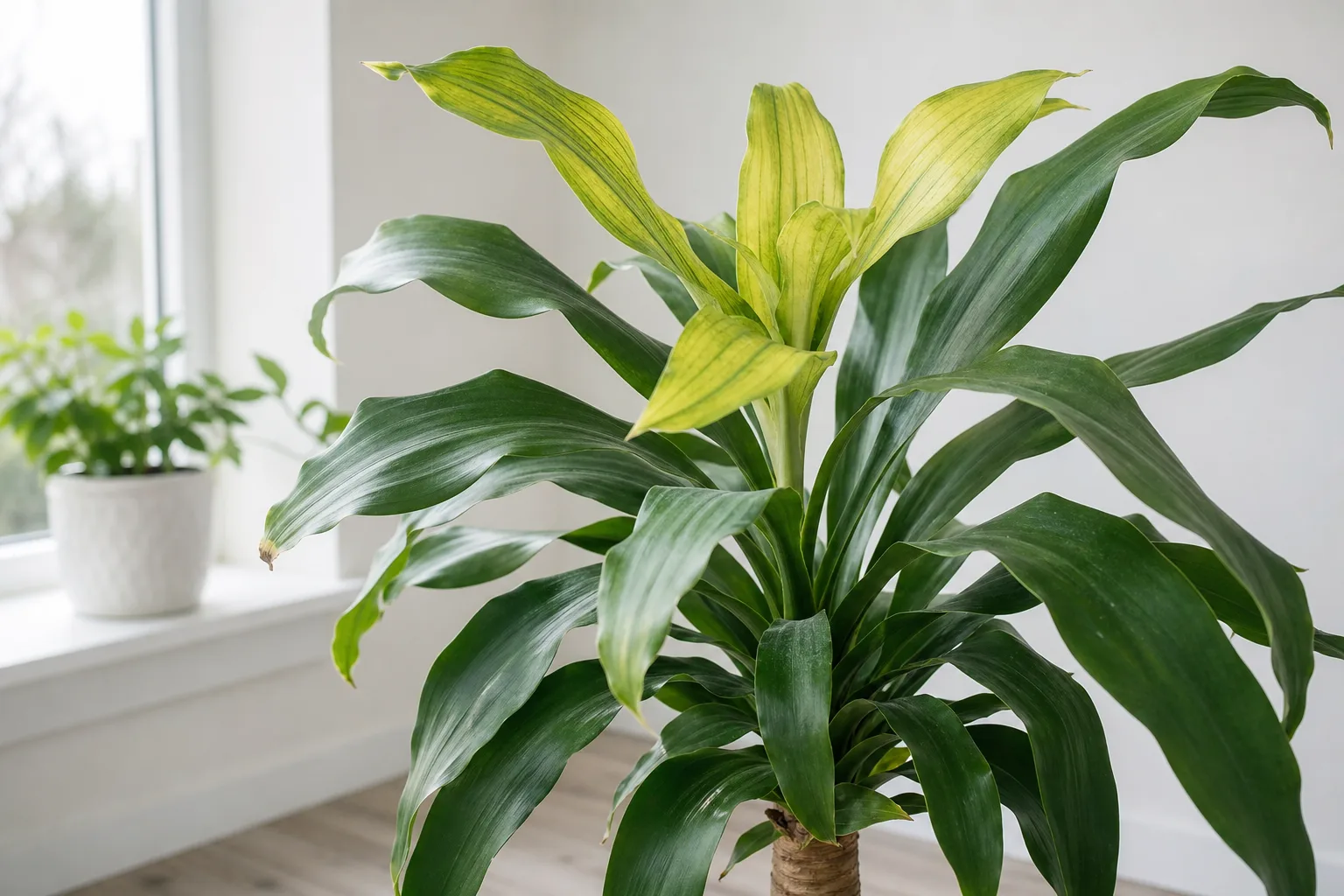
Soil Too Acidic on Janet Craig Dracaena: Causes, Checks & Fixes
This guide covers soil too acidic on Janet Craig Dracaena. See also the general Soil Too Acidic guide, watering, and light pages for this plant.
Soil Too Acidic on Janet Craig Dracaena: Causes, Checks & Fixes
Quick answer
Soil too acidic on Janet Craig Dracaena (Dracaena deremensis ‘Janet Craig’, often sold as Dracaena fragrans ‘Janet Craig’) means potting mix has drifted below the 6.0–7.0 range this slow-growing cane dracaena uses best-not that the plant “prefers acid” in a healthy way. When peat-heavy mix ages, compacts, or gets pushed lower with acidifying hacks, pH can fall below 5.5. Nutrients stop moving normally, new crown leaves stunt, and the problem is easy to confuse with fluoride tip burn or salt crust unless you test the root zone.
First step: test moist potting mix from the middle of the root ball with a pH meter or soil test kit. If readings sit below 5.5–6.0 and the plant shows stunted or pale new crown growth on a firm cane, repot into fresh mix per the Janet Craig soil guide recipe (roughly 3 parts potting soil + 1 part perlite). Do not switch to filtered water alone-that fixes fluoride, not a pH that has already crashed.
Ideal pH vs. too acidic on Janet Craig
Janet Craig is not an acid-loving ericaceous plant. It grows best in slightly acidic to neutral mix, roughly pH 6.0 to 7.0, matching the soil guide pH FAQ and extension guidance for corn-plant dracaenas. Clemson Extension recommends keeping dracaena mix between pH 6.0 and 6.5 partly to limit fluoride uptake at the root zone-so the target band is narrow, not “as acid as possible.”
Too acidic means confirmed readings below about 6.0, often 5.5 or lower in aged indoor peat. That is different from “slightly acidic,” which is the healthy target. Below-range pH can lock out phosphorus and some macronutrients while manganese and aluminum become more available-UF/IFAS notes that media pH below 6.0 may cause leaf chlorosis on dracaena production crops. Above 6.5, iron deficiency becomes more likely-the opposite chemistry.
If your meter reads 6.2–6.8 and the plant looks fine, you do not have an acidity emergency. If readings are 5.2 with shrinking crown leaves, acidity is the working diagnosis.
What overly acidic soil looks like on Janet Craig
Acid-damaged Janet Craig rarely collapses overnight. This cultivar is a slow to moderate grower in dim offices, so nutrient stress builds over months while the woody cane stays firm.
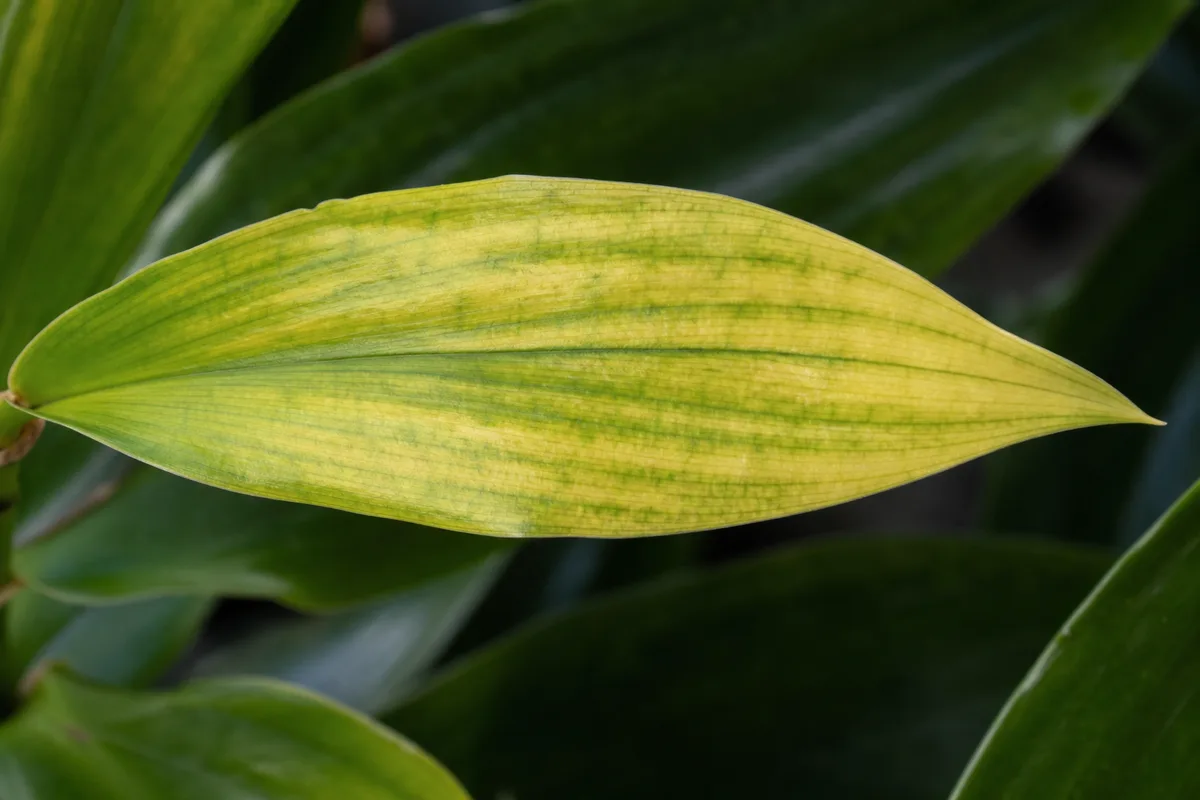
Soil Too Acidic symptoms on Janet Craig Dracaena - compare with healthy tissue on the same plant.
Typical above-ground signs:
- Stunted new crown leaves that emerge smaller and thinner than the previous flush, even with sensible watering
- Dull or yellow-green new foliage across the whole blade-not the crisp margin-only necrosis typical of fluoride brown tips
- Dark green veins on pale young leaves or general chlorosis on newest strap leaves while older lower leaves still look deep green
- Slow crown renewal for a full season despite stable light and water rhythm
- Mix that smells sour and has shrunk away from the pot wall when dry-aged peat breaking down in a pot that rarely fully dries in low light
- Firm cane and roots on first inspection-unlike root rot where the base softens on perpetually wet mix
What excess acidity does not look like: tan crispy tips only at margins after years of municipal tap water (fluoride), white chalky crust with immediate tip burn after heavy feed (salt build-up), or sudden wilt with black mushy roots (rot). Nutrient lockout from salt crust can mimic pale crown growth-check for white deposits and flush history before treating acidity that is not there.
Lookalikes: fluoride tips, salt crust, and rot
| Pattern | Key clues | First direction |
|---|---|---|
| Too acidic | pH below 5.5–6.0; stunted pale crown leaves; aged sour peat; firm cane | Test pH, repot into fresh mix |
| Fluoride tips | Margin/tip necrosis only; tap-water history; deep green firm leaves | Filtered water, flush salts |
| Salt build-up | White crust; tip burn after feeding; poor response to fertilizer | Stop feed, leach pot |
| Root rot | Soft cane; sour wet mix for weeks; yellow dropping leaves | Inspect roots, repot rescue mix |
| Wrong dense mix | Water beads on surface; pot heavy for weeks | Wrong soil mix texture fix |
Janet Craig in deep shade transpires slowly, so aged peat can acidify in a pot that barely dries between waterings while fluoride still accumulates from tap water-opposite fixes. Acidic mix needs fresh buffered repot; fluoride needs water change. Test pH before you lime a plant that only needs filtered water.
Why Janet Craig soil becomes too acidic
Janet Craig evolved under tropical forest shade with loose, organically rich but well-drained floor material. Indoors you compress that into a peat-based pot that may sit in a low-light office for two years without Janet Craig Dracaena repotting guide. Peat-based components start naturally acidic (roughly pH 3.0–4.0); manufacturers add limestone to reach a growable range, but that buffer fails as peat decomposes and compacts-often within 12 to 24 months in the same container per the soil guide refresh interval.
Common triggers in home Janet Craig care:
- Never repotting a plant still in nursery peat from purchase
- Pure peat-heavy or ericaceous compost without enough perlite for Janet Craig’s long dry-down cycles in dim light
- Acidifying “hacks”-vinegar in water, piled coffee grounds, or elemental sulfur meant for garden beds
- Oversized plastic pots holding wet, anaerobic peat at the center while the top inch looks merely cool
- Soft water or rainwater on mix that already trends low, without occasional mix refresh
- Ammonium-heavy fertilizers in old acid mix, nudging pH down over repeated doses
Because Janet Craig is not a heavy feeder and grows slowly in offices, when crown leaves stay tiny for months despite correct watering dry-down and filtered water, the mix itself deserves a pH test-not another fluoride-focused flush.
How to confirm the cause
Work through these checks before repotting or adding lime:
- Pot age and mix type - Has the same peat blend been in the pot more than 12–24 months? Does the surface look crusted while the center stays dark and spongy?
- pH test - Probe moist mix from the middle of the root ball, not only the dry top layer. Below 5.5–6.0 supports excess acidity; 6.0–7.0 fits Janet Craig’s target range.
- Watering cross-check - Allow the top half of mix to dry before the next drink in low light. If soil stays wet for three weeks, compaction may overlap with acidity-note both.
- New growth comparison - Measure the newest crown leaf against one from several months ago. Progressive shrinkage with firm cane fits nutrient stress more than sudden wilt.
- Root peek - Slide the plant out. Firm white roots in sour-smelling black peat suggest mix failure. Mushy roots point to rot-handle that before lime.
- Amendment history - List any coffee, vinegar, sulfur, or ericaceous-only repots in the last year.
- Fluoride cross-check - If damage is margin-only on firm deep-green leaves with normal pH, rule out brown tips before treating acidity.
If pH reads 6.0–7.0 and symptoms persist, inspect salt build-up, light level, and nutrient lockout before assuming the mix is too acid.
Confirmation decision table
| Reading + signs | Likely cause | First action |
|---|---|---|
| pH below 5.5, stunted crown, aged peat | Excess acidity | Repot fresh mix |
| pH 6.0–7.0, margin tip burn, tap water | Fluoride | Filtered water, flush |
| pH normal, white crust, feed history | Salts / lockout | Stop feed, leach |
| pH low or normal, soft cane, wet sour mix | Rot overlap | Root inspection first |
| pH normal, water beads on surface | Hydrophobic / dense mix | Dry hydrophobic soil or texture repot |
First fix for Janet Craig
Test pH, then repot into fresh buffered mix if readings are below 5.5–6.0.
That single action removes decomposed acidic peat and resets the root zone near Janet Craig’s 6.0–7.0 target without guessing lime rates in a small indoor pot. Choose a pot only one size larger with a drainage hole. Blend 3 parts peat- or coir-based potting soil + 1 part perlite per the soil guide quick recipe-the same airy structure Clemson and Missouri Botanical Garden describe for dracaena container culture.
After repotting, water once lightly so mix settles, then resume your normal dry-down check at half depth. Hold fertilizer for four to six weeks until new crown growth looks stable.
Lime only when repot is delayed and reading is confirmed low
If pH is 5.0–5.4, roots are healthy, and you cannot repot immediately, a cautious dolomitic lime application can raise pH slowly-but indoor pots lack the buffer capacity of garden beds, and overshooting above 6.5 risks iron chlorosis on dracaenas. Mix a small amount into the top inch only per product label for containers, retest in two weeks, and still plan a full repot at the next opportunity. Never add lime without a confirmed low reading and never treat fluoride tip burn with lime.
If pH is only slightly low (5.5–5.9) and roots are firm, full repot remains safer than surface lime indoors.
Recovery timeline
Janet Craig recovers more slowly than fast vines like pothos. Expect cleaner new crown leaves within three to six weeks after repotting into mix in the 6.0–7.0 range, during spring or summer active growth. In a dim winter office, crown renewal may take longer-judge by the next leaf flush from the crown, not lower strap leaves.
Old chlorotic or dull tissue will not fully re-green. Trim fully yellow leaves only after one healthy new crown leaf emerges. If no improvement appears after six to eight weeks with confirmed pH in range, re-check light, fluoride water source, and pests before a second repot.
What not to do
Do not add garden lime to a houseplant saucer on a guess-indoor pots can overshoot pH with little room for error. Do not pour vinegar or coffee grounds to “balance” water; you may push an already peat-low Janet Craig pot further down. Do not repot into pure ericaceous compost-Janet Craig Dracaena overview wants slightly acid mix, not blueberry-level acidity.
Avoid stacking repotting, heavy pruning, and fertilizer on the same day. Do not confuse sour soil with acidity alone when the cane is soft-inspect for root rot first. Keep dolomitic lime and amendments away from pets; Dracaena is toxic to cats and dogs.
How to prevent overly acidic soil next time
Refresh peat-based mix every 12–24 months, or when drainage slows and the pot smells earthy-sour. Use the Janet Craig soil recipe with real perlite-not aged peat alone. Test pH before any amendment. Match pot size to the root ball so unused mix does not stay wet for weeks in low light.
Default to filtered or low-fluoride water for routine care-that prevents tip burn but does not replace scheduled mix refresh. NC State recommends non-fluoridated water when leaves brown from built-up salts. Treat a pH probe as a yearly repotting tool alongside your moisture skewer.
When to use this page vs other Janet Craig Dracaena guides
- Janet Craig Dracaena watering guide - Use for routine moisture checks before assuming soil too acidic is the main issue.
- Janet Craig Dracaena problems hub - Browse all 50 common issues on this species.