Nutrient Lockout on Janet Craig Dracaena: Causes, Checks &
Quick answer
Nutrient lockout on Janet Craig Dracaena means roots cannot absorb minerals already in the mix-usually from soluble salt buildup, pH drift, or hard fluoridated tap water concentrating in slow low-light pots. First step: flush the container with plain room-temperature water until roughly twice the pot's volume drains freely, then pause all fertilizer for four to six weeks.
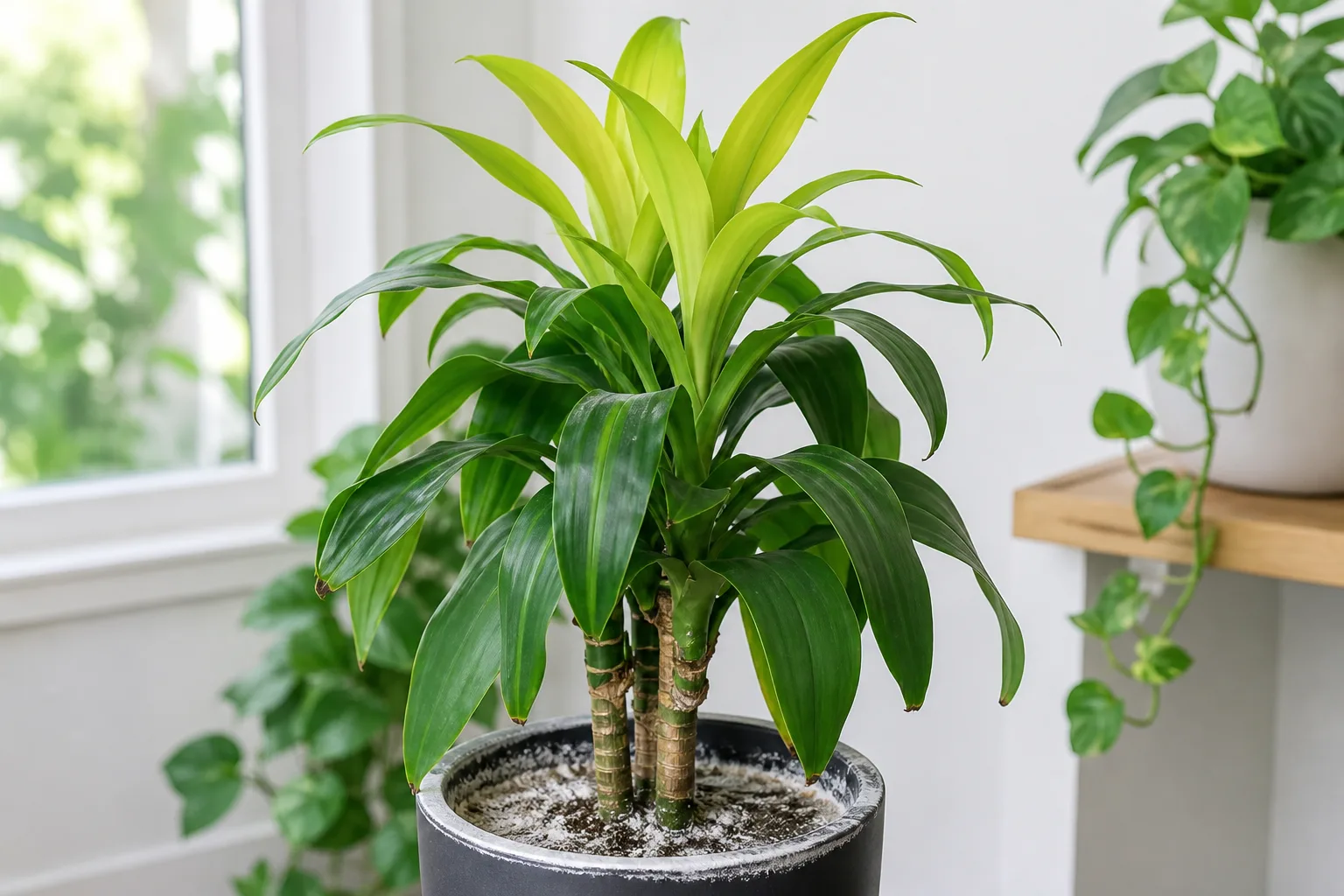
Nutrient Lockout on Janet Craig Dracaena: Causes, Checks & Fixes
This guide covers nutrient lockout on Janet Craig Dracaena. See also the general Nutrient Lockout guide, watering, and light pages for this plant.
Nutrient Lockout on Janet Craig Dracaena: Causes, Checks & Fixes
Quick answer
Nutrient lockout on Janet Craig Dracaena (Dracaena deremensis ‘Janet Craig’) means roots cannot absorb minerals that are already present in the soil or fertilizer-the plant looks hungry even though you feed on schedule. On this slow-growing, fluoride-sensitive foliage dracaena, lockout usually comes from soluble salt accumulation, pH drift from hard tap water, or over-fertilizing in low light-not from simple underfeeding.
First step: flush the container with plain room-temperature water until roughly twice the pot’s volume drains freely, then pause all fertilizer for four to six weeks. Lockout is not fixed by stacking more nutrients on top of a blocked root zone. More feed often deepens salt buildup and makes pale crown growth worse. Full feeding context: Janet Craig fertilizer guide.
What nutrient lockout looks like on Janet Craig
Lockout mimics several deficiencies at once because multiple elements fail to reach the tissue, not just one. On Janet Craig’s broad, dark-green strap leaves, watch the crown and the mix surface together.
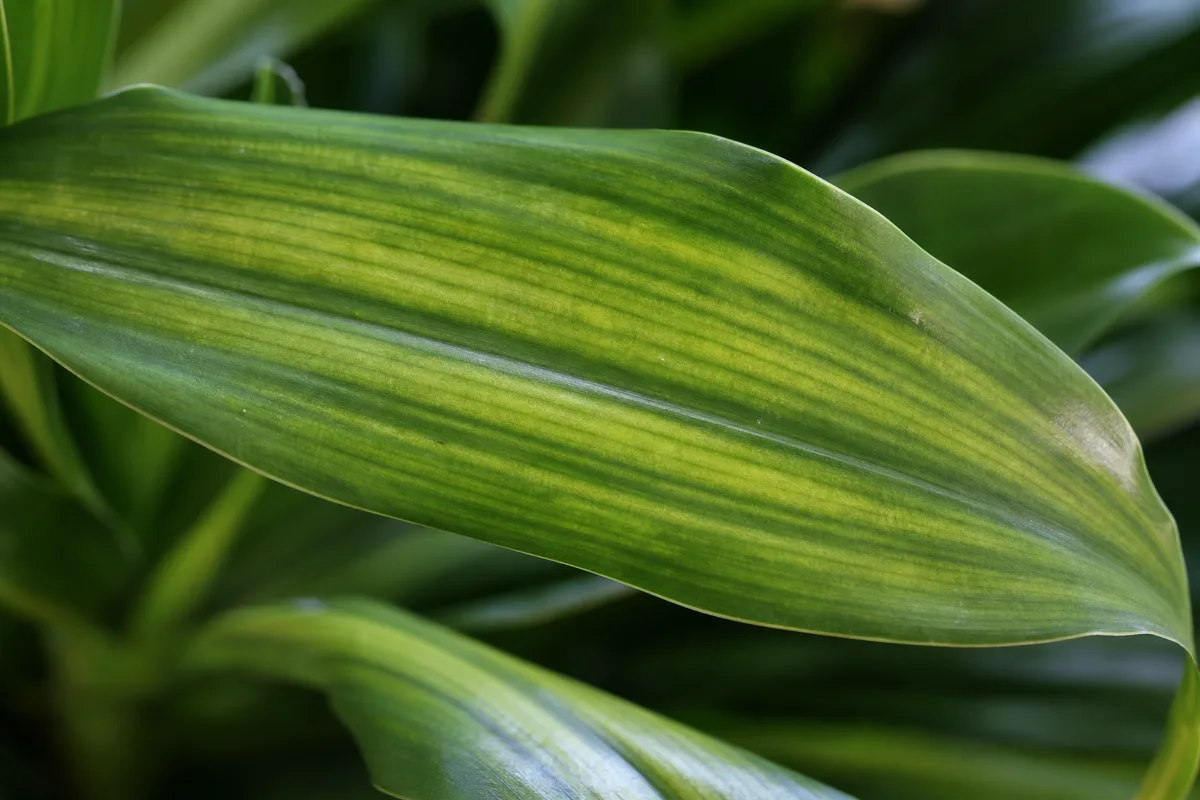
Nutrient Lockout symptoms on Janet Craig Dracaena - compare with healthy tissue on the same plant.
Typical signs:
- Pale or yellow-green new leaves at the crown despite regular half-strength feeding
- Mixed deficiency patterns-interveinal chlorosis on young leaves plus older leaf yellowing, tip burn, or weak new petioles appearing together
- Stunted or thin new crown leaves that stay pale after you applied targeted supplements
- White or chalky crust on the soil surface, pot rim, or drainage holes
- Fertilizer that “does nothing”-half-strength liquid produces no greening within two weeks
- Wilting on moist soil when salt levels pull water away from roots through osmotic stress
What lockout does not look like:
- Crispy brown tips appearing within days of one heavy feed with fresh crust-that pattern fits acute fertilizer burn more than chronic lockout
- Margin-only necrosis on firm deep-green leaves after months of tap water-chronic fluoride injury often lacks poor feed response and white crust tied to recent dosing
- Uniform yellowing of older lower leaves first with a light, dry pot-underwatering or nitrogen shortage, not blocked uptake on wet mix
- Yellow soft leaves on a heavy wet pot with sour soil-overwatering or root rot before nutrients
In deep office shade, lockout often surfaces when stored salts and pH drift from hard fluoridated tap water become visible on new crown growth-exactly when someone resumes spring feeding without flushing first. Dracaena deremensis is very sensitive to fluoride toxicity, which accumulates gradually in foliage and can compound mineral stress in the root zone.
Why Janet Craig gets nutrient lockout
Janet Craig is a slow-growing light feeder widely used in low-light interiors. That combination makes root-zone chemistry problems more likely than on fast-growing vines in bright windows.
Salt buildup from repeated feeding without flushing is the most common indoor trigger. Container dracaenas have nowhere for fertilizer residues to go. Each half-strength dose leaves soluble minerals behind. Over months-especially in mature pots that are rarely repotted- the root zone becomes chemically hostile even when you follow a sensible schedule. University of Maryland Extension notes that high soluble salts reduce water uptake and can damage roots even when soil feels moist.
Slow transpiration in low light concentrates salts. Janet Craig in a dim office alcove drinks infrequently and evaporates slowly from the mix surface. Minerals from hard tap water and fertilizer stay behind between waterings. Infrequent drinks that barely moisten the top layer fail to leach salts the way a thorough flush would. See salt build-up when white crust is the primary complaint.
pH drift from hard tap water locks out iron, manganese, and other micronutrients. Clemson HGIC recommends keeping dracaena soil pH between 6.0 and 6.5 to reduce fluoride availability; when pH climbs above about 7.0 from alkaline water or lime-heavy mix, iron may exist in the soil but roots cannot absorb it in usable forms. The plant shows chlorosis while fertilizer sits unused-a classic lockout picture.
Over-fertilizing and winter feeding stack another problem. Clemson HGIC advises monthly liquid feeding only during spring and summer on actively growing dracaenas. Applying summer-rate fertilizer while Janet Craig metabolism is low in a cool, dim winter leaves nutrients concentrated in mix until spring growth resumes-then new crown leaves emerge pale despite your “good intentions.”
Fluoride and superphosphate overlap complicate diagnosis. Dracaena is very sensitive to fluoride, with tip and margin necrosis as primary symptoms. Clemson instructs growers to avoid fertilizer containing superphosphate since it often carries high fluorine levels. Fluoride tips from tap water can coexist with salt lockout-chronic margin burn without recent feeding points to water quality; poor feed response plus crust points to lockout.
Feeding dry soil concentrates salts at the root surface. On fluoride-sensitive Janet Craig, never pour fertilizer onto bone-dry mix-the rescue protocol in the fertilizer guide is water first, feed later.
Nutrient lockout vs. brown tips vs. deficiency vs. salt build-up
| Pattern | Key signals | First direction |
|---|---|---|
| Nutrient lockout | Pale new crown growth despite feeding; mixed deficiency signs; white crust; fertilizer “does nothing” | Flush, pause feed, test pH |
| Fluoride brown tips | Margin or tip necrosis on firm leaves; months of tap water; may lack crust after recent flush | Switch water; see brown tips |
| Single deficiency | Clean pattern on new growth (e.g., interveinal yellow with green veins only) | Target element if pH is in range |
| Fertilizer burn | Crispy tips within days of heavy feed on dry soil | Flush; see fertilizer burn |
| Salt crust only | White rim, plant still deep green | Leach; see salt build-up |
| Root rot | Wet sour mix, soft cane, mushy roots | Stop feeding; inspect roots |
When symptoms overlap-common on Janet Craig in hard-water offices-feed response and crust timing separate lockout from fluoride: lockout tracks salt/pH accumulation and failed green-up after feeding; fluoride tracks tap-water history with margin necrosis that persists without recent fertilizer.
How to confirm the cause
Work through these checks before Janet Craig Dracaena repotting guide, switching fertilizers, or trimming every pale leaf:
- Feeding response - Have you fed at half strength for six or more weeks with no greening on new crown flushes? Did iron or magnesium supplements fail to change the next leaves? Poor response despite nutrients present suggests lockout.
- Salt crust - White or yellowish deposits on the mix surface or inner pot rim support salt-related lockout. Drought stress alone rarely leaves crust.
- Soil pH test - Use a meter or lab kit. Readings above 7.0 with tip chlorosis fit alkaline lockout on dracaena. Clemson targets roughly 6.0–6.5 for fluoride-sensitive species.
- Water hardness - Hard tap water adds calcium and other minerals with every drink. Combined with fertilizer, it accelerates crust in slow office pots.
- Moisture and pot weight - In deep shade, allow the top half of mix to dry between waterings. Soil wet for weeks after one drink, a heavy pot, or sour smell suggests root stress mimicking lockout-see watering guide.
- Symptom pattern - Multiple deficiency signs at once on a fed plant fit lockout better than one clean pattern. Potassium deficiency and calcium deficiency slugs describe narrower patterns when uptake works.
- Root inspection (if decline continues after flush) - Slide the plant out gently. Firm, pale roots with crusty mix need flushing and water-quality correction. Brown, mushy roots with sour odor mean rot-fix that before any feed.
Confirmed lockout requires blocked uptake-salts, pH outside range, or impaired roots-not pale leaves alone on a plant you never feed.
First fix for Janet Craig
Flush the container with plain water-no fertilizer, supplements, or vinegar mixed in.
Move the pot to a sink, tub, or outdoor spot where drainage will not damage floors. Water slowly with room-temperature water-filtered or distilled if fluoride tip burn has been a problem-until water runs freely from the bottom. Wait ten minutes, then water again. Repeat until you have passed roughly twice the pot’s volume through the mix. Let the pot drain completely and empty the saucer.
Nebraska Extension recommends leaching houseplants with twice the volume of the pot as a standard salt-removal practice. University of Maryland Extension advises flushing growing media with several volumes of pure water when mineral or fertilizer salt deposits accumulate-and notes those deposits can block absorption of essential plant nutrients.
This single leaching step is the most important action. It washes accumulated fertilizer and mineral salts away from the root zone and gives you a clean baseline to test pH and inspect recovery.
Do not foliar-feed every nutrient at once. Do not repot on day one unless flushing fails, crust returns within a week, or roots smell sour. Do not trim every pale leaf immediately-wait until you see whether new crown growth emerges green after the flush.
Step-by-step recovery
After the initial flush, follow this order:
- Scrape visible crust - Remove white granules or crystal deposits from the mix surface with a spoon before the second flush. Do not mix them deeper into the root zone.
- Test pH once the mix is evenly moist - Above 7.0: repot into fresh neutral potting mix in spring when possible rather than only spraying iron on leaves. Below 5.5: repot into standard indoor mix; avoid acidifying blindly without data.
- Repeat flush in seven to ten days if symptoms were severe - Widespread pale crown growth or heavy crust may need two or three leach cycles across a week.
- Pause all fertilizer four to six weeks - Hold every feed until new crown leaves open with normal deep-green color. A stressed Janet Craig rebuilds from stored energy; more salts interrupt that process.
- Switch water source if tips brown - Filtered, distilled, or rainwater reduces the fluoride and mineral load that compounds lockout on this species.
- Repot if mix is old or compacted - If the pot has not been refreshed in two or more years, or crust returns quickly after two flushes, repot into fresh standard mix in spring. Do not jump to an oversized pot in low light.
- Resume at half strength on moist soil - When Janet Craig pushes healthy new crown shoots during active growth, restart with half-strength balanced liquid per the fertilizer guide-typically once a month in spring and summer, less often in dim offices.
Recovery timeline
First week: Wilting from salt stress may stabilize after flushing. Slight improvement is not permission to feed again.
Two to four weeks: New crown leaves should emerge noticeably greener if root damage was moderate and pH is moving toward range. Old pale or burned strap tissue stays discolored permanently.
Four to eight weeks: A severely locked-out office specimen may push only one or two clean leaves before resuming normal slow growth. Judge the next crown flush, not every old blade.
Worsening signs: Continued leaf drop after two flushes, stems softening at the base, or sour-smelling mix suggest root rot layered on salt stress-unpot and inspect rather than flush again blindly.
What not to do
Do not double fertilizer doses on a pale Janet Craig hoping to force green-up-that deepens salt lockout. Avoid foliar-feeding every nutrient at once without fixing the root zone first.
Do not feed during winter when growth has stalled in a dim office. Do not apply fertilizer to bone-dry soil or stack slow-release granules with full-strength liquid the same week.
Skip random iron, Epsom salt, or calcium supplements without a clear deficiency pattern and pH data-lockout often looks like multiple deficiencies, and guessing wastes time.
Do not assume all pale growth is lockout when soil stays soggy for weeks-fix drainage and watering before leaching. Avoid superphosphate fertilizers on this fluoride-sensitive species.
Keep plants, runoff, and stored fertilizer away from pets; Dracaena is toxic to cats and dogs.
How to prevent nutrient lockout next time
Match feeding to active growth only. Janet Craig benefits from half-strength balanced liquid during spring and summer, then a complete pause from late fall through winter in typical room-grown setups. See the fertilizer guide for seasonal rhythm.
Flush periodically. In hard-water homes, run plain water through the pot until it drains freely every four to six months during the active season to reduce mineral buildup.
Use low-fluoride water if tip burn is chronic. Filtered, distilled, or rainwater pairs with lighter feeding better than escalating fertilizer on fluoridated tap.
Water before you feed. Moist soil buffers roots against salt shock-the moist-soil rule matters more than brand choice on Janet Craig.
Repot on schedule. Mix older than two to three years loses structure and holds salts. Refresh in spring when roots circle the pot, using a right-sized container for low-light metabolism-not an oversized wet pot.
Match dry-down to light per the watering guide and overview so each thorough drink carries a little leaching without leaving the mix soggy for weeks.
Practical checks
Urgency check
Flush the same day if wilting hits moist soil with heavy white crust after recent feeding. Escalate to root inspection if cane tissue softens, soil smells sour, or yellowing spreads on a heavy wet pot in low light-that urgency pattern may be rot, not lockout alone.
Best inspection order
Crown new leaves → white crust on mix → last feed date and strength → water source → pot weight and half-depth moisture → pH if available → roots only if wet decline persists after two flushes.
Related Janet Craig problems
- Janet Craig overview - Light, watering, and culture baseline
- Fertilizer guide - Half-strength rhythm, flush protocol, superphosphate warning
- Watering - Dry-down rhythm for office and home placements
- Brown tips - Fluoride margin necrosis lookalike
- Salt build-up - White crust focus
- Fertilizer burn - Acute tip damage after heavy feed
- Potassium deficiency - Narrow deficiency pattern when uptake works
- Calcium deficiency - Margin and new-growth calcium signs
Conclusion
Nutrient lockout on Janet Craig Dracaena is a root-zone chemistry problem, not mysterious leaf disease on a slow office dracaena. Confirm it with poor response to feeding, mixed deficiency signs, salt crust, or pH drift above the range this fluoride-sensitive species tolerates. Flush with plain water first, pause feed for four to six weeks, fix water quality and drainage, then resume lightly on moist soil during active growth. Janet Craig forgives a skipped month of fertilizer far more willingly than it forgives another dose poured onto a blocked, salty root zone.
When to use this page vs other Janet Craig Dracaena guides
- Janet Craig Dracaena watering guide - Use for routine moisture checks before assuming nutrient lockout is the main issue.
- Janet Craig Dracaena problems hub - Browse all 50 common issues on this species.