Brown Tips on Janet Craig Dracaena: Causes, Checks & Fixes
Quick answer
Brown tips on Janet Craig Dracaena are most often fluoride from tap water-not low humidity. Switch to filtered or distilled water, flush salts from the mix, and trim dead tips. New crown leaves should emerge clean within two to four weeks.
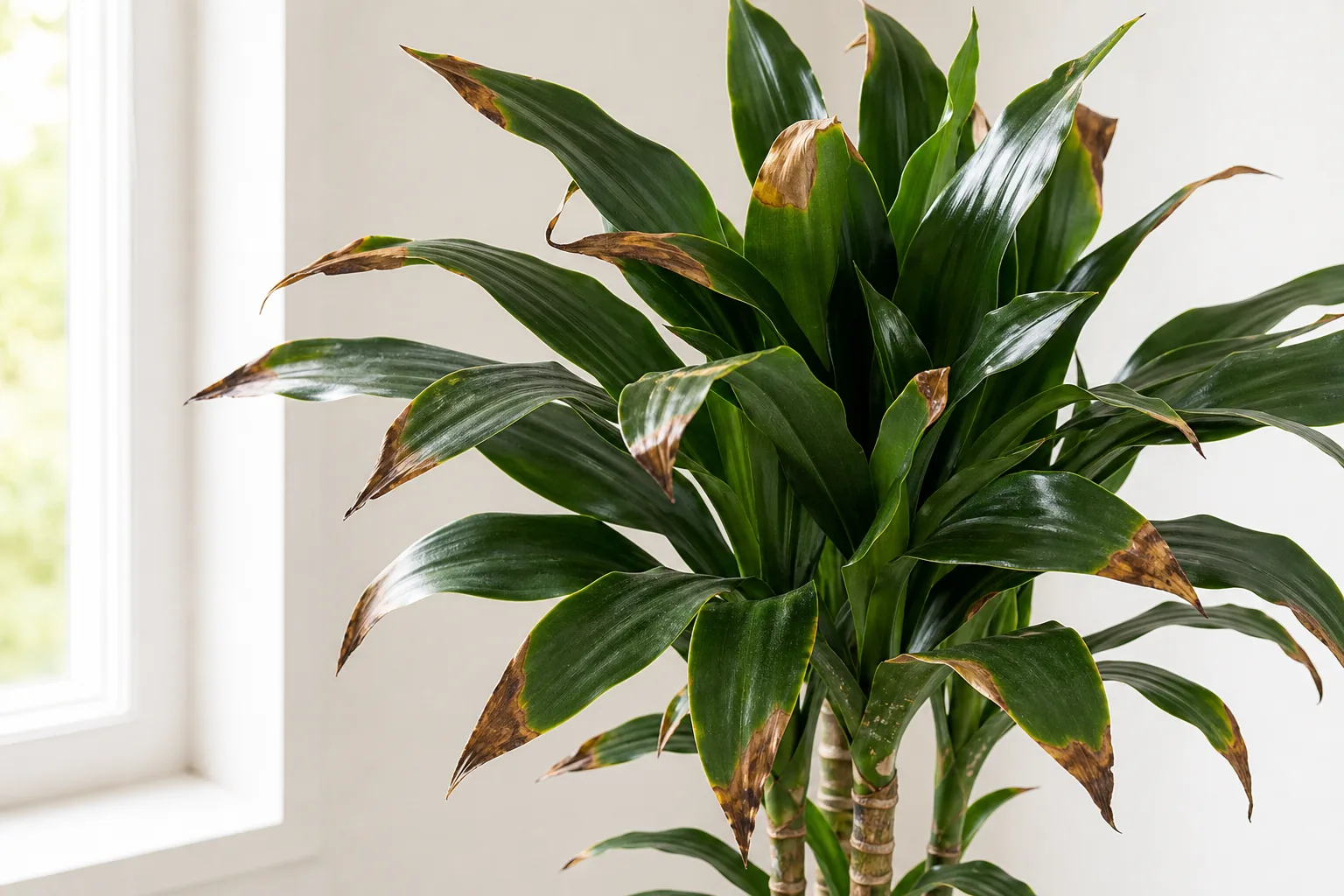
Brown Tips on Janet Craig Dracaena: Causes, Checks & Fixes
This guide covers brown tips on Janet Craig Dracaena. See also the general Brown Tips guide, watering, and light pages for this plant.
Brown Tips on Janet Craig Dracaena: Causes, Checks & Fixes
Quick answer
Brown tips on Janet Craig Dracaena (Dracaena deremensis ‘Janet Craig’) are the signature complaint for this cultivar-and the cause is usually fluoride in tap water, not dry air. Municipal water often contains fluorine at about 1 ppm; Dracaena roots absorb it with every watering and it accumulates at leaf margins and tips. Switch to filtered or distilled water, flush accumulated salts from the mix, and trim existing dead tips for appearance. New crown leaves should emerge clean within two to four weeks if water quality was the trigger.
Why Janet Craig gets brown tips
Janet Craig is among the most fluoride-sensitive houseplants in commercial interiors. Unlike chlorine, fluoride does not evaporate when tap water sits overnight. Over time, even correct watering on a good schedule produces widespread tip necrosis if the water source stays fluoridated. Other contributors include salt buildup from over-fertilizing, excessive drying between waterings in bright light, and chronic underwatering-but on Janet Craig, water quality should be your first suspect.
What brown tips look like on Janet Craig
Damage starts at leaf tips and may creep along margins as tan-to-brown crispy tissue. The rest of the leaf often stays deep green and firm-unlike yellow soft leaves from overwatering. Newest crown leaves may show minor tip browning early if fluoride is already high in the root zone. White crust on the soil surface can accompany salt or mineral buildup. Janet Craig tolerates average household humidity; brown tips rarely mean you need a humidifier on this plant.
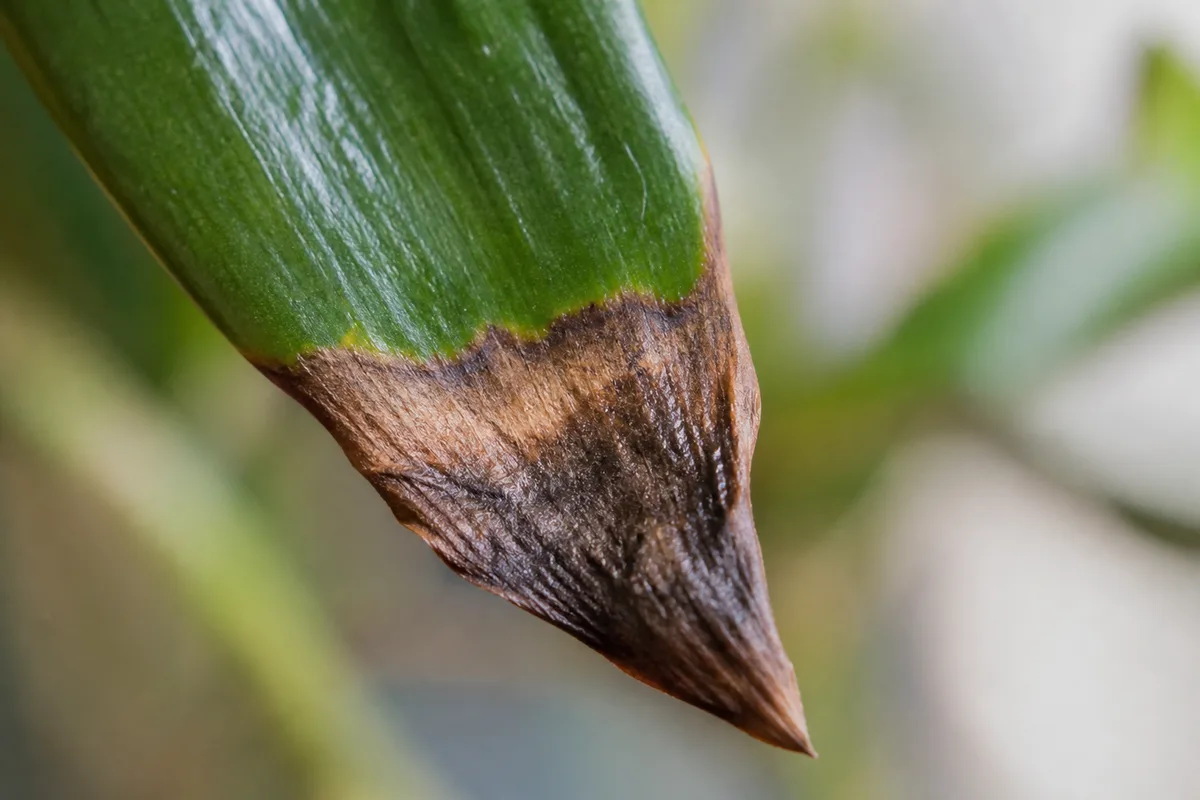
Brown Tips symptoms on Janet Craig Dracaena - compare with healthy tissue on the same plant.
Brown tips vs. crispy whole leaves: Tip burn stays confined to margins on firm green strap leaves. Crispy leaves on Janet Craig often involve broader desiccation from heat vents or drought-not the chronic margin necrosis fluoride produces on every leaf age.
How to confirm the cause
Review your water source: tap, softened water, or filtered. If you have watered with municipal tap for months and tips persist despite stable moisture, fluoride is likely. Push a finger halfway into the mix-if it is bone dry and leaves also droop, drought may contribute. If the pot stays heavy and lower leaves yellow, look at overwatering before blaming fluoride. NC Extension recommends filtered or rain water for Dracaena when tap causes browning.
Fluoride vs. salt vs. drought vs. rot
| Pattern | Leaf age affected | Leaf texture | Pot / soil | First direction |
|---|---|---|---|---|
| Fluoride tip burn | All ages; margins first | Firm green blade, crispy tip | Normal weight; tap-water history | Switch to filtered water; flush |
| Salt buildup | Tips after heavy feeding | Firm; white crust on mix | Normal; fertilizer history | Leach pot; hold feed |
| Drought stress | Tips after dry spell | Slightly limp; droop possible | Light pot; dry half-depth | One thorough soak |
| Root rot overlap | Lower leaves yellow | Soft, not just crispy | Heavy wet pot; sour smell | Stop water; inspect roots |
First fix for Janet Craig
Switch to rainwater, distilled, or reverse-osmosis water immediately. Water thoroughly once with the new source, then let the top half of the mix dry before the next drink. Flush the pot with plain low-fluoride water at two to three times pot volume to leach salts. Trim dead tips cleanly with sharp scissors-cosmetic only; focus on undamaged new growth. Avoid superphosphate fertilizers, which can carry high fluorine levels.
Repot vs. flush: Most Janet Craig tip burn resolves with water change plus leaching-no repot required. Repot only when white salt crust is extreme, mix has collapsed, or roots show rot after a wet-soil misread. See salt build-up when crust persists after flushing.
Recovery timeline
Burned tip tissue will not re-green. After switching to low-fluoride water and one thorough flush:
- Week 1–2: No new tip damage on existing leaves; pot weight and dry-down stabilize.
- Week 2–4: First clean crown leaf emerges without margin necrosis-the primary success marker.
- Months 2–3: Older burned tips remain cosmetic; trim only fully dead edges.
If crown leaves still brown after four weeks on filtered water with appropriate dry-down, review salt build-up or low humidity only when placement matches a dry heat source-not as the default Janet Craig fix.
What not to do
Do not mist leaves to fix fluoride burn-it does not leach fluoride from tissue. Do not increase watering frequency hoping tips recover; wet soil in low light causes separate problems. Do not use water from a home softener-sodium damages Dracaena roots. Keep the plant away from pets; Dracaena is toxic to cats and dogs. If a pet chews foliage, contact your veterinarian or the ASPCA Animal Poison Control Center at (888) 426-4435.
How to prevent brown tips next time
Make low-fluoride water the default for every Janet Craig watering. Match dry-down to light per the Janet Craig watering guide: bright to moderate filtered light dries faster; deep shade needs far longer intervals. Feed lightly during active growth only. Old burned tips will not green up-watch the crown for clean new leaves. Flush seasonally in hard-water regions.
Related Janet Craig guides
- Janet Craig overview - species hub and troubleshooting index
- Janet Craig watering - dry-down by light level
- Salt build-up - white crust and leaching
- Low humidity - when dry air contributes near heat vents
- Crispy leaves - broader desiccation patterns
- Overwatering - yellow soft leaves on wet mix
Related tool
Use the Plant Problem Diagnosis Tool to narrow causes for brown tips on this plant before changing multiple variables at once.