Best Soil for Janet Craig Dracaena: Mix & Drainage
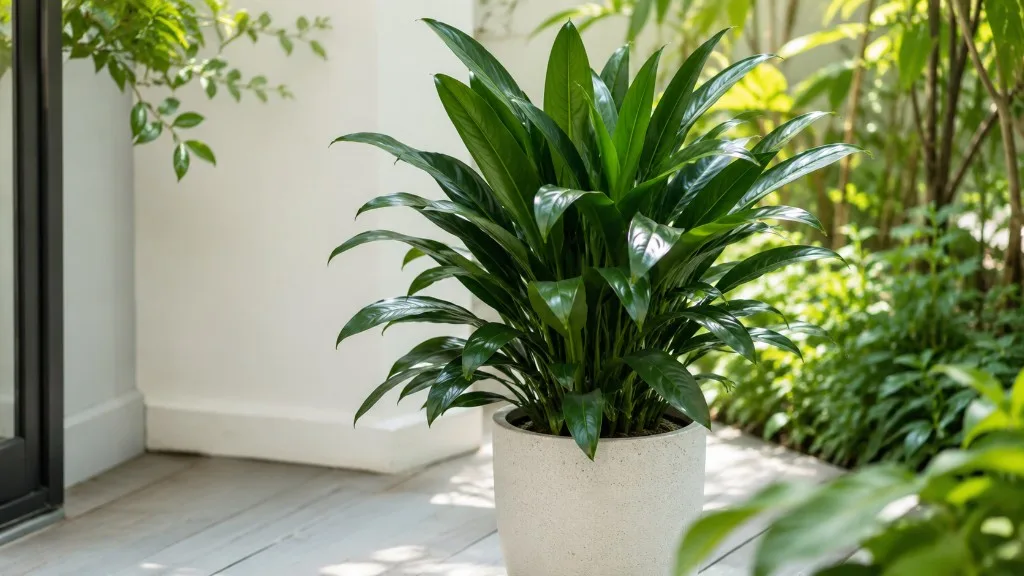
Best Soil for Janet Craig Dracaena: Mix & Drainage
Best Soil for Janet Craig Dracaena: Mix & Drainage
Why Soil Matters More Than Watering Schedules for Janet Craig
Janet Craig Dracaena (Dracaena fragrans ‘Janet Craig’, often sold under the older name Dracaena deremensis ‘Janet Craig’) is one of the most forgiving large foliage plants for dim offices, interior corners, and architectural displays. Growers rightly focus on low light tolerance, infrequent watering, and keeping fluoride-heavy tap water away from sensitive leaf tips. Those habits matter, but the root zone is where watering, placement, and long-term health either hold together or quietly fail. Soil is not decorative filler around a cane stem. It decides how fast water moves through the pot after a thorough drink, how much oxygen remains around thick roots between waterings, how salts from tap water and fertilizer accumulate over two years in the same container, and how quickly a slow-growing plant recovers when someone finally notices yellow lower leaves.
Janet Craig belongs to Asparagaceae and shares the cane architecture of other corn-plant Dracaenas: an upright stem topped with glossy dark green leaves that can reach roughly 1.8 to 3 m (6 to 10 ft) indoors over many years. Missouri Botanical Garden recommends organically rich, well-drained, loamy peaty potting soil for container culture - enough moisture that roots do not desiccate, yet fast drainage so a plant in low light never sits in stale, oxygen-poor mud between infrequent waterings.
If Janet Craig yellows from the bottom up or keeps brown tips despite filtered water, inspect mix texture and pot pairing before rewriting the entire care routine.
What Dracaena fragrans ‘Janet Craig’ Needs From Its Root Zone
Dracaena fragrans ‘Janet Craig’ evolved under tropical African forest canopies, where indirect light filters through taller trees, organic litter accumulates on the floor, and rainfall drains through loose surface material while deeper humus holds moderate moisture. Indoors, you compress that environment into a pot that may sit in a low-light office where the same volume of mix dries far slower than it would in a bright atrium. The best soil for Janet Craig Dracaena must therefore balance two realities at once: forgiving moisture retention for a plant that can go 21 to 28 days or longer between waterings in dim conditions, and aggressive drainage structure so those long intervals never turn the lower root zone into a sealed wet pocket.
Missouri Botanical Garden notes that leaves may brown when soils become too moist or too dry, and that filtered or rain water can reduce tip burn from chlorine and fluoride. NC State recommends commercial potting soil in a pot with drainage holes with dry-down between waterings. Your mix should support that pattern - dense, salt-laden, slow-drying soil compounds both root decline and tip burn.
The Low-Light Tropical Floor Model
In its native range, Janet Craig grows in warm, humid, shaded conditions where the upper soil layer dries between rains while deeper organic matter stays lightly damp. Your container mix should mimic that function: a light organic base, coarse amendments for air pockets, and a pot sized to the root mass so you are not leaving a large unused wet zone in a dim corner. Target damp like a wrung-out sponge at depth after watering - not saturated like a sealed wet towel for weeks.
Three Jobs Your Mix Must Do
Every ingredient in a Janet Craig soil recipe should serve at least one of three jobs. First, controlled moisture retention: thick cane roots and a relatively small root system for the leaf mass need a mix that does not swing instantly from soggy to concrete-hard between infrequent waterings. Second, drainage and aeration: excess water must exit the pot within minutes, and air must remain in pore spaces after watering so roots can breathe during the long dry-down phase common in office light. Third, structure over time: peat-based mixes decompose and compact within 12 to 24 months; the medium should resist collapsing into an anaerobic block for as long as possible before refresh.
If your mix fails any job, expect slow lower-leaf yellowing, soft stem bases, or a pot that stays heavy for weeks while symptoms overlap with fluoride burn and underwatering - which is why soil behavior matters as much as watering frequency.
Signs Your Current Janet Craig Soil Is Wrong
Soil problems on Janet Craig Dracaena often announce themselves indirectly because the plant tolerates neglect better than chronic wet feet. Water sits on the surface for minutes after you pour, then runs down the gap between the root ball and pot wall - usually a sign the mix has become hydrophobic from drying too hard or from peat breakdown. The pot stays heavy for two or three weeks after a single thorough watering in a dim office while the top inch looks merely cool-damp, especially common in dense commercial mixes or oversized containers. Lower leaves yellow one at a time while the stem base feels firm but the drainage hole smells faintly sour - anaerobic conditions may be developing even before collapse.
Missouri Botanical Garden explicitly links over-moist and over-dry soils to leaf browning on Dracaena fragrans (Missouri Botanical Garden). On Janet Craig specifically, watch for yellowing paired with soil that never fully dries at depth in low light - the roots may be stressed by moisture imbalance while you blame fluoride or insufficient fertilizer. If you lift the plant and see dark, mushy roots or a root ball that is solid, smell-free, but rock-hard, the soil system has failed in opposite ways - too wet or too compacted - but both require a fresh, airier mix rather than more frequent small sips of water.
A simple diagnostic rule: if you adjust watering and water type and the same symptoms return within three to four weeks, inspect the mix texture, pot size, and drainage path before stacking fertilizer, relocation, and Janet Craig Dracaena repotting guide together. Janet Craig responds slowly, but it does respond when the root zone is corrected.
Best Soil Mix for Janet Craig Dracaena
The best soil for Janet Craig Dracaena is a light, airy, well-draining potting mix with enough organic matter to buffer moisture between infrequent waterings. Clemson recommends well-drained potting mix for dracaenas. Missouri Botanical Garden’s loamy, peaty, well-drained standard points the same direction: organic base plus real drainage, not heavy garden soil or moisture-retaining gimmicks.
You are aiming for a medium that feels light and crumbly when moist, not sticky mud or pure grit. When you squeeze a handful lightly, it should hold shape briefly and fall apart. If it forms a tight ball, add perlite or orchid bark. If water runs through instantly and the plant shows drought stress within a few days in brighter light, you have gone too coarse for that placement - but in a true low-light office, that outcome is rare.
The Quick-Answer Recipe
A dependable Janet Craig Dracaena soil mix you can blend at home:
| Ingredient | Proportion | Role |
|---|---|---|
| Quality peat-based or coir-based potting soil | 60% (3 parts) | Organic base, moisture, starter nutrients |
| Perlite or pumice | 25% (1.25 parts) | Drainage channels, air space |
| Orchid bark or coarse coco chips | 15% (0.75 parts) | Structure, long-term aeration |
A simpler three-ingredient ratio that performs well in most homes: 3 parts potting soil + 1 part perlite. For a plant in a very dim office where the pot already dries slowly, that ratio is often enough without adding bark. For a Janet Craig in brighter indirect light that uses water faster, shift to 2 parts potting soil + 1 part perlite + 1 part orchid bark for slightly faster dry-down and more stable pore space.
An equal-parts recipe also works for growers who tend to overwater: 1 part peat moss or coco coir, 1 part perlite, 1 part orchid bark, with a small handful of compost mixed into the coir or peat fraction if you want gentle organic nutrition. Moisten dry peat or coir slightly before blending so ingredients combine evenly. Dry peat can repel the first watering, creating the false impression of good drainage while the center of the root ball stays dry - a common reason newly repotted Janet Craig looks wilted despite wet soil at the surface.
Core Ingredients Explained
Understanding what each component does helps you adjust the recipe without starting from scratch every time the plant behaves differently in a lobby vs. a north-facing bedroom.
Peat Moss or Coconut Coir
Sphagnum peat moss is lightweight and holds moisture evenly, but it compacts and turns hydrophobic within 12 to 24 months - a hidden cause of root stress when the bottom turns dense while the surface looks fine. Coconut coir rewets more easily and sits near pH 5.8 to 6.5; choose low-salt horticultural coir and always pair it with generous perlite. Either peat- or coir-based potting soil works as the 60% foundation as long as perlite is added.
Perlite, Orchid Bark, and Other Amendments
Perlite creates non-decomposing air space; use coarse grade so particles resist packing. Orchid bark or coarse coco chips add long-lived structure and help water flow around thick cane roots. Pumice substitutes cleanly for perlite. Avoid sand as the main amendment, garden soil in pots, and gravel layers at the bottom - all three reduce aeration or create perched water tables.
pH, Fluoride, and Fertilizer Compatibility
Corn-plant Dracaenas prefer slightly acidic to neutral soil, roughly pH 6.0 to 7.0 (Clemson HGIC; Missouri Botanical Garden). Exact testing is optional unless growth stays pale despite good light and watering. Janet Craig is sensitive to fluoride and boron in tap water, showing brown leaf tips even with sound technique (Missouri Botanical Garden). Salts accumulate in old mix over months - white crust, worsening tip burn after feeding, or stalled new leaves all suggest flushing or repotting. Flush every two to three months in active growth; never use softened water (Clemson HGIC). Balanced fertilizer at half strength monthly in spring and summer is enough once the soil system is healthy.
Drainage Speed and Dry-Down Balance
Drainage for Janet Craig does not mean “bone dry all the time.” It means excess water leaves the pot quickly while the mix retains enough moisture that thick roots do not shatter when you finally water after a long dry-down in low light. Missouri Botanical Garden recommends allowing soils to dry slightly between waterings while never letting them totally dry out for extended periods (Missouri Botanical Garden). After a thorough watering, water should exit the drainage hole within minutes, not pool in the bottom for hours. The root ball should feel heavier and evenly moist, not sodden.
Use this one-minute drainage check after watering: pour until water runs from the hole, then lift the pot. Excess should stop streaming within 30 to 60 seconds. If water keeps dripping for many minutes and the saucer fills repeatedly, the mix is too dense, the pot lacks sufficient hole area, or the plant sits in a cachepot that traps runoff. Empty saucers and cachepots after 15 to 20 minutes - roots should never sit in standing water overnight.
The top-half dry-down rule describes target moisture between waterings for Janet Craig in typical indoor culture. Check moisture 10 to 15 cm (4 to 6 inches) down with a finger or skewer before watering in low light; the upper half should feel dry while the lower portion may still hold slight coolness. If the top is dry but the bottom stays wet for three weeks or more in a dim office, you have a density or pot-size problem, not a watering-frequency problem.
| Observation | Likely soil issue | First adjustment |
|---|---|---|
| Top dry, bottom wet for weeks | Dense or degraded mix; oversized pot | Repot with airier recipe; reduce pot size |
| Water beads on surface | Hydrophobic peat | Bottom-water once, repot, or pre-moisten mix |
| Yellow lower leaves with wet soil | Root stress from past overwatering on Janet Craig Dracaena | Inspect roots, repot into rescue mix |
| Crispy tips with hard dry soil | Underwatering or compacted mix | Rehydrate thoroughly; refresh mix |
| White crust on surface | Mineral/fertilizer buildup | Flush or repot; use filtered water |
Pot Choice and How It Changes Soil Behavior
The same Janet Craig soil mix behaves differently depending on the container. Plastic and glazed ceramic retain moisture longer, which suits low-light office growers who water infrequently. Terracotta breathes through the walls and pulls moisture from the mix, speeding dry-down - helpful for overwaterers, risky in very dry, bright rooms where the plant transpires faster. Cachepots (decorative outer pots without holes) are fine only if the inner nursery pot drains freely and you never let runoff accumulate in the outer shell.
Every pot for long-term container care needs a drainage hole. Missouri Botanical Garden treats container drainage as standard for Dracaena fragrans culture (Missouri Botanical Garden). A layer of gravel at the bottom does not fix poor mix; it reduces usable root volume.
Pot size matters as much as mix. Janet Craig is a slow to moderate grower indoors and can live in the same pot for one to two years when the mix is fresh. Match the pot to the root ball, not only the current leaf spread. When repotting, move up only 2.5 to 5 cm (1 to 2 inches) in diameter - roughly one pot size. An oversized floor pot holds a large volume of mix the roots cannot colonize quickly; that unused mix stays wet for weeks in low light and invites rot while the plant channels energy into root exploration instead of top growth.
For tall, top-heavy specimens, a heavier pot (thick ceramic or weighted plastic) can anchor the cane without changing soil chemistry. Keep the plant slightly away from heat vents and cold drafts; soil dries unevenly when one side of the pot is baked and the other stays cool.
Commercial Mixes vs. DIY Blends
Commercial all-purpose or premium indoor potting soils can work well if they are genuinely light and not peat-only mud. Read the label and feel the bag if possible. A good store mix contains visible perlite, feels springy, and does not clump into a brick when moistened. Many standard all-purpose potting soils are acceptable as the 60% base for Janet Craig if you add 25 to 40% extra perlite by volume.
Can you use regular potting soil without amendment? Only temporarily, and only if you watch dry-down closely. Regular mix in a large plastic pot under office light often stays wet too long for Dracaena roots. If that is what the plant came in from the nursery, plan to refresh or repot within the first six to twelve months rather than waiting for obvious decline.
Avoid mixes labeled “moisture control” with water-absorbing crystals. They are designed to stay wet longer - the opposite of what cane Dracaenas need indoors (Clemson HGIC). Cactus or succulent mix alone is usually too fast-draining for Janet Craig unless you blend it 50/50 with peat- or coir-based potting soil. Straight cactus mix forces repeated drought cycles on thick roots, showing up as brown tips and leaf drop that mimics fluoride burn.
DIY mixing costs less at scale, lets you tune aeration for your specific room, and guarantees freshness at repotting. Commercial mixes save time and often include starter fertilizer - useful, but remember to dilute feeding after the first month because Janet Craig shows salt stress on leaf margins quickly.
Adjusting the Recipe for Low-Light Offices and Bright Rooms
No single recipe is perfect for every placement. Adjust based on how fast the pot dries, not on a calendar. If the mix is still wet at depth after three to four weeks in a dim lobby and lower leaves yellow, increase perlite to 35 to 40% at the next repot or refresh. If the plant in a bright atrium wilts and the skewer comes out dry halfway down within five to seven days, reduce perlite slightly or move to a plastic pot that slows evaporation - but never remove drainage structure entirely.
Seasonal shifts slow evaporation in winter - hold major repotting until spring unless the mix is clearly failing. Heat above 27 °C (80 °F) stresses Janet Craig and increases transpiration (NC State Extension); hot, dim corners are the worst combination and should be fixed with placement, not swampy soil.
When to Refresh or Replace Janet Craig Soil
Peat-based mixes decompose and compact over time, and Janet Craig often stays in the same container long enough that soil structure fails before the plant looks root-bound. Plan to refresh soil every 12 to 24 months for a floor specimen in a stable office, or sooner if you see performance decline. Full repotting is not always required; top-dressing - removing the top 3 to 5 cm of old mix and replacing it with fresh aerated blend - can extend root-zone health between major repots when roots are not yet circling.
Repot into entirely fresh mix when roots circle the pot bottom, emerge from drainage holes, or push the plant upward; when water runs straight through without absorbing because structure has collapsed; when the mix smells sour or looks muddy despite careful watering; when salt crust persists after flushing; or when growth stalls for a full growing season with no other clear cause. Spring and early summer are the safest windows because Janet Craig can root into fresh medium quickly. Avoid winter repotting unless you are rescuing root rot or severe compaction.
Even if the cane still fits its pot visually, soil age alone justifies refresh on a long-lived architectural plant. Old mix loses pore space, holds water unevenly, and accumulates minerals. Janet Craig rewards fresh medium with cleaner new leaves and steadier upright growth.
Repotting into Fresh Mix: Step-by-Step
Repotting is the practical moment when soil theory becomes root health. Done correctly, it solves compaction, salt buildup, and pot-size mismatch without shocking a plant that may already be dropping lower leaves naturally as the cane matures.
Water lightly two days before so the root ball holds together and roots are flexible. Choose a clean pot one size up with a drainage hole. Prepare fresh Janet Craig soil mix and moisten it slightly. Slide the plant out and inspect roots: healthy Dracaena roots are firm, white to tan, and sparse relative to the cane thickness. Trim dark, mushy roots with sterilized pruners. If rot is extensive, repot into a rescue mix with extra perlite (see below) and reduce watering until new growth appears.
Loosen only the outer 2 to 3 cm of the old root ball - do not bare-root unless you are treating severe rot. Thick cane roots break rather than bend. Place a layer of fresh mix in the new pot, set the plant so the stem base sits at the same depth as before (never bury the cane deeper), and fill around the sides with fresh mix. Tap the pot gently or use a chopstick to settle mix without compacting. Water lightly until drainage runs, empty the saucer, and place the plant in bright indirect to low indirect light without direct sun for two to three weeks. Hold fertilizer for four to six weeks so tender new roots are not burned.
After repotting, some lower leaf yellowing is normal on mature canes. Persistent stem softening or widespread yellowing after four weeks suggests the pot is too large, the mix is too wet, or roots were damaged - reassess before increasing water or feed.
For a rescue mix on a plant recovering from overwatering, use 40% base potting soil, 50% perlite, 10% orchid bark, skip fertilizer until recovery is clear, and use a pot only slightly larger than the trimmed root mass. Keep the plant in stable light and avoid stacking relocation, feeding, and pruning in the same week.
Soil Mistakes That Damage Janet Craig Roots
Root decline on Janet Craig is almost always prevention failure, not bad luck. The most common soil mistakes are easy to avoid once you know what they look like in low-light conditions.
Using unamended dense potting soil in a large plastic floor pot is the top error in offices. The mix stays wet at the bottom for weeks while the surface looks acceptable, so well-meaning caretakers wait - then panic-water when a leaf yellows. Oversized pots multiply the problem by adding unused wet volume around a slow-growing root system. No drainage hole, or a plugged hole, traps water regardless of mix quality. Gravel layers give a false sense of security while reducing root space. Reusing old, compacted mix at repotting imports salt problems and poor structure into a fresh container. Moisture-control potting mixes keep the root zone wet longer than Janet Craig tolerates indoors.
Another subtle mistake is repotting into fresh mix but keeping a waterlogged cachepot habit - the inner pot drains, but the outer pot holds stale water. Dracaena roots experience the same anaerobic stress as if the mix itself were swampy. Garden soil in pots compacts within weeks under intermittent heavy watering and is rarely worth the saved dollar. Repotting on day one when the nursery mix is still sound removes stability; wait unless the mix is clearly failing or pests are present.
If you suspect rot, unpot immediately. Trim affected roots, repot into airy fresh mix in an appropriately sized pot, and adjust watering to the top-half dry-down rule. Do not fertilize until you see stable new growth at the crown. Leaf damage already present will not fully reverse, but clean soil stops the cycle from continuing and lets fresh foliage replace older lower leaves as the cane naturally matures.
Conclusion
The best soil for Janet Craig Dracaena balances two demands that sound opposite but are not: hold enough moisture that thick cane roots survive long dry-down intervals in low light, and drain fast enough that oxygen never disappears from the mix for weeks at a time. Build around 3 parts peat- or coir-based potting soil and 1 part perlite, adding orchid bark if the plant sits in brighter light or the mix still dries too slowly after repotting. Keep pH near 6.0 to 7.0, pair the mix with a drainage hole and correctly sized pot, and refresh the medium every 12 to 24 months or when compaction, salt crust, or root crowding appears.
Janet Craig will still need low to medium indirect light, infrequent deep watering with filtered water when possible, and light feeding in active growth - soil does not replace those needs. What good soil does is make the Janet Craig Dracaena watering guide readable, reduce root rot risk in dim offices, and give this architectural plant a stable foundation so glossy leaves stay clean longer. When in doubt, check the mix before moving the pot again or buying a larger container. More often than not, the fix is fresher, chunkier, and better drained - not more complicated.
When to use this page vs other Janet Craig Dracaena guides
- Janet Craig Dracaena overview - Start here for whole-plant context before deep-diving this topic.
- Janet Craig Dracaena problems hub - Jump to symptom-specific fix guides when this care topic does not resolve the issue.
- Wrong Soil Mix on Janet Craig Dracaena - Escalate here when soil adjustments are not enough.
- Poor Drainage on Janet Craig Dracaena - Escalate here when soil adjustments are not enough.