Overwatering on Janet Craig Dracaena: Causes, Checks & Fixes
Quick answer
If your Janet Craig is drooping while the pot still feels heavy, treat it as overwatering first. Stop watering, confirm moisture at half depth, and escalate quickly if the cane base softens or the mix smells sour.
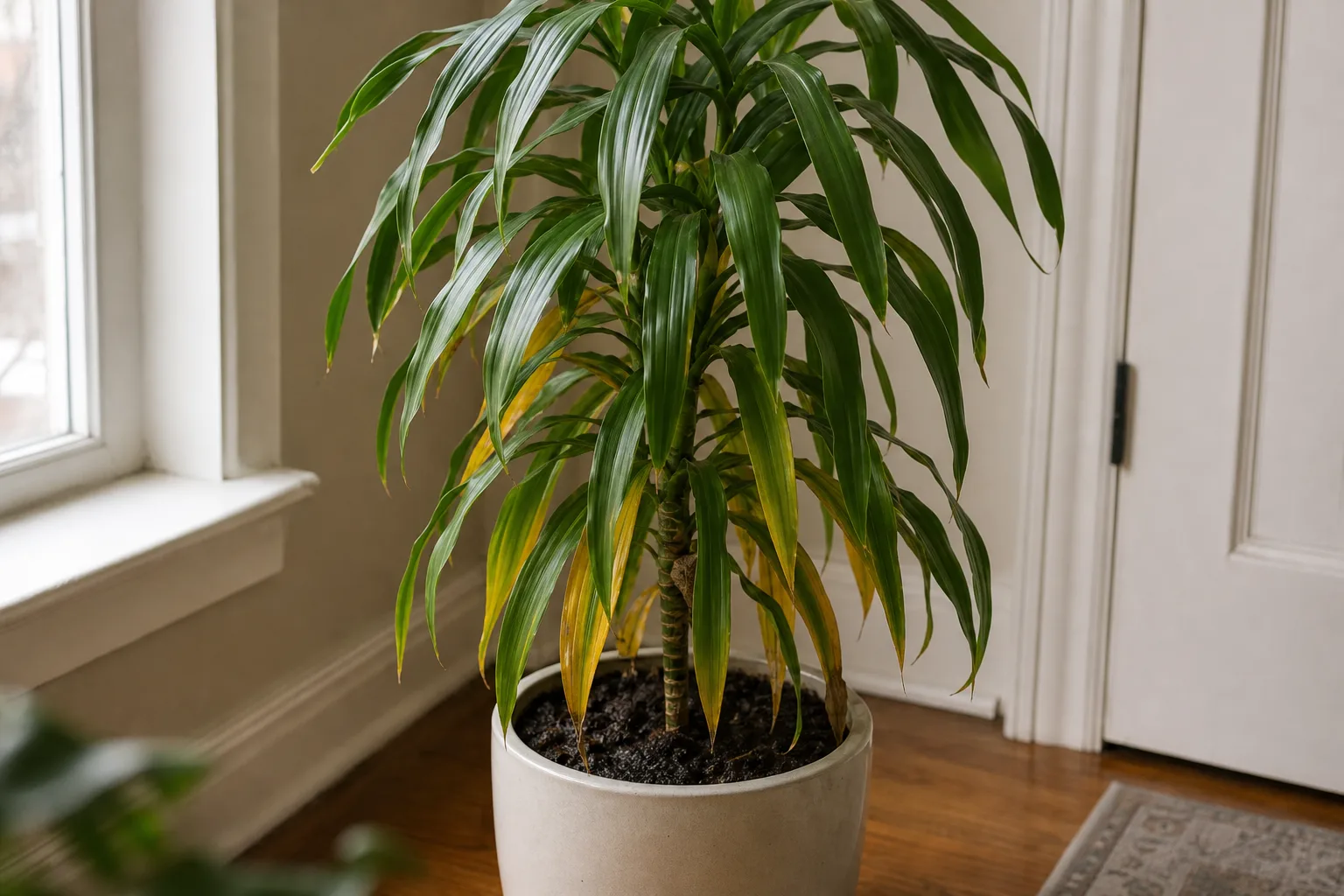
Overwatering on Janet Craig Dracaena: Causes, Checks & Fixes
This guide covers overwatering on Janet Craig Dracaena. See also the general Overwatering guide, watering, and light pages for this plant.
Overwatering on Janet Craig Dracaena: Causes, Checks & Fixes
Quick answer
If your Janet Craig Dracaena looks thirsty but the pot is still heavy and cool inside, treat the situation as overwatering first. Janet Craig Dracaena overview handles lower indoor light levels better than many houseplants, but that same trait slows water use and raises wet-soil risk in offices and dim rooms. In deeper shade, watering may be needed only every three to four weeks or longer, not weekly. Your first move is simple: stop watering and verify how wet the root zone really is at half depth.
Why Janet Craig is sensitive to overwatering
Janet Craig has sturdy canes but fine feeder roots that still need oxygen between irrigations. Extension guidance for dracaena emphasizes letting the mix dry between waterings and avoiding constantly wet conditions. In low light, transpiration drops, so weekly watering can saturate the lower root zone long before the top dries. Oversized pots, compact media, and cachepots that trap runoff extend that saturation window.
This species also has a separate stress pathway: dracaenas are sensitive to fluoride injury, and repeated wet conditions can amplify root stress while tip-burn symptoms distract owners into watering more. The loop becomes: brown tips -> more frequent watering -> lower oxygen in roots -> weaker uptake -> broader yellowing and decline.
What overwatering looks like on Janet Craig
Look for a pattern, not one symptom:
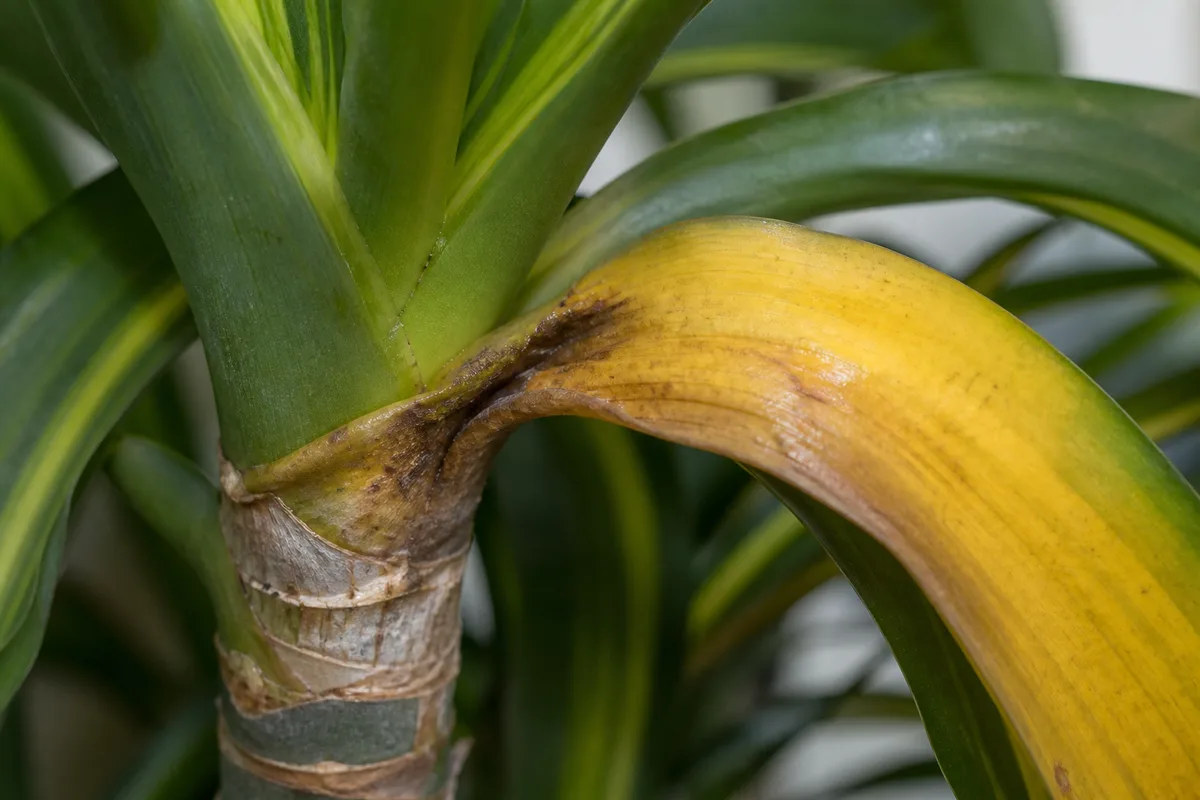
Overwatering symptoms on Janet Craig Dracaena - compare with healthy tissue on the same plant.
- lower leaves yellow and drop while still partly green
- crown growth slows or stalls for weeks
- pot remains heavy several days after watering
- skewer at half depth comes out cool, dark, and damp
- fungus gnats persist around the mix surface
Advanced warning signs are more urgent: a soft cane base, a sour or swampy odor, and wilt even while soil is wet. That wilt-on-wet-soil paradox usually means roots are too damaged to move water effectively.
How to confirm the cause
Use this sequence before treating:
- Weight test: lift the pot 5 to 7 days after watering. If it still feels heavy, root-zone moisture is likely high.
- Half-depth test: insert a wooden skewer to about half the media depth. Cool and damp means wait.
- Base firmness test: press gently at the cane base near the mix line. Firm is better; softening is a red flag.
- Root check (if declining): unpot and inspect. Brown, slimy, or foul-smelling roots confirm overwatering damage.
Rule out lookalikes. Underwatered plants usually have a noticeably light pot and dry mix; natural lower-leaf aging happens slowly and does not keep the pot wet for long periods. If your schedule is weekly in dim light, overwatering is still the leading suspect.
First fix for Janet Craig
Stop watering immediately. Do not add fertilizer, peroxide soaks, or multiple treatments on day one.
Then branch by severity:
- Mild (firm cane, no odor): extend dry-down by another 7 to 14 days, increase airflow, and reassess with half-depth checks.
- Moderate (persistent yellowing, damp for too long): unpot, remove mushy roots with sterile shears, and repot into fresh, well-draining mix in an appropriately sized pot.
- Severe (soft base, sour odor, rapid collapse): treat as probable root-rot escalation and follow your full rescue workflow in
/plants/janet-craig-dracaena/root-rot/.
When restarting irrigation, water deeply only after true dry-down, then drain fully. For fluoride-sensitive dracaena, prefer lower-fluoride water sources such as rainwater, distilled, or properly treated water.
Recovery timeline and success signs
Recovery is gradual. Damaged roots and yellowed leaves do not rebound quickly, and dead tissue does not turn green again.
In mild cases, visible stabilization can appear in 2 to 4 weeks: leaf drop slows, the pot dries at a more normal pace, and no new yellowing clusters develop. In moderate cases after root work, expect 4 to 8+ weeks before strong improvement, judged by steady new crown growth and stable cane firmness. If softness spreads upward or the plant keeps declining despite dry-down correction, escalate to root-rot rescue instead of repeating the same watering adjustments.
What not to do
Do not water on a fixed weekly schedule in low light. Do not keep the nursery pot standing in runoff inside a decorative cachepot. Do not try to “correct” tip burn by watering more often. Do not fertilize stressed wet roots. Keep pets away: ASPCA lists dracaena as toxic to cats and dogs due to saponins. If ingestion is suspected, call your veterinarian promptly.
How to prevent overwatering next time
Treat the calendar as a check reminder, not an automatic watering trigger. In low light, long intervals are normal for Janet Craig; many homes land near three to four weeks between soakings once roots are healthy. In brighter indirect light, intervals can shorten, but always confirm dry-down first.
Keep prevention practical:
- use drainage holes and empty saucers/cachepots after watering
- size pots close to root mass, not to future plant size
- verify moisture at depth, not just dry-looking surface media
- reduce watering frequency in cooler or darker months
- cross-check routines with your core care guide at
/plants/janet-craig-dracaena/watering/
If yellowing persists after schedule correction, compare symptoms with /plants/janet-craig-dracaena/underwatering/ and /plants/janet-craig-dracaena/yellow-leaves/ before making another major change.
When to worry
Act the same day if any of these appear: cane base turns soft, mix smells sour, leaf drop accelerates while the pot stays wet, or the crown collapses. Those signs suggest progressing root failure that needs immediate escalation, not another wait-and-see watering experiment.
When to use this page vs other Janet Craig Dracaena guides
- Janet Craig Dracaena watering guide - Use for routine moisture checks before assuming overwatering is the main issue.
- Janet Craig Dracaena problems hub - Browse all 50 common issues on this species.
- Yellow Leaves on Janet Craig Dracaena - Different entry point when symptoms overlap with overwatering.
- Fungus Gnats on Janet Craig Dracaena - Different entry point when symptoms overlap with overwatering.