Fungus Gnats on Janet Craig Dracaena: Causes, Checks & Fixes
Quick answer
Fungus gnats on Janet Craig Dracaena almost always signal overwatering for the light level-especially weekly watering in a dim office. First step: stop watering and let the top half of the mix dry completely before the next soak.
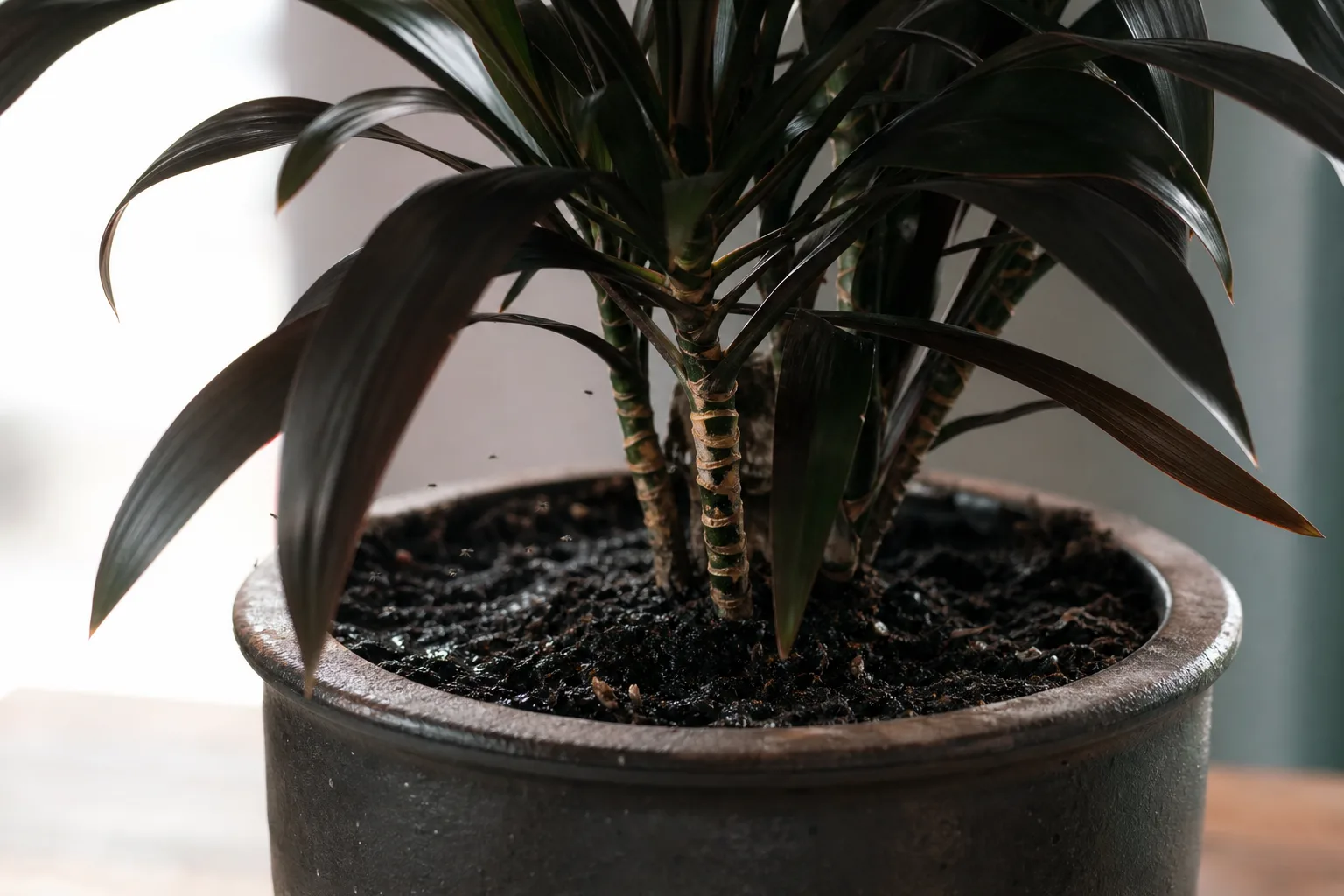
Fungus Gnats on Janet Craig Dracaena: Causes, Checks & Fixes
This guide covers fungus gnats on Janet Craig Dracaena. See also the general Fungus Gnats guide, watering, and light pages for this plant.
Fungus Gnats on Janet Craig Dracaena: Causes, Checks & Fixes
Quick answer
Fungus gnats on Janet Craig Dracaena are a moisture alarm, not a random pest invasion. The small dark flies breed in damp potting mix; their larvae feed on fungi, decaying organic matter, and sometimes tender feeder roots in the top layer of soil. On Janet Craig-one of the most shade-tolerant Dracaena cultivars-gnats almost always mean the mix has stayed wet longer than this slow-drinking plant needs.
First step: stop watering and let the top half of the mix dry completely before you soak again. In a dim office or interior hallway, that dry-down may take two to three weeks. Yellow sticky traps can catch adults while you fix the root cause, but drying the soil is what breaks the life cycle.
What fungus gnats look like on Janet Craig
Adults are tiny, mosquito-like flies-about one-eighth inch long-with dark bodies and long legs. They are weak fliers. Disturb the pot or water the plant and a small cloud may rise from the soil surface, then settle back near the base of the cane or on nearby windows.
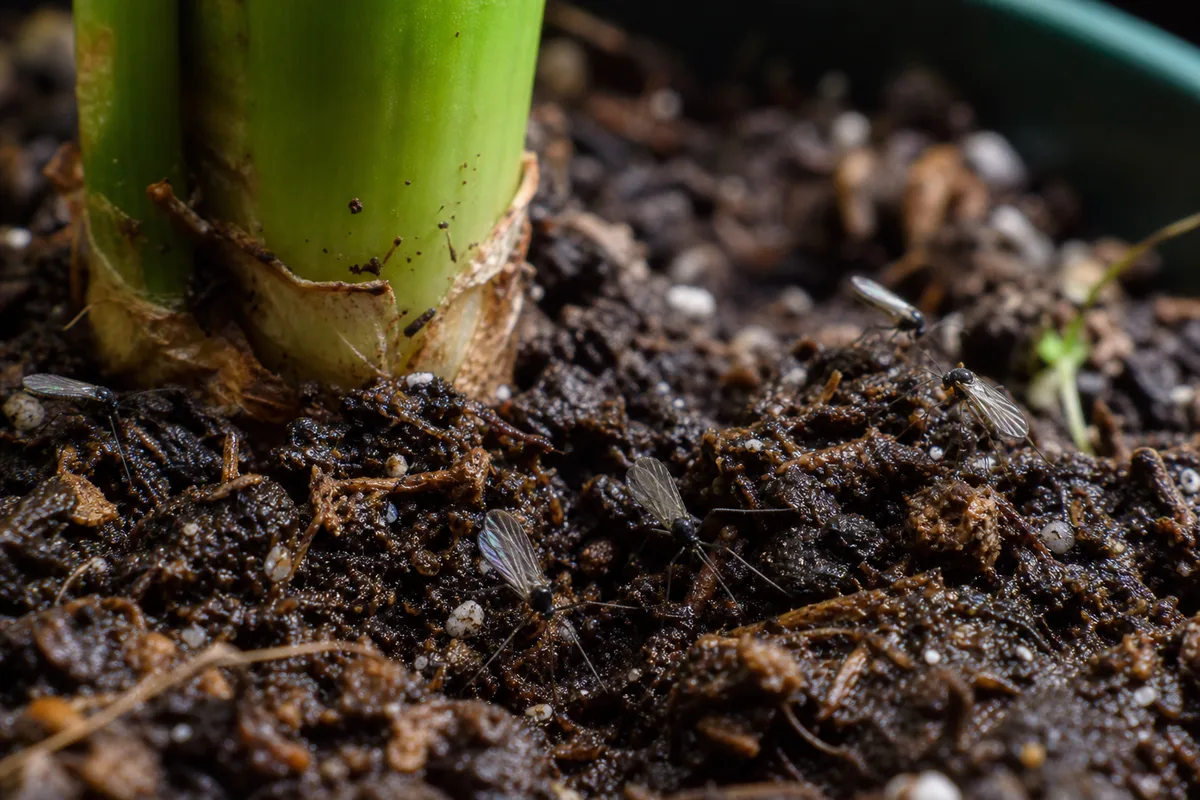
Fungus Gnats symptoms on Janet Craig Dracaena - compare with healthy tissue on the same plant.
On Janet Craig, gnats rarely damage the glossy upright leaves directly. The visible problem is behavioral: flies hovering at the pot rim, crawling on damp surface mix, or collecting on yellow sticky traps placed at soil level. The mix itself often looks dark and wet for days after watering. You may notice a thin white fungal film or algae on the surface in chronic cases.
Larvae live in the upper two to three inches of moist mix. They are slender, translucent, and legless-easy to miss unless you scrape the top layer into a white saucer and look closely. Heavy larval feeding can contribute to yellow lower leaves or stalled crown growth, but those leaf symptoms usually mean the same overwatering on Janet Craig Dracaena that attracted gnats is already stressing Dracaena roots.
Why Janet Craig gets fungus gnats
Janet Craig earns its reputation in low-light offices because it uses water slowly. Allow soil to dry between waterings is standard Dracaena advice; in deep shade, Janet Craig may need water only every three to four weeks minimum. Many caretakers still water weekly out of habit-the same schedule that works for a pothos in a bright window keeps Janet Craig’s root zone saturated for weeks.
Wet, peaty potting mix with slow evaporation is ideal gnat habitat. Females lay eggs in moist soil; larvae hatch within days and feed where fungi and organic debris accumulate. Cool indoor temperatures in winter slow Janet Craig’s uptake further, so autumn and winter overwatering is a common trigger after summer watering habits continue unchanged.
Other Janet Craig-specific contributors include:
- Oversized decorative pots that hold a large wet reservoir around a modest root ball
- Cachepots or saucers that retain runoff and keep the bottom mix soggy
- Compacted, aged mix that no longer drains quickly
- Low airflow around dense foliage in corners and cubicles, which slows surface drying
- New plants from nursery benches introduced into an already moist collection
Gnats do not mean your Janet Craig is diseased. They mean the soil environment favors flies-and that same environment eventually favors root rot on Dracaena.
How to confirm the cause
Work through these checks before reaching for sprays:
- Fly behavior - Do adults rise from the Janet Craig pot when watered or bumped? Gnats stay tied to damp soil. Flies that only appear near kitchen fruit bowls are likely fruit flies, not fungus gnats.
- Surface moisture - Push a finger one inch deep. If it feels cool and wet several days after watering, you have a moisture problem whether or not larvae are visible.
- Pot weight - Lift the container. A heavy pot long after watering confirms slow dry-down-typical in low-light Janet Craig placements.
- Light versus schedule - Compare your watering calendar to placement. Weekly watering in a fluorescent-only office strongly implicates overwatering as the gnat trigger.
- Sticky trap test - Place a yellow sticky card at soil level for three to five days. Multiple tiny dark flies on the trap confirm active adults breeding nearby.
- Plant stress pattern - Yellow lower leaves, stalled new growth, or a sour smell from the mix suggest wet-root damage alongside gnats. Inspect roots if these appear.
If the mix is dusty dry, the pot is light, and flies still appear, check whether another nearby plant-not the Janet Craig-is the breeding source.
First fix for Janet Craig
Stop watering and let the top half of the mix dry completely.
Janet Craig can tolerate a longer dry spell better than it tolerates chronic wet roots. In low light, that may mean waiting two to three weeks-or longer in cool winter rooms-before the next thorough soak. Let the top one to two inches dry completely at minimum; for Janet Craig in dim placements, dry-down through half the pot depth is safer and more effective against both gnats and root stress.
While the mix dries:
- Set yellow sticky traps at soil level to reduce egg-laying adults and monitor progress.
- Empty saucers after any future watering so the bottom never sits in standing water.
- Improve airflow slightly around the pot if foliage blocks evaporation from the surface.
Do not repot on day one. Most Janet Craig gnat outbreaks resolve once dry-down matches light level. Repot only if the mix stays waterlogged for weeks despite withheld water, or if a root inspection shows rot.
Step-by-step recovery
After the first dry-down cycle:
- Continue moisture discipline - Water only when half-depth checks read dry in low light, or when the top half is dry in brighter indirect light. Use lukewarm filtered water when you resume; fluoride stress is a separate Janet Craig issue and should not distract from fixing wet soil.
- Replace sticky traps weekly until adult counts drop sharply.
- Apply BTI if larvae persist - Products containing Bacillus thuringiensis subsp. israelensis (mosquito bits or dunks) target fungus gnat larvae in moist soil. Apply as a soil drench every five to seven days for three to four weeks because BTI does not affect eggs or pupae and does not persist long in the mix. BTI is generally safe around pets when used as labeled, but Dracaena itself is toxic if chewed-keep treated pots out of reach.
- Bottom-water selectively if the surface will not stay dry - Set the pot in a tray of water for 15 to 30 minutes so roots drink from below while the top inch stays drier and less attractive for egg-laying.
- Inspect roots if leaves yellow - Unpot and trim mushy roots only if soft cane tissue or sour odor confirms rot. Firm cane with drying mix and fewer gnats means you are on track without Janet Craig Dracaena repotting guide.
Recovery timeline
Expect two to six weeks of consistent dry-down before adult counts fall to occasional stragglers. Fungus gnats overlap life stages in indoor pots-eggs, larvae, pupae, and adults can all be present at once-so a single dry week rarely clears an infestation overnight.
Signs you are improving:
- Fewer flies when you water
- Surface mix light in color and dry to the touch before scheduled checks
- Sticky traps catching fewer adults each week
- Firm Janet Craig cane and stable lower leaves
Signs the underlying problem is worsening:
- Gnats increasing despite dry surface (check hidden saucer water or a neighboring wet pot)
- Yellow leaves dropping while the pot stays heavy
- Softening at the cane base or musty odor from the mix
If gnats remain heavy after four weeks of proper dry-down and BTI drenches, repot into fresh well-draining mix with perlite and confirm the new pot is not oversized.
Lookalike symptoms
Fruit flies cluster around ripening produce, trash bins, or dirty drains-not necessarily houseplant soil. If traps at the Janet Craig pot stay clean while kitchen traps fill, look outside the plant room.
Shore flies resemble fungus gnats but breed in algae on constantly wet surfaces; they are more common in greenhouses than typical Janet Craig office setups.
Overwatering without visible gnats still damages Janet Craig roots the same way. Yellow lower leaves on a heavy wet pot warrant a root check even if no flies appear.
Mistakes to avoid
Do not respond to gnats by watering more often or misting foliage-extra surface moisture feeds the problem. Do not rely on sticky traps alone while the mix stays wet; adults are only half the life cycle. Do not spray general houseplant insecticides on soil as a first move; drying and BTI target the actual breeding site more safely. Do not ignore gnats while lower leaves yellow-inspect roots before the cane softens. Keep all treatments and damaged plant tissue away from pets; Dracaena sap and leaves are toxic to cats and dogs.
How to prevent fungus gnats next time
Treat the calendar as a reminder to check soil, not to water automatically. In deep shade, expect 21 to 28 days or longer between thorough soaks. In brighter indirect light, let the top half dry-often every 10 to 14 days in warm months. Always empty saucers. Refresh compacted peaty mix every two to three years. Quarantine new Dracaena purchases for two weeks with a sticky trap at soil level before placing them beside an established Janet Craig. When gnats appear, read them as proof the pot is drying too slowly for Janet Craig Dracaena overview-not as an isolated pest emergency.
When to use this page vs other Janet Craig Dracaena guides
- Janet Craig Dracaena watering guide - Use for routine moisture checks before assuming fungus gnats is the main issue.
- Janet Craig Dracaena problems hub - Browse all 50 common issues on this species.
- Overwatering on Janet Craig Dracaena - Different entry point when symptoms overlap with fungus gnats.
- Poor Drainage on Janet Craig Dracaena - Different entry point when symptoms overlap with fungus gnats.